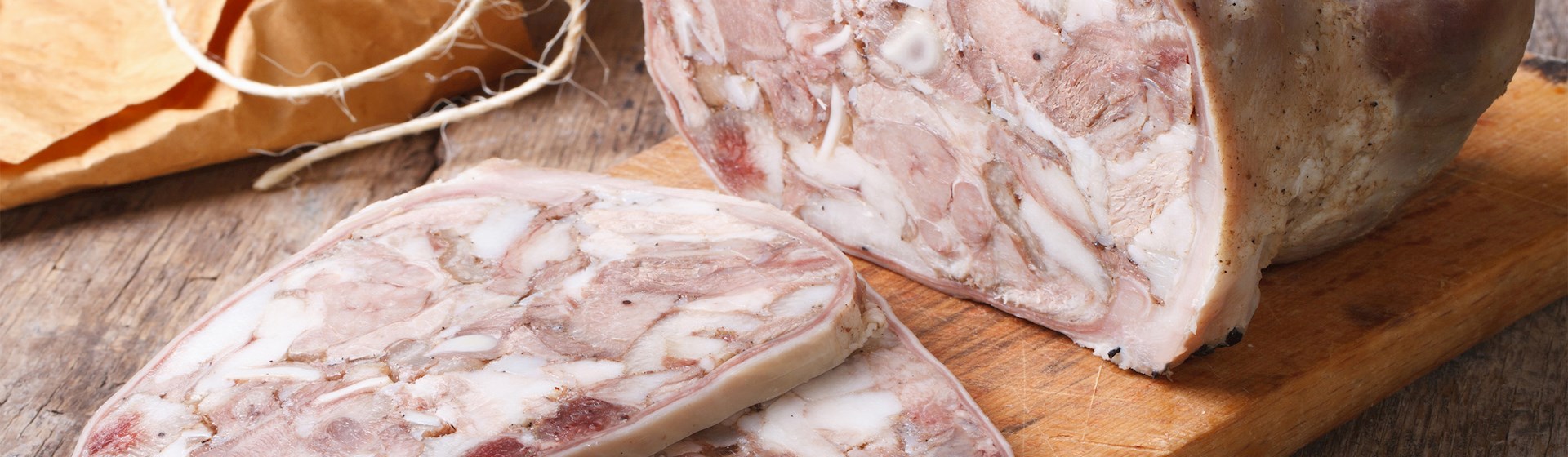
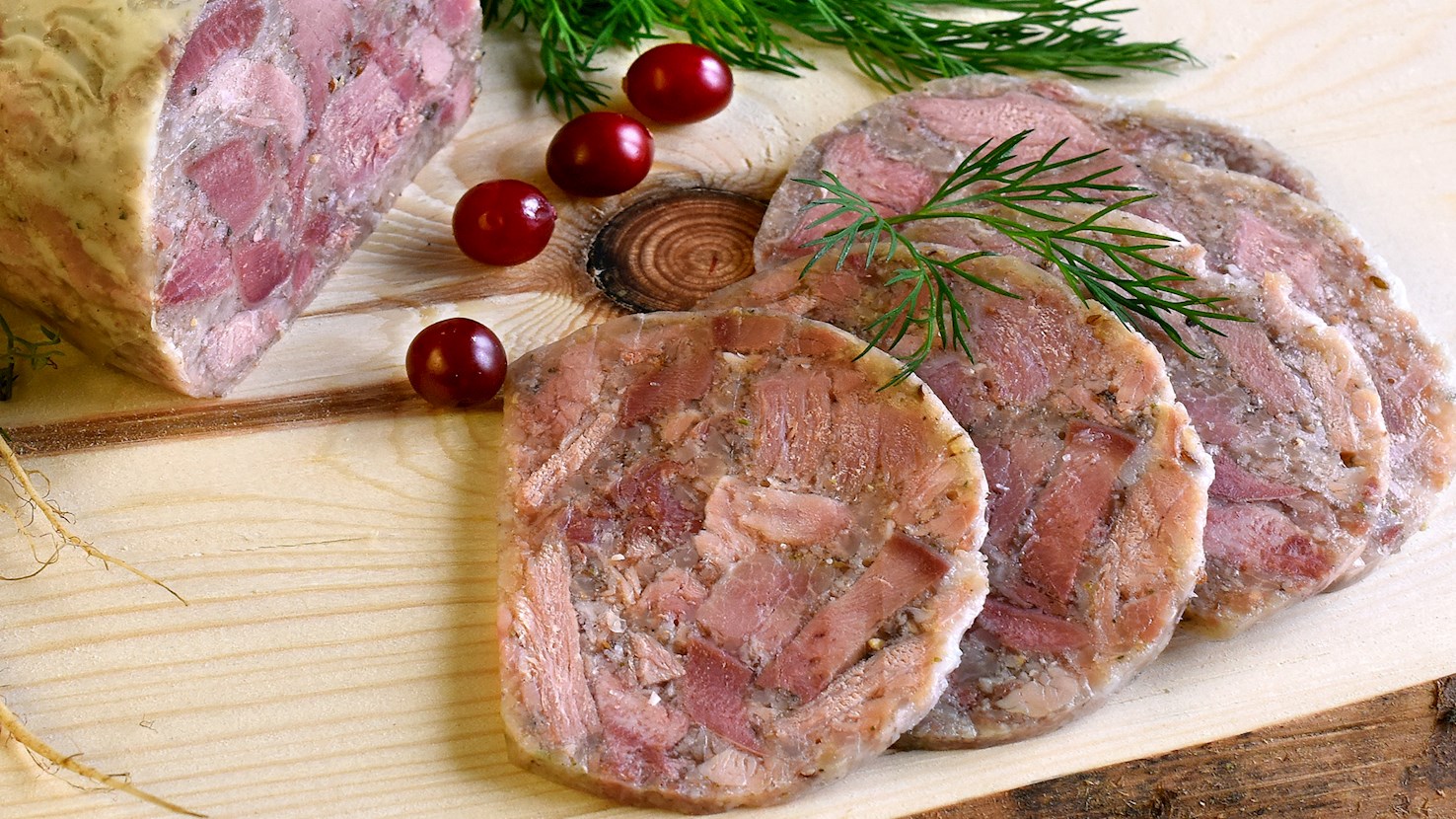
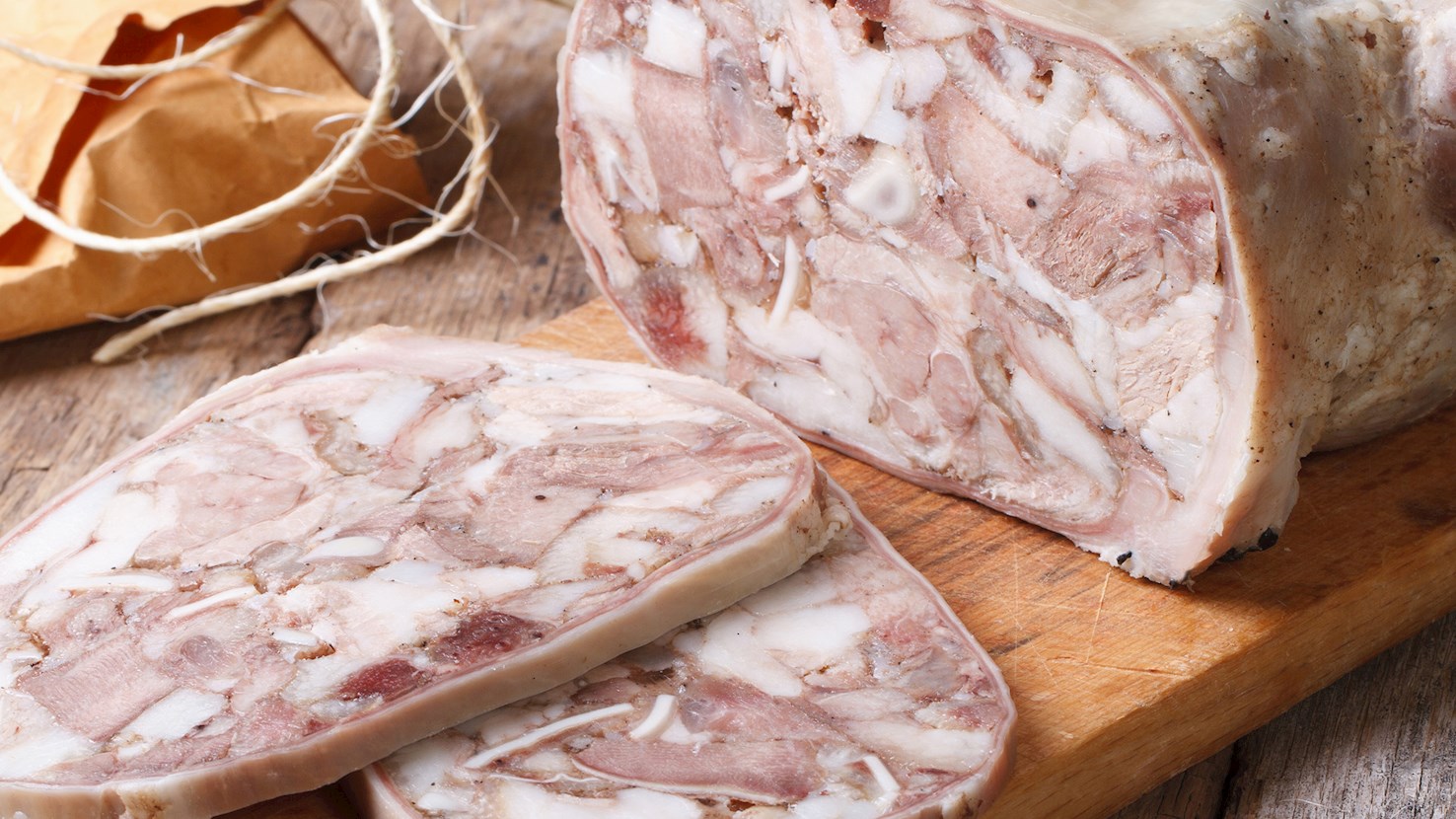
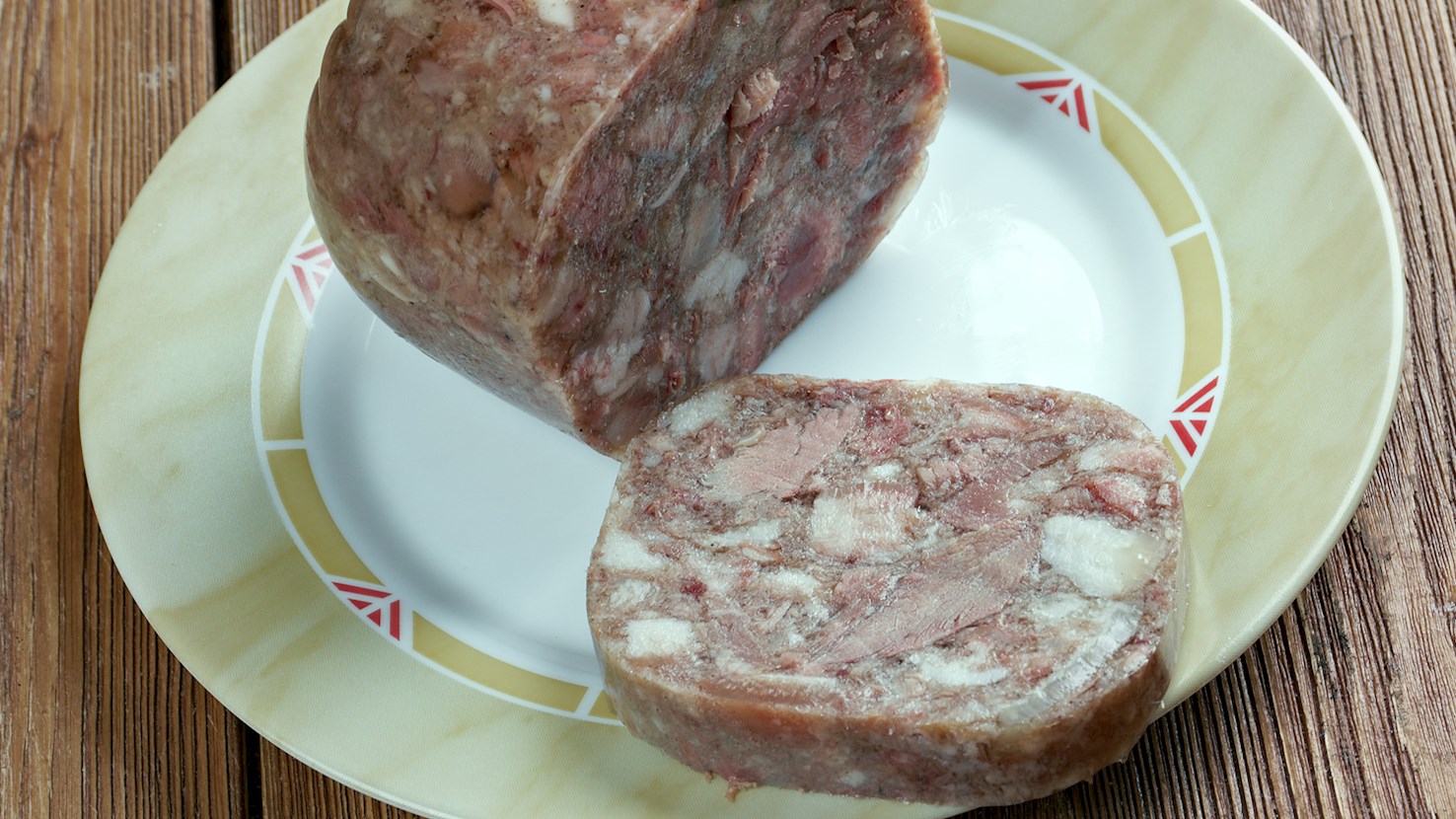
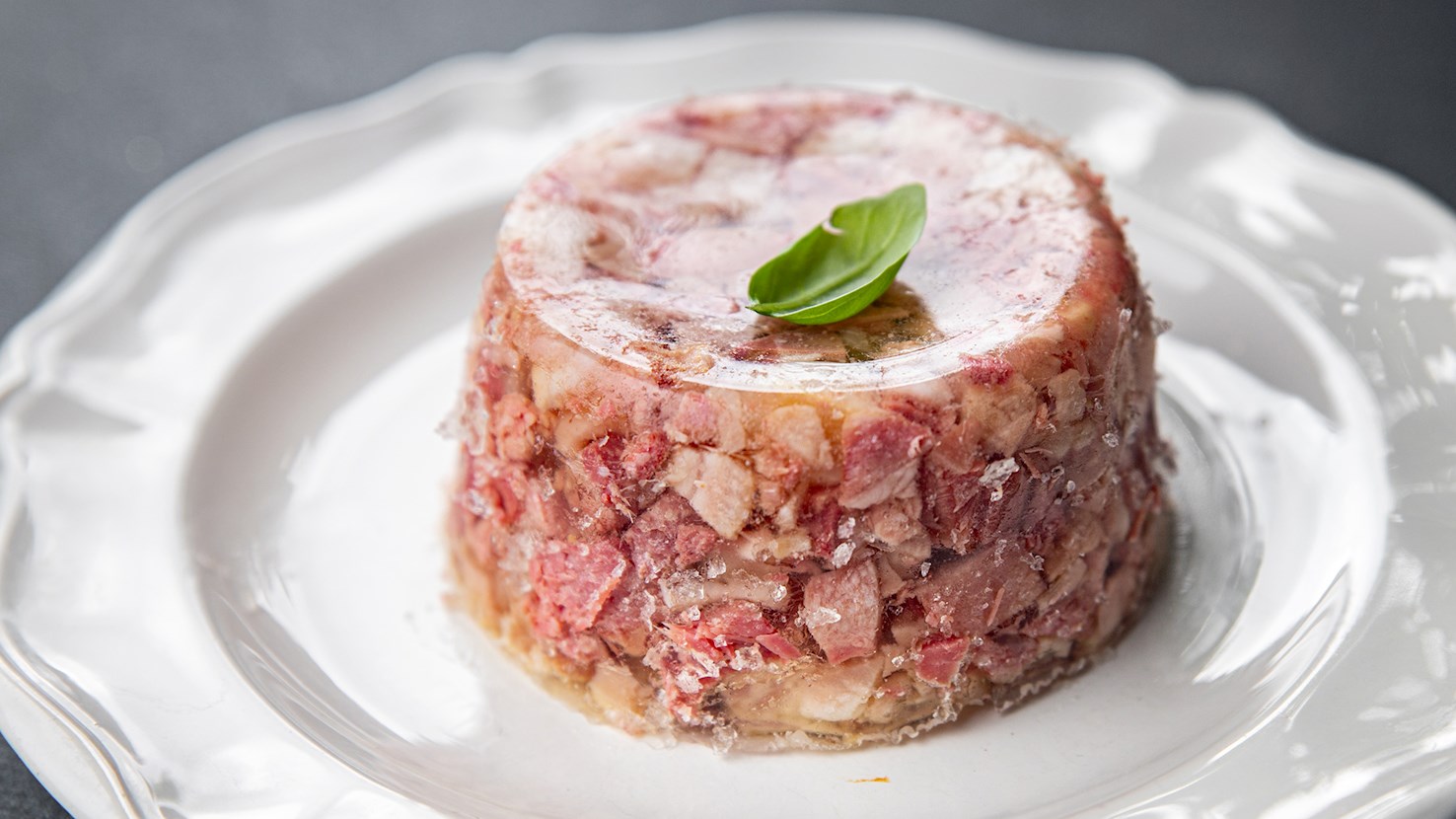
Sülzwurst is a type of German headcheese consisting of pork head meat, pork, rinds, and sometimes other offal parts, which are seasoned with a variety of spices. The animal parts are then cooked and chopped before they are set in a jelly-like liquid. Gherkins, onions, and additional spices are often added to this traditional headcheese for extra flavor. Sülzwurst is usually enjoyed as part of a selection of cold cuts along pickled vegetables, bread, and fried potatoes.
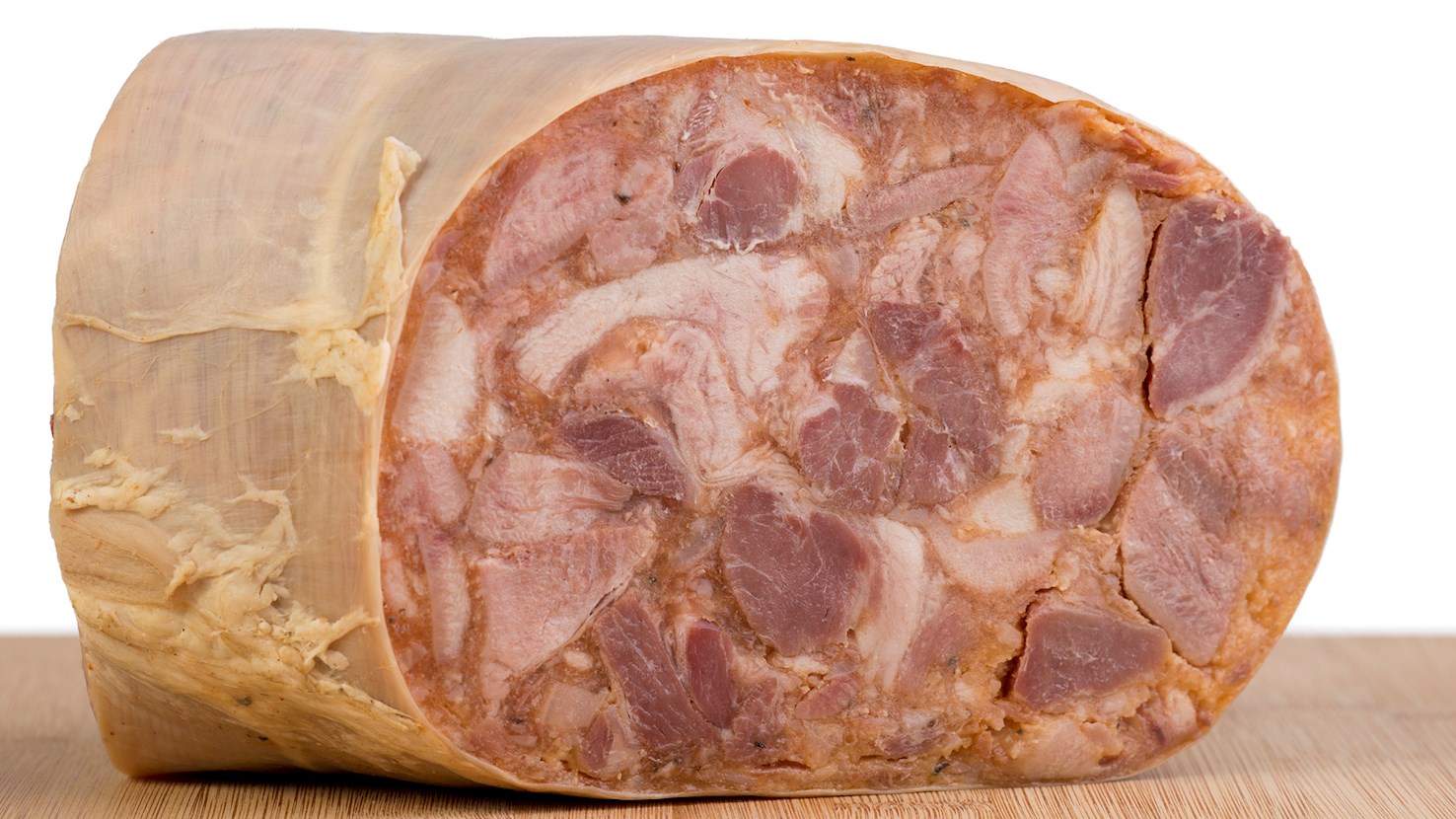
Tlačenka is the Czech version of gelatinous head cheese. It consists of different pork cuts, mainly offal that is simmered with chopped up trotters, poured into pig's intestines, and cooled until solid. Tlačenka is usually shaped into long and large cylindrical tubes and served in thick slices. With its rough texture, this traditional Czech product resembles a coarse pâté and is typically enjoyed with diced raw onions, rye bread, and a splash of vinegar.
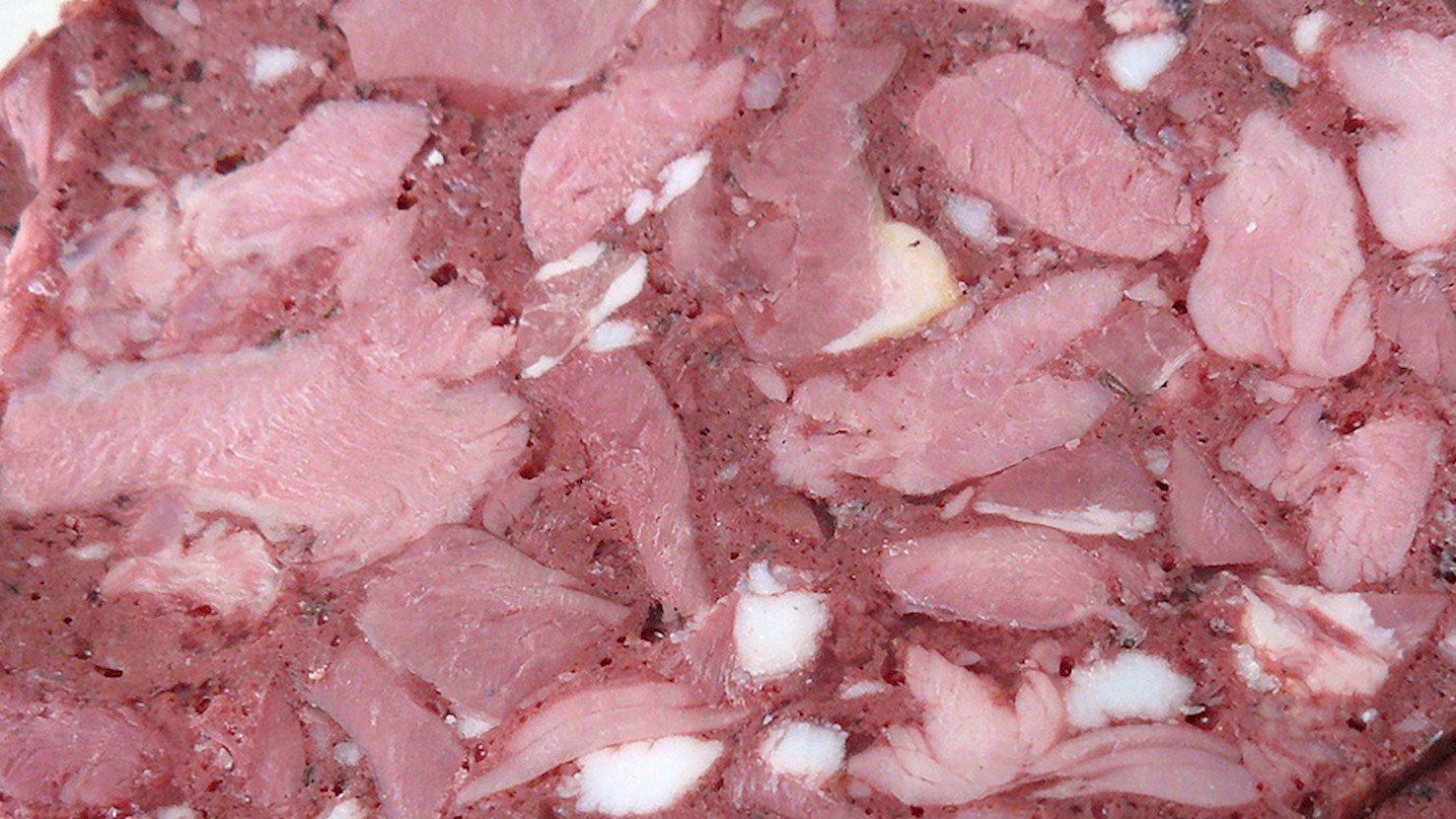
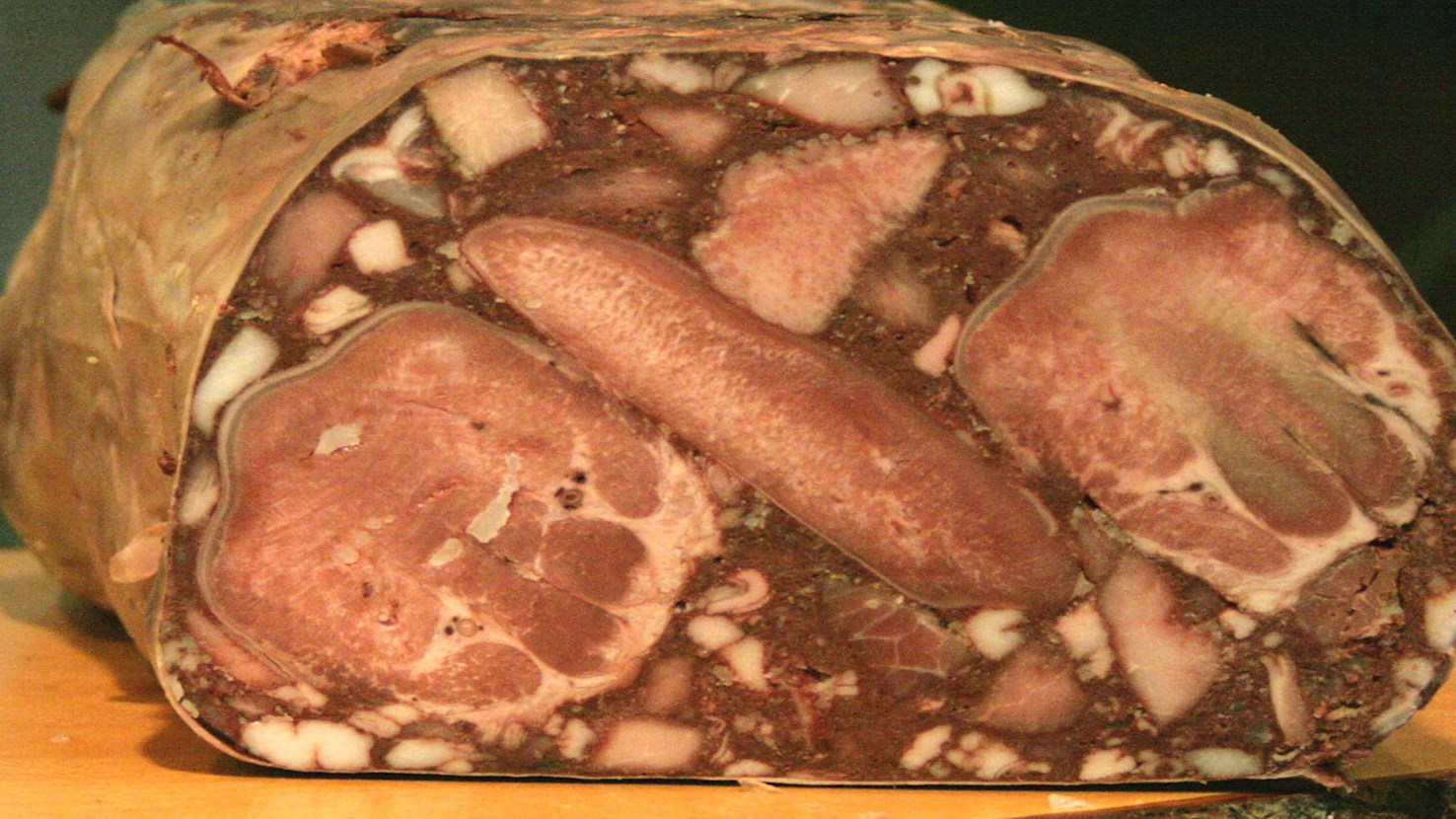
Presskopf wurst is a variety of German head cheese that is made with different animal parts such as pork or calf head meat, rinds, bacon, pork heart, and sometimes pork blood or pork muscle meat. The sausage mixture is typically flavored with ingredients such as garlic, onions, pepper, salt, nutmeg, and sugar, and it is usually filled into sausage casings. The word presskopf means pressed head in German, and it refers to the method of pressing the sausage once it has gone through the process of scalding. The name of this cooked sausage varies from one region to another, with presssack, presswurst, and schwartenmagen being some of the common name variations. Presskopf wurst is typically enjoyed thinly sliced on top of bread, smeared with mustard or horseradish, or tossed with raw onions and vinaigrette.
Traditionally prepared after the annual pig slaughter, disznósajt, translated to pork cheese, is a Hungarian head cheese that is usually made by combining various pork parts such as the head, tongue, heart, ears, and hooves of a pig. After cooking the pork parts with garlic, Hungarian paprika, salt, and black pepper, the meat mixture is typically stuffed into pig stomach in a similar manner to a sausage. The sausage-like head cheese is then cooked again before it is pressed and smoked. This Hungarian delicacy is typically eaten thinly sliced with fresh bread, mustard, and pickles, and it is usually washed down with a glass of traditional fröccs, made by mixing wine and soda water.
Sülze (or Sulz in Austrian cuisine) is a type of German meat jelly or aspic, typically made with pork. The preparation of Sülze begins with simmering meat, often including parts rich in collagen like pork knuckles, ears, or even tongue, along with vegetables and spices. The collagen from the meats creates a natural gelatin as it cools. The meat is then removed from the bones, cut into small pieces, and mixed back into the strained broth. This mixture is poured into a mold and left to cool, typically overnight. The gelatin in the broth solidifies as it cools, creating a jelly-like consistency. Sülze is served cold and is often sliced and served with garnishes like pickles, onions, or a side of bread. It can be found in many traditional German and Austrian restaurants and is a common sight in local delis. It's a classic example of nose-to-tail cooking, where all parts of the animal are used, helping to reduce waste.
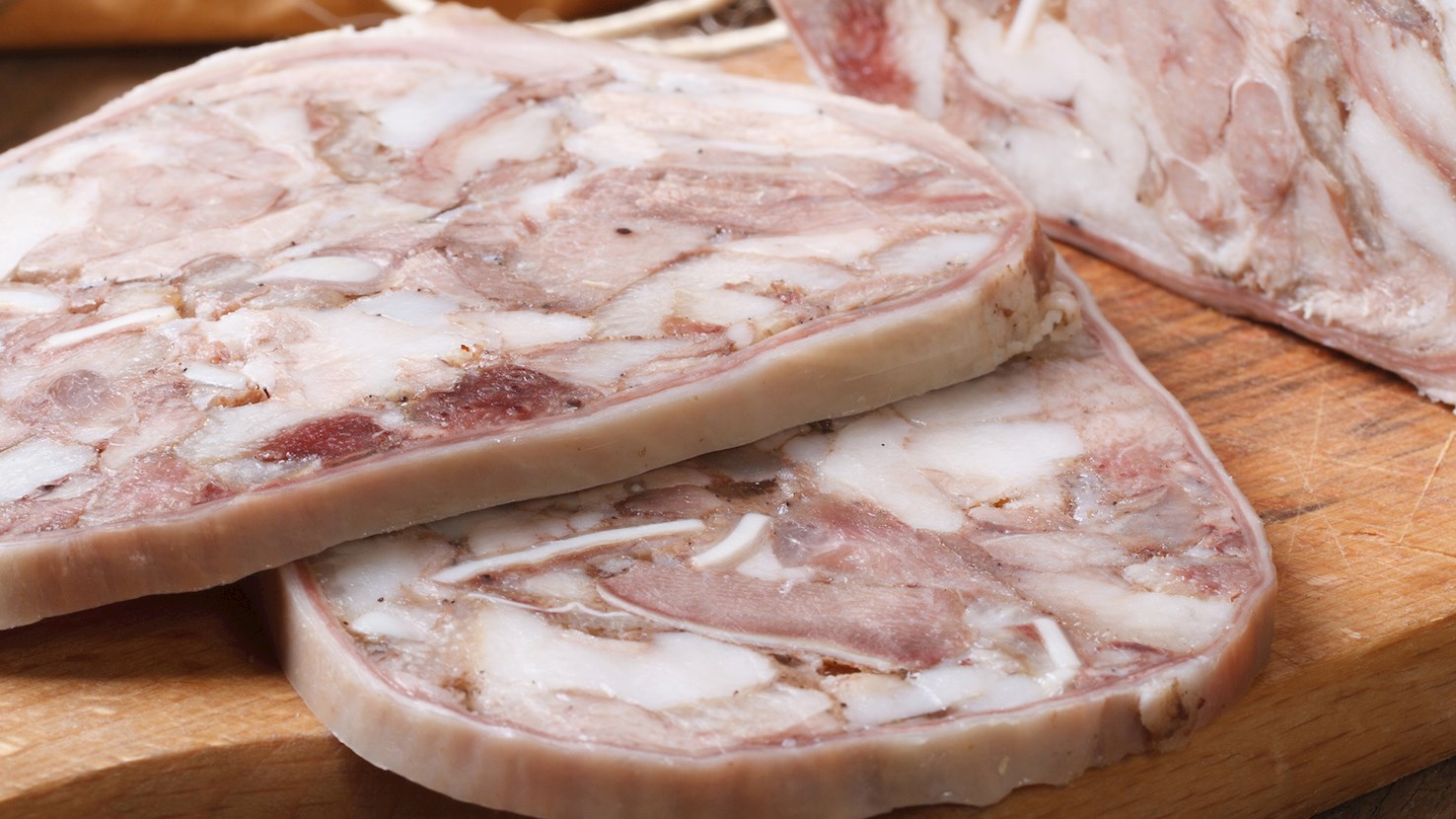
Once considered to be an inferior meat product, today the Polish head cheese is regarded as a unique gourmet delicacy. Depending on the seasonings, shape, and main ingredients, which often include brawn, offal, or blood, traditional Polish cuisine boasts with more than ten different head cheese varieties. They are mostly prepared with pork, but some varieties exclusively use veal. Once popular in many cities bordering Germany, today they are prepared and enjoyed throughout the country. Regardless of the type, these texturally-exciting treats are usually enjoyed as cold cuts, commonly accompanied by bread and various meat products.
Prepared with pork offal, usually various parts of the head, cheeks, and tongue, this traditional Italian product, similar to head cheese, belongs to the wide group of soppressata sausages. All the ingredients are roughly chopped, cooked, and seasoned with various regionally influenced spices that typically include salt, pepper, lemon and orange zest, bay leaves, and occasionally pistachio, cinnamon and nutmeg. The mixture is then placed into containers or various fabrics and is left to set. Depending on the region, the sausage goes under different names, such as soppressata Toscana in Tuscany, testa in cassetta in Piedmont, Liguria and Sardinia and coppa in the regions Lazio and Marche. When set and well-chilled it is best served as antipasto, accompanied by bread, fresh vegetables, and a glass of robust red wine.
Zungenwurst is a traditional blood sausage that contains pieces of pickled tongues. It typically consists of a mixture of pork blood, fat, and pieces of pickled tongues, seasoned with ground pepper and (optionally) other strong spices. Usually, the blood sausage is entirely made of animal parts, containing no fillers or cereals. Since the sausage is typically cured and dried, it requires no cooking prior to its consumption. A common sausage in Austria as well, it can be consumed both hot and chilled, fried, or sliced in sandwiches. Its name is derived from the German words Zungen, meaning tongues in English, and Wurst, which translates to sausage.
Zure zult is a cold, gelatinous meat product made from the head, ears, and trimmings of a pig, set in an acidic jelly and originating from the southern provinces of the Netherlands. The production of this item is rooted in the practical necessity of livestock utilization in North Brabant and Limburg, where every portion of the animal was processed to minimize caloric waste after the slaughter. The product emerged as a preservation method, as the combination of boiling, high acidity from vinegar, and the airtight seal provided by the gelatin matrix extended the shelf life of the meat during periods without mechanical refrigeration. Preparation involves simmering the pork components in a broth containing vinegar, onions, bay leaves, cloves, and peppercorns for several hours until the connective tissues undergo thermal hydrolysis. This process converts the insoluble collagen into soluble gelatin, which acts as the primary binding agent for the dish. Once the meat is tender, it is finely chopped or ground and returned to the reduced, strained cooking liquid. The mixture is then poured into molds and refrigerated until the gelatin sets into a firm, semi-translucent block. A specific property of zure zult is the high concentration of acetic acid, which provides a sharp flavor profile that distinguishes it from the milder, non-acidic head cheeses found in other European regions. Some variations include the addition of finely diced pickles or carrots within the matrix to provide textural contrast. Zure zult is eaten primarily as a cold cut or a spread, often served in thin slices on sturdy rye bread or white farmhouse bread. It remains a staple of the "koffietafel" or afternoon lunch in southern Dutch households and is frequently found at butcher shops. Functional food pairings include a layer of sharp mustard or a garnish of pickled silver onions to enhance the existing acidity of the meat. Beverage pairings are typically robust to match the vinegar content, with a glass of dark Trappist ale or a pilsner being the standard choices to cleanse the palate of the rich, fatty gelatin.
Spreewälder Gurkensülze is a meat aspic from the Spreewald region of Brandenburg in eastern Germany, known for incorporating the area’s signature pickled cucumbers. It combines finely chopped cooked meat, gelatin, vinegar, and spices, set together with diced Spreewald gherkins to form a firm, tangy jelly. The dish reflects the regional taste for sour flavors and preserved foods, shaped by a landscape of wetlands where cucumber cultivation and pickling have long been central to local life. It developed as part of rural cuisine in a region where preservation techniques were essential for storing meat and vegetables through the seasons. The roots of the dish lie in the practice of making Sülze, a meat jelly prepared after butchering, when every part of the animal was used. Cooks boiled pork, veal, or sometimes beef bones with onions, herbs, and spices to extract gelatin, then combined the cooled stock with shredded meat and vinegar to create a cold, set dish. In the Spreewald, where cucumbers were abundant and became a symbol of the region’s produce, the recipe evolved to include diced pickles, giving the aspic a distinctive sour freshness. This combination of meat and cucumber brought a lightness to what was otherwise a rich, gelatinous dish, reflecting the area’s preference for balanced, clean flavors. Over time, as refrigeration replaced the need for many preserving methods, Spreewälder Gurkensülze remained a regional specialty, kept alive by local butchers and small producers who valued its connection to rural craftsmanship. Preparation begins with simmering pork knuckles, rind, or lean cuts with onions, bay leaves, peppercorns, and vinegar until the liquid thickens from its natural gelatin. The meat is then finely chopped, and the strained broth is seasoned further with mustard seeds, salt, and sometimes a little sugar. Chopped Spreewald cucumbers are added to the mixture before it is poured into molds or jars and left to set as it cools. The result is a firm jelly dotted with bright green cucumber pieces, each slice revealing a mosaic of meat and vegetable suspended in clear aspic. The texture is soft but structured, and the flavor alternates between the mild savoriness of the meat and the refreshing acidity of the pickles. Spreewälder Gurkensülze is served cold, most often as part of a light meal or rustic lunch. It is eaten sliced, accompanied by boiled potatoes, rye bread, or fried potatoes, and sometimes with mustard or a drizzle of vinegar. A chilled beer or schnapps is a common pairing, reinforcing its place as a straightforward, hearty dish in local taverns and home kitchens.
TasteAtlas food rankings are based on the ratings of the TasteAtlas audience, with a series of mechanisms that recognize real users and that ignore bot,
nationalist or local patriotic ratings, and give additional value to the ratings of users that the system recognizes as knowledgeable.
TasteAtlas Rankings should not be seen as the final global conclusion about food. Their purpose is to promote excellent local foods,
instill pride in traditional dishes, and arouse curiosity about dishes you haven’t tried.






What People Say