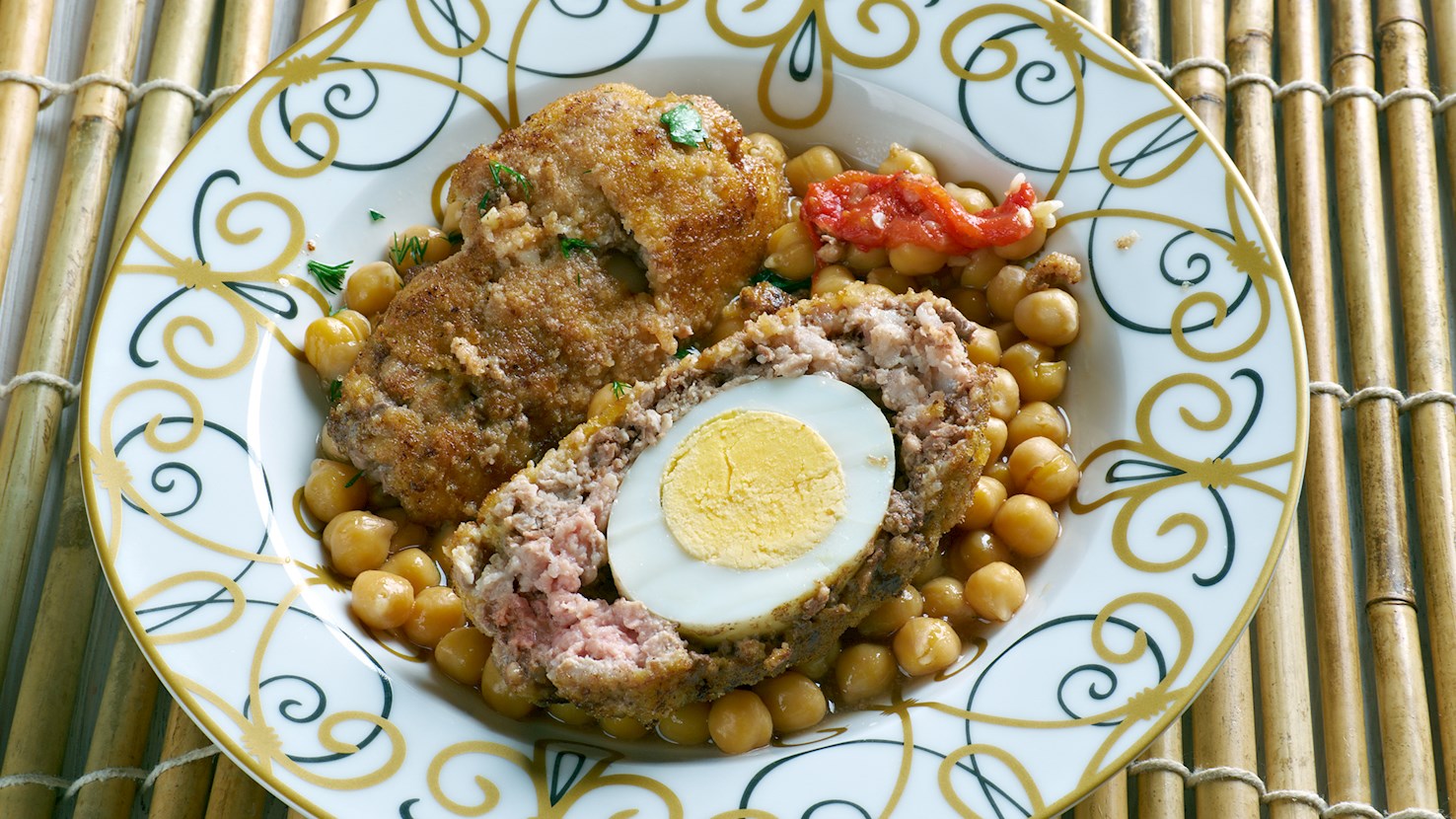
Kufteh Tabrizi is a large, stuffed meatball dish from the city of Tabriz in northwestern Iran, known for its complex preparation and rich combination of herbs, meat, legumes, and dried fruits. Unlike smaller Persian koftas, kufteh Tabrizi is notable for its imposing size and the variety of fillings hidden inside. The history of this dish is linked to Tabriz’s role as a crossroads of cultures, where Ottoman, Caucasian, and Persian cooking blended over centuries. Recipes for large meat dumplings filled with fruit, nuts, and grains were documented in the kitchens of wealthy families and caravanserais, where elaborate preparations showcased a cook’s skill. Over time, kufteh Tabrizi became an emblem of the city’s food identity, offered during celebrations and family gatherings. Though it requires time and patience to prepare, it has remained a fixture in Tabrizi households and continues to be a point of regional pride. Preparing kufteh Tabrizi begins with cooking split peas until tender, then combining them with ground beef or lamb, rice, grated onion, eggs, herbs such as parsley, tarragon, and savory, and spices including turmeric and black pepper. This mixture is kneaded thoroughly to achieve a smooth, cohesive texture. A portion of the mixture is flattened by hand and filled with a core of cooked eggs, dried apricots, prunes, barberries, walnuts, and sometimes small meatballs. The meat and rice layer is carefully gathered and shaped into a large ball, sometimes the size of a melon. The kufteh is then lowered gently into a seasoned broth made with tomato paste, onion, turmeric, and sometimes a little saffron, and simmered slowly to cook through without falling apart. One detail about Kufteh Tabrizi is the importance of kneading the mixture until it becomes sticky and elastic enough to hold its shape. In many households, cooks will test a small ball by simmering it briefly to be sure it remains intact before committing to forming the main meatball. The broth not only cooks the kufteh but also becomes a flavorful soup served alongside. Kufteh Tabrizi is typically presented in a large serving dish, cut into wedges so the fillings are visible, and surrounded by its cooking broth. It is eaten hot, often with fresh herbs, pickles, and flatbread, and sometimes finished with a squeeze of lemon juice.
Zardak kabab is a specialty from Isfahan, a city in central Iran, a type of carrot-based kabab in which grated carrots are combined with minced meat and spices to form small patties that are then cooked until golden. Unlike the meat-heavy kababs more commonly associated with Iranian cuisine, zardak kabab brings carrots into focus, creating a preparation that is both nourishing and subtly sweet. Its roots lie in Isfahan’s history of inventive cooking, where local produce was incorporated into everyday meals in creative ways. Carrots, or “zardak” in Persian, were abundant and valued not only for use in sweets and stews but also in savory preparations. Over time, cooks in Isfahan developed this kabab as a way to highlight the carrot’s unique qualities, and it became a beloved part of the city’s repertoire of home-style dishes. To prepare it, carrots are finely grated and mixed with minced lamb or beef, eggs, flour or breadcrumbs for binding, onions, and a selection of spices such as turmeric, cinnamon, and black pepper. The mixture is shaped into small patties and pan-fried until crisp outside and soft inside. They are often served warm with flatbreads like lavash or sangak, accompanied by fresh herbs, yogurt, or pickled vegetables to balance the flavors. Zardak kabab is most often eaten as part of family meals in Isfahan, though it can also appear at gatherings and celebrations where a variety of dishes are presented together. It pairs well with rice dishes, flatbreads, or yogurt-based sides, and is sometimes enjoyed with Iranian pickles or a glass of doogh, the yogurt and mint drink that is a staple of the region’s dining culture.
Nafeleh is a meatball dish from Khuzestan in southwestern Iran, where it is well known for its tangy sauce and the use of chickpea flour mixed with ground meat. The dish developed in a context where both meat and pulses were staples, and cooks learned to stretch meat further by combining it with chickpea-based binders while emphasizing bold sour-sweet seasonings. In preparing nafeleh, ground beef or lamb is mixed with grated onion, chickpea flour (or gram flour), turmeric, salt, and sometimes mint. The mixture is formed into small meatballs and lightly fried until the exterior is golden. Separately, a sauce is made by sautéing onions in oil, then adding dried mint, vinegar, sugar, and water. The fried meatballs are then added into this sauce and simmered until they soak up its flavor and the sauce thickens somewhat. The result is meatballs that carry savory notes, a touch of tang, and aromatic herbs in every bite. Nafeleh is eaten in Khuzestan homes, often served as a main course alongside flatbread or rice. It is typically part of family meals or shared on modest social occasions. To accompany it, fresh herbs, yogurt, or pickles may be offered to offset its rich and tangy character.
TasteAtlas food rankings are based on the ratings of the TasteAtlas audience, with a series of mechanisms that recognize real users and that ignore bot,
nationalist or local patriotic ratings, and give additional value to the ratings of users that the system recognizes as knowledgeable.
For the “Top 3 Iranian Meatballs” list until May 16, 2026, 109 ratings were recorded, of which 41 were recognized by the system as legitimate.
TasteAtlas Rankings should not be seen as the final global conclusion about food. Their purpose is to promote excellent local foods,
instill pride in traditional dishes, and arouse curiosity about dishes you haven’t tried.