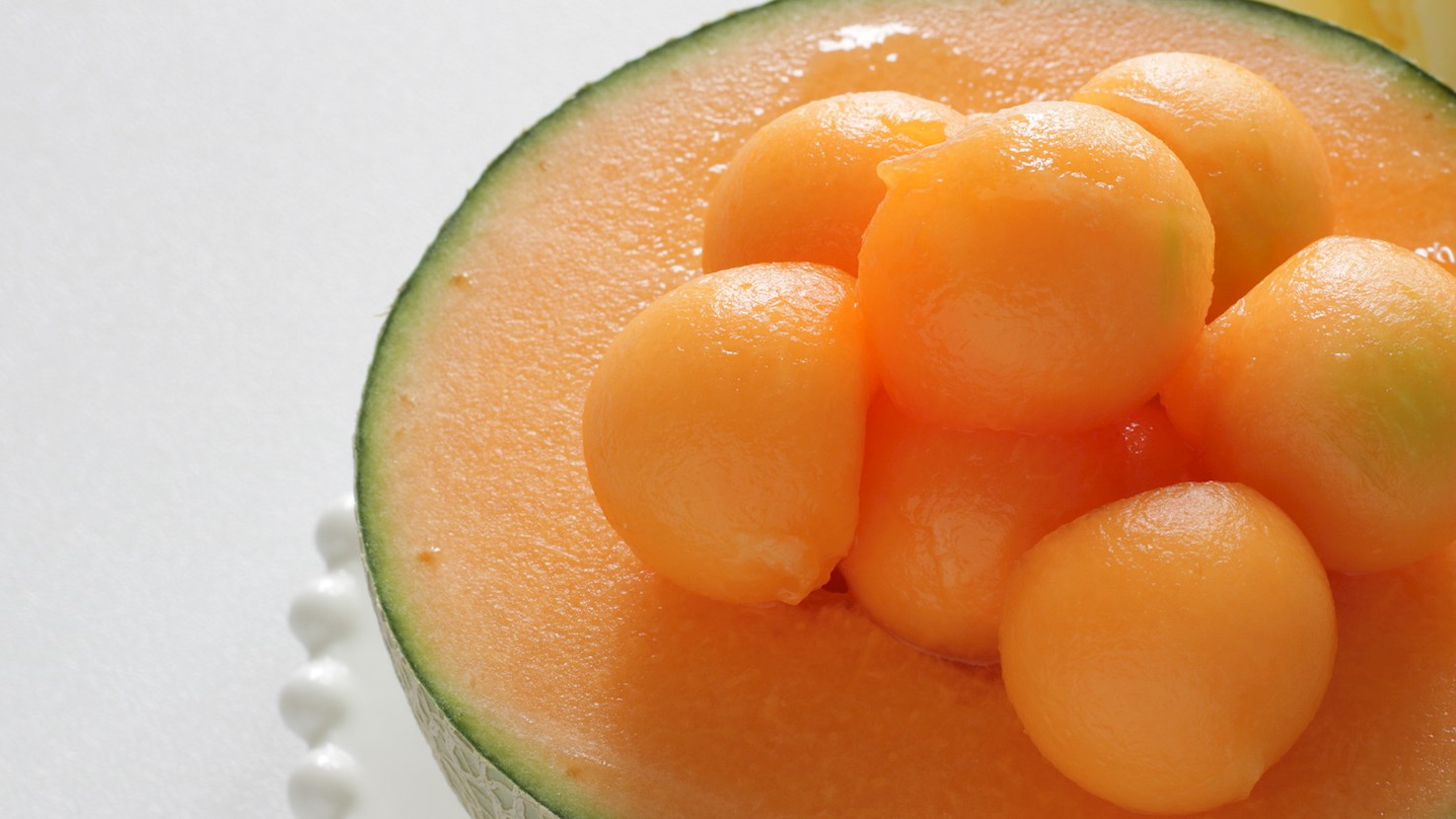
Yubari King are expensive Japanese melons grown in Yubari on Hokkaido. They are highly prized for their renowned sweetness. The top grade of these melons are perfectly round with a perfectly smooth skin. Their flesh is orange on the inside, and it is regularly graded – there are 4 grades depending on the sweetness, and some melons can even be rejected if they are too sweet or not sweet enough. It is recommended to consume them within 2 to 3 days of harvesting, which is done by hand with scissors. The melons are traditionally grown in volcanic ash soil in greenhouses, and the planting is done in February. Interestingly, in 2017, a pair of these melons was sold at an auction for $27,000.
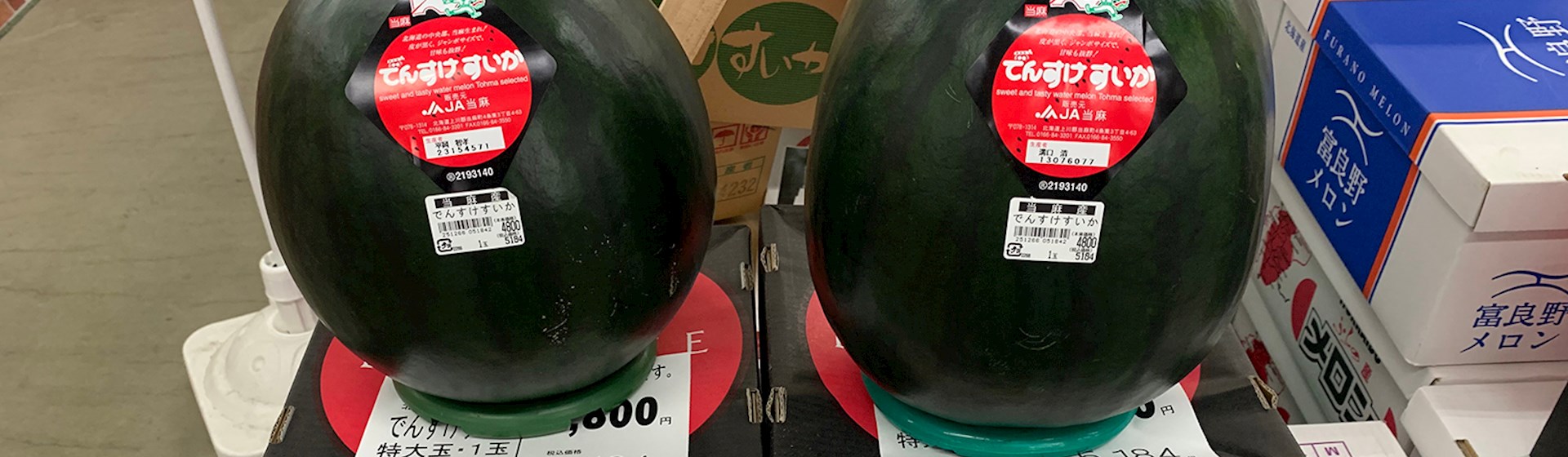
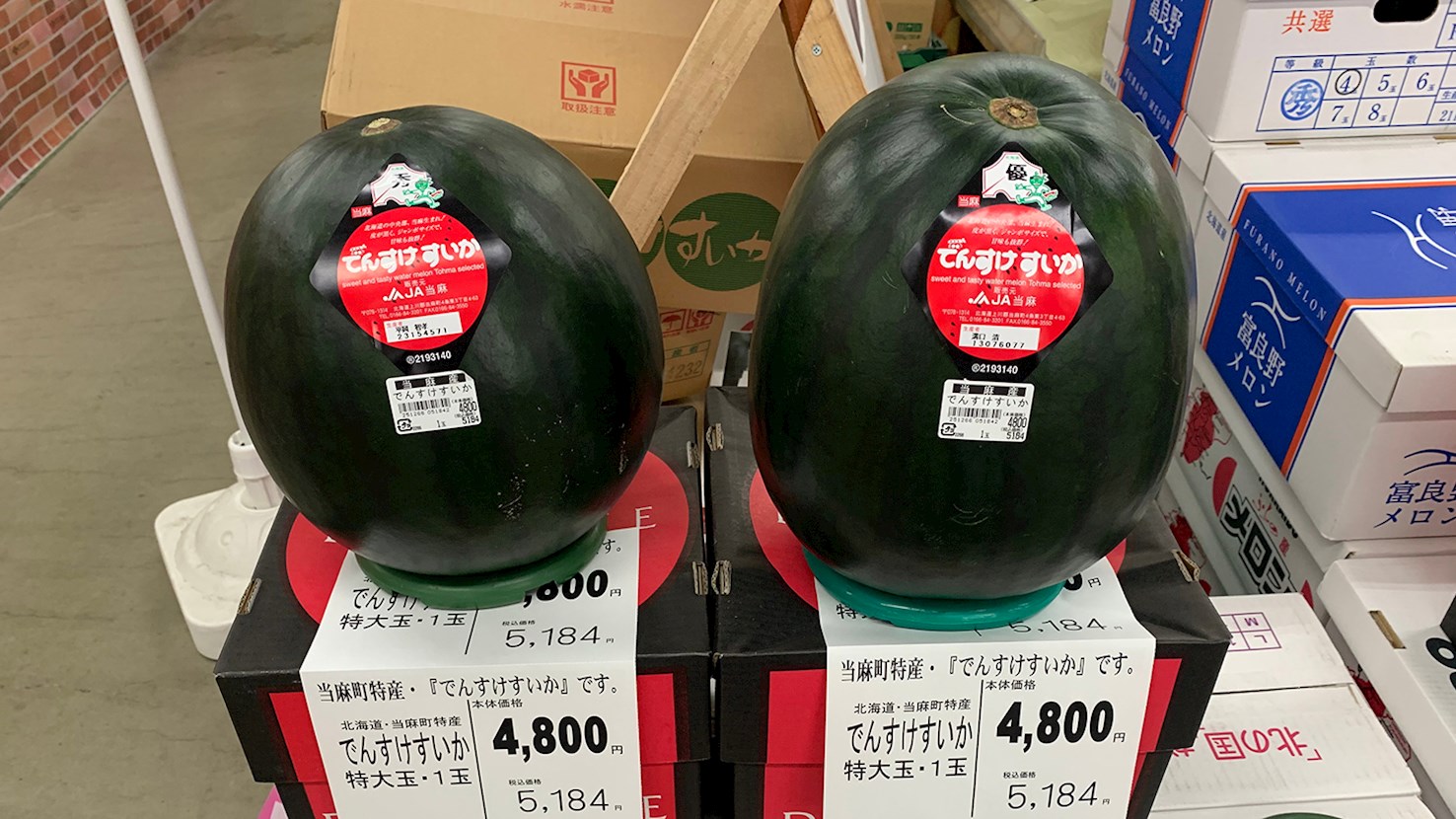
Densuke is a Japanese fruit known for possibly being the world's most expensive type of watermelon, reaching prices up to $6,000 at auctions for top quality produce. The watermelon is black in color, crisp, and hard, with a different level of sweetness than other watermelons. It also has very few seeds. This fruit is grown exclusively on Hokkaido, and it's produced in limited quantities, which puts them in high demand and at high prices. Densuke watermelons are usually packaged in cubic cardboard boxes for protection, and they come with certificates of origin included in the box.
Zentsujisan shikakusuika is a cube-shaped ornamental watermelon produced in Zentsuji City, and registered as a protected Geographical Indication specialty. Its name means “square watermelon produced in Zentsuji,” which is important because the product is not simply any watermelon grown in a mold, but a specific regional specialty with standards for origin, shape, and appearance. The fruit is famous for its sharp, box-like form, glossy green rind, and vertical striped pattern, giving it the look of something designed rather than grown. It begins as an ordinary watermelon, but while still young, it is placed inside a rigid cube-shaped container, where it gradually expands until it takes on the shape of the frame. The technique requires careful handling because the fruit must fill the mold evenly, maintain a neat surface, avoid cracking, and show attractive stripes in a balanced position. Unlike most premium Japanese fruits, Zentsujisan shikakusuika is not prized primarily for sweetness. It is usually harvested before full ripeness so the rind remains firm, the cube shape stays clean, and the fruit can be displayed for a longer period. Because of that, it is generally treated as a decorative fruit rather than a dessert watermelon. This makes it one of the more unusual products in Japan’s luxury fruit culture: a real agricultural product whose main value lies in visual impact, rarity, and craftsmanship instead of eating quality. A fully ripe round watermelon would normally be juicier and sweeter, but Zentsujisan shikakusuika occupies a different category. It is bought for display in fruit shops, department stores, hotels, restaurants, offices, and homes, where its purpose is to attract attention and mark the season with something striking and rare. This watermelon is closely tied to Zentsuji, a city in northwestern Kagawa Prefecture that has become the best-known home of Japan’s square watermelon production. The area’s farmers developed the shaped watermelon to distinguish their produce, and the product eventually became one of the city’s representative agricultural symbols. The registered GI production area is Zentsuji City, and the name separates this recognized local specialty from generic square watermelons that might be made elsewhere by similar molding methods. Production remains limited because each fruit needs individual attention, and not every watermelon placed in a mold becomes attractive enough to sell under the recognized name. Zentsujisan shikakusuika is often expensive, and the fruit is usually presented carefully, sometimes in protective packaging or with branding that emphasizes its origin, and it is appreciated much like a seasonal craft item.
TasteAtlas food rankings are based on the ratings of the TasteAtlas audience, with a series of mechanisms that recognize real users and that ignore bot,
nationalist or local patriotic ratings, and give additional value to the ratings of users that the system recognizes as knowledgeable.
For the “Top 3 Japanese Melons” list until June 10, 2026, 15 ratings were recorded, of which 9 were recognized by the system as legitimate.
TasteAtlas Rankings should not be seen as the final global conclusion about food. Their purpose is to promote excellent local foods,
instill pride in traditional dishes, and arouse curiosity about dishes you haven’t tried.