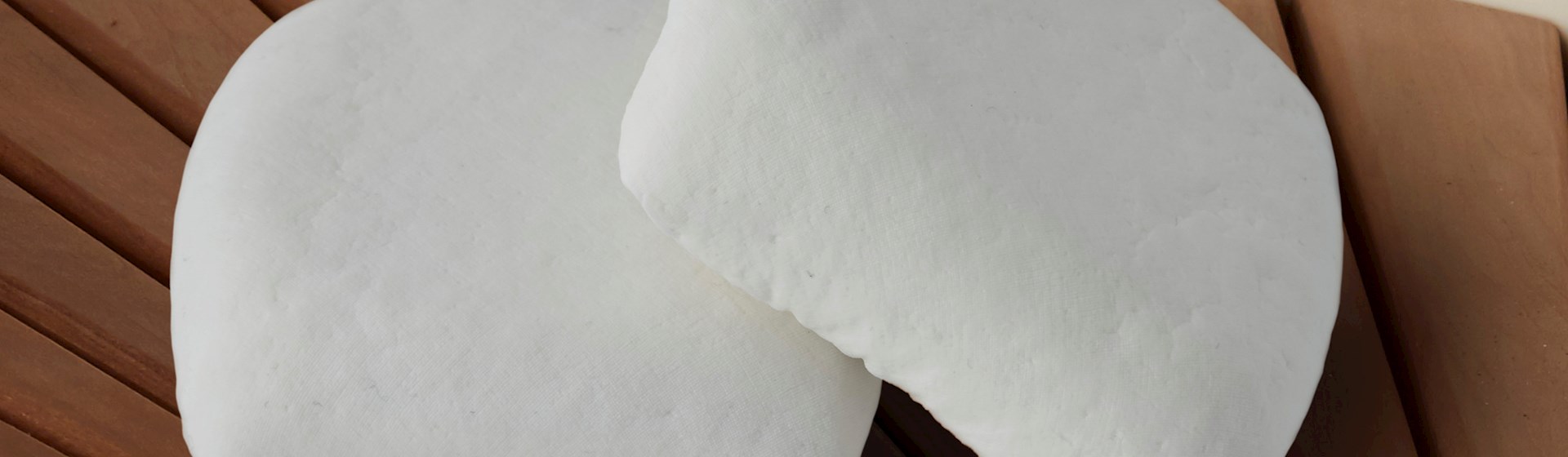
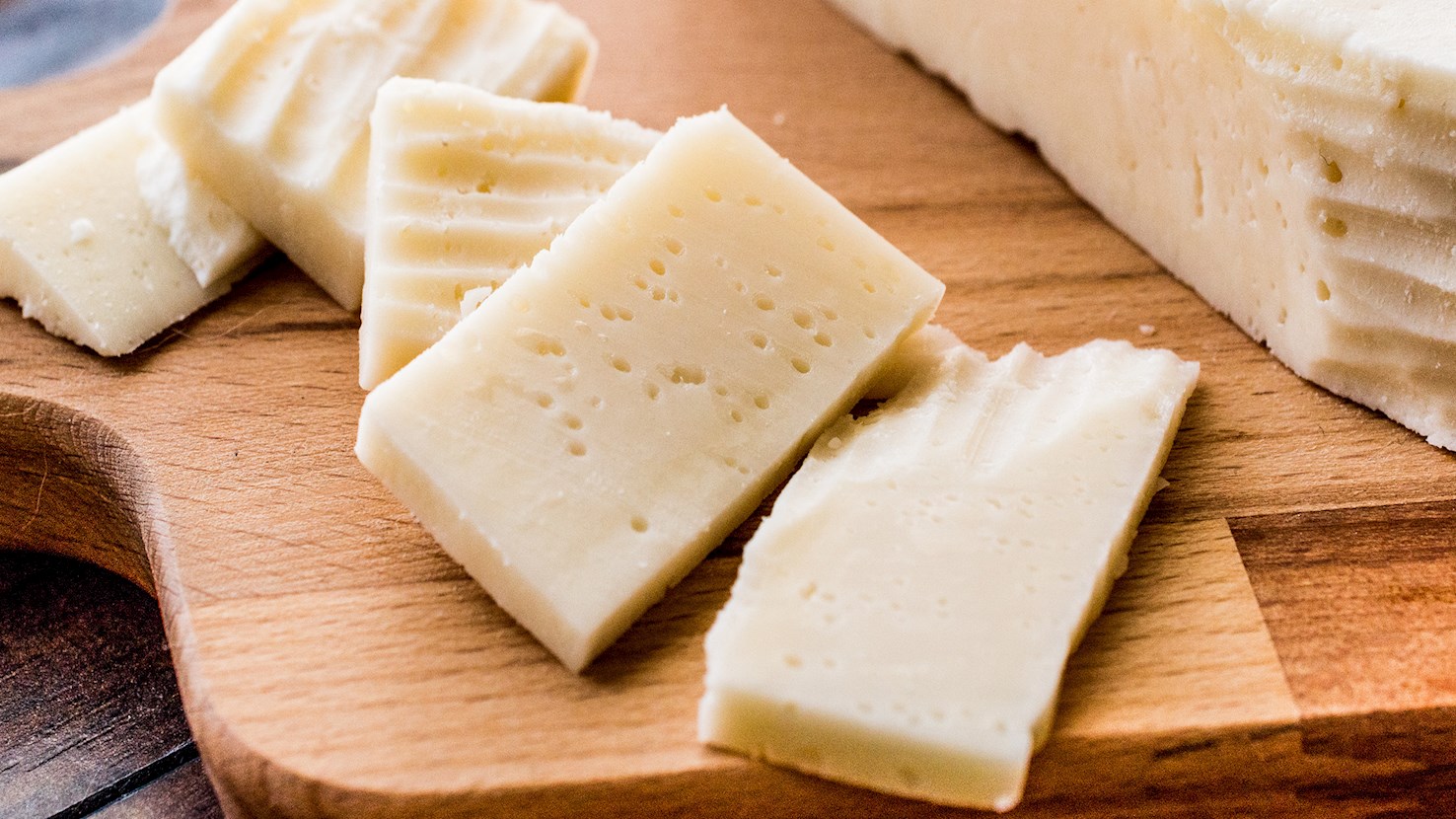
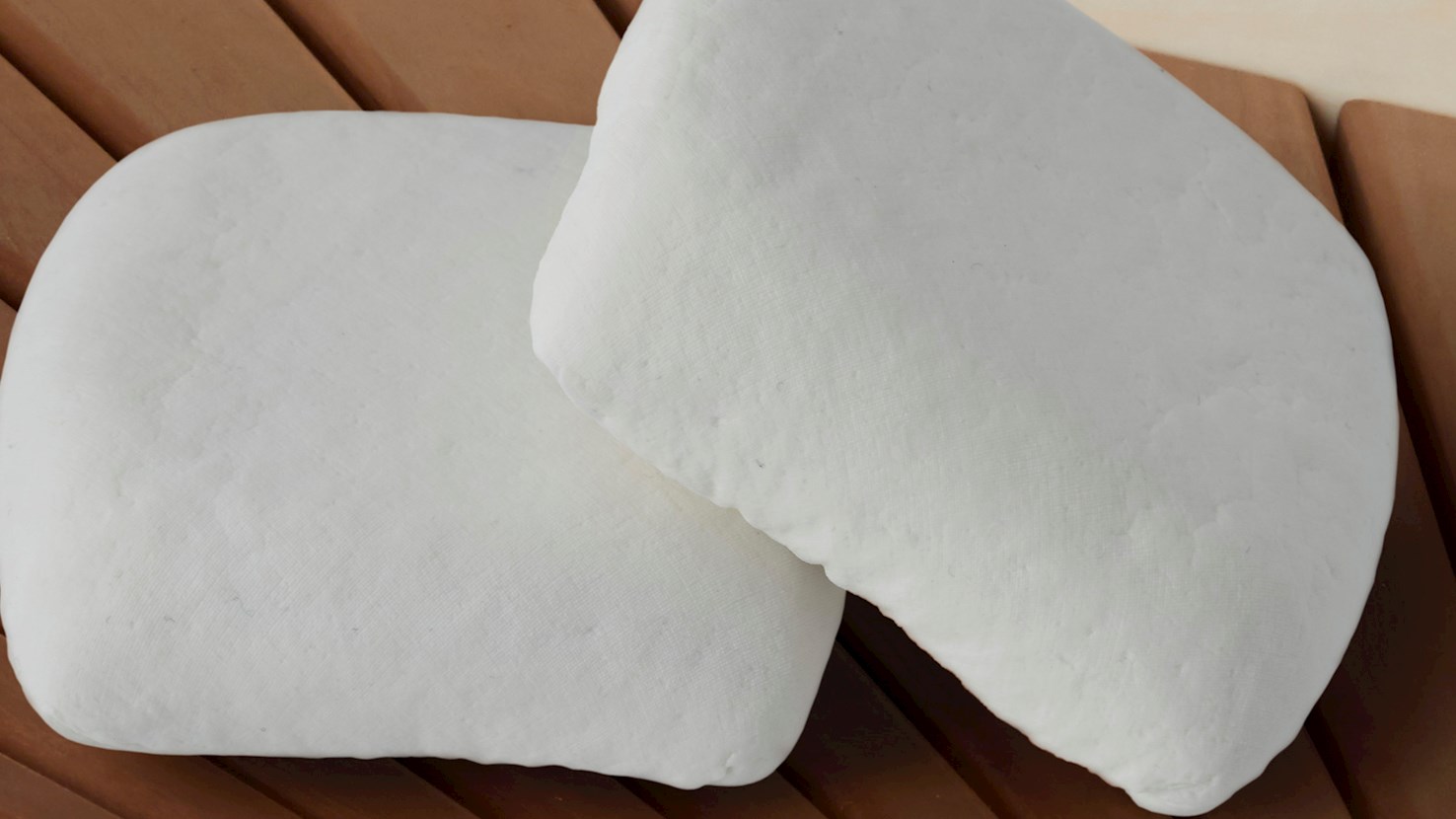
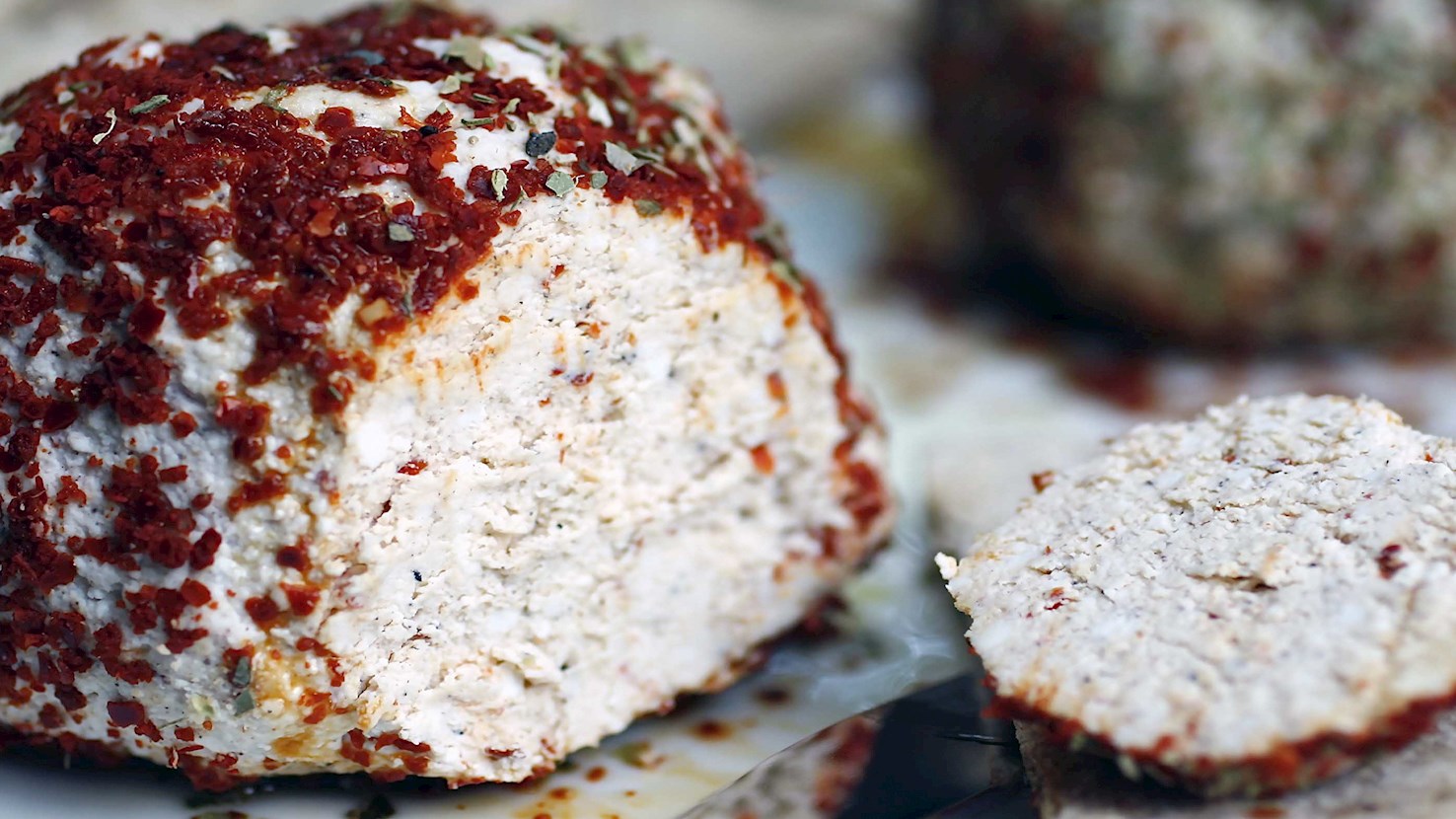
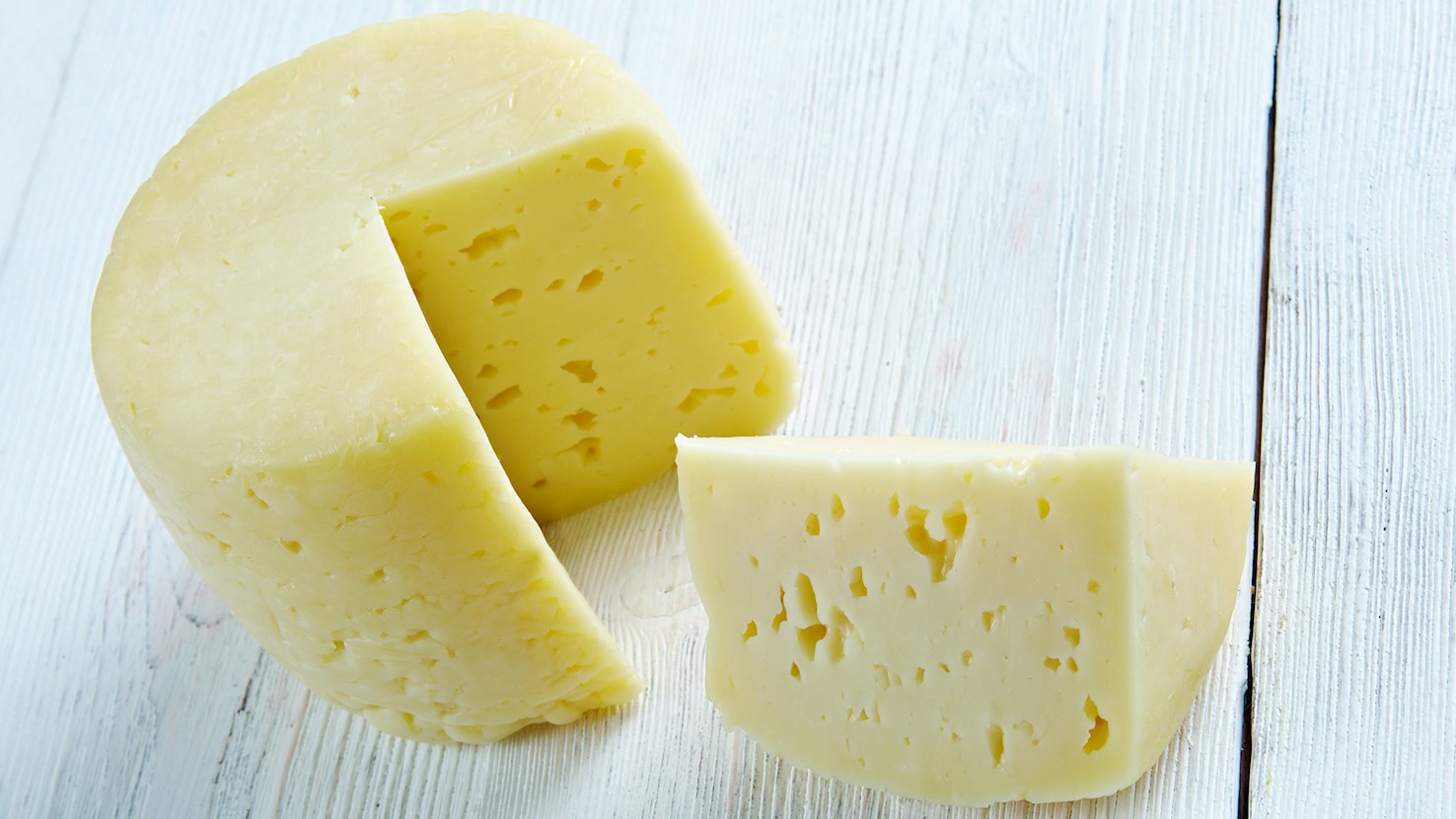
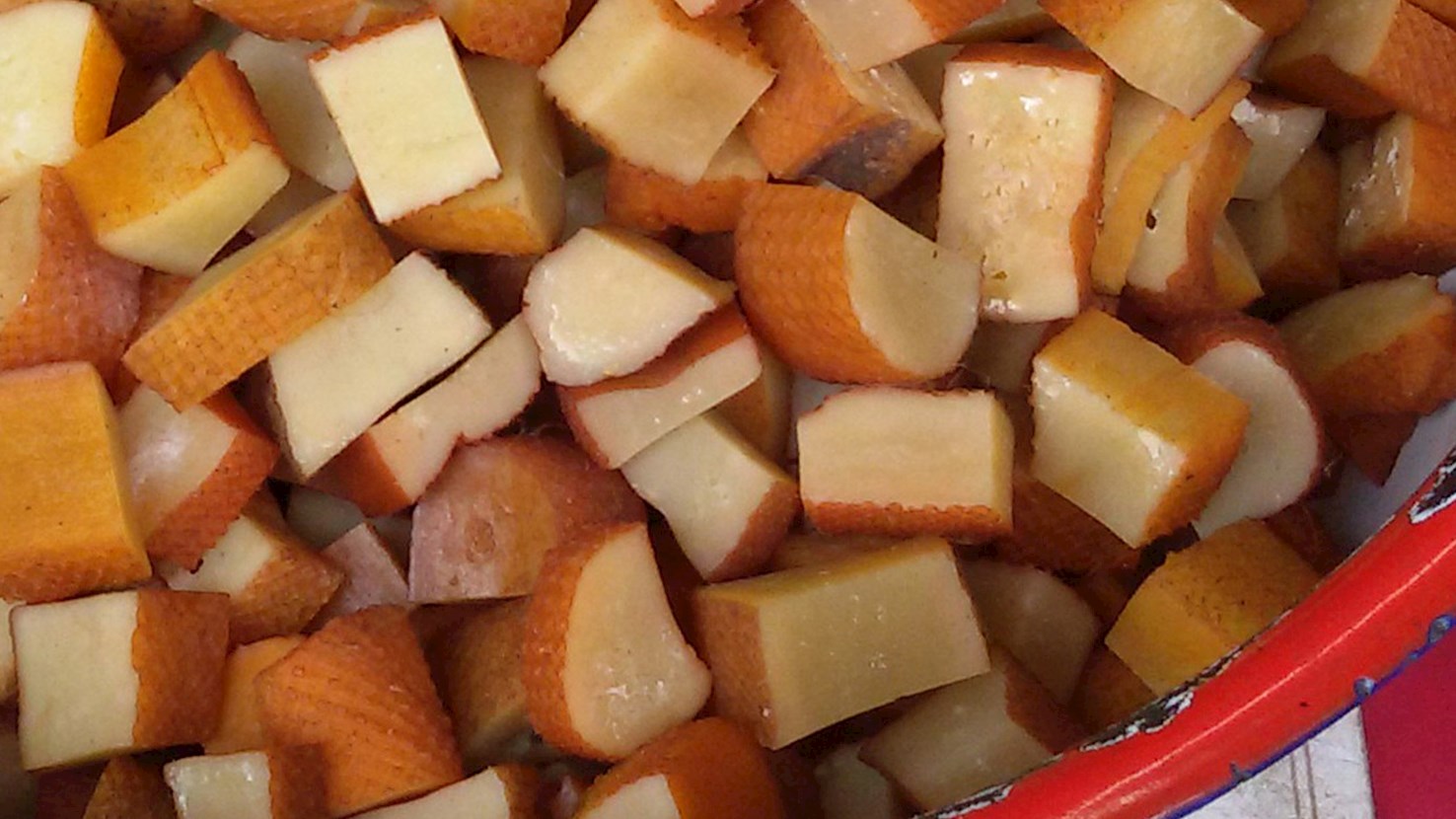
Mihaliç peyniri is a Turkish cheese produced in Bursa and Balıkesir. It is named Mihaliç because it originated in the town of Karacebey, which was originally named Mihaliç. In the past, it used to be made from raw sheep's milk, but nowadays it's made from cow's milk or a combination of goat, sheep, and cow's milk because sheep's milk is no longer produced in sufficient quantities. The cheese is stored in brine to harden and develop a firm, yet slightly elastic texture. Afterwards, it is salted and dried before being sold in slices or balls. When aged, its texture is crumbly, grainy, and open, while the flavors are intense and salty. Mihaliç can be used in place of parmesan cheese, and it is recommended to use it grated in baked dishes and various salads.
Akkawi is a white brined cheese originating from the city of Acre (Akko) in northern Palestine, from which it takes its name. It is widely produced and consumed across the Levant, including Lebanon, Syria, Jordan, and Israel. The cheese is made primarily from cow’s milk, though goat or sheep milk versions exist in rural areas. Akkawi is known for its mild, slightly salty flavor and semi-firm, elastic texture, placing it among the family of Middle Eastern white cheeses similar to nabulsi or halloumi but softer and less salty. It is eaten fresh, often paired with bread, olives, and vegetables, or used in cooking and baking for its melting quality. The cheese originated in coastal towns of the Eastern Mediterranean, where dairy production developed alongside salt-curing and brining methods that allowed milk to be preserved in warm climates. Farmers and cheesemakers in Acre and nearby regions refined a process for curdling and aging cheese in brine, creating a consistent product that could be stored and traded. Its spread across the Levant was facilitated by local markets and migration, and over time, akkawi became a common household staple, valued for its balance of flavor and versatility. Today, it is one of the most widely available Arabic cheeses, produced both by small dairies and industrial manufacturers. To prepare akkawi, milk is heated and mixed with rennet to separate the curds from the whey. The curds are drained, pressed lightly, and cut into blocks, which are then soaked in brine for preservation. The level of salt can vary: fresh akkawi is rinsed before eating to reduce saltiness, while aged versions have a firmer, saltier character. The cheese has a smooth, dense texture that softens slightly at room temperature and melts easily when heated, making it suitable for pastries, sandwiches, and desserts. In Lebanese and Palestinian cooking, it is commonly used in sweets such as kunafa and qatayef, where its subtle salt balances the sugar syrup. It also appears in savory dishes like manakish, pies, and omelets. Akkawi is served both raw and cooked, sliced alongside cucumbers, tomatoes, and olives for breakfast or melted in baked goods and stuffed pastries. Its mild flavor allows it to accompany a wide range of foods without dominating the palate. When eaten fresh, it pairs well with flatbreads, mint tea, or coffee, while baked forms are often enjoyed with sweetened drinks or fruit syrups. Its firm yet creamy texture distinguishes it from sharper or crumblier white cheeses, giving it a distinctive place in Levantine cuisine as both a table cheese and a cooking ingredient.
Shanklish is a traditional cheese made from sheep's or cow's milk. It is primarily produced in Syria and Lebanon, mostly in mountainous and coastal regions. The cheese is shaped into balls, left to dry in the sun, and is then stored in jars to mature without any light until it develops a moldy layer on its surface. The mold is rinsed, and shanklish is coated in spices such as thyme or chili. Its texture is firm and crumbly, while the flavors range from mild to sharp and spicy.
Sakura is a Japanese soft cheese made from cow's milk, Japanese yeast, and microbes. It is produced by Kyodogakusha in Hokkaido. The cheese is aged for 10 days, and has a unique pickled cherry blossom in the center (hence the name), making it visually reminiscent of the Japanese flag. It is covered in a soft white mold, and on the inside it is smooth in texture, while the flavors are delicate, creamy, and light, with notes of shiso leaf and a faint aroma of cherry blossom. Sakura is available only between January and May. It was also the first Japanese cheese to win the gold medal at the Mountain Cheese Olympics in Appenzell, Switzerland.
Often described as the mozzarella of Kashmir, kalari is a traditionally ripened cheese made from cow’s or goat’s milk. It has a mild flavor and a dense, stretchy texture. In Jammu and Kashmir, kalari is typically enjoyed as a street snack, flattened and sautéed in its own fat until it develops a crisp golden layer on the outside while remaining creamy, tender, and gooey on the inside. The cheese is often flavored with various spices, then topped with chopped vegetables.
Jibneh Arabieh is a semi-hard cheese made from cow's milk, although it has originally been made from goat's or sheep's milk. It has origins in Israel and the Middle East. The cheese has a firm, open texture, and its flavor is very mild. It can be consumed on its own or paired with various vegetables and pickled olives. Jibneh Arabieh is also often fried in the pan, when it is usually combined with a few eggs.
Chhurpi is a pale yellow cheese made from cow's milk (the soft variety) or yak's milk (the hard variety), produced in the Himalayan regions. The soft variety is often used as a substitute for vegetables, so it is usually used in curries and consumed with rice. The hard variety can last up to 20 years if properly stored in yak skin. The flavor of chhurpi can best be described as fresh and tangy.
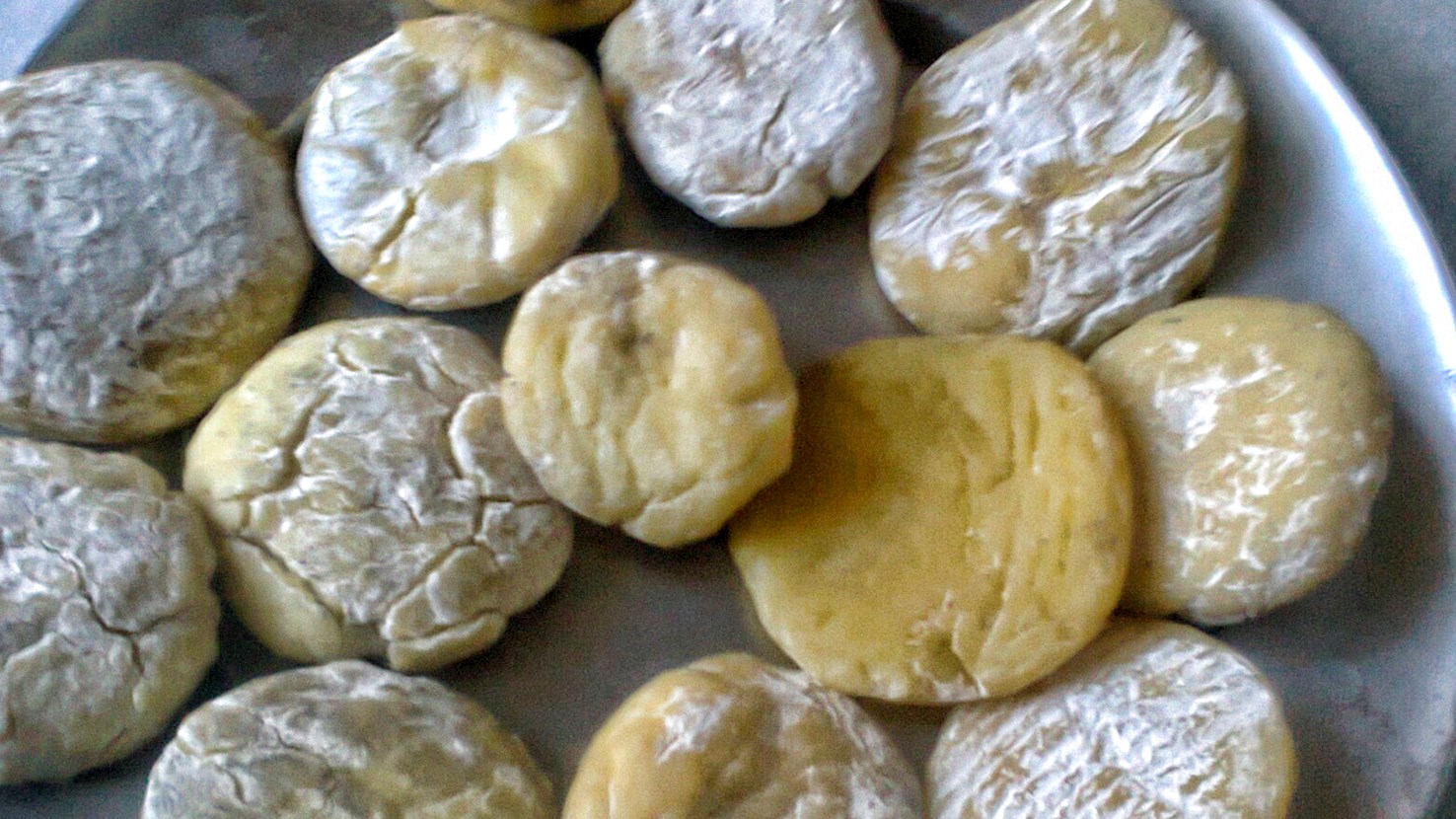
Chura kampo is a hard Tibetan cheese made from yak’s milk. This hard cheese has a dry, firm, and dense texture. It begins as soft cheese curds (leftovers from boiling buttermilk) that are shaped into balls, noodles, or beads which are then left to dry, either in the sun or in the oven. Before the drying process, sugar or melted butter are sometimes added to the curds.
Erzurum küflü civil peyniri is a blue-moulded, cow's milk string cheese from Turkey, produced in the Erzurum province. The cheese’s origins lie in the high-plateau dairying region of Erzurum, where skimmed milk from cows grazed on herbaceous highland pastures was historically processed by local creamery artisans; over time the product developed into a protected geographical-indication (GI) cheese with defined methods of production and ageing. In its production skimmed cow’s milk is used, to which starter cultures and rennet are added and the temperature raised gradually until curd forms; the curd mass is then kneaded and stretched repeatedly, creating a fibrous string structure, and subsequently the cheese blocks are pressed and salted, then matured under conditions that allow spontaneous or inoculated blue-green mold (kef) to develop on the surface, forming the characteristic rind and contributing flavour; some versions are packed in brine or vacuum-sealed after mould development for storage and distribution. Variations include the fresh un-moulded “Civil” form, and the mould-ripened version called “Göğermiş” (moulded civil cheese) in which the cheese has been pressed further and allowed to develop the kef exterior; some producers now add flavour-enhancing steps such as light smoking or vacuum-packing to extend shelf-life. A distinctive feature of Erzurum küflü civil peyniri is its low-fat origin (since it’s made from skimmed milk), combined with the stringy fibrous internal structure and the external mould layer which is unusual among Turkish cheese-types; it's also a GI-registered product as of 2009, meaning its production zone and method are legally governed. The cheese is eaten typically as part of a Turkish breakfast or meze platter, served at room temperature or sliced thinly, and is often paired with fresh bread, black tea, or light raki; when used in cooking it is melted into börek or paired with roasted vegetables, and it also complements crisp white wines or light lager-style beers whose clean profile offsets the mould-ripened flavour.
Kalimpong is an Indian cheese named after the eponymous city in West Bengal. It is believed that the first version of this cheese was made by Brother Abraham, who was a parish priest in Sikkim. The unripened Kalimpong has a semi-smooth edible rind, slightly acidic flavor, and a crumbly texture which makes it great for salads or sandwiches with tomatoes and eggs. When ripened, Kalimpong’s flavor is often compared to aged Gouda, and it is recommended to pair it with grapes and cheese biscuits.
TasteAtlas food rankings are based on the ratings of the TasteAtlas audience, with a series of mechanisms that recognize real users and that ignore bot,
nationalist or local patriotic ratings, and give additional value to the ratings of users that the system recognizes as knowledgeable.
For the “Top 11 Asian Natural Rind Cheeses” list until May 30, 2026, 1,259 ratings were recorded, of which 98 were recognized by the system as legitimate.
TasteAtlas Rankings should not be seen as the final global conclusion about food. Their purpose is to promote excellent local foods,
instill pride in traditional dishes, and arouse curiosity about dishes you haven’t tried.