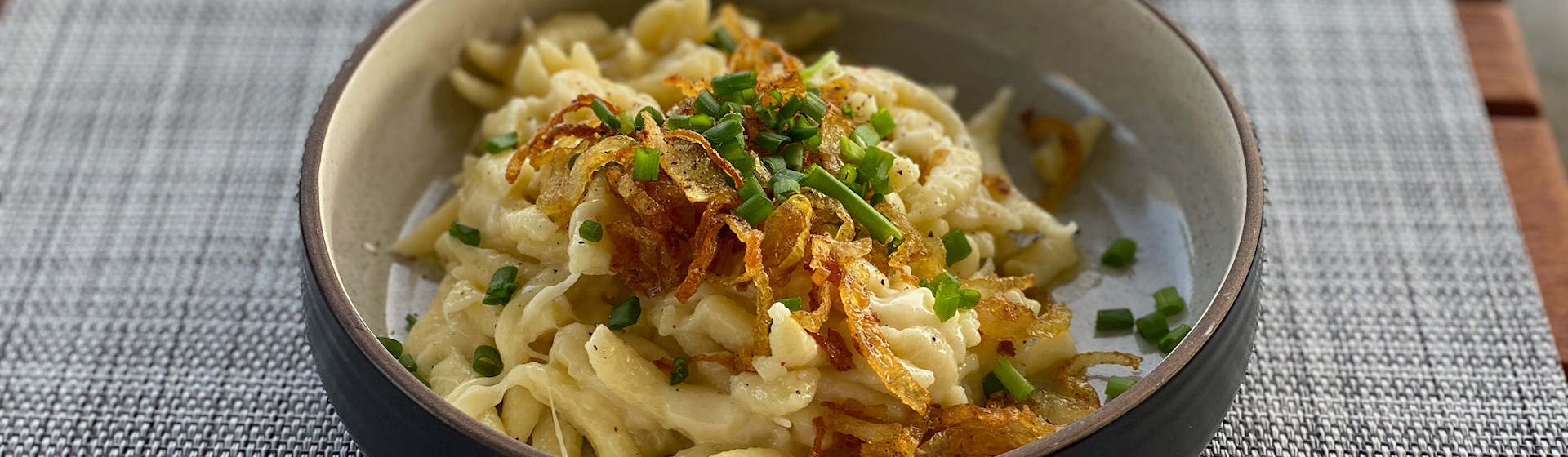
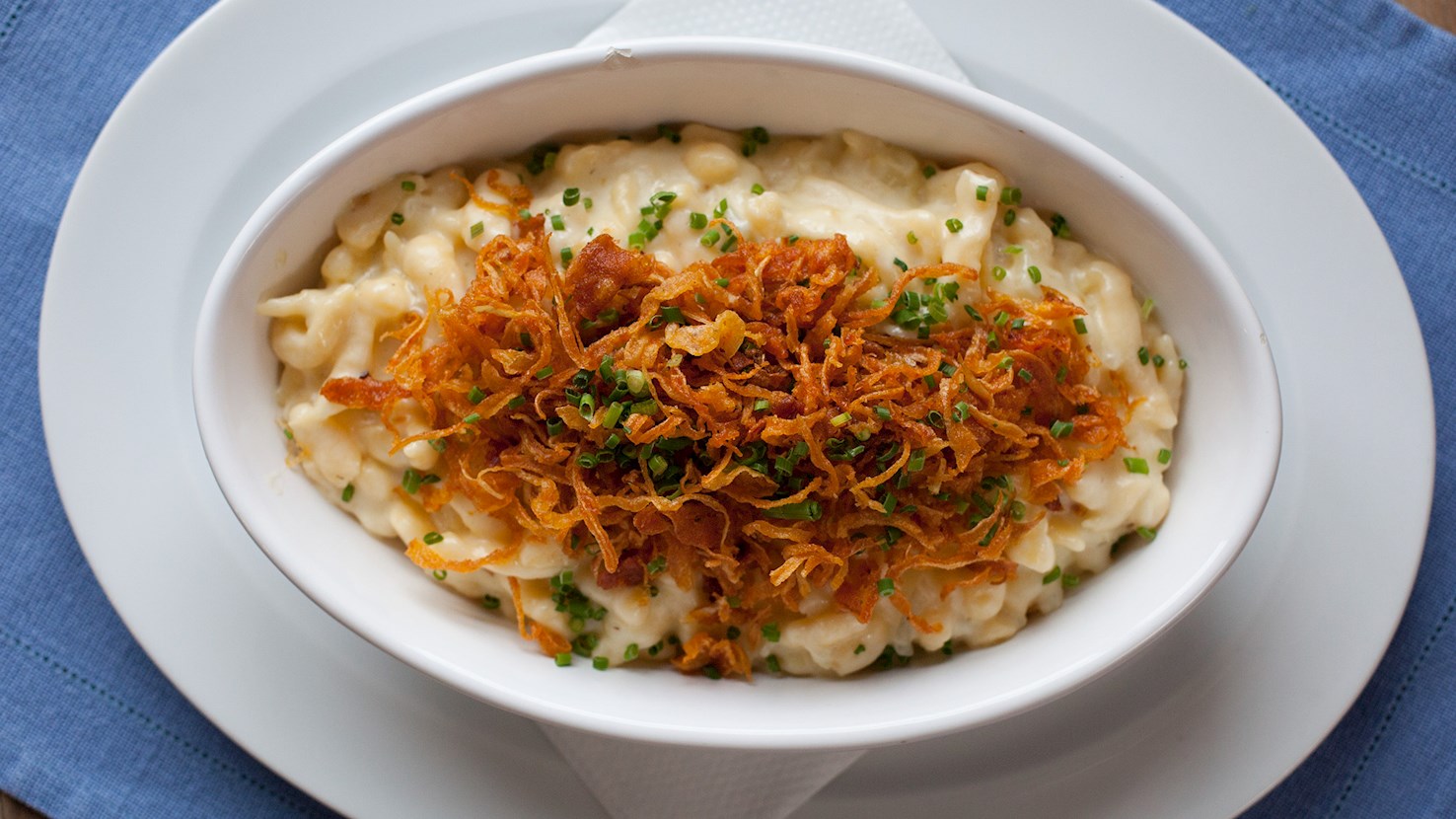
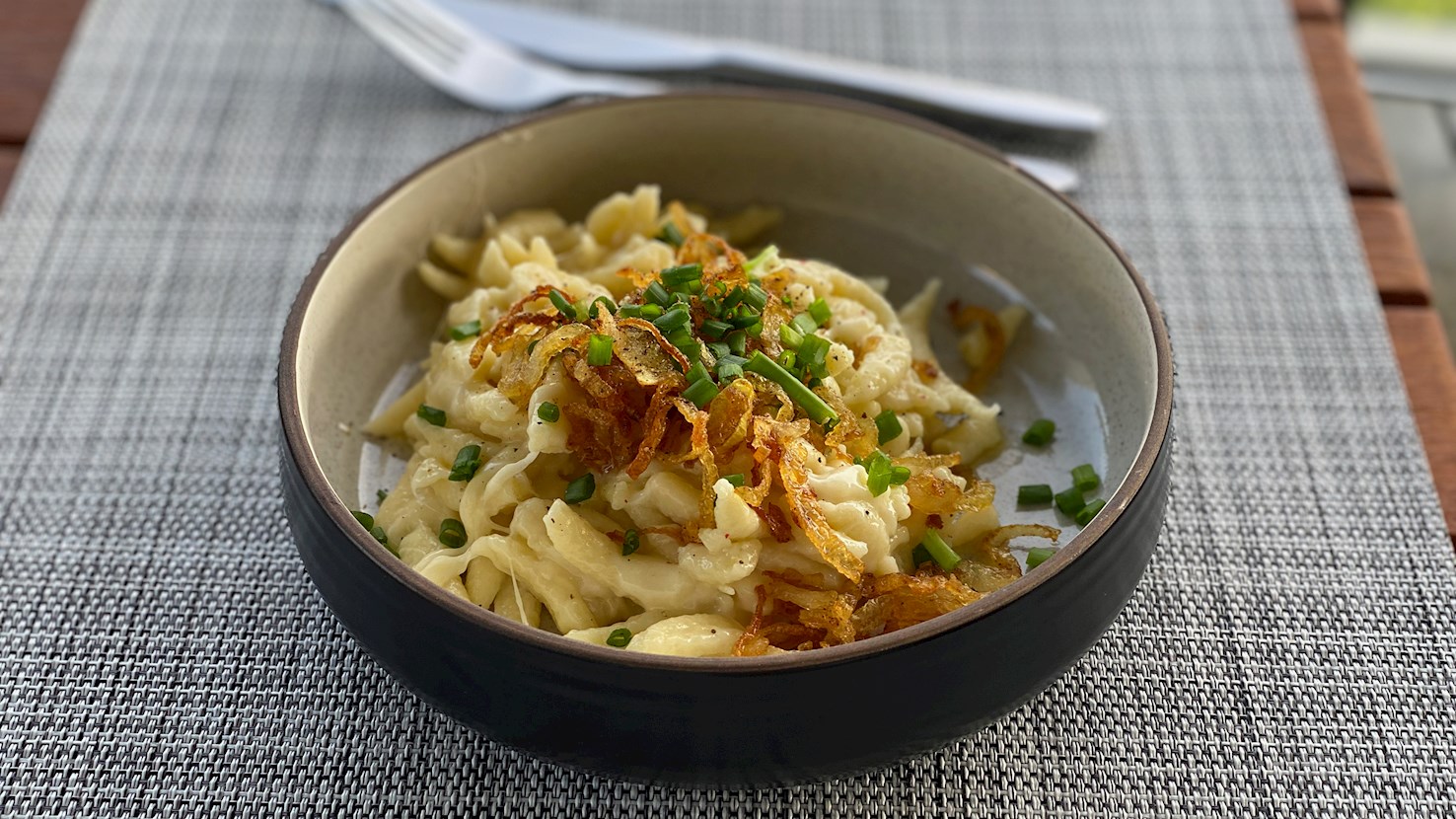
Kasspatzln is a traditional cheese-based dish in several regions of Austria, Germany, Liechtenstein, and Switzerland. Most notably a favorite in the western Austrian state of Tyrol, this variety of kasspatzln uses strong-flavored local cheese varieties such as Bergkäse or Graukäse. The recipe is simple - a soft and slightly runny dough is gently pressed onto a special grater (spätzlehobel), creating small noodle shapes that are boiled until firm. The noodles are then mixed with sautéed onions, followed by generous heaps of grated cheese. The mixture is left to cook until the cheese has completely melted, and it is then garnished with chopped parsley and fried onion rings. Depending on the location, the dish can be accompanied by fresh green salads, potato salad, or applesauce on the side.
Käsespätzle is a simple noodle dish that combines spätzle noodles with a creamy mixture of melted cheese. The noodles are also called knöpfle, meaning little buttons, and are made with eggs, flour, milk or water, and seasonings such as salt, pepper and (sometimes) nutmeg, while käse refers to the melted cheese mixture, which is usually a combination of two or more types of cheese such as Edam, Gouda, Fontina, Gruyère, Appenzeller, or Emmental cheese. The noodle mixture is typically pressed through a specially designed spoon or colander directly into boiling salted water and cooked until done before it is mixed with the melted cheese. Also referred to as käsknöpfle, the dish is typically enjoyed with additional grated cheese and caramelized onions on top, and typical accompaniments include apple sauce, potato salad, and fresh green salads. Versions of this dish are traditionally consumed in Southern Germany, Swabia, Austria, and Liechtenstein, and it's also a typical dish in Switzerland, Hungary, Alsace, Moselle, and South Tyrol.
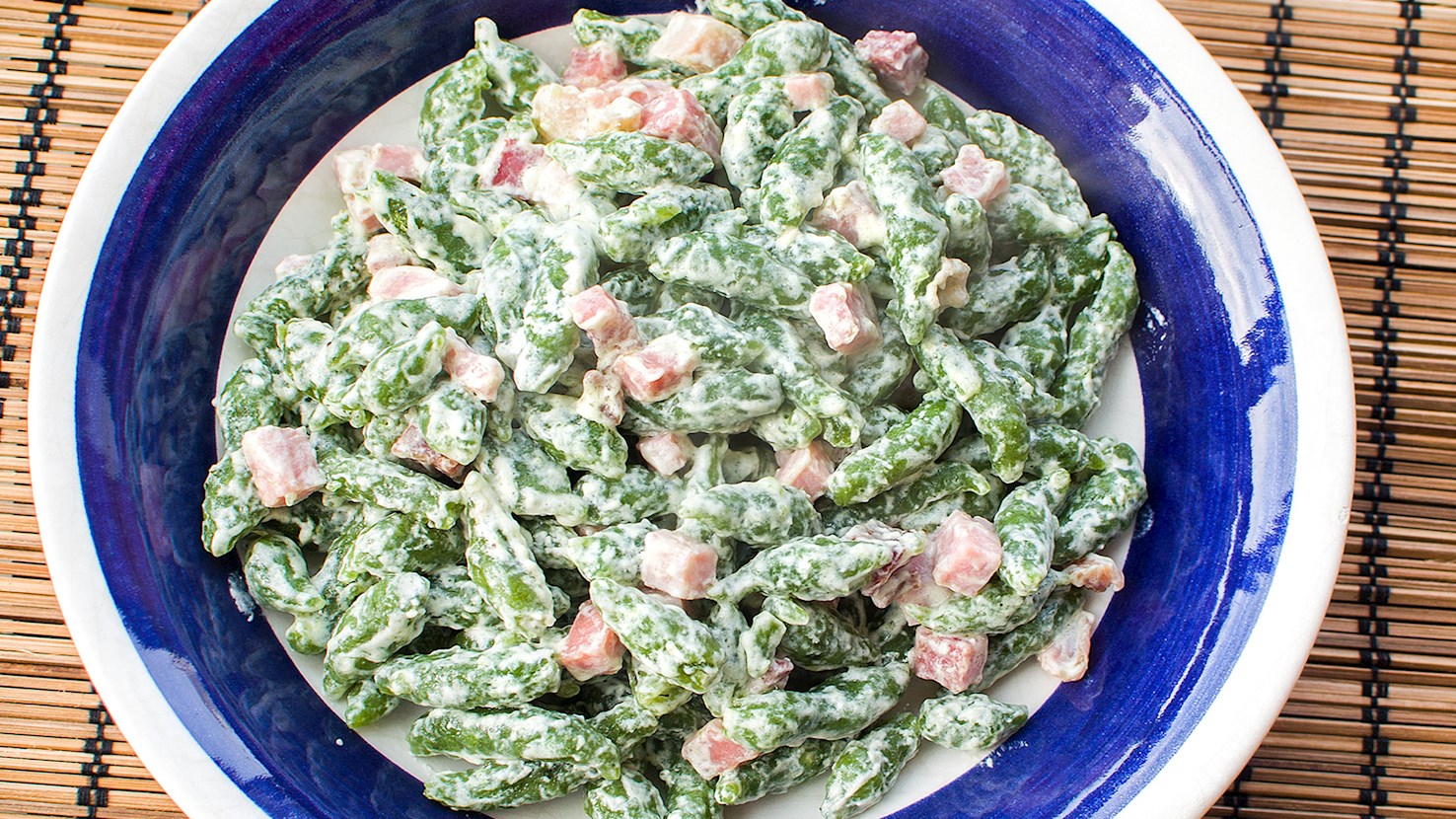
Spatzle Tirolesi (also known as spinatspatzeln) is an Italian version of the German spätzle, traditionally prepared throughout the region of Trentino Alto Adige. One of the most classic ways of enjoying this rustic green pasta variety made with boiled spinach, eggs, flour, nutmeg, salt, pepper, and water is in a simple sauce consisting of heavy cream and crispy speck, previously fried in butter. Cooked spatzle are added to the sauce, then tossed until fully coated. Spinatspatzeln are best enjoyed immediately after preparation, topped with grated Parmigiano and a sprinkle of a freshly ground pepper.
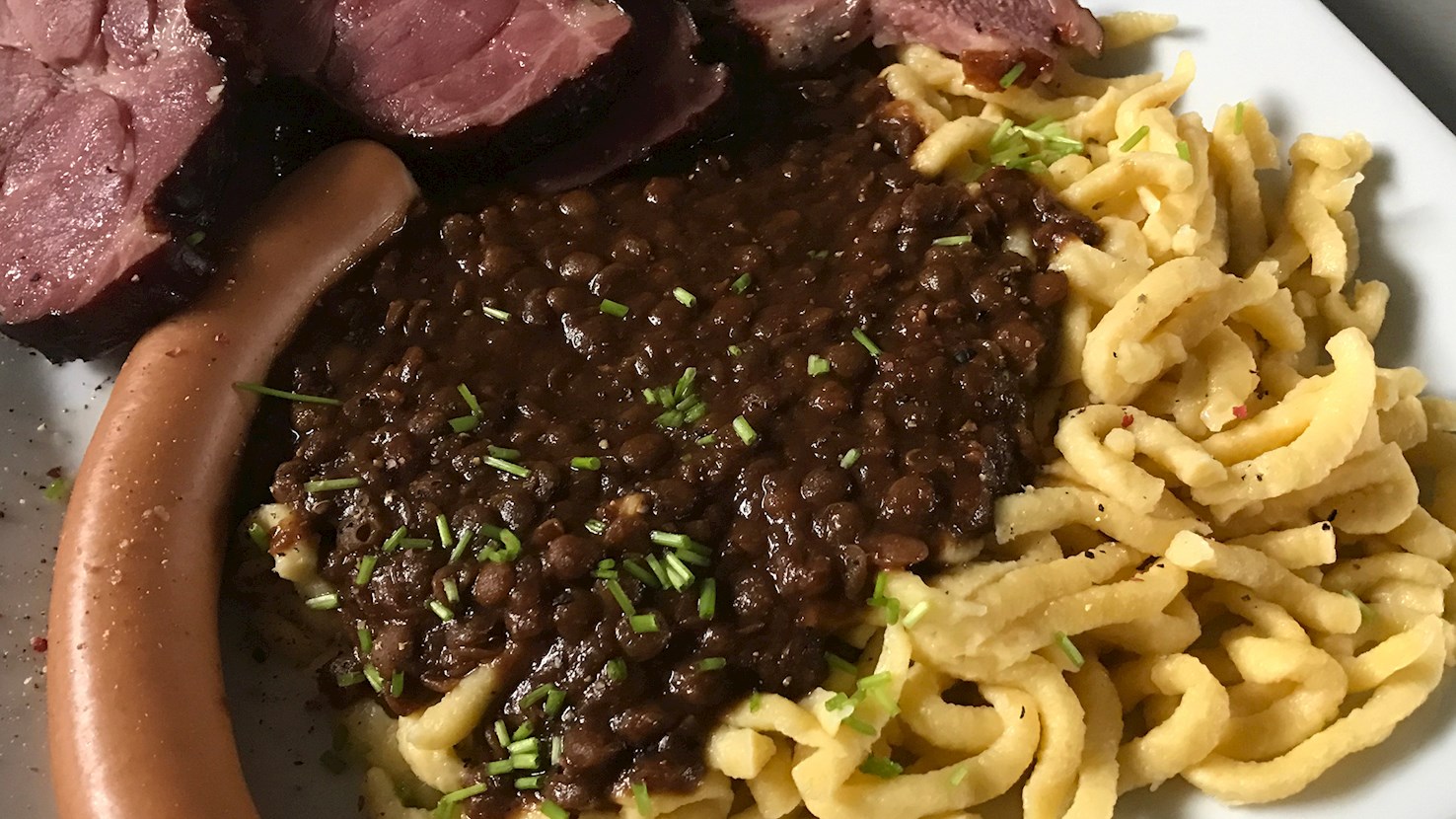
One of the staples of traditional Swabian cuisine, linsen mit spätzle combines a thick and creamy stew of brown lentils (linsen) with soft egg noodles (spätzle). Lentils are braised with bacon and vegetables and then simmered until soft and fully cooked in meat or vegetable broth, which is usually thickened with roux. The broth is typically enhanced with tomato paste and seasoned with vinegar, salt, pepper, and nutmeg. Warm and filling, the lentil stew is then transferred to a plate of boiled spätzle noodles, and it is usually enjoyed with a side of saitenwurst sausages (German string sausages) and a cold beer. This hearty combination makes a frequent appearance in restaurants and university cafeterias in the region, but it is also a beloved home-cooked dish in numerous Swabian households.
Bruckbam is a regional Bavarian dish made of thick potato noodles that are cooked in the oven, prepared in parts of southern Germany where potato-based specialties have long been staples of rural cooking. The name is less widely known outside local communities, but the dish itself reflects the broader Bavarian preference for simple, hearty meals that combine potatoes, flour, and basic seasonings. The preparation begins by making a dense dough from cooked, riced potatoes mixed with flour, eggs, and salt. This dough is shaped into thick, short noodle-like pieces, which are arranged in a greased baking dish. Once formed, the potato noodles are either baked on their own until golden or moistened lightly with broth or milk to keep them soft. Some versions add small pieces of bacon or onions on top to infuse the dish with more flavor as it bakes. The result is a satisfying combination of a tender interior with lightly crisped edges. Bruckbam is typically served hot, often alongside braised meats, sausages, or simple salads. The dish is most common in rural households, where it has been valued as a way to make use of leftover potatoes and stretch them into a filling main or side course. In some Bavarian villages, Bruckbam is still prepared in wood-fired ovens, which give the crust a distinctive aroma.
Käsknöpfle is a cheese noodle dish from Liechtenstein and the neighboring alpine regions of western Austria, especially Vorarlberg. It consists of small, soft dumplings made from egg, flour, and water, layered with grated cheese and topped with fried onions. The name comes from the German word “Knöpfle,” meaning “little buttons,” referring to the round shape of the noodles, which are smaller and denser than the longer Swabian Spätzle found in southern Germany. It is one of the most recognizable dishes of Liechtenstein’s everyday cooking and represents the hearty, modest style of mountain cuisine shaped by local ingredients and climate. Its origins lie in the rural cooking of the Alpine valleys, where wheat flour, eggs, and dairy formed the foundation of many household meals. In an environment where fresh produce was limited in winter, dishes built around flour and cheese became central to sustenance and comfort. The dough-based dumplings were quick to prepare and filling, and as cheese-making developed in the mountain pastures, cooks began combining the two. Käsknöpfle evolved as a natural result of this pairing, reflecting the self-sufficient habits of small farming communities where every ingredient came from nearby. Over time, it became a common meal both at home and in local taverns, carrying with it a sense of familiarity and balance between richness and simplicity. The preparation begins by mixing flour, eggs, salt, and a bit of water into a smooth but thick batter. The dough is pressed through a special tool called a Knöpflehobel or scraped with a knife into boiling salted water, where the pieces quickly rise to the surface once cooked. They are then drained and layered in a large bowl with grated cheese, often a blend of mountain cheeses like Montafoner, Räßkäse, or Bergkäse, so that the heat of the noodles melts the cheese into a cohesive, creamy mass. The dish is completed with browned onions scattered over the top, adding sweetness and texture that balance the richness of the melted cheese. Some cooks stir a small amount of butter or cream into the mixture to loosen it, but the essence of the dish relies on the quality of the cheese and the right texture of the Knöpfle. Käsknöpfle is eaten across Liechtenstein and parts of Austria, often as a main course at family gatherings, festivals, or casual taverns. It is commonly served with a simple green salad or apple sauce, which lightens the meal and contrasts with the richness of the cheese. Some prefer a glass of dry white wine or beer alongside it, both of which cut through the fat and emphasize the nutty flavors of the melted cheese.
Rezanci na žufi is a traditional dish originating from the Slatina area. The dish consists of noodles and the brothy concoction in which they're cooked. The noodles are made from flour, water, and eggs, while the broth consists of water, salt, and pounded pumpkin seeds. The pumpkin seeds are typically mixed with hot water, then brought to a boil and combined with the noodles until they become fully cooked.
TasteAtlas food rankings are based on the ratings of the TasteAtlas audience, with a series of mechanisms that recognize real users and that ignore bot,
nationalist or local patriotic ratings, and give additional value to the ratings of users that the system recognizes as knowledgeable.
For the “Top 7 European Noodle Dishes” list until May 15, 2026, 481 ratings were recorded, of which 424 were recognized by the system as legitimate.
TasteAtlas Rankings should not be seen as the final global conclusion about food. Their purpose is to promote excellent local foods,
instill pride in traditional dishes, and arouse curiosity about dishes you haven’t tried.