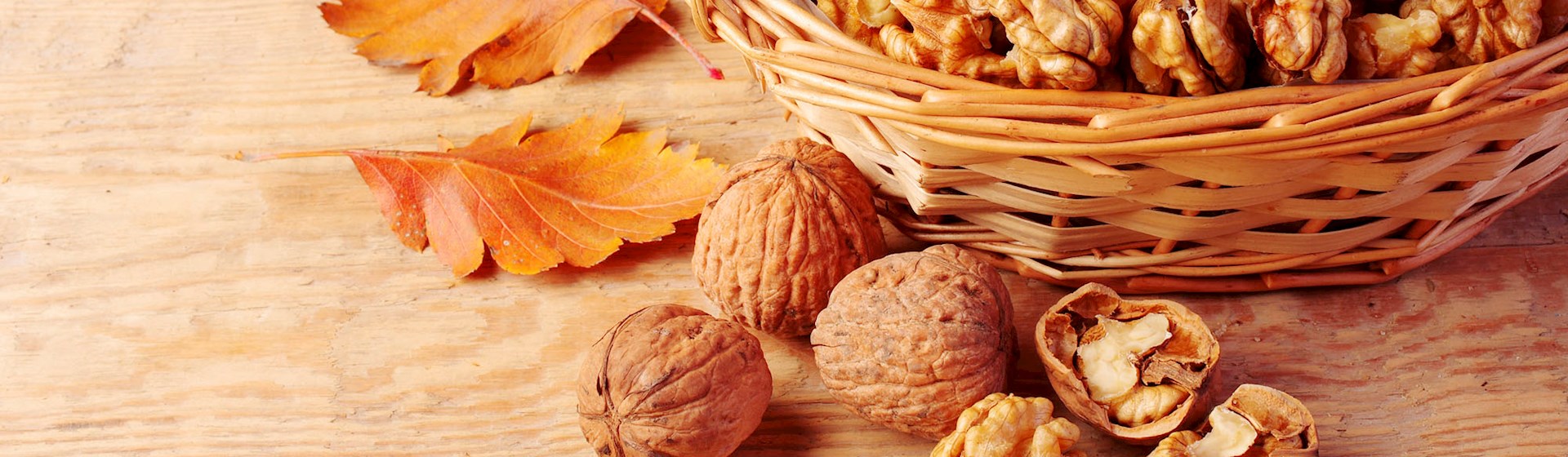
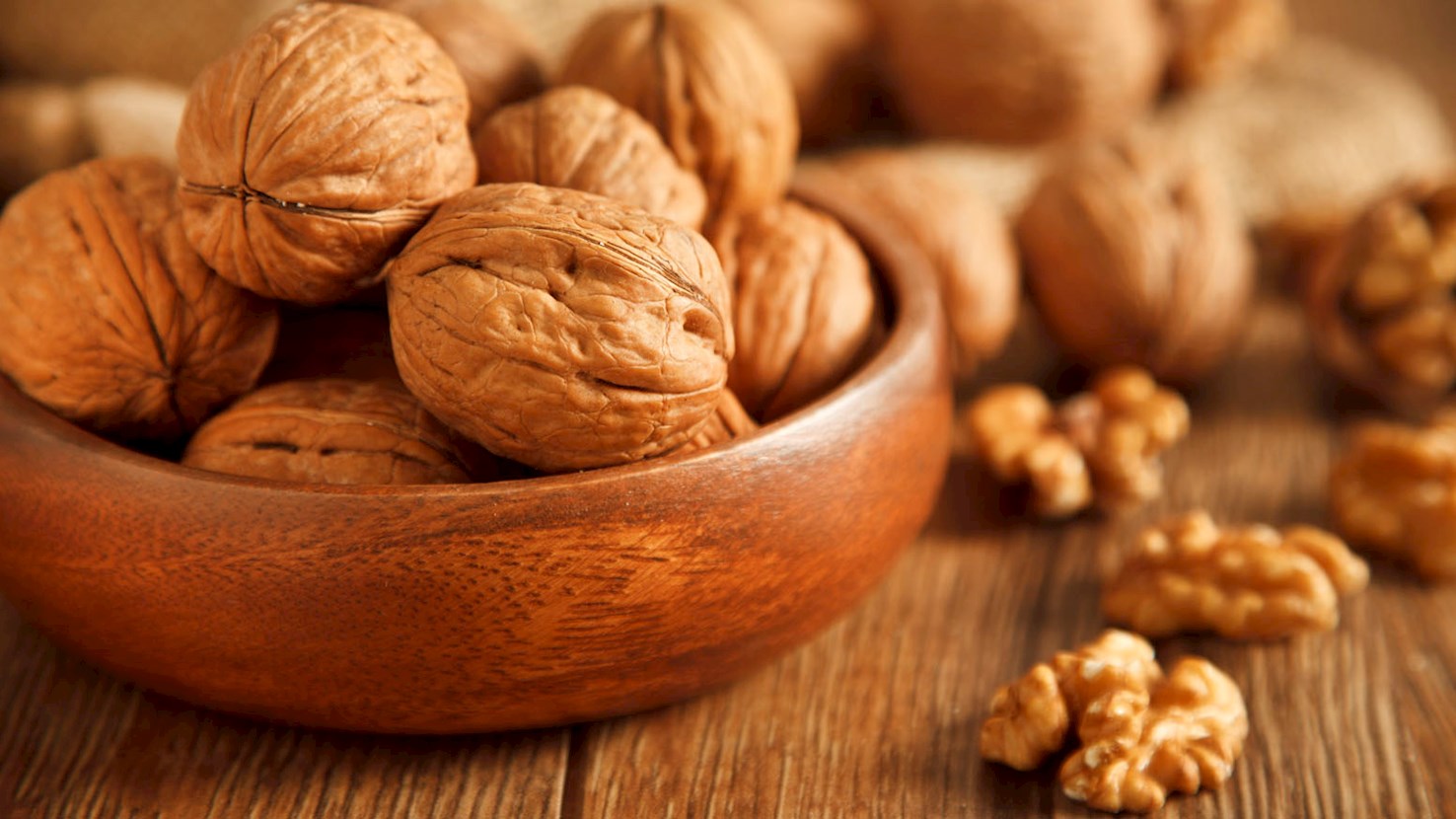
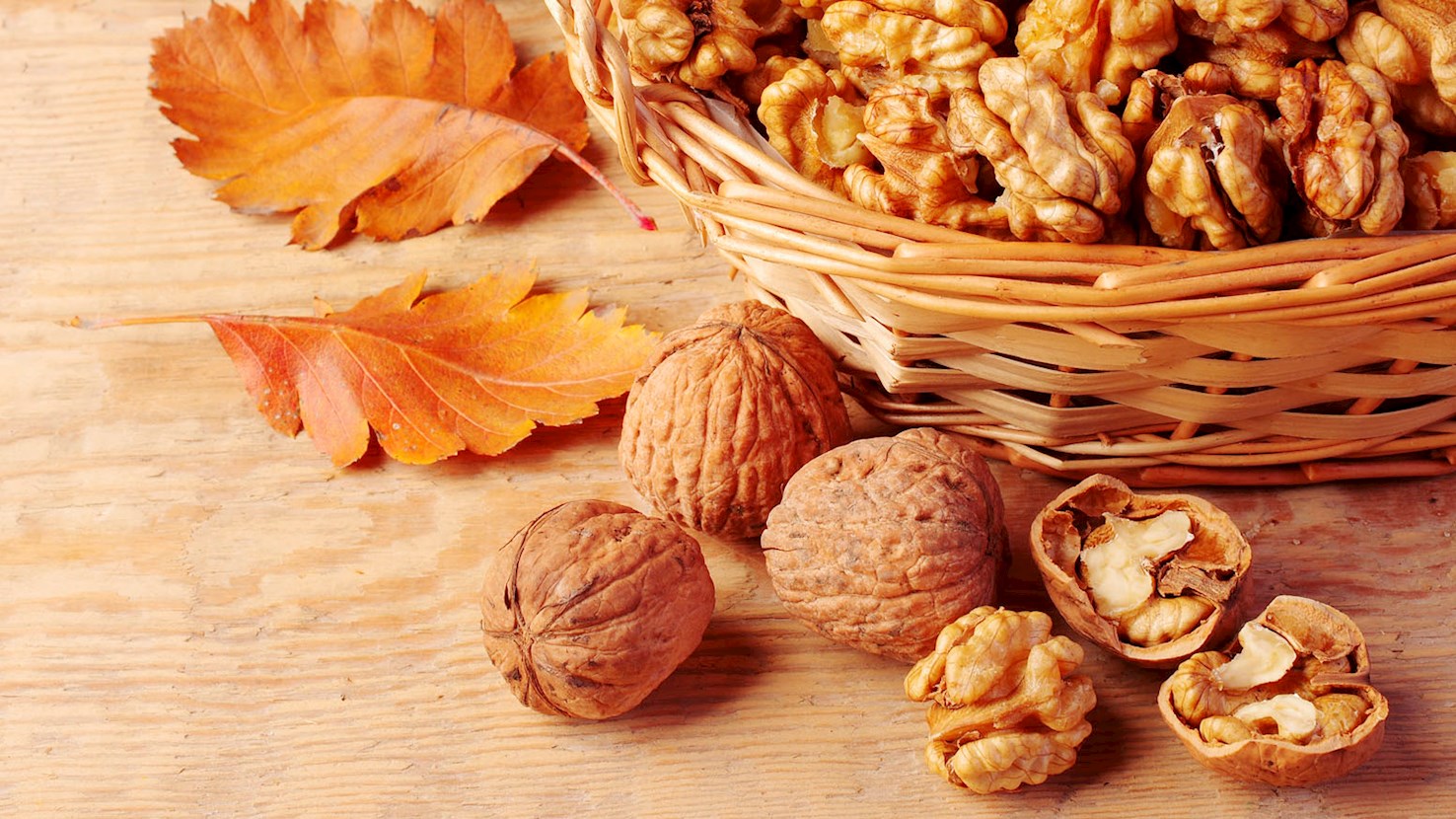
Noix de Grenoble are walnuts that are gathered in their shells from the end of September and come from three different varieties in the French departments of Isére, Drôme and Savoie. The ancient Romans brought the walnut trees to France and since it was a highly prized item (they used to pay the rent with walnuts), the trees were very well nurtured and cared for, giving the Grenoble walnuts their unique quality and taste. The three varieties of these walnuts (franquette, mayette, and parisienne) differ in shape, color and taste, and they are commonly used in onion soups that are served at weddings, pressed for walnut oil, eaten candied, in the form of nougat or jam, in salads, cheeses or used in cakes.
Noix du Périgord are early or dry walnuts or walnut kernels with a fine texture and a unique taste similar to black walnuts, produced in the French regions of Aveyron, Charente, Corréze, Dordogne, Lot and Lot-et-Garonne, where the walnuts must be grown, shelled and packed. Early walnuts are fresh and sold in their shells and the nuts are white with a thin skin that can be easily peeled. Dry walnuts are gently dried and less bitter than early walnuts and the walnut kernels are small, light or dark in color and must be minimally 8 mm in size. Noix du Périgord can be enjoyed as they are, in candies, covered in chocolate, cracked on salads or pressed into walnut oil or walnut wine.
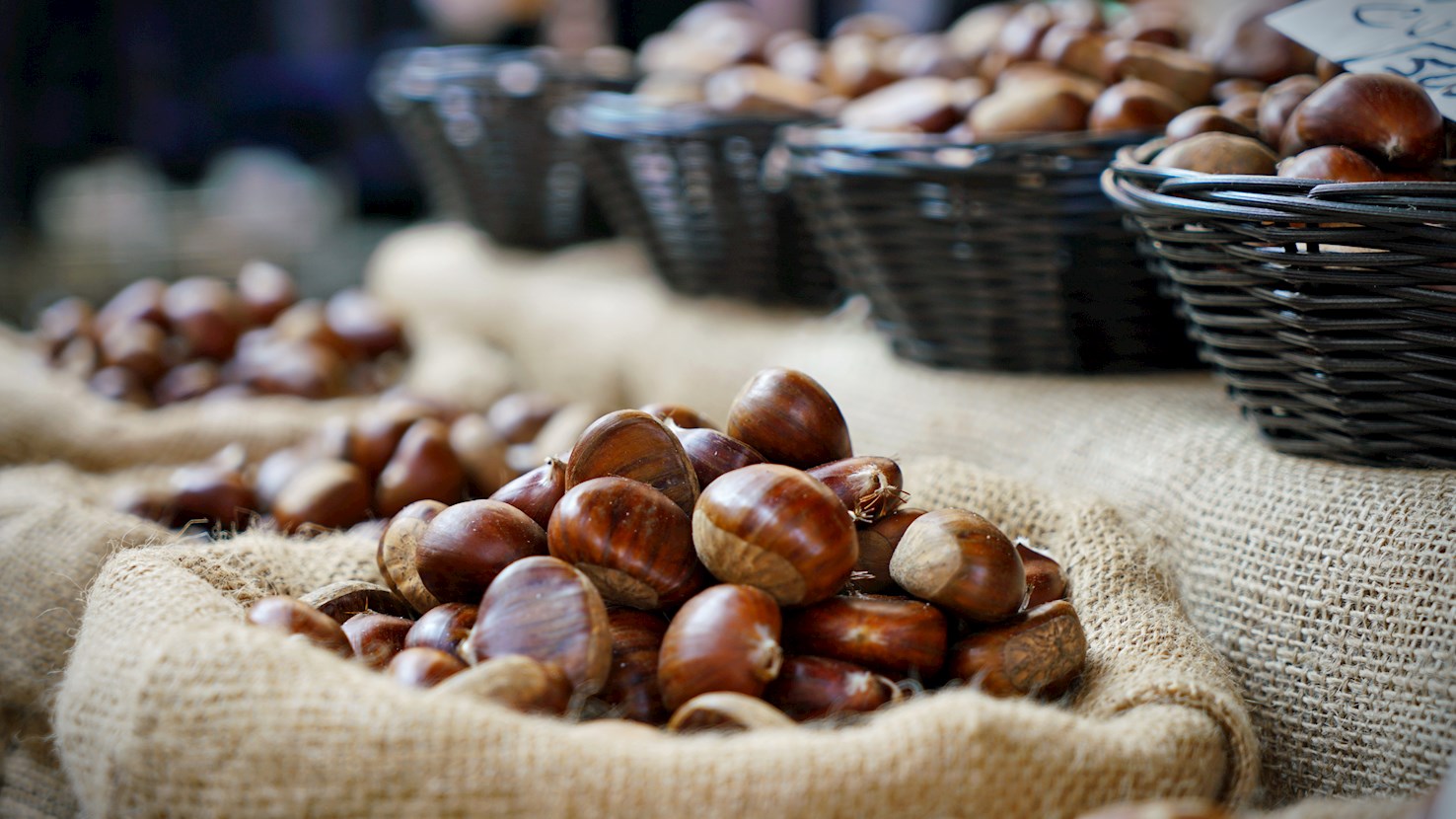
Châtaigne d'Ardéche are sweet chestnuts of the ancient local varieties of Castanea sativa Miller grown and harvested in the Ardéche, the largest chestnut-producing region in France, with an annual Chestnut Festival and even a Chestnut museum in the medieval town of Joyeuse. They can be used for making chestnut flour, or may come as fresh unpeeled chestnuts or peeled dry chestnuts. The taste is uniquely sweet, with aromas of pastry, sweet potatoes, honey, onion squash and pain au lait. For dried chestnuts, there are aromas of nuts, almonds, hazelnuts, and cake, sometimes accompanied by a slightly bitter flavor. They are regularly used in candied chestnut purée, liqueurs, cakes, soups (known as Cousina), jams or in chestnut flour bread.
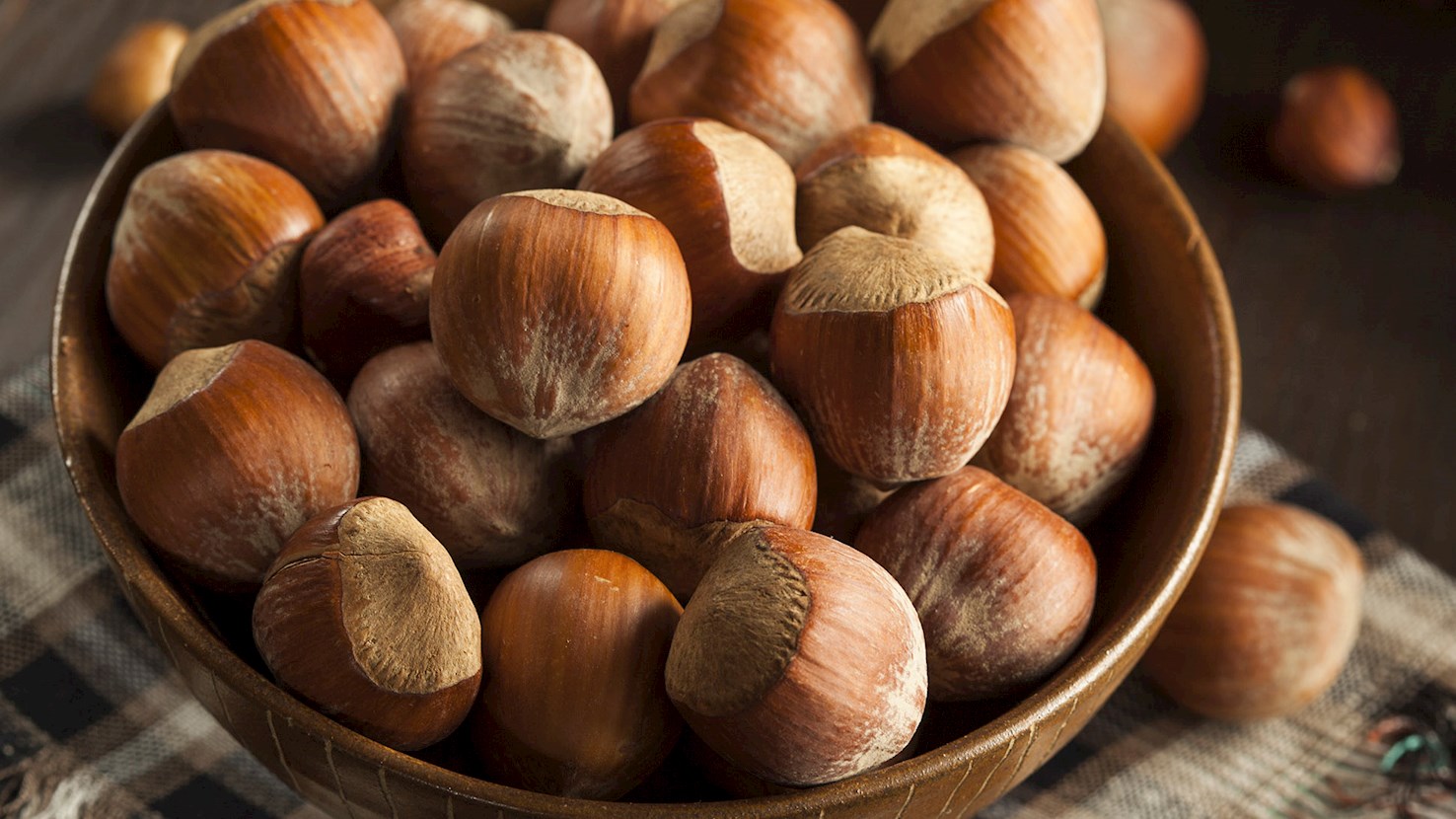
Noisette de Cervione are hazelnuts from the Fertile de Coutard variety and their shape is best described as a flattened heart. They are cultivated in the French region of Haute-Corse, favorable for its high humidity, irrigated soils and apt altitude. The heart-shaped kernels are brown to mahogany red, while the flesh is white to ivory in color and quite firm. Because of their small size, there is a greater concentration of flavors than in other hazelnuts, so the taste is clear, woody, oily, sweet and delicately aromatic, reminiscent of brown sugar. It is best to eat them as they are, dried, sugared, salted, or used in spreads, sweets, chocolate or meringues.
Châtaigne des Cévennes is a renowned sweet chestnut produced in the mountainous region of the Cévennes, covering parts of the departments of Gard, Lozère, Ardèche, and Hérault. It is not a single variety but rather a collective designation for a range of local chestnut types that share common characteristics and are cultivated under specific geographical and agricultural conditions. Protected by European AOP (Appellation d'Origine Protégée) status, it is one of the region's most emblematic products and a vital part of its gastronomic identity. The chestnut has been deeply woven into the life of the Cévennes for centuries. The region's steep slopes and acidic soils are ideally suited for chestnut trees, and their cultivation became widespread during the Middle Ages, when they were known as "the bread of the Cévennes" because they provided an essential source of nutrition in an otherwise harsh landscape. Chestnuts fed both people and livestock, were dried and ground into flour for bread and cakes, and stored for winter as a dependable food supply. Over generations, chestnut groves became an integral part of the landscape, with terraced slopes and stone-drying houses — called clèdes — shaping both the environment and the region's cultural identity. What distinguishes Châtaigne des Cévennes from other chestnuts is its combination of sensory and physical qualities. The nuts are medium to large, with a smooth, shiny shell and a thin pellicle that peels off easily after roasting or boiling. The flesh is pale, sweet and delicately flavoured, with a fine texture that makes it ideal for both savoury and sweet preparations. Its high sugar content and aromatic profile lend themselves particularly well to confectionery and pâtisserie. At the same time, its ability to absorb flavours and thicken broths makes it a versatile ingredient in savoury cooking. The chestnuts are harvested in autumn, usually from late September to November, when they fall naturally from the trees. They are collected by hand, sorted, and either sold fresh or dried slowly over a wood fire in the clèdes to concentrate their sweetness and extend their shelf life. Once dried, they can be rehydrated and used in soups, stews, and purees or ground into chestnut flour, which is a cornerstone of Cévenol baking. Fresh chestnuts are roasted over open flames, boiled for use in savoury dishes, or candied over several days to make marrons glacés. The flour is used in breads, pancakes, pastries, and cakes, imparting a subtle sweetness and moist texture. The versatility of Châtaigne des Cévennes means it is consumed in many ways throughout the year. In autumn and winter, freshly roasted chestnuts are a familiar sight at markets and village fairs, often paired with mulled wine or coffee. Dried chestnuts are added to hearty stews and game dishes, or served as a garnish for poultry and pork. In desserts, they appear in creams, mousses, tarts, and the classic mont-blanc, and their flour is used in cakes, biscuits, and even pasta. The chestnuts pair beautifully with red wines from the Cévennes and Languedoc, dessert wines, aged spirits like Armagnac, and savoury accompaniments such as wild mushrooms, root vegetables, and charcuterie.
Marron d’Olargues is a highly prized sweet chestnut from the Haut-Languedoc region of southern France, grown around the historic village of Olargues in the Orb valley in Hérault. It is part of the broader Châtaigne des Cévennes AOP. Still, it is recognised for its exceptional quality, delicate sweetness, and fine texture, characteristics that have made it one of the most sought-after chestnuts in France. Its cultivation is deeply connected to the region’s history, geography, and way of life, and it remains a powerful symbol of rural identity in the southern Cévennes.
Chestnut trees have been cultivated in the Cévennes and Espinouse mountains since the Middle Ages, when they played a central role in the local diet and economy. Known historically as the “bread tree,” the chestnut provided a reliable source of nutrition in remote, mountainous areas where cereal crops were difficult to grow. The introduction of the Châtaigne des Cévennes AOP helped safeguard these qualities, and Marron d’Olargues is now recognised as one of its most distinguished varieties. The chestnuts are harvested by hand in autumn, usually from late September to November, when they fall naturally from the trees. Only fully mature chestnuts are collected, then sorted to remove any damaged or undersized nuts. Once harvested, they are slowly dried in small stone drying houses known as clèdes, where gentle wood fires circulate warm air for several weeks. This process concentrates their natural sugars, deepens their flavour, and improves their storage life. Once dried, the chestnuts are shelled and can be sold whole, rehydrated for cooking, or ground into flour. Fresh chestnuts are often roasted over an open fire or boiled and peeled for use in savoury and sweet dishes. Their fine, sweet flesh and thin, easy-to-remove pellicle make them especially suitable for confectionery, including the prized marrons glacés, where they are slowly candied in sugar syrup over several days until glossy and tender. The versatility of Marron d’Olargues means it is used in a wide variety of preparations. Fresh-roasted chestnuts are enjoyed on their own or served alongside charcuterie, cheese, and game dishes. Boiled chestnuts are puréed into soups, sauces, and fillings, and they pair particularly well with poultry, venison, and root vegetables. Dried chestnuts are rehydrated and cooked in stews or braises, and their flour is used in breads, cakes, crêpes, and biscuits. In pâtisserie, the chestnuts are used to make chestnut cream, mousses, tarts, and mont-blanc, a dessert of sweetened chestnut purée topped with whipped cream. The nut’s natural sweetness and rich texture also make it ideal for liqueurs, candied confections, and chocolate pairings. Marron d’Olargues is celebrated each autumn during harvest festivals in the Orb valley, where roasted chestnuts, chestnut flour products, and confectionery are shared and sold. It is enjoyed throughout the cold months, whether roasted in paper cones at markets, incorporated into hearty stews, or transformed into refined desserts. It pairs beautifully with full-bodied red wines, sweet dessert wines, or aged brandies like Armagnac, and is often enjoyed with coffee when served as a sweet treat.
TasteAtlas food rankings are based on the ratings of the TasteAtlas audience, with a series of mechanisms that recognize real users and that ignore bot,
nationalist or local patriotic ratings, and give additional value to the ratings of users that the system recognizes as knowledgeable.
For the “Top 6 French Nuts” list until July 22, 2026, 61 ratings were recorded, of which 47 were recognized by the system as legitimate.
TasteAtlas Rankings should not be seen as the final global conclusion about food. Their purpose is to promote excellent local foods,
instill pride in traditional dishes, and arouse curiosity about dishes you haven’t tried.