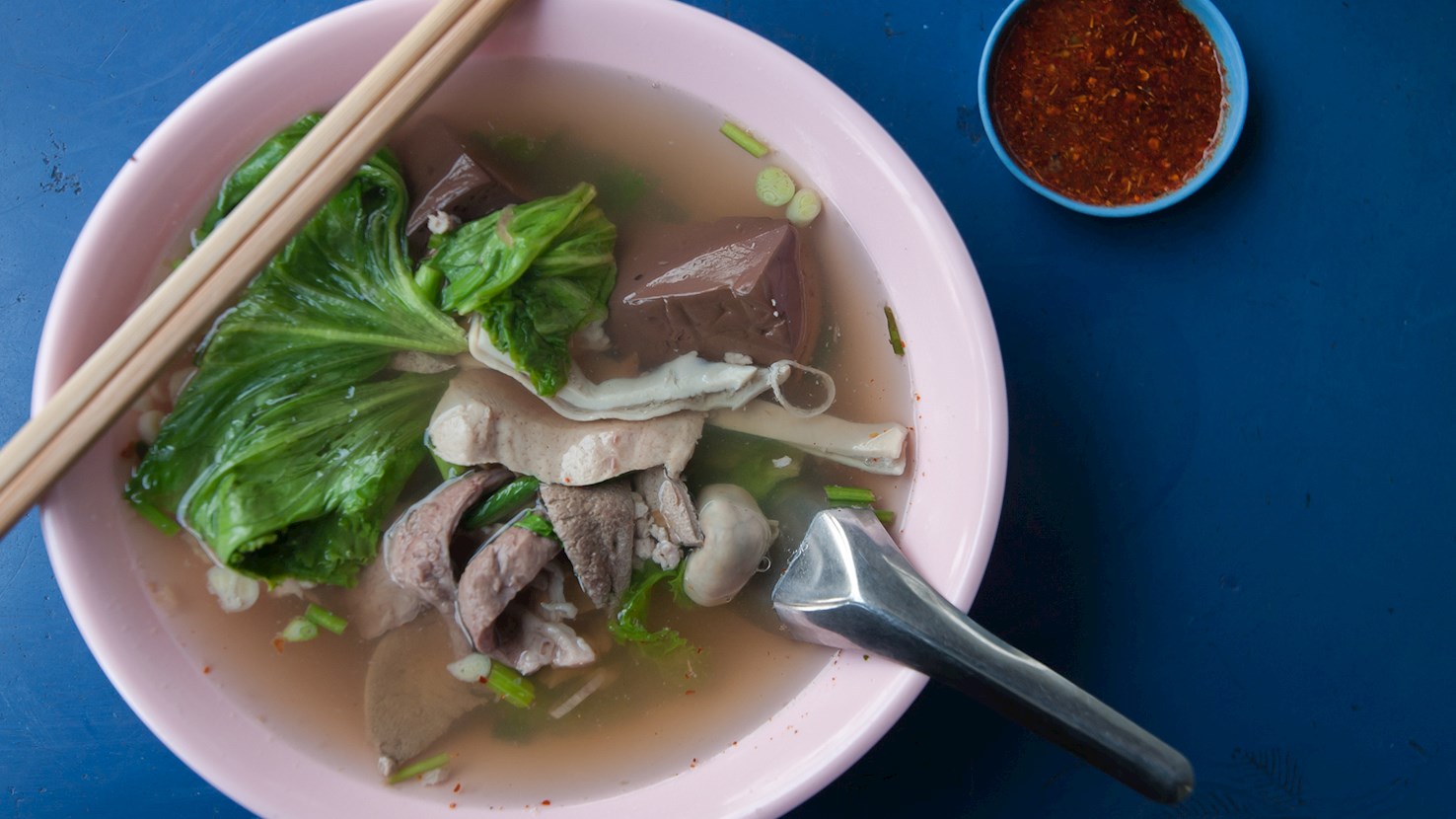
Although it originated from the Chaozhou province in China, pig’s organ soup is nowadays most popular in Singapore. The dish consists of pig offal, sliced pork, vegetable strips, onion leaves, and pepper. It is often served accompanied by eggs, rice, vegetables, braised tofu, or a special sauce prepared with a combination of soy sauce and chopped chili peppers. It is believed that the secret to a good broth is the combination of saltiness and sweetness coming from hours of boiling together pickled vegetables and pork bones.
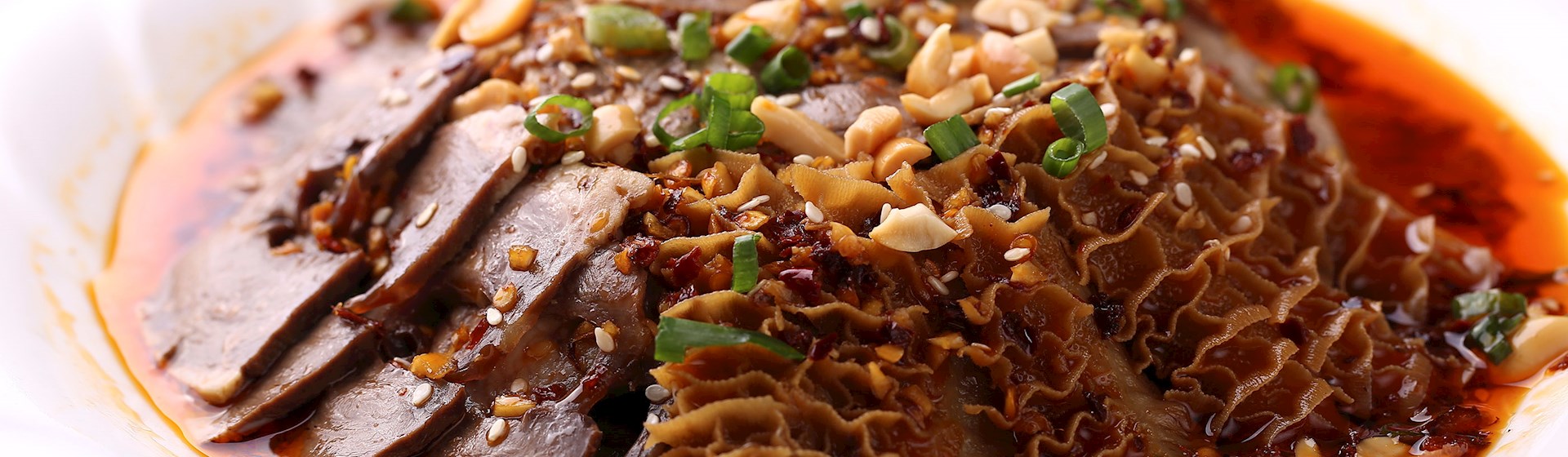
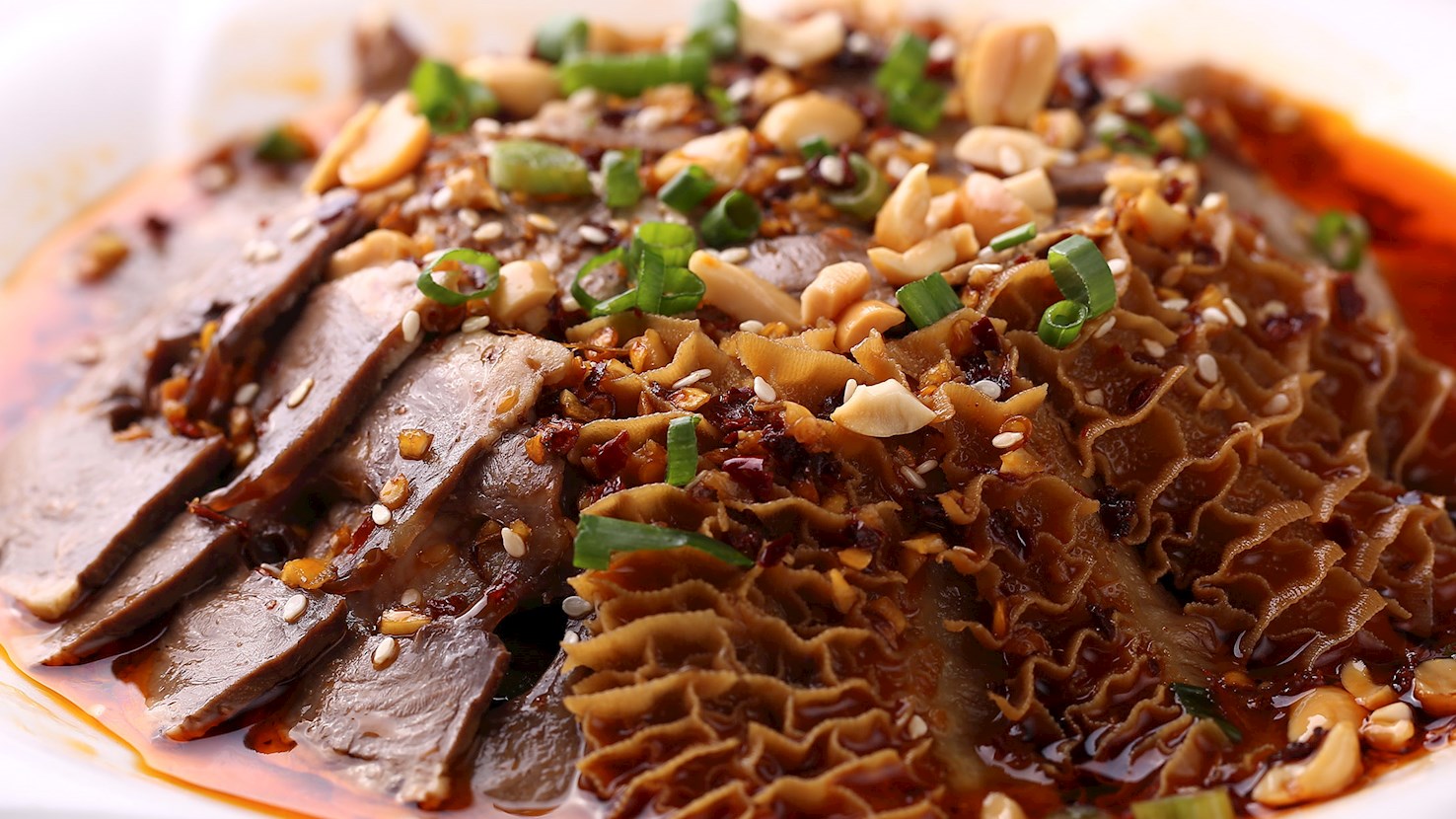
Fūqī fèipiàn is a Sichuanese cold dish made from thinly sliced beef and offal dressed in a fragrant, spicy sauce. The dish gained its distinctive name, meaning “husband and wife slices,” from a couple in Chengdu, Guo Chaohua and Zhang Tianzheng, who became famous in the early twentieth century for their exceptional version sold at street stalls. Their skill in seasoning and preparation turned what began as a humble vendor’s snack into one of the most recognizable representatives of Sichuan cuisine. Over time, the name stuck, spreading beyond Chengdu until it became synonymous with this particular style of seasoned beef. Preparation begins with beef heart, tongue, and tripe simmered in a lightly spiced broth until tender, then cooled and sliced thin to achieve a uniform texture. The sauce is what defines the dish: chili oil blended with Sichuan peppercorn, garlic, soy sauce, vinegar, sugar, and sesame paste, each component calibrated to strike a balance between numbing, heat, salt, and subtle sweetness. Once mixed, the sliced meat is coated thoroughly, allowing the oil to glisten over the surface and carry the fragrance of pepper and spice. Peanuts, sesame seeds, and fresh cilantro are often sprinkled on top, adding crispness and color. The result is both rich and precise, with the coolness of the meat offset by the warmth and sting of the dressing. Fūqī fèipiàn is served widely in Sichuan restaurants and across China, often as an appetizer or part of a shared spread. It pairs naturally with plain rice or light noodles that absorb its sauce without dulling its sharpness. Many people enjoy it with cold beer or mild grain spirits, as the drink’s crispness refreshes the palate between bites.
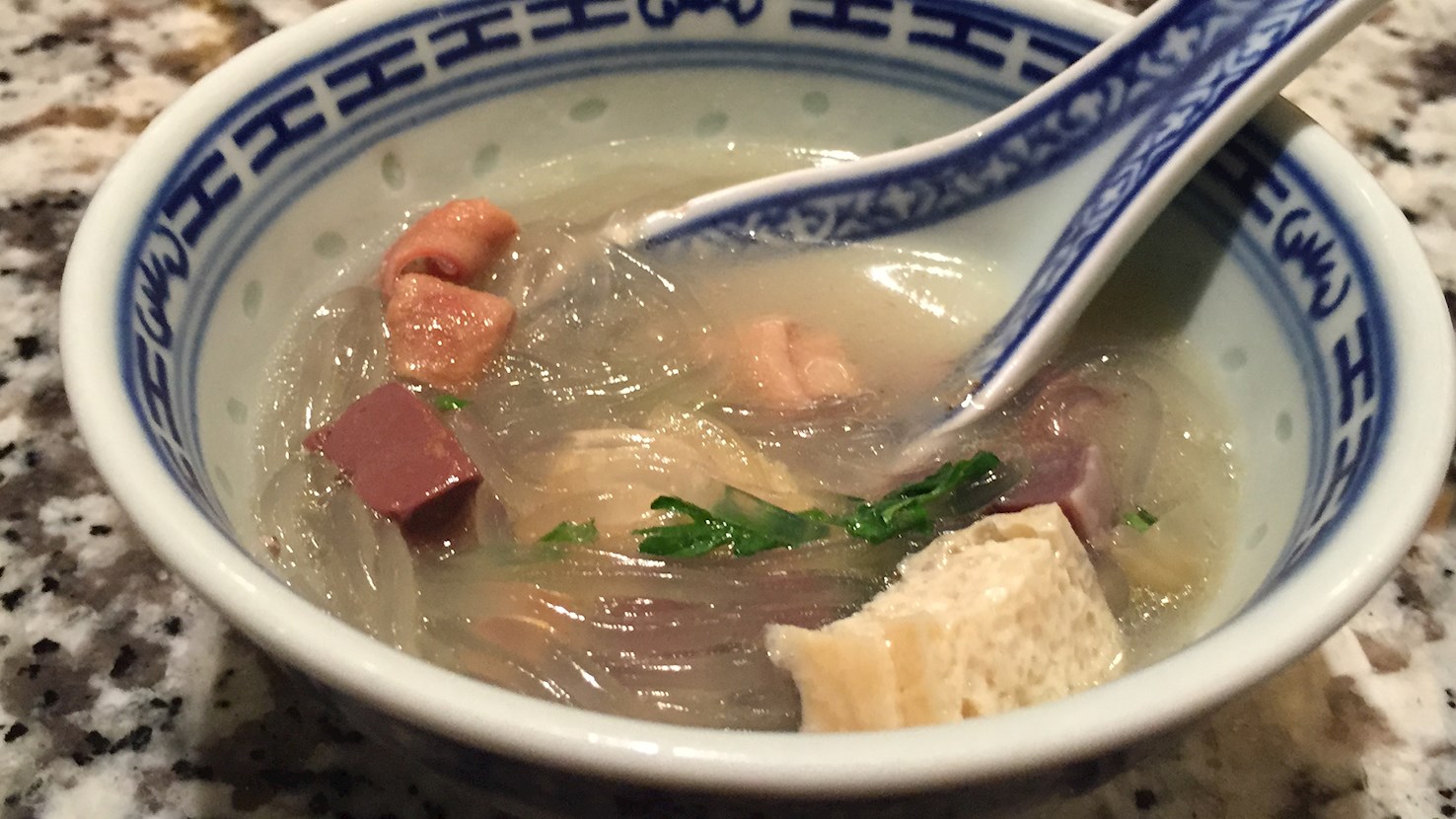
Duck blood and vermicelli soup is a traditional delicacy made by cooking vermicelli, duck liver, blood, and intestines with dried tofu, dried shrimp, ginger, sesame oil, and caraway seeds. Although the dish is consumed in many Chinese regions, it is a specialty of Nanjing, famous throughout the world for its duck dishes, which is why it is sometimes referred to as the capital of duck. According to a popular story, a poor man in Nanjing had killed a duck and used a bowl to hold its blood. While cleaning the duck, he accidentally dropped some vermicelli into the bowl and cooked the stew afterwards. When he tasted the stew, he found it quite flavorful, and a wealthy man heard about the newly created dish, thus employing the poor man as a cook for his family. Today, duck blood and vermicelli soup hold the status of a Nanjing favorite, while some cooks add 20 different Chinese herbs in the soup, believing that their ingredients help with blood circulation, removal of toxins from the body, and the maintenance of one's beauty.
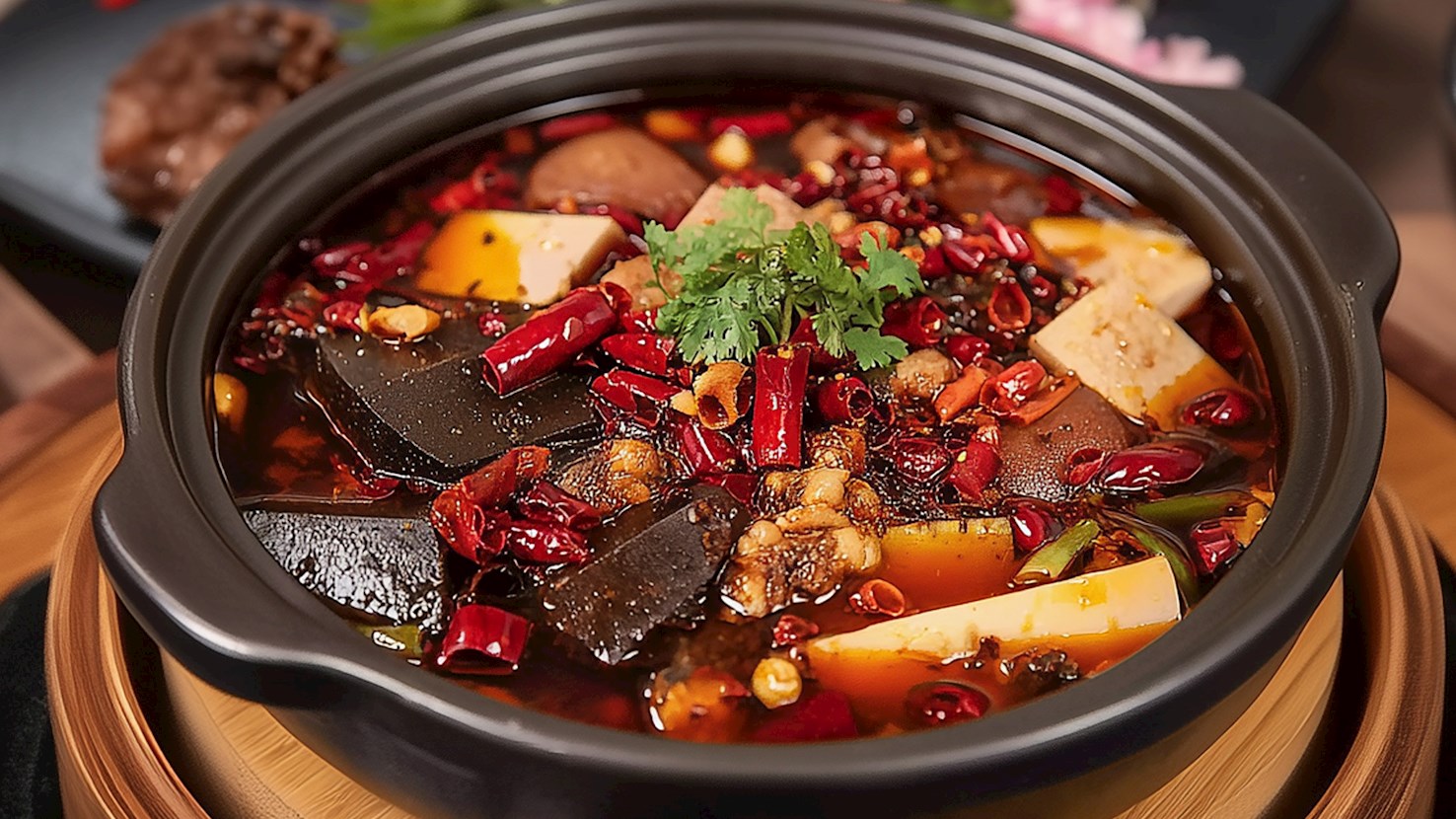
Máoxuèwàng is a spicy Sichuan hotpot-style dish made with a mix of meats, offal, and vegetables cooked in a deep, crimson broth flavored with chili, Sichuan peppercorn, and bean paste. The name roughly means “boiled blood and tripe in chili soup,” reflecting its use of duck or pig blood curd and a variety of ingredients simmered together in one bowl. It comes from Chongqing, in the heart of the Sichuan region, where the cuisine is defined by bold heat, complex layers of spice, and an emphasis on texture. The dish began as a humble street food, prepared by workers and boatmen along the Yangtze River who used inexpensive cuts of meat and animal offal to create a rich, hearty meal. The broth’s base of chili and bean paste served not only to add flavor but also to preserve and mask the strong taste of organ meats. Over time, cooks began refining the dish, balancing the ratio of chilies, oil, and spices, and adding blood curd for a smooth, custard-like texture that complemented the chewiness of tripe and the tenderness of meat slices. In later years, máoxuèwàng moved from local eateries to restaurants across China, becoming a staple of Sichuan hot dishes known for their heat and depth. Preparation begins by simmering a broth made with Sichuan bean paste (doubanjiang), dried chilies, and Sichuan peppercorn in generous amounts of oil to release aroma and color. Garlic, ginger, and fermented black beans are added for complexity. Once the base is rich and fragrant, sliced beef, duck blood curd, beef tripe, and other ingredients such as luncheon meat, tofu skin, or bean sprouts are blanched and layered in a large bowl. The boiling chili broth is then poured over the ingredients, cooking them instantly. The dish is finished with a scattering of dried chilies, peppercorn, garlic, and scallions, followed by a final pour of sizzling hot oil that releases the spices’ aroma into the air. The result is a dish that is vivid in appearance and layered in taste, numbing, spicy, and aromatic all at once. Máoxuèwàng is served as a large communal dish, usually placed at the center of the table and shared with others. It is eaten hot, often accompanied by plain rice or steamed buns that absorb the spicy broth. Cold side dishes such as cucumber salad or marinated black fungus are commonly served alongside to contrast its intensity.
Chǎo dà cháng is a stir-fried offal dish consisting of sliced pork large intestine cooked over high heat, producing pieces that are firm yet yielding, with a chewy bite, a glossy surface, and a rich, savory flavor shaped by rendered fat, aromatics, and a balance of salt and acidity. The dish developed within Chinese whole-animal cooking practices, where intestines were valued for texture and flavor and required careful preparation, becoming established as stir-frying techniques allowed quick cooking that preserved structure while intensifying taste. Preparation begins with thorough cleaning of the large intestine through repeated washing, turning, and blanching to remove impurities and odor, followed by simmering until tender, slicing into manageable pieces, and stir-frying in a hot wok with oil, garlic, ginger, scallions, and seasonings such as soy sauce, cooking wine, chili, or vinegar, allowing the exterior to sear while keeping the interior supple. Common variations include adding pickled vegetables, fermented bean paste, leeks, or chilies; varying the heat level; or finishing with black vinegar for sharpness, while the defining feature remains the careful balance between tenderness and chew, achieved through precise cleaning and cooking. Chǎo dà cháng is eaten hot as a shared main dish, most often served with steamed white rice, and appears in home cooking, casual restaurants, and banquet-style meals, where it is paired with lighter vegetable dishes or clear soups to offset its richness.
Hóngshāo zhū wěi is a braised pork dish from China which consists of chopped pig tail sections with layers of skin, fat, cartilage, and small bone, cooked until the meat becomes tender and gelatin-rich, coated in a glossy sauce with a balance of savory soy, mild sweetness, and warming aromatics, producing a soft, sticky texture and deep pork flavor. The dish emerged from whole-animal pork cookery that valued collagen-heavy cuts for their ability to transform through long cooking, becoming established as red-braising methods spread through home kitchens and emphasized depth, preservation, and efficient use of ingredients. Preparation begins with thorough cleaning and blanching of the pig tail to remove impurities, followed by caramelizing sugar in oil to form a dark base, adding the pork tail pieces to coat them evenly, then simmering them with light and dark soy sauce, Shaoxing wine, ginger, scallions, and spices such as star anise and cinnamon until the cartilage softens and the sauce reduces to a thick glaze. Common variations include differences in sweetness, spice intensity, or the addition of dried citrus peel, tofu products, or hard-boiled eggs, while the defining element remains the high collagen content of the tail, which creates a texture that is dense yet yielding once braised. Hóngshāo zhū wěi is eaten hot as a main dish, most often served with steamed white rice to absorb the sauce, and it appears in family meals and banquet-style settings where it is paired with plain vegetables, light soups, or tea to balance its richness.
Hóngshāo zhū tí is a braised pork dish from China that consists of chopped pig feet cooked until tender, featuring thick skin, fat, connective tissue, and bone, resulting in a glossy, gelatin-rich texture with deep savory flavor, mild sweetness, balanced salinity, and a soft, sticky mouthfeel shaped by collagen and reduced sauce. The dish developed alongside the widespread use of red-braising techniques that relied on soy sauce, sugar, and long cooking to transform tough cuts into valued table dishes, becoming firmly established as pork husbandry expanded and slow braising became central to home cooking. Preparation begins with cleaning and blanching the pig feet to remove impurities, then frying or caramelizing sugar to create a dark base before adding the pork, soy sauce, Shaoxing wine, ginger, scallions, and spices such as star anise and cinnamon, followed by slow simmering until the skin and tendons soften and the sauce thickens and coats the meat evenly. Common variations include adjustments in sweetness, the addition of dried tofu or eggs, or differences in spice intensity depending on household preference, while the defining feature remains the concentration of collagen that gives the dish its characteristic texture once braised. Hóngshāo zhū tí is eaten hot as a main dish, commonly served with steamed white rice to absorb the sauce, and it is consumed in family meals and banquet settings where its richness is balanced by simple vegetables, light soups, or tea.
TasteAtlas food rankings are based on the ratings of the TasteAtlas audience, with a series of mechanisms that recognize real users and that ignore bot,
nationalist or local patriotic ratings, and give additional value to the ratings of users that the system recognizes as knowledgeable.
For the “Top 7 Chinese Offal Dishes” list until June 15, 2026, 47 ratings were recorded, of which 33 were recognized by the system as legitimate.
TasteAtlas Rankings should not be seen as the final global conclusion about food. Their purpose is to promote excellent local foods,
instill pride in traditional dishes, and arouse curiosity about dishes you haven’t tried.