Melsat is a pale, delicately seasoned pork sausage from France, made with a mixture of finely ground pork offal, eggs, and bread. Originating in the rural areas of Aveyron and the Monts de Lacaune in Tarn, it developed as part of the domestic pig-slaughtering cycle, when families sought to preserve and make full use of every edible part of the animal. References to its preparation appear in regional cookbooks from the late nineteenth century, where it was considered a farmhouse specialty prepared during winter. The sausage’s base consists of minced pork offal—most often liver and throat—combined with eggs, crumbled bread, salt, pepper, and nutmeg, and sometimes fresh herbs such as thyme. The mixture is stuffed into natural pork casings, then slowly poached in lightly simmering water for about forty minutes to two hours, depending on size and thickness. The cooked sausage takes on a pale cream to light gray color, smooth texture, and mild, savory taste balanced by the sweetness of the bread and richness of the offal. In Aveyron, melsat is often prepared in long, thin casings, while in the Tarn it appears in a larger, thicker form, closer in shape to a pudding. Some cooks omit the offal entirely, producing a lighter version that relies more on the eggs and bread for structure. Melsat is served either cold, sliced as part of a charcuterie platter, or warm, browned in a pan until lightly crisped and accompanied by lentils, beans, or a simple green salad. It pairs well with rustic country bread, a glass of dry white or rosé wine from Gaillac, and mild cheeses that complement its delicate richness without masking its gentle flavor.
Saucisse de couenne is a fresh pork-rind sausage from the Tarn department of France. Its origins lie in the pig-butchering traditions of the region, where the abundant pork rind (“couenne”) left over from slaughter was incorporated into a sausage mixture combining one-third rind, one-third lean pork and one-third fat, and the name “coudenat” derives from the Occitan word coudeno (rind). In production the rind, lean meat and pork fat are finely ground together, seasoned with salt and pepper, stuffed into pork intestine casings of about 3 to 4 cm (1.5 inches) diameter, and cooked only when ready to eat rather than smoked or aged; fresh sausage must be simmered in a stew or cassoulet so that the rind melts into gelatin and thickens the broth, giving the dish its body. Variations include the “lou coudenot” version around Mazamet in the Black Mountain where the rind is precooked and the stuffing contains bread and eggs in addition to rind, meat and fat, and slight differences in diameter, seasoning or cooking time; a distinct feature of the saucisse de couenne is its high proportion of rind which yields a gelatinous texture when hot and acts as a binder in legume stews, a role uncommon among sausages. It is eaten hot, most commonly simmered in bean or lentil dishes or included in the region’s cassoulet-style stews, and it pairs well with hearty rustic red wines of the south, dense country bread to soak up the cooking juices, and a simple green salad or cooked legumes that provide contrast to its rich texture.
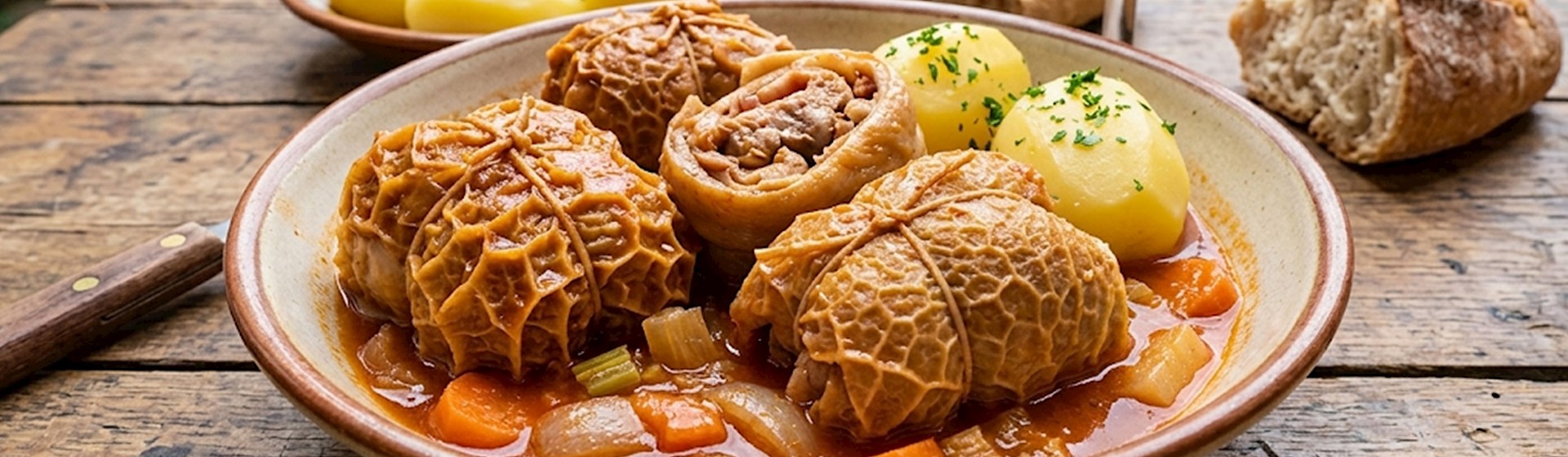
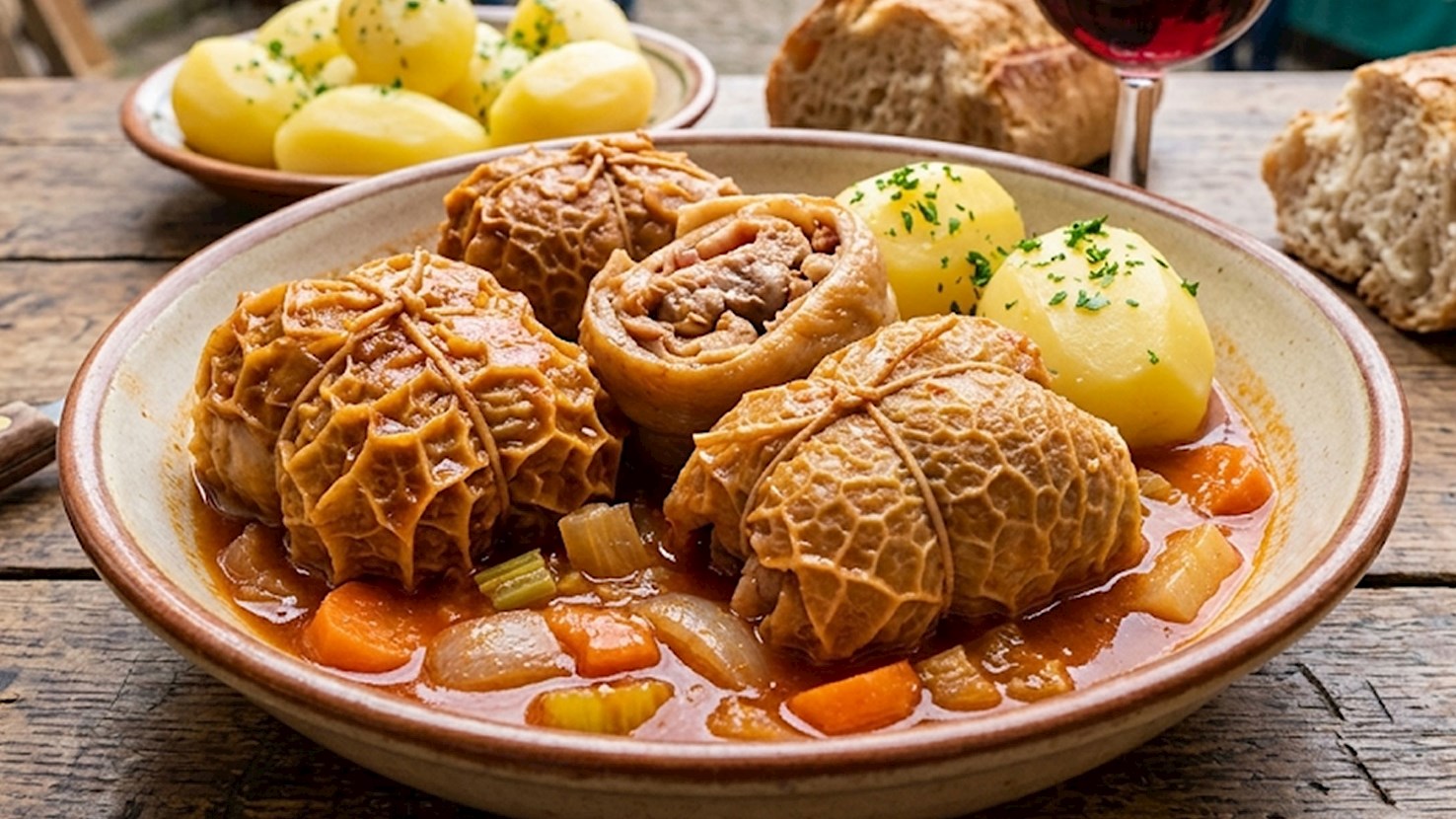
Tripous are bundles of veal or sheep tripe from Aveyron. Their origins lie deep in local rural kitchens, where farm households used tripe from veal or sheep, ham, garlic, parsley, and available herbs, and held gatherings after morning mass at village fairs and railway stations. In preparation fresh veal or sheep stomach are washed, blanched, cut into rectangles, then each piece receives a layer of pork rind, a dice of country ham and veal meat seasoned with garlic, parsley, salt and pepper; the piece is then rolled, tied by string, placed in a large pot with onions, carrots, celery, tomato, white wine and stock and slowly braised for several hours until the tripe parcels are tender and infused with the braising liquid. Typical variations include adding pig’s feet or rind to the bundles, incorporating more tomato or wine into the cooking liquid, or preparing smaller parcels called “petites”. At the same time, some recipes lighten the broth for service at morning village breakfasts. A distinctive characteristic of the dish is the way the tripe casing and enriched filling meld during slow cooking into compact parcels that retain their form yet yield a soft interior with savory depth and aroma. Tripous are often served hot for breakfast in village festivals or as a main meal, accompanied by boiled potatoes, lentils, or simply crusty bread and a green salad. They pair well with a young dry white wine such as a Gaillac or a Sancerre, or a local red like Marcillac, and even a light beer to complement their rich, savory flavor.
Sanguette is a traditional blood pancake from the southwestern regions of France, particularly in rural parts of Gascony and the Basque Country, where rustic and nose-to-tail cooking has long been part of everyday life. Made from fresh pig’s blood mixed with flour, onions, herbs, and sometimes a touch of garlic or pork fat, sanguette is pan-fried into thin cakes and served hot, often as part of a hearty farmhouse meal. It is typically prepared during the pig slaughtering season in winter, a time when every part of the animal is used and shared among family or neighbors, reflecting a culture of frugality, respect for ingredients, and culinary ingenuity. The texture of sanguette is tender and slightly crisp around the edges, with a rich, mineral depth of flavor that comes from the blood itself. The addition of onions and herbs balances the intensity with sweetness and freshness, and the use of local fats or confit adds richness that makes it satisfying and filling. While often eaten on its own, sanguette may also be accompanied by potatoes or crusty bread, and occasionally served with a splash of vinegar or a spoonful of country mustard to brighten its deep, savory profile. As with many traditional dishes rooted in seasonal and agricultural rhythms, sanguette is less commonly found in urban areas or modern menus, yet it remains a cherished food in regions where artisanal butchery and home cooking traditions endure.
TasteAtlas food rankings are based on the ratings of the TasteAtlas audience, with a series of mechanisms that recognize real users and that ignore bot,
nationalist or local patriotic ratings, and give additional value to the ratings of users that the system recognizes as knowledgeable.
For the “Top 4 Occitan Offal Dishes” list until May 15, 2026, 1 ratings were recorded, of which 1 were recognized by the system as legitimate.
TasteAtlas Rankings should not be seen as the final global conclusion about food. Their purpose is to promote excellent local foods,
instill pride in traditional dishes, and arouse curiosity about dishes you haven’t tried.