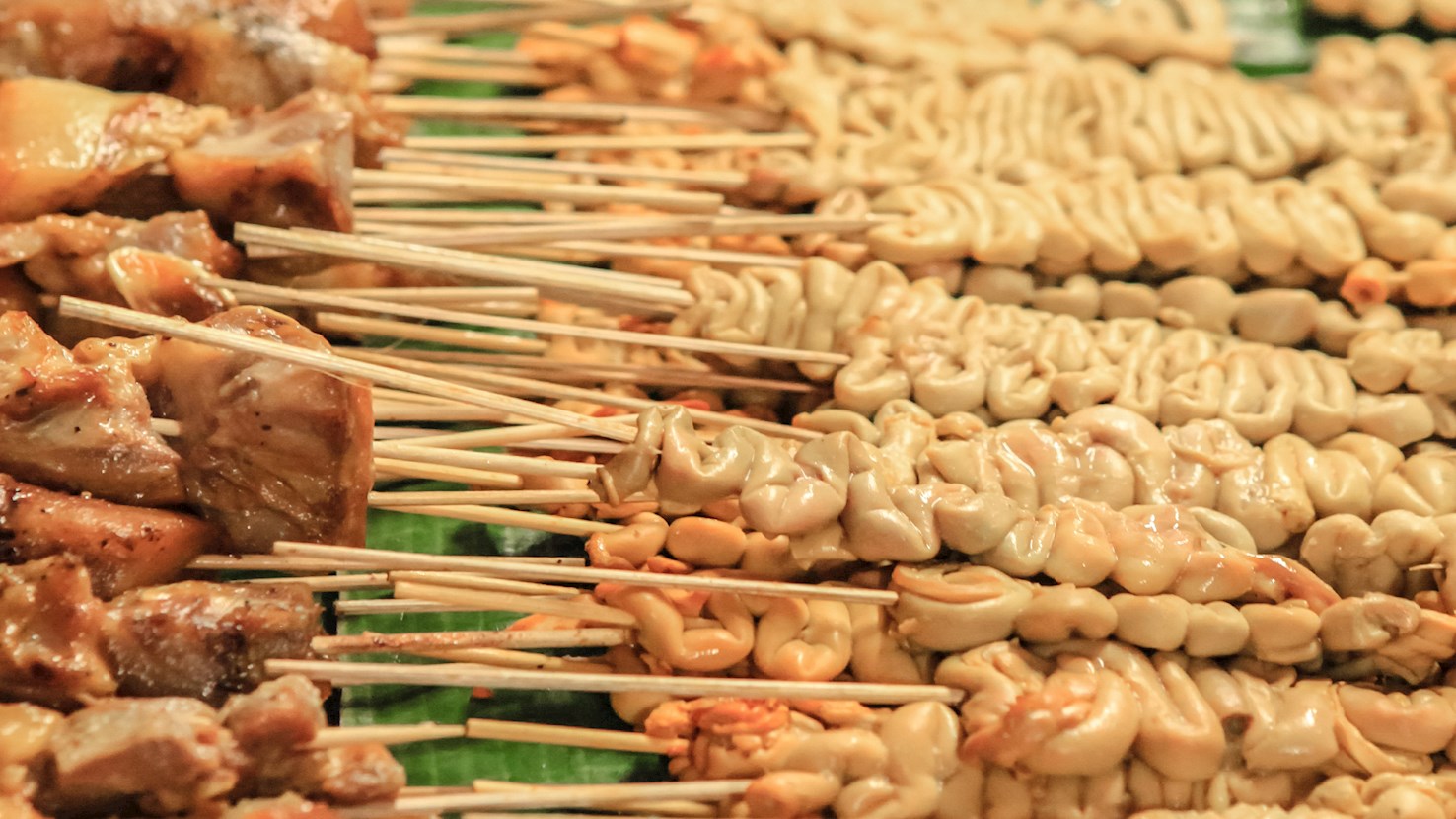
Isaw is a popular Filipino street food dish consisting of marinated, boiled, and grilled chicken and pork intestines which are usually coiled and skewered on a stick. Although similar, pork isaw is typically slightly larger and chewier than the chicken version. The marinade is usually prepared with soy sauce, oil, ketchup, garlic, and seasonings. Thoroughly cleaning and boiling the intestines before they are placed on a grill is an essential part of the preparation process because it eliminates all food-born pathogens. The dish is usually dipped in a vinegar-based sauce that is made with chili peppers and onions (sawsawan). Because it is one of the cheapest Filipino street food meals, the dish is extremely popular, and there are even street stalls called isawan, devoted entirely to the preparation of this specialty. Isaw is usually enjoyed as an afternoon snack, and apart from its popularity on the streets, due to its low price, it is also a staple food for numerous university students.
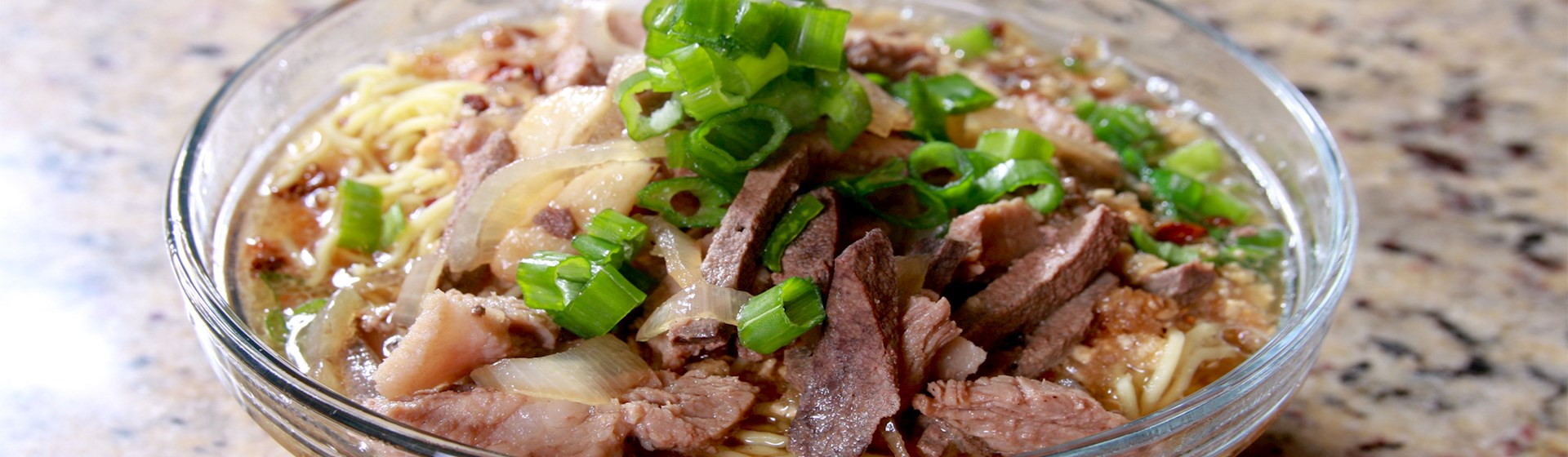
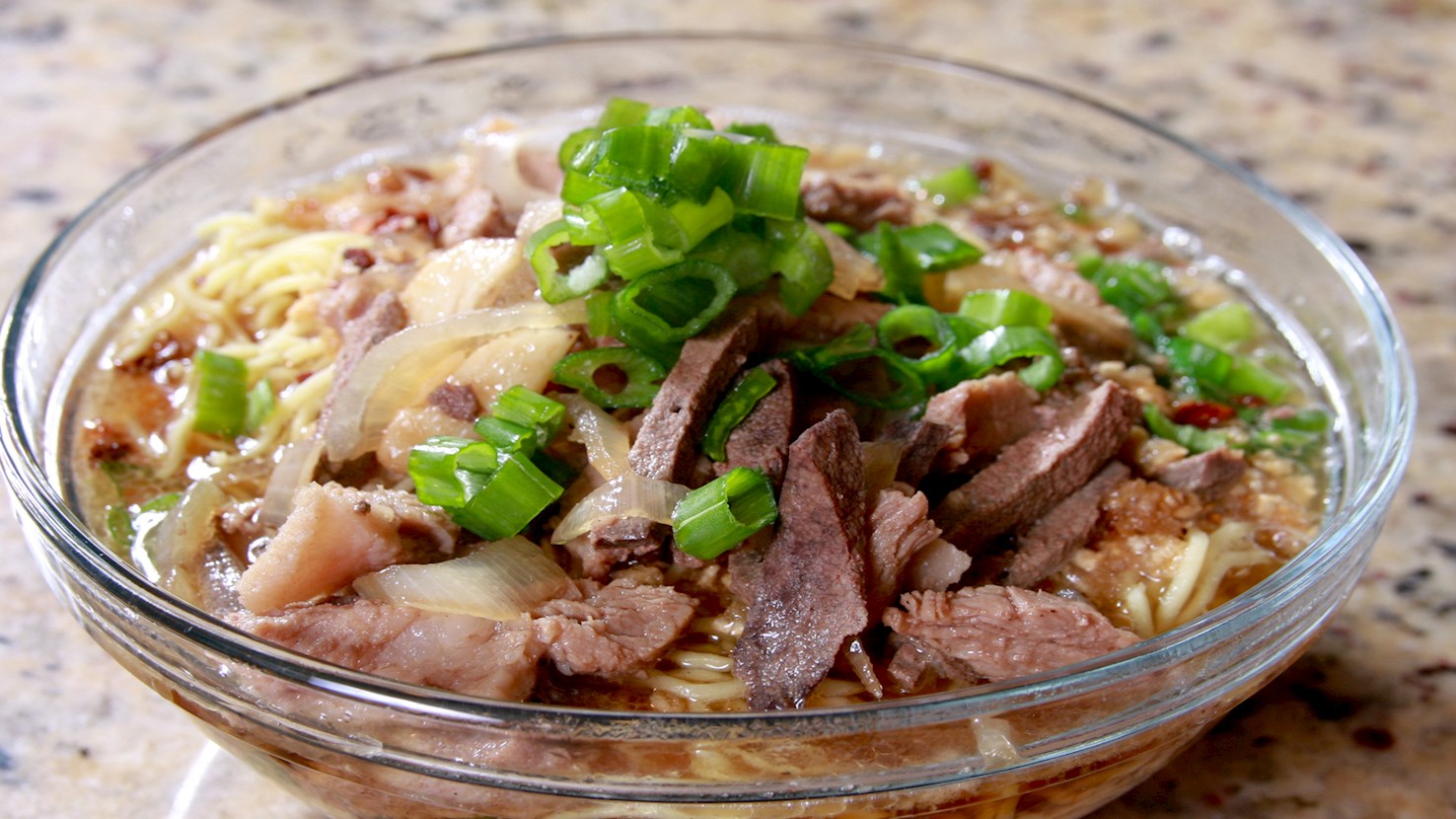
The hearty batchoy is a popular Filipino soup consisting of pork offal, chicken or beef stock, and fresh round egg noodles. Generously seasoned with shrimp paste and (occasionally) soy sauce, the soup is usually topped with pork cracklings, fried garlic, and a raw egg. Although there are numerous stories about the origin of the dish, there is no doubt that it was created in Iloilo, more specifically in the district of La Paz, from where it spread to other parts of the country to become one of the most famous Filipino soup dishes.
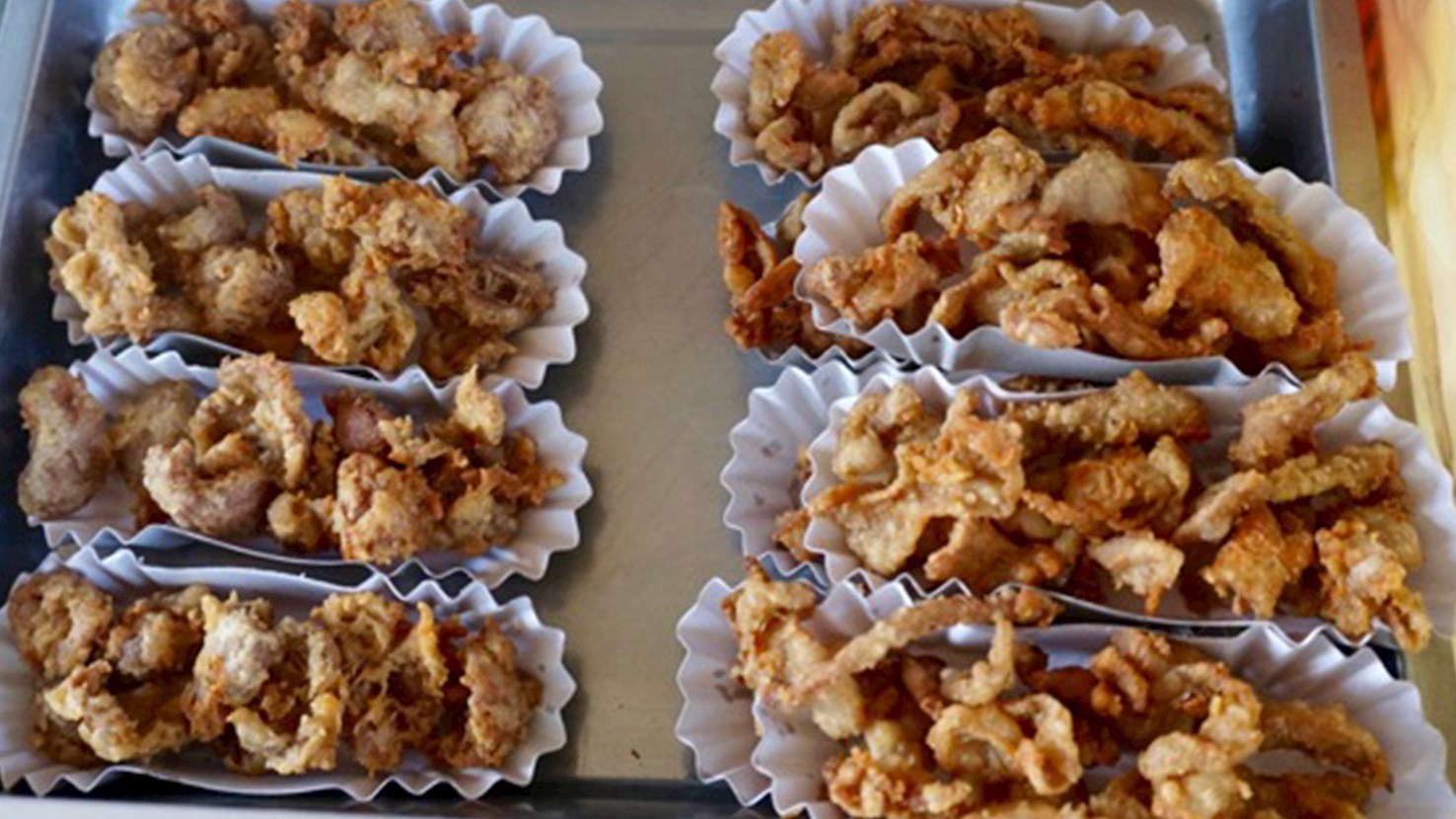
Proben (occasionally referred to as proven) is a satisfying Filipino snack, and one of the most popular street food items in the country. It is prepared with an unusual chicken organ named proventriculus, a component that is in many ways similar to chicken gizzard. Coated in flour or cornstarch, the tiny proben pieces are shortly deep-fried until the exterior becomes golden brown and crispy. They can be fried individually and served in plastic bags, or skewered and fried on bamboo sticks. Cheap, fast, and nutritious, proben has come to represent one of the most common street food varieties in the Philippines, which is especially favored among the young students. The snacks can be found on numerous streets and traditional markets, where they are usually prepared by street vendors who prepare heaps of fresh proben on mobile food stands. Even though they can be eaten plain, bagged or skewered versions are usually accompanied by sour vinegar sauce or sweet chili sauce.
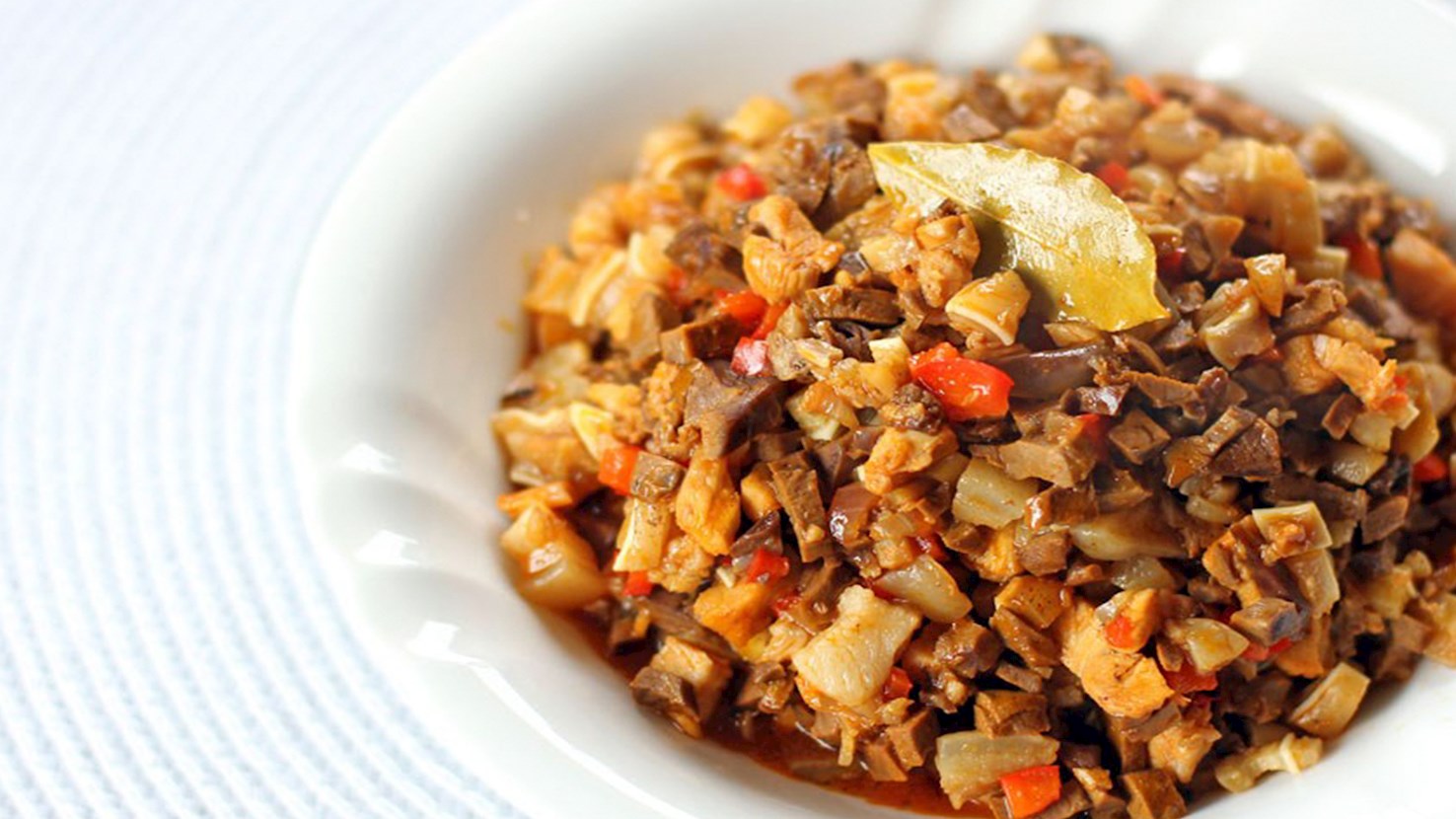
Bopis is a traditional dish which usually consists of animal’s (usually beef or pork) heart and lungs that are stewed alongside garlic, onions, and a variety of vegetables and spices. Eaten throughout the country, the dish appears in numerous version which may differ in the choice of ingredients, textures, and levels of spiciness. It is traditionally eaten as an appetizer or a snack accompanied by alcoholic beverages, but it also makes a satisfying main meal with steamed rice served on the side. The variety hailing from Bicol is usually called kandingga.
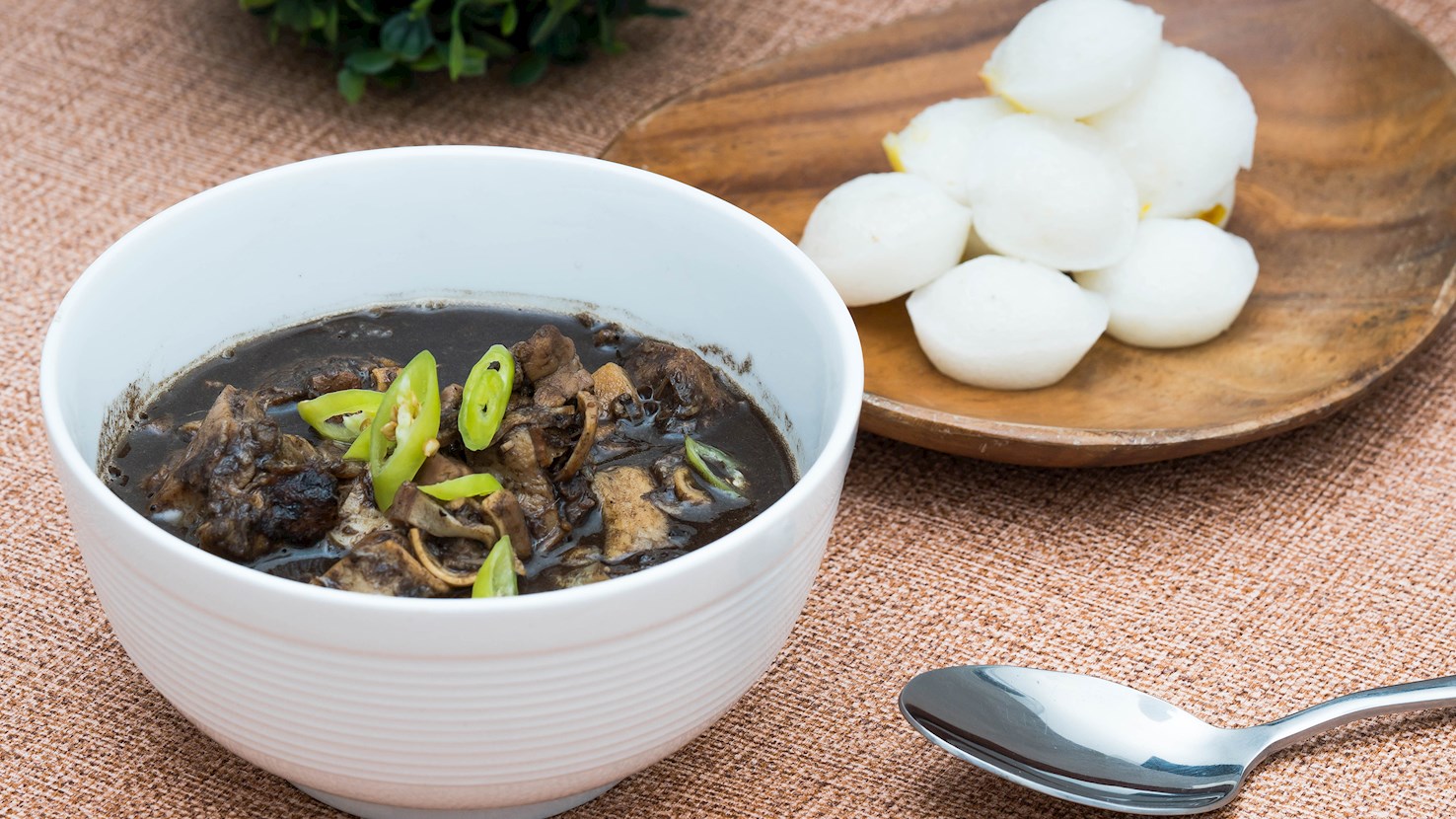
Dinuguan is a savory dark stew made from diced pork belly and offal simmered in a thick, highly acidic sauce of pig’s blood and cane vinegar. Thoroughly cleaning and dicing raw pork belly, snout, ears, and intestines is the first step in the recipe. These dense cuts are added to a wide hot pan coated with oil, where they render their heavy animal fat. Minced garlic and chopped red onions are then softened directly in the hot lard. A generous splash of sharp cane vinegar is poured into the pan, and the mixture is boiled aggressively, helping tenderize the tough cartilage while reducing any gamey odors. Fresh liquid pig’s blood is slowly poured into the simmering broth. During this step, the bottom of the pot must be scraped continuously with a heavy wooden spoon to keep the blood from curdling or scorching against the hot metal. The heat is then reduced, and the mixture simmers gently until the red liquid thickens into a glossy black gravy. Whole green chilies are added during the final minutes, giving the stew a mild vegetal heat. In the northern provinces, a dry version called dinardaraan is made by deep-frying the pork pieces until extremely crisp, then tossing them lightly in a heavily reduced blood glaze. In the central plains, a very different method involves boiling fresh blood on its own until it solidifies into rubbery cakes. These dark cakes are cubed and simmered in a clear, sour broth, producing a pale soup with dark chunks rather than a unified black gravy. Another common version replaces the pork with chopped chicken meat and chicken blood, which significantly shortens the cooking time. The origins of dinuguan trace back to pre-colonial indigenous cooking practices across the Southeast Asian archipelago. Sixteenth-century Spanish chroniclers, including Antonio Pigafetta during the 1521 Magellan expedition, recorded that local communities used every part of slaughtered livestock for economic reasons. Because of the intense tropical heat, highly acidic liquids such as fermented coconut sap or cane vinegar were needed to help preserve meat without refrigeration. This established the sharp, sour, metallic flavor profile that still defines the stew today. Dinuguan is served hot in a deep ceramic bowl. A large stack of puto, slightly sweet and spongy steamed rice cakes, is almost always served beside it. The soft white cakes are dipped directly into the thick black gravy, adding a necessary sweetness that cuts through the sharp vinegar and metallic iron flavor. The stew can also be poured over a wide plate of steaming white rice, turning it into a filling, standalone main course.
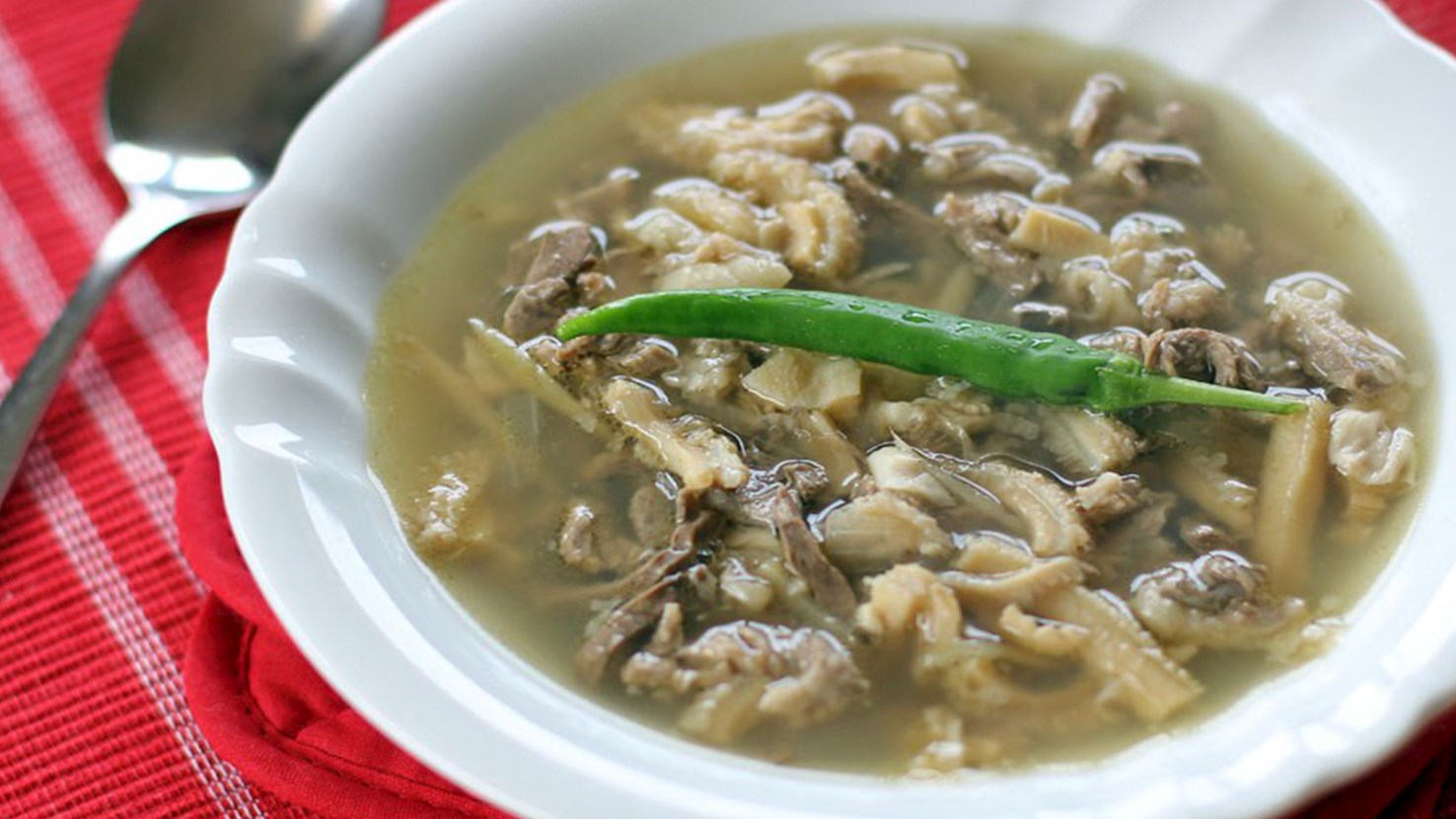
The rich and flavorful papaitan is a popular Filipino soup which consists of goat or cow innards such as heart, tripe, or liver, simmered alongside garlic, onions, and various spices. The most important addition to the dish is bile - a bitter liquid extracted from animal livers, giving the soup its distinctive sour flavor and a light yellow color. This popular Ilocano dish is always served hot and is usually garnished with sliced green onions and chili peppers.
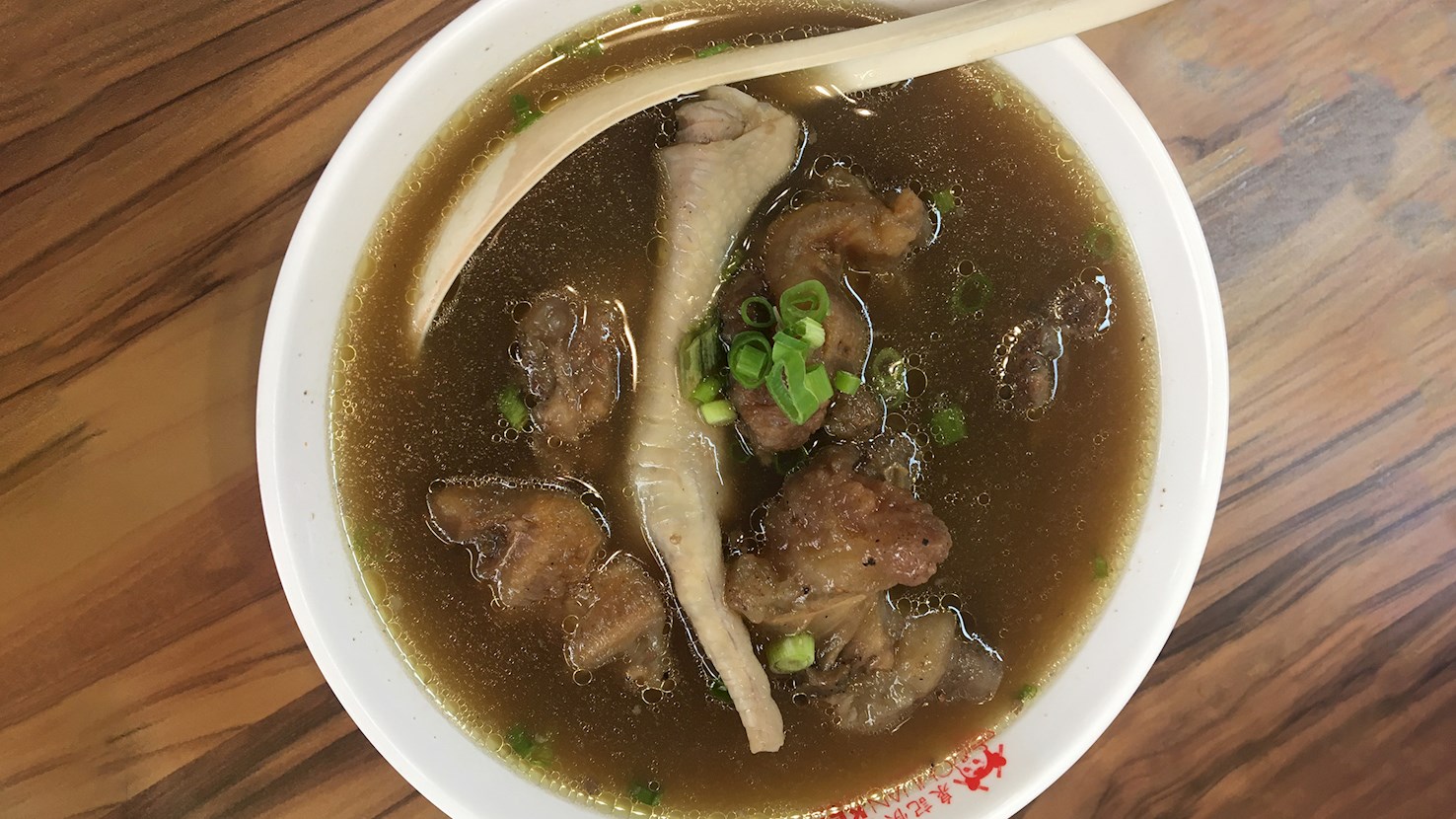
Soup number five is a Filipino soup prepared with unusual key ingredients – bull's penis and testicles. Other ingredients include a plethora of (mostly) herbs and spices such as chili peppers, green onions, lemongrass, ginger, onions, garlic, salt, sugar, pepper, fish sauce, beef broth, and oil. There are many variations on the soup, as well as secret recipes. In the Philippines, the soup is thought to be an aphrodisiac and to have healing properties. It's also very popular as a hangover cure and a pulutan – a dish that's eaten while drinking alcohol. The unusual name with the number five, however, is still shrouded in mystery. In the province of Cebu, this soup is known as lanciao or lansiao.
TasteAtlas food rankings are based on the ratings of the TasteAtlas audience, with a series of mechanisms that recognize real users and that ignore bot,
nationalist or local patriotic ratings, and give additional value to the ratings of users that the system recognizes as knowledgeable.
TasteAtlas Rankings should not be seen as the final global conclusion about food. Their purpose is to promote excellent local foods,
instill pride in traditional dishes, and arouse curiosity about dishes you haven’t tried.



What People Say