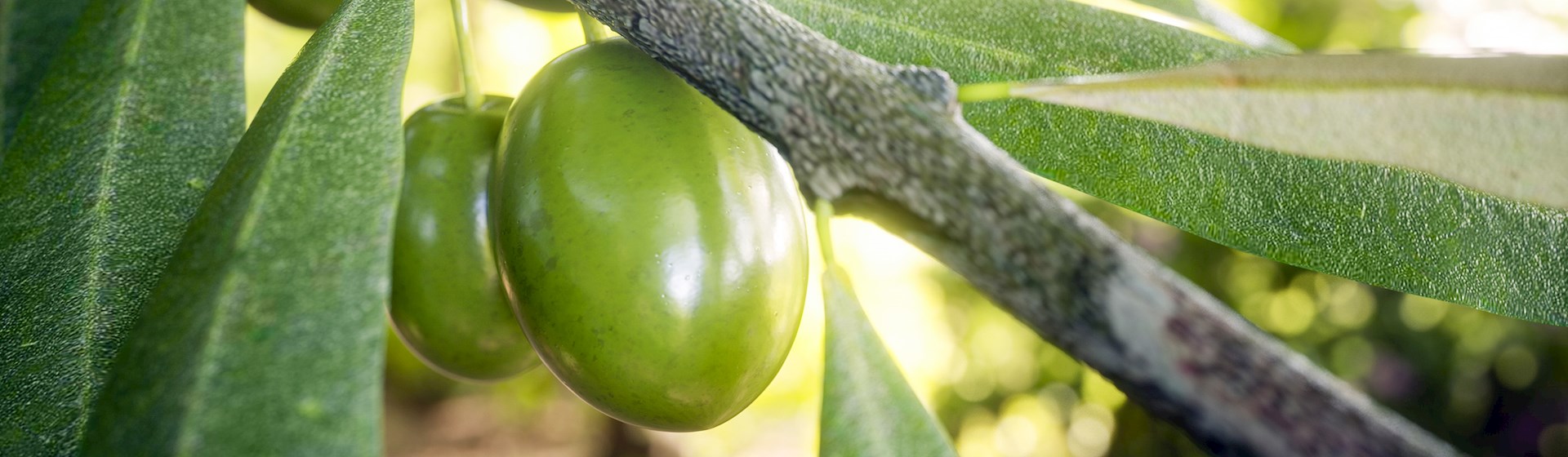
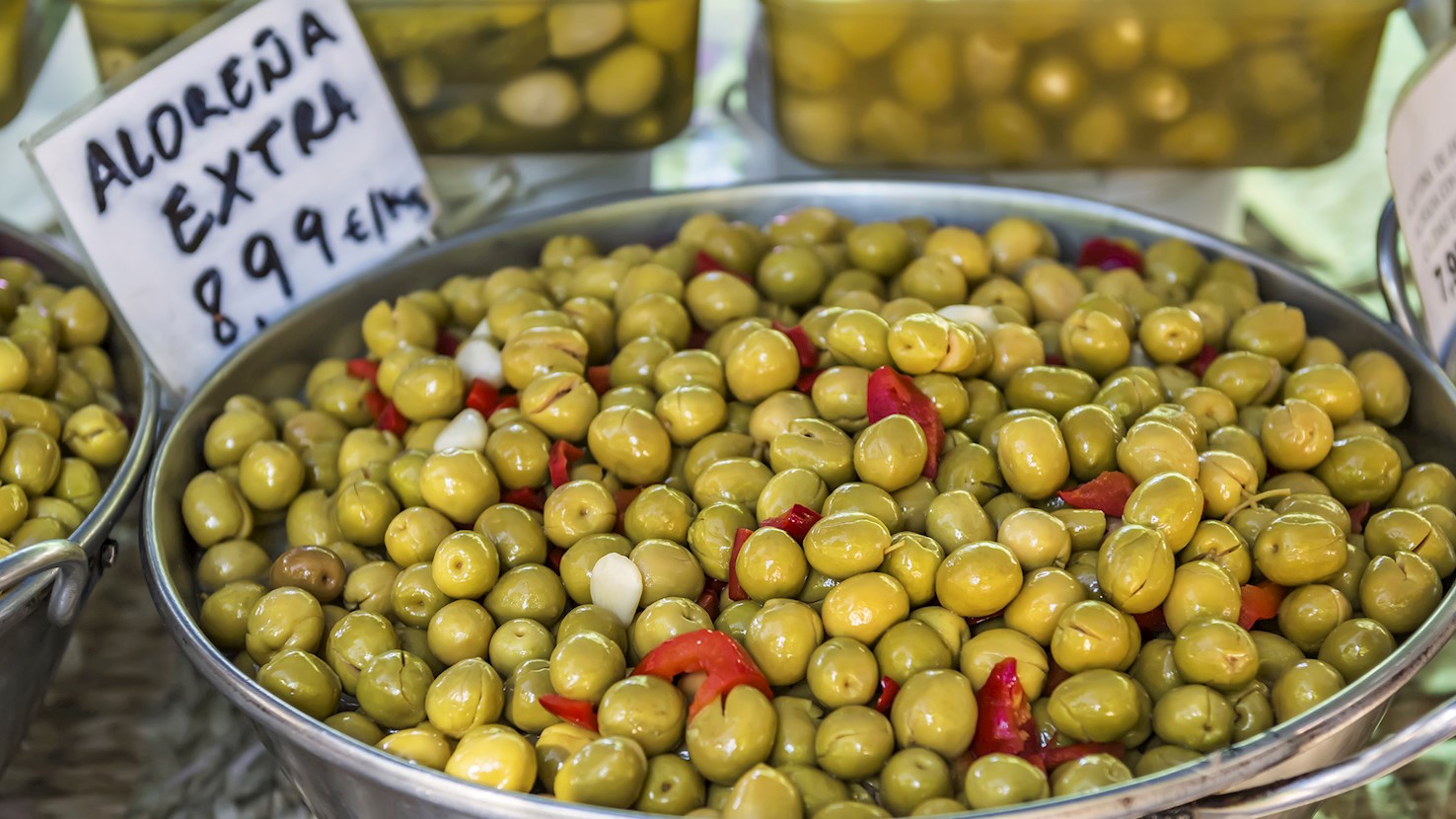
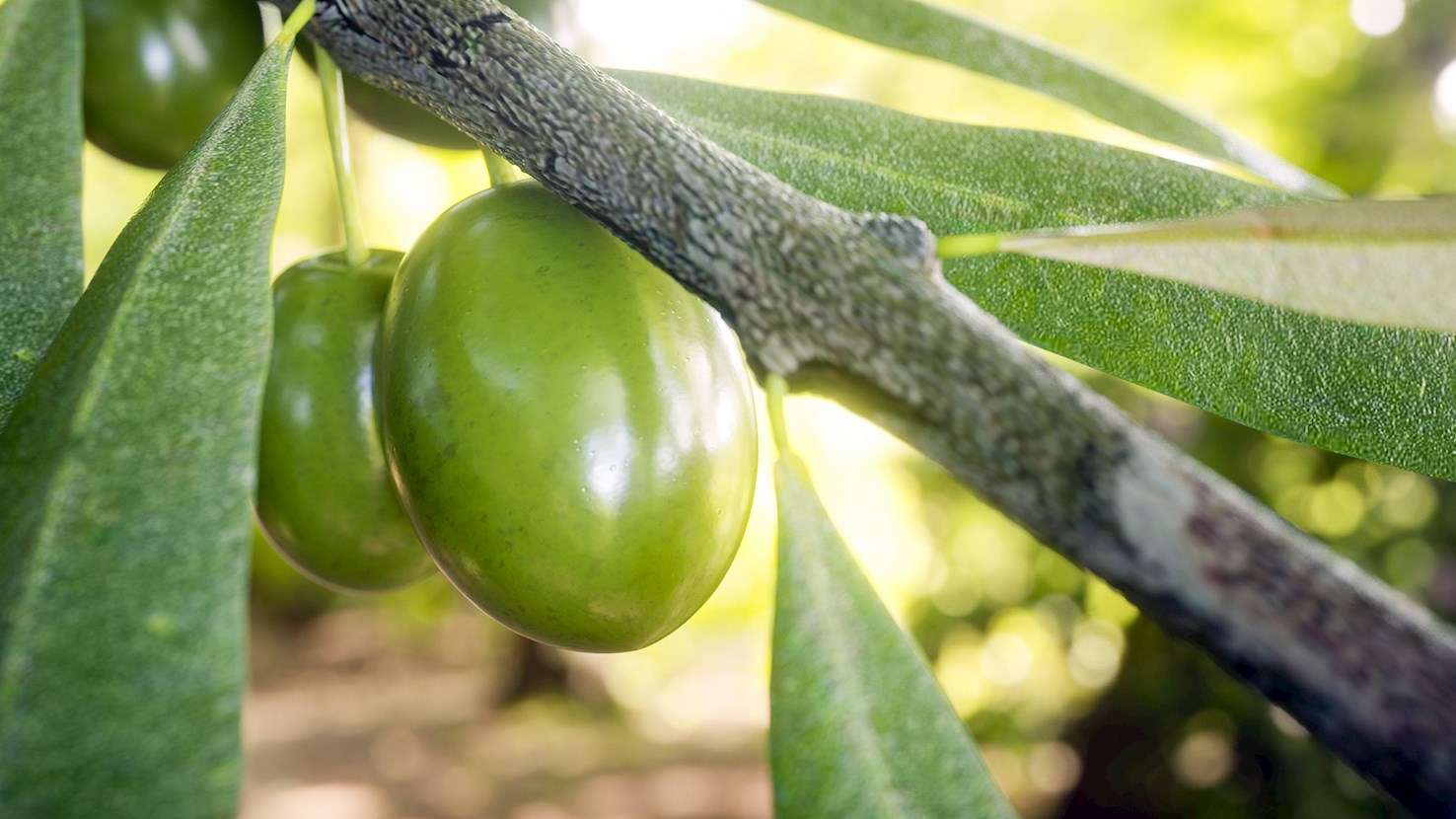
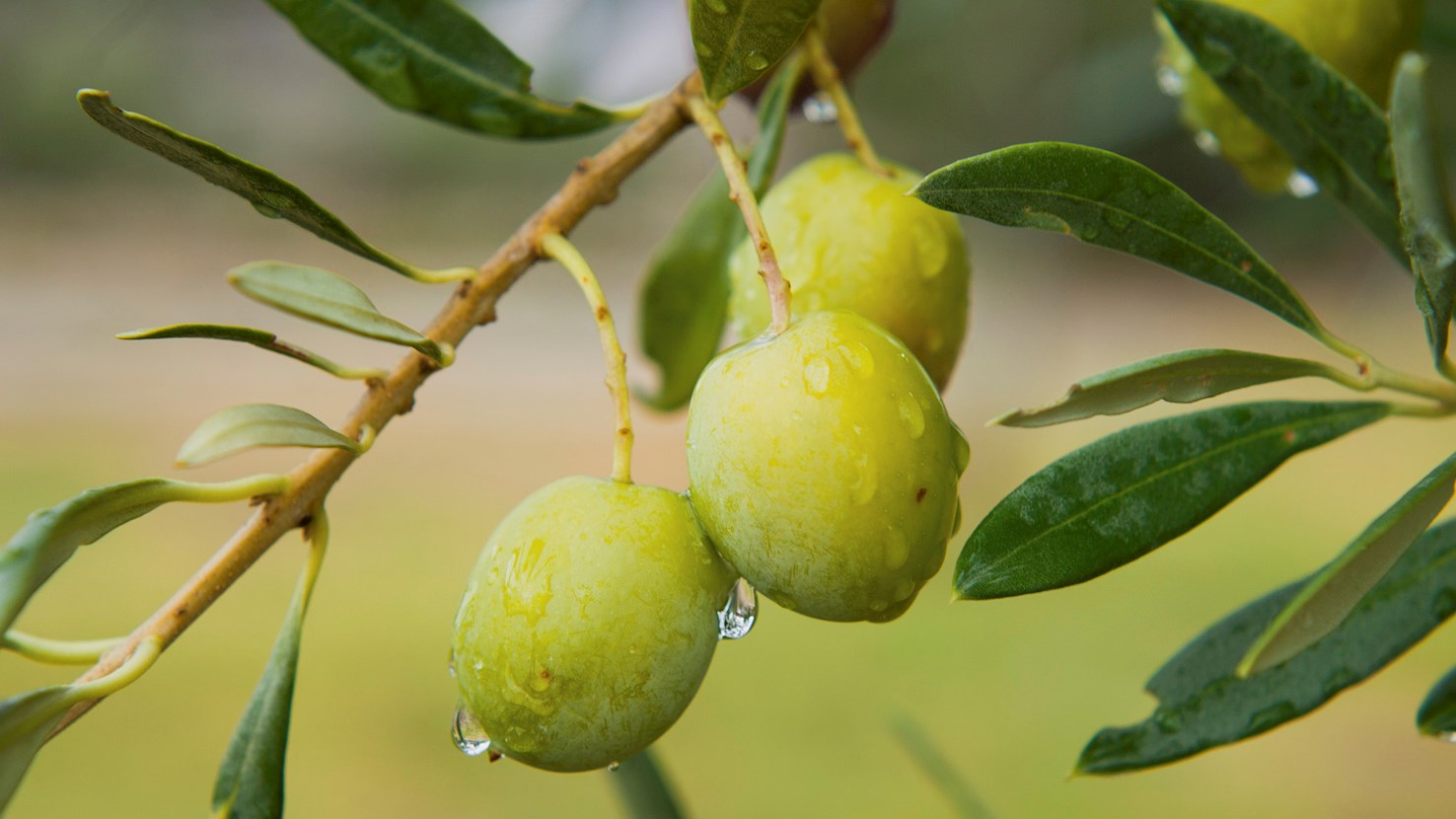
Aceituna Aloreña de Málaga is a seasoned table olive of the Aloreña variety. The olives must be harvested at the appropriate time of ripeness and are then split, brined and fermented. These olives are traditionally seasoned with thyme, fennel, garlic, and pepper. Due to their low content of oleuropein, these olives don't require treatment to remove bitterness and are only brined in the mixture of salt and water. These olives are light green to pale yellow in color and are firm and crisp in texture. Aceituna Aloreña de Málaga is quite bitter and very flavorful, and the flesh is easily removed from the pit. There are three types of these olives, and they differ from one another solely in the way that they are prepared: verdes frescas (fresh green), tradicionales (traditional) and curadas (cured).
Hojiblanca is a prominent variety of olive originating from the southern regions of Spain, primarily cultivated in the autonomous communities of Andalusia, including Córdoba, Málaga, and Seville. Known for its resilience and adaptability, this olive variety thrives in the Mediterranean climate characteristic of the area, where hot, dry summers and mild winters prevail. The name "Hojiblanca" translates to "white leaf," a reference to the distinct silvery underside of its leaves, which distinguishes it visually from other olive cultivars. This variety plays a significant role in Spanish olive oil production, prized for its balanced flavor profile and versatility. The cultivation of Hojiblanca olives dates back several centuries, reflecting a long-standing agricultural practice embedded in Andalusian culture and economy. Over time, the variety has become a staple among olive growers due to its robustness and high yield potential. Its importance surged in the 20th century as Spain increased its presence in the global olive oil market, with Hojiblanca contributing notably to the country's status as the world's leading olive oil producer. The olives are harvested primarily in the late autumn to early winter months, ensuring optimal ripeness that balances oil content and flavor. In terms of preparation, Hojiblanca olives are harvested either for direct oil extraction or as table olives. When processed for oil, they undergo cold pressing to preserve their characteristic flavor, which combines fruity, slightly bitter, and peppery notes with hints of herbs and fresh almonds. This makes Hojiblanca olive oil a favorite for both cooking and finishing dishes, lending depth without overpowering other ingredients. For table olives, they are typically cured using methods such as brining or lye treatment, which mellow their natural bitterness while retaining a firm texture and subtle fruity taste. The olives’ dual-purpose nature enhances their appeal in culinary applications. Hojiblanca olives and their oil are integral to Andalusian cuisine, often enjoyed in salads, tapas, grilled vegetables, and as a finishing drizzle on meats and seafood. Their oil is also favored by chefs for frying due to its relatively high smoke point and robust flavor. Additionally, the olive's presence extends beyond Spain, as Hojiblanca olive oil is exported widely and appreciated by international consumers who seek authentic Mediterranean ingredients.
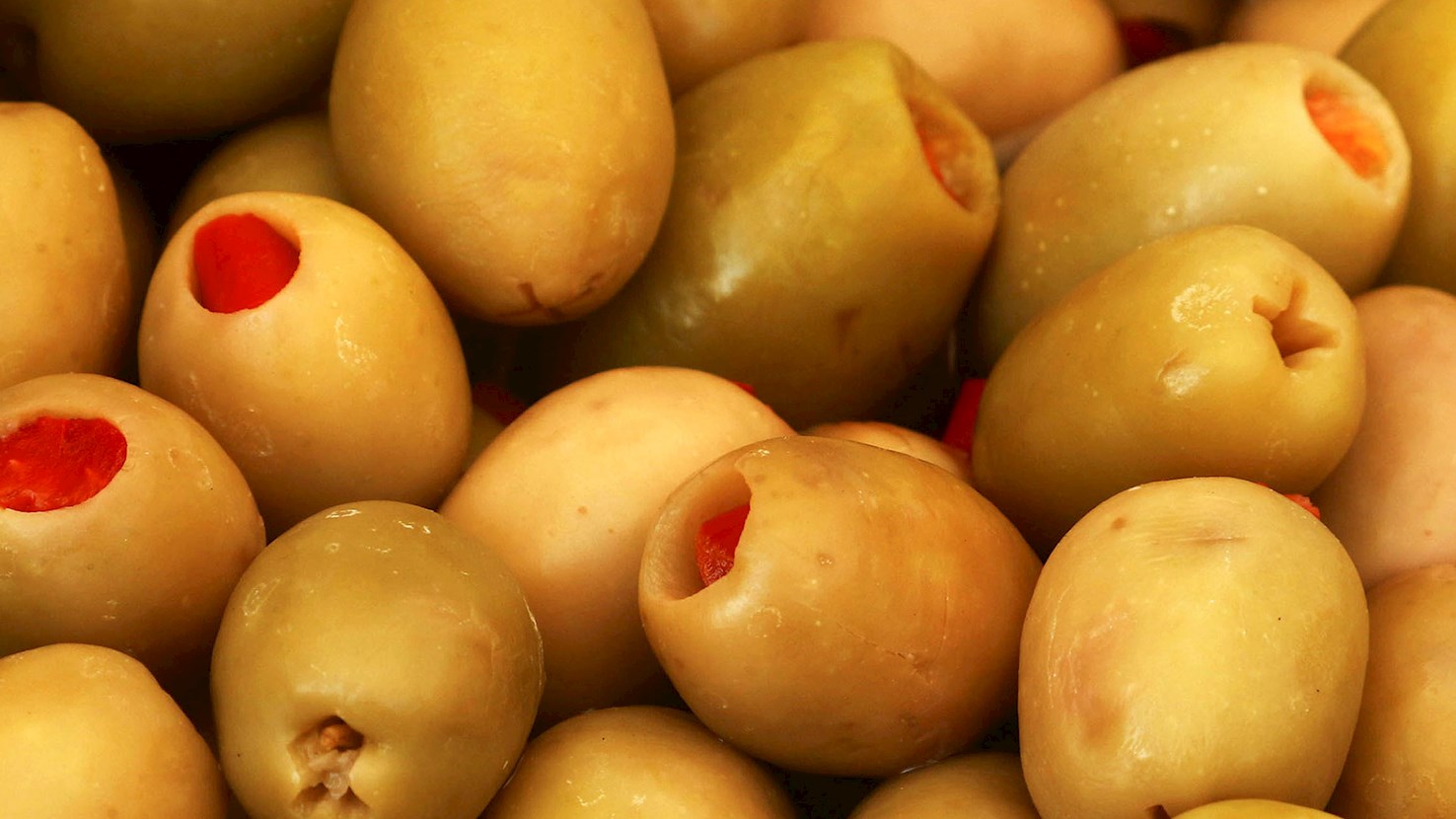
Aceituna Manzanilla de Sevilla is a renowned variety of Spanish olives, mainly grown around the Andalusian town of Seville. They are often used as table olives, but due to the high oil content, they can also be used for the production of olive oil. The word manzanillo, meaning little apple in Spanish, refers to its regular and spherical shape resembling an apple. Aceituna Manzanilla de Sevilla has a well balanced, delicate, bitter-salty flavor, and it can be consumed in both green and black (ripened) state. Manzanilla olives can be preserved in brine or marinated - they are often pitted and stuffed with garlic or pimento.
Aceituna Gordal de Sevilla, or Sevillian Gordal olive, is an olive variety grown exclusively in the area around Seville. It is one of the largest variety of olives in the world, with fibrous texture and plenty of firm, meaty flesh. The fruit contains very little oil, so they are only used as table olives. Once boiled and fermented, they develop a straw yellow color, with little white spots or lenticels that make them stand out from other olives. Sevillian Gordal olives are best enjoyed with good jamon and a glass of sherry - due to their size, they are also often used in tapas.
Verdial is an olive variety native to southern Spain, especially prominent in the Andalusia region. Known for its relatively large, round fruit, Verdial olives are valued both as table olives and for producing high-quality olive oil. The olives thrive in the Mediterranean climate characterized by hot, dry summers and mild, wet winters, which contribute to their distinct flavor and oil composition. Verdial olive oil is appreciated for its balanced profile, often exhibiting fruity notes with mild bitterness and a subtle peppery finish. These characteristics make it versatile in culinary applications, suitable for drizzling, cooking, and finishing dishes. The cultivation of Verdial olives has a long history in Andalusia, where olive farming forms a vital part of the agricultural economy and cultural identity. Farmers have developed specific harvesting and curing techniques to optimize both the taste and texture of Verdial olives, ensuring they maintain their distinctive qualities. When prepared as table olives, Verdial fruits undergo curing processes such as brining or dry curing to reduce natural bitterness and develop a firm yet tender texture. For oil production, the olives are typically cold-pressed shortly after harvest to preserve their fresh and complex flavors. Verdial olives and their oils are integral to Andalusian cuisine, widely used in everyday cooking and local dishes. They complement a variety of Mediterranean foods, pairing well with fresh vegetables, seafood, and grilled meats.
TasteAtlas food rankings are based on the ratings of the TasteAtlas audience, with a series of mechanisms that recognize real users and that ignore bot,
nationalist or local patriotic ratings, and give additional value to the ratings of users that the system recognizes as knowledgeable.
For the “Top 5 Andalusian Olives” list until June 10, 2026, 31 ratings were recorded, of which 20 were recognized by the system as legitimate.
TasteAtlas Rankings should not be seen as the final global conclusion about food. Their purpose is to promote excellent local foods,
instill pride in traditional dishes, and arouse curiosity about dishes you haven’t tried.