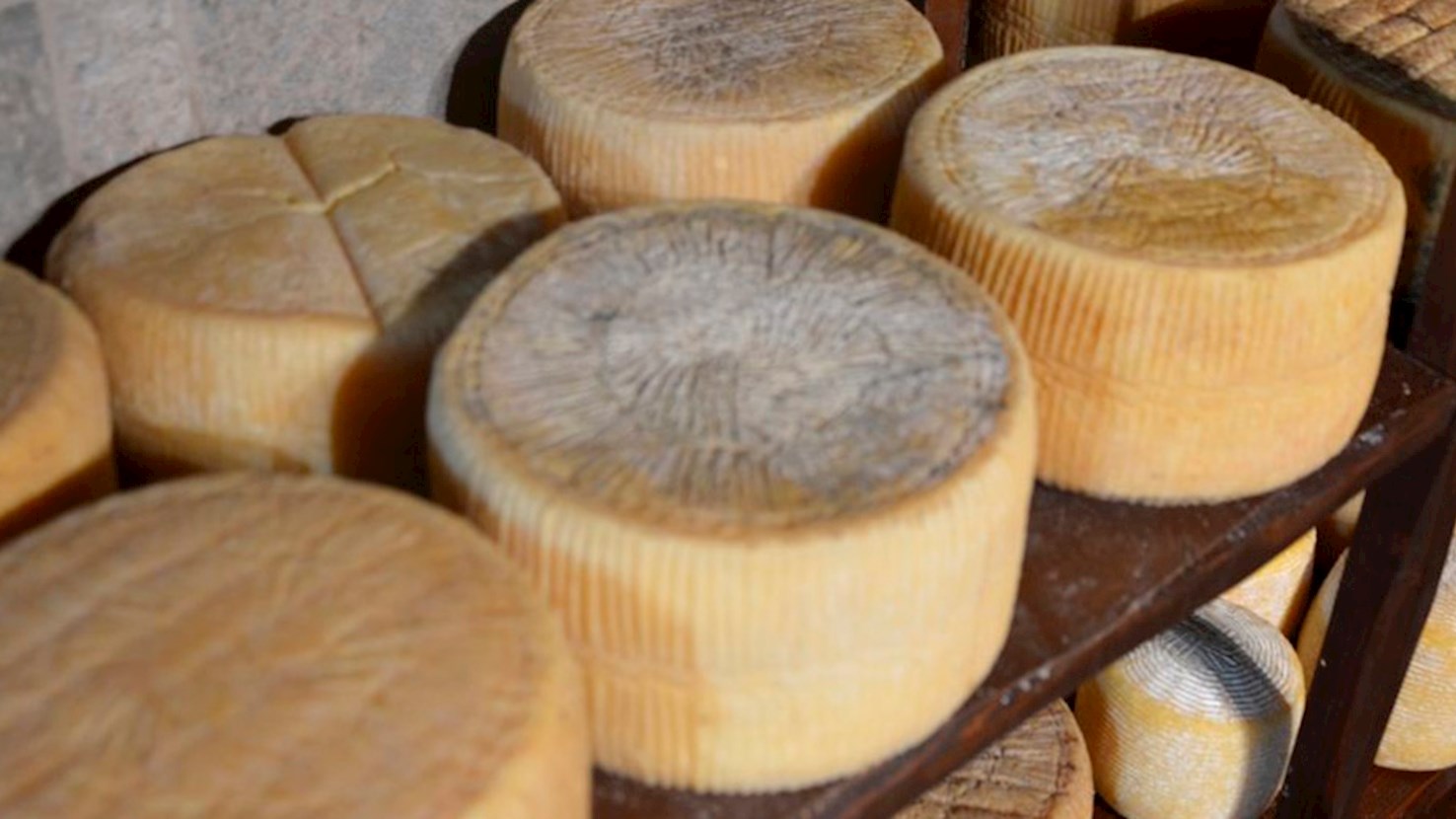
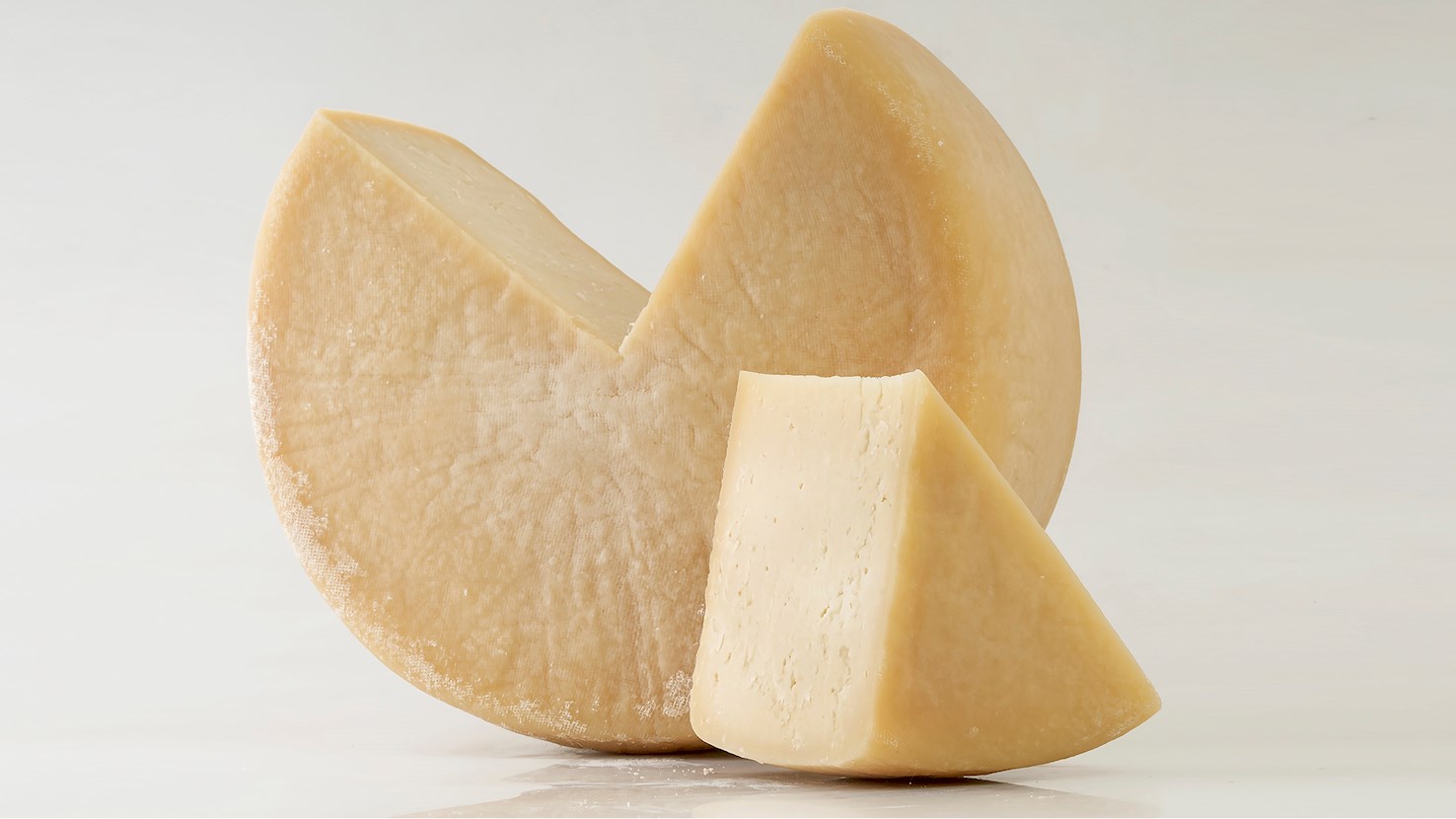
This cheese has been produced on the island of Naxos in the Cyclades for at least a century. Graviera Naxou is made from pasteurised cow milk or a mixture of sheep milk and a maximum of 20% goat milk. It has a thin rind and a light yellow, compact interior filled with small holes. Graviera Naxou is a hard table cheese with a refreshing taste and light aroma. It has a maximum moisture content of 38% and at least 40% fat content. The milk used for its production comes from breeds that are traditionally raised on the island, which feed on a diet of local plants and herbs that give their milk a unique flavor. It can be sliced and served as an appetizer, fried and eaten as a snack, or grated over pasta.
This hard cheese is obtained exclusively from the milk of cows bred on the island of Syros in the Cyclades archipelago, where this famous cheese has been produced for more than half a century using the same traditional methods. The local cows are fed a diet of aromatic local plants and herbs, which contribute to the buttery scent of this cheese. It is quite hard and compact with many irregular holes. It has a cylindrical shape and a color that varies from light to intense yellow. Its aroma is unique and it has a pleasantly spicy taste with an aftertaste reminiscent of dried fruit. It can be eaten plain as a table cheese, and it is also often used as an ingredient in soufflés or omelettes.
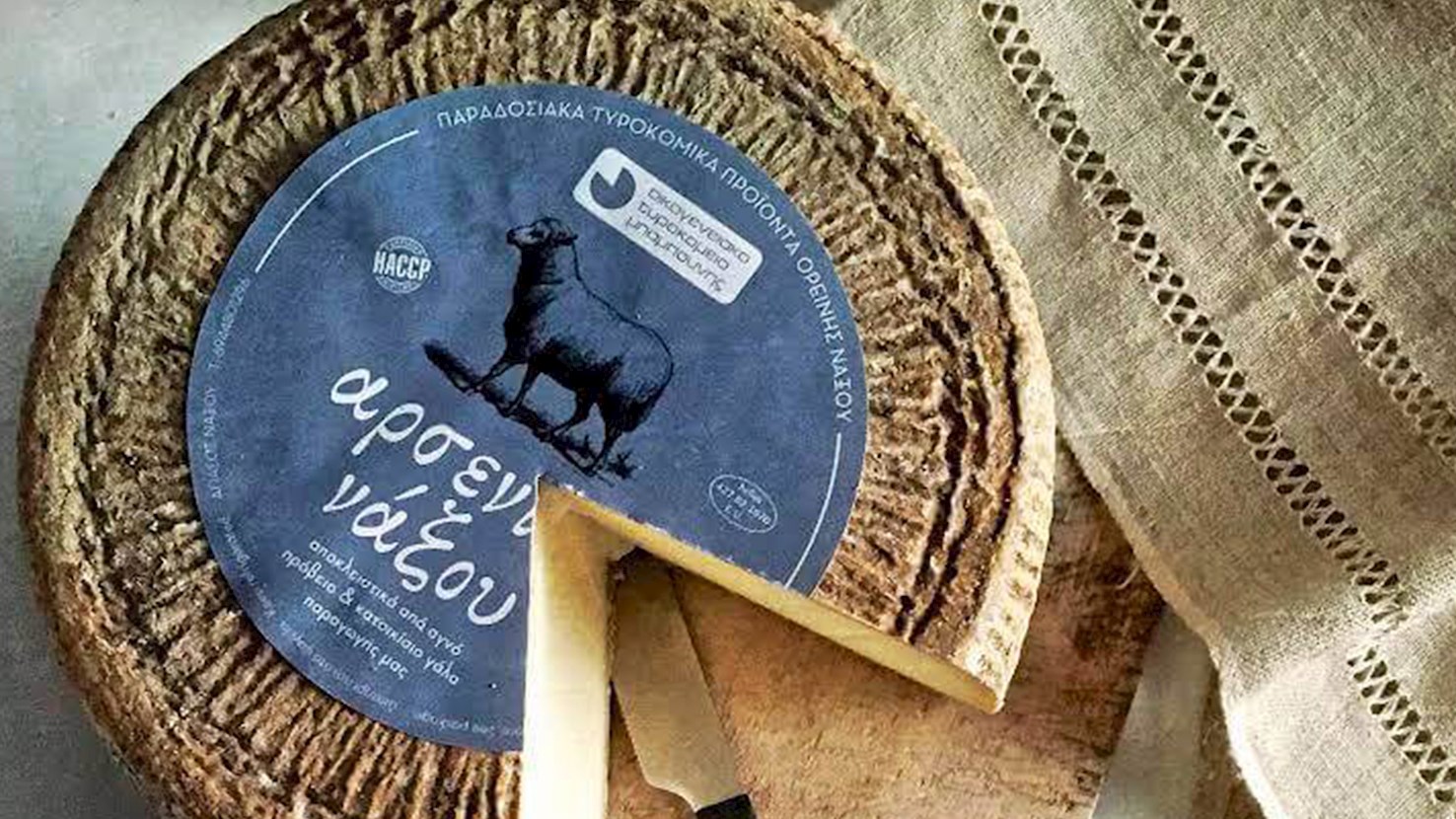
Arseniko Naxou is a Greek cheese originating from the island of Naxos, hence the name. The word arseniko means male or masculine. The cheese is made from raw sheep’s and goat’s milk with the addition of whey. After it thickens, the cheese is drained in specially designed baskets known as tirovola. In the beginning, its flavor is sweet, but after a few months it develops a spicy and aromatic flavor.
Krasotyri is a traditional cheese originating from Kos. The cheese is made from sheep's or goat's milk (or a combination). The milk is warmed, pasteurized, placed into containers, then traditional elongated wicker molds where it drains. After it's out of the mold, the cheese is placed in brine, drained, then combined with wine sediment and left to age for up to 20 days. The result is a distinct flavor of wine. The texture is delicate and soft, and the aromas are reminiscent of wine. It's recommended to serve Krasotyri with homemade bread and vegetables drizzled with olive oil.
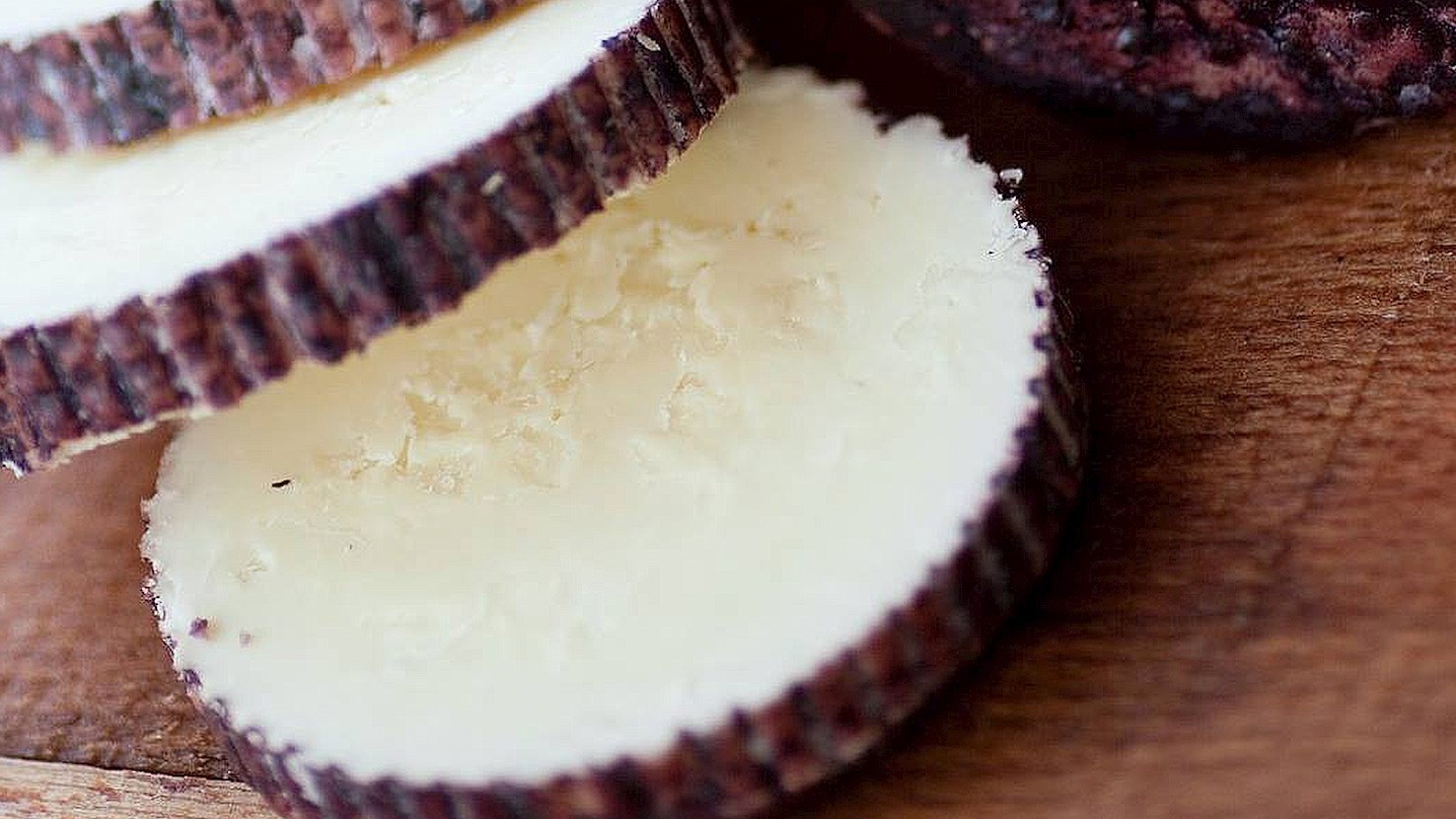
Krasotiri Ko or Tiri tis Possias is a traditional soft cheese hailing from the island of Kos. The cheese is made from pasteurized or raw goat's or sheep's milk or a blend of the two. It's ripened for a minimum of one day in brine, and then for at least one month in a thick combination of boiled red wine sediment (also known as possia). Krasotiri ko has a reddish natural rind, but on the inside it's completely white. The cheese is shaped into long cylinders with visible indentations from the cheese molds on the exterior. The aromas are reminiscent of wine, while the flavor is milky and acidic. On Kos, this cheese is often included on the 'Greek Breafkast' menus in the island's hotels. For the best experience, serve it with watermelon or pair it with Greek coffee.
Naxos Kefalotyri is a traditional hard cheese from the Greek island of Naxos, known for its unique flavor and production methods. Unlike typical Kefalotyri, which is made from sheep or goat milk, Naxos Kefalotyri often includes a significant proportion of cow’s milk due to the island’s strong dairy farming traditions. This results in a milder and creamier taste compared to other regional variations. The cheese has a firm, crumbly texture with a slightly salty, tangy flavor and nutty undertones, making it versatile for grating, frying, or enjoying as a table cheese. Its pale yellow color and compact surface are characteristic of its traditional production. Naxos Kefalotyri is often used in classic Greek dishes such as saganaki or grated over pasta and pairs well with bread and wine.
Kariki is a unique and traditional cheese originating from the Greek island of Tinos. Kariki is essentially a blue cheese, but what makes it particularly special is that it's made from the milk of cows, sheep, or goats, and then aged in hollowed out and dried gourds, a method that contributes to its unique taste and texture. The aging process is crucial to developing Kariki's characteristic flavors. The cheese is first left to mature in the gourds for up to six months, where it naturally ferments and develops a strong, pungent flavor, similar to other well-known blue cheeses. However, unlike many blue cheeses that are inoculated with specific molds, Kariki's fermentation process relies on the natural flora present in the gourds and the environment, which gives it a distinct terroir-specific taste that cannot be replicated elsewhere. Kariki is not very well-known outside of Greece, making it a rare find for cheese enthusiasts. Its flavor is described as intensely spicy and salty, with a creamy yet crumbly texture. Due to its strong taste, Kariki is often enjoyed as part of a cheese platter, paired with sweet fruits like figs or pears, or used sparingly in salads and other dishes to add a depth of flavor.
Sitaka is a traditional dairy product that originates from the Dodecanese islands in Greece, particularly from the island of Kasos. It is a unique soft cheese with a yogurt texture, made from goat's or sheep's milk. Sitaka is known for its rich, creamy texture, which is similar to clotted cream, making it spreadable and perfect for a variety of uses. The flavor of sitaka is tangy and slightly sour, with a buttery undertone that comes from the slow fermentation process. Its production involves cooking milk gently until it thickens, allowing the cream to rise to the top. After straining the mixture, the fat is skimmed off, resulting in sitaka. The final product undergoes fermentation, which gives it its distinctive taste. Sitaka is traditionally served in a dish called makaronia me sitaka, where it is mixed with thick pasta and often topped with fried onions. It is also enjoyed spread on bread or crackers, sometimes with a drizzle of honey to balance its tanginess. Additionally, sitaka can be used as a dip or paired with appetizers, making it a versatile and beloved part of the local cuisine on the Dodecanese islands.
TasteAtlas food rankings are based on the ratings of the TasteAtlas audience, with a series of mechanisms that recognize real users and that ignore bot,
nationalist or local patriotic ratings, and give additional value to the ratings of users that the system recognizes as knowledgeable.
TasteAtlas Rankings should not be seen as the final global conclusion about food. Their purpose is to promote excellent local foods,
instill pride in traditional dishes, and arouse curiosity about dishes you haven’t tried.







What People Say