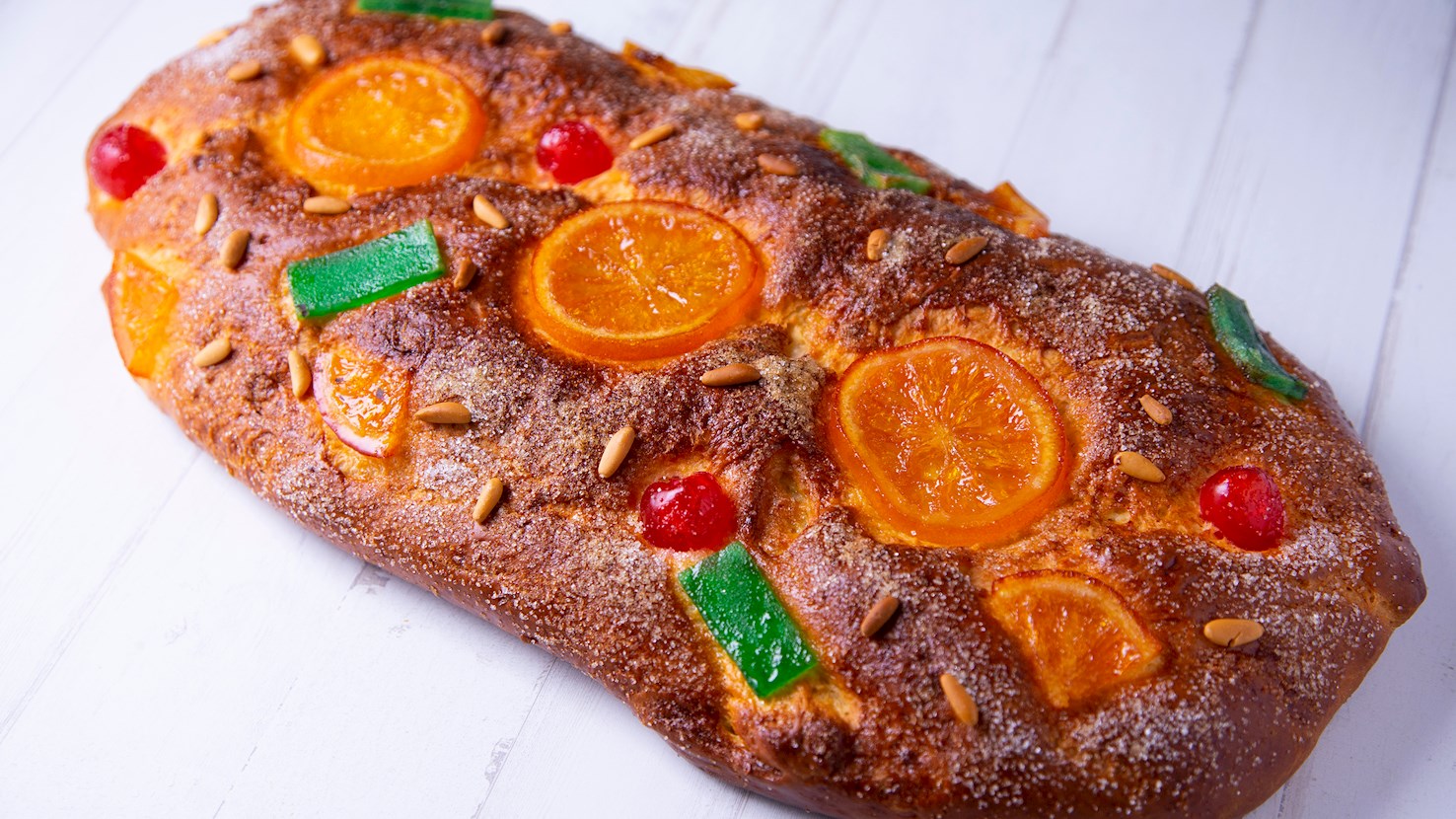
Considered the star of Catalan baked goods, coca is a traditional pastry prepared in a few varieties: sweet, savory, open, and closed. Depending on the variety, coca may take on various shapes and forms and resemble a flatbread, a pizza, or even a cake. The sweet variety usually consists of flour, sugar, butter, and eggs, and it is typically topped or filled with candied fruit, marzipan, cream, or pine nuts. The savory variety is prepared in the same way, but sugar and eggs are replaced by yeast and salt. A wide range of ingredients may go on top or inside savory cocas, including vegetables, fish, meat, and mushrooms, among others. Savory varieties include pizza-like cocas or coques as they’re called in Catalan, such as coca de recapte (topped with vegetables and fish) and coca de xulla (with bacon and other meat). There is also a variety that combines sweet and savory flavors such as coca de llardons, a flat coca which is made with pork cracklings, pine nuts, and sugar. In Spain, special varieties of coca are prepared for almost all important festivities and celebrations, and even national holidays such as La Mercè (Festival of the Virgin of Mercy) and La Diada de Cataluña (National Day of Catalonia) have their own unique cocas. Some of these include coca de San Juan (a sweet cake for the eve of St. John’s Day), mona de Pascua (an Easter cake eaten during the Semana Santa), and coca de reyes (a sweet Christmas cake for the Day of the Kings).
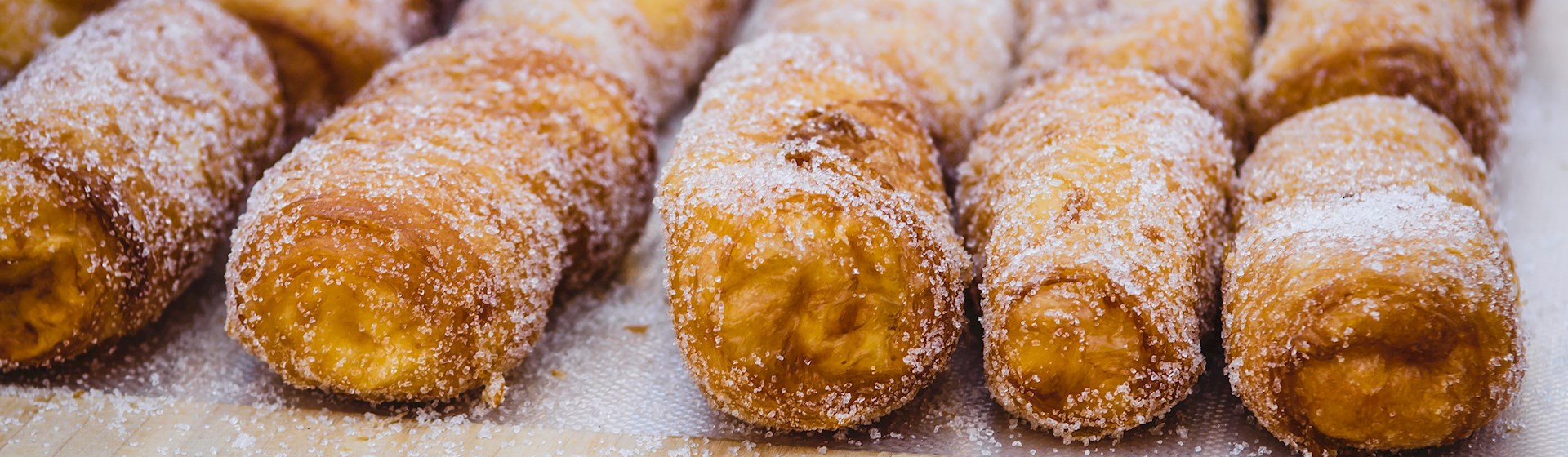
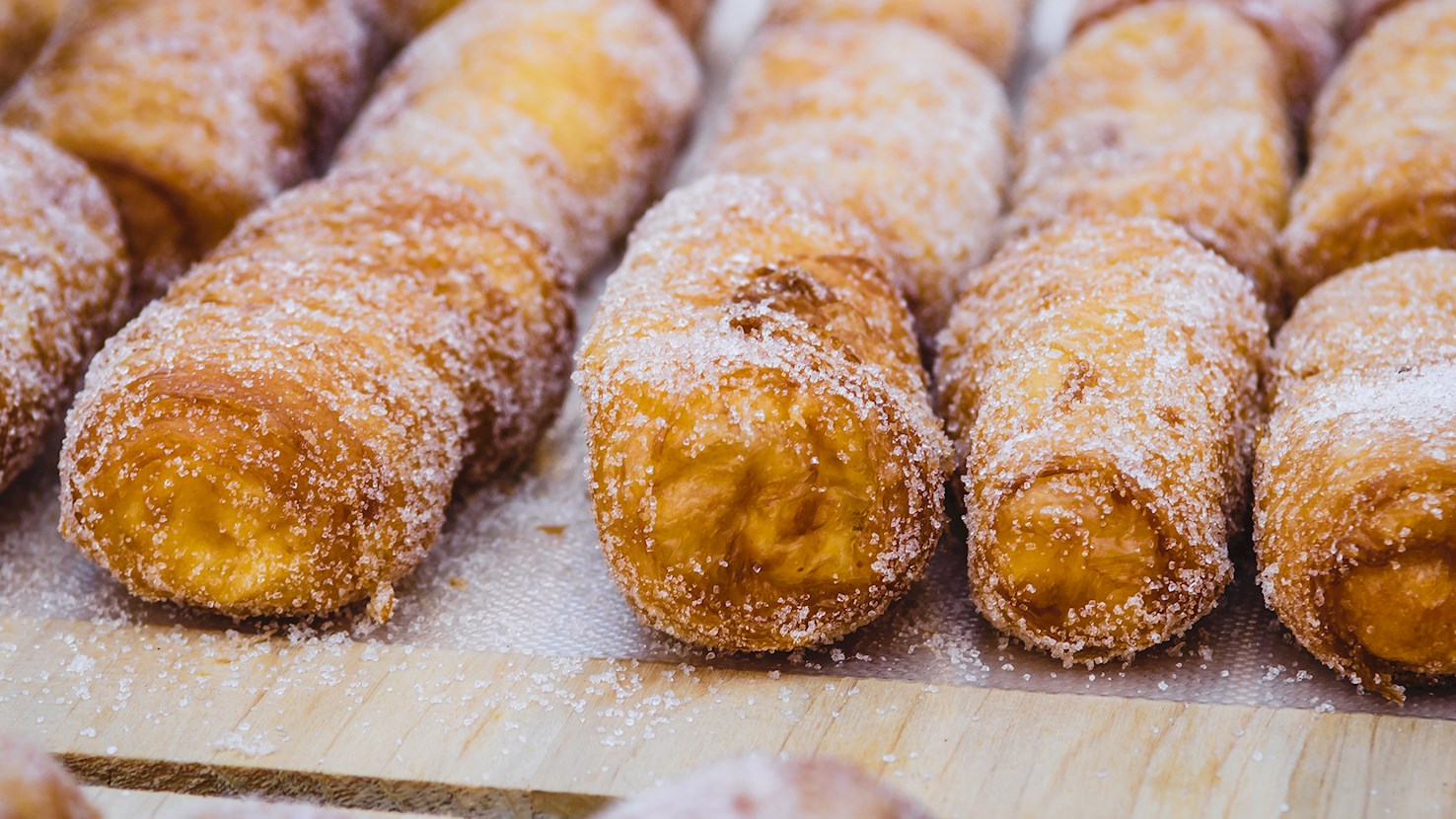
Xuixo (pronounced shoo-shoo) is a Catalan dessert originating from the city of Girona. Dating back to the 1920s, this pastry is cylindrical-shaped and filled with the delectable crema catalana. It's probably best to describe it as a cross between a croissant and a churro, but filled with cream. The xuixo is then deep-fried and sprinkled with crystallized sugar. According to the city's lore, an acrobat named Tarlá fell in love with a pastry chef's daughter, and one day when the chef entered his bakery he heard a sneeze, leading him to Tarlá's hiding spot. The acrobat then promised to marry the chef's daughter and gave him a recipe for this special pastry, which was named after the sneeze that gave the acrobat away. Nowadays, xuixo is usually eaten for breakfast or tea, and it's so popular that there is even a xuixo parade that goes through the city's streets, and when it's finished, the participants are given a treat of fresh xuixos.
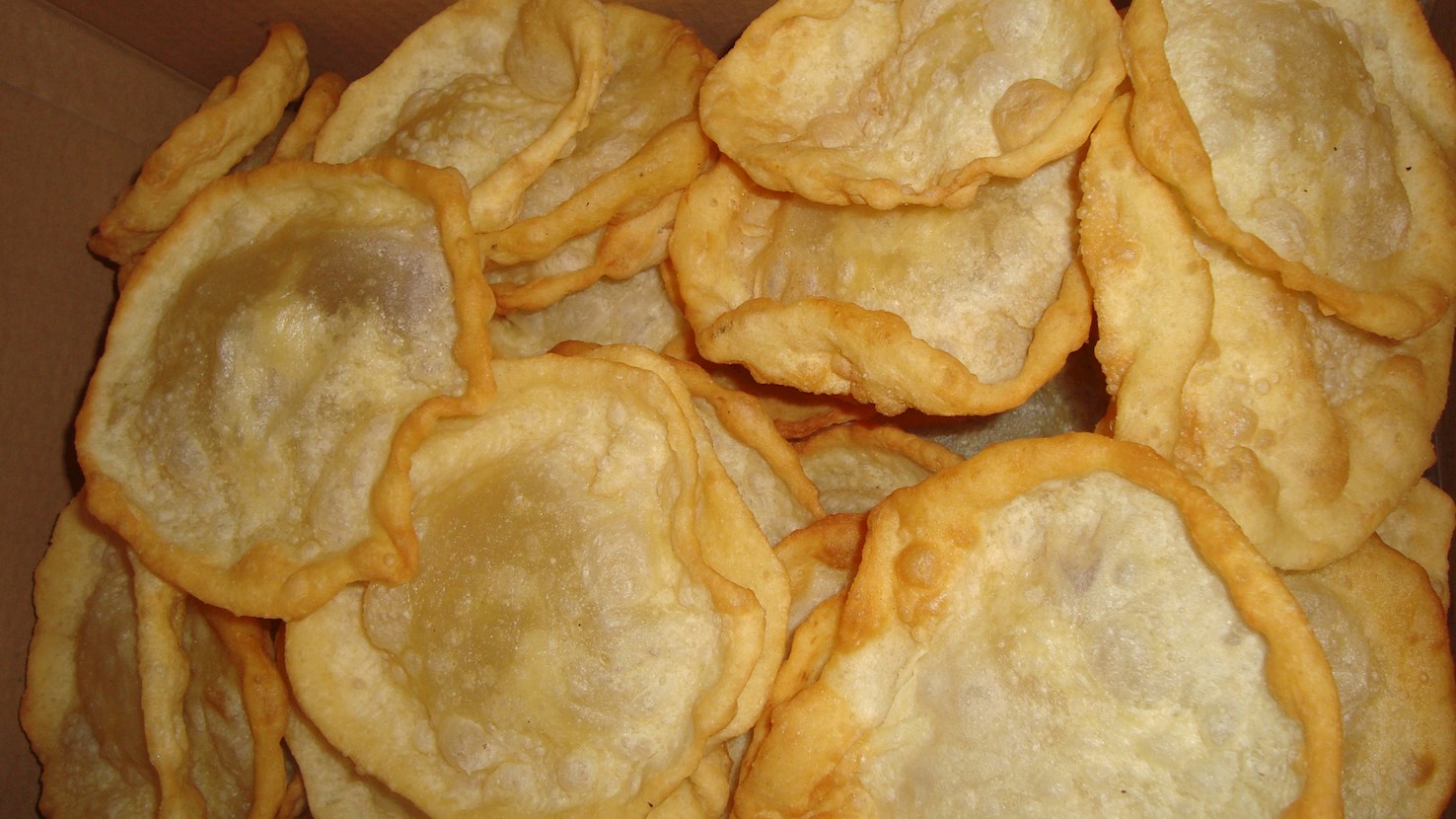
Orelletes are Spanish and Andorran pastries that are especially popular in Catalonia and Valencia. The dough is made with flour, sugar, eggs, anisette, and olive oil, but it might also include orange and lemon juice or zest. The dough is traditionally fried by women, and in the past, the pastries had often been consumed after mass, when they were accompanied by a glass of sweet local wine. The name orelletes means ears, referring to the ear-like shape of these festive pastries that are present at most weddings, birthdays, and similar celebrations. For the best experience, orelletes should be dusted with powdered sugar.
TasteAtlas food rankings are based on the ratings of the TasteAtlas audience, with a series of mechanisms that recognize real users and that ignore bot,
nationalist or local patriotic ratings, and give additional value to the ratings of users that the system recognizes as knowledgeable.
For the “Top 3 Catalan Pastries” list until June 15, 2026, 103 ratings were recorded, of which 73 were recognized by the system as legitimate.
TasteAtlas Rankings should not be seen as the final global conclusion about food. Their purpose is to promote excellent local foods,
instill pride in traditional dishes, and arouse curiosity about dishes you haven’t tried.