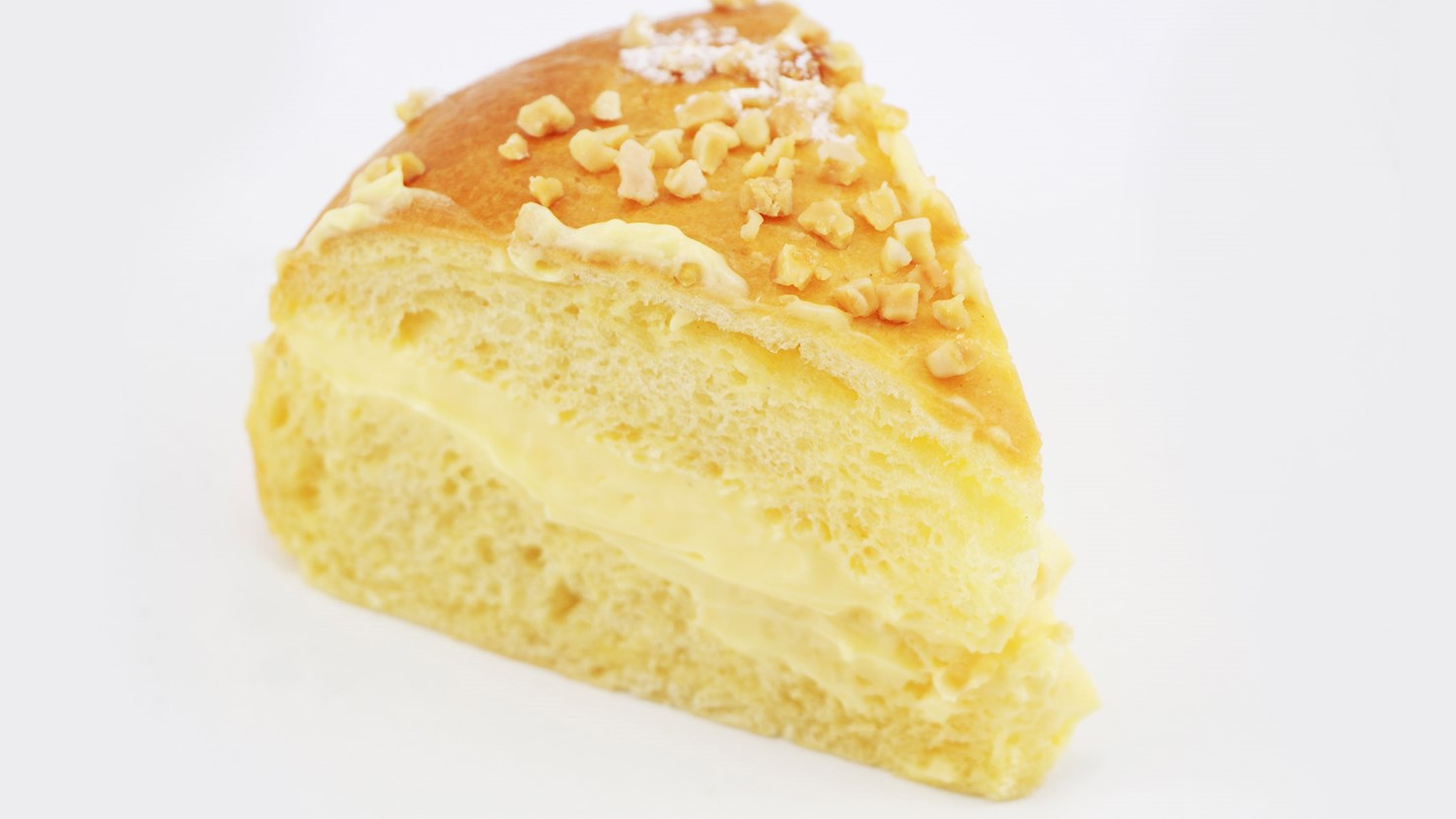
Tarte tropézienne is a French dessert consisting of a brioche pastry, usually orange flavored, which is cut in half and filled with a creamy filling. Since the original recipe is a secret, fillings may vary, including pastry cream, buttercream, crème diplomat, or other pastry cream varieties. The top is usually decorated with sliced almonds, pearl sugar, or a thin layer of powdered sugar. The recipe for this cream-filled brioche has arrived in France with the Polish pastry chef named Alexandre Micka in 1950. In 1955, during the filming of a famous movie in Saint-Tropez, Micka was supplying the entire crew with his food, and when he offered his brioche invention to the renowned actress Brigitte Bardot, she named the dessert pie de Saint-Tropez. Micka later patented his invention under the name tarte tropézienne. and the original recipe has not been revealed up to this day.
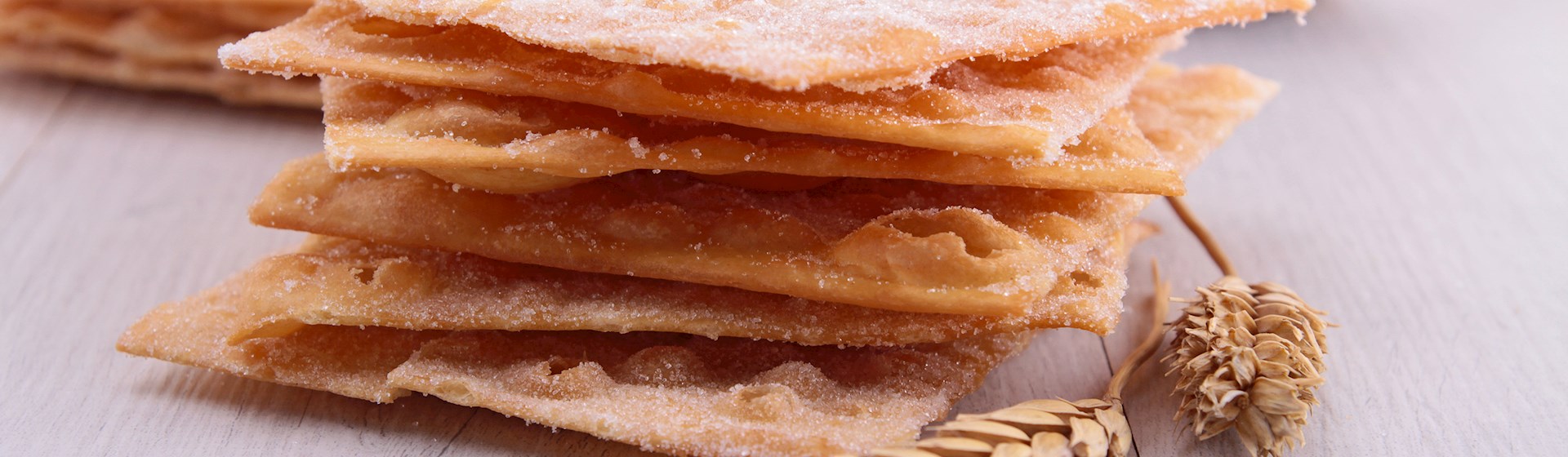
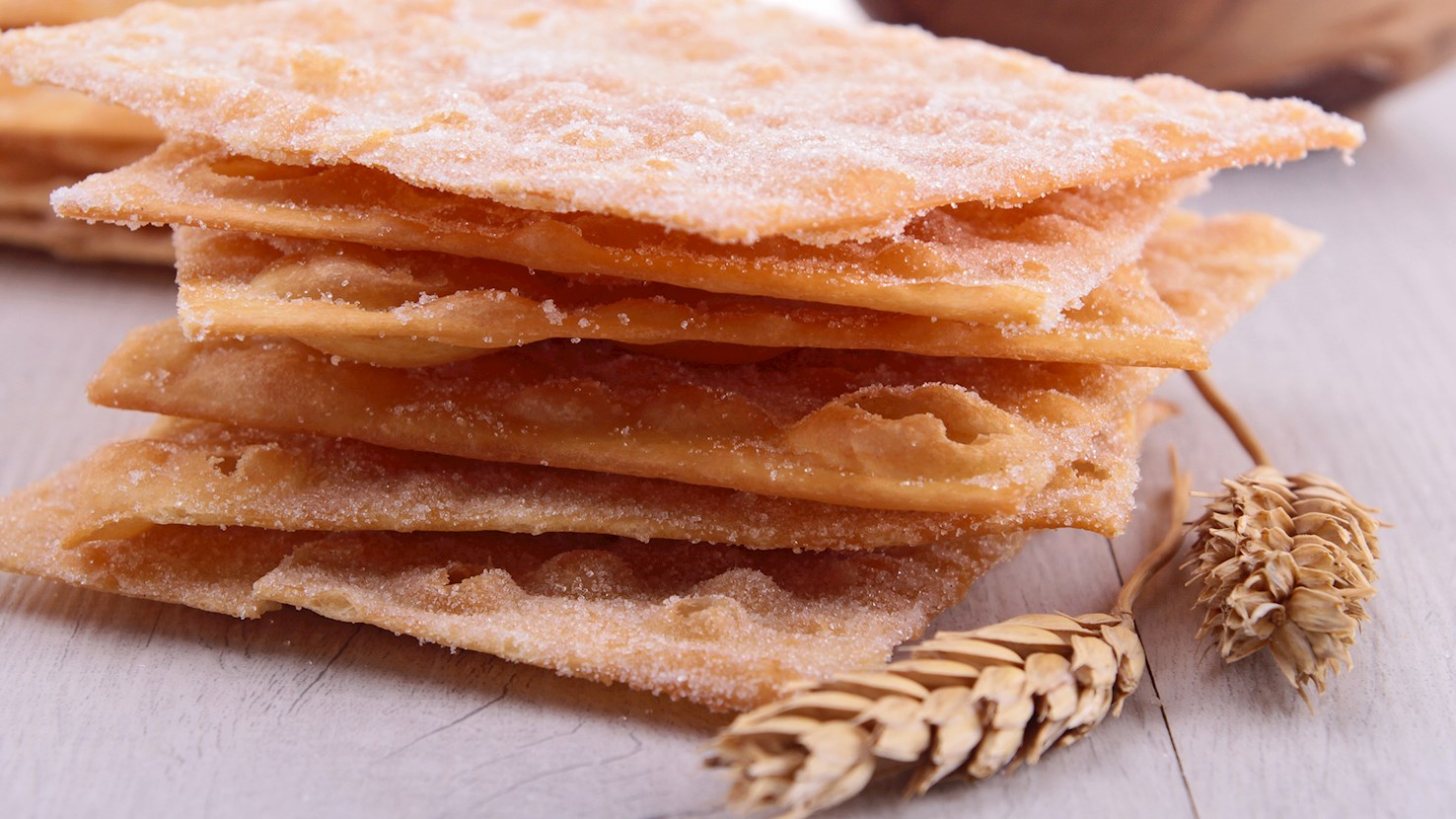
Hailing from Provence, oreillettes are the thin, rectangular sheets of deep-fried dough. They are prepared with flour, eggs, and butter, and are usually enriched with citrus zest and orange flower water. Traditionally enjoyed during the Carnival season, they are best served freshly prepared and generously coated in powdered sugar. These crispy fritters are also enjoyed in the neighboring Occitanie region.
Ganses are small, fried pastries from the county of Nice, deeply rooted in the region’s carnival-time baking. They have been made for centuries in local households where simple ingredients like flour, eggs, butter and citrus zest were transformed into treats for festive gatherings. The dough is prepared by combining flour, sugar, butter, eggs, milk, a pinch of salt and a leavening agent, then flavouring with lemon or orange zest. After resting, the dough is rolled thinly, cut into strips or diamonds, often knotted, and deep-fried in olive oil until golden. While still warm, the ganses are generously dusted with powdered sugar. Variations include using wheat flour blends, increasing the aromatics such as orange blossom water, omitting the leavening for a denser texture, or dipping the finished pastry in honey rather than sugar. What distinguishes ganses is their shape, knotting or folding of the dough strips, and the use of olive oil for frying in the Nice version, which gives them a crisp exterior and light interior. Ganses are eaten during the carnival season, at village squares or family gatherings, and are best enjoyed fresh, paired with coffee, tea or hot chocolate, and they accompany dessert wine or sparkling wine as a sweet finish to a meal.
Gibassier is a French pastry consisting of flour, sugar, eggs, butter, and olive oil. Orange peel, orange-flavored water, and anise seed are also often incorporated into the dough, giving it a unique flavor. The pastry is usually served for breakfast, and tradition says that a piece of bread should be consumed by dipping it into honey butter while it is still warm. Gibassier is likely to have originated in the village of Lourmarin, in the French region of Provence. Today, the pastry is even popular outside France, due to the founder of the San Francisco Baking Institute, named Michel Suas, who popularized it in the 2000s.
Chichi frégi is a sweet fried pastry from Provence, known for its elongated shape, crisp exterior, and soft interior, often coated with sugar and enjoyed as a snack or dessert. Its origins are linked to southern coastal towns where it was prepared by street vendors and at fairs, particularly around fishing ports, where it became a staple treat for locals and visitors alike. The name “chichi” is believed to derive from an old Provençal dialect, while “frégi” refers to the frying process. Over time, it became a familiar sight at markets, seaside promenades, and festive gatherings, where its simple preparation and appealing texture ensured its enduring popularity. The preparation begins with a smooth dough made from flour, water, sugar, yeast, a little salt, and olive oil. The dough is kneaded until elastic and left to rise until doubled in size. Once ready, it is shaped into long, ridged strips using a piping bag or a special nozzle, then carefully lowered into hot oil and fried until golden and puffed. The chichis are drained on paper and rolled in granulated sugar while still warm, ensuring the coating adheres evenly. Some recipes enrich the dough with orange blossom water for fragrance; others use chickpea flour mixed with wheat flour, a nod to older regional methods that give the pastry a distinctive flavour and slightly denser texture. Variations include filling the chichis with pastry cream, chocolate, or jam after frying, or dusting them with cinnamon sugar for extra aroma. In certain regions, they are made shorter and thicker, while in others they remain long and slender, often exceeding 30 centimetres (12 inches). A characteristic feature of chichi frégi is its dual texture — crisp on the outside and soft inside — and the fact that it is almost always made and eaten fresh, ideally straight from the fryer. Chichi frégi is most often sold at markets, seaside stalls, fairs, and festivals, particularly during the warmer months. It is eaten plain as a sweet snack, sometimes served with coffee or hot chocolate, and it pairs well with sweet dessert wines or fortified wines. In coastal towns, it is a staple of summer evenings, enjoyed while walking along promenades or at celebrations and gatherings. Its simplicity, freshness, and connection to local street food culture have secured it a lasting place in French culinary life.
TasteAtlas food rankings are based on the ratings of the TasteAtlas audience, with a series of mechanisms that recognize real users and that ignore bot,
nationalist or local patriotic ratings, and give additional value to the ratings of users that the system recognizes as knowledgeable.
For the “Top 5 Provençal Pastries” list until May 15, 2026, 82 ratings were recorded, of which 64 were recognized by the system as legitimate.
TasteAtlas Rankings should not be seen as the final global conclusion about food. Their purpose is to promote excellent local foods,
instill pride in traditional dishes, and arouse curiosity about dishes you haven’t tried.