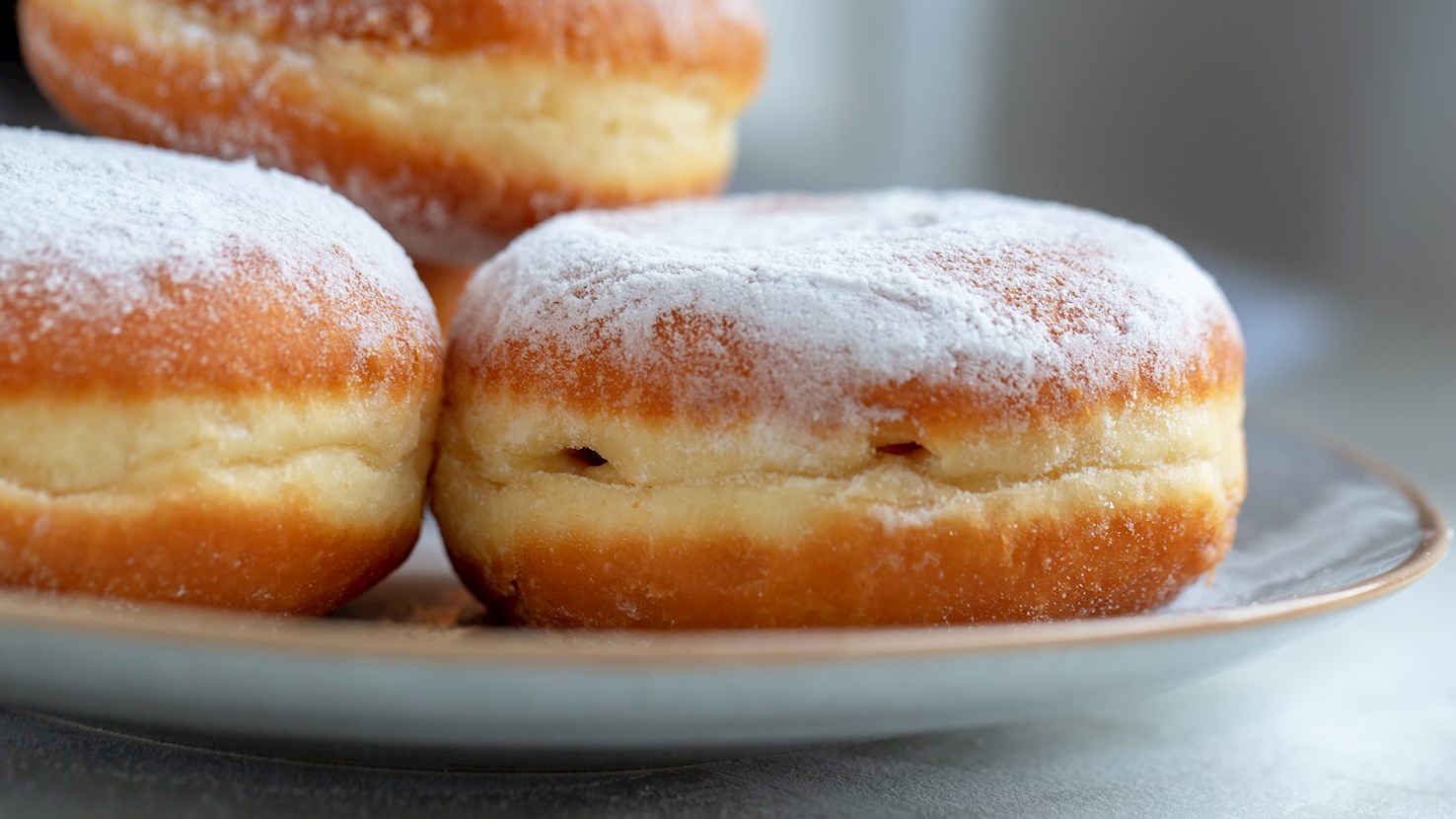
Krapfen was probably the first European-style doughnut to appear, followed by similar varieties in other countries. These pastries are traditionally prepared with leavened dough that is deep-fried until golden and crispy on the outside, while they remain soft, light, and airy on the inside. Though krapfen can be prepared plain, they are most often filled or topped with jams, and vanilla or chocolate custards, while the top is usually dusted with powdered sugar or drizzled with chocolate. The origin of the word krapfen dates back to 9th century, and the recipes in German can be found as early as the 14th century. The sweet versions of the pastry became predominant, and have remained closely associated with the Carnival, a festive period which precedes Christian Lent. Interestingly, during the Carnival, one krapfen in a batch filled with jam and fruit preserves might contain a filling of mustard as a prank. It is believed that doughnuts spread throughout many central European countries, which adopted the technique but used different regional names. Consequently, krapfen in Germany goes under Berliner, pfannkuchen, faschingskrapfen, krebbel, or kreppel. In Poland, they are known as pączki or krepel, Hungarians refer to them as fánk, Slovak as šišky, while the Czechs use the term koblihy. In Slovenia, they are better known as krofi, while the standard name throughout Croatia, Bosnia, and Serbia is krofne or krafne. In St. Petersburg, Russia, the doughnuts are known as pyshki (either ring-shaped or without a hole), and there is a local café that has been serving pyshki prepared from the original recipe since the 1960s.
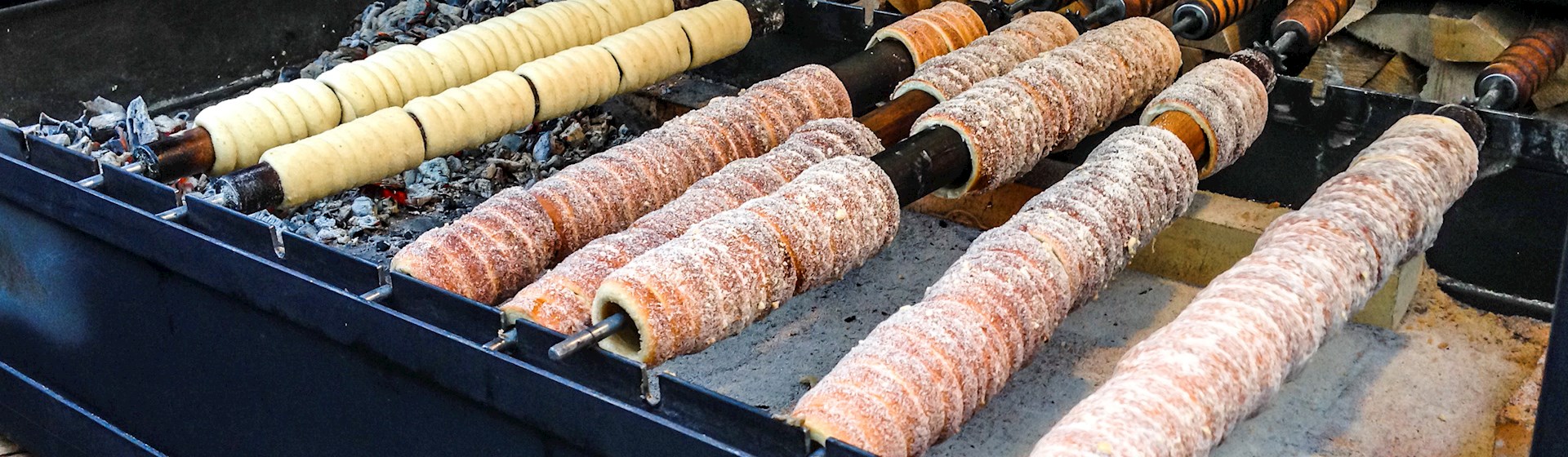
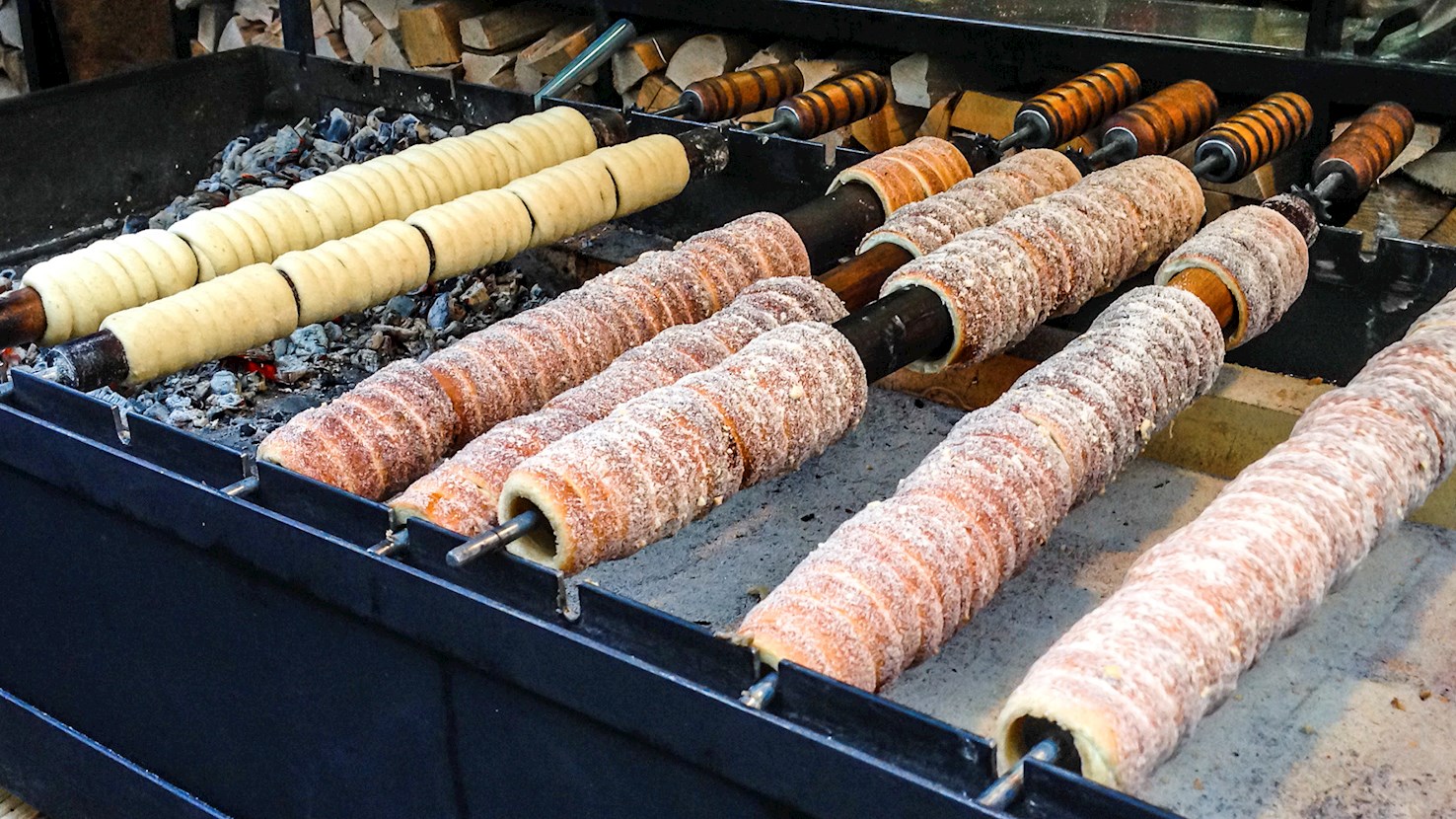
Skalický trdelník is a hollow, cylindrical pastry product made by winding the soft dough on a roller called 'trdlo'. This unusually shaped pastry is produced in the northwestern part of the Slovak Republic, near the border with the Czech Republic to the north and the Myjava River to the south. According to food historians, a Hungarian general was in the town of Skalica in the 18th century, on the border between Slovakia and the Czech Republic, and his companion was a Transylvanian cook who had a recipe for this delicacy. Once the dough is on the roller, it is coated with egg whites and sprinkled with walnuts, almonds or apricots, baked until golden and sprinkled with caster and vanilla sugar. On the exterior, the trdelnik is golden brown but remains yellow on the interior. The dough is soft and has an aroma of chopped nuts, apricots, and vanilla. Enjoy it on various street corners, squares and fairs in Slovakia and the Czech Republic, freshly baked and wrapped in paper. In Hungary, there is an almost-identical, slightly larger pastry known as kürtőskalács, but unlike Skalický trdelník, it is not protected under the EU law.
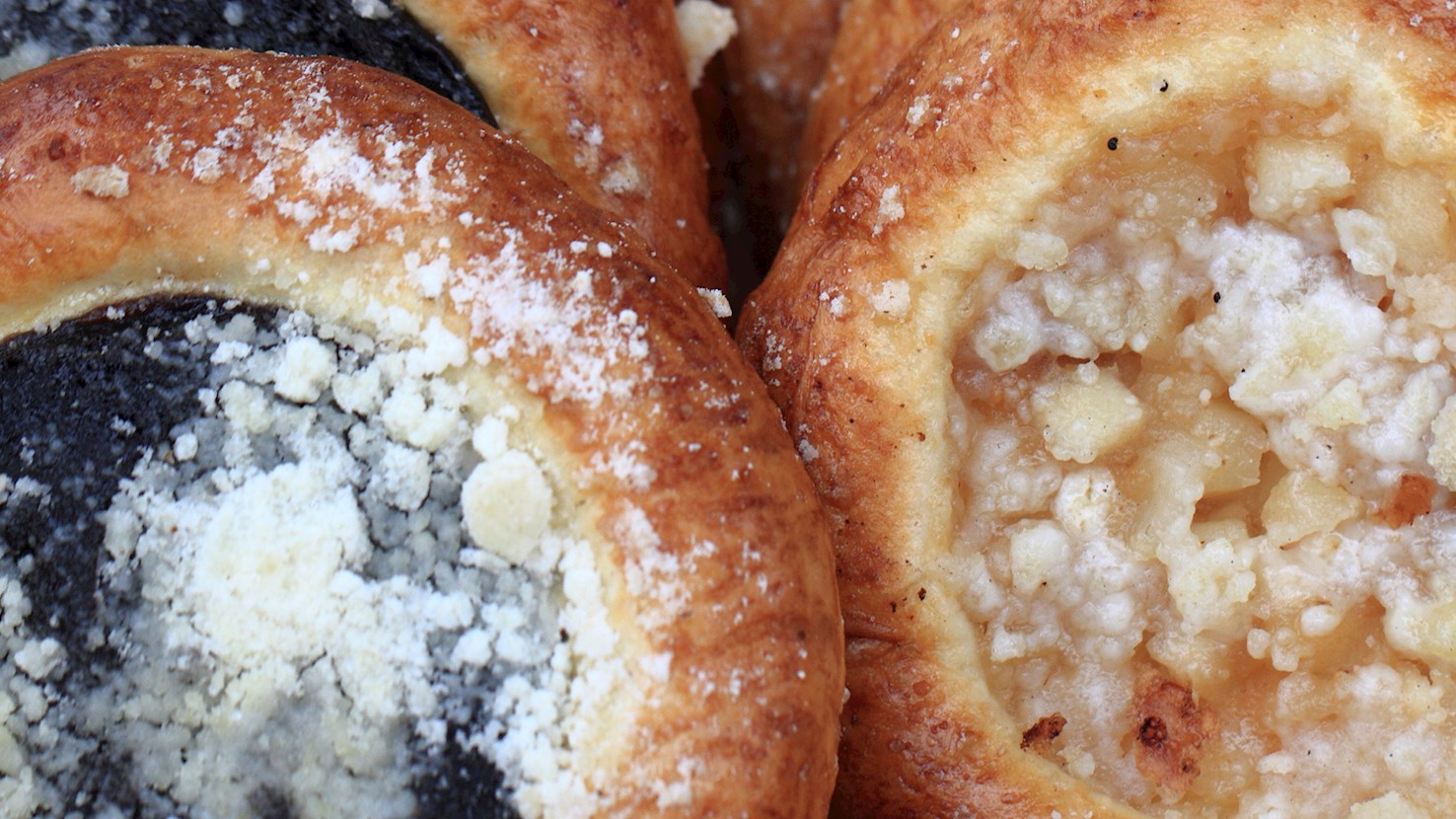
Koláče or kolache (plural: kolaches) is a sweet pastry roll that is traditionally topped with plums or plum jam, cheese, or poppy seeds. Modern toppings might include fruit such as apricots, blueberries, cherries, lemon, pineapples, or raisins. Its name is derived from the Czech word kola, meaning wheels, referring to the traditional, round shape of the pastry. The pastry originated in the 1700s in the Czech Republic, where round breads are some of the earliest ritual foods, usually symbolizing the sun and the moon. With numerous Czech people immigrating to Texas in the early 1900s, koláče grew in popularity in the United States of America, and today there are numerous Czech-American koláče festivals throughout the country. Although many Czechs insist on preparing their own koláče at home, it has become a commercial product in America, sold in numerous bakeries, doughnut stores, and even in some restaurants.
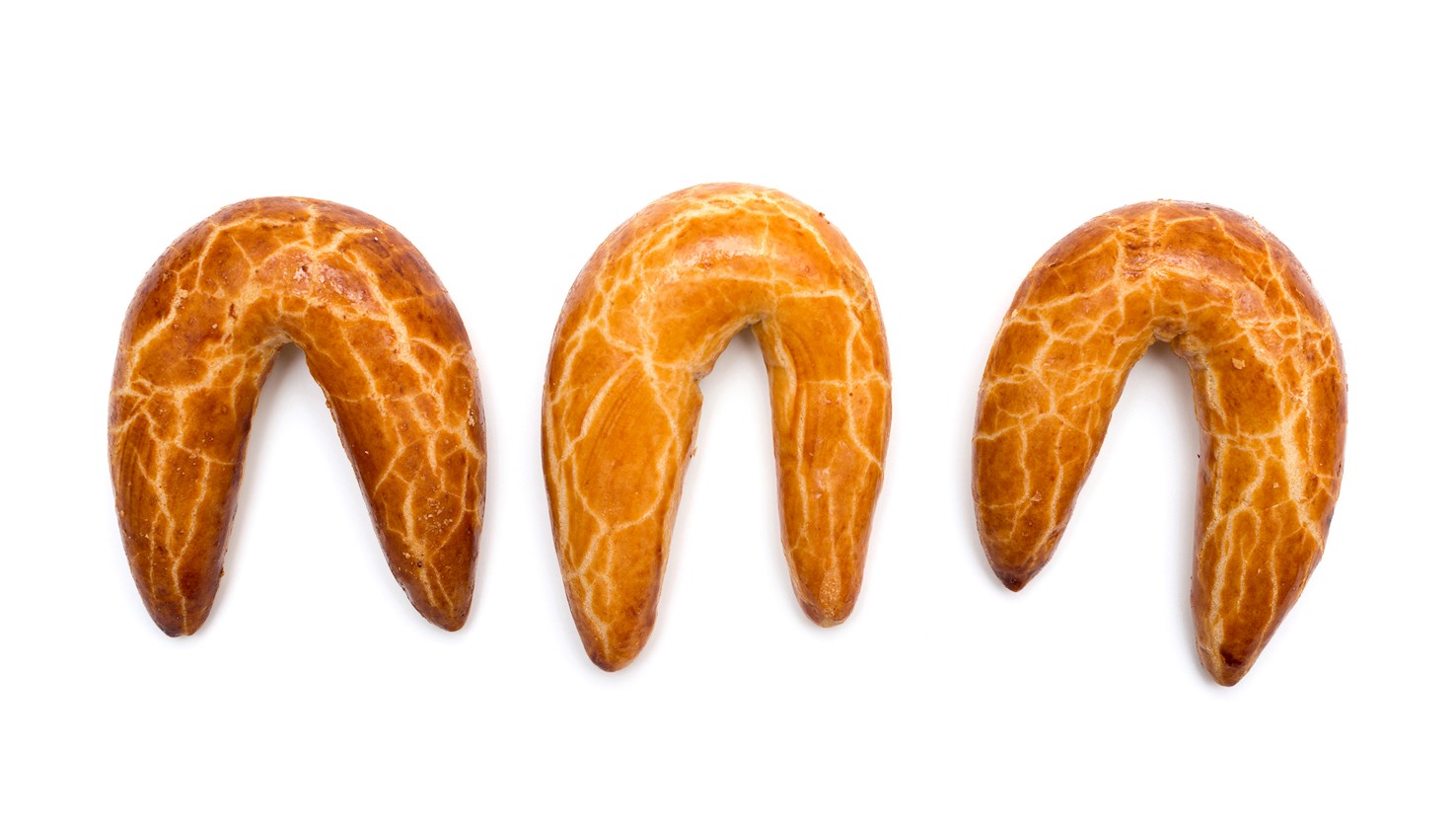
Bratislavský rožok is a traditional Slovakian pastry that has a centuries-long tradition. It comes in two different varieties – the crescent-shaped pastry filled with poppy seeds or the C-shaped variety that is filled with ground walnuts. Each rožok needs to be rolled manually, have an equal amount of pastry and filling, and the typical glossy, golden marble pattern on the top. The first official mention of Bratislavský rožok dates back to 1785 when it was introduced at a patisserie in Bratislava. Through history, it was integrated into Austrian and Hungarian cuisine, where it is better known as Pressburger Kipfel and Pozsonyi kifli.
TasteAtlas food rankings are based on the ratings of the TasteAtlas audience, with a series of mechanisms that recognize real users and that ignore bot,
nationalist or local patriotic ratings, and give additional value to the ratings of users that the system recognizes as knowledgeable.
For the “Top 4 Slovak Pastries” list until October 15, 2026, 1,241 ratings were recorded, of which 977 were recognized by the system as legitimate.
TasteAtlas Rankings should not be seen as the final global conclusion about food. Their purpose is to promote excellent local foods,
instill pride in traditional dishes, and arouse curiosity about dishes you haven’t tried.



What People Say