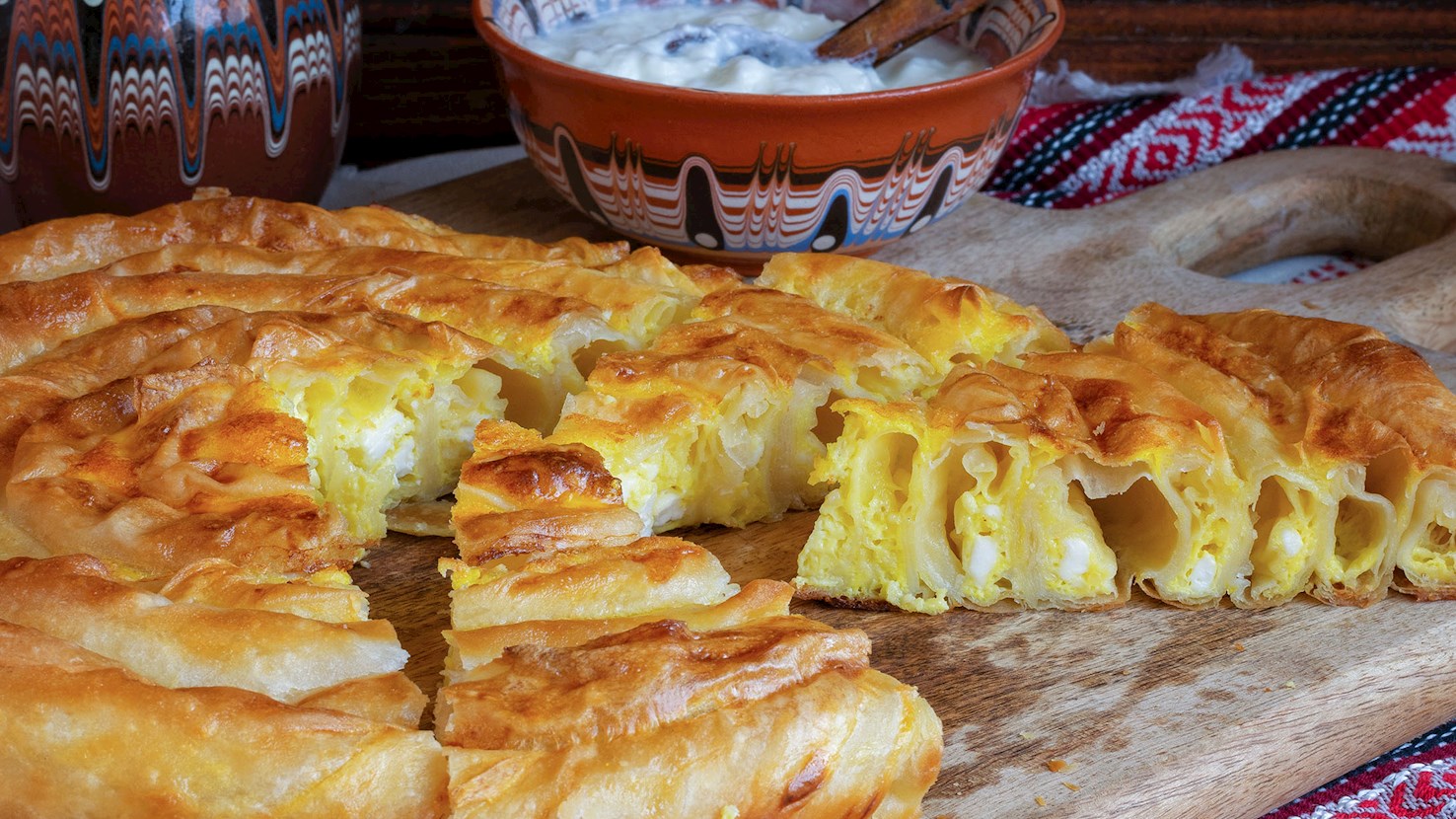
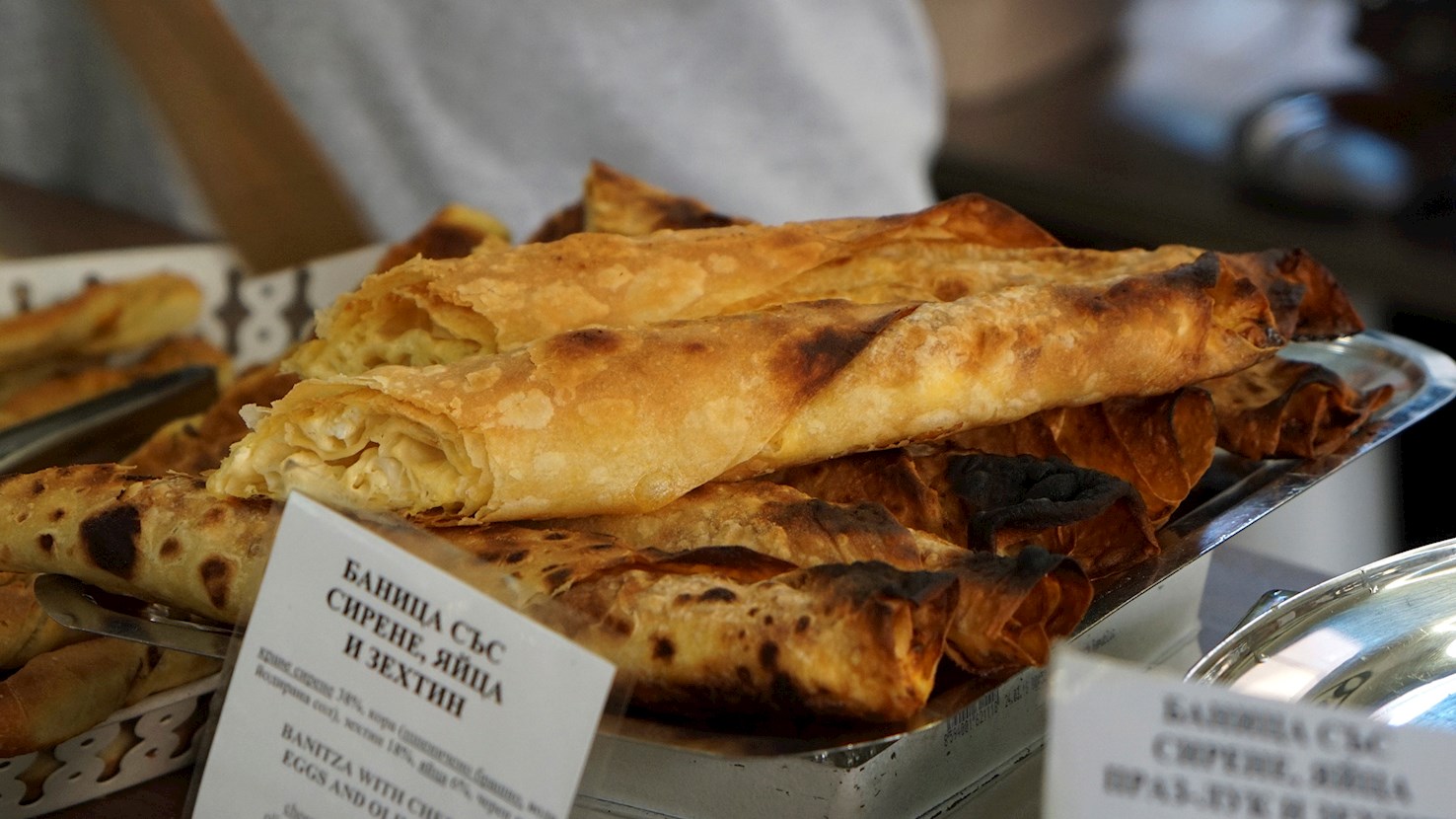
The Bulgarian pie banitsa made with cheese is the main version of this traditional pie. It's made by layering sheets of buttered phyllo pastry with a combination of eggs, yogurt, and cheese such as sirene and feta. There's an optional ingredient in the preparation of banitsa and it's baking soda, which makes the yogurt rise and makes the pie fluffier and richer in flavor. Traditionally, banitsa with cheese was prepared and served on Christmas and New Year's Eve, but nowadays it can also be bought throughout the year at grocery stores, street vendors, kiosks, and pretty much everywhere. Apart from this basic variety, there are also other types of savory or sweet banitsa pies filled with various vegetables and fruits.
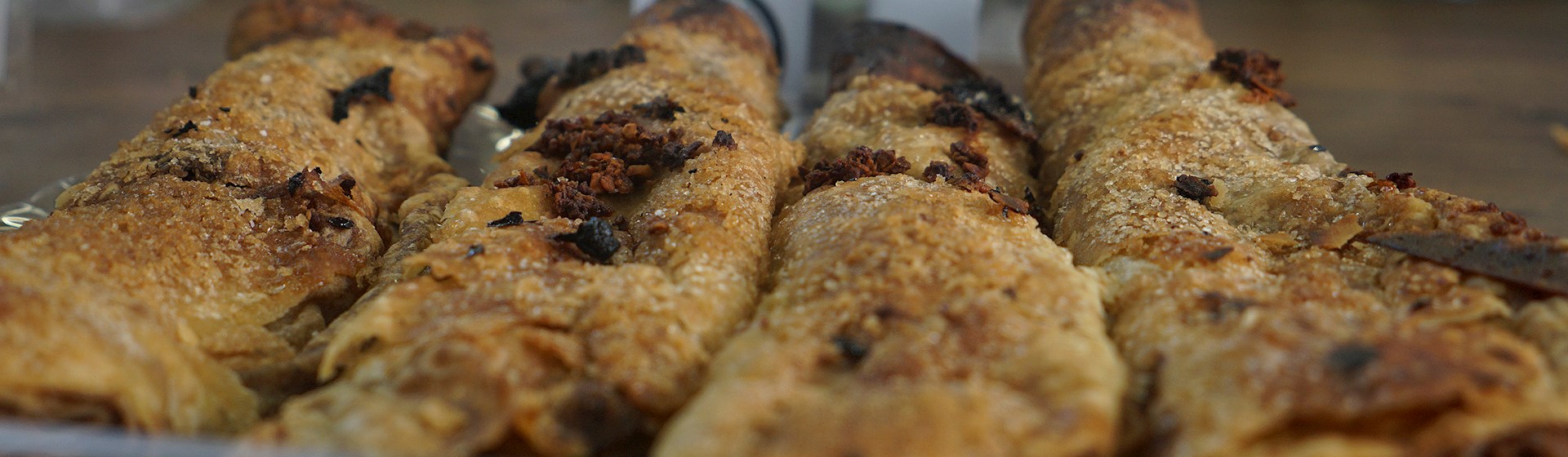
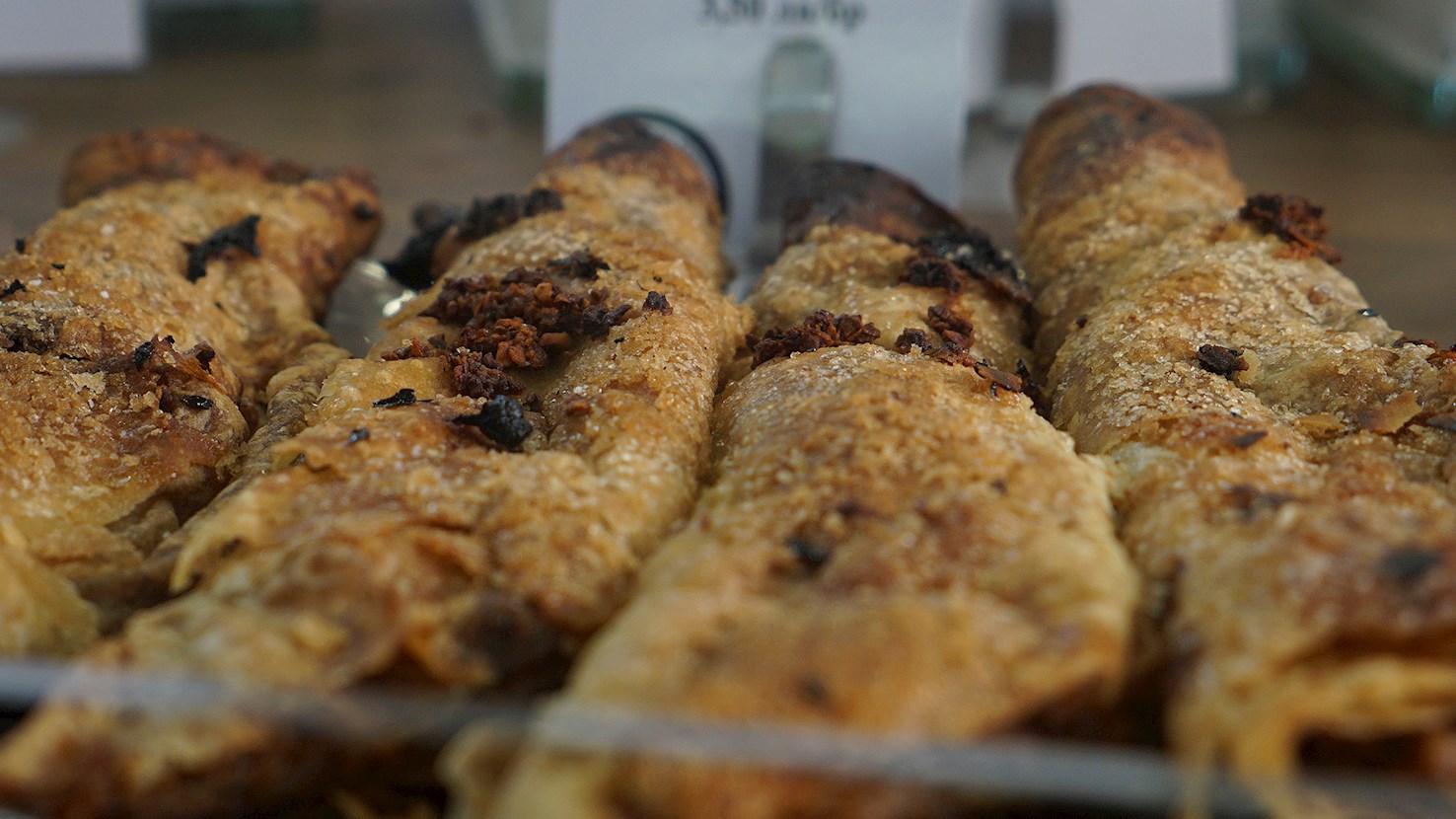
Tikvenik is a traditional pastry consisting of thin sheets of dough that are filled with grated pumpkin, coarsely ground walnuts, sugar, and cinnamon. This pumpkin dessert is a sweet version of banitsa, a phyllo pastry pie that comes in numerous varieties. When baked, tikvenik is sliced and usually dusted with powdered sugar. Tikvenik is often associated with winter season, and it is commonly served on Christmas Eve, but it can be enjoyed throughout the year, either as a delicious breakfast or a hearty dessert. It is recommended to pair tikvenik with a glass of yogurt on the side.
Banitsa is a traditional dish made by layering sheets of buttered phyllo pastry with a mixture of eggs, yogurt, and white cheeses like sirene and feta for the simple and classic version of banitsa. Besides the classic cheese filling, this pie can be made with a myriad of different fillings, either savory or sweet. Pies with a vegetable filling, such as zelnik, are especially popular. Zelnik can be made with a filling of leafy greens like spinach, nettles, marigold, parsley, and cabbage, praznik is made with leeks, while luchnik is a type of banitsa filled with onions. When it comes to sweet versions of banitsa, there is tikvenik, made with pumpkins, an apple-filled variety, shtrudel, or mlecna banitsa - made by soaking pastry sheets with a mixture of milk, eggs, sugar, and vanilla. Bulgarians sometimes fill banitsa with lucky charms, coins, or pieces of paper that have wishes written on them, a practice that is especially popular during the festive winter season. The pie is typically served as a breakfast dish with yogurt or boza on the side.
Lučnik is a savory baked pie made with a thick top and bottom crust and a generous filling of caramelized onions. Its name comes from the Slavic word luk, meaning onion. The pie is closely connected with Orthodox fasting periods in the Balkans. During late winter and early spring, especially around the observance of Todorovden, stored onions and newly grown scallions were among the main vegetables available. Baking large quantities of onions inside a substantial wheat crust provided a filling meal during periods when meat and dairy were avoided. The dough is made by activating fresh yeast in warm water and mixing it with plain wheat flour, salt, and sunflower oil until a dense, pliable dough forms. For the filling, several kilograms of yellow onions, green scallions, or thick leeks are chopped and cooked slowly in hot oil in a wide iron pan. They are left to soften completely and turn deep brown. Dried savory, ground paprika, and black pepper are then mixed into the onions. The rested dough is divided into two pieces. The larger piece is rolled out and placed in a greased round baking tin, with the edges hanging over the rim. The onion filling is spread evenly across the base. A thinner sheet of dough is placed on top, and the overhanging edges of the bottom crust are folded and twisted inward to seal the pie. The pie is baked in a hot oven until the top becomes dark golden brown. The filling can change depending on the fasting calendar. The vegan version uses only oil and onions. A richer dairy version adds crumbled white brine cheese and raw eggs to the onions, creating a denser filling. Another variation replaces the thick yeasted dough with several layers of very thin stretched phyllo pastry, producing a much lighter and more brittle crust. After baking, the pie is covered with a thick cloth towel and left to rest so the firm outer crust softens slightly. It is then cut into large triangular slices. Lučnik can be served hot straight from the baking tin or completely cold. It is commonly eaten with a cold glass of liquid yogurt or fermented boza, which balances the rich, oily sweetness of the onions.
TasteAtlas food rankings are based on the ratings of the TasteAtlas audience, with a series of mechanisms that recognize real users and that ignore bot,
nationalist or local patriotic ratings, and give additional value to the ratings of users that the system recognizes as knowledgeable.
TasteAtlas Rankings should not be seen as the final global conclusion about food. Their purpose is to promote excellent local foods,
instill pride in traditional dishes, and arouse curiosity about dishes you haven’t tried.




What People Say