

shutterstock

Top 7 New York Pome Fruits

Last updated on June 15, 2026
01

Jonathan apples

3.4 ·

Jonathan is an apple variety that's believed to have originated in Woodstock, New York in 1826. This apple is a parent to many other varieties such as Jonagold, Jonafree, and Jonamac. The apples are medium-sized with a thin red skin and yellow or green blushes. The texture of the flesh is juicy and crisp, while the flavors are mildly sweet, tart, and tangy with hints of spice. Available in the fall, Jonathan apples are usually cooked or eaten fresh. It's recommended to add slices to tarts, purees, soups, or use it in pies and sauces. Due to their slightly spicy flavor, these apples are often made into juices or ciders.

02

Empire apples

3.3 ·

Empire is an apple variety that was cultivated as a hybrid between McIntosh and Red Delicious in Geneva, New York in 1945. The apples are bright red in color with faint white striations and a light green blush. The flesh is creamy white in color, while the texture is crisp and juicy. The flavor is sweet and tart. Available from fall until mid-winter, Empire apples are usually baked, sautéed, or roasted. When fresh, they're used in salads or coleslaw. It's recommended to pair them with sharp cheeses, pears, pumpkin, and warming spices such as cinnamon and nutmeg.

03

Cortland apples

3.2 ·

Cortland is an American apple variety dating back to 1898, when it was raised at the New York State Agricultural Experiment Station and named after Cortland County. These apples are bright red with dark red streaks, and often a green blush. The flesh is white and juicy, while the flavors are tart and sweet. Cortlands are a cross between the Ben Davis and the McIntosh. It's recommended to use the apples in cooking, for making apple sauce, apple butter, and juices, but they're also eaten fresh when available (in fall through spring). When thinly sliced, these apples can be added to sandwiches, tortillas, and burgers.

04

Macoun apples

n/a ·

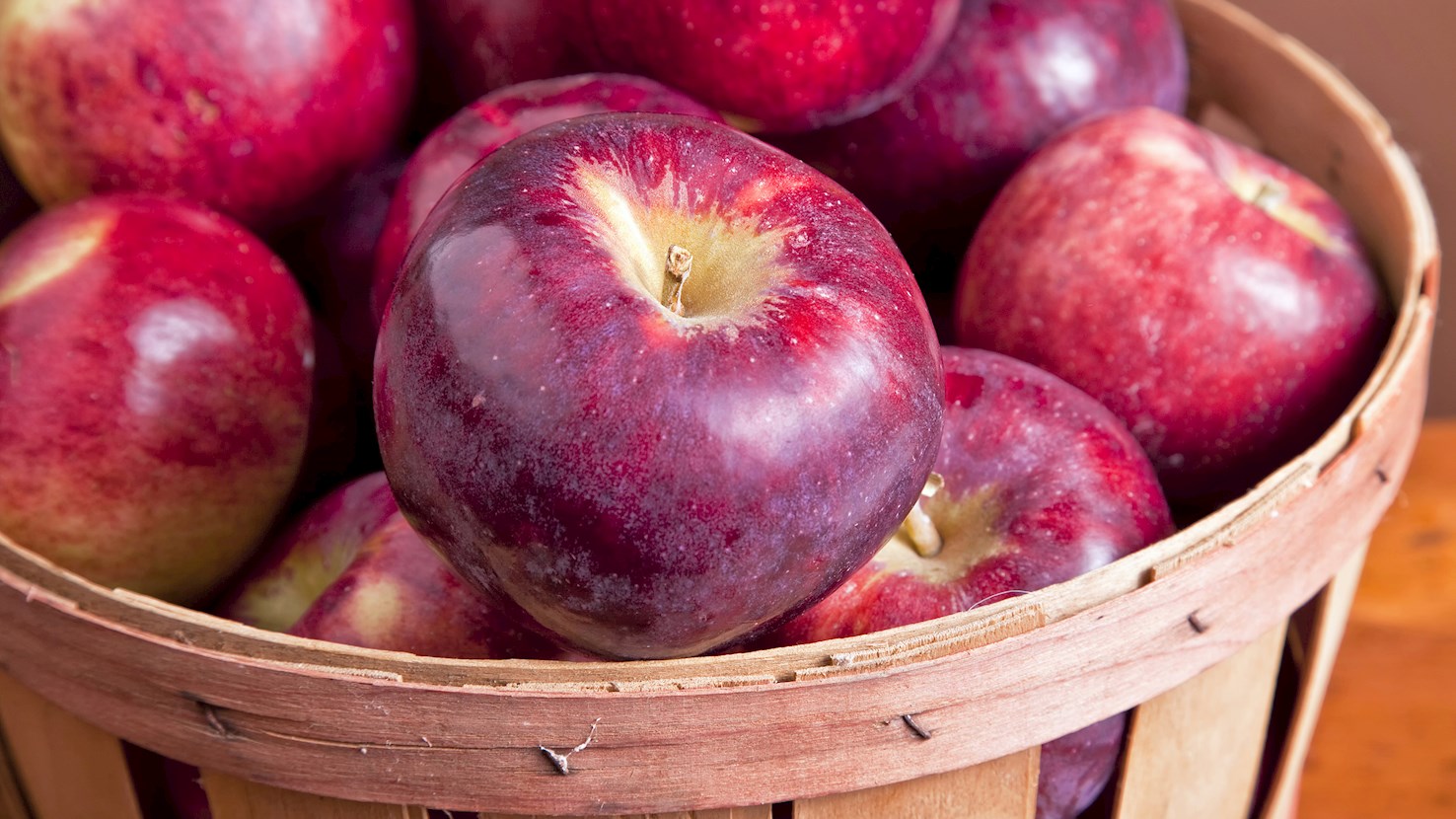
Macoun is an apple variety that was developed at the New York State Agricutural Experiment Station, and it was introduced to the market in 1923 by Richard Wellington. The apples are a cross between McIntosh and Jersey Black, and they're named after a famous Canadian fruit breeder. They are medium-sized, and when ripe, they are deep red to dark purple in color. The flesh is white, crisp, tender, and creamy, while the flavors are very sweet and rich with hints of berries. Available in the fall and early winter, Macoun apples are usually used for festive pies (when cooked, they don't break down), eaten fresh as a snack, sliced and added to salads, or paired with cheese.

05

Chenango Strawberry apples

n/a ·

Chenango Strawberry is an American apple variety that’s thought to have originated in Lebanon, New York or Chenango County, New York. This summer apple ripens in two to three weeks, and it’s harvested once the skin turns milky. The quality of the fruit and color begin to degrade after a few weeks when stored, so it’s recommended to consume or process these apples as soon as possible. Beneath the smooth, aromatic, and shiny skin, the texture of the flesh is juicy, tender, and aromatic. It’s recommended to use Chenango Strawberry apples as dessert apples or transform them into applesauce.

06

Liberty apples

n/a ·

Liberty is an American apple variety that was developed in New York as a cross between Macoun and Purdue 54-12 in order to be as disease-resistant as possible. The apples are medium-sized, with a dark red skin and a barely visible yellow background. The flesh is yellow in color, and the texture is juicy, fine-grained, and crisp. The flavors are sweet and tart with hints of melon and citrus. Available in the fall, Liberty apples are usually used in desserts such as apple pies, muffins, or apple sauce. They can also be baked with nutmeg and cinnamon or thinly sliced and added to chicken salad.

07

Esopus Spitzenburg apples

n/a ·

Esopus Spitzenburg is an old American apple variety that was discovered in the late 1700s near Esopus in New York’s Hudson Valley. The apples are harvested from September through October, and the flavors improve after picking. The texture of the flesh is crisp, tender, and firm, while the aromas are intense and slightly spicy. These are some of the best dessert apples and it’s recommended to use them for baking. Esopus Spitzenburg apples keep well, and the Spitzenburg part of their name refers to a local mountain in Hudson Valley.

Read more
View all
View map
About this ranking

TasteAtlas food rankings are based on the ratings of the TasteAtlas audience, with a series of mechanisms that recognize real users and that ignore bot, nationalist or local patriotic ratings, and give additional value to the ratings of users that the system recognizes as knowledgeable. For the “Top 7 New York Pome Fruits” list until June 15, 2026, 77 ratings were recorded, of which 72 were recognized by the system as legitimate. TasteAtlas Rankings should not be seen as the final global conclusion about food. Their purpose is to promote excellent local foods, instill pride in traditional dishes, and arouse curiosity about dishes you haven’t tried.

Similar lists