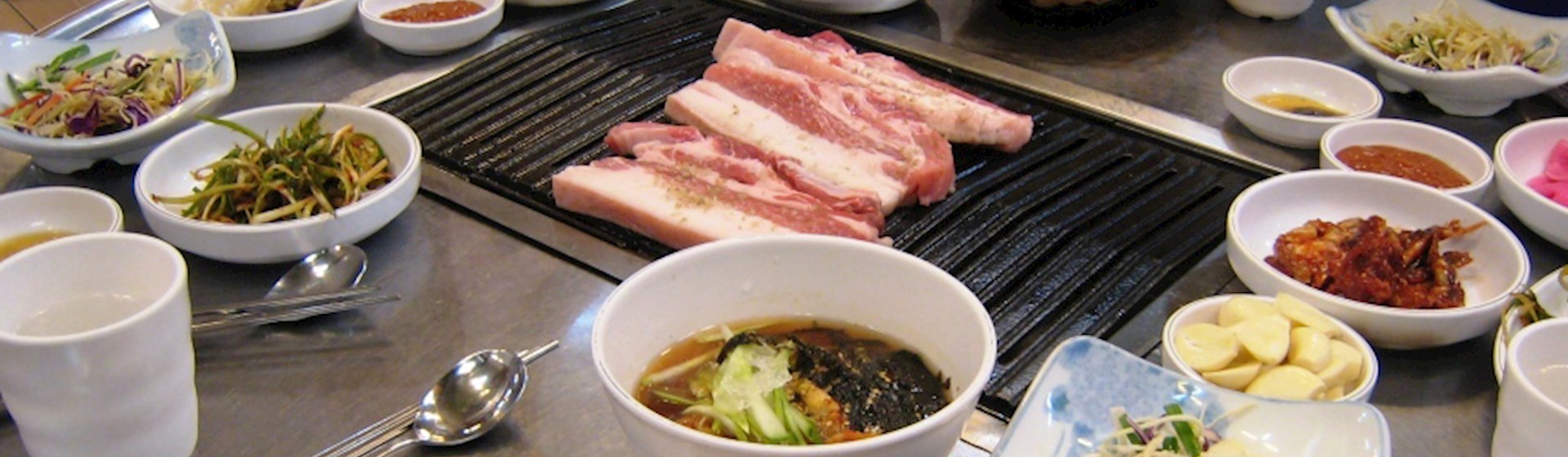
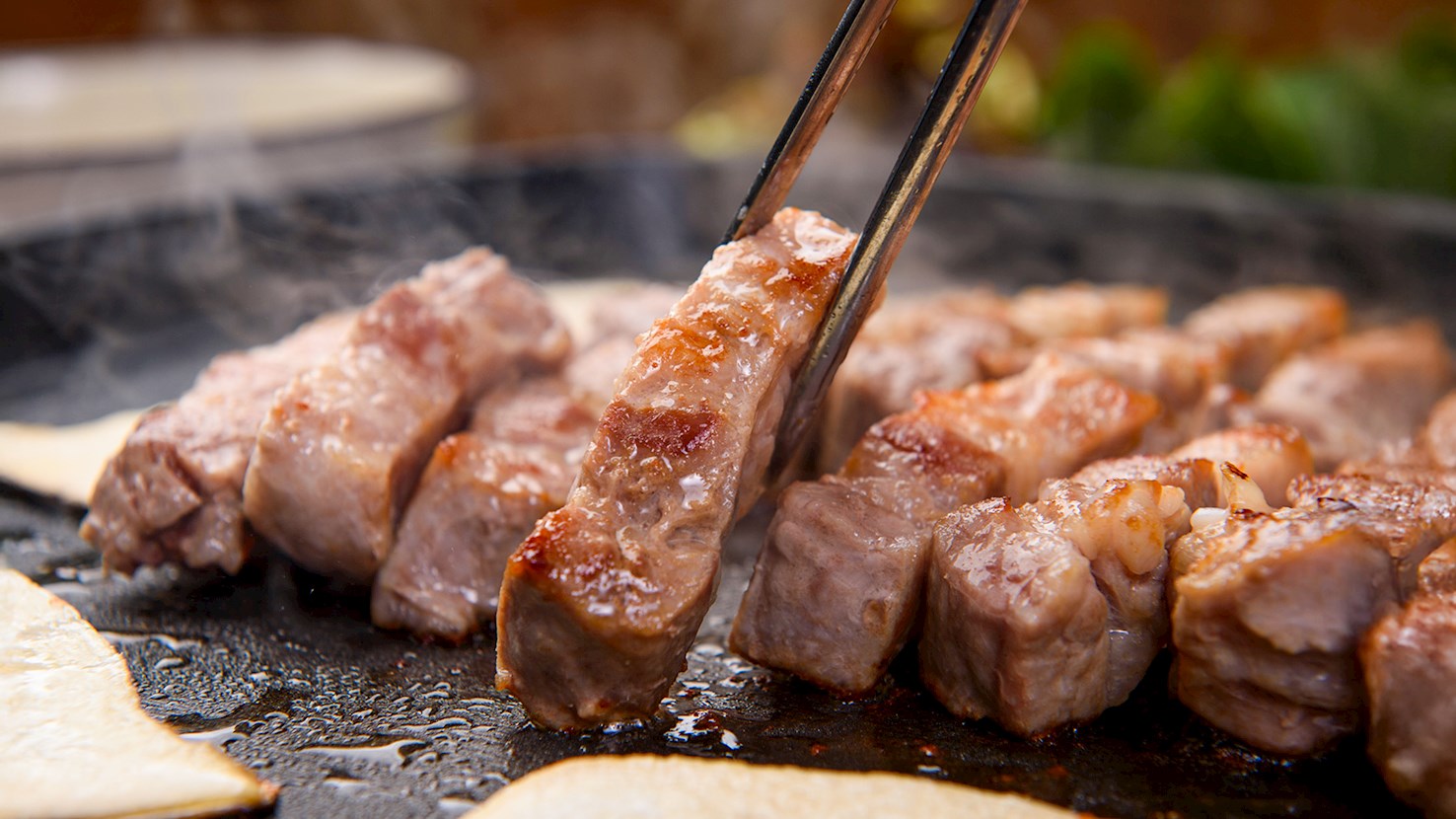
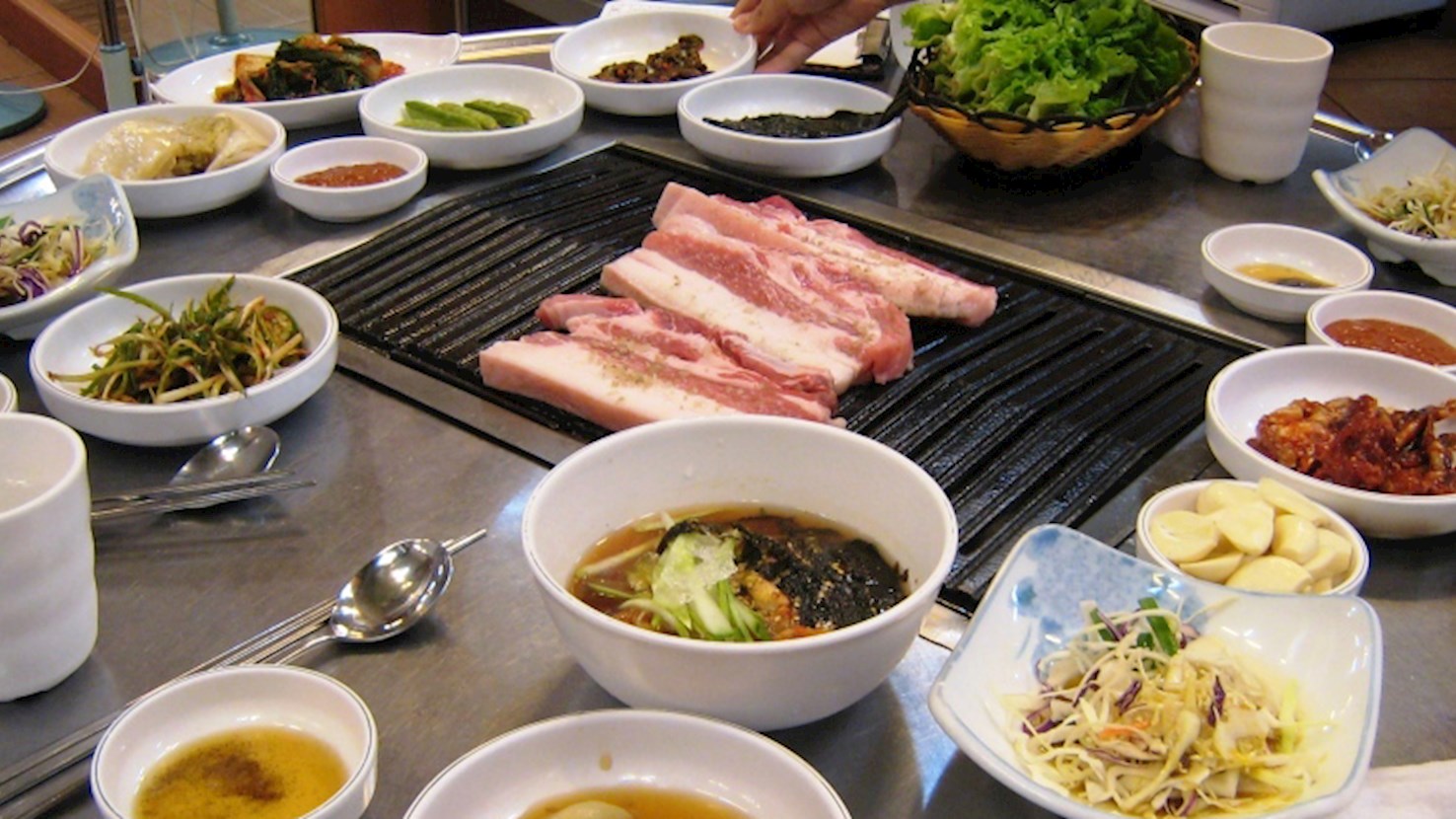
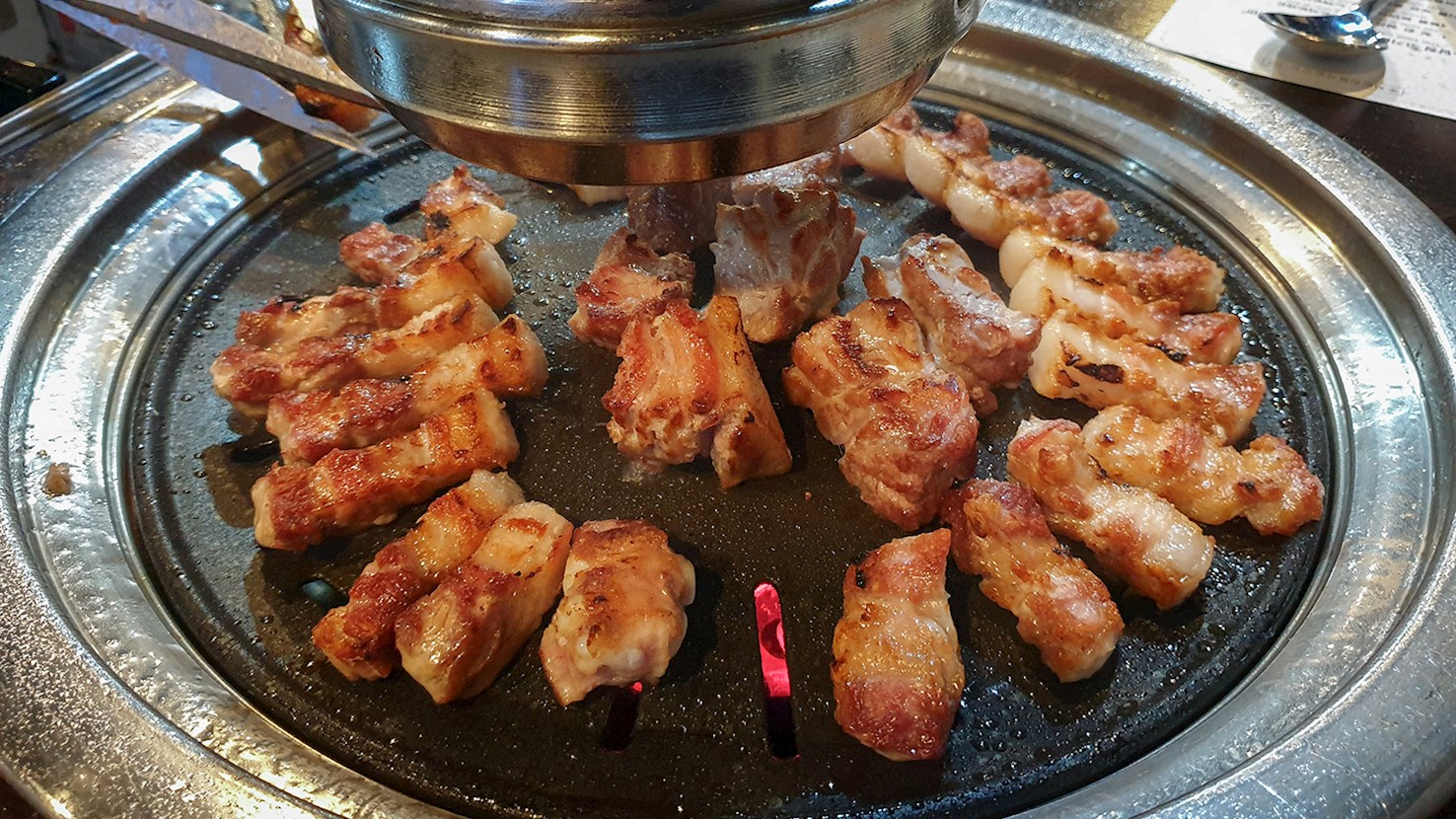
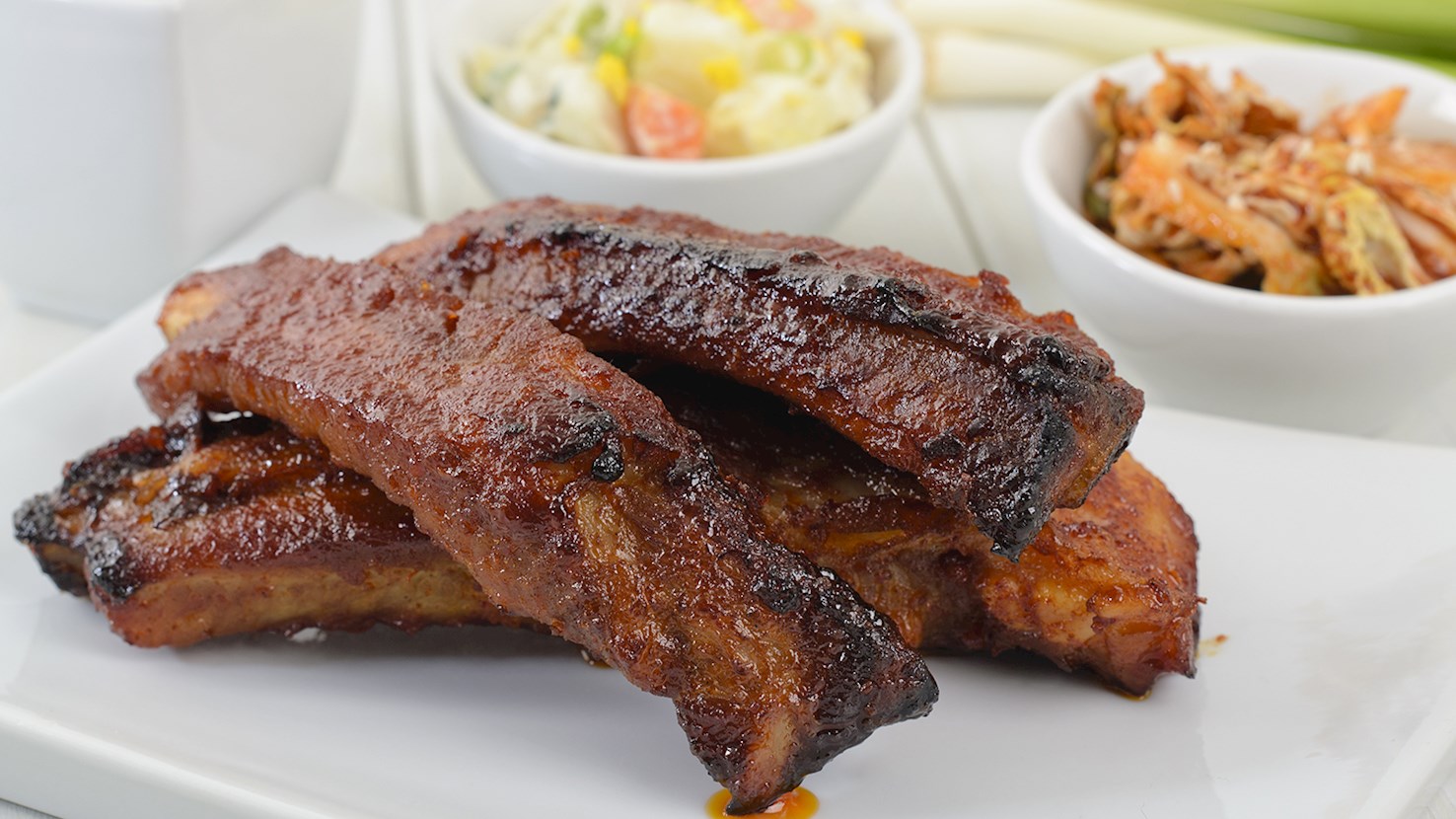
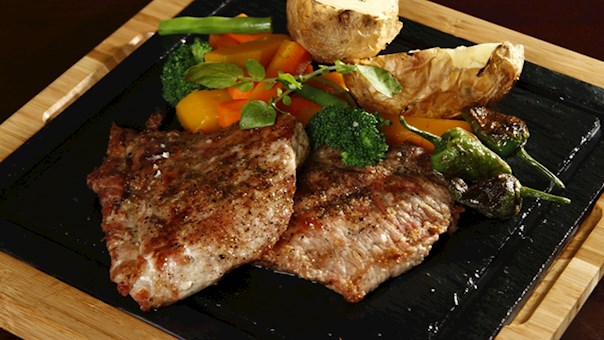
Samgyeopsal is a South Korean delicacy consisting only of pork belly, the most expensive cut of pork in the country. It is so popular in South Korea that the residents eat it approximately once every four days. The name of the dish consists of three words: sam (three), gyeop (layered), and sal (meat), so it can be literally translated as three-layered meat, referring to the three visible layers of the meat. It is believed that the dish became popular in the 1960s, when the price of soju decreased and people needed a dish to go with it, so they chose pork belly due to its low price at the time. Whether at home or in restaurants, samgyeopsal is traditionally cooked at the table in a special pan which is designed to let the fat run off the sides of it. The dish is most commonly accompanied by lettuce, raw garlic, green chili peppers, kimchi, and green onions. Two dipping sauces are traditionally served on the side: one is ssamjang, consisting of sesame oil, chili paste, and soybean paste, and the other is gireumjang, consisting of sesame oil, salt, and black pepper.
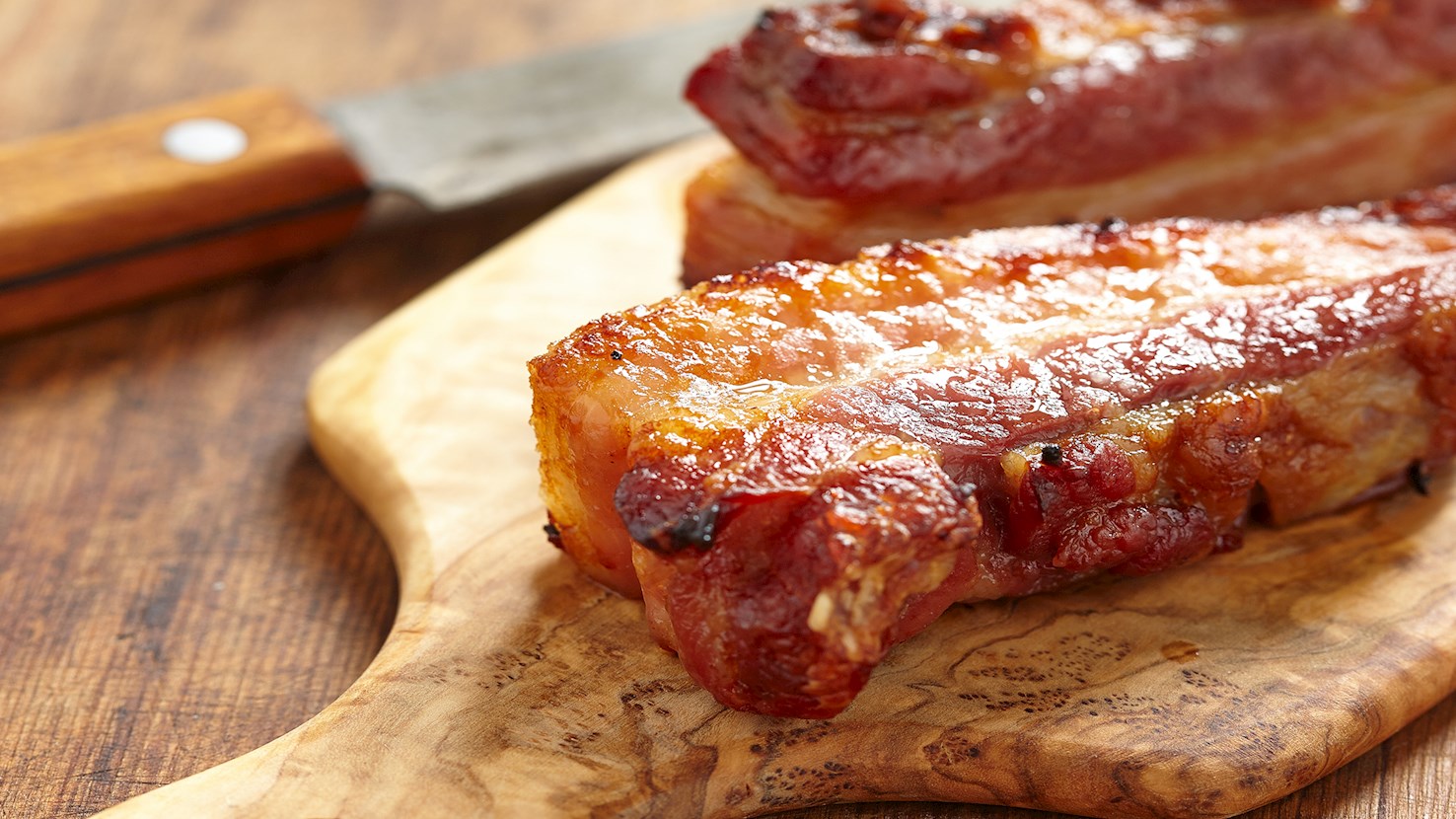
Ogyeopsal is a pork belly cut traditionally used in South Korean barbecue (gui). The cut comes from the pork belly together with the skin. It is similar to more popular samgyeopsal, which does not include the skin. Ogyeopsal is typically sliced into strips that are then grilled on traditional Korean barbecue. It is usually cut into smaller, bite-size pieces. Grilled ogyeopsal can be enjoyed plain—accompanied by side dishes and dipping sauces—but it is also commonly incorporated into ssam wrappers, together with the accompaniments. Ogyeopsal roughly translates as five-layered meat, due to the number of layers visible on the cut.
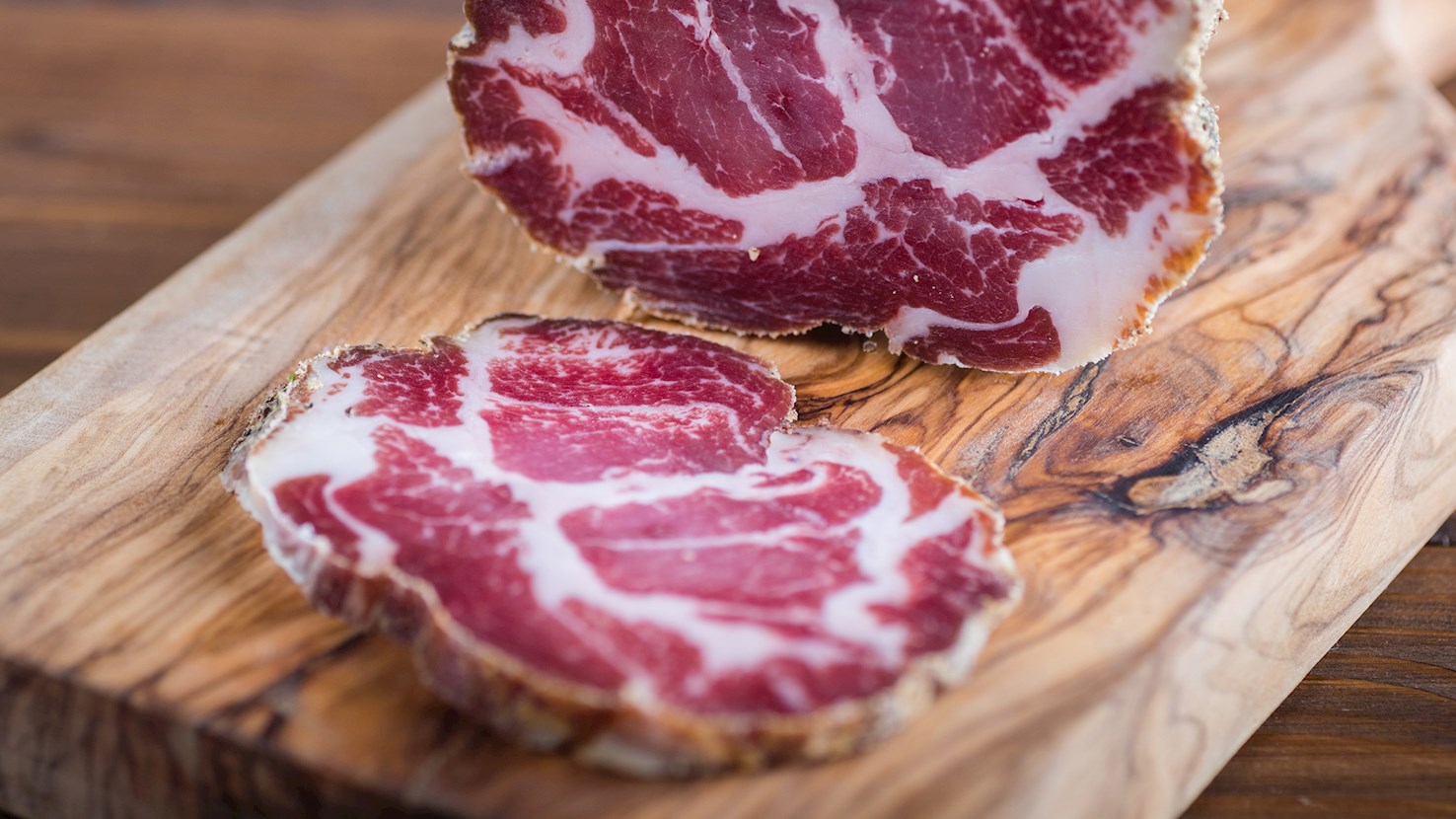
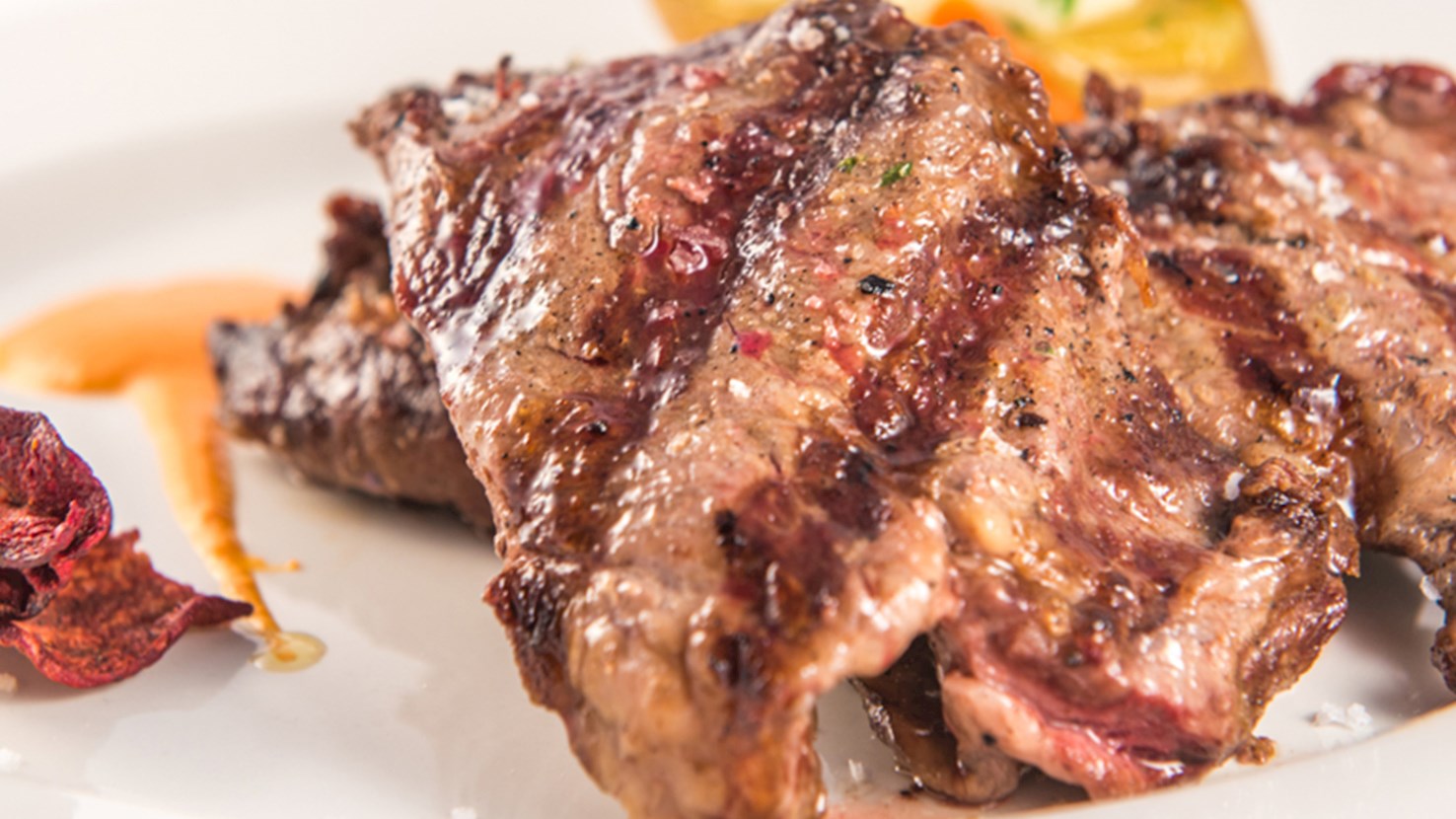
Capocollo, also known as coppa or capicola, is a cut of pork taken from the upper part of the pig's neck and shoulder. Prized for its tender texture and rich flavor, it features a balance of lean meat and marbled fat that renders during cooking, ensuring the meat remains juicy and flavorful. Fresh capocollo is incredibly versatile in the kitchen. It is often roasted whole and seasoned with herbs, garlic, and olive oil, creating a moist and aromatic centerpiece. It can also be braised in wine, broth, or tomato-based sauces, allowing the marbled fat to melt and enrich the dish. Grilled capocollo steaks are another popular preparation, with the fat rendering beautifully to enhance the meat's flavor. Thin slices of capocollo are also used to wrap stuffing or roulades, combining its savory richness with other ingredients. This cut is celebrated for its hearty and comforting qualities, embodying the rustic elegance of Italian cuisine. Whether roasted, grilled, or braised, fresh capocollo highlights pork's natural flavors and textures, making it a favorite in traditional and modern dishes.
Moksal is a Korean name for pork cuts obtained from the neck of the animal. This pork cut is nicely marbled, and its tough and stiff texture makes it great for grilling. Compared to samgyeopsal (pork belly), moksal doesn’t have as much fat. This cut comes in pork chop size, and as it’s grilled, the meat is often cut into bite-sized pieces with special scissors. This is one of the most popular pork cuts in Korea and it’s mostly used for Korean barbecue.
Hangjungsal or hanjeongsal is a Korean name for pork jowl, a pork cut that’s often used in traditional Korean barbecue. Due to the fact that a whole pig provides only about 200 grams of hangjungsal, the cut is less accessible than samgyeopsal (pork belly) and moksal (pork neck). The texture of hangjungsal is crunchy and chewy, while the flavors are heavier than other pork cuts, so it’s not recommended to have too much of it. Hangjungsal has even marbling, and although the texture is chewy, it’s also tender and juicy once it’s been grilled.
Ibérico pluma is a specific cut of pork from the Ibérico pig, a unique breed of pig native to Spain. The word "pluma" means "feather" in Spanish, and this cut is named for its feather-like shape. It's located at the end of the loin, near the shoulder. This cut is known for its tenderness and intense flavor, which is a result of the pig's diet and free-range lifestyle. Ibérico pigs are often fed a diet rich in acorns, which contributes to the distinct taste and marbling of the meat. The pluma is best cooked quickly over high heat to maintain its juiciness and is a delicacy in Spanish cuisine.
Fatback is firm and dense fat taken off the back of a pig, and can be bought with or without the skin. It can be used to make salt pork or lard, and it is sometimes used for techniques such as larding and barding. Fatback is also the name of a traditional dish that is served for New Year's Eve in the American South, when it is fried until golden-brown and crunchy, accompanied by black eyed peas and greens. The dish is supposed to bring luck and wealth in the year that follows. Originally, fatback became popular in the South during the Great Depression because it was the only cut of meat that hungry families could afford.
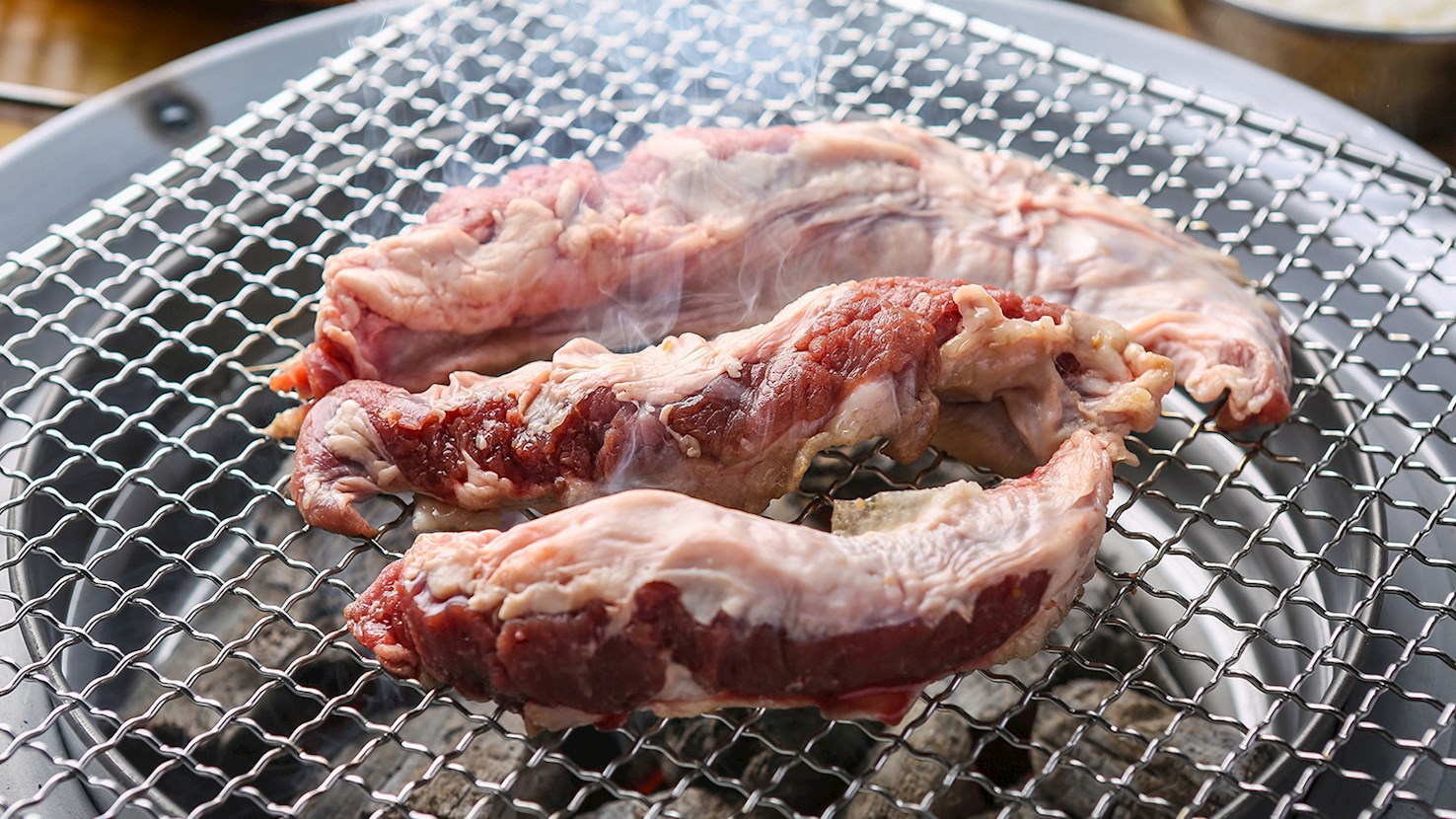
Galmaegisal or kalmaegisal is a Korean name for skirt meat, a pork cut that’s sliced into thin strips after it’s been grilled on a traditional Korean barbecue. The texture of galmaegisal is chewy and tougher than other pork cuts due to the fact that the meat is attached to the diaphragm of the animal. This cut is especially popular in the Mapo region and it’s a great alternative to the fattier samgyeopsal (pork belly). Interestingly, many people claim that it tastes less porky than samgyeopsal as well.
Daeji galbi or daejikalbi is a Korean name for pork ribs, a cut of pork that’s usually used for traditional Korean barbecue. The ribs are marinated before grilling, often in a combination of ginger, onions, garlic, gochujang red chili pepper paste, sugar, soy sauce, sesame oil, and black pepper. If you order daeji galbi in a restaurant, in some places you might get a combination of ribs and moksal (pork neck). Once grilled, the pork ribs are often served with cold noodles on the side.
Presa de Bellota 100% Ibérico is one of the most prized cuts of Iberian pork, sourced from the purebred Ibérico pig native to Spain. This particular cut, known as “presa”, comes from the muscle located between the shoulder and the loin, making it exceptionally tender and richly marbled. The “Bellota” designation signifies that the pigs are raised free-range in the Dehesa woodlands, where they feed on acorns (bellotas) during the Montanera season. This exclusive acorn diet gives the meat its deep red color, intense marbling, and a rich, nutty flavor, often compared to the quality of Wagyu beef. Thanks to this high level of intramuscular fat, the meat is both juicy and flavorful, with a buttery texture that melts in the mouth. Traditionally, presa Ibérica is best enjoyed grilled or seared, allowing the marbling to render and create a crispy, caramelized crust while keeping the inside tender and succulent. Some chefs also prepare it carpaccio-style or as tartare, emphasizing its natural depth of flavor. The cut pairs beautifully with Spanish red wines such as Rioja, Ribera del Duero, or Priorat, which complement its rich umami profile. Due to its acorn-rich diet, the fat of presa de Bellota 100% Ibérico is naturally high in oleic acid, the same heart-healthy fat found in extra virgin olive oil, making it not only delicious but also a healthier alternative to conventional pork. Because only a small portion of this premium cut is available per pig, it is considered a luxury delicacy, reflecting the artisanal traditions of Spanish pork production.
TasteAtlas food rankings are based on the ratings of the TasteAtlas audience, with a series of mechanisms that recognize real users and that ignore bot,
nationalist or local patriotic ratings, and give additional value to the ratings of users that the system recognizes as knowledgeable.
For the “Top 11 Pork Cuts in the World” list until June 15, 2026, 304 ratings were recorded, of which 268 were recognized by the system as legitimate.
TasteAtlas Rankings should not be seen as the final global conclusion about food. Their purpose is to promote excellent local foods,
instill pride in traditional dishes, and arouse curiosity about dishes you haven’t tried.