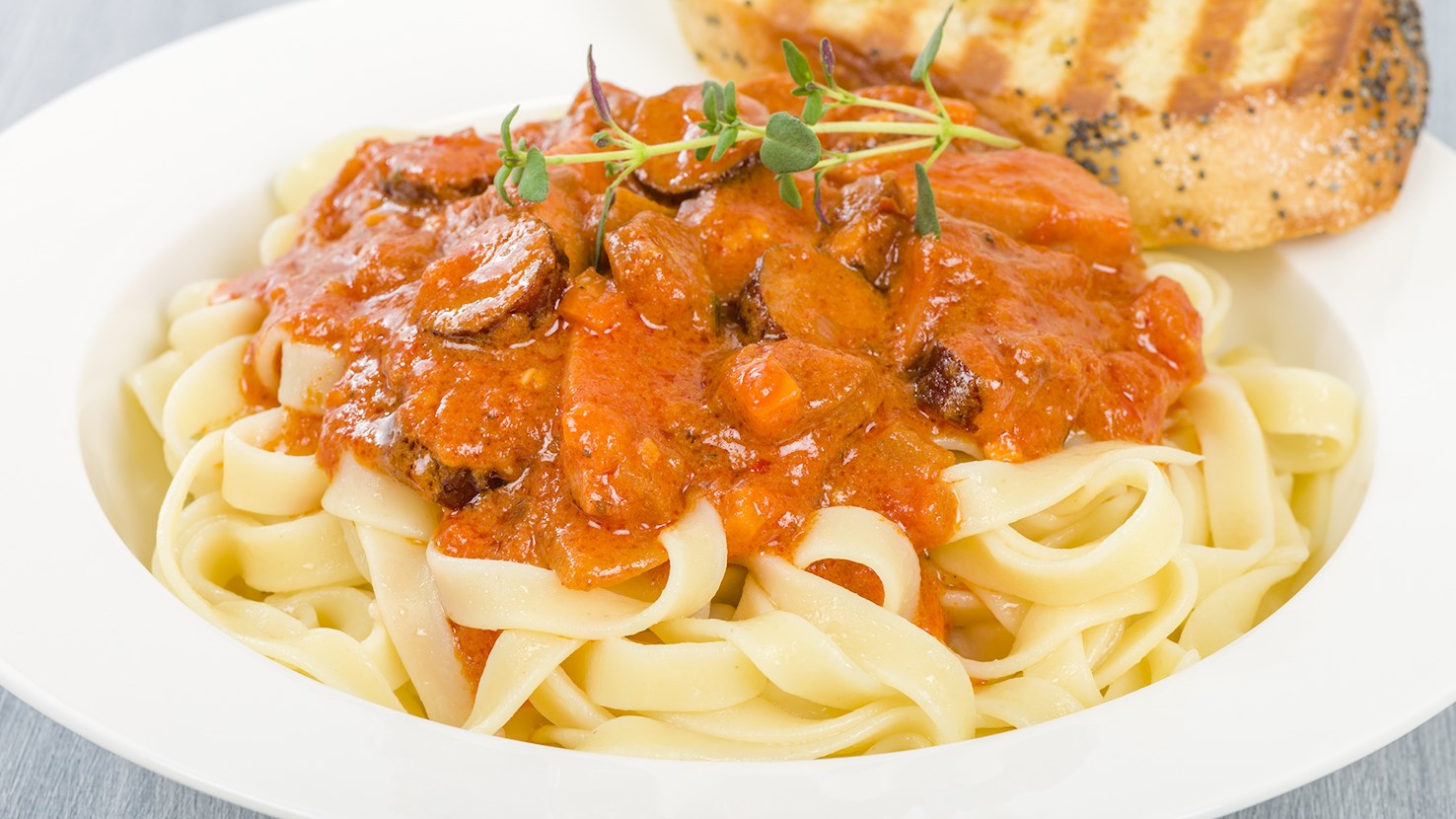
Székely gulyás is a thick and rich Hungarian stew prepared with a combination of pork, onions, peppers, paprika, potatoes, sauerkraut, sour cream, and garlic. The dish is believed to have originated in the city of Szeged, known for its paprika, and it was supposedly named after the Hungarian journalist and archivist Jószef Székely. Once prepared, Székely goulash is typically served with homemade pasta or crusty bread on the side.
Stefánia szelet is a traditional meatloaf stuffed with hard-boiled eggs in the middle, making the dish visually attractive once cut and the cross-section becomes visible. The meat mixture consists of ground pork, onions, garlic, caraway, paprika, parsley, and marjoram. Instead of being fried in the pan, the meatloaf is baked in a loaf pan. When baked and sliced, the dish is often accompanied by boiled potatoes, but it can also be served on its own when it cools down a bit.
Mangalica pörkölt is a Hungarian pork stew prepared with the richly marbled meat of the mangalica pig, a heritage breed renowned for its deep flavor and high fat content. Originating in Hungary, pörkölt is one of the cornerstone dishes of the country’s cuisine, a slow-cooked meat stew deeply flavored with paprika, onions, and garlic. When made with mangalica, the dish takes on an even more intense and velvety character, as the meat’s natural fat content lends depth and richness to the sauce. The roots of pörkölt trace back to rural Hungarian cooking, where stewing was a practical and flavorful way to prepare tougher cuts of meat. As paprika became a defining ingredient of Hungarian cuisine in the 18th and 19th centuries, it transformed the flavor profile of these slow-cooked dishes, giving them their signature color and taste. The use of mangalica in pörkölt reflects the breed’s long-standing role in Hungarian agriculture and gastronomy. Raised for centuries in the Carpathian Basin, mangalica pigs were highly valued for their ability to thrive outdoors and produce richly flavored meat, making them a preferred choice for stews and braises. The preparation of mangalica pörkölt begins with selecting well-marbled cuts such as shoulder or leg, which are cut into cubes. The base of the stew is built from slowly sautéed onions, cooked until golden and sweet in lard or rendered fat. Generous amounts of Hungarian sweet paprika are then added, followed by garlic, caraway seeds, and sometimes a touch of tomato paste or chopped peppers for depth. The meat is added and seared before liquid, usually water or stock, is introduced, and the stew is left to simmer gently for several hours. During this time, the meat becomes tender and the sauce thickens into a deep red, aromatic gravy. The high fat content of mangalica pork gives the dish a luxurious texture and a fuller flavor compared to versions made with leaner meat. Mangalica pörkölt is most often served as a main course, accompanied by classic Hungarian side dishes such as dumplings, boiled potatoes, or slices of crusty bread. It is also commonly enjoyed with pickles or fermented vegetables, which provide a sharp contrast to the richness of the stew. The dish is a popular choice for family gatherings and communal meals, particularly in colder months when hearty, slow-cooked dishes are most satisfying. It pairs well with robust red wines from Hungary’s regions, such as Bikavér or Kékfrankos, whose acidity cuts through the richness of the sauce.
Sült mangalica is a Hungarian roast pork dish made from the meat of the mangalica pig, a heritage breed renowned for its richly marbled flesh and deep flavor. Originating in Hungary, where the breed has been raised since the nineteenth century, the dish reflects the country’s long reliance on pork as a central component of its cuisine and its appreciation for slow-cooked, hearty meat dishes. The mangalica breed was developed through crossbreeding local pigs with Serbian and wild boar stock, resulting in an animal well adapted to the region’s climate and landscape. Its meat, prized for its tenderness and high fat content, became a staple in Hungarian kitchens, especially in rural areas where whole-animal cooking was common. While the breed declined in the mid-twentieth century as leaner commercial pigs became dominant, renewed interest in heritage food revived its popularity, and roasted mangalica reemerged as a sought-after specialty in restaurants and home cooking alike. The preparation of sült mangalica focuses on highlighting the quality of the meat itself. Cuts such as the shoulder, loin, or belly are often used, chosen for their balance of meat and fat. The pork is typically seasoned simply with salt, pepper, garlic, and paprika, allowing its natural flavor to stand out. Some recipes call for marinating the meat for several hours to deepen its taste before roasting it slowly at a moderate temperature, which renders the fat and produces a tender interior with a crisp, caramelized exterior. The high fat content of mangalica pork makes it particularly well suited to roasting, as the meat remains moist and develops a rich, concentrated flavor during cooking. Once roasted, it is usually sliced and served warm as the centerpiece of a meal. Sült mangalica is often accompanied by roasted or mashed potatoes, braised cabbage, or seasonal vegetables, and sauces such as paprika gravy or garlic jus are sometimes added to complement the meat’s richness. The dish is typically enjoyed as part of festive meals or family gatherings, where it represents both culinary heritage and quality ingredients. Its intense flavor and firm texture make it a favorite among chefs, who often pair it with robust red wines like Kadarka or Kékfrankos, which balance the pork’s richness.
TasteAtlas food rankings are based on the ratings of the TasteAtlas audience, with a series of mechanisms that recognize real users and that ignore bot,
nationalist or local patriotic ratings, and give additional value to the ratings of users that the system recognizes as knowledgeable.
For the “Top 4 Hungarian Pork Dishes” list until July 15, 2026, 124 ratings were recorded, of which 91 were recognized by the system as legitimate.
TasteAtlas Rankings should not be seen as the final global conclusion about food. Their purpose is to promote excellent local foods,
instill pride in traditional dishes, and arouse curiosity about dishes you haven’t tried.