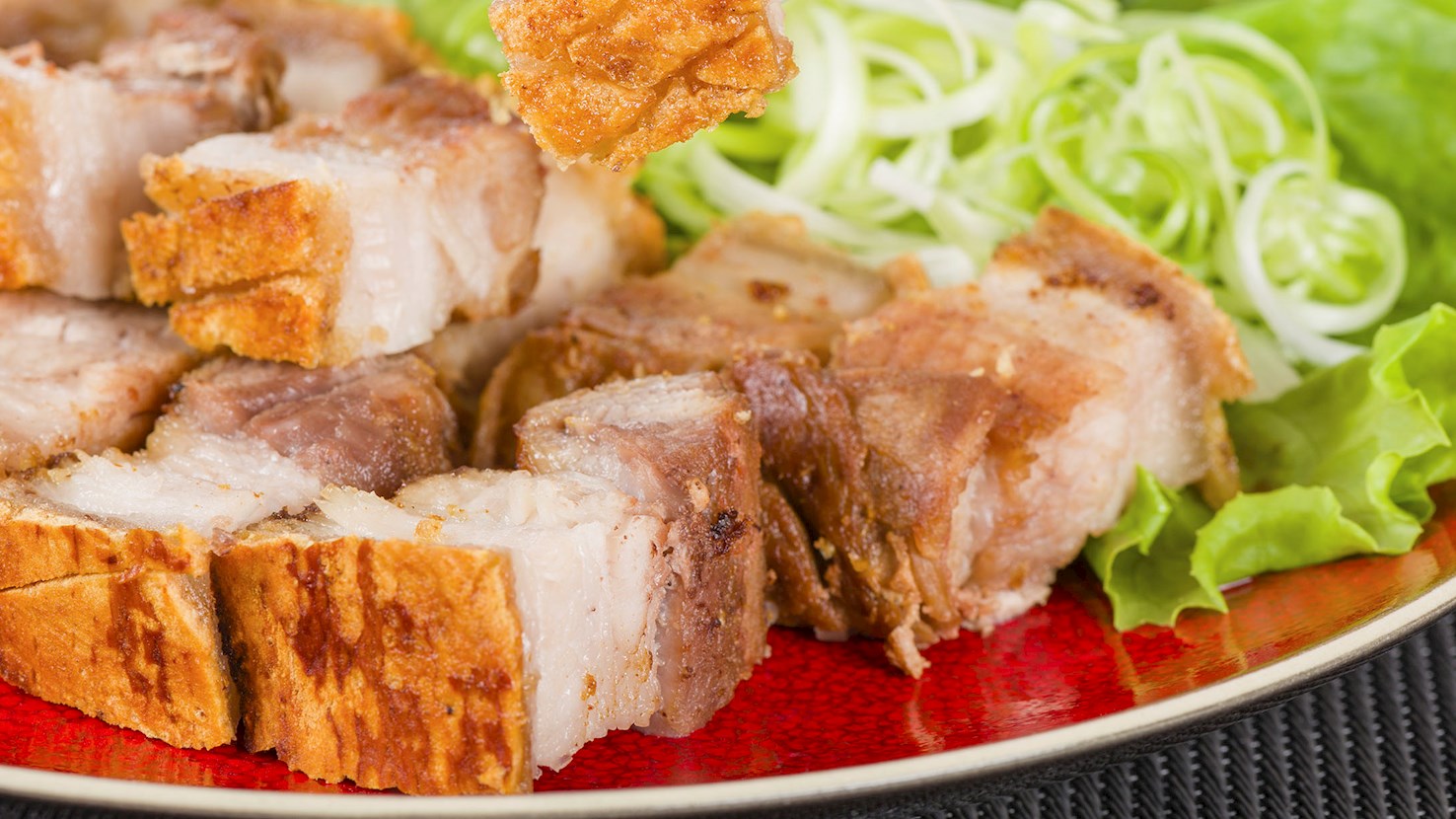
A version of typical Cantonese siu mei (roasted meat dishes), siu yuk is a hefty meal that is mostly consumed in small quantities, made by roasting a whole, seasoned pig in charcoal furnaces at very high temperatures, resulting in succulent, tender meat and crispy skin. Traditionally, the meat is served as it is, but it is sometimes accompanied by either hoisin sauce or soy sauce. Since it is a known fact that the Chinese have many beliefs, in Hong Kong siu yuk is often oferred to the Jade Emperor (the first god in Chinese culture) in order to celebrate a movie's opening, hoping that the movie achieves great success in the cinemas. The dish is often garnished with pineapple or cucumber slices, placed in a red box and wrapped with red wrapping paper, for additional luck.
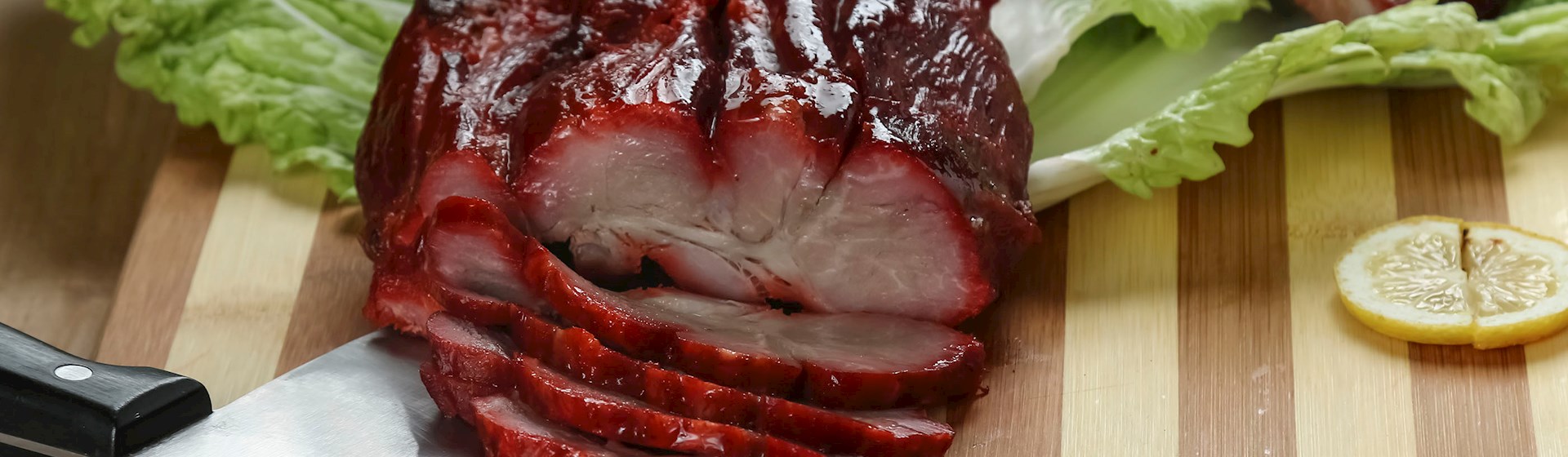
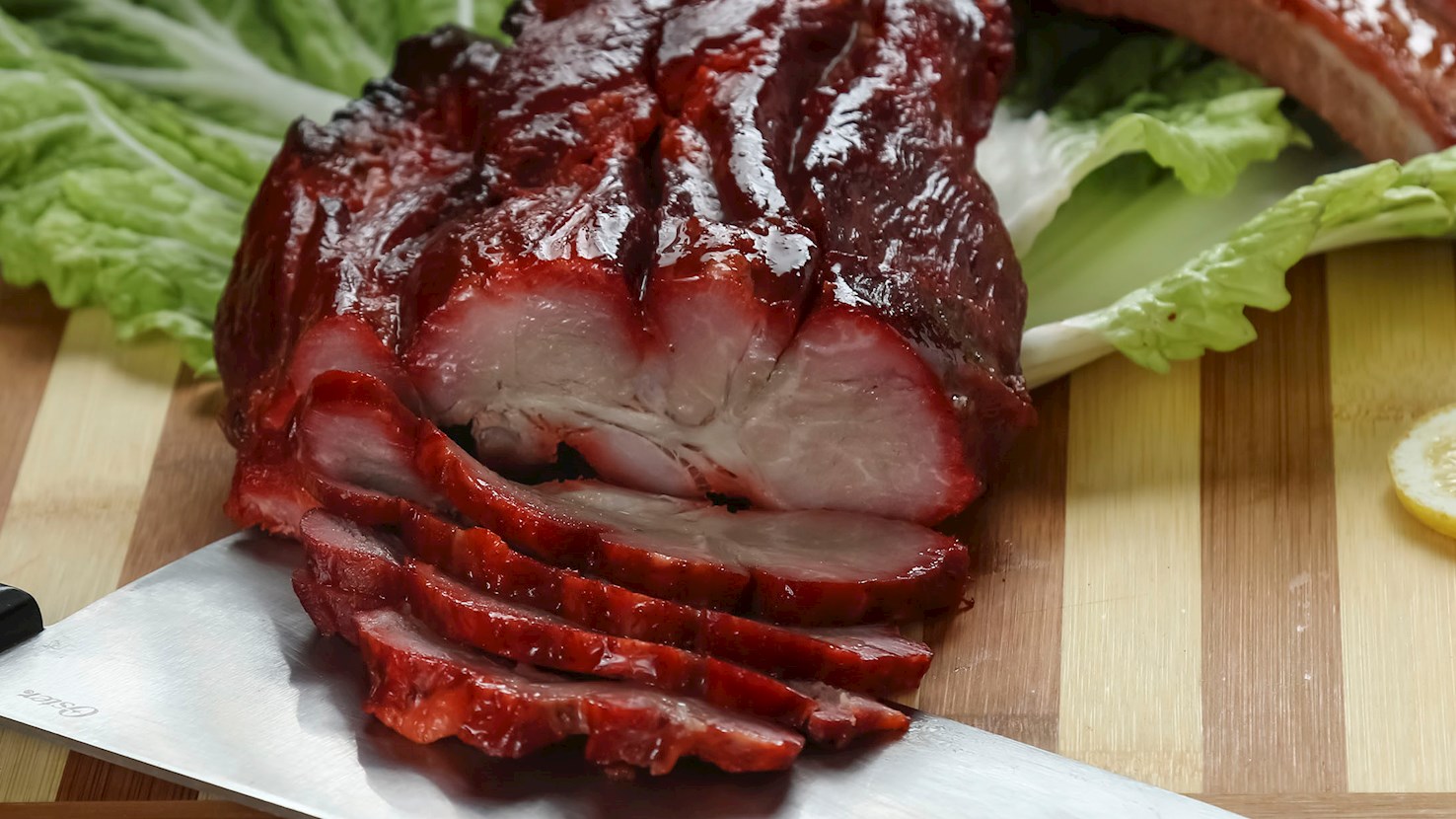
Char siu is a dish consisting of roasted, barbecued pork that has previously been marinated in the eponymous sauce, including ingredients such as soy sauce, hoisin sauce, rice wine, and star anise. The pork is usually served either as a sliced appetizer or shredded and chopped as a main meal. In the early days of char siu, any available meats, such as wild boars and pigs were used to make the dish. The name char siu is literally translated to fork-roasted, referring to the original method of preparation in which the meat is placed on an elongated fork and roasted over an open fire that caramelizes the sugars found in the marinade. One of the most popular ways to use the meat is to serve it in steamed buns called char siu bao. As a proof of char siu's popularity, it was listed as the 28th among the World's 50 Most Delicious Foods in a poll compiled by CNN Go in 2011.
Sweet and sour spare ribs is a popular Chinese dish that is mostly consumed in restaurants since it is somewhat hard to prepare it at home. Spare ribs are first marinated, deep-fried, then dipped in Chinese sweet and sour sauce. Traditionally, the dish is served as an appetizer and is extremely popular in the southern parts of China. In Chinese culture, pork symbolizes prosperity, so the dish is often prepared and served for Chinese New Year. The Chinese people love to serve sweet and sour dishes during the festive time because the word sour (syun in Cantonese) sounds like the word grandchild when pronounced, giving hope for a new offspring. It is recommended to pair this decadent appetizer with a glass of ice-cold beer.
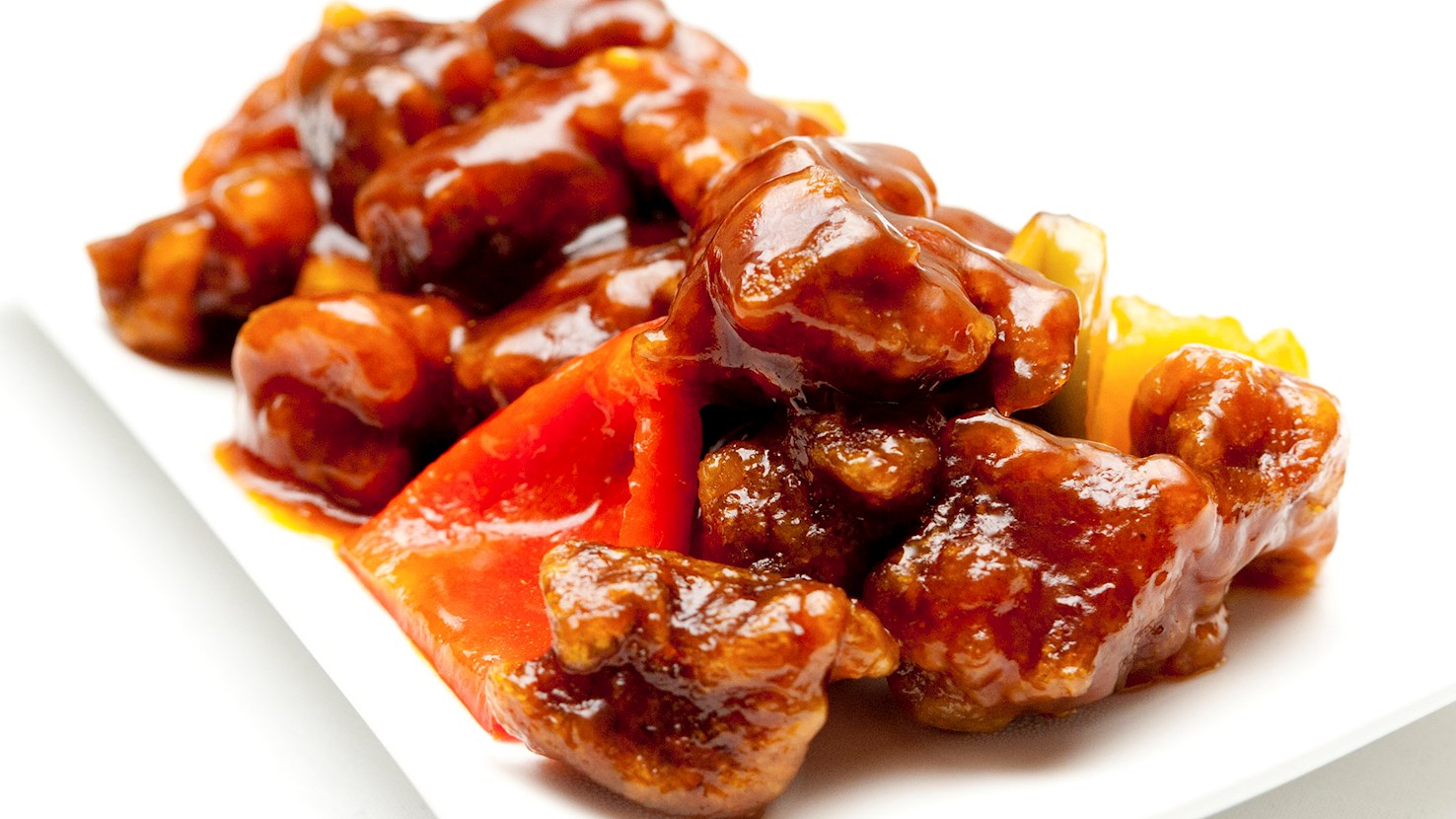
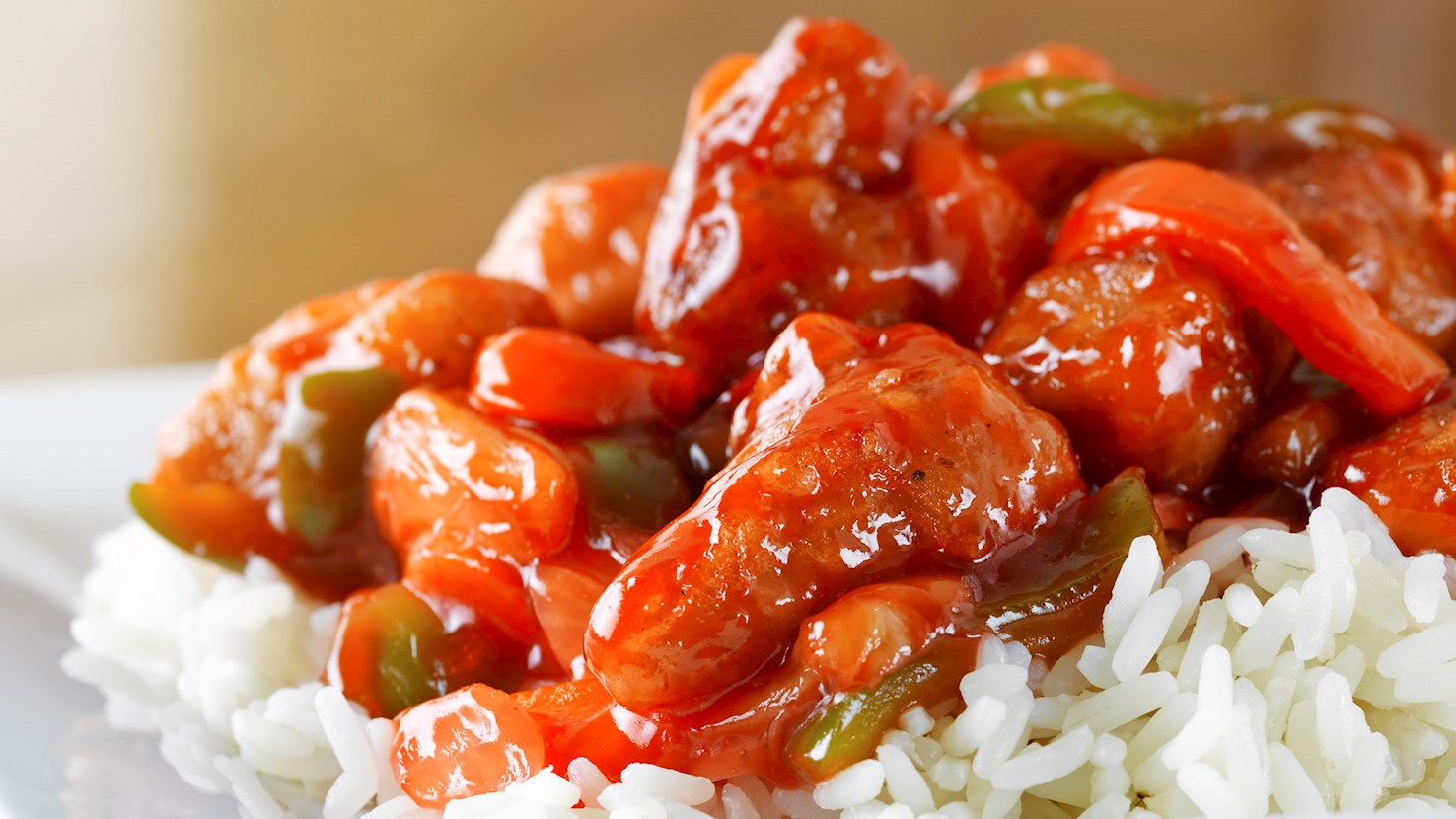
Sweet and sour pork is a Chinese dish consisting of batter-coated chunks of pork that are deep-fried until crispy on the outside and tender on the inside. Chunks of meat are then mixed with a bright red, sticky, sweet and sour sauce, and vegetables such as carrots, green pepper, and onions. The dish has origins in the Cantonese cuisine of the 18th century, and it is still an extremely popular dish in the area. In the early 20th century, sweet and sour pork spread to the United States via Chinese immigrants who worked on the railroads. In America, the dish is much sweeter than in China, and although it is believed that sweet and sour pork is a traditional Chinese New Year's meal, it is only common in some Chinese communities in the United States.
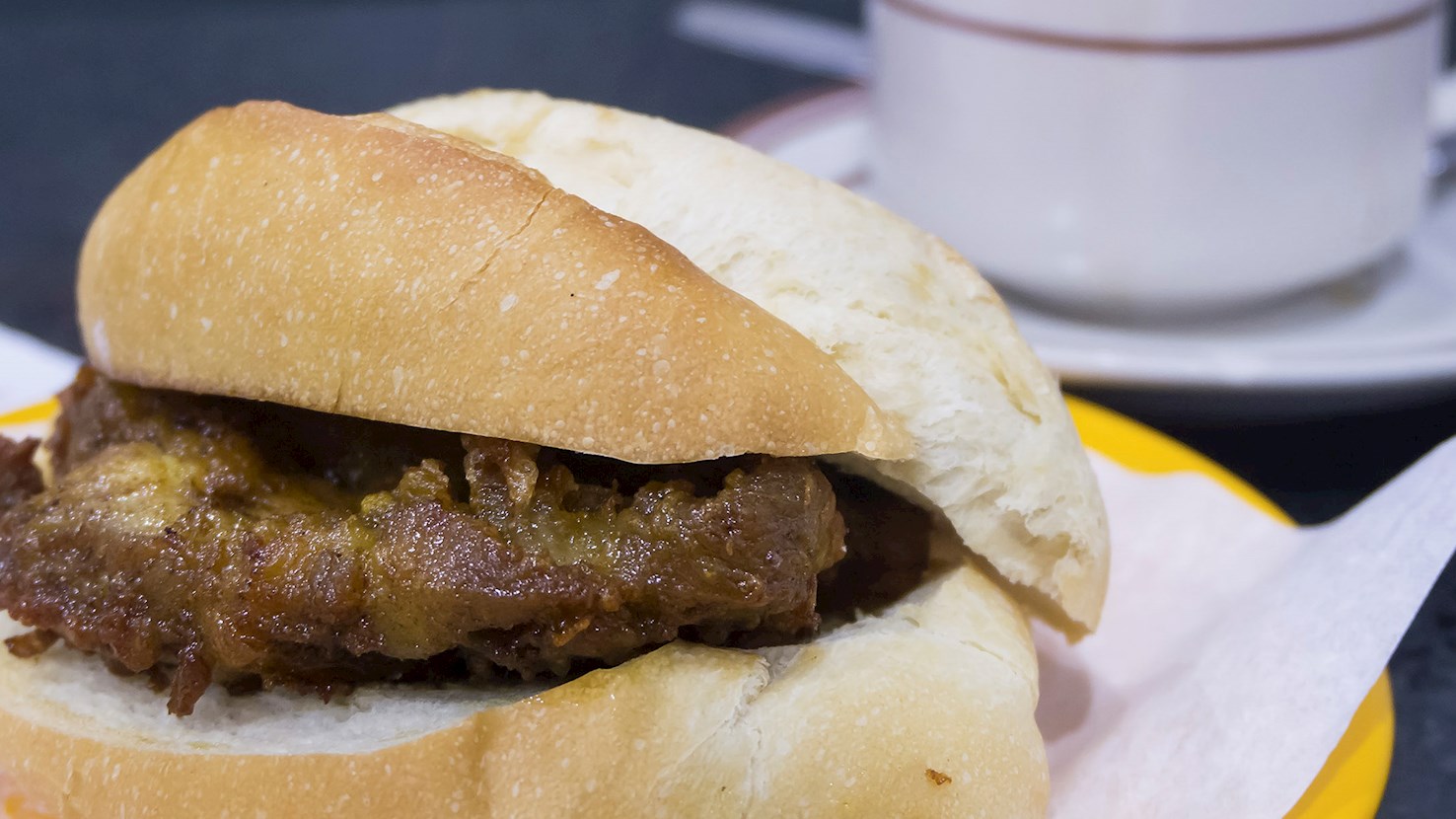
Pork chop bun is a Macanese specialty and one of the most famous dishes in the region. Although it is reminiscent of a typical sandwich or a hamburger, it doesn't have a lot in common with them. For a long time, Macau has been a Portuguese colony and the pork chop bun, in a way, represents a fusion of Portuguese and Asian cuisine and culture. It is praised for its simplicity because it consists of two main ingredients: a bun and a pork chop. The bun is also known as piggy bun, and it is traditionally made in Hong Kong. The inside of the bun is soft, while the outside is covered in a perfectly crunchy crust. The shape of the bun is originally Portuguese, and in Portugal it is used to make the famous bifana sandwich. Pork chop bun is distinguished by the usage of a pork chop on the bone, instead of the more typical pork cutlet. Simplicity is the main characteristic of this dish; it does not have any standard condiments or toppings, such as salad greens, cheese, or mayonnaise - the only thing that is added to pork chop bun is soy sauce, used to marinate the pork chop, and garlic, which is usually fried together with the pork chop or added to the marinade.
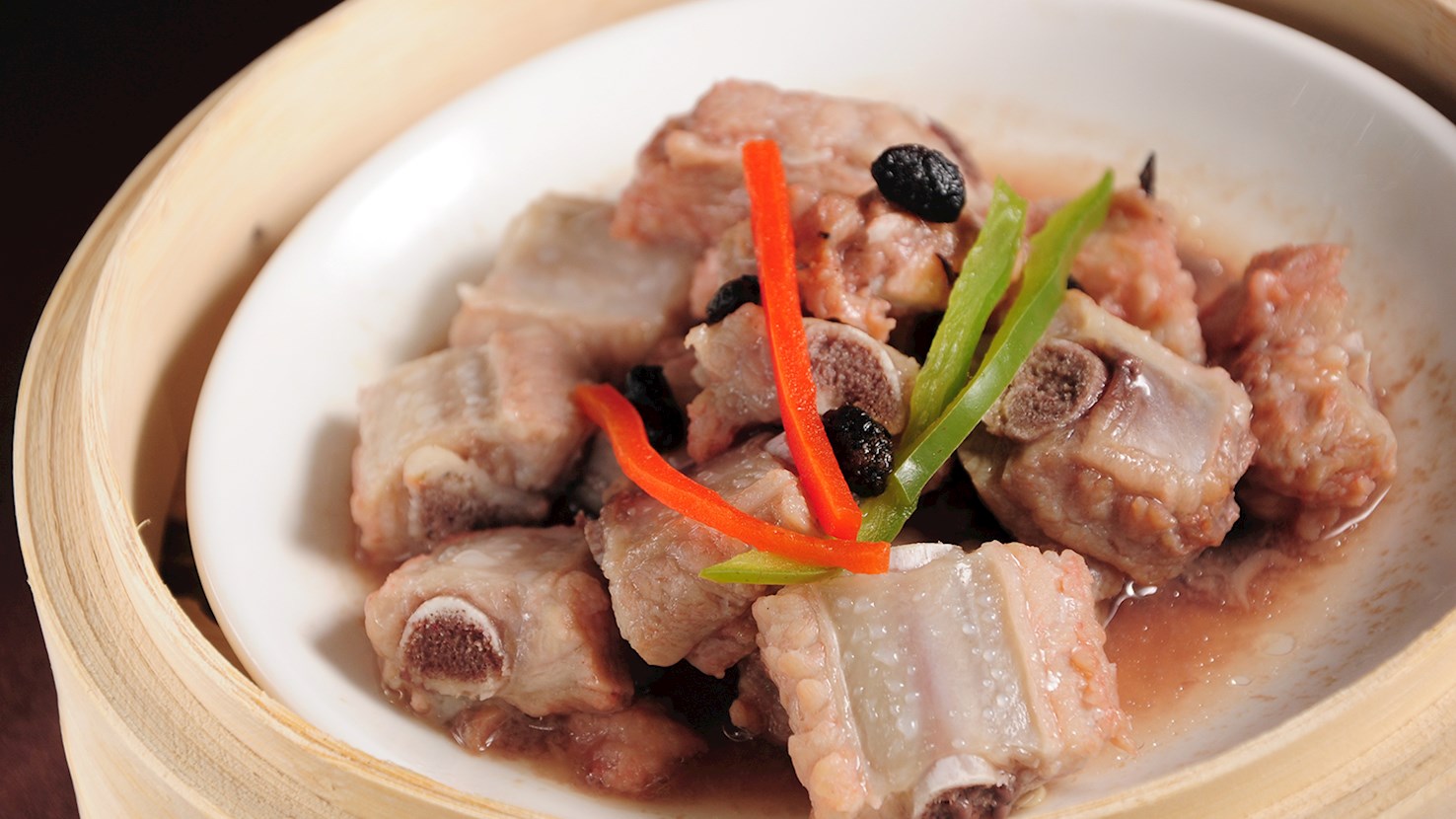
Pai gwut is a traditional dish that’s usually served as a part of dim sum. It consists of steamed pork ribs. The pork rib tips are steamed with oil and while black beans. Typical ingredients include black bean sauce, cornstarch, ginger, garlic, rice wine, pepper, sugar, oil, and sesame oil. Once done, the ribs are traditionally served covered in rich sauce in small bamboo steamers. Pai gwut can also be served on its own as an appetizer, and it’s then usually accompanied by rice and garnished with chopped scallions.
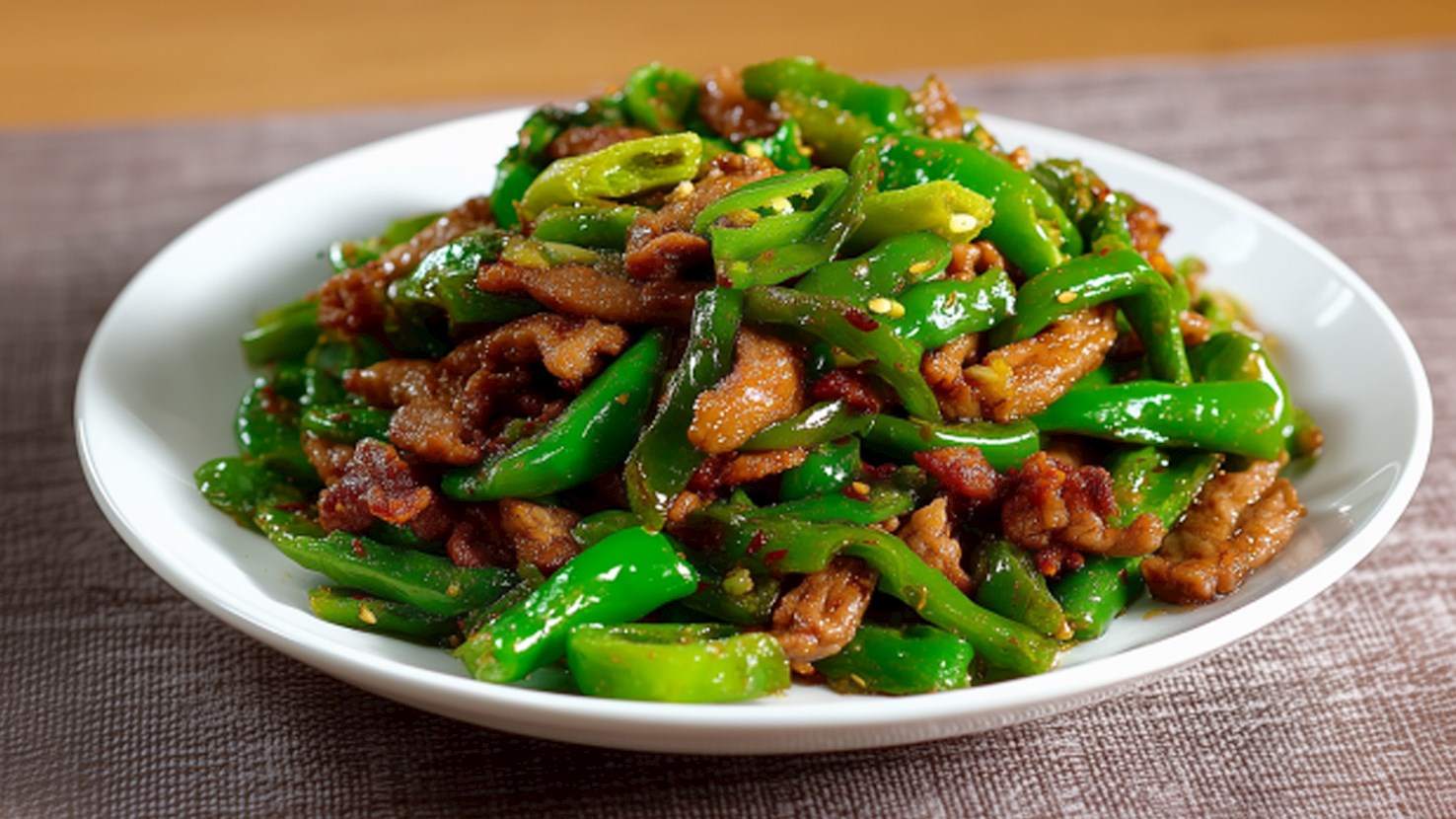
Làjiāo chǎoròu is a stir-fried pork dish from Hunan, built around the interplay of tender slices of pork and the sharp heat of fresh chili peppers. The use of chili became central to Hunan cooking from the late Ming and early Qing periods, when the crop was introduced to China and quickly adapted to the province’s warm, humid climate. As chili cultivation spread, it transformed local cooking styles, and pairing pork with an abundance of fresh peppers became a defining feature of the regional palate. The preparation of làjiāo chǎoròu relies on simplicity and speed. Pork belly or another cut with both fat and lean meat is thinly sliced to ensure it cooks quickly and remains tender. The meat is usually marinated briefly with light soy sauce, Shaoxing wine, and sometimes a small amount of sugar to enhance its depth of flavor. Fresh green and red chilies, typically small and intensely hot, are sliced and quickly stir-fried in hot oil to release their aroma and pungency. The pork is then added and cooked over high heat until it takes on a slightly crisp edge and absorbs the flavors of the chilies. Garlic, ginger, and sometimes fermented black beans or pickled chilies are added to deepen the flavor profile, but the dish remains focused on the combination of meat and fresh chili heat. Làjiāo chǎoròu is usually served hot as a main dish and is rarely eaten on its own. It is most often accompanied by plain steamed rice, which balances the heat and soaks up the savory juices released during cooking. At the table, it is typically part of a larger spread of dishes that might include mild vegetable stir-fries or light soups, which provide contrast and roundness to the meal. It is eaten in homes throughout Hunan as part of everyday cooking, but it also appears frequently in restaurants across China, where it represents one of the clearest expressions of Hunan’s flavor philosophy.
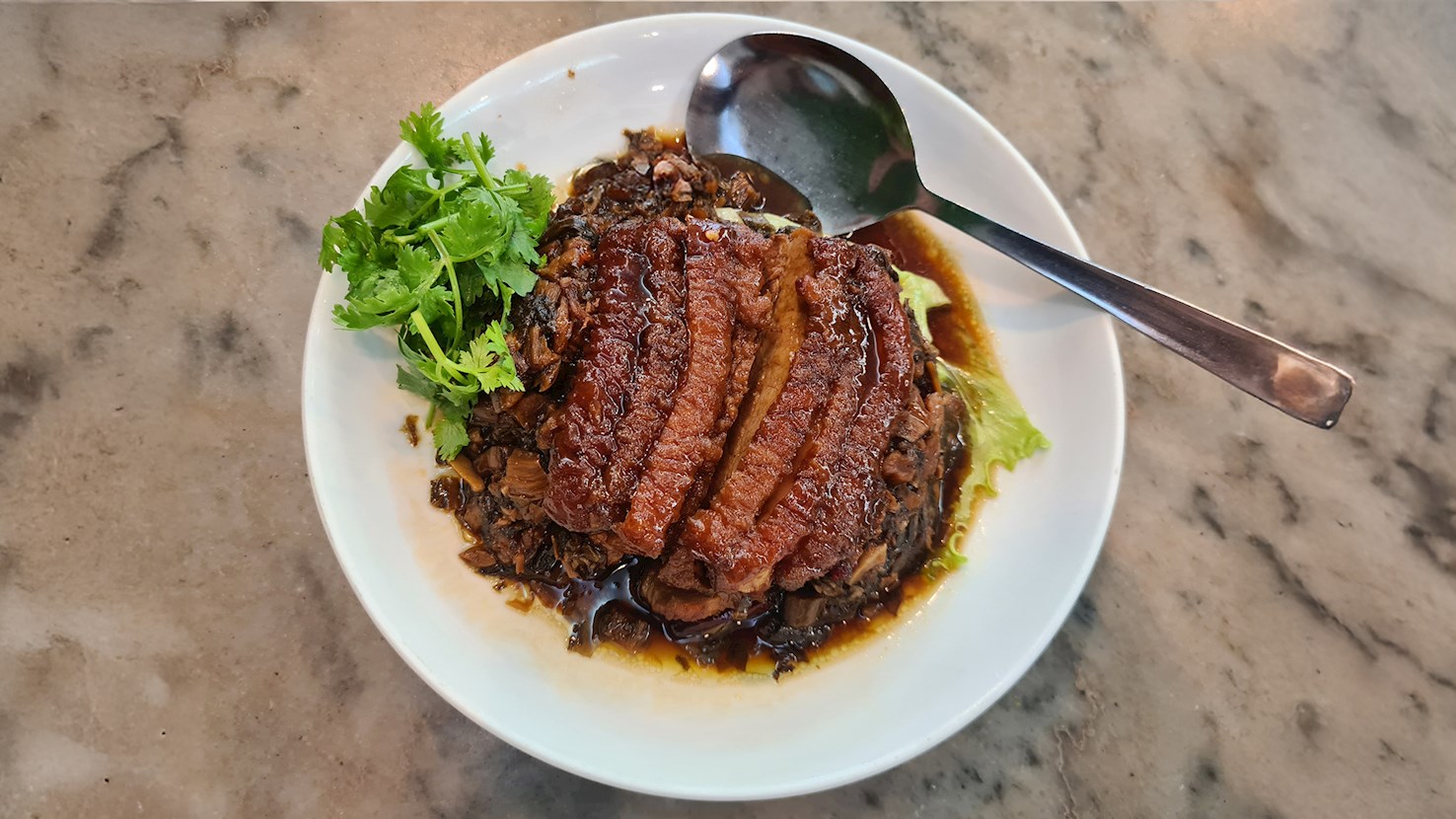
Méicài kòuròu is a pork dish from southern China, particularly associated with Hakka cuisine and widely enjoyed in regions such as Guangdong, Fujian, and Jiangxi. It is made by braising pork belly with preserved mustard greens, known as méicài, which gives the dish its distinctive balance of richness and depth. Originating from communities where resourcefulness and preservation were central to cooking practices, it emerged as a way to combine preserved vegetables, often made during harvest seasons, with fatty cuts of pork, creating a dish that was both flavorful and sustaining. Over time, it became a hallmark of celebratory meals and family gatherings, valued for its comforting, savory profile and the skill required to achieve its perfect texture and flavor. The preparation begins with pork belly, which is first blanched to remove impurities and then deep-fried or seared to render some fat and develop a caramelized outer layer. The meat is then sliced and arranged over a bed of soaked and seasoned preserved mustard greens, which have been rinsed to reduce their saltiness and sautéed with aromatics such as garlic, ginger, and soy sauce. The layered ingredients are steamed slowly for several hours, allowing the flavors to meld and the pork to become tender enough to melt in the mouth while the vegetables absorb the richness of the rendered fat. The dish is often inverted onto a plate before serving, with the glossy, tender slices of pork on top and the savory preserved greens forming a base beneath. It is most often served as part of a larger shared meal rather than on its own, frequently accompanied by plain steamed rice or mantou, which help absorb the flavorful sauce.
Máo Shì hóngshāoròu is a well-known Hunanese pork dish, consisting of braised pork belly cooked slowly with soy sauce, sugar, rice wine, and aromatics until it becomes tender, glossy, and deeply flavorful. It is a specific variation of the broader Chinese red-braised pork style, distinguished by its regional flavor profile and its association with Mao Zedong, who was known to favor this preparation. It became widely recognized during the mid-20th century when chefs in Mao’s hometown of Shaoshan refined the dish to his tastes, balancing savory depth with gentle sweetness and a hint of spice. Over time, this particular version gained cultural significance, appearing on restaurant menus and family tables across the region as a tribute to both its flavor and its historical connection. Preparation of Máo Shì hóngshāoròu begins with high-quality pork belly, cut into generous cubes to preserve the layers of meat, fat, and skin that give the dish its characteristic texture. The pork is briefly blanched to remove impurities, then caramelized with sugar to develop a deep amber color and a base layer of sweetness. Shaoxing wine or huangjiu is added along with light and dark soy sauces, sliced ginger, and star anise, and the mixture is simmered gently for one to two hours. Unlike some eastern Chinese versions, this Hunanese style often incorporates a small amount of dried chili or fermented bean paste to introduce subtle heat and complexity. The pork is cooked until the fat becomes silky, the meat tender but still cohesive, and the sauce reduced to a thick, glossy coating that clings to each piece. It is slightly less sweet than its Jiangsu or Zhejiang counterparts and more aromatic, with a savory backbone and a mild, lingering heat that reflects the preferences of Hunan cuisine. The dish is typically served hot as a centerpiece of a family-style meal, often accompanied by plain steamed rice, which absorbs the rich sauce, and lighter vegetable dishes such as stir-fried greens or pickled mustard stems to provide contrast. It is a popular choice at banquets, festive occasions, and everyday meals alike, and many restaurants in Hunan specialize in their own versions.
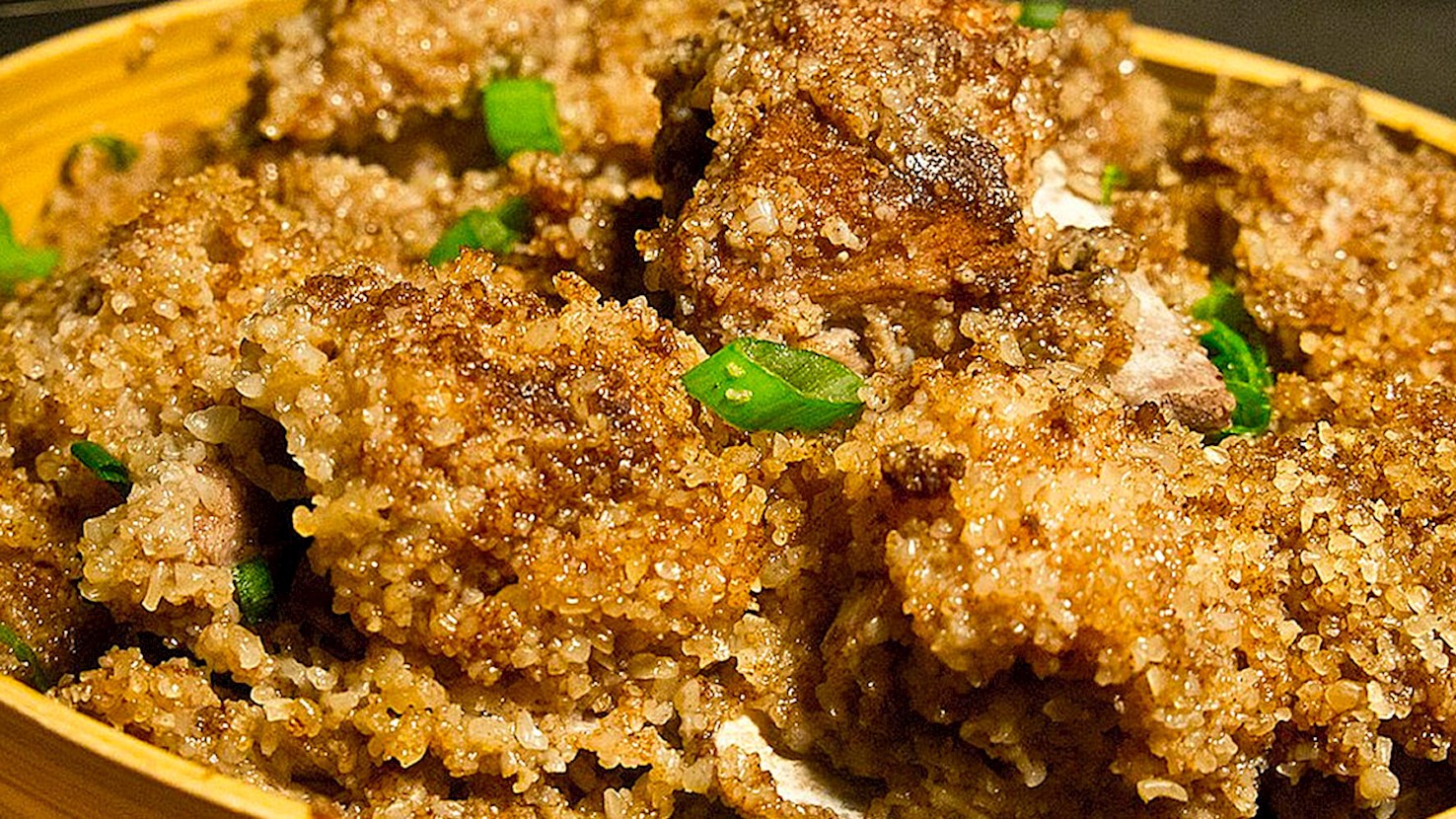
Fěnzhēng ròu is a Chinese steamed pork dish coated in ground rice flour, most closely associated with Sichuan and Hunan cuisines. It is made by marinating slices of pork belly, coating them with a mixture of ground toasted rice and spices, and steaming until the meat is tender and the rice has absorbed the juices. The technique creates a dish that is rich yet not greasy, with a distinctive texture from the soft, flavored rice layer clinging to the pork. The dish reflects a long development of steaming methods in southern and central China, where steaming was valued for retaining nutrition and keeping food moist in humid climates. Rice, the staple grain of the region, was used in more than one form, and cooks discovered that toasting and grinding rice before applying it to meat created a coating that enhanced flavor while moderating fat. Over time, this preparation became a household favorite and was later featured at banquets, appreciated for its depth of flavor and comforting character. Variations appeared across provinces, but Sichuan and Hunan made the dish particularly famous by combining it with their own regional spices. Preparing fěnzhēng ròu begins with toasting raw rice until golden, often together with spices like star anise, Sichuan peppercorns, or dried chilies, then grinding it into a coarse powder. Pork belly is sliced and marinated with seasonings such as soy sauce, Shaoxing wine, ginger, garlic, and sometimes fermented bean paste for added depth. Each piece of pork is coated thoroughly in the rice mixture, then arranged in a dish or bamboo steamer lined with leaves to prevent sticking. Steaming for around an hour allows the rice to swell with the pork’s juices, creating a crust that is soft, savory, and fragrant, while the meat inside turns tender. Today, fěnzhēng ròu is eaten in households and restaurants across central and southern China. It is commonly paired with plain rice or light vegetable sides, since the dish itself is richly seasoned and filling. In banquets, it is served in the same dish it was steamed in, preserving the aroma and presentation, while in home cooking it is a comforting centerpiece shared among family.
TasteAtlas food rankings are based on the ratings of the TasteAtlas audience, with a series of mechanisms that recognize real users and that ignore bot,
nationalist or local patriotic ratings, and give additional value to the ratings of users that the system recognizes as knowledgeable.
For the “Top 10 Central Southern Chinese Pork Dishes” list until May 16, 2026, 697 ratings were recorded, of which 624 were recognized by the system as legitimate.
TasteAtlas Rankings should not be seen as the final global conclusion about food. Their purpose is to promote excellent local foods,
instill pride in traditional dishes, and arouse curiosity about dishes you haven’t tried.