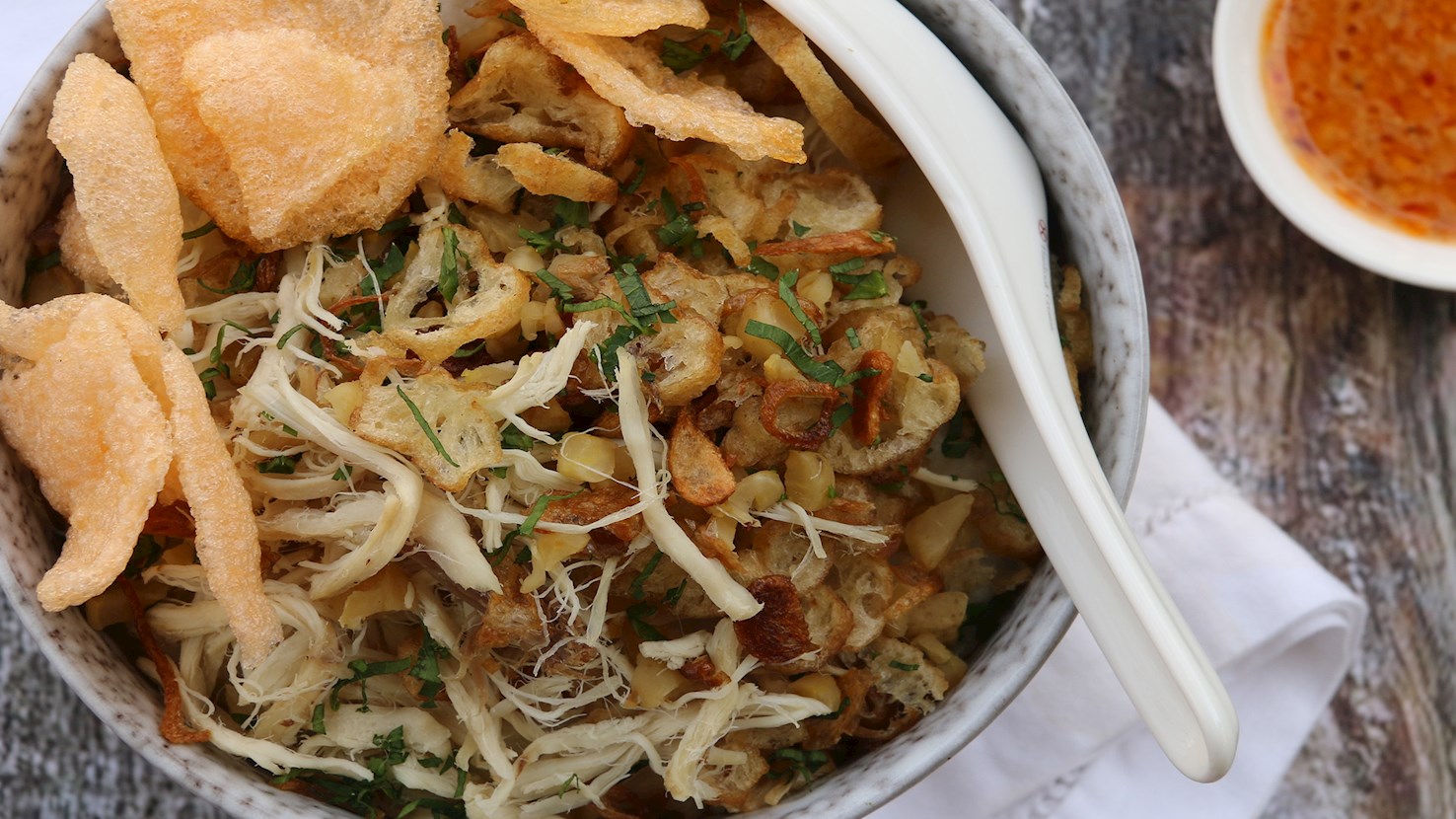
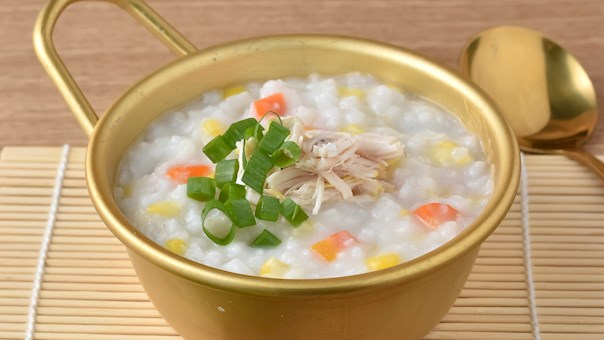
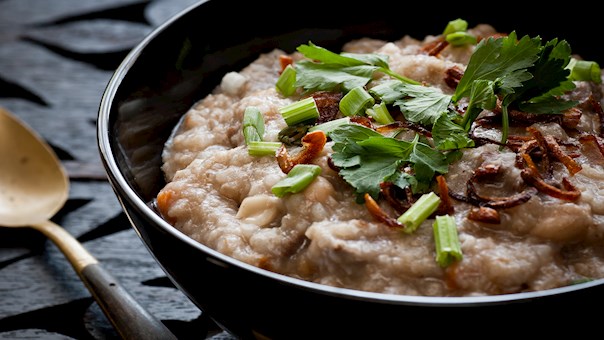
Bubur ayam is the Indonesian version of chicken congee, a thick rice porridge topped with shredded chicken and various savory condiments. This breakfast staple probably originates from the Chinese rice porridge, but it employs regionally available ingredients and toppings to create an authentic Indonesian dish. The process starts with boiling chicken (usually darker, on the bone pieces), and the same broth is typically used to cook the rice until it becomes dense in consistency. Besides rice porridge and shredded chicken, bubur ayam can employ a myriad of other ingredients. It is commonly topped with sliced scallions, crispy fried shallots, chopped cilantro, crushed peanuts, fried crullers, and sliced boiled eggs. Before it is served, bubur ayam is usually generously doused with soy sauce, sesame oil, or fish sauce. Unlike other traditional Indonesian dishes, this chicken porridge is not overly spicy, but the fiery sambal sauce can be served on the side, if desired. Bubur ayam is one of the most common street food varieties in Indonesia - each morning, numerous street vendors can be seen selling this comforting porridge as a nutritious breakfast dish.
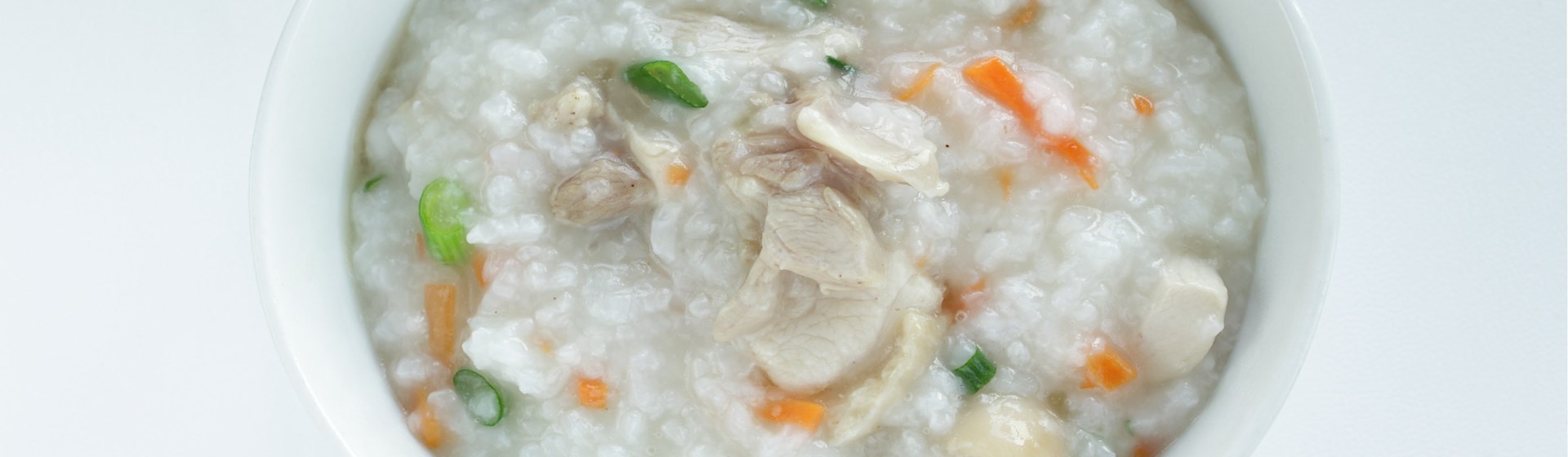
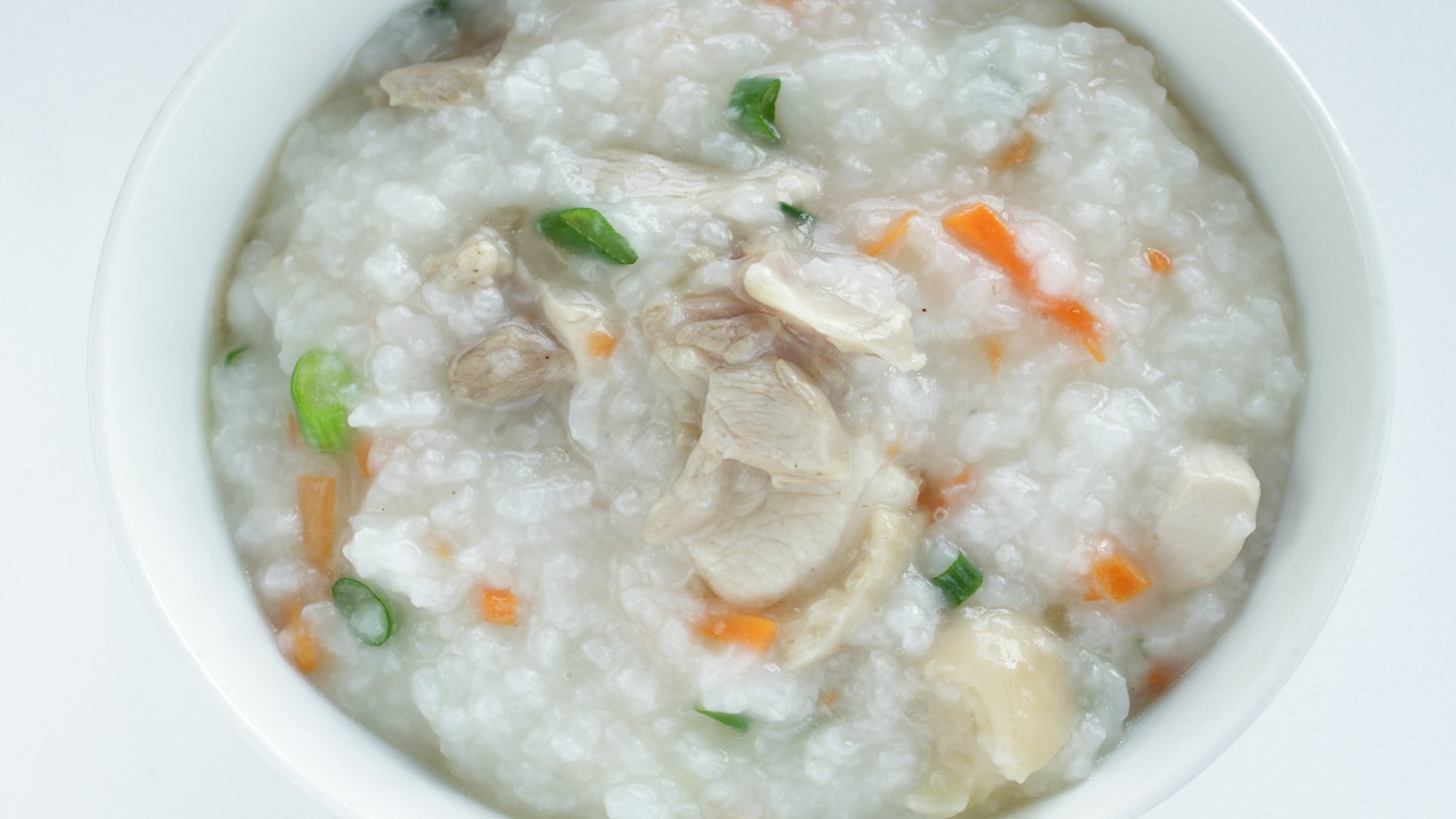
Arroz caldo is the Filipino variety of congee, a thick rice porridge that is ubiquitous in many Asian countries. It is also one of many congee varieties found in the Philippines. Distinguished by the addition of chicken, arroz caldo is usually cooked in a ginger-infused broth and served with various accompaniments and seasonings. Although congee is originally Chinese, this particular variety is believed to have been developed and adapted to suit the tastes of the large Spanish community that was present in the country during colonial times. This comforting rice dish is usually enjoyed as a filling breakfast or a satisfying midday meal.
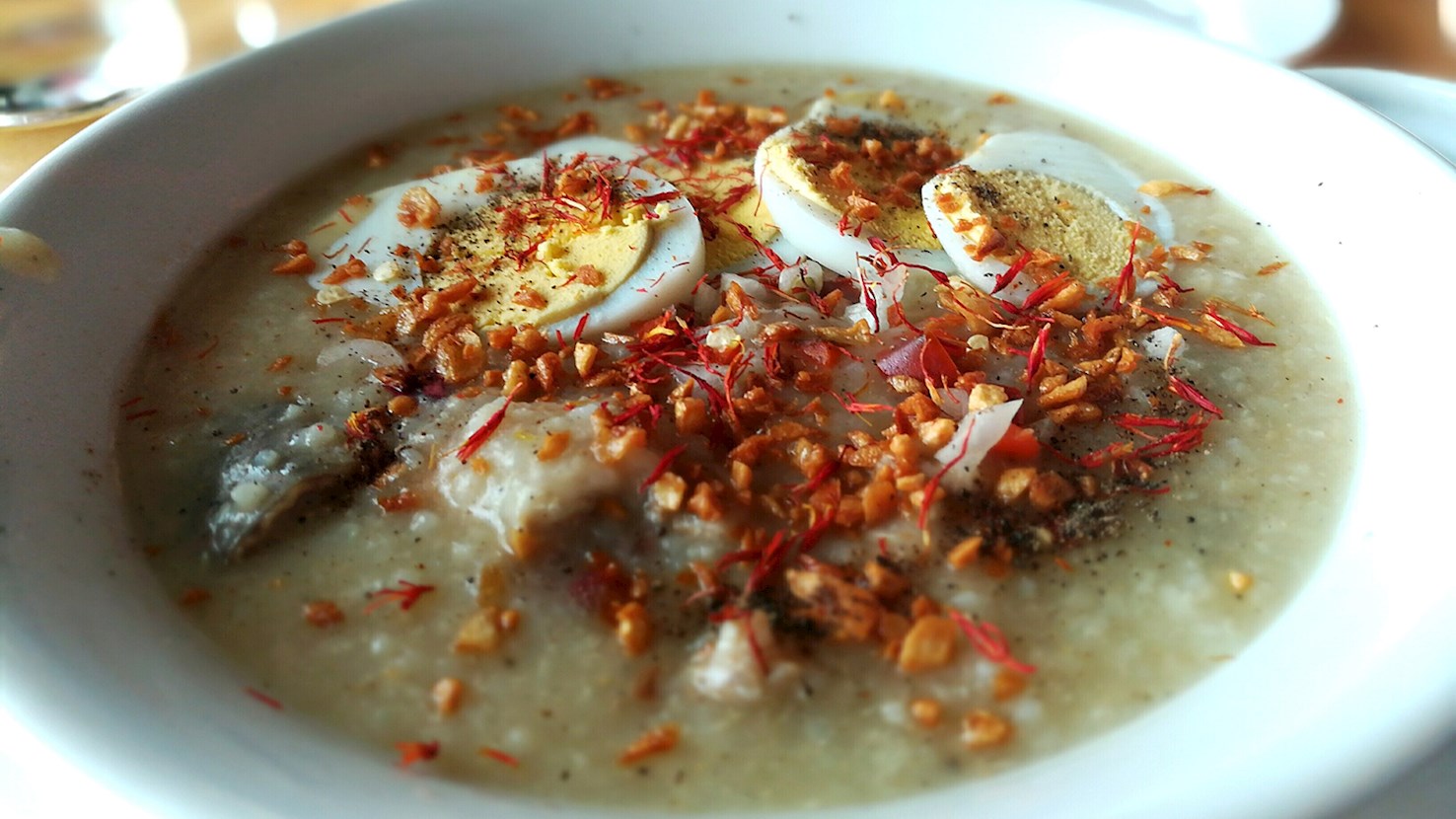
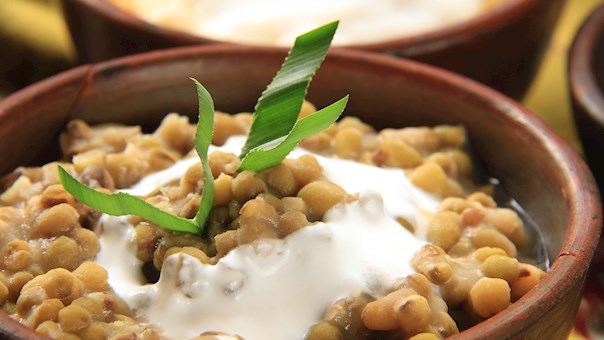
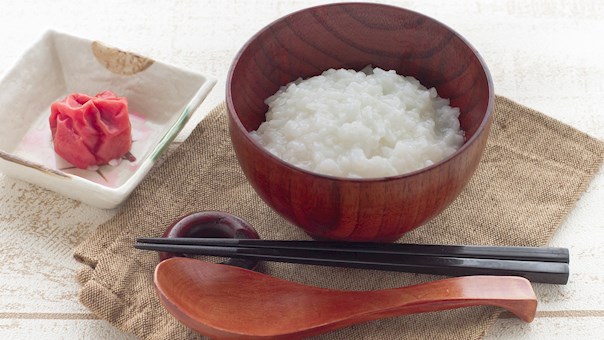
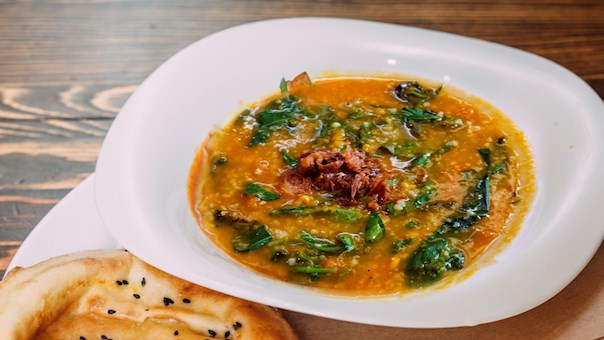
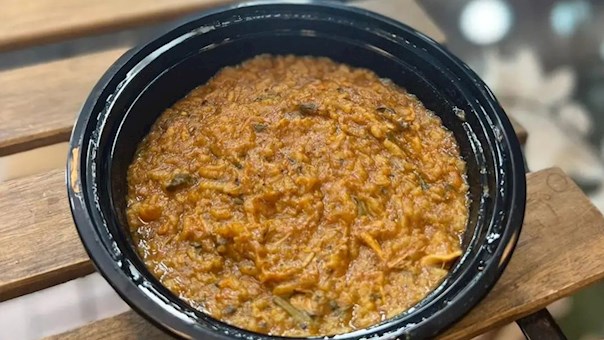
Lugaw is a versatile, starch-heavy rice porridge that serves as a blank canvas for an enormous array of sweet and savory flavors. The earliest Spanish colonial dictionary, the Vocabulario de la lengua tagala compiled by Pedro de San Buenaventura in 1613, officially defined the item simply as rice mixed with milk or water. It is traditionally prepared as a part of the Christmas Eve celebratory meal known as Noche Buena. Because of its soft, easily digestible texture, it serves as the ultimate comfort food for the sick, the elderly, and weaning infants, while also serving as a major caloric staple during breakfast or the cold, rainy typhoon season. The main ingredient is glutinous rice, known locally as malagkit, or standard long-grain white rice, boiled in an extreme excess of water or bone broth. The pot comes to a rapid boil before dropping to a slow, steady simmer until the grains break down completely, yielding a liquid noticeably thinner than standard Asian congee, which rapidly congeals into a thick paste if left to cool. For savory versions, crushed garlic, smashed ginger, and chopped onions are sautéed in hot oil until fragrant before the raw grains drop in to toast. The steaming porridge arrives in deep ceramic bowls and is topped. Typically, a squeeze of tart calamansi juice to cut through the heaviness of the starch, then splashes of soy sauce, fermented fish sauce, and ground black pepper. A massive scattering of chopped green scallions, incredibly crisp bits of fried garlic, and a halved hard-boiled egg almost always crown the bowl. Lugaw is eaten while still hot, frequently accompanied by side plates of tokwa't baboy, which consists of crispy fried tofu blocks mixed with boiled pork, as well as fried spring rolls or steamed rice cakes called puto. Arroz caldo, a name coined by the Spanish meaning "hot rice," features large, bone-in chicken segments and a generous pinch of safflower or turmeric, dyeing the entire batch a vibrant yellow. Another heavily favored savory iteration, goto, incorporates slow-boiled beef tripe, known as tuwalya, alongside gelatinous ox intestines and beef bone marrow, resulting in a significantly dense, chewy texture. In Visayan-speaking regions, these savory, meat-heavy variations are collectively referred to as pospas. Moving away from savory profiles entirely, sweet adaptations transform the starch into a rich treat, utilizing coconut milk or sugar. Champorado boils the sticky grains with pure native cacao blocks, called tablea, to create a dark chocolate porridge that is paired with salty dried fish called tuyo to offset its intense sweetness. Ginataang mais combines the rice with sweet corn kernels and rich coconut milk, while ginataang munggo relies heavily on toasted whole mung beans for a nutty, earthy profile. Binignit, another Visayan specialty, features slices of saba bananas, starchy taro, sweet potato, vibrant purple yam, and chewy sago pearls in a thick, sweet coconut milk base.
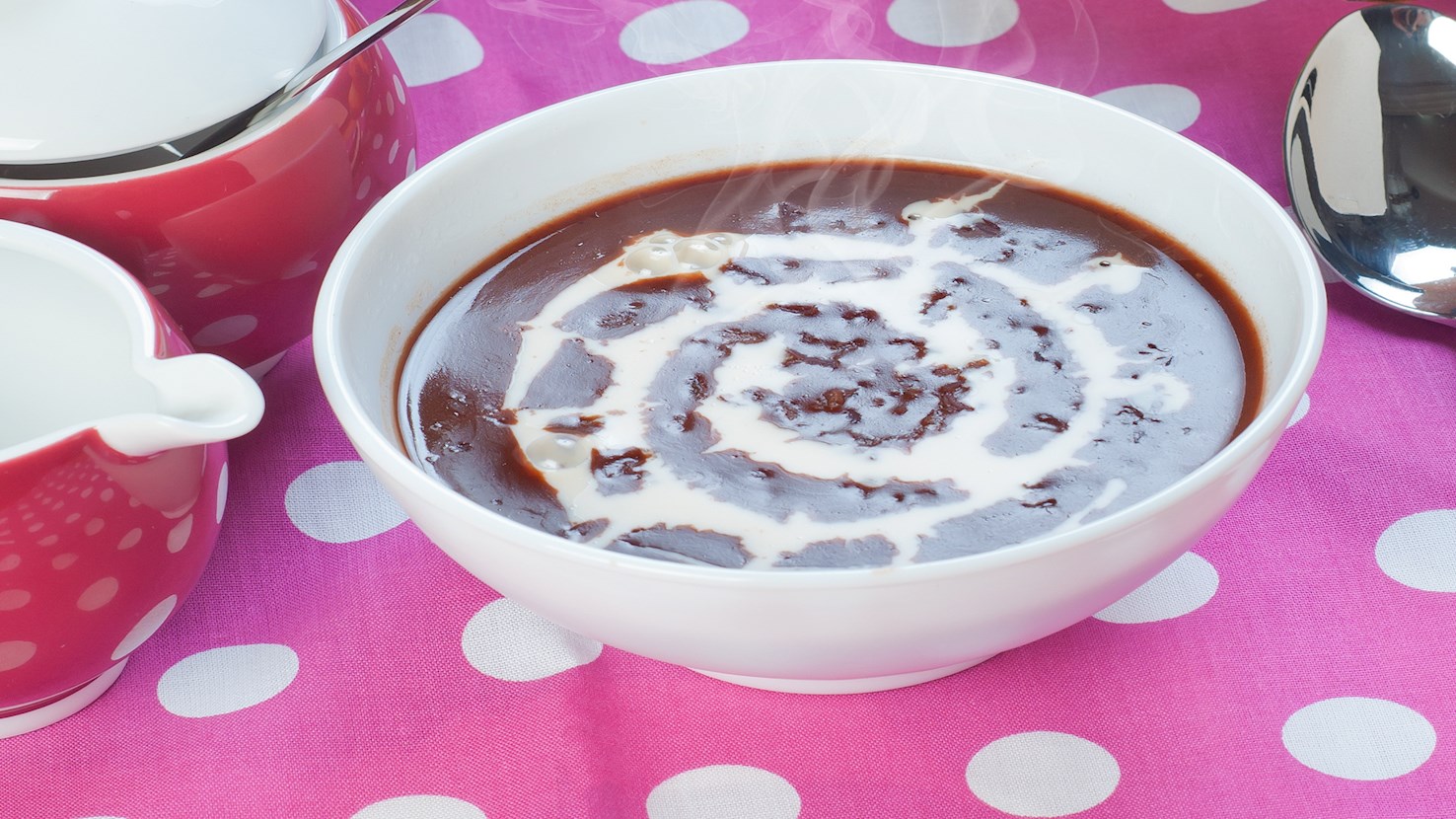
Champorado is a thick Filipino rice pudding. Originally prepared with chocolate, nowadays it is usually made with cooked glutinous rice blended with sugar and cocoa powder. The origins of the dish derive from a Mexican chocolate-based drink known as champurrado, which was introduced during the colonial period. Usually enjoyed as a hearty breakfast or a sweet afternoon snack, Filipino champorado can be served hot or cold, drizzled with condensed milk, or accompanied by salted dry fish.
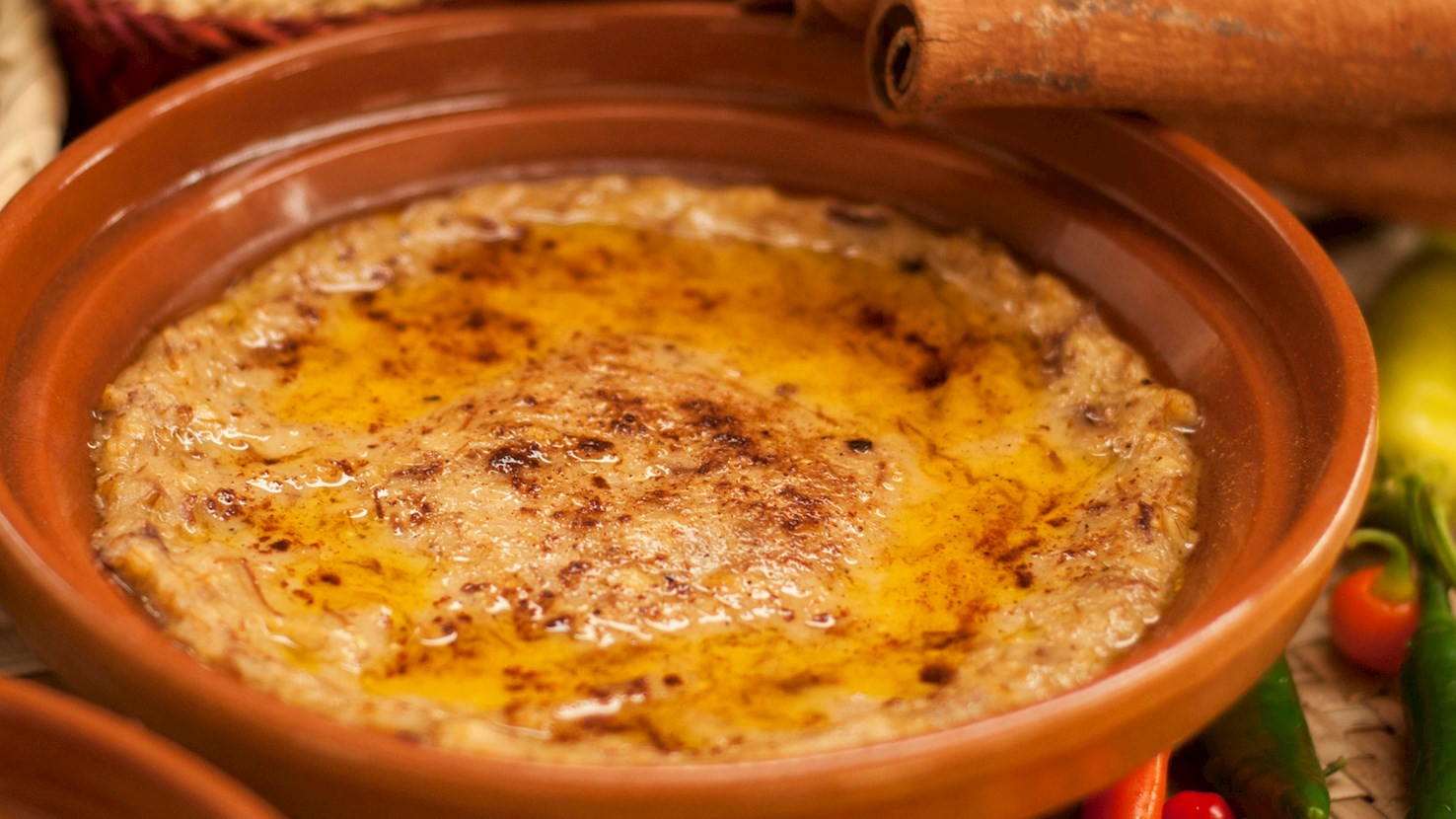
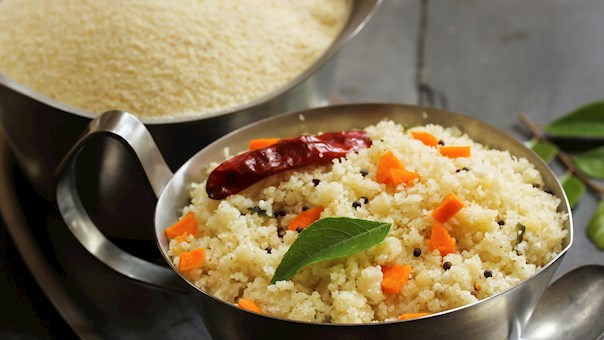
A staple during the month of Ramadan in numerous Middle Eastern countries is a plate of jareesh, a satisfying meal which combines coarse wheat and meat. This centuries-old dish probably originated in Saudi Arabia, but has since spread throughout the entire Middle East and India. Numerous countries in the area have created their unique varieties, employing authentic ingredients and giving the dish local names. In Middle Eastern countries, harees is usually prepared with coarse ground wheat which is mixed with water, butter, and meat, then left to soak overnight. Any excess liquid is drained, and all the ingredients are thoroughly mixed to create a homogenous and slightly elastic mixture that looks like a thick porridge. Chicken and lamb are the most common meat varieties employed in harees, but some regional variations also include mutton. The spices used in the preparation are also regionally influenced: cardamom, cinnamon, and cumin are commonly employed in Arabian countries, garlic and olive oil are usually found in Lebanon, while chili and turmeric are used in Indian variations.
Often described as a porridge or a congee, cháo long is a Vietnamese dish that combines pork bone broth, rice, and various pork offal such as liver, kidney, spleen, intestines, or hearts. The dish is always served warm, with sliced offal and usually pieces of quẩy—deep-fried dough—as well as scallions and chili flakes, while bean sprouts, lime, fresh vegetables and herbs, fish sauce, and ginger are usually served on the side. Optionally, cubes of congealed blood can be added. Cháo long is a hearty, affordable dish that is enjoyed throughout the country.
Chè ba màu is a colorful Vietnamese dish that belongs to the category of desserts, drinks, puddings, porridges, and soups regarding its consistency. It might include sticky rice, tapioca pearls, lotus seeds, sweet beans, water chestnuts, or agar jelly. Regardless of the wide variety of ingredients used in chè, they are almost always drenched in coconut milk and additionally garnished with bananas, crushed peanuts, or other toppings. The dish is served either hot or cold, although it is especially popular as a chilly treat on hot summer days. It is believed that the Cantonese dessert soup called tong sui is chè ba màu's predecessor. The dish is sometimes referred to as three-layered dessert or rainbow dessert due to its three distinct layers: yellow (mung beans), red (azuki beans), and green (agar jelly with pandan extract). There are also some other varieties of chè such as chè bap, chè ba ba, and chè dau den, but chè ba màu still holds the number one spot in terms of popularity.
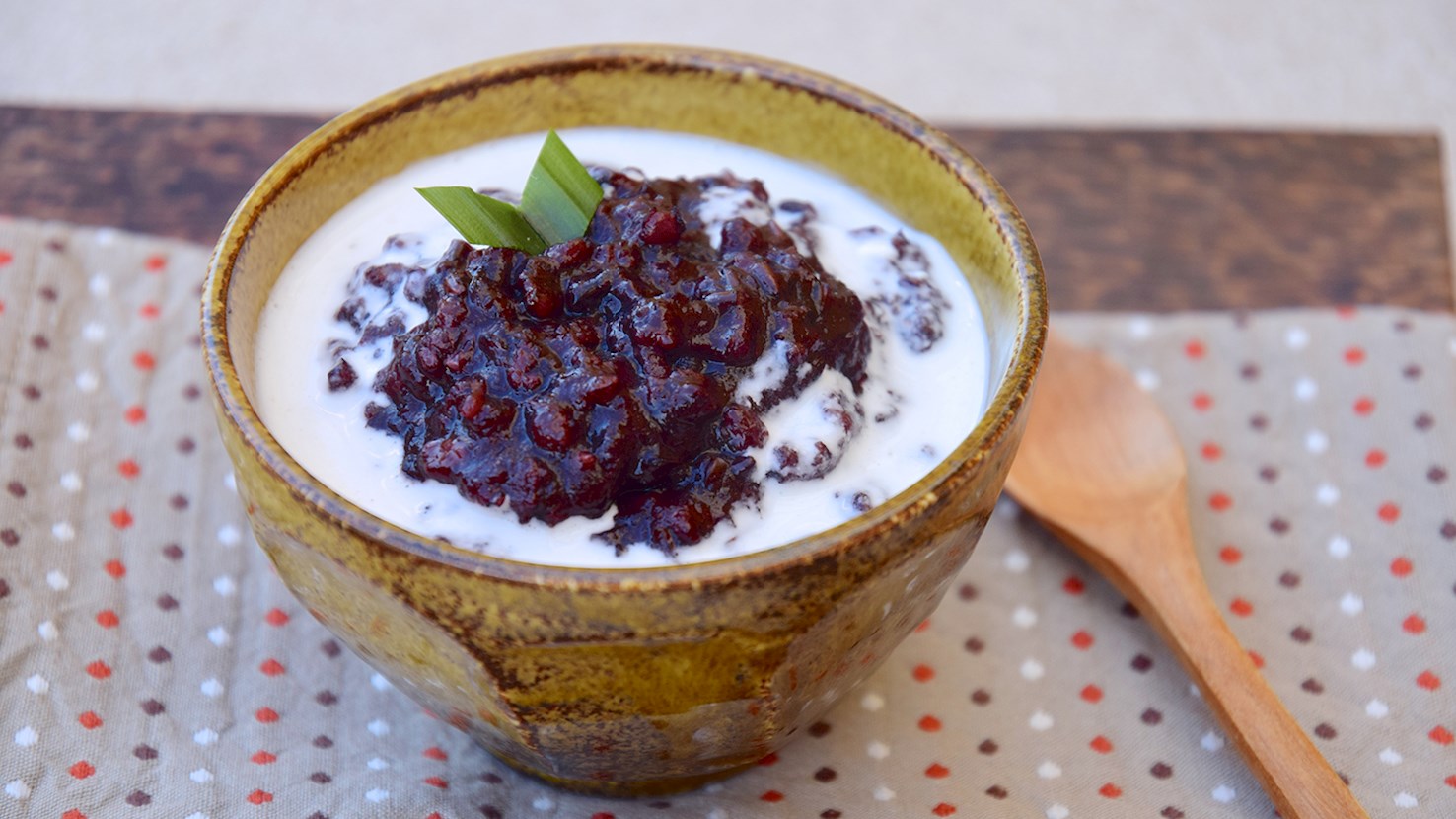
Bubur ketan hitam is an Indonesian dessert made from black glutinous rice that is slowly cooked into a thick, sweet porridge and typically served with coconut milk. It originates from Java but is enjoyed throughout Indonesia and across other parts of Southeast Asia with minor regional variations. The name translates directly to “black glutinous rice porridge,” where "bubur" means porridge, "ketan" refers to glutinous or sticky rice, and "hitam" means black. The dish is commonly eaten as a snack or dessert, particularly in the afternoon or during the fasting month of Ramadan as part of iftar meals. The main ingredient, black glutinous rice, is soaked for several hours or overnight to reduce cooking time and improve texture. It is then simmered in water until soft and slightly broken down, forming a thick consistency. During the final stages of cooking, palm sugar or granulated sugar is added to sweeten the porridge. The defining element is the topping of coconut milk, which is usually lightly salted to contrast with the sweetness of the rice. The balance of sweet and salty, along with the chewy texture of the rice and the creaminess of the coconut milk, creates a layered and satisfying flavor. Bubur ketan hitam is often served warm but can also be eaten at room temperature or chilled, depending on personal preference and climate. In some areas, it is combined with mung beans or bananas, or garnished with fried shallots or grated coconut, though these additions are optional and vary by region or household. The dish is widely available from street vendors, in food markets, and at home, where it is commonly prepared in large batches.
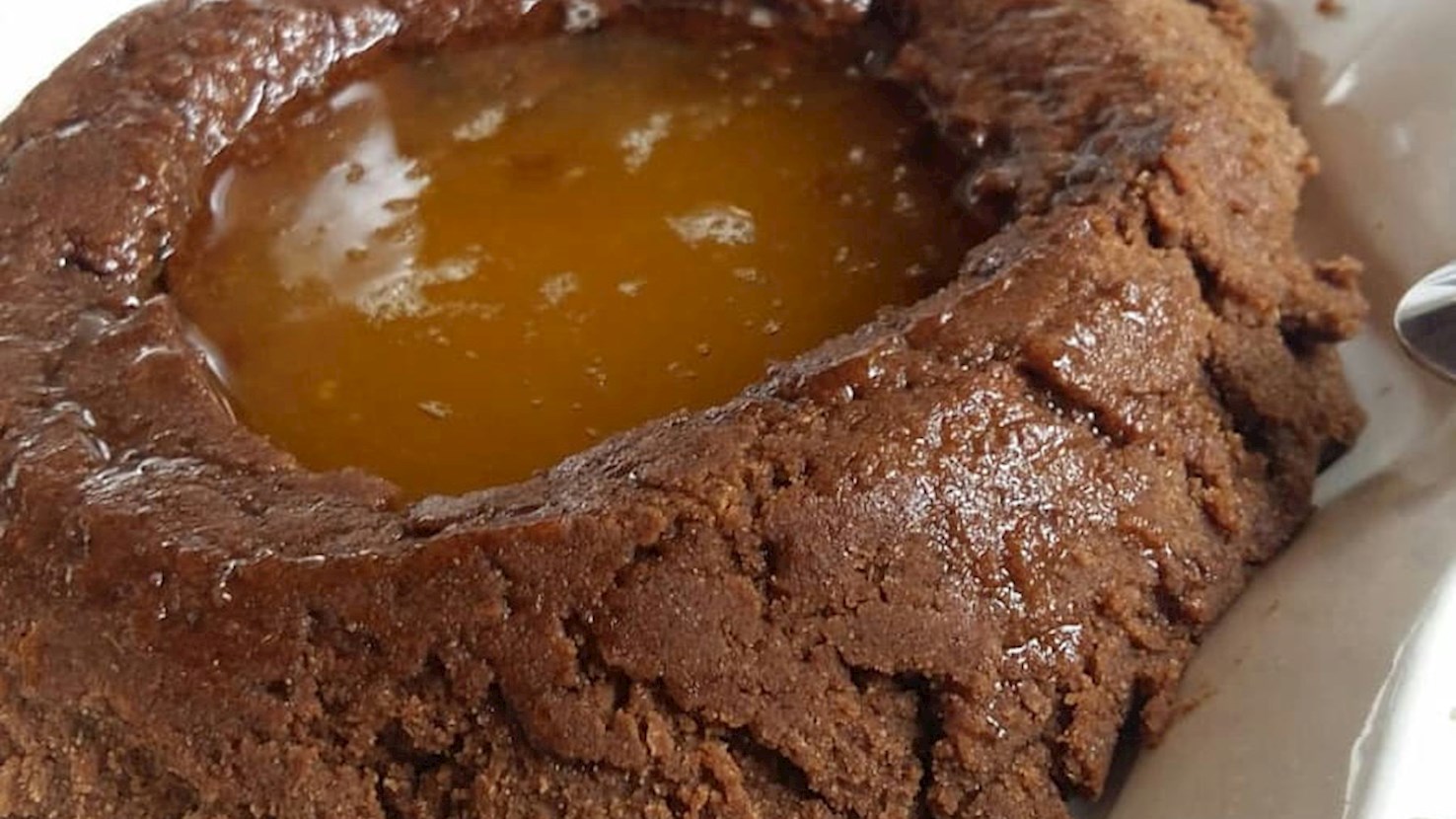
Kavut is a traditional dish originating from the eastern regions of Türkiye, but it's mostly prepared in the villages of Trabzon. The dish is usually made with a combination of whole-meal wheat and barley grains. They are roasted and ground, often by stone milling. When the cooked kavut with milk, butter, and sugar comes to the consistency of a porridge, it's removed from the heat source, and a well is made in the center. Honey or light sugar syrup with butter is poured in the well, and the dish is then eaten with spoons by dipping them into the syrup. There's also another way to eat kavut – people make holes in the top, then pour honey over it.
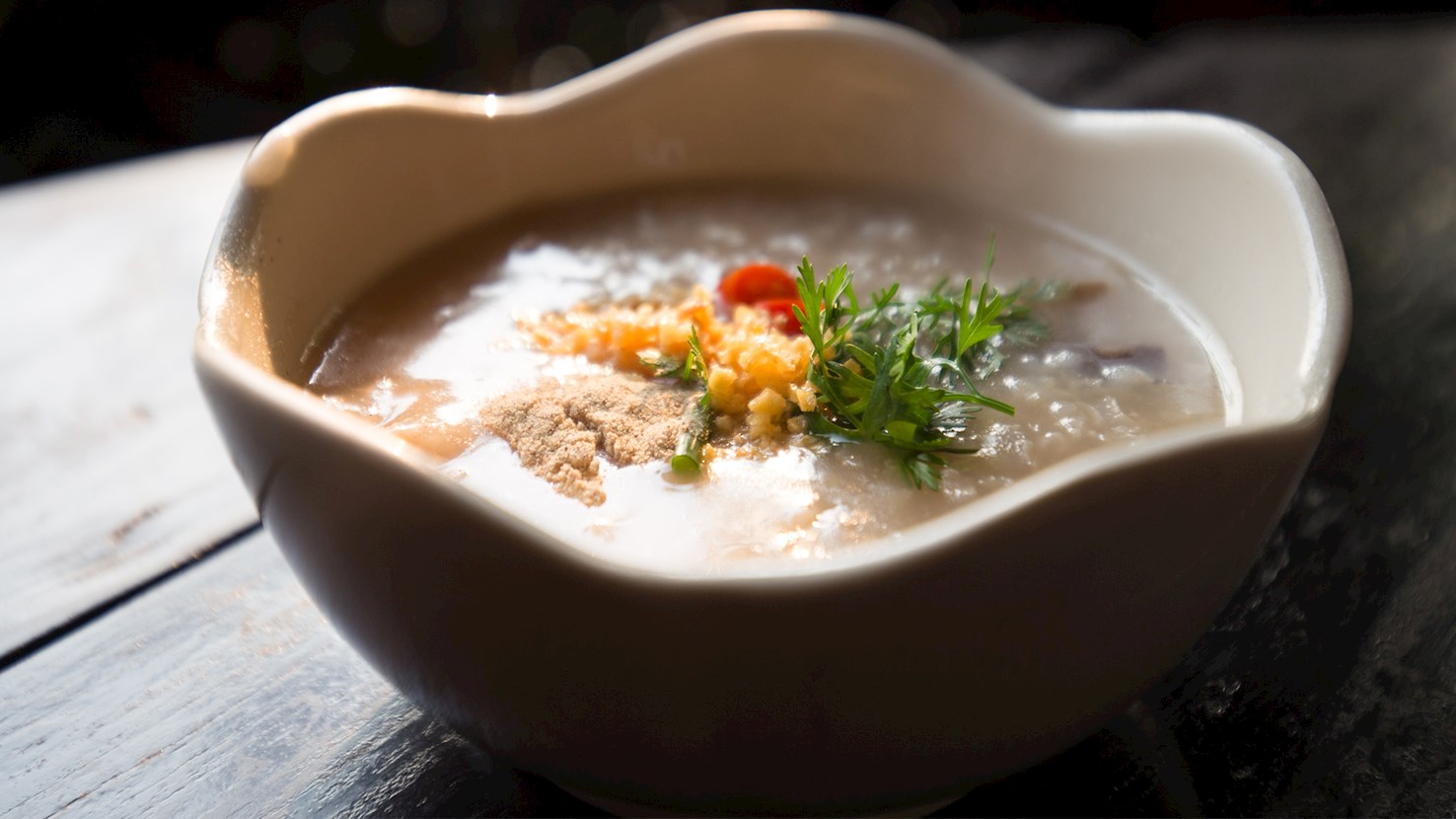
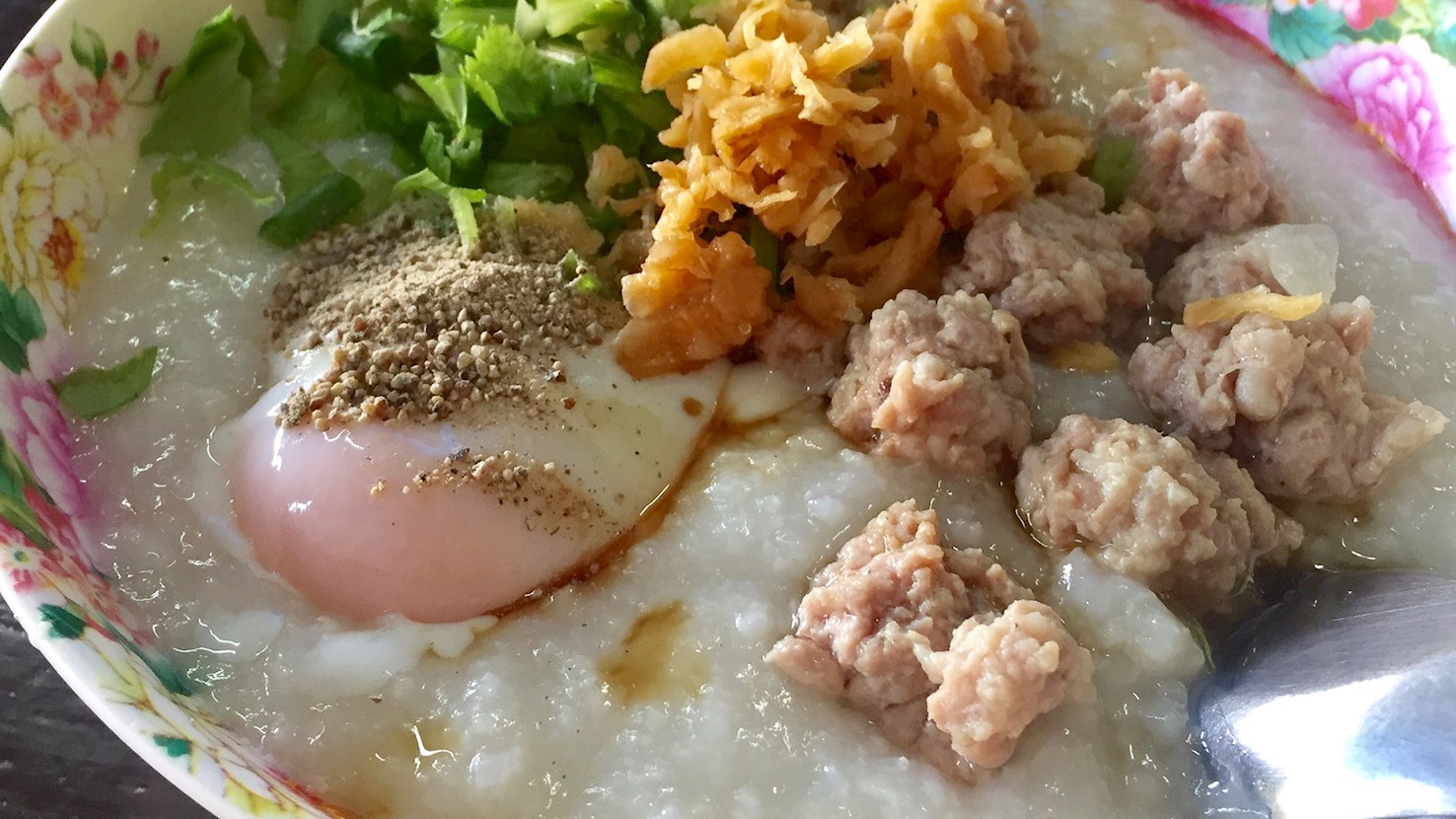
Chok is the Thai version of traditional Chinese congee, a type of rice porridge. It is typically prepared with boiled jasmine rice cooked with water, chicken broth, or pork broth until the dish becomes very thick. Pork meatballs, liver slices, shredded chicken, shrimps, or fish and lightly boiled eggs are typical accompaniments to this rice dish. Thai chok is usually flavored with fish sauce, garlic, white pepper, vinegar, and soy sauce. Warm and filling, this breakfast staple is typically served with Thai donuts on the side, sprinkled with slivered ginger, spring onions, fried garlic, and freshly chopped cilantro. It is available at street stalls throughout the country, but it can also be enjoyed in selected restaurants.
TasteAtlas food rankings are based on the ratings of the TasteAtlas audience, with a series of mechanisms that recognize real users and that ignore bot,
nationalist or local patriotic ratings, and give additional value to the ratings of users that the system recognizes as knowledgeable.
For the “Top 34 Asian Porridges” list until August 15, 2026, 883 ratings were recorded, of which 585 were recognized by the system as legitimate.
TasteAtlas Rankings should not be seen as the final global conclusion about food. Their purpose is to promote excellent local foods,
instill pride in traditional dishes, and arouse curiosity about dishes you haven’t tried.







What People Say