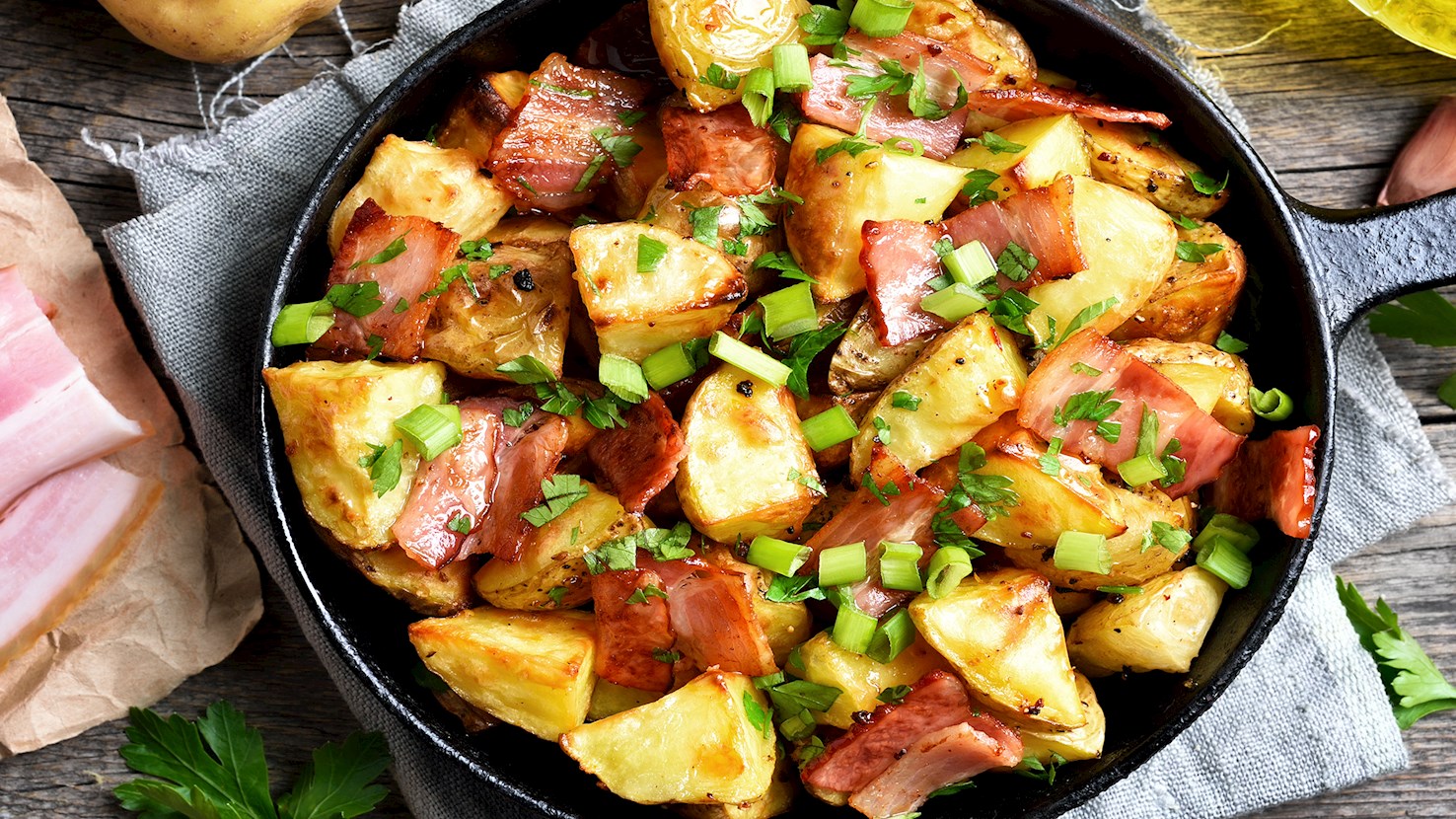
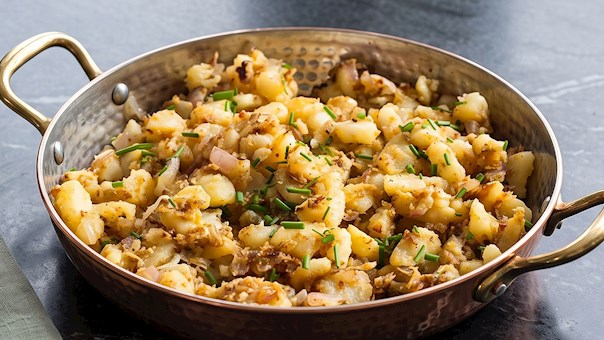
Pan-fried potatoes are a classic, versatile German dish that is easily adapted with additional ingredients and comes in different flavor combinations. The potatoes are traditionally diced or sliced, buttered and salted, and can be then combined with bacon, ham, onions, vegetables, and a variety of fresh herbs and spices. The key is to achieve crispy, golden potatoes that stay soft and tender on the inside. Simple and affordable, bratkartoffeln is a common restaurant dish as well as a popular home-cooked meal that is usually served as an accompaniment to roasted or grilled meat, sausages, fish, or fried eggs.
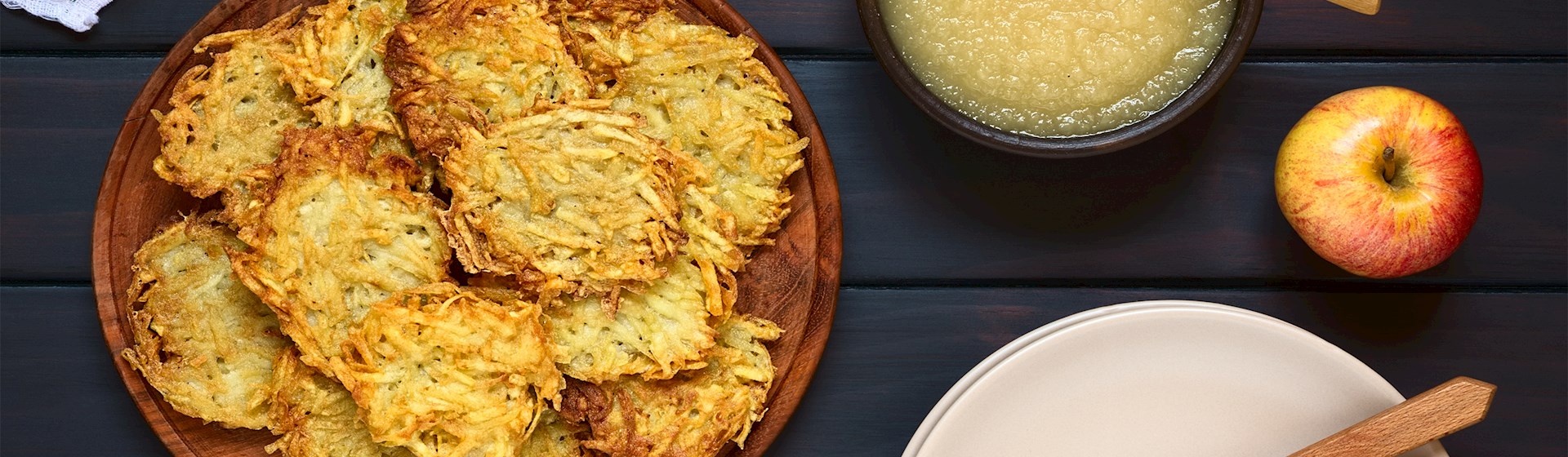
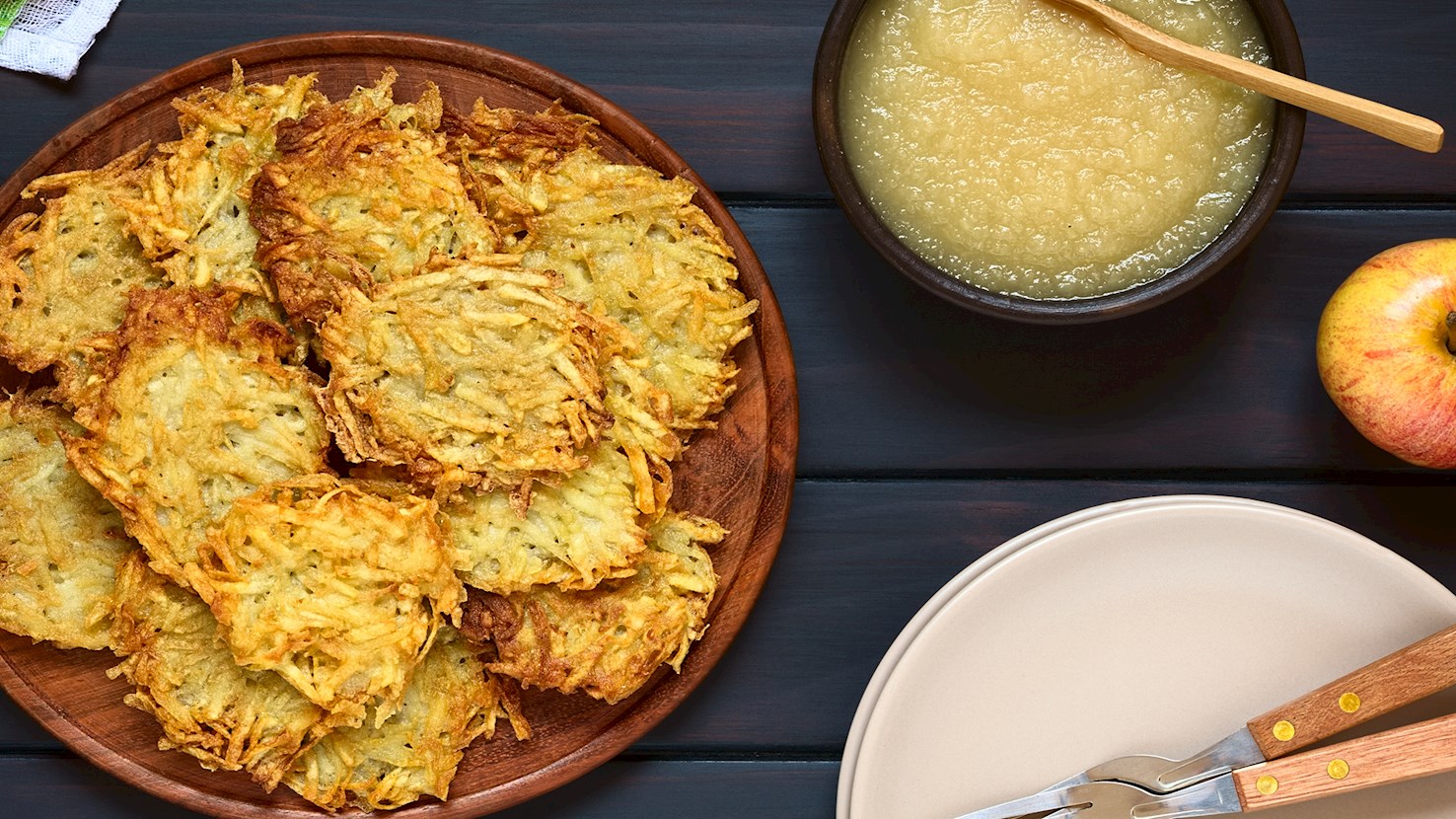
German potato pancakes are a restaurant staple, a homemade classic, and a popular street food snack. They are prepared with a thick batter that employs grated raw potatoes, flour, and eggs, and are usually shaped into flat, round discs that are shortly pan-fried until golden and crispy. Even though they are often served as a complement to stews, grilled meat, and sausages, potato pancakes make an excellent snack or main course. Kartoffelpuffers are traditionally accompanied by creamy apple sauce, fruit preserves, or sour cream.
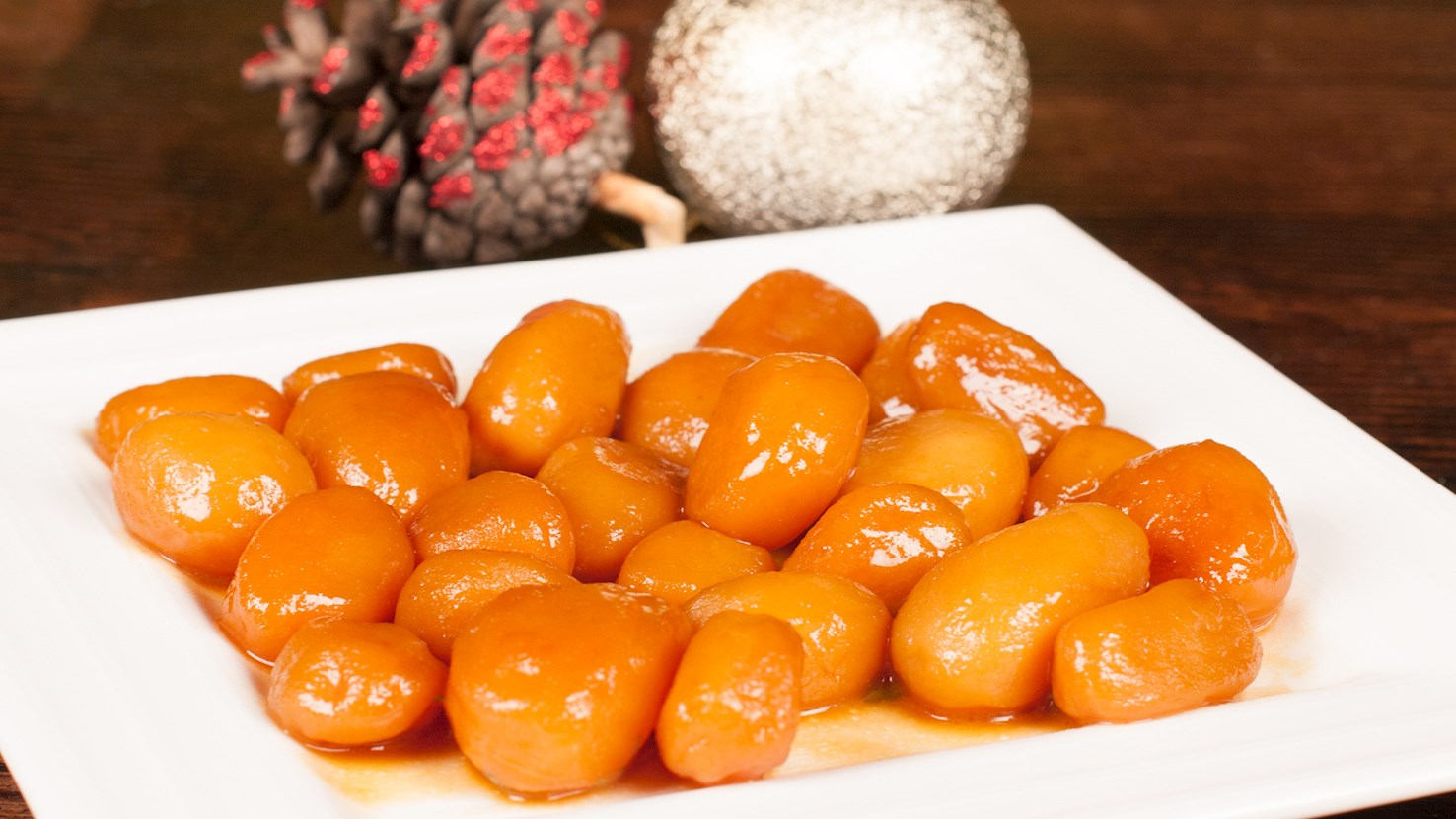
Traditionally associated with Christmastime, brunede kartofler (lit. caramelized potatoes) is a simple, yet immensely flavorful Danish dish, also eaten in the Northern Germany. The dish is usually made with a combination of new potatoes, butter, nutmeg, salt, and sugar. The butter, salt, sugar, and nutmeg are mixed together, and the mixture is poured over boiled new potatoes that have been lined in a greased gratin dish. The ingredients are gently tossed so that all of the potatoes are coated with the mixture. The dish is baked until lightly browned and crisp. Karamellkartoffeln is typically served as an accompaniment to kale ste
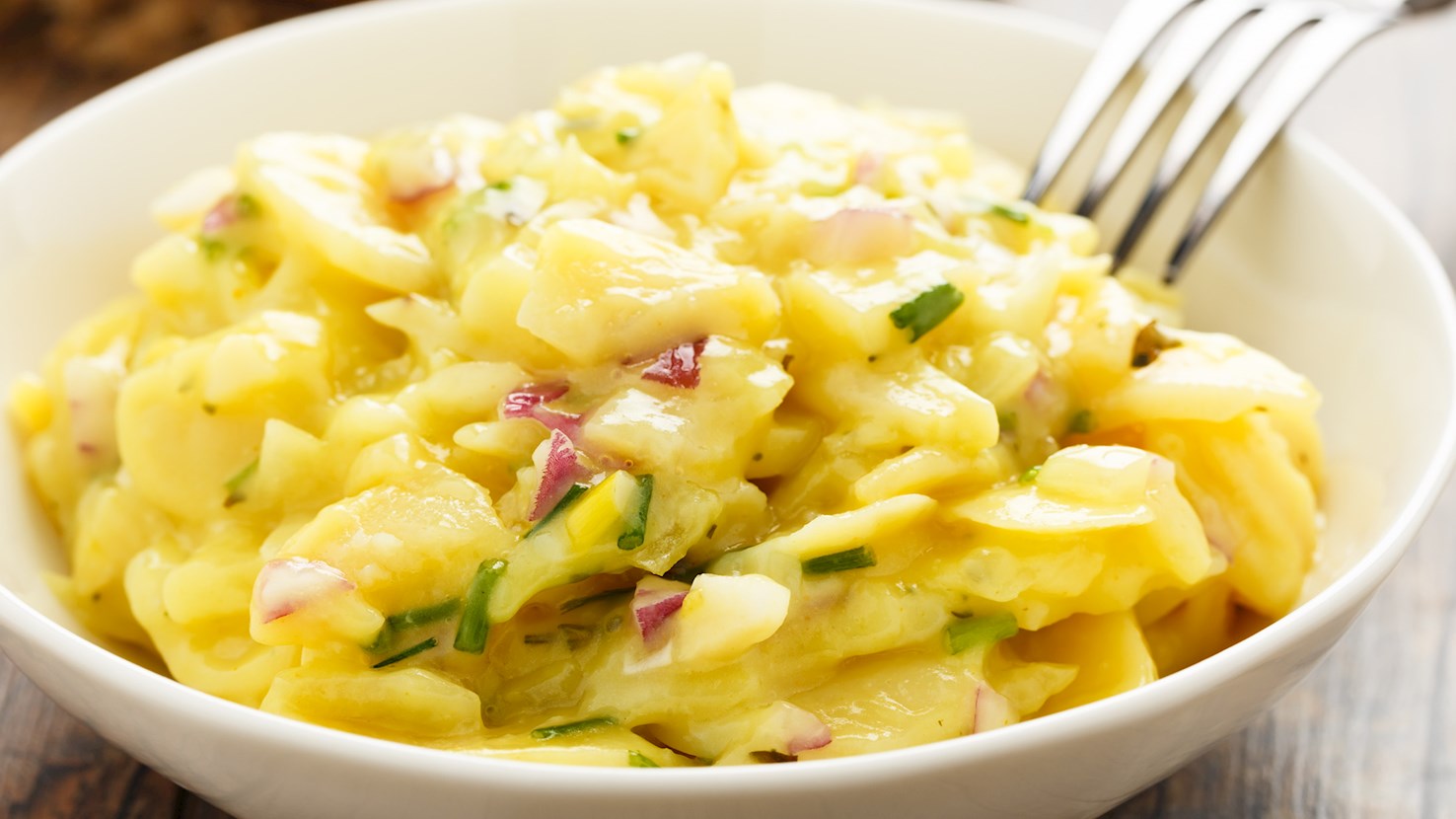
Kartoffelsalat is a potato salad from Germany made from cooked potatoes mixed with other ingredients, with two main preparation families defined by whether the dressing contains mayonnaise or not. Kartoffelsalat has sliced or cubed potatoes that stay tender but intact, coated either in a clear, savory, mildly acidic marinade or in a creamy, tangy dressing, and it commonly includes components such as vinegar, oil, salt, pepper, mustard, broth, onions, pickles, bacon cubes, eggs, apples, and fresh herbs depending on the version. The oldest known potato-salad recipe is dated 1621 in Nova Typis Navigatio by the Austrian abbot Caspar Plautz, similar potato salads appeared in German recipes around 1800, and named recipes such as Tarfuffeln-Salat were printed in 1752 and Erdäpfelsalat in 1770 as potatoes became integrated into everyday cooking. Waxy or mostly waxy “salad” potatoes are preferred because they do not fall apart easily when mixed, and some recipes include a small portion of floury potatoes to create a slightly thicker consistency. Basic preparation starts by cooking the potatoes either peeled in salted water or in their skins, cutting them into slices, and combining them with the chosen dressing, with the timing of cutting and dressing shaped by the regional style. For mayonnaise-based kartoffelsalat common in northern Germany, the potatoes are often processed a day after boiling to gain extra firmness before mixing with the dressing, while in southern styles the potatoes are often dressed while still warm so the marinade absorbs more deeply, and some methods lightly crush the potatoes instead of slicing them. One established non-mayonnaise method uses a hot mixture of meat broth, vinegar, oil, salt, pepper, and mustard poured over sliced potatoes, with optional additions such as finely cut onions, fried bacon cubes, garlic, or cucumber pieces, and the result can be eaten warm or cold. A specific Swabian method called “grated potato salad” uses day-old cooked potatoes grated on a kitchen grater and combined with onion, vinegar, oil, salt, pepper, and warm meat broth. In parts of Styria and Burgenland pumpkin seed oil is used for dressing, and in Franconia chives are treated as required. Mayonnaise-based kartoffelsalat is also associated with Silesian and Bohemian cooking, the Rhineland often adds gherkins or apples, northern variants often feature apples and hard-boiled egg, and Brandenburg combinations include gherkins with radishes or finely sliced onion, with optional additions such as roast leftovers, matjes, sausage pieces, and fresh herbs, and yogurt can replace mayonnaise as a lighter option. Kartoffelsalat is used as a flexible side dish and party food served with sausages, cutlets, and fried or baked fish, and as Erdäpfelsalat it is a classic accompaniment to Wiener Schnitzel, with many families in Germany eating Kartoffelsalat with bratwurst, bockwurst, or Wiener on Christmas Eve and a 2020 survey naming sausages with potato salad as the most popular Christmas Eve meal in Germany. Regional naming reflects local potato words, including erdäpfelsalat in southern Germany and Austria and härdöpfelsalat in Upper Swabia and Swiss German, alongside many dialect forms used for local variants.
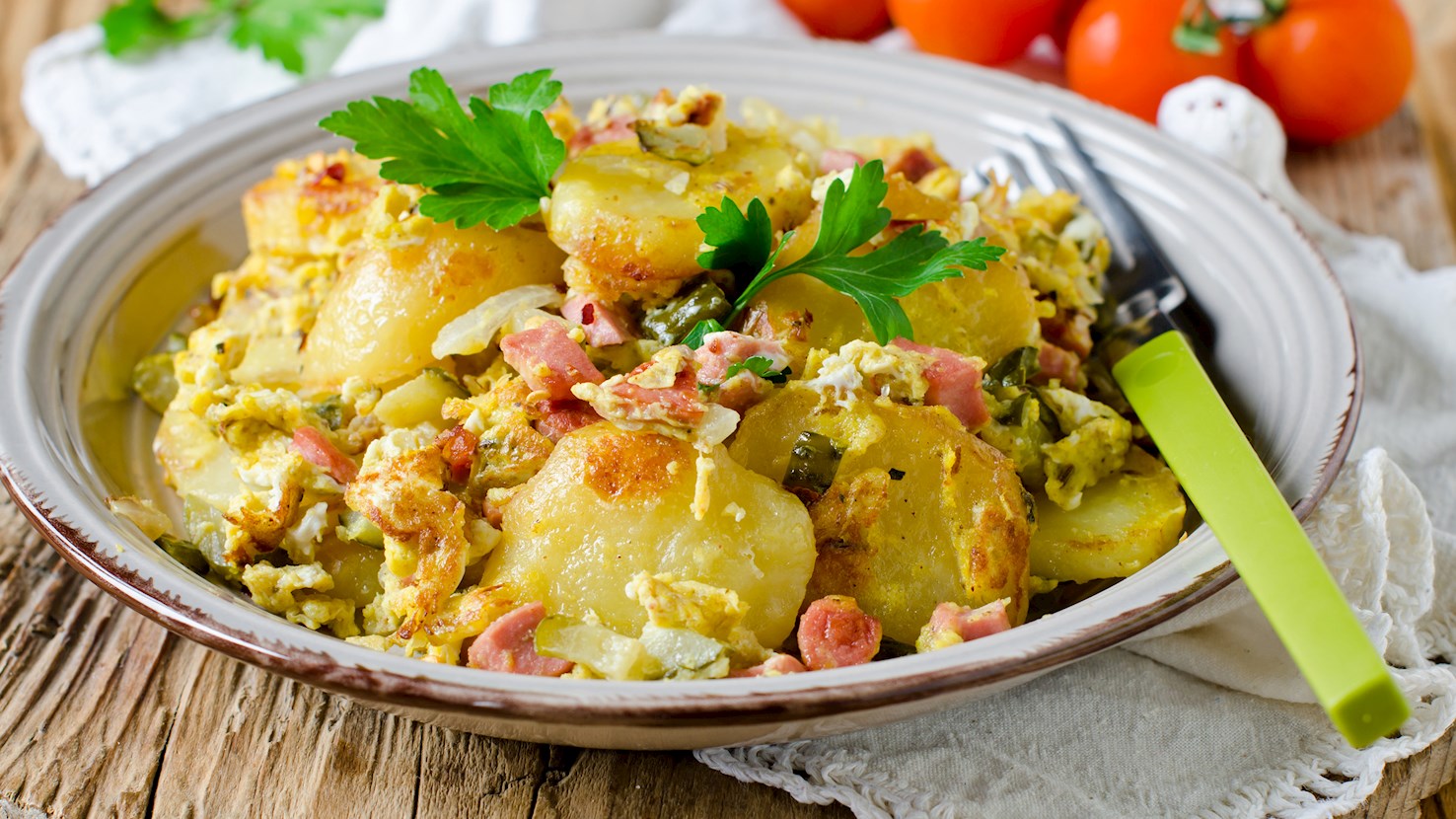
Bauernfrühstück is a traditional dish that can be translated as a farmer’s breakfast. Although there are many variations throughout the country, it’s usually made with a combination of potatoes, butter or vegetable oil, onions, cured ham, eggs, milk, chives, salt, and pepper. The potatoes are boiled in their skins, peeled, cut into slices, and browned in butter with the onions and diced ham. The eggs are beaten, mixed with milk, seasoned with salt and pepper, and the mixture is then cooked in the pan with the rest of the ingredients. Once fully cooked but still moist, the dish is garnished with chopped chives and served warm.
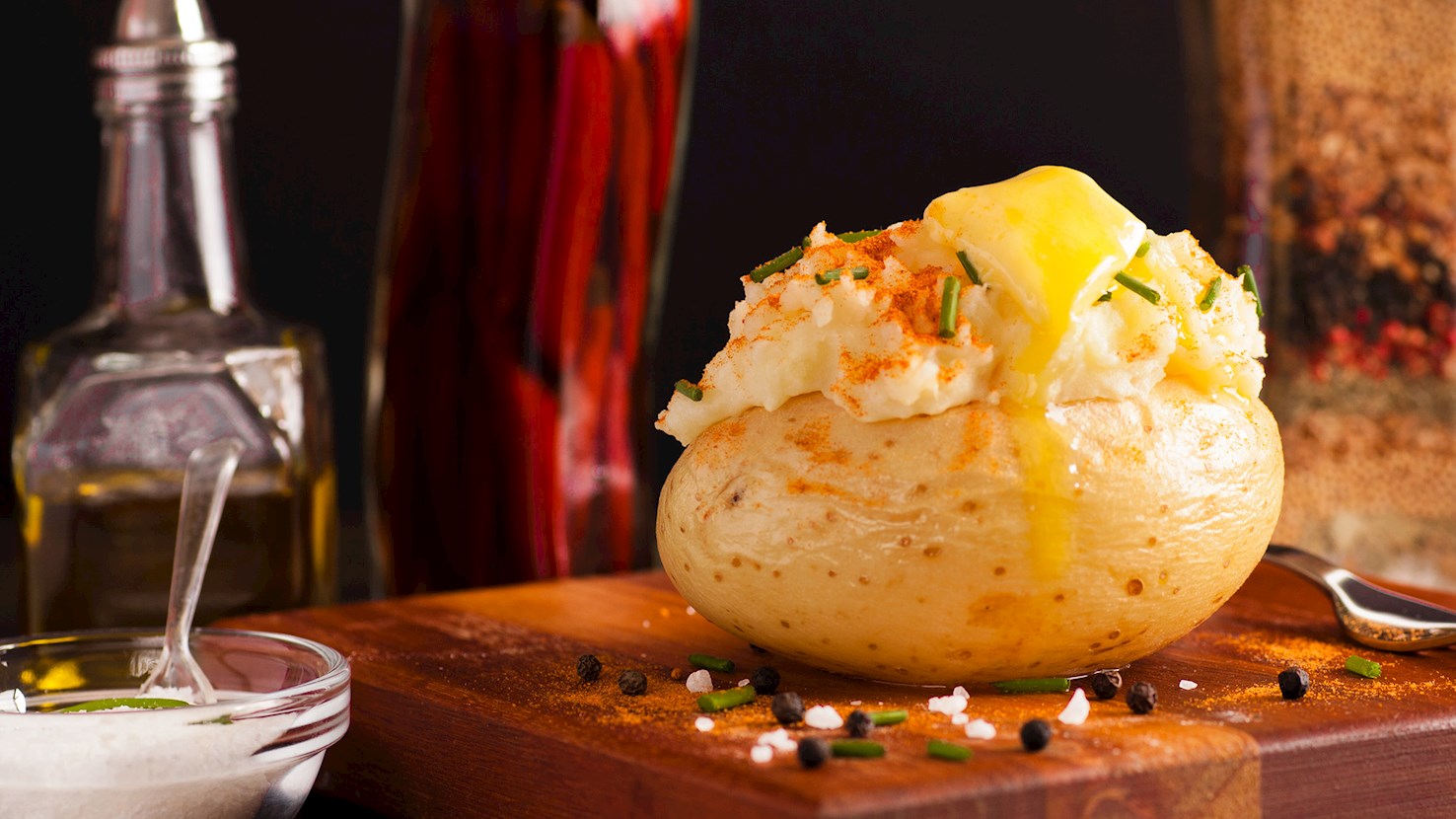
Pellkartoffeln refers to boiled or steamed potatoes with their skins intact. This traditional German dish can be enjoyed on its own or served as an accompaniment to a variety of different dishes. The potatoes are usually scrubbed to remove any impurities and then cooked whole in water seasoned with salt and (sometimes) caraway seeds or bay leaves. Leaving the skin intact allows the potatoes to cook better and retain more of their natural flavor and nutrients. Once done, the potatoes can either be peeled or eaten with their skins intact. The simplest way to enjoy pellkartoffeln is with salt and butter, although another popular way is to accompany them with kräuterquark (quark mixed with fresh herbs). Other typical combinations include pellkartofflen with salmon remoulade (Lachsremoulade), quark and flaxseed oil, leberwurst, heringsalat, or curry sauce. Pellkartoffeln are also used to prepare other potato-based specialties such as the ubiquitous German potato salad (Kartoffelsalat), roasted potatoes, pan-fried potatoes (Bratkartoffeln), various potato dumplings (Kartoffelklöße), a type of potato-based pasta (Schupfnudeln), potato pancakes (Kartoffelpuffer), mashed potatoes (Kartoffelpüree), and potato soups.
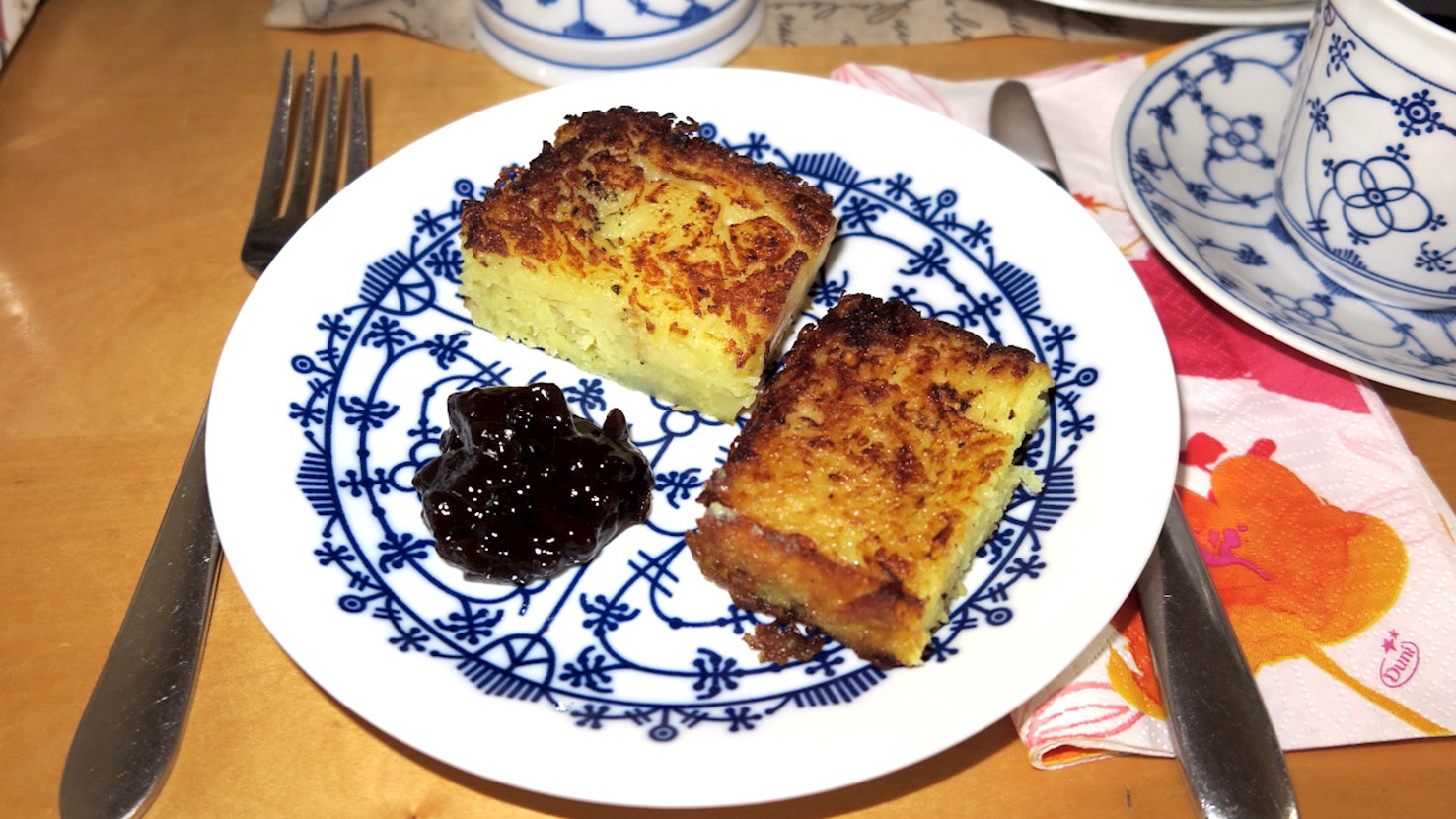
Potthucke is a traditional potato cake originating from the Sauerland region in Westphalia. It's made with a combination of potatoes, eggs, milk, sour cream, butter, salt, and pepper. Half of the potatoes are boiled and grated, and the remaining half is boiled and mashed. The two are mixed together with sour cream, milk, eggs, seasonings, and the white starch from the cooking liquid. The batter is poured into a greased loaf pan, dotted with butter, and baked until browned and crisp. Once cooled, the loaf is typically cut into thin slices and sautéed in butter on both sides before it's served hot. Potthucke is traditionally washed down with schnapps or beer. This savory cake has many variations, so it can also contain ingredients such as bacon and onions.
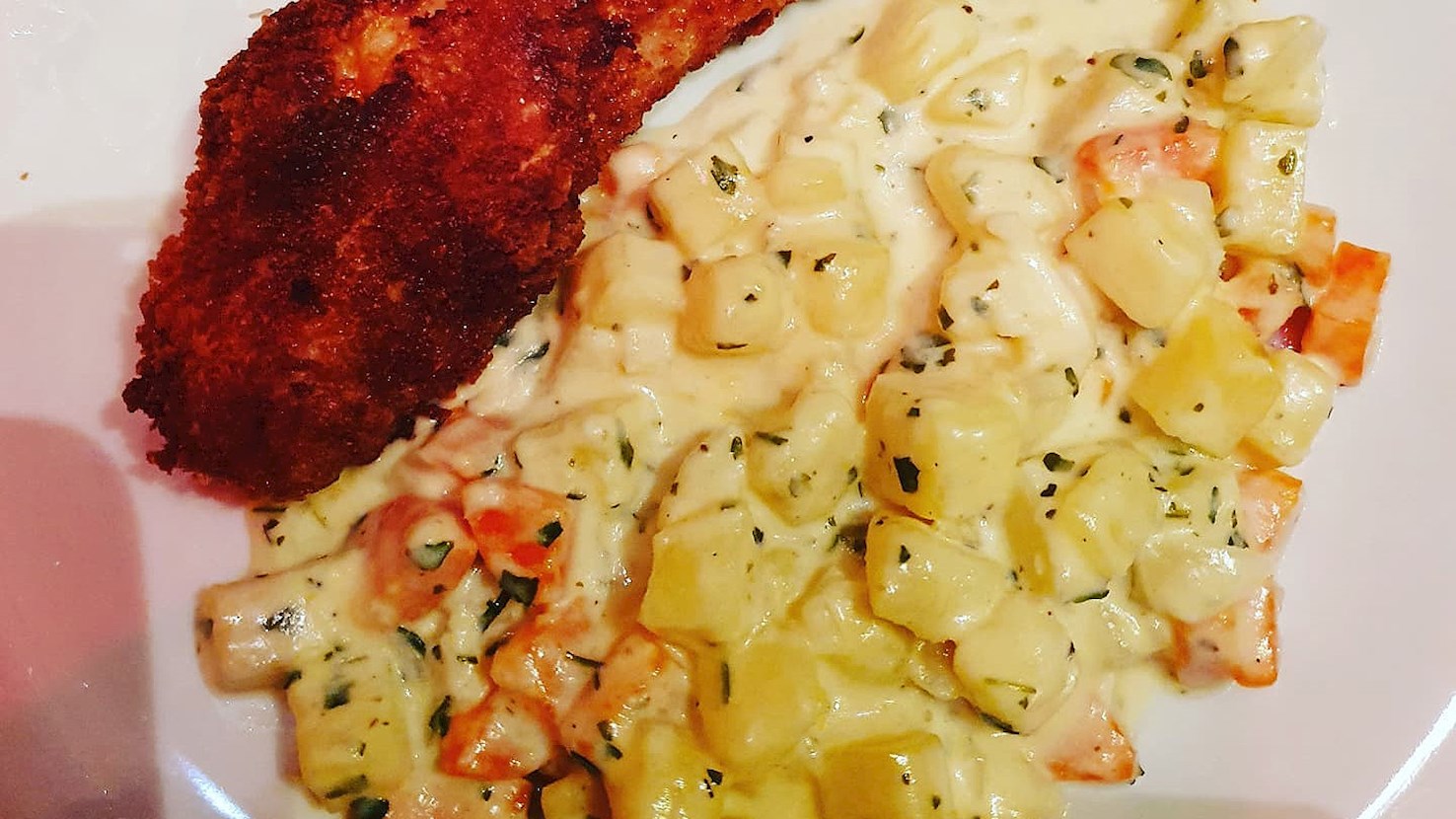
Meerrettich kartoffeln is a traditional dish consisting of potatoes in horseradish cream sauce. The dish is usually made with a combination of potatoes, root horseradish, milk, butter, onions, flour, sugar, salt, and parsley. The horseradish is grated and soaked in milk. The potatoes are boiled, peeled, and sliced. The onions are minced, sautéed in butter, sprinkled with flour, and stirred until the flour is absorbed. Water, milk, and grated horseradish are added to the pan in order to create a creamy sauce that's stirred until smooth and thick. It's seasoned with salt and sugar, sprinkled with parsley, and the potatoes are then simmered in the sauce for a few minutes before the dish is served warm.
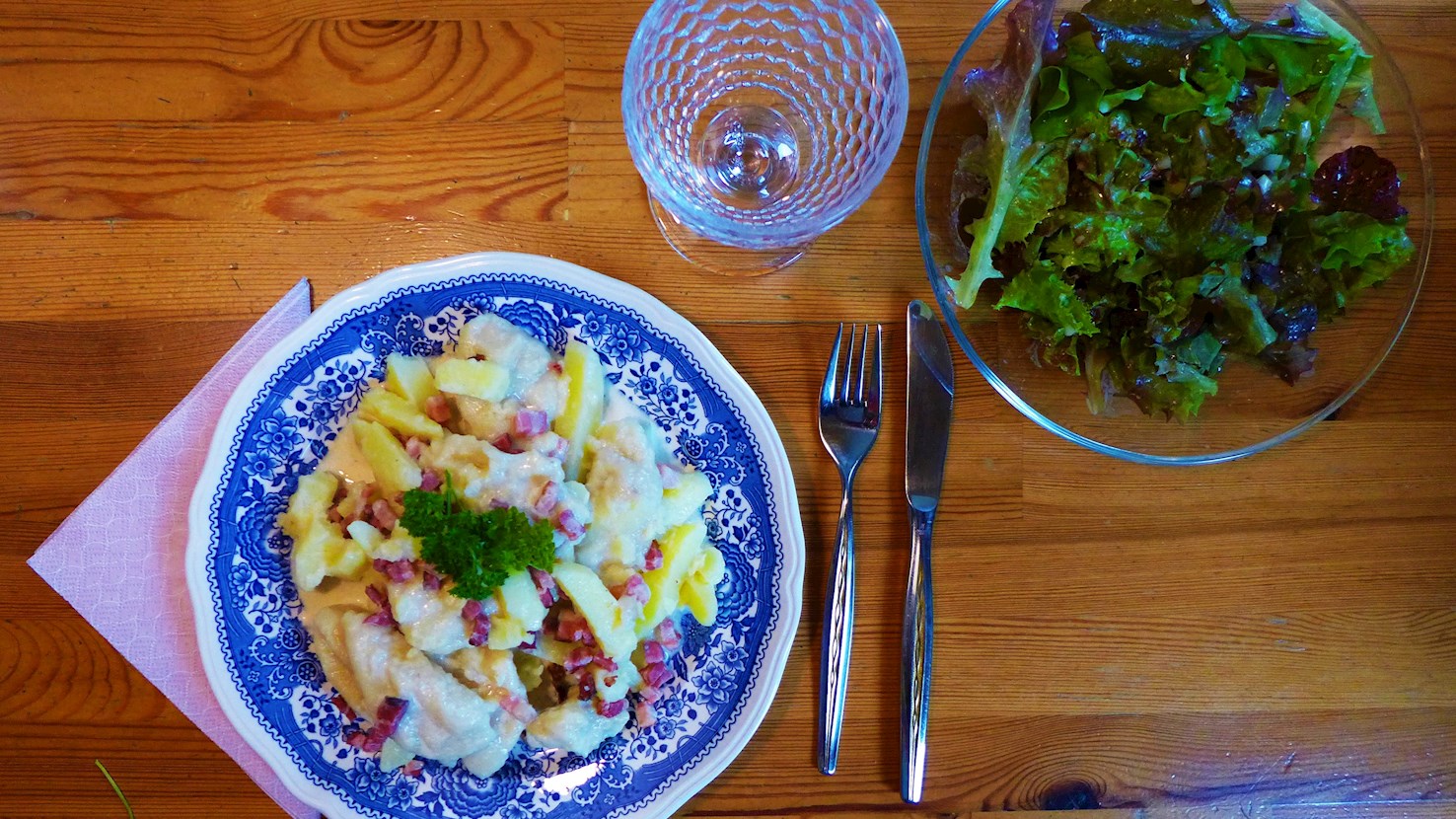
Hailing from Saarland, verheiratete is a combination of boiled potatoes, flour-based dumplings, and a creamy bacon sauce. This simple German dish is known by the names of verheiratete and geheirate (also geheiratete or geheirade), both with the same meaning of married, the married ones, or a married couple. The name refers to the act of joining or marrying separate ingredients together into one meal, just like when two people are united together in marriage. In Saarland, this dish used to be a part of the poor people’s diet due to the simple, everyday ingredients of which it consists. Over the years, the dish evolved into a comfort food beloved by everyone.
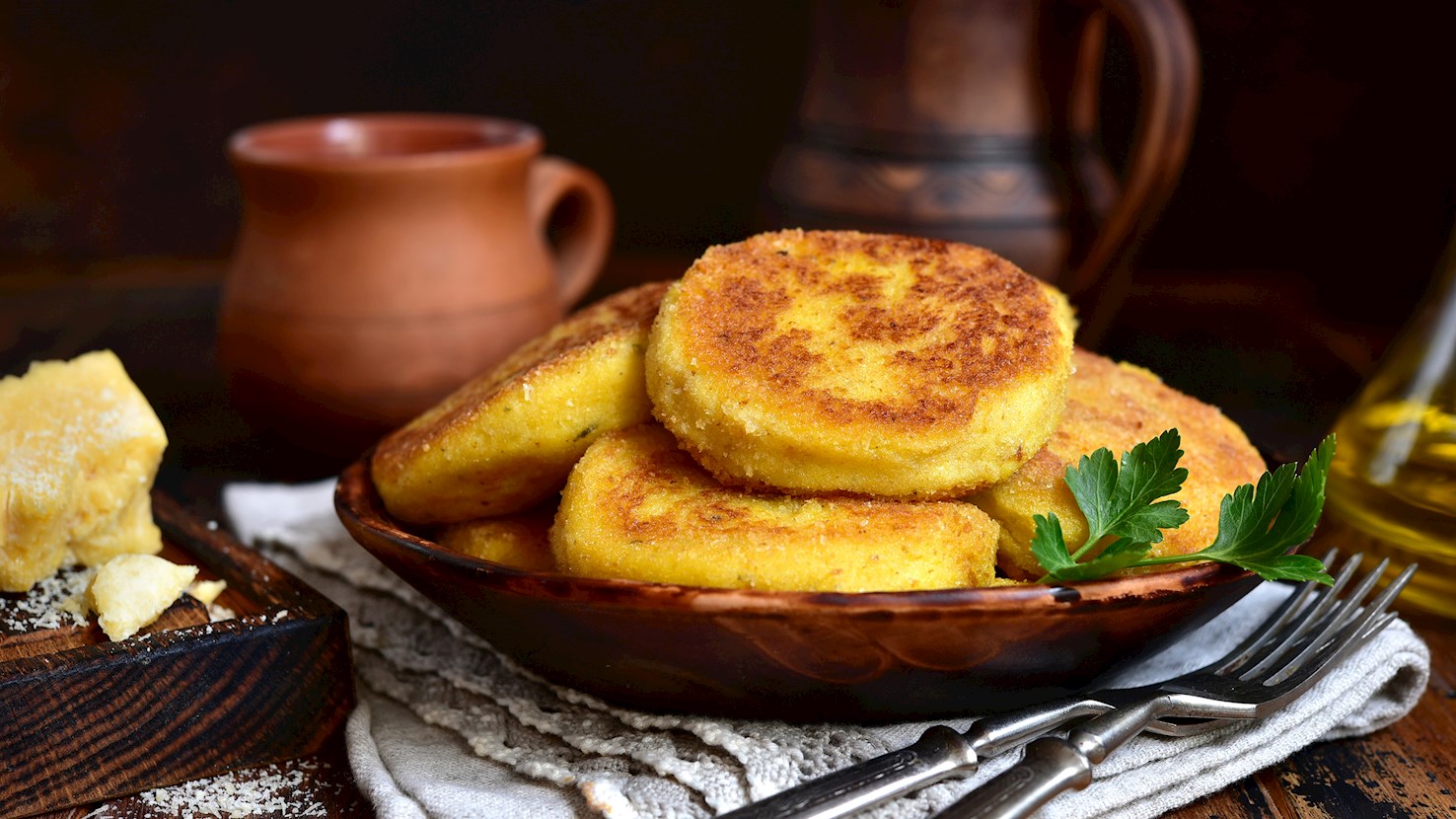
Gedadschde is a traditional dish originating from the Palatinate region. These simple patties are made with a combination of mashed potatoes, flour, milk, salt, sugar, and oil. Shredded cheese can be added to the mixture if desired. The mixture is shaped into patties, then fried in oil on both sides until golden brown. The patties are served as a side dish or a snack, and it’s recommended to pair them with a dollop of mayonnaise.
TasteAtlas food rankings are based on the ratings of the TasteAtlas audience, with a series of mechanisms that recognize real users and that ignore bot,
nationalist or local patriotic ratings, and give additional value to the ratings of users that the system recognizes as knowledgeable.
For the “Top 25 German Potato Dishes” list until September 15, 2026, 1,003 ratings were recorded, of which 896 were recognized by the system as legitimate.
TasteAtlas Rankings should not be seen as the final global conclusion about food. Their purpose is to promote excellent local foods,
instill pride in traditional dishes, and arouse curiosity about dishes you haven’t tried.






What People Say