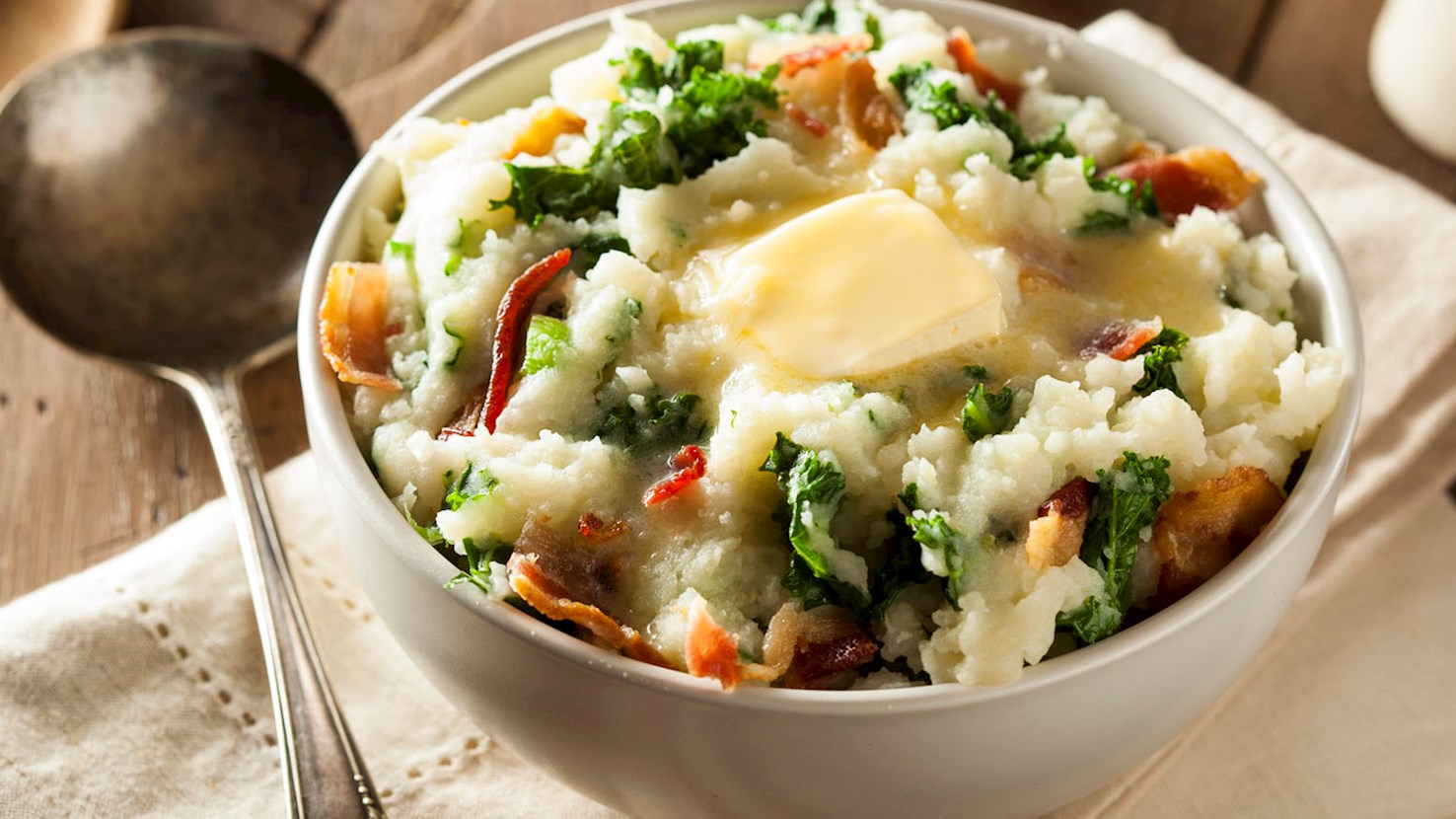
Colcannon is made from mashed potatoes combined with cabbage or kale, often enriched with butter, milk, and sometimes scallions. It comes from the rural cooking of Ireland, where potatoes formed the backbone of the diet for centuries and green vegetables were among the most reliable companions to the staple crop. The name itself is believed to derive from the Gaelic “cal ceannann,” meaning white-headed cabbage, which points directly to the importance of leafy greens in the dish. Potatoes became a central food in Ireland after their introduction from the Americas in the 16th century, and by the 18th century they were a staple of nearly every household. Colcannon arose naturally from the combination of potatoes with locally available greens, making it filling, nourishing, and inexpensive. It was more than everyday sustenance, though, as it also gained a place in Irish festivals. On Halloween, for example, colcannon was sometimes served with small charms or coins hidden inside, believed to foretell the fortunes of those who found them. This festive role gave the dish cultural significance beyond the table. Preparation begins with boiling potatoes until soft, mashing them with warm milk and butter to create a smooth base. Finely shredded cabbage or kale is cooked until tender, often sautéed lightly in butter to develop flavor, then folded into the mashed potatoes along with chopped scallions or leeks. The result is a balance of creamy texture with the slight bite of greens and a subtle onion sharpness. It is typically seasoned simply with salt and pepper, letting the ingredients speak for themselves. Today, colcannon is still eaten across Ireland, often as a side dish to roasted meats or stews. It pairs naturally with sausages, lamb, or corned beef, and its buttery, hearty consistency makes it especially popular in colder months. In Irish pubs and homes, it is equally at home as comfort food or as part of festive holiday meals. The dish has also traveled abroad with the Irish diaspora, appearing in Irish-American cooking and being celebrated on St. Patrick’s Day tables around the world.
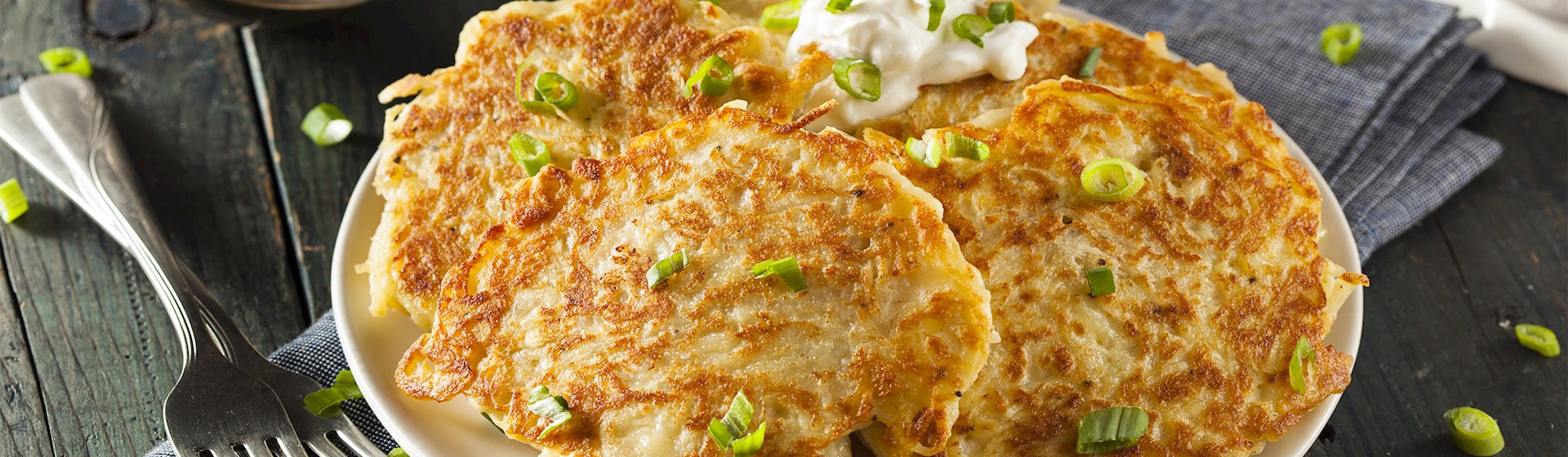
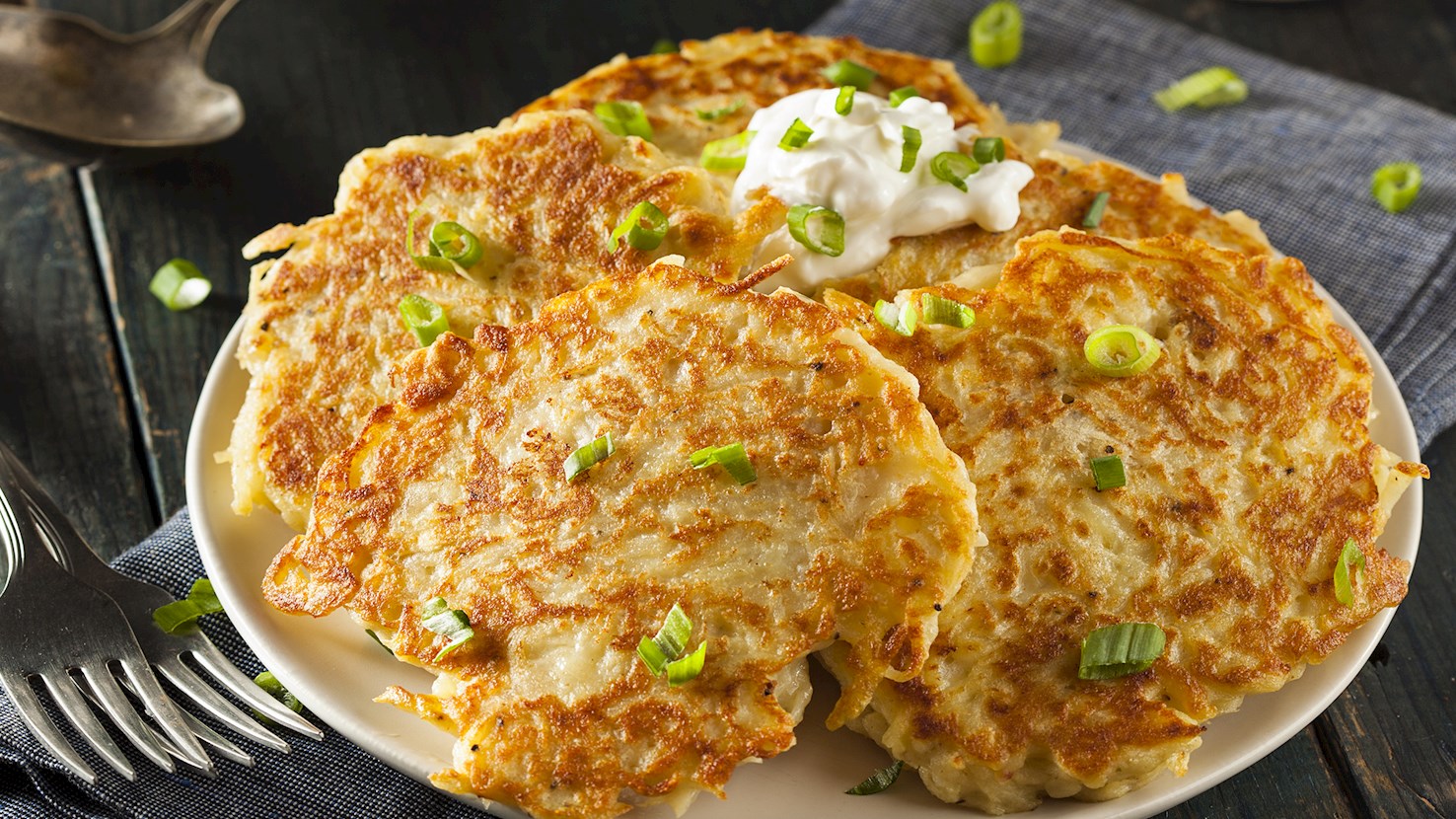
Boxty is an Irish potato pancake that comes from the northern and midland counties of Ireland, where potatoes have long been central to the diet. It is essentially a type of pancake or flatbread made from finely grated raw potatoes mixed with mashed potatoes, flour, buttermilk, and baking soda, then cooked on a griddle or pan. The name is thought to derive from the Irish words “arán bocht tí,” meaning “poor house bread,” which reflects the resourceful way potatoes were once used to stretch simple meals. The dish has its roots in times when potatoes were the most important staple of Irish cooking. To make food more filling and versatile, households developed different methods of preparing them, and boxty became one of the most recognizable forms. Variations appeared in different regions, with some families preferring a pancake-like version cooked on a griddle, while others baked a denser loaf-like form. What united them all was the combination of raw and cooked potatoes, which gave the dish a distinctive texture. Preparation involves grating raw potatoes to a fine consistency, squeezing out excess liquid, and then combining them with mashed potatoes and dry ingredients before adding buttermilk to form a batter. The mixture is then either fried in small rounds like pancakes or spread into a larger cake and cooked until golden brown on both sides. A baked version also exists, where the batter is placed in a loaf tin and cooked in the oven, resulting in a bread-like consistency. Today, boxty is eaten across Ireland, particularly in restaurants and pubs that highlight regional Irish cooking. It often appears alongside hearty foods such as stews or sausages and is also enjoyed at breakfast with eggs and bacon.
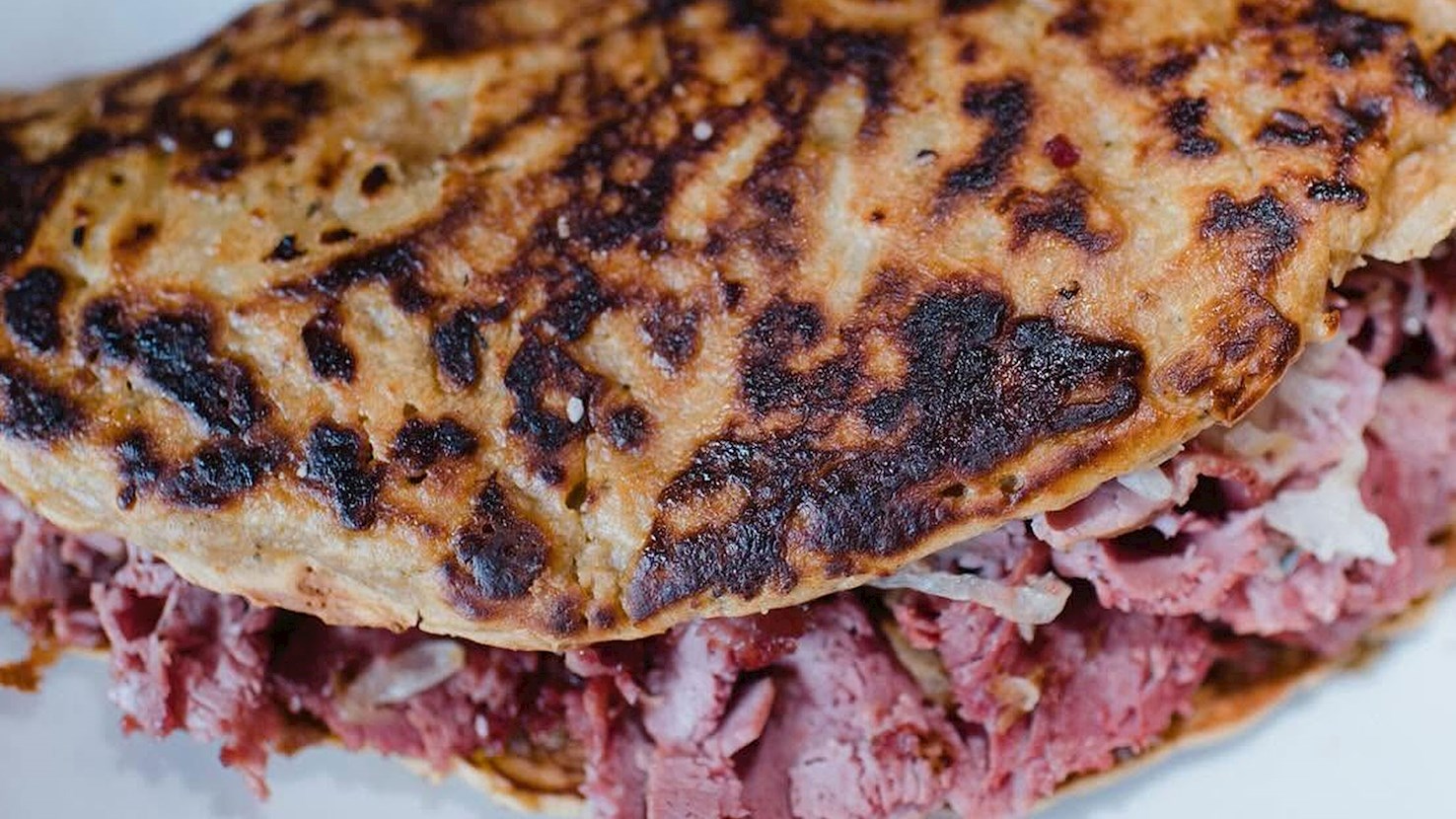
Corned beef boxty pairs potato pancakes with tender salt-cured beef, often folded inside a large pancake with cabbage, cheese, or sauce. Served in Ireland and in Irish-style pubs abroad, particularly in the United States, it is a substantial main course rather than a single, fixed recipe. The pancake usually has a lightly browned surface and a soft interior, giving the salty meat a mild potato base. Some versions resemble a filled crêpe; others are thicker and folded in half. The name can also describe a plate of corned beef served with boxty dumplings, so it does not always indicate a stuffed pancake. In Dublin, this dumpling form is served with cabbage, kale, and parsley sauce. Boxty itself belongs to the cooking of Ireland’s northern midlands and northwest, especially counties such as Leitrim, Cavan, Mayo, and Sligo. Its essential ingredient is grated raw potato, combined with flour and, in many recipes, cooked mashed potato. It can be made into griddle cakes, baked loaves, or boiled dumplings, with the consistency of the mixture determining the form. These older ways of making boxty should be distinguished from the generously filled restaurant pancake. Corned beef boxty has no securely established inventor or date of creation, and insufficient evidence assigns the combination to one Irish county. It is better understood as a modern serving of an older potato food, with considerable freedom in the filling and presentation. Corned beef brings a separate Irish and Irish-American background to the plate. Ireland produced salted beef for centuries, including for export, but that does not mean it was everyday food in all Irish households. Its association with cabbage and St. Patrick’s Day became especially strong among Irish Americans, while bacon and cabbage had a more prominent place in domestic Irish cooking. That connection makes corned beef a familiar filling on Irish-American pub menus, though it doesn't establish where the first corned beef boxty was made. For the pancake version, the main practical challenge is making boxty that holds together but remains supple enough to fold. Finely grated potato gives a more even texture than coarse shreds, while cooked mash produces a softer mixture and helps bind it. Excess liquid is squeezed from the raw potato so the batter does not become watery; some methods allow the extracted liquid to settle and return the potato starch to the mixture. Flour adds structure, and milk or buttermilk loosens the batter enough to spread across the pan. Some recipes include eggs, particularly for large filled pancakes, but they are not universal. Neither are raising agents. A thick mixture makes a more substantial potato cake, while a looser batter spreads into a thinner wrapper. Too much flour makes the pancake heavy, and excessive heat can brown the outside before the raw potato has softened. Steady cooking allows the center to set while the surface develops color. For a filled boxty, the edges should remain flexible rather than becoming brittle and crisp all the way through. The corned beef is cooked before it goes into the pancake. It may be sliced, shredded, or chopped, depending on the desired texture and the cut being used. Thin slices give a layered filling, while chopped or shredded meat distributes more evenly and is easier to cut through with a fork. Leftover cooked corned beef works well, making the dish a useful follow-up to a larger meat-and-cabbage meal. The pancake is browned on both sides before the filling is added, then folded and heated just long enough to warm the contents and melt any cheese. A brief finish in the oven is another option. Filling it sparingly enough to close without tearing matters more than achieving a particular shape. American pub versions sometimes borrow the combination used in a Reuben sandwich: corned beef, sauerkraut, Swiss cheese, and a creamy dressing. The sauerkraut adds acidity, while the cheese melts around the meat; these are optional additions, not requirements of corned beef boxty. Other versions use cooked cabbage and a mustard sauce, including sauces flavored with stout. The cabbage needs to be drained well so its moisture does not soak the pancake. A parsley sauce gives a milder accompaniment, particularly when the boxty is served as dumplings alongside the beef rather than wrapped around it. Corned beef boxty is generally eaten hot with a knife and fork as a pub lunch or dinner. In the United States, it also appears in St. Patrick’s Day cooking, although it is not restricted to the holiday. Because the potato pancake already supplies a substantial starch component, cabbage, sautéed greens, or a lightly dressed salad can be more useful alongside it than another potato side. Mustard or a little horseradish suits the cured beef, especially when the filling contains cheese or a creamy sauce. An Irish stout offers roasted bitterness alongside the browned potato and salty meat, while a dry cider provides a sharper accompaniment to richer versions.
TasteAtlas food rankings are based on the ratings of the TasteAtlas audience, with a series of mechanisms that recognize real users and that ignore bot,
nationalist or local patriotic ratings, and give additional value to the ratings of users that the system recognizes as knowledgeable.
TasteAtlas Rankings should not be seen as the final global conclusion about food. Their purpose is to promote excellent local foods,
instill pride in traditional dishes, and arouse curiosity about dishes you haven’t tried.



What People Say