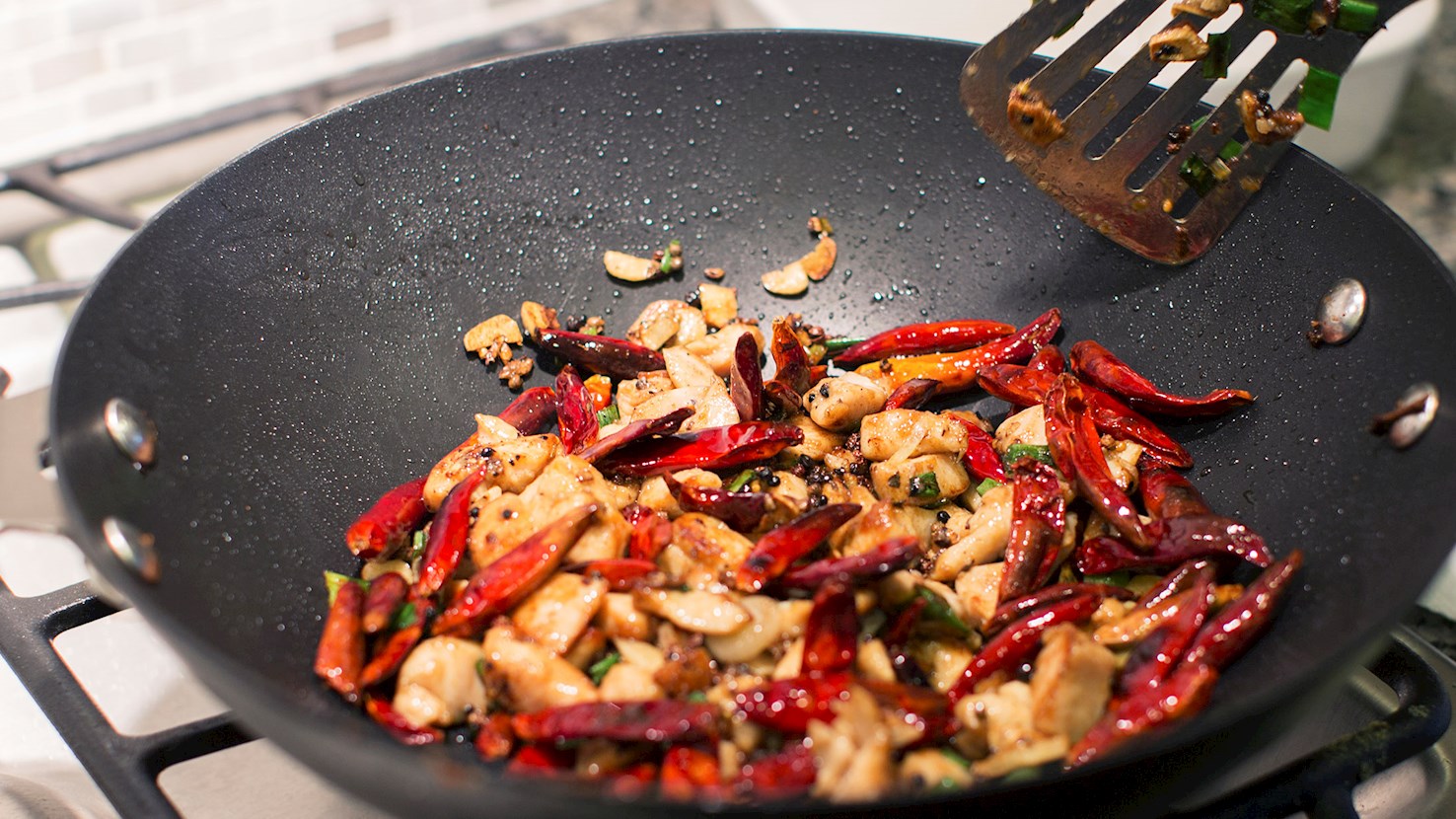
Chongqing chicken is a famous Sichuan dish consisting of chicken and chilis. The dish is usually made with chicken on the bone, which is then chopped into small pieces, marinated, and deep-fried. Traditionally, there is almost always more dried red chili peppers in the dish than chicken, nearly covering the meat underneath. The combination of ingredients is usually stir-fried with ginger and garlic. Chongqing chicken is consumed by picking out the pieces of chicken with chopsticks, often leaving out the remaining chili peppers in the bowl.
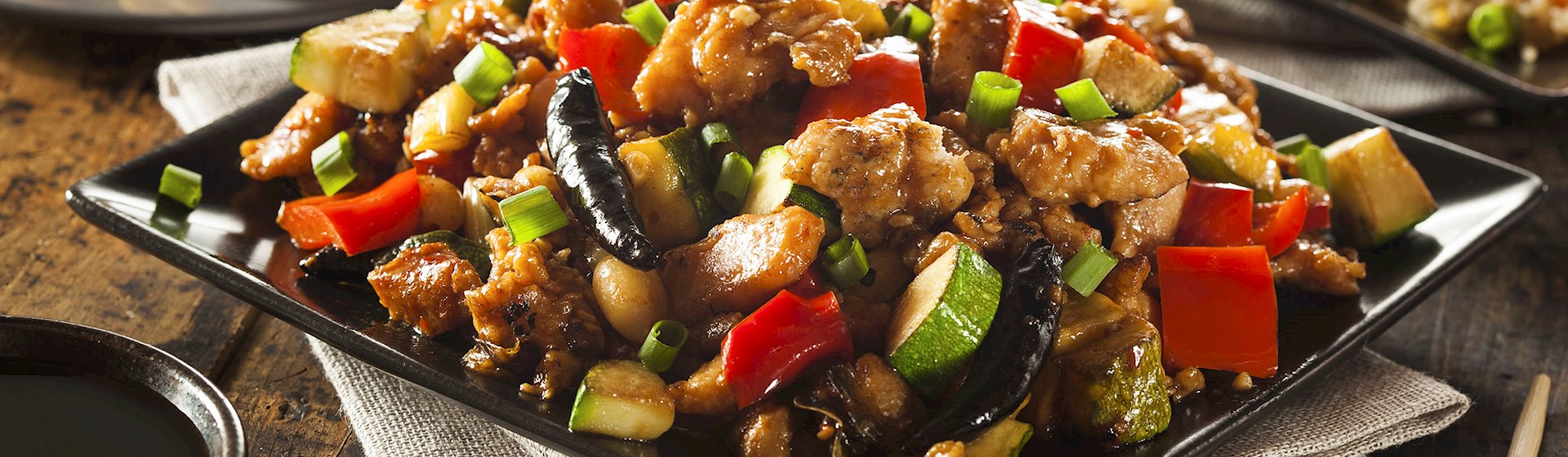
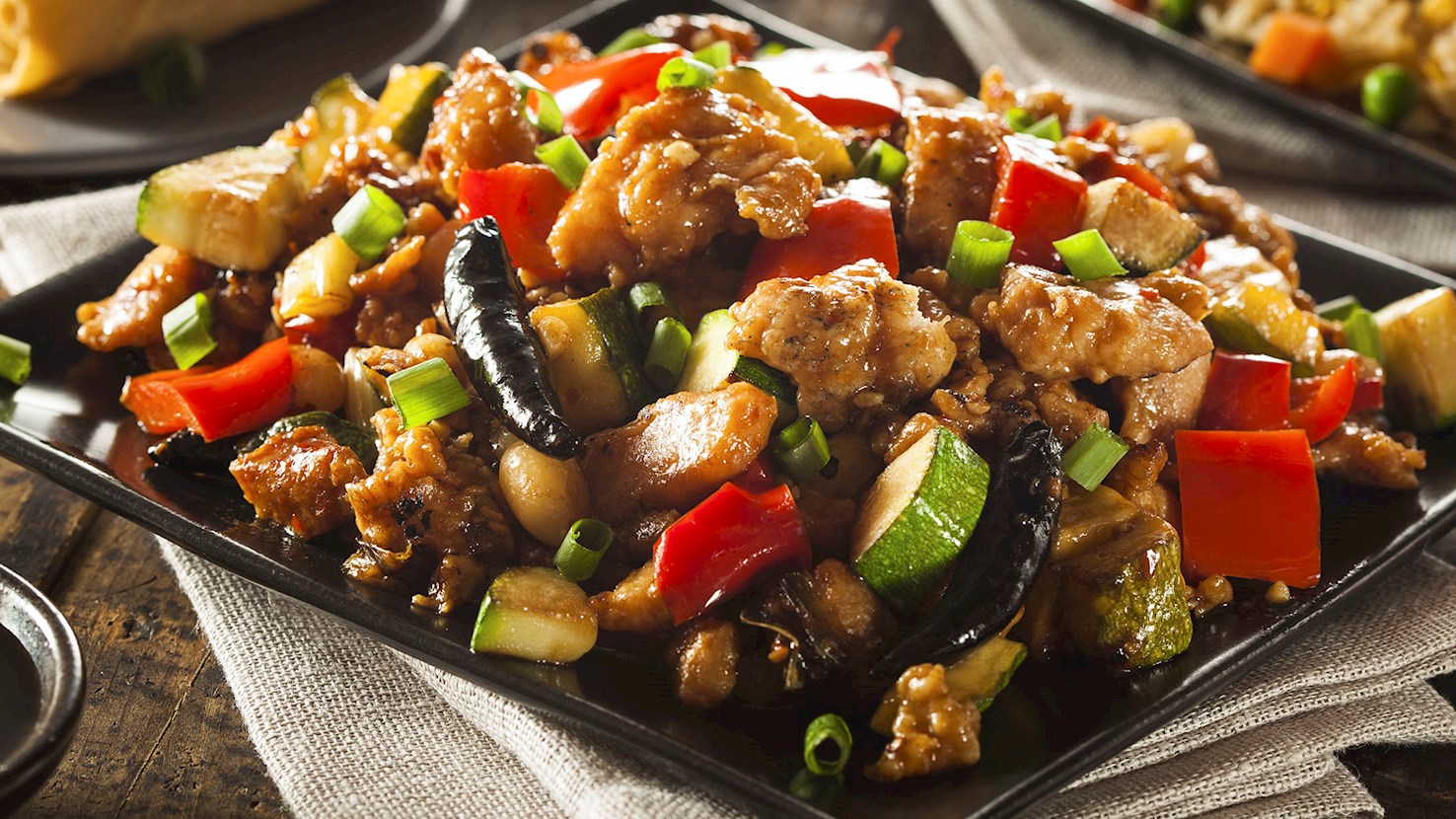
A staple of westernized Chinese cuisine and one of the favorite dishes of foreigners in China, kung pao chicken is a spicy stir-fry dish made with diced chicken, vegetables, peanuts, and Sichuan peppercorns. It was invented in the Sichuan province and has a unique, interesting origin story. In the 19th century, a boy named Ding Baozhen fell into a river and almost drowned. A passing stranger saved him, and as the years went by, Ding grew up to become a government official. He went to visit the man who saved him and ate a dish made with diced chicken, peanuts, and spicy peppercorns while visiting his home. Ding loved the dish so much that he asked the chef for a recipe, and then started serving it to his guests. The dish quickly spread in the Sichuan province, and many years later, it is still popular both in China and in the rest of the world. Although it's commonly eaten in North America, the dish is cooked differently and lacks the unique spice that makes the original so flavorful, because it was illegal to import it to the United States until 2005. However, it remains one of the most popular dishes in most Chinese restaurants throughout the world.
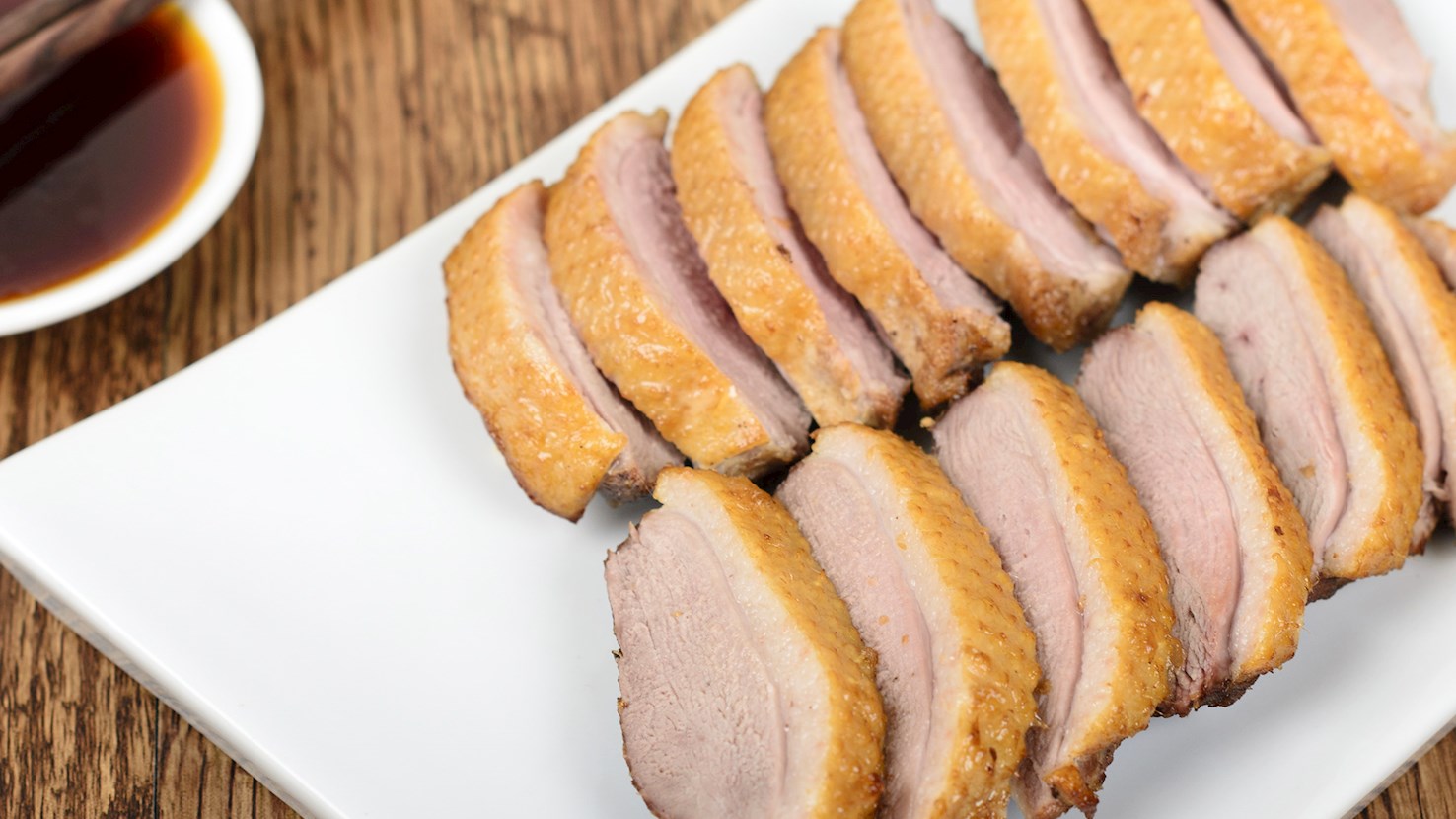
Zhangcha duck is a duck smoked with tea and camfor, originating from the Chinese province of Sichuan which is famed for its spicy dishes. The preparation of this meal is a five-step process; first, it’s marinated, then boiled, air-dried, smoked, and finally, fried. When served, pieces of duck meat are topped on gebao — a clam-shaped bun.
Ghost chicken is a salad from the Yunnan province, consisting of shredded chicken, herbs such as sand ginger, basil, coriander, Thai bird's eye chili, sawtooth, and cardamom, and lime juice. The chicken is the local black-skinned chicken which is boiled and then shredded. The meat and the skin are mixed with herbs and lime juice. Traditionally, the chicken feet and the head are also used in the salad. Also, the use of aromatics shows the influence of Southeast Asian flavors, as the province borders Myanmar, Laos, and Vietnam.
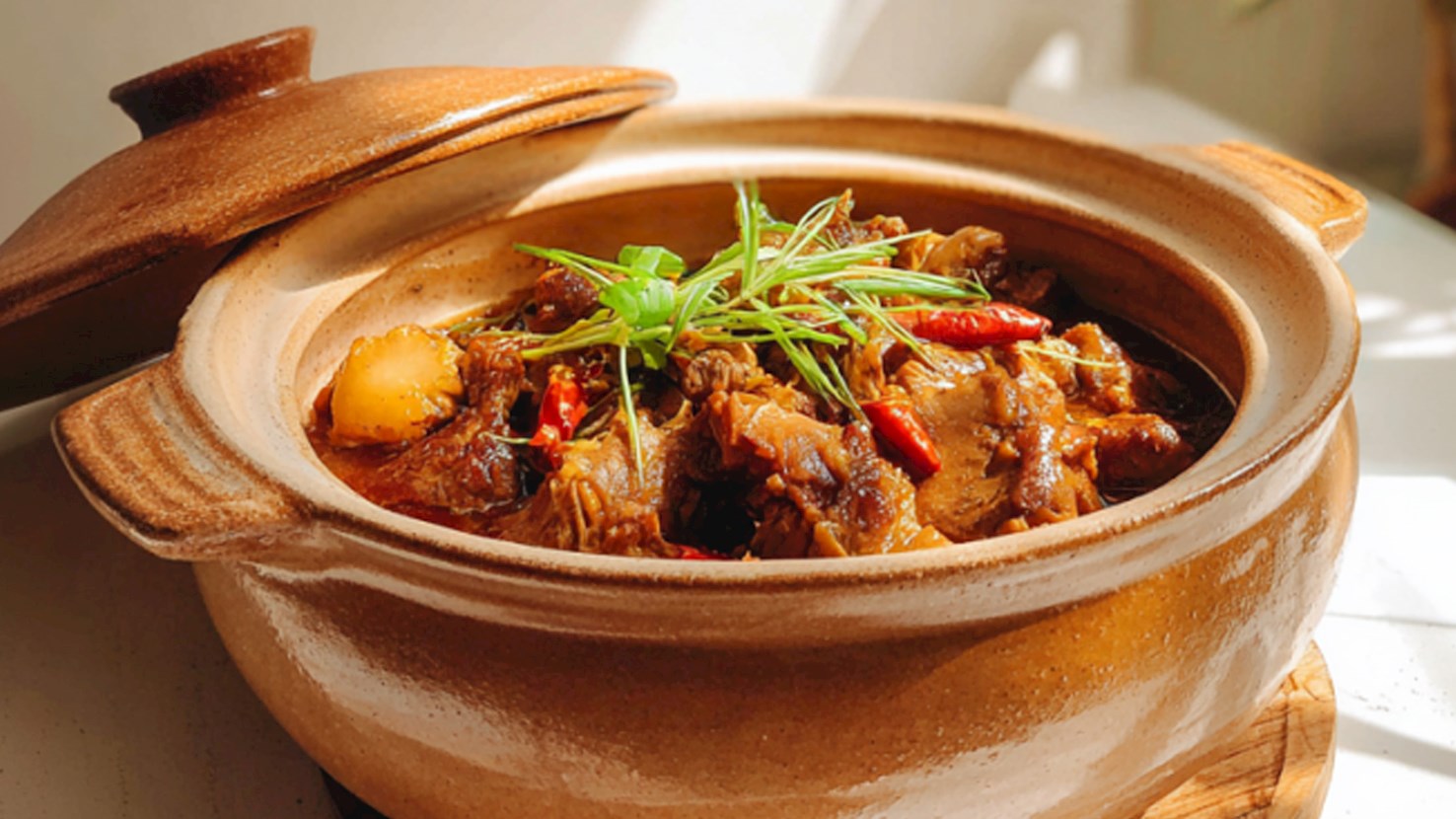
Píjiǔ yā is a braised duck dish cooked with beer, originating in Sichuan. Its name, meaning “beer duck,” comes from the central role beer plays in tenderizing the meat and enriching the sauce, resulting in a deeply savory dish known for its balance of richness and complexity. The recipe grew out of the evolution of Chinese braising techniques and the introduction of beer into domestic cooking in the early 20th century. As cooks experimented beyond the classic soy sauce and rice wine bases of red-cooked dishes, they found that beer imparted a gentle sweetness, subtle bitterness, and malty depth that paired exceptionally well with the rich flavor of duck. This adaptation quickly gained favor in both household kitchens and restaurants, turning píjiǔ yā into a sought-after specialty that bridges older cooking practices with newer ingredients. To prepare píjiǔ yā, a whole duck is cut into pieces and blanched to remove impurities before being seared with aromatics such as ginger, garlic, scallions, and dried chilies. Once browned, beer is added along with soy sauce, sugar, and spices like star anise or cassia bark, creating a braising liquid that infuses the duck as it simmers gently. The slow cooking allows the flavors to concentrate, the alcohol to cook off, and the sauce to thicken into a rich glaze that clings to the tender meat. Depending on the recipe, fermented bean paste or dark soy may be added to deepen the color and umami. Píjiǔ yā is typically served hot and shared family-style as a centerpiece dish. It is often paired with steamed rice, which soaks up the sauce, and light vegetable sides or pickled greens, which offset the richness. In many cases, diners enjoy the same beer used in cooking alongside the meal, completing the experience with complementary flavors.
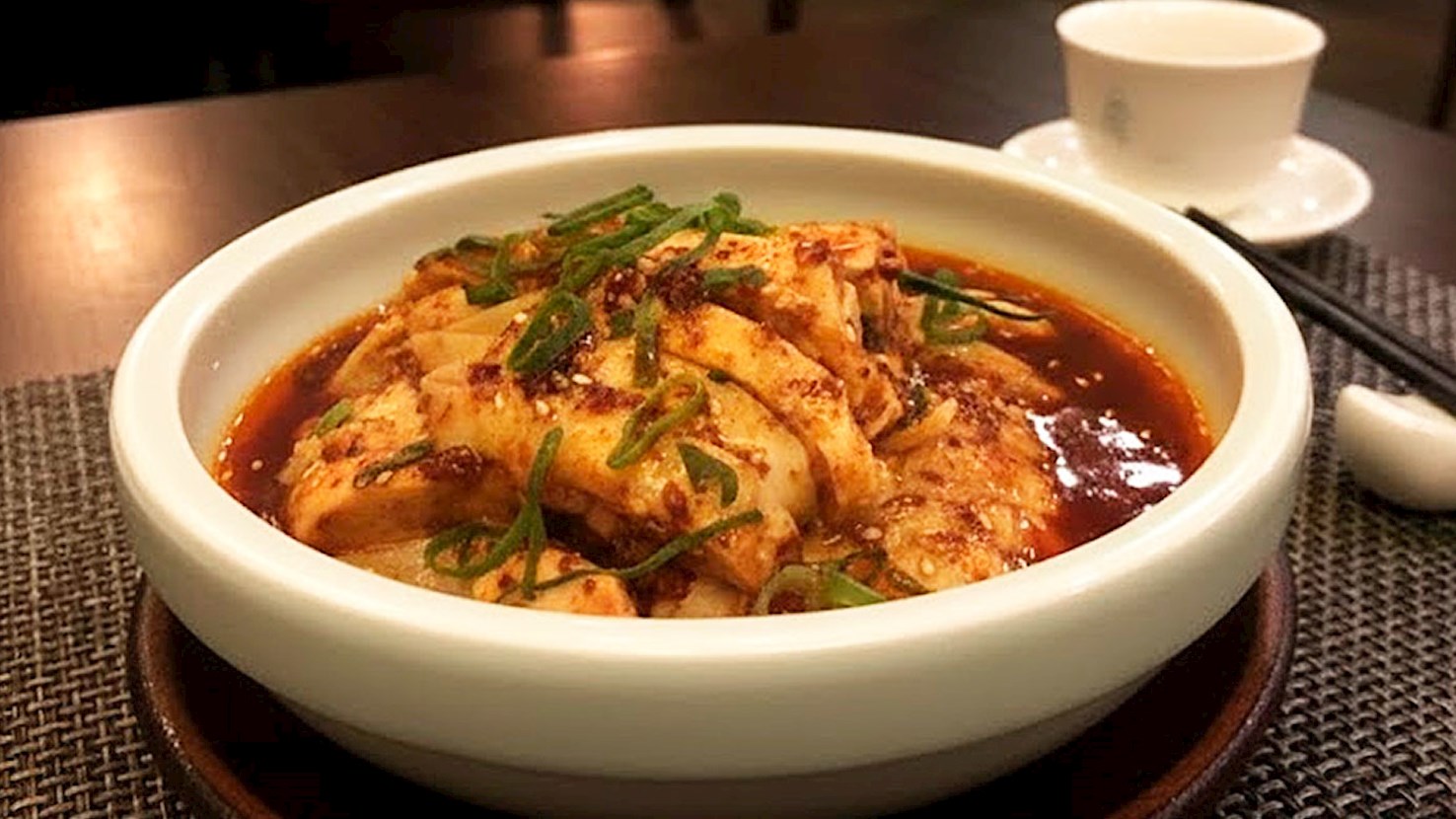
Ganbian ji is a traditional chicken dish originating from Sichuan. The dish is usually made with a combination of chicken, scallions, dried chili peppers, oil, Sichuan pepper, chili-bean paste (doubanjiang), ginger, garlic, salt, sugar, chili oil, and soy sauce. The chicken pieces are fried in oil in a wok over high heat until fragrant and golden. The hot peppers and Sichuan pepper are added to the wok and stir-fried until darkened. Doubanjiang paste is stir-fried in oil until red and fragrant and it's then mixed with the other ingredients along with garlic, ginger, and scallions. Soy sauce, sugar, and chili oil are added to the wok and everything is fried until very hot and sizzling.
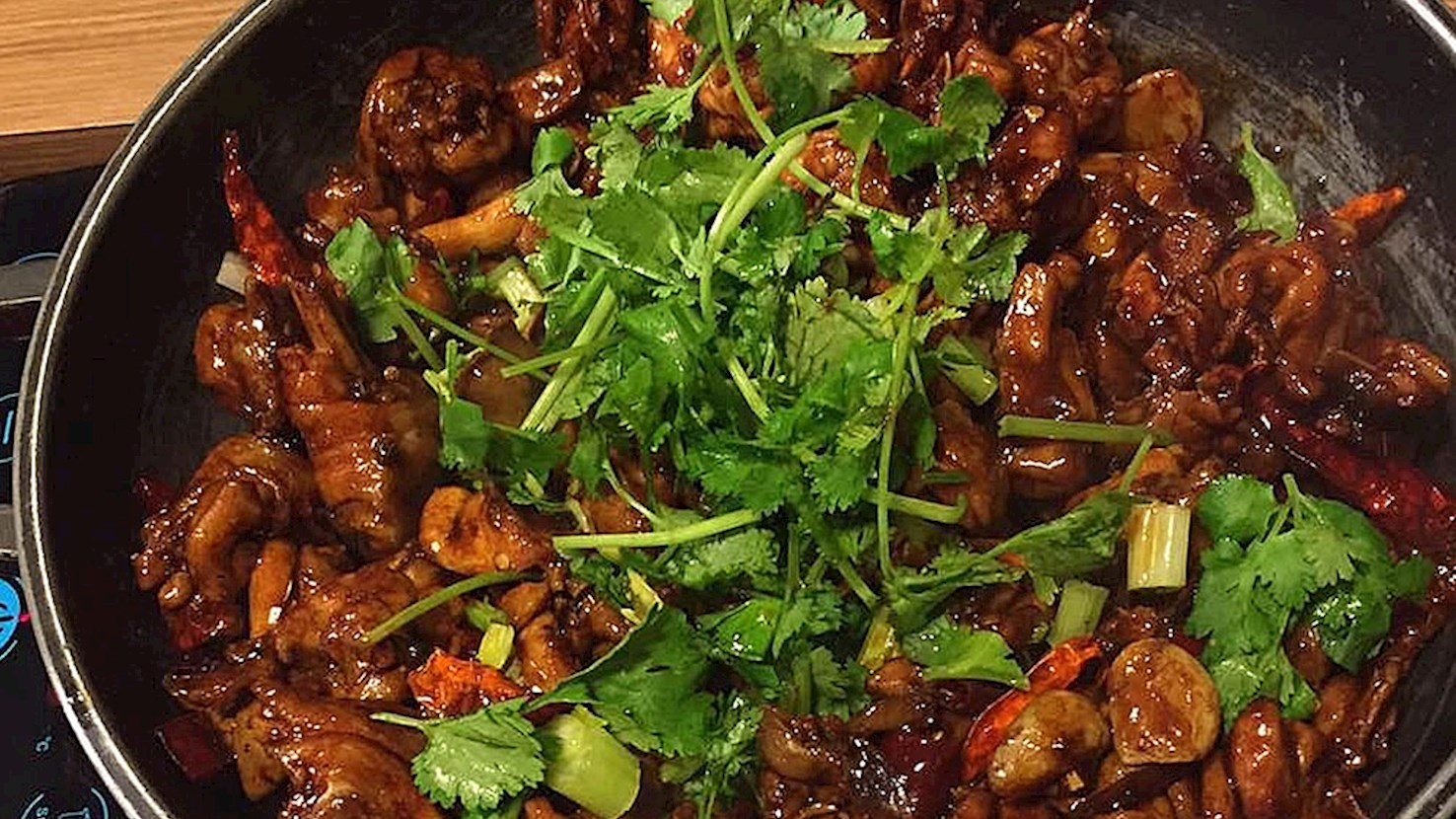
Gānguō jī is a dry pot chicken dish from Sichuan province. The name literally means “dry pot chicken,” referring to a cooking method that differs from saucy braises or soups by using high heat and minimal liquid to intensify the flavor of each ingredient. The origins of gānguō cooking are closely linked to Sichuan’s hot pot culture. As dry pot techniques evolved from the communal hot pot tradition, cooks sought ways to achieve the same intensity of flavor without the broth, creating dishes that were richer, more aromatic, and easier to serve individually. Gānguō jī grew from this evolution, often appearing in small eateries and home kitchens as a more concentrated version of the flavors diners loved in hot pot: spicy, numbing, and deeply savory. Over time, it became a symbol of contemporary Sichuan cooking: a style that celebrates both the power of spice and the balance of heat, fragrance, and texture. Preparation begins with marinating chicken pieces, usually bone-in chunks, in soy sauce, Shaoxing wine, ginger, and a little starch to enhance their tenderness. The chicken is first seared or lightly fried to develop a golden crust, which locks in moisture and creates a base layer of flavor. It is then cooked together with dried chilies, Sichuan peppercorns, garlic, ginger, and doubanjiang, creating a deeply aromatic foundation. Various vegetables such as lotus root, potatoes, celery, or mushrooms are often added, not only for texture but also to absorb the spicy, savory oil released during cooking. The process uses very little liquid, relying instead on rendered chicken fat and infused chili oil to carry the flavors, resulting in a dish that is rich without being heavy. Gānguō jī is typically served as a main dish, often shared family-style at the center of the table. Its intense flavors make it ideal alongside plain steamed rice, which balances the heat and richness, and it is commonly paired with cold vegetable salads or lightly pickled side dishes to refresh the palate. In restaurants, it may be accompanied by a mild soup or tea to round out the meal.
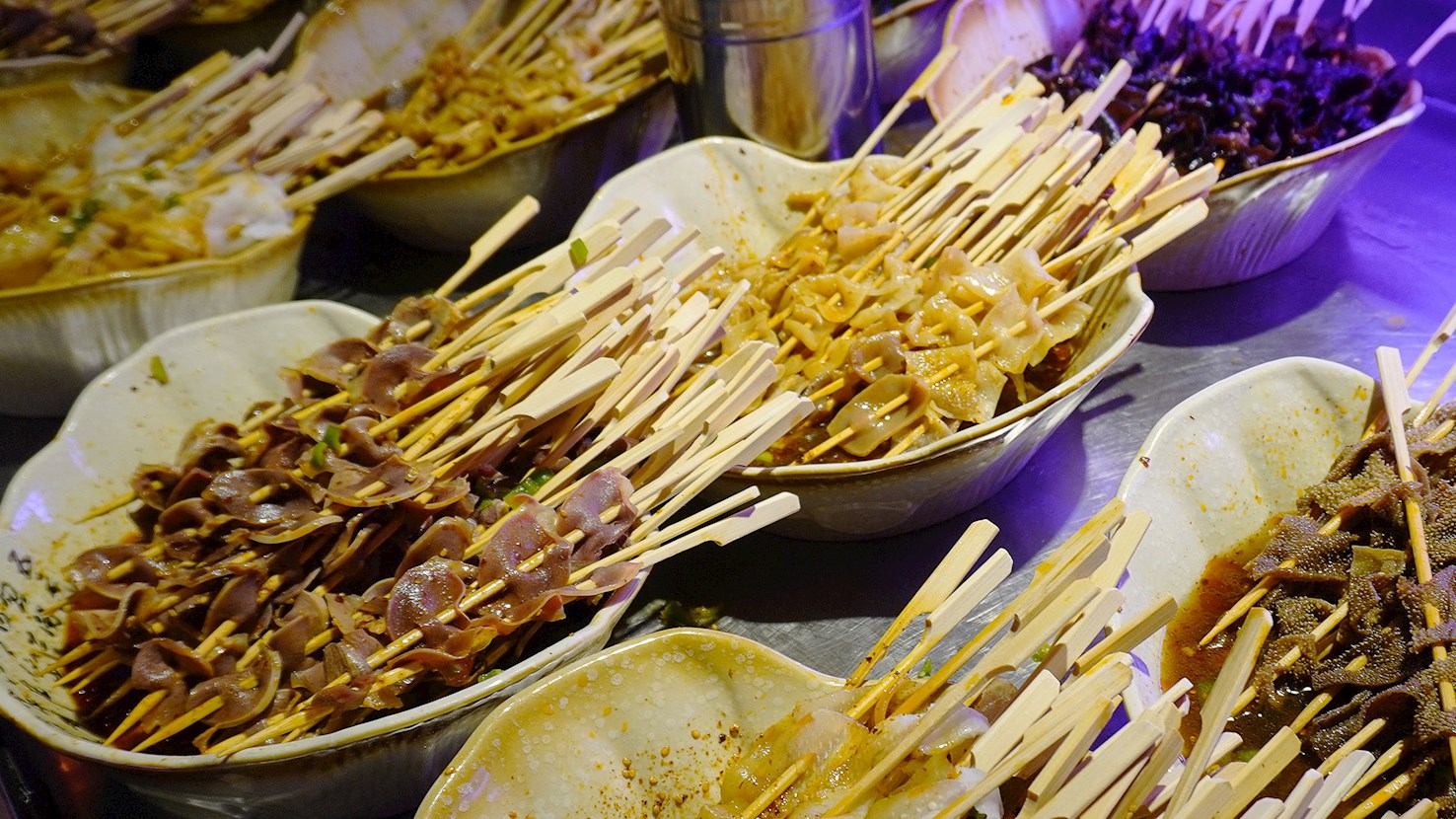
Bōbōjī is a cold chicken skewer dish from Chengdu in Sichuan province, known for its fragrant, spicy, and numbing flavor. The name comes from the word “bōbō,” which refers to the earthenware or metal pot used to soak the skewers in seasoned chili oil. It belongs to the family of cold Sichuan foods that rely on aromatic oils, spices, and herbs rather than heat from cooking, capturing the region’s precise balance of chili, peppercorn, and sesame. Bōbōjī has its roots in Chengdu’s street food culture, where cold dishes offered relief from the region’s humid climate. Over time, vendors developed their own versions, influenced by local ingredients and preferences. The dish grew from simple chicken boiled and dipped in chili oil into an elaborate cold skewer experience, served with layers of spice, sesame, and herbs. Chengdu’s long-standing love for málà—the combination of numbing and spicy—shaped its flavor, while the city’s reputation as a hub for refined street food helped spread it beyond local neighborhoods. Today, it is widely recognized across Sichuan and often seen as a link between the more rustic spicy snacks and the intricate cold dishes served in restaurants. Preparation begins with boneless chicken, usually breast or thigh, poached gently with aromatics like ginger, scallion, and cooking wine until tender. Once cooled, it is cut into bite-sized pieces and skewered onto small bamboo sticks. A sauce is prepared from a base of chili oil infused with Sichuan peppercorns, sesame paste, vinegar, soy sauce, garlic, and sometimes a touch of sugar or crushed peanuts for texture. The skewers are then placed in a large bowl or pot, often the “bōbō” that gives the dish its name, and fully submerged in the seasoned oil mixture. They are left to marinate and absorb the flavors before being served at room temperature or slightly chilled. The resulting taste is complex: aromatic from the spices, mildly numbing from the peppercorns, and balanced by the nutty and tangy sauce. In Chengdu, bōbōjī is eaten throughout the year but is particularly popular in warm weather when cold dishes dominate the table. It is commonly served as a shared snack in casual eateries or night markets, often accompanied by cold noodles, pickled vegetables, or small glasses of beer or herbal tea. The dish also appears in restaurants specializing in cold Sichuan appetizers, where it bridges the gap between street food and refined dining.
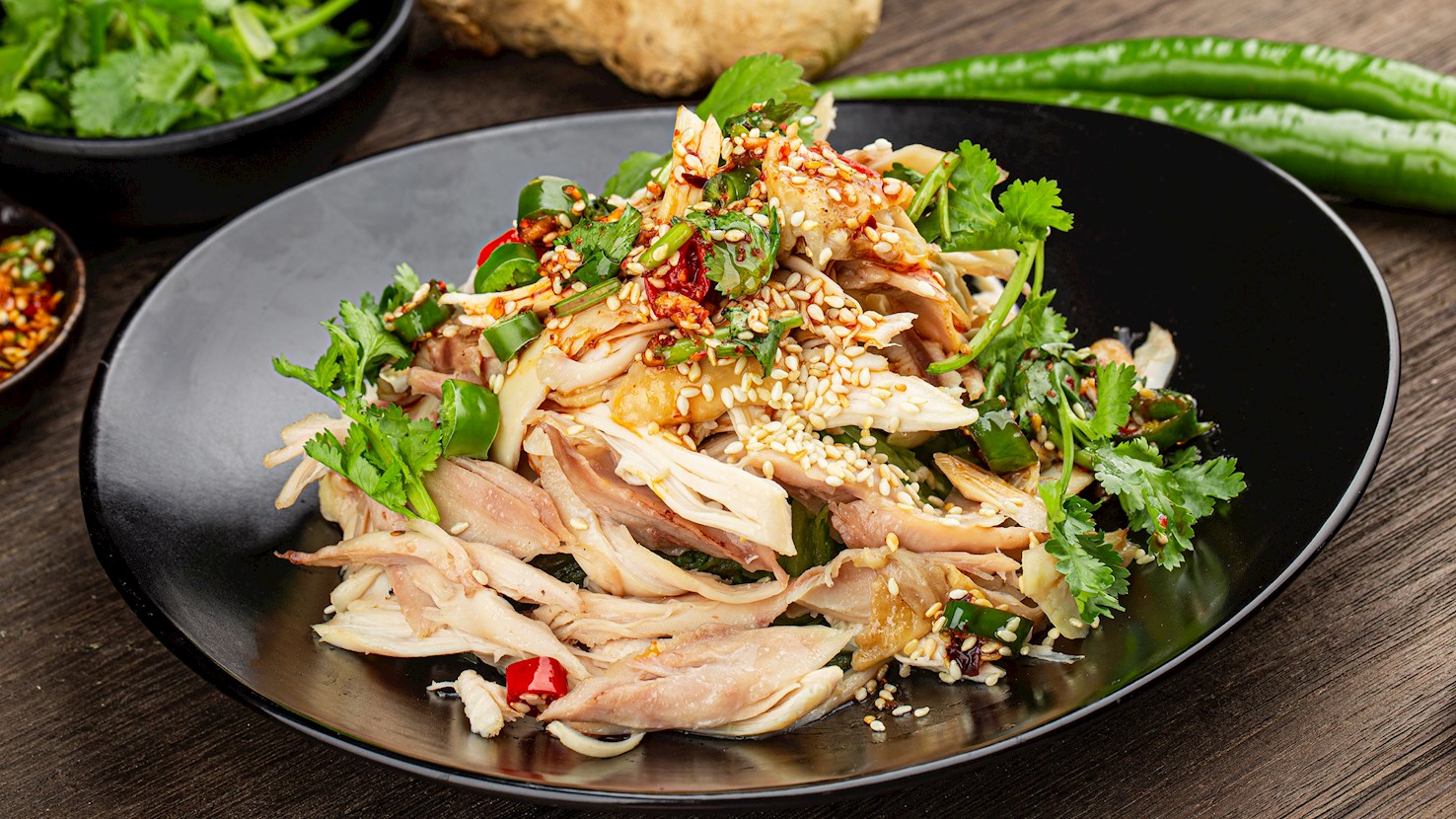
Kǒushuǐjī is a cold chicken dish from Sichuan, recognized for its rich and numbing chili sauce that combines heat, fragrance, and spice with a clean finish. The name means “mouth-watering chicken,” a reference to its ability to stimulate appetite through aroma and balance rather than heaviness. The origins of the dish trace back to home kitchens and small eateries in Sichuan, where poached chicken served with chili oil became a favored preparation, especially in the warmer months. Over time, chefs refined the sauce, adjusting its proportions to achieve a harmony that would later make it one of the most recognizable cold appetizers in Chinese cuisine. Its name was popularized during the twentieth century in Chengdu, when versions of the dish began appearing on restaurant menus under that title, emphasizing not just taste but the sensory anticipation that preceded it. Preparation starts with a whole chicken, often poached gently in seasoned water with scallion, ginger, and a pinch of salt until the meat is just cooked through and still moist. After cooling, the chicken is chopped into bite-sized pieces and arranged on a plate, sometimes over a bed of cucumber or bean sprouts for freshness. The defining element is the sauce, made from chili oil infused with crushed Sichuan peppercorn, soy sauce, vinegar, garlic, sesame paste, sugar, and a touch of cooking wine. The mixture is poured over the cooled chicken, coating it evenly without soaking it. Roasted sesame seeds, chopped peanuts, and scallions are usually sprinkled on top, completing the contrast of smooth, spicy, and nutty textures. The flavor develops as the oil spreads across the surface of the meat, releasing aroma and gentle heat that lingers but does not overpower. Kǒushuǐjī is eaten throughout China, often as the opening dish of a Sichuan meal, served before hot dishes to awaken the palate. It pairs naturally with plain rice or light noodles, which help absorb the sauce, and with mild drinks such as jasmine tea or cold beer that temper the spice.
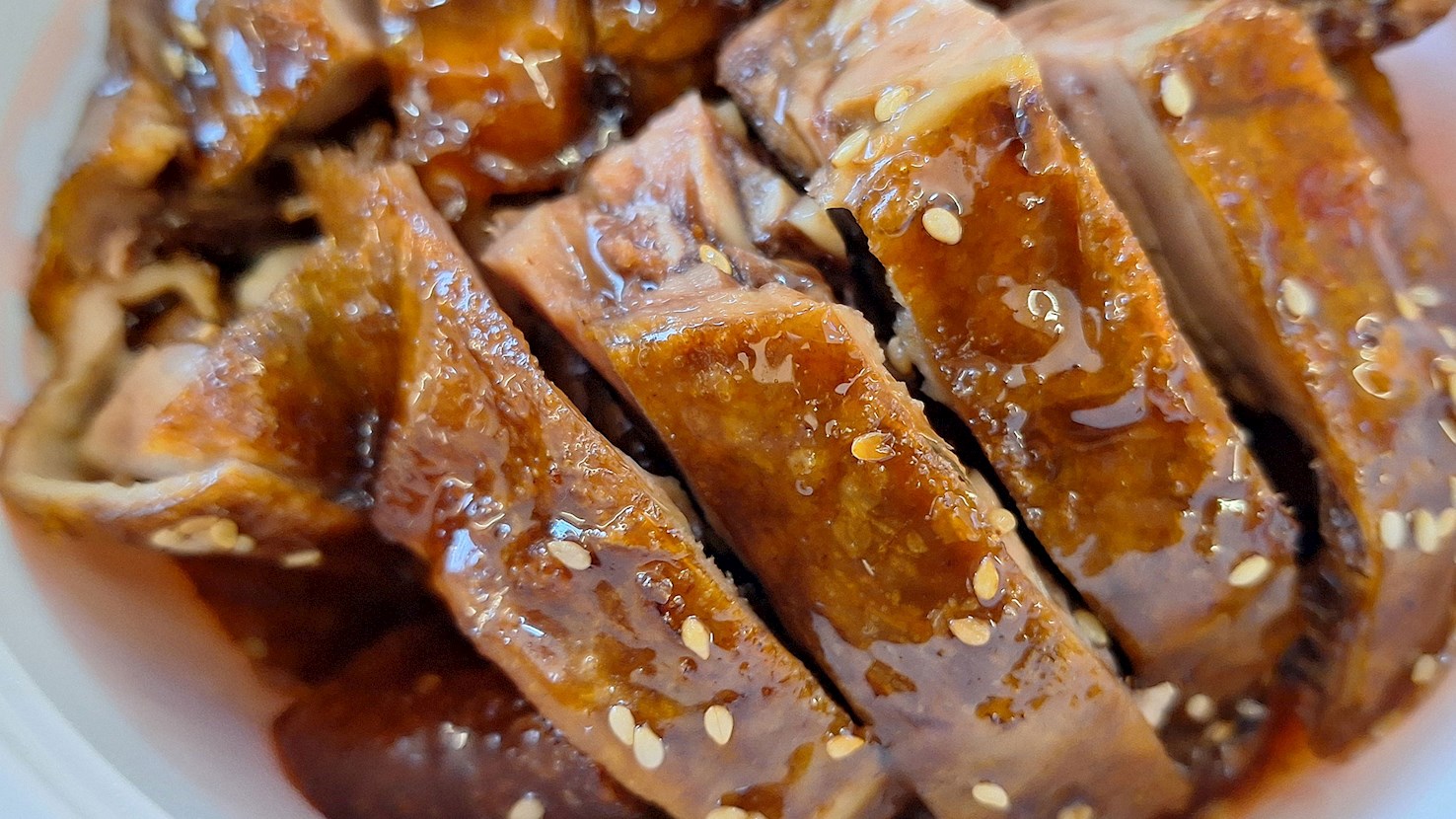
Lèshān tián pí yā, literally meaning “ Leshan sweet-skinned duck,” is a specialty from Leshan in Sichuan Province. It is known for its glossy, sweetly seasoned skin and tender meat, standing apart from other regional duck preparations that focus more on savory or spicy profiles. Its origins go back several centuries, tied to the city’s location as a crossroads of river and land trade. Leshan’s access to abundant duck from the rivers and nearby farms, combined with the influence of Sichuan’s highly developed spice culture, encouraged cooks to refine duck roasting and braising techniques that emphasized both flavor and appearance. Sweet-skinned duck became popular as a banquet dish and eventually moved into markets and street stalls, where it attracted attention for its striking red-brown skin and enticing aroma. The preparation of Lèshān tián pí yā involves several steps. Ducks are first marinated with a mixture of soy sauce, rice wine, sugar, and a variety of spices such as star anise, cinnamon, and Sichuan peppercorns. After marination, the ducks are either braised or roasted slowly, allowing the skin to absorb the sweet and spiced coating while the meat becomes tender. A final glaze of syrup or maltose gives the skin its characteristic sheen and a subtle sweetness that contrasts with the underlying savory notes. The result is a bird with layered flavors and a texture that combines crisp skin with succulent meat. Today, Lèshān tián pí yā is eaten both in restaurants and as a takeaway food from local markets. It is often chopped into pieces and served with rice, noodles, or steamed buns, and it is a common feature at family gatherings and festive occasions in Sichuan. Beyond its home city, it is found in Sichuanese restaurants across China and increasingly abroad, where it is enjoyed as part of the diverse spectrum of Sichuan cooking.
TasteAtlas food rankings are based on the ratings of the TasteAtlas audience, with a series of mechanisms that recognize real users and that ignore bot,
nationalist or local patriotic ratings, and give additional value to the ratings of users that the system recognizes as knowledgeable.
For the “Top 11 Southwestern Chinese Poultry Dishes” list until May 15, 2026, 394 ratings were recorded, of which 351 were recognized by the system as legitimate.
TasteAtlas Rankings should not be seen as the final global conclusion about food. Their purpose is to promote excellent local foods,
instill pride in traditional dishes, and arouse curiosity about dishes you haven’t tried.