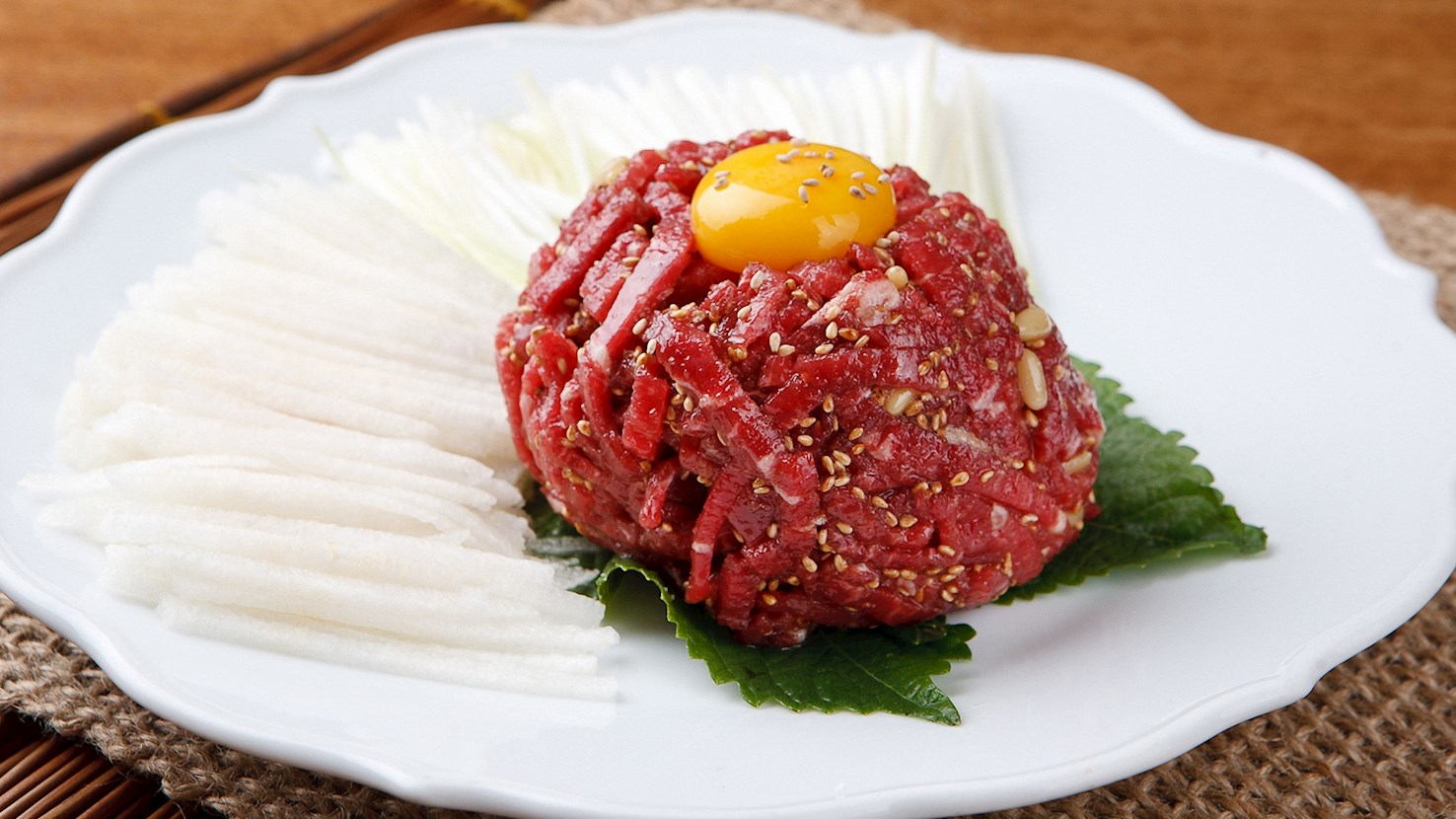
Yukhoe is the Korean version of steak tartare, consisting of thinly sliced beef marinated in soy sauce, sesame oil, garlic, and sugar. The concoction is then seasoned with salt and pepper. The dish is always served with a raw egg yolk on top, while thinly sliced Korean pear is an often-seen addition served on the side. The name of the dish is derived from two words: yuk, meaning meat, and hoe, meaning sashimi. No one is yet sure about the origins of yukhoe, but some say it originated in China, while the others claim it was first served at the Korean Royal Court. Today, the dish is traditionally consumed by dipping the meat in raw egg yolks or in chogochujang sauce, consisting of chili, sugar, vinegar, and honey.
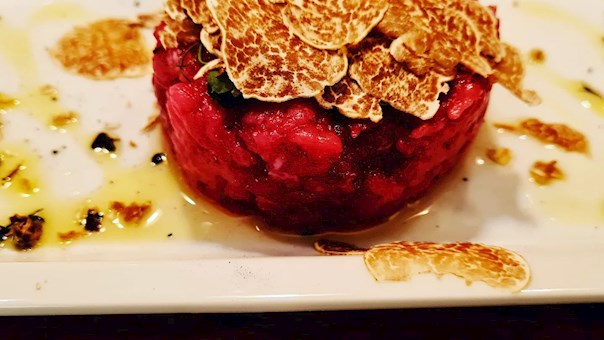
This traditional Italian dish of worldwide fame is typically served as an appetizer, and consists of very thin slices of raw fish or meat served on a plate with olive oil, cheese shavings, and lemon. Carpaccio was created in 1950 by a Venetian restaurateur named Giuseppe Cipriani, the owner of Harry’s Bar, who first made the dish for Countess Amalia Nani Mocenigo, whose doctors had recommended she eat raw meat. Cipriani based the dish on a specialty from Piedmont consisting of slices of raw beef dressed with lemon juice, olive oil, and white truffle shavings. An impassioned art lover, Cipriani named the new dish carpaccio in honor of painter Vittore Carpaccio, whose style and bold colors were reminiscent of the intense red color of raw meat. Today, there are numerous modern varieties of carpaccio made with zucchini, scallops, beet, salmon, figs, and lamb, and it is said that any kind of carpaccio is best paired with a glass of wine on the side.
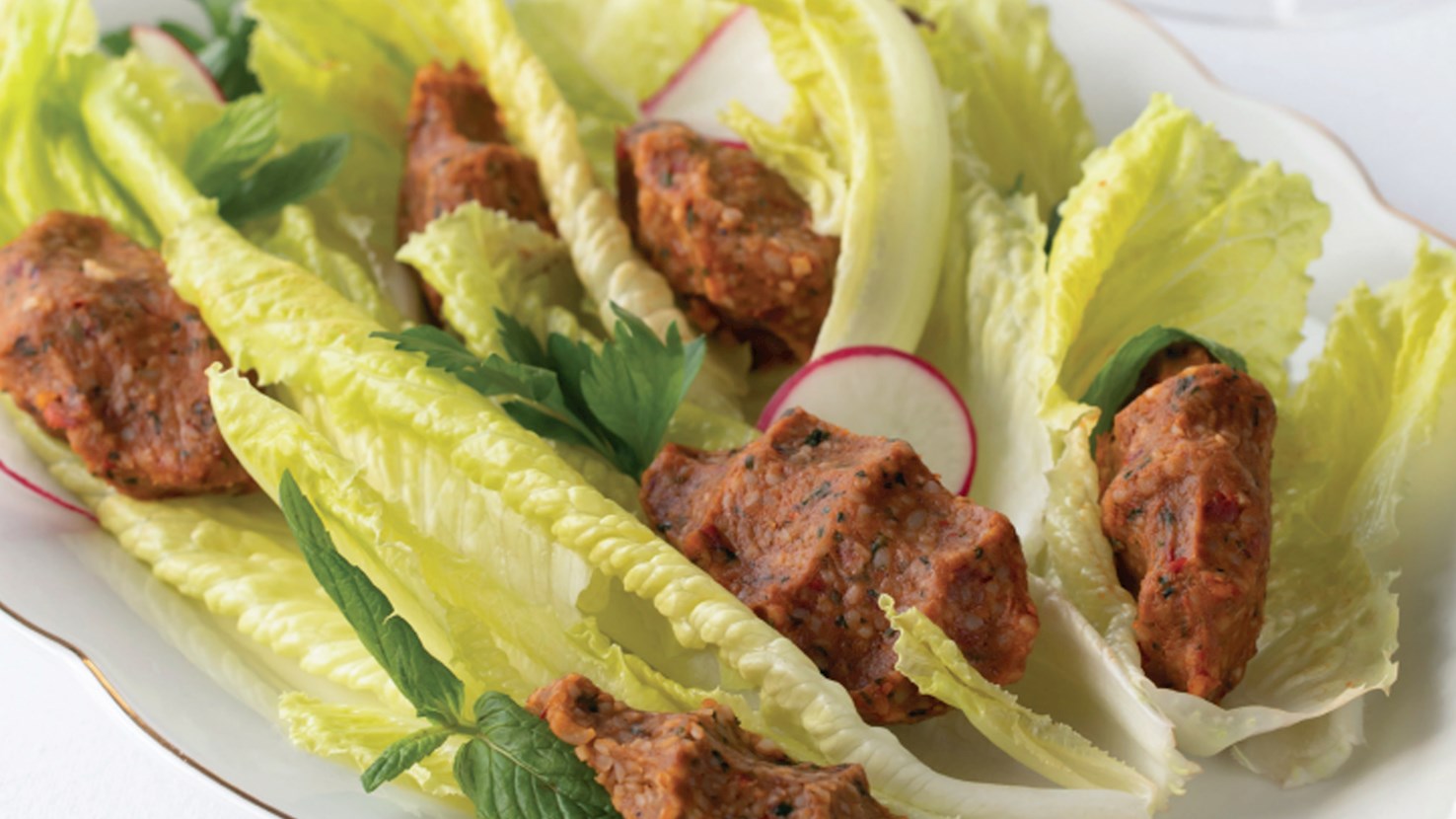
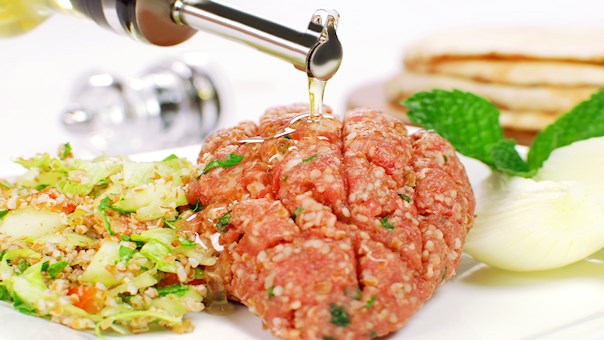
Çiğ köfte is the Turkish version of steak tartare, traditionally made with high-quality ground raw beef (or lamb) that is combined with tomatoes, onions, garlic, pepper, and a selection of Turkish spices. The dish is consumed as a meze, and it is typically served almost cold. Nowadays, due to food safety regulations and health concerns, the meat is almost always replaced with bulgur and ground walnuts, but these vegetarian versions are so good that people mostly can’t tell them from the real thing.
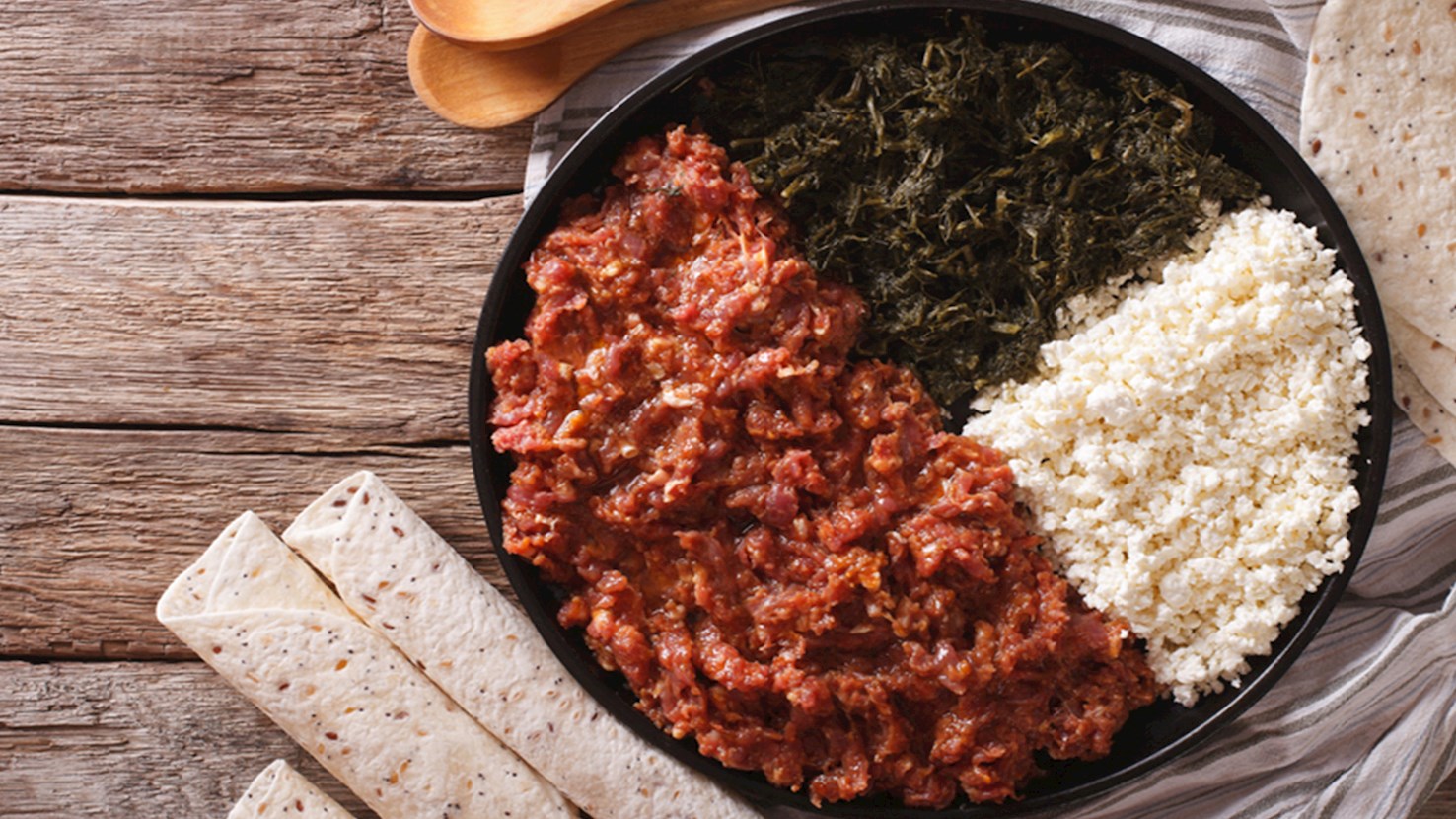
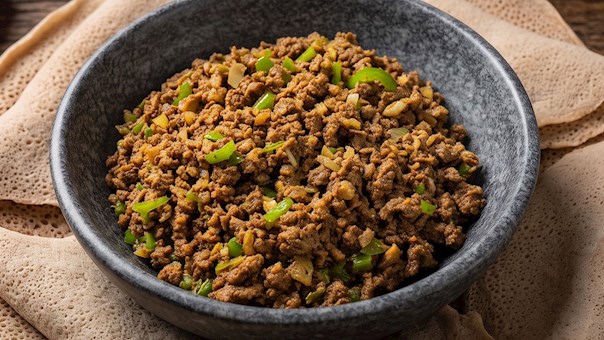
Kitfo is an Ethiopian beef specialty from the Gurage communities of south-central Ethiopia, made from very finely chopped lean beef mixed with warm spiced clarified butter and mitmita, a potent chili-based seasoning. The classic form is served raw, giving it a soft, almost creamy texture once the meat is coated with butter, although lightly warmed and fully cooked versions are also widely available. Kitfo spread well beyond the Gurage highlands and is now eaten throughout Ethiopia, with specialist kitfo restaurants particularly common in Addis Ababa. Its association with the Gurage is well established: accounts of Gurage food culture identify kitfo alongside enset-based foods as an important part of feasts, weddings, hospitality, and other significant gatherings, while Ethiopian restaurant culture helped turn it into a nationally familiar dish. The preparation depends heavily on the quality and texture of the beef. A very lean, tender cut is cleaned of visible fat, membranes, and sinew before being chopped repeatedly until extremely fine; hand-chopping has historically been preferred because it produces a delicate texture without turning the meat into a uniform paste. The meat is then seasoned with mitmita, whose mixture typically includes hot dried chilies, korarima or Ethiopian cardamom, cloves, salt, and other spices depending on the blend. Melted niter kibbeh, clarified butter infused with aromatics and spices, is worked through the beef immediately before serving. The butter provides much of kitfo’s characteristic richness while carrying the heat and fragrance of the spices throughout the meat. The degree of cooking is usually chosen by the person ordering it. Raw kitfo is commonly described as tere, while leb leb is briefly warmed so that the meat begins to cook without becoming firm or dry; a fully cooked version is also available for people who prefer not to eat raw beef. The distinction is important because kitfo is not simply minced beef served at different temperatures: prolonged cooking changes the soft texture that is central to the raw and lightly warmed versions. When eaten raw, it also carries the same food-safety risks as other uncooked beef dishes, so freshness, hygienic handling, and an appropriate cut of meat are particularly important. Kitfo is closely linked with kocho, a dense, slightly sour food made from fermented enset, which is especially characteristic of Gurage cuisine. Enset has long been a major staple among Gurage communities, and its mild fermented flavor provides a useful contrast to the rich meat and chili-spiced butter. Other common accompaniments include ayibe, a mild fresh curd cheese, and cooked leafy greens, often collards known as gomen. The cool, lightly acidic cheese softens the heat of the mitmita, while the greens add a vegetal element to an otherwise rich plate. Injera is also frequently served with kitfo, particularly outside the Gurage region, and pieces of either injera or kocho are used to pick up the meat by hand. Kitfo is usually presented as a substantial main dish rather than a small starter, sometimes on its own and sometimes as part of a larger platter containing cheese, greens, and breads. It remains particularly associated with celebrations and hospitality but is also eaten casually in restaurants throughout Ethiopia and in Ethiopian communities abroad. Its richness works especially well with sour or mildly fermented starches, fresh cheese, and leafy vegetables, while Ethiopian beer can provide a refreshing contrast to the butter and chili. Tej, Ethiopia’s honey wine, can also accompany it, particularly during celebratory meals, while water or lighter drinks allow the heat of the mitmita to remain more prominent.
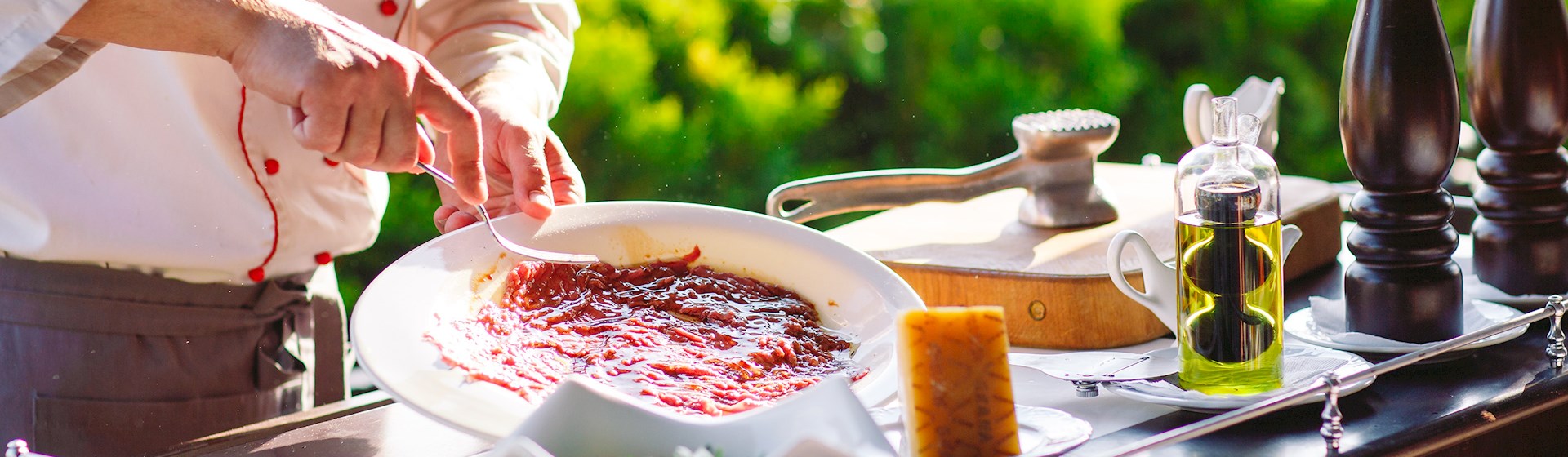
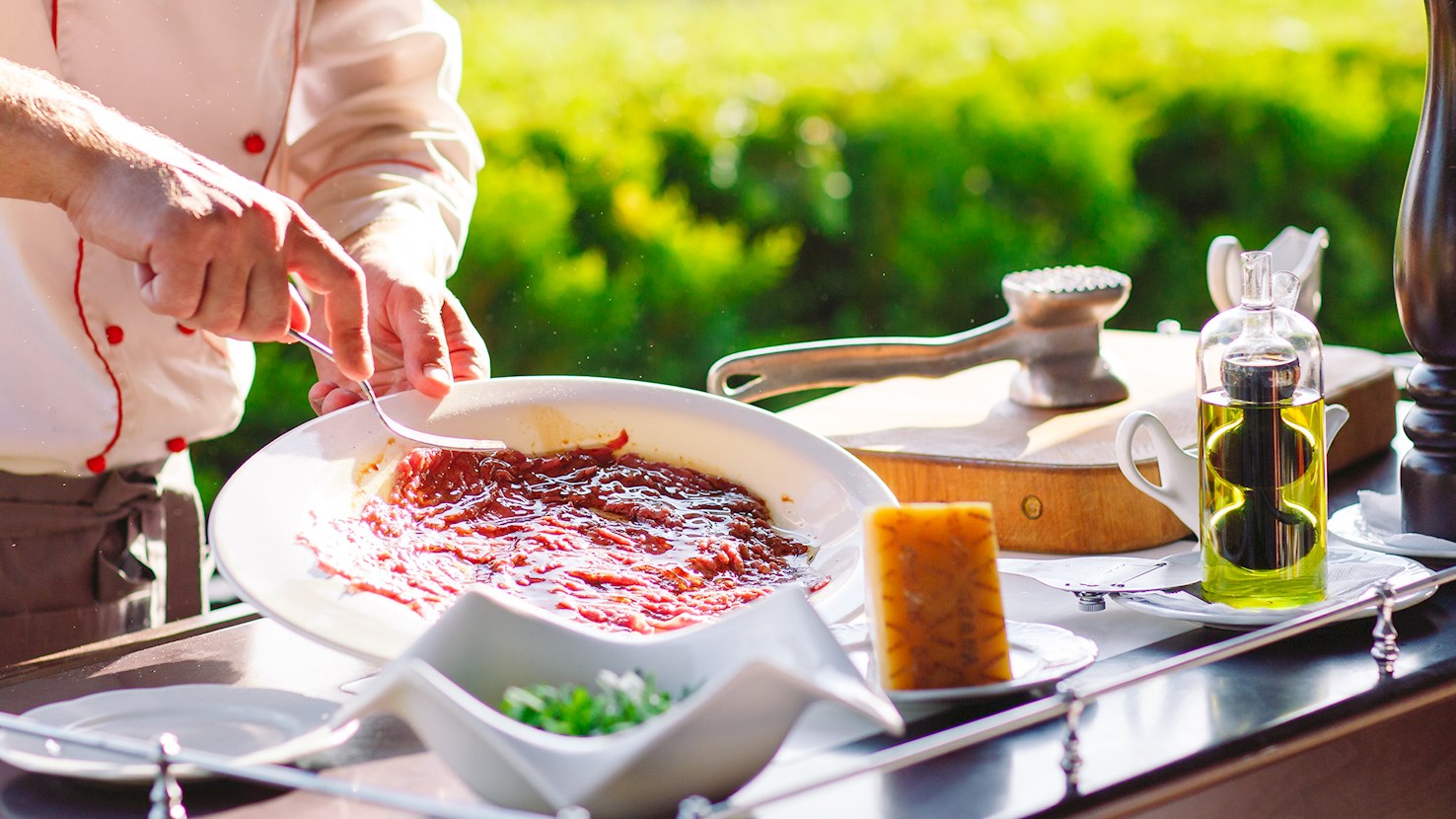
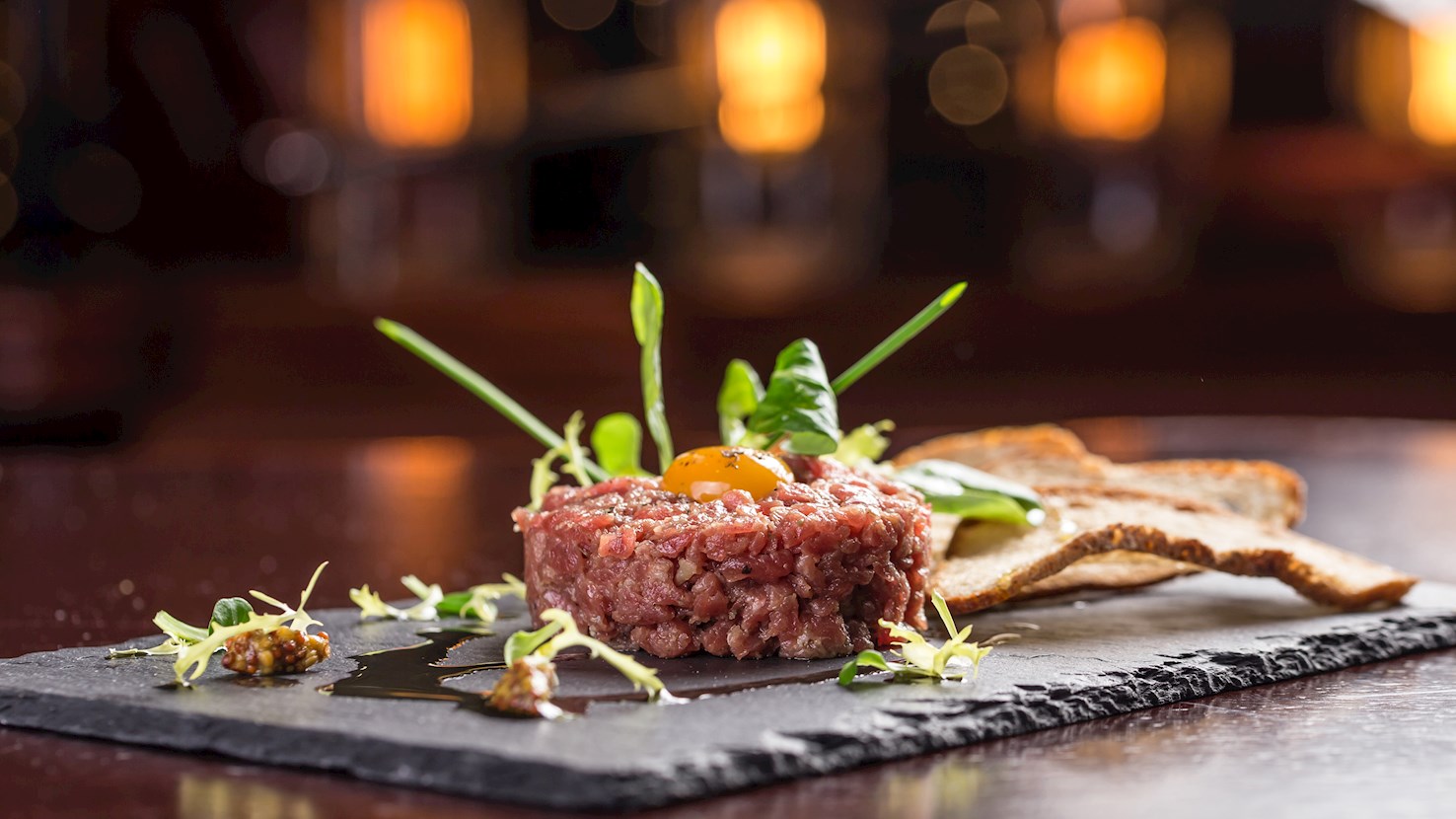
Steak tartare is an appetizer made with finely chopped raw beef or horse meat that is seasoned with salt, pepper, Worcestershire sauce, Tabasco, and mustard. The meat is combined with a raw egg yolk, capers, shallots, parsley, and (sometimes) chopped gherkins. When served, steak tartare is usually accompanied by toasted bread, rye bread, or french fries. It is believed that steak tartare was originally a variation on beefsteack à l'Américaine, a dish of raw chopped beefsteak that first appeared in France at the turn of the 20th century. This variation, steak tartare, was originally served with tartar sauce, and anything that was served with it was known as à la tartare, hence the name.
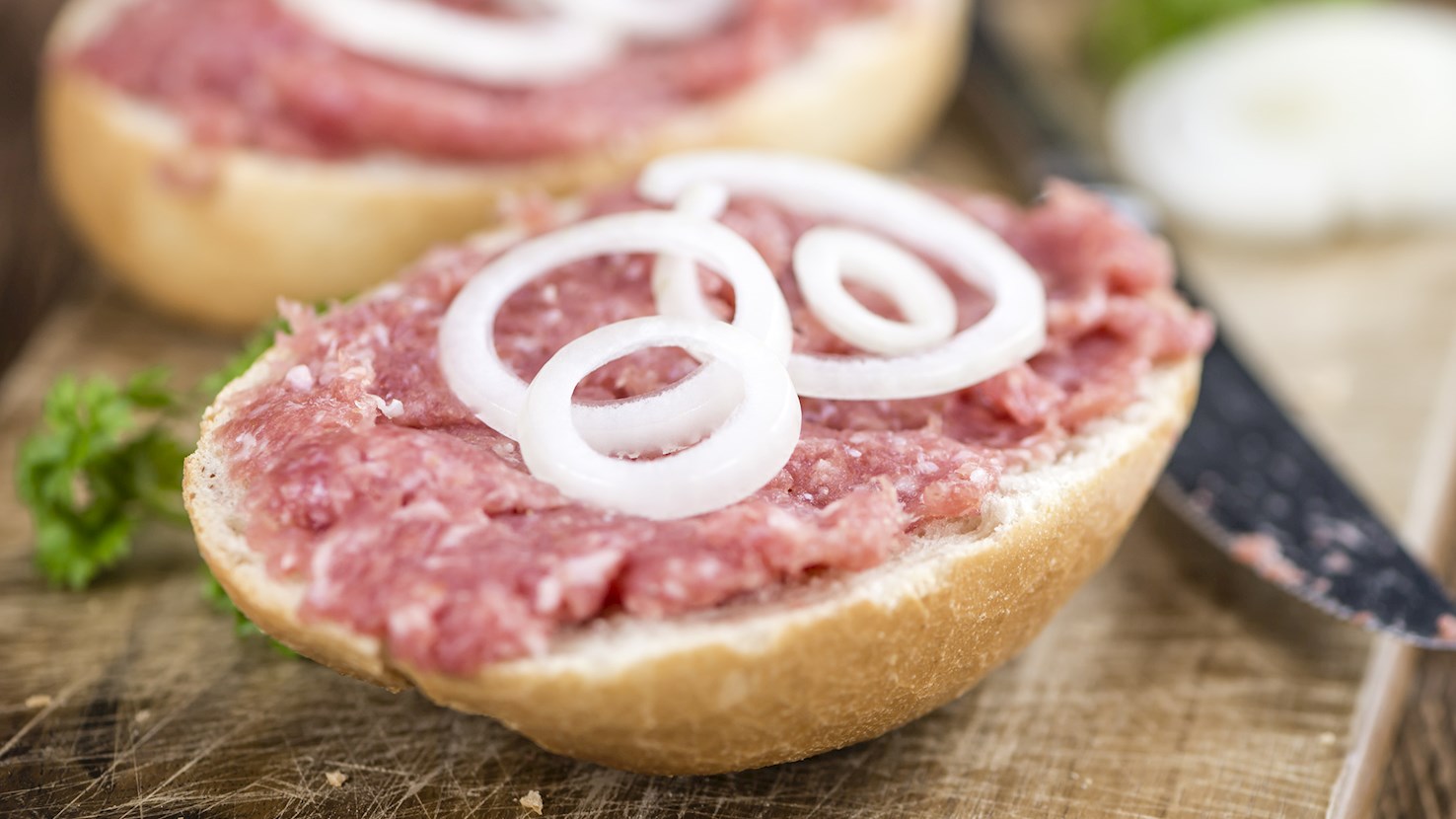
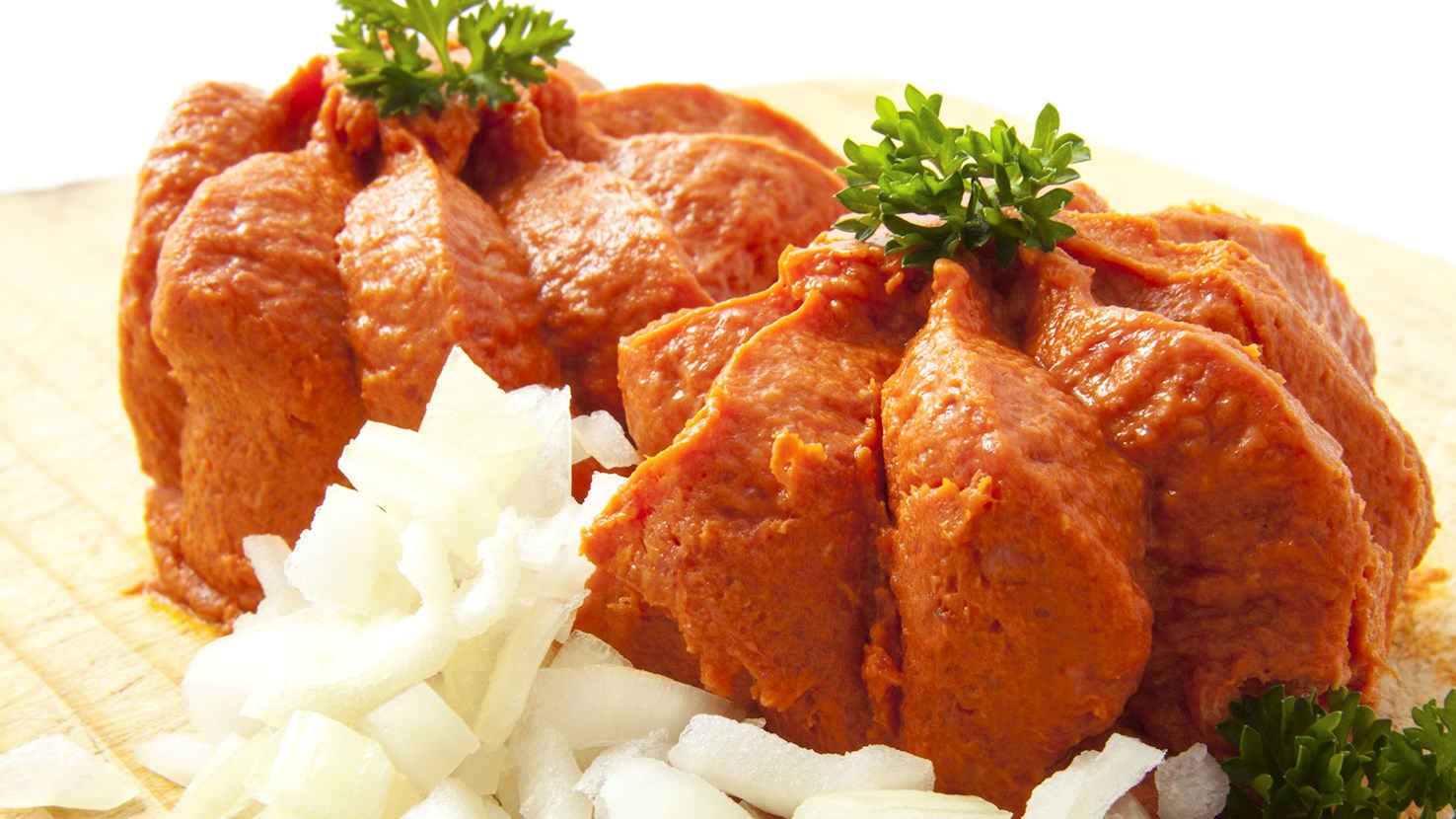
Called hackepeter or mett, this unusual German specialty consists of raw pork mince which is meant to be eaten as it is - fresh and raw. The raw meat is typically seasoned with salt and pepper, though it is usually enhanced with crushed caraway, marjoram, nutmeg, and garlic for added flavor. When raw onions are added to the basic mett, the resulting concoction is called zwiebelmett, while the addition of onions and marjoram makes what is known as a thüringermett. In Germany, seasoned raw pork mince is typically enjoyed slathered over bread rolls (mettbrötchen) or slices of bread, usually sprinkled with raw onion rings on top. Another common way of serving this delicacy is in the form of a mettigel (also known as hackepeterigel or hackepeterschwein), referring to the hedgehog-shaped presentation of mett which was popularized in the 1970s.
Although it is sometimes confused with a steak due to its unusual name, filet Américain is a spread made with raw beef. This popular dish is a close cousin to the more famous steak tartare, but the difference is that filet Américain uses meat which has been minced in a meat grinder. Only lean and premium beef cuts are used in this Belgian classic, and because the meat is served raw, it should be as fresh as possible. When the meat is ground, it is usually generously seasoned and enriched with onions, capers, mustard, mayonnaise, raw eggs, tabasco, and Worcestershire sauce, which also help in holding the spread together. There are two ways of serving filet Américain in restaurants: fully prepared, or left for the consumers to add the condiments according to individual preferences. It is believed that Joseph Niels invented the dish in 1924 and was the first to serve it in his restaurant in Brussels. Filet Américain is often spread on crackers and served as an appetizer, although it is sometimes served as a main dish with fries and a fresh salad on the side. However, most locals prefer to spread the mixture on a piece of crusty bread and consume it as a sandwich.
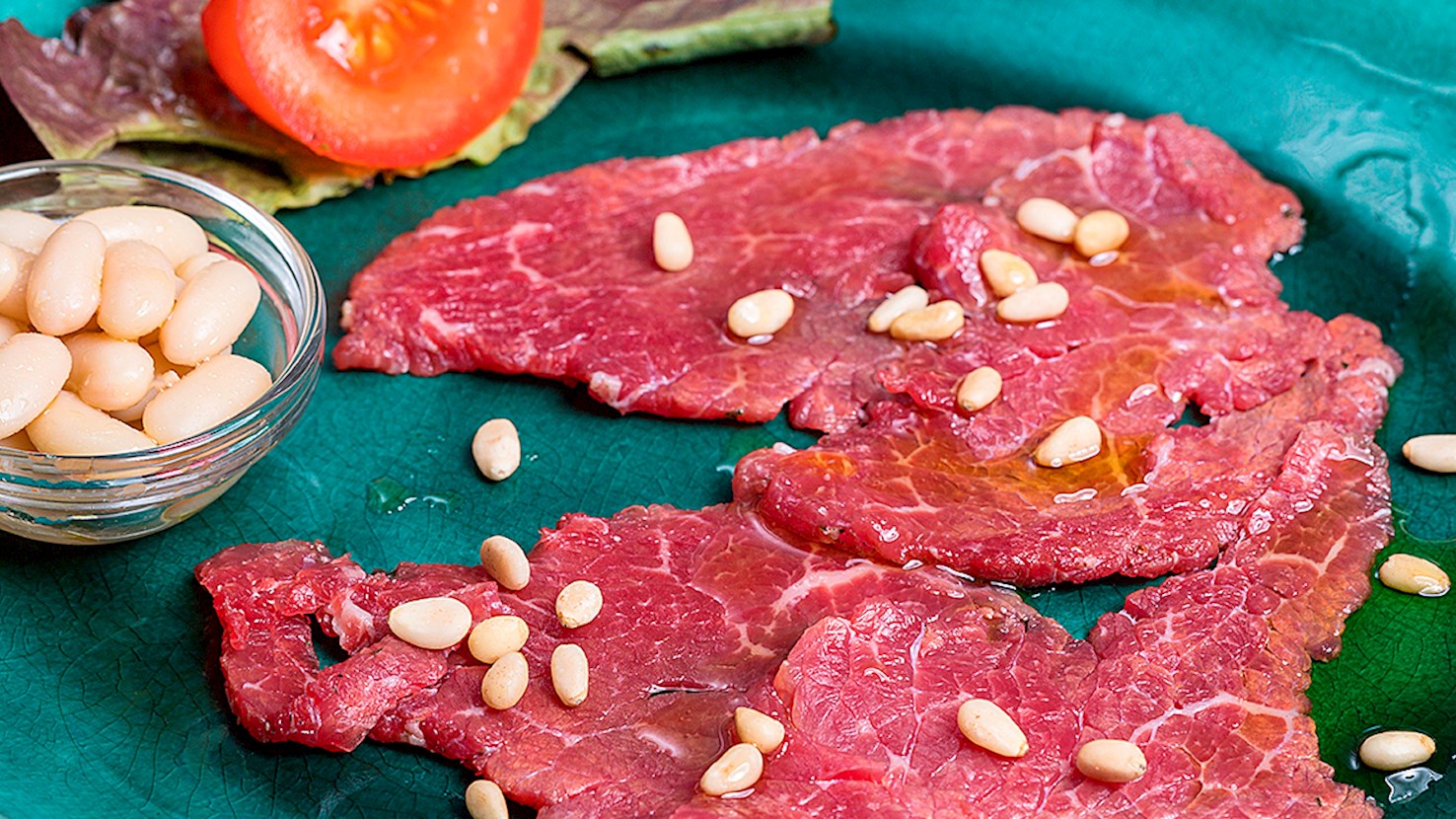
Carne salada is a typical Trentino meat product that can be traced back to the 16th century. It is made by flavoring beef rump with salt, pepper, juniper berries, rosemary, crushed garlic, and bay leaves. After at least two weeks of turning and kneading the meat, which traditionally rests in steel tubs, it is ready to be consumed, either raw or cooked. If served raw, carne salada is cut in thin slices, drizzled with extra virgin olive oil, and paired with lemon slices, chopped capers, or rocket and parmesan cheese. If cooked, the slices should be cut a bit thicker, then fried for a minute and served with boiled beans. Carne salada is delicious either way, and it is traditionally served as an appetizer.
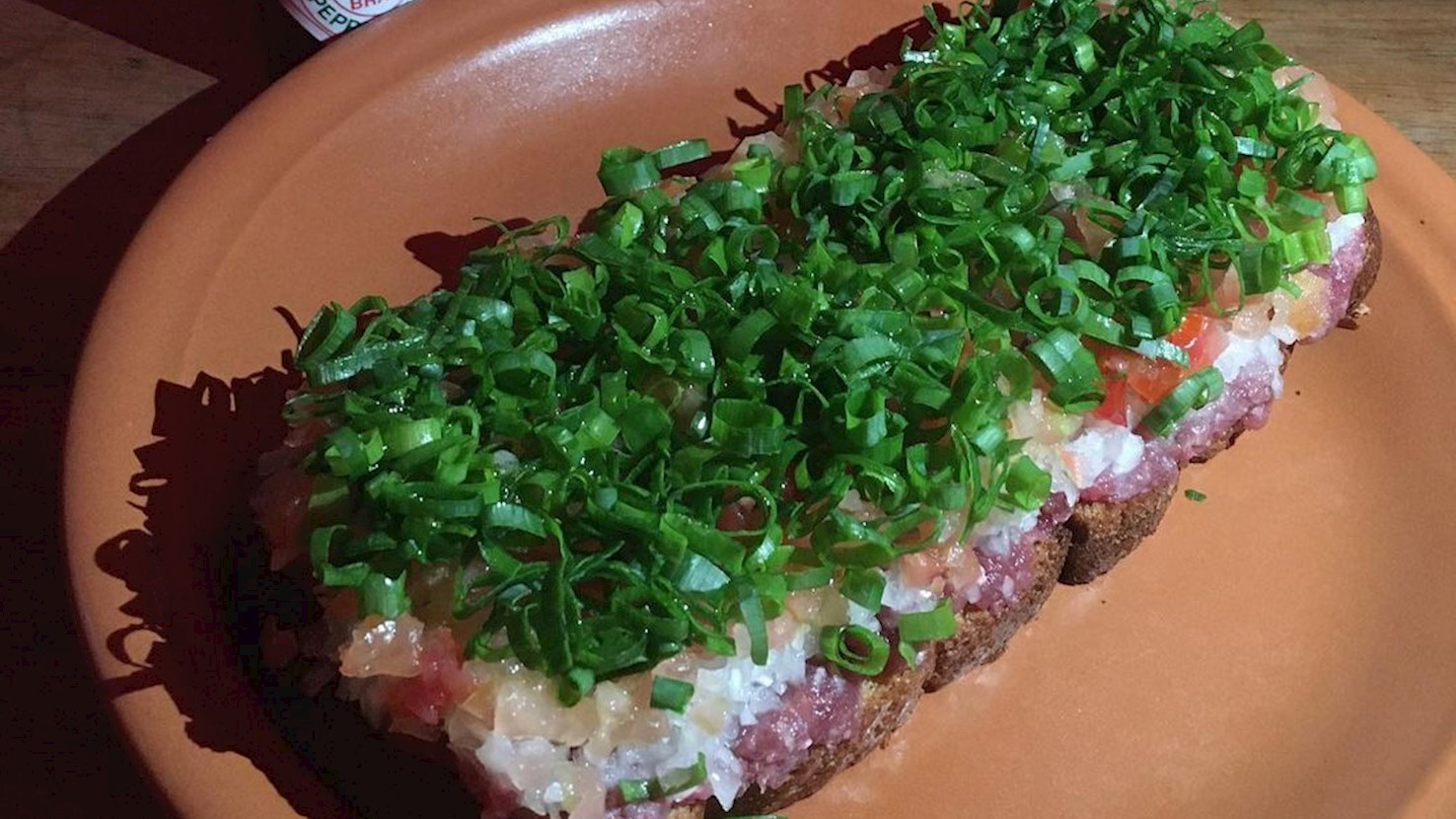
Carne de onça is a traditional dish originating from Curitiba, where it's been served since 1953. It's also the town's official dish, a type of beef tartare made with a combination of minced beef, garlic, onions, chives, olive oil, Cognac, chili powder, and sweet paprika powder. The minced beef is flattened, drizzled with Cognac, seasoned, and mixed with the remaining ingredients. Once done, the resulting mixture is usually shaped into a flat rectangle, and it's then served with toasted bread, mustard, and butter. The name of the dish means jaguar meat, referring to the Brazilian cat known as onça, because it's said that after eating the dish, you'll have the breath of the onça, a reference to the pungent ingredients used to prepare it.
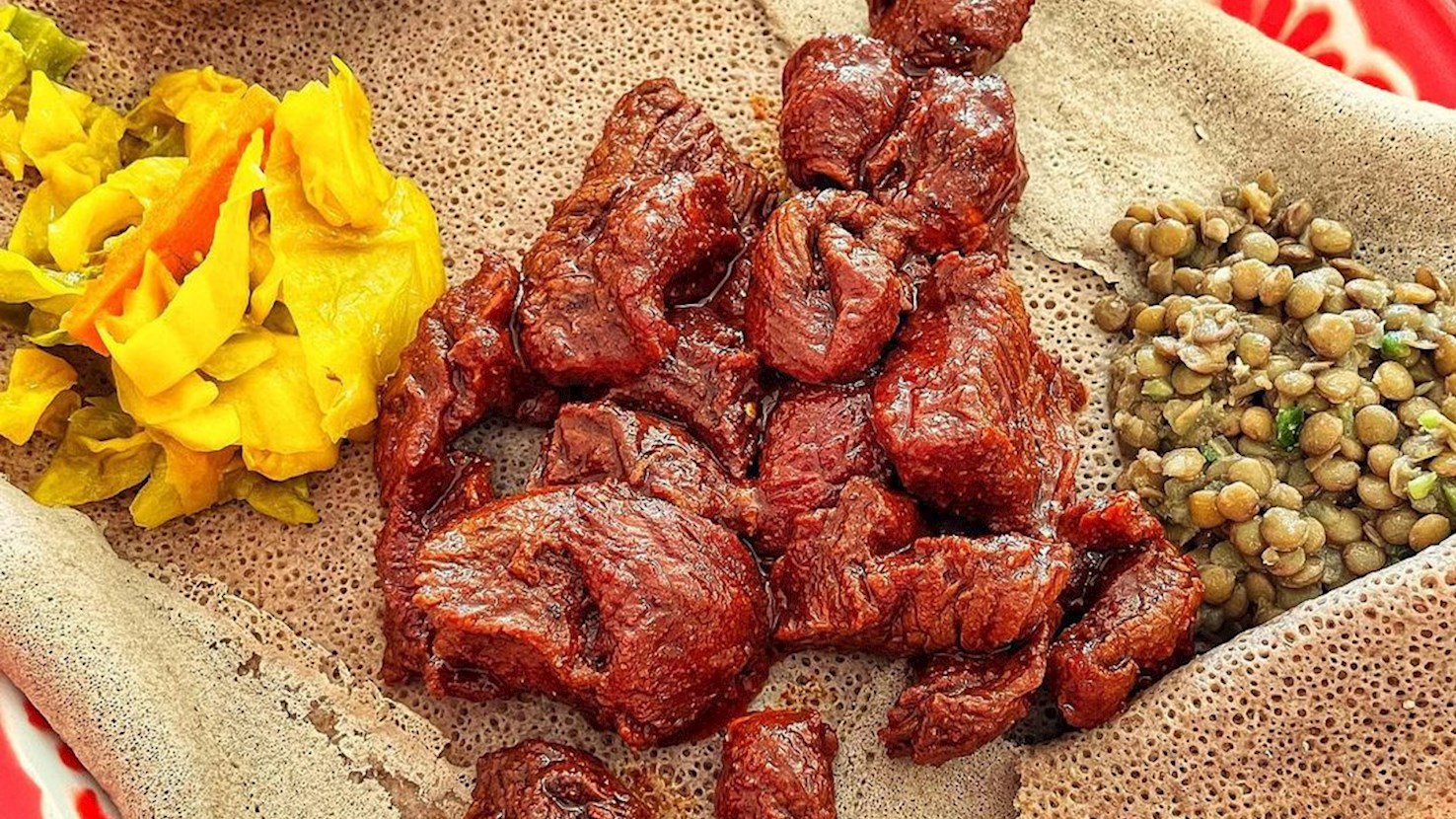
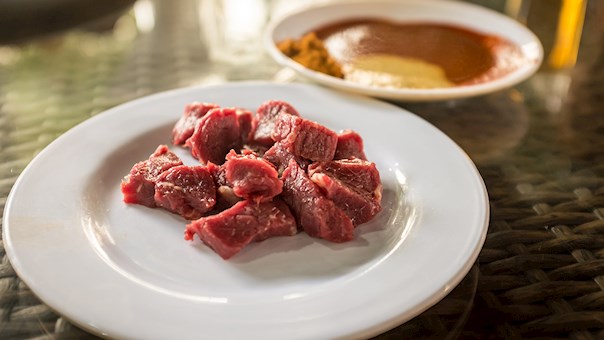
Gored gored is an Ethiopian raw-beef specialty made from substantial cubes of fresh beef rather than finely minced meat, giving it a firm, chewy texture that clearly separates it from kitfo. The defining feature is the cut: tender beef is sliced into bite-sized cubes, often with some fat left attached, and served raw or, in some versions, only very lightly warmed. Gored gored belongs to Ethiopia’s much wider culture of eating fresh raw beef, alongside tere siga or kurt and kitfo. Studies of Ethiopian food habits confirm that raw and lightly cooked beef remain common in many parts of the country and are especially associated with social gatherings, festive occasions, butcher shops, and meals built around freshly slaughtered cattle. A frequently repeated oral explanation claims that Ethiopian soldiers began eating uncooked meat during wartime to avoid lighting fires that might reveal their position, but researchers note that written evidence establishing this story is lacking, so it is better treated as folklore rather than a confirmed account. Preparation is deliberately simple because the quality and texture of the beef are central. Tenderloin, round, or similarly lean and tender cuts are commonly chosen, trimmed and cut with a sharp knife into roughly bite-sized pieces. Some versions are served almost unseasoned, with awaze and mitmita provided separately for dipping, while others lightly coat the cubes with niter kibbeh, berbere, mitmita, or awaze immediately before serving. An Ethiopian Ministry of Labor and Skills training manual, for example, gives a version in which cubed raw beef is mixed with berbere, awaze, mitmita, salt, and melted niter kibbeh, showing that the degree of seasoning is not completely standardized. This flexibility also explains why descriptions sometimes differ: gored gored is not defined by one exact spice formula but by keeping the meat in recognizable cubes rather than mincing it or presenting it as long strips. Kitfo is chopped very finely and mixed thoroughly with seasoned butter and mitmita, while tere siga is generally cut directly from a larger piece of raw beef and eaten with condiments; gored gored occupies a distinct position between the two in terms of cutting and serving. Because it is commonly eaten raw, freshness and hygienic handling are particularly important. Ethiopian food-safety studies have documented significant microbial and zoonotic risks associated with raw-beef consumption, especially where slaughter, storage, or handling conditions are poorly controlled. Gored gored is typically served with injera and strongly flavored condiments rather than elaborate side dishes. Awaze supplies a thick chili-based sauce, mitmita adds concentrated heat, and lemon can provide acidity, while ayib or cooked greens offer a milder contrast on larger platters. It may be ordered as a dish in its own right or appear as part of a larger meat-focused meal, particularly during celebrations and communal gatherings. The dish is especially at home in Ethiopian butcher-restaurants and meat restaurants, where access to freshly cut beef is part of the appeal. Tej or beer can accompany a richer serving, while water works well with heavily seasoned versions, and Ethiopian coffee is commonly taken later in the meal.
TasteAtlas food rankings are based on the ratings of the TasteAtlas audience, with a series of mechanisms that recognize real users and that ignore bot,
nationalist or local patriotic ratings, and give additional value to the ratings of users that the system recognizes as knowledgeable.
For the “Top 20 Raw Meat Dishes in the World” list until October 15, 2026, 2,627 ratings were recorded, of which 1,460 were recognized by the system as legitimate.
TasteAtlas Rankings should not be seen as the final global conclusion about food. Their purpose is to promote excellent local foods,
instill pride in traditional dishes, and arouse curiosity about dishes you haven’t tried.













What People Say