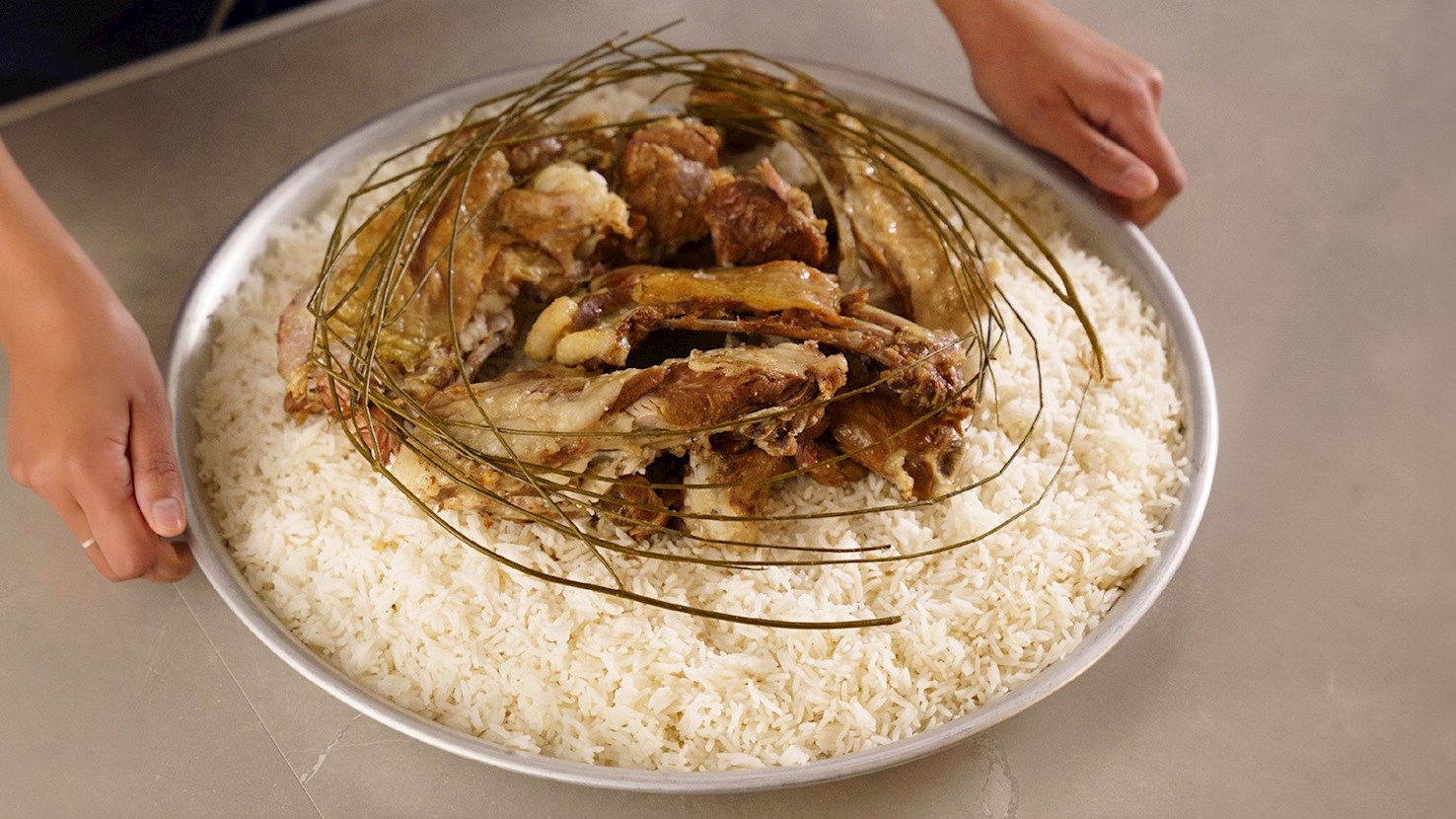
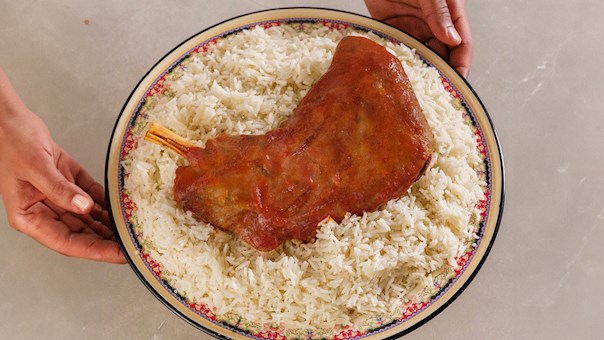
Haneeth is a traditional dish from the Asir region of Saudi Arabia and Shabwah/Hadramout region of Yemen, popular across the Arabian Peninsula. It features slow-roasted, spice-rubbed lamb, typically cooked in a Tannour oven, served on a bed of rice. The preparation involves dry-rubbing chunks of bone-in lamb with a unique spice mix, then slowly roasting it in the oven at a very low temperature for about six hours, ensuring the meat is tender and succulent.
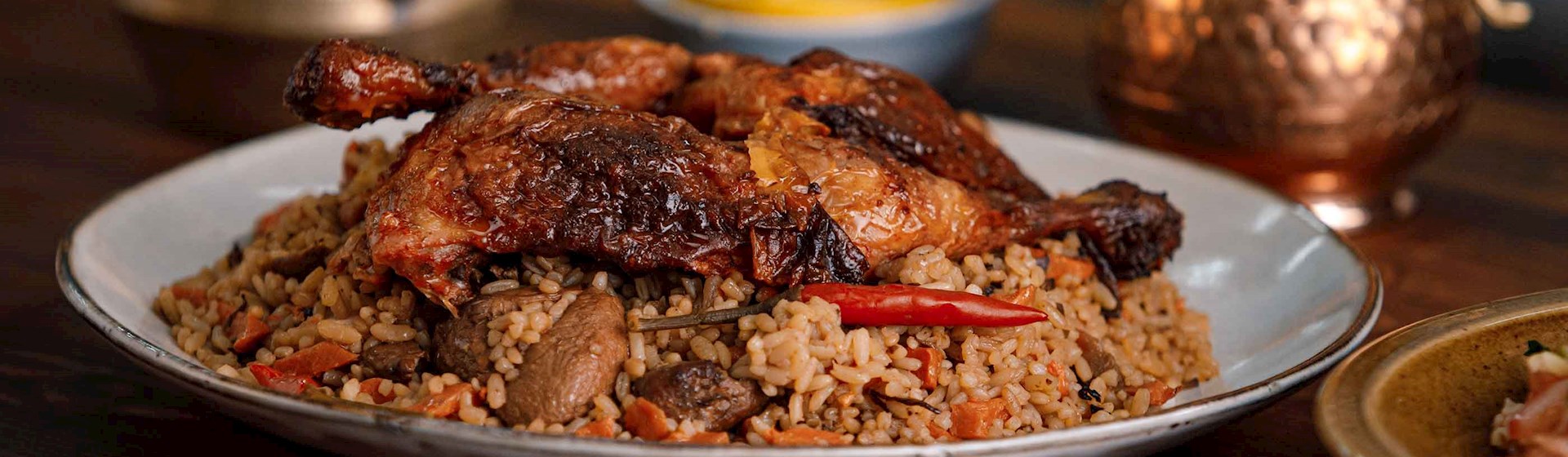
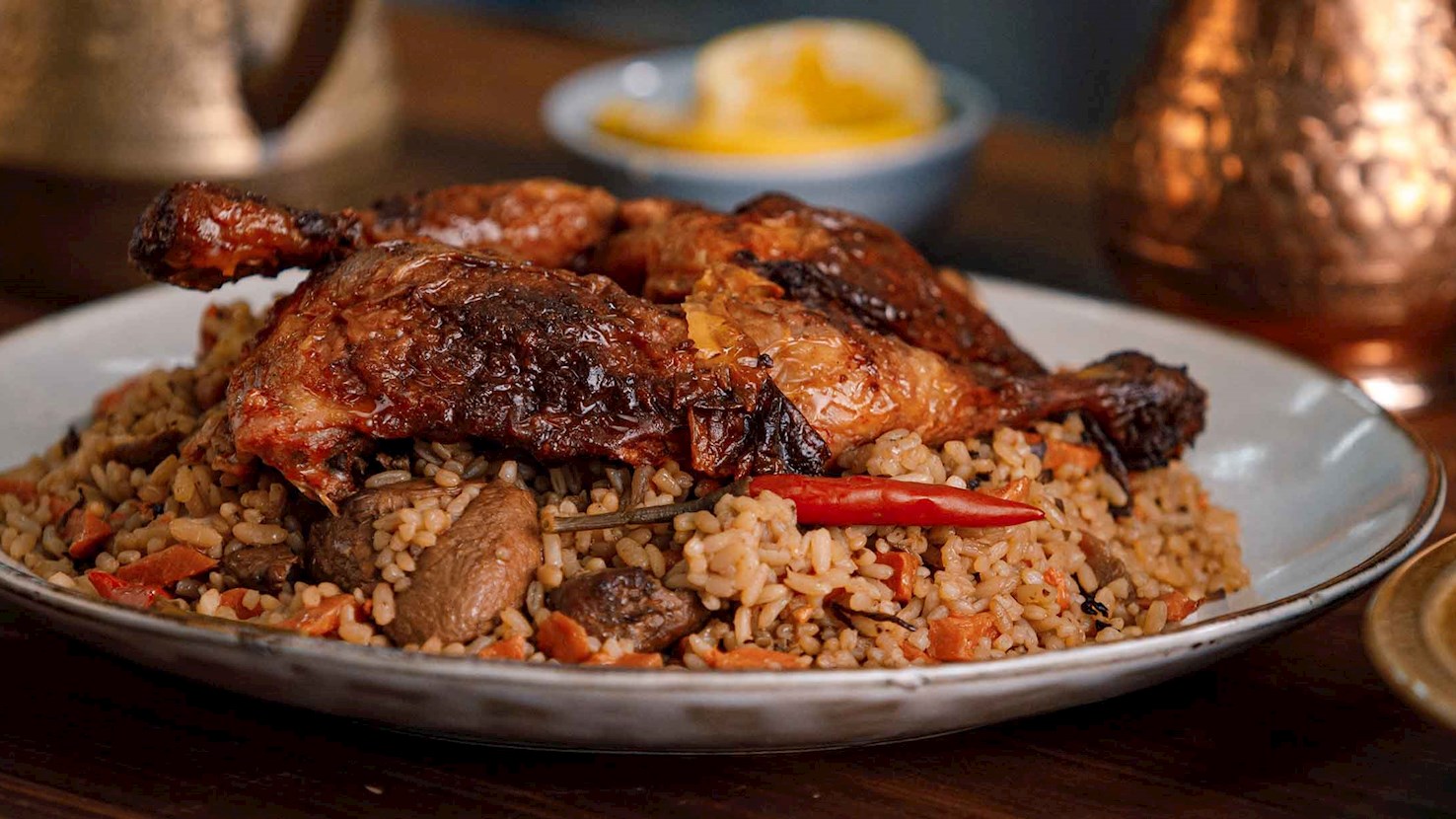
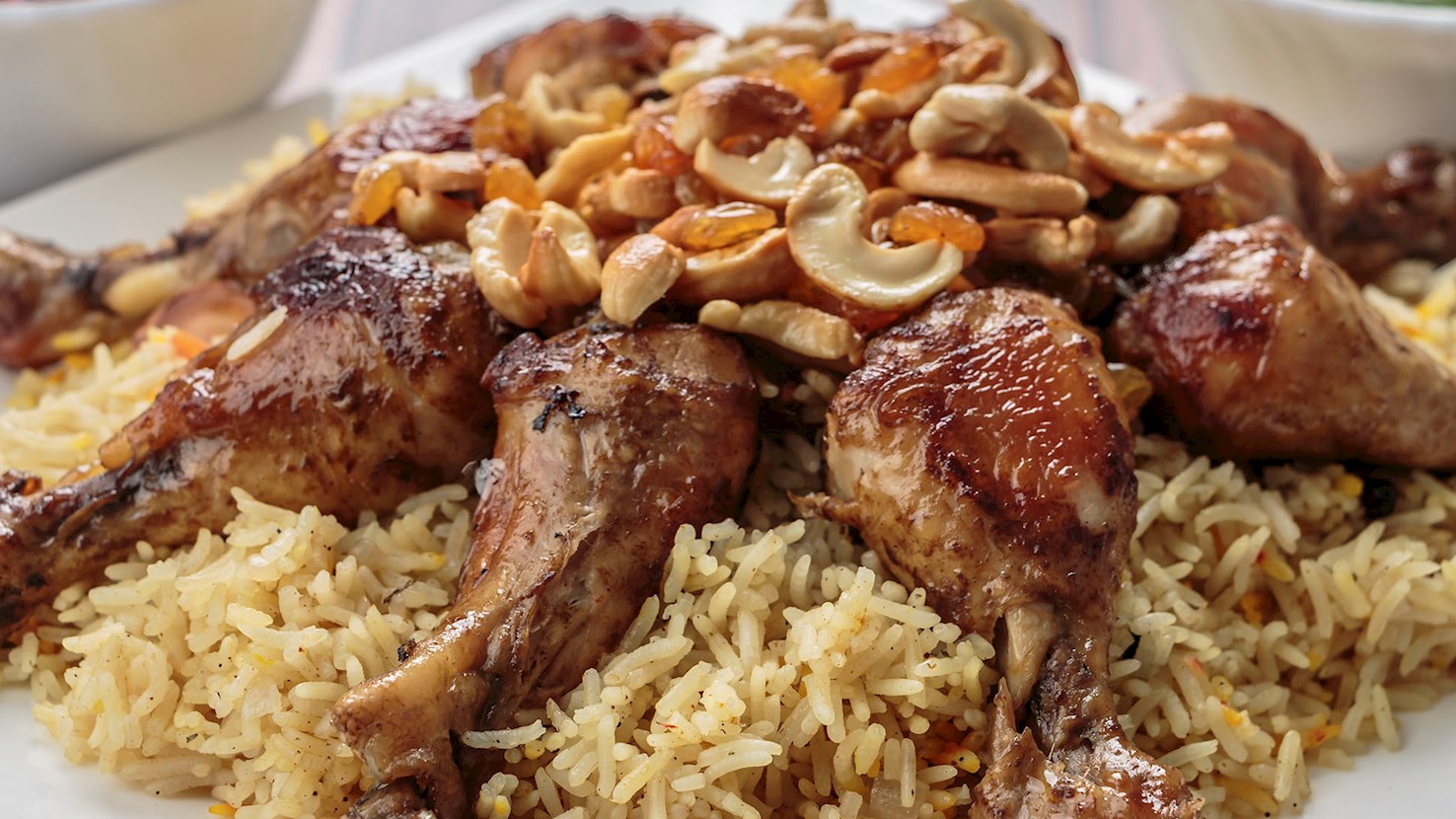
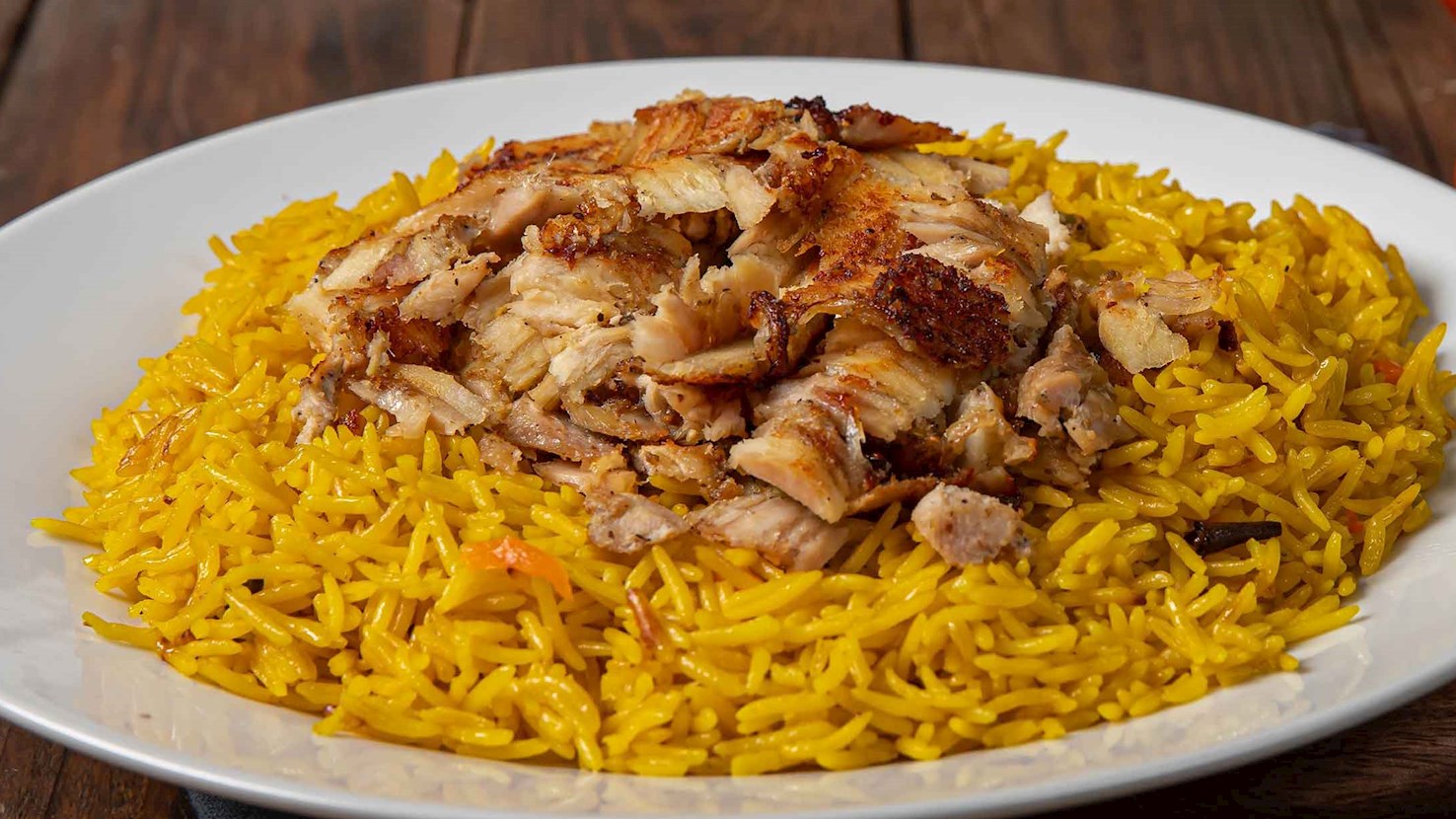
Kabsa is a rice dish that is enjoyed throughout the Gulf States of the Arabian Peninsula. Heavily influenced by Persian and Indian biryanis, kabsa makes use of the water that was used for cooking fish or meat and re-using it to cook the spiced, long-grain rice in it, perfectly blending all the flavors and spices. The dish can be made with chicken, lamb, camel meat, fish, or even shrimps, truffles, or duck meat. The meat or fish is usually placed on top of the rice, and the whole dish is served on a large platter, meant to be shared and eaten by hands. Although it originated in Yemen, this traditional combination of rice and meat is incredibly popular in Qatar and Saudi Arabia, where it is considered a national dish. Across the Arabian Peninsula, kabsa is also known as machboos.
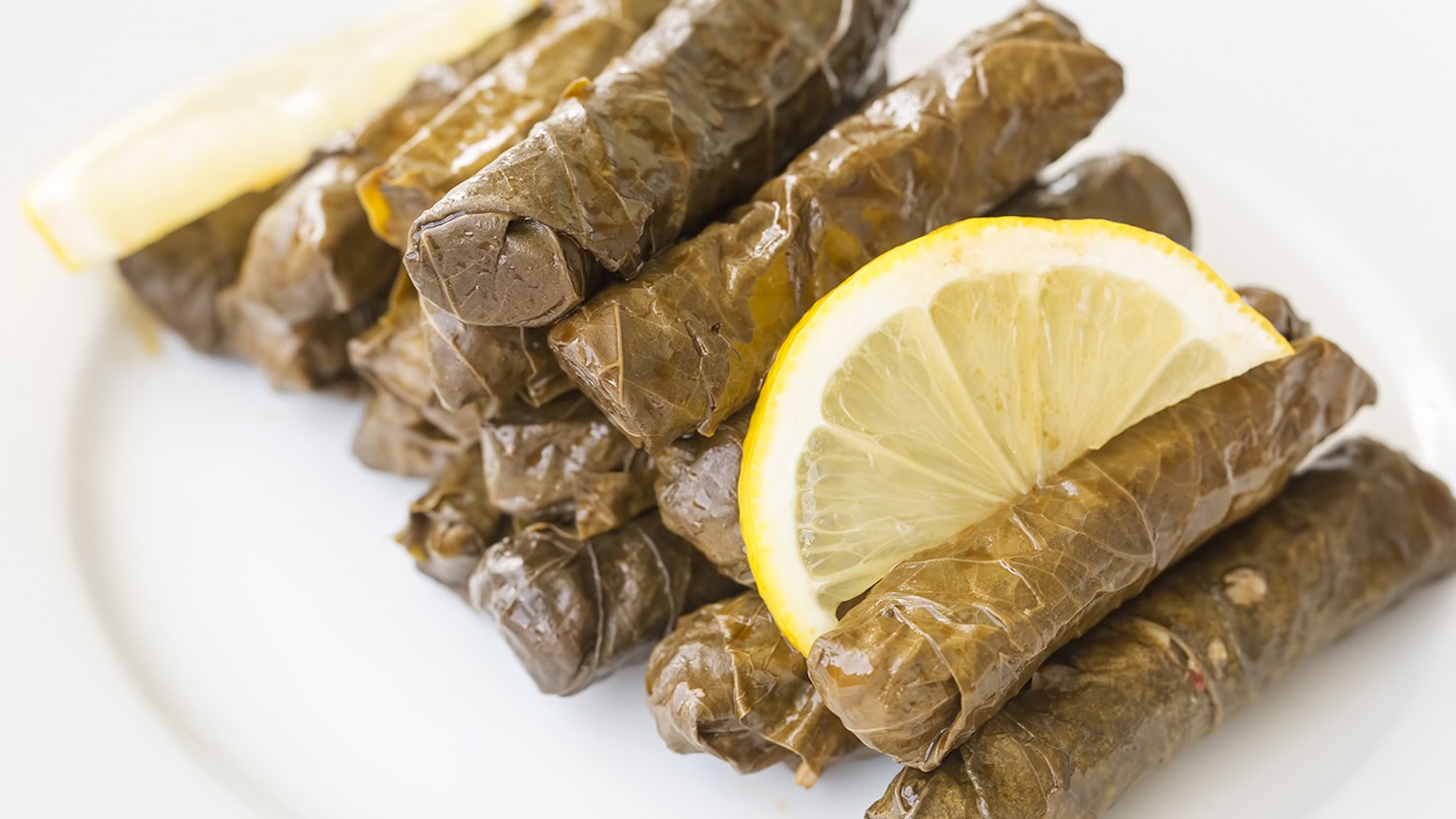
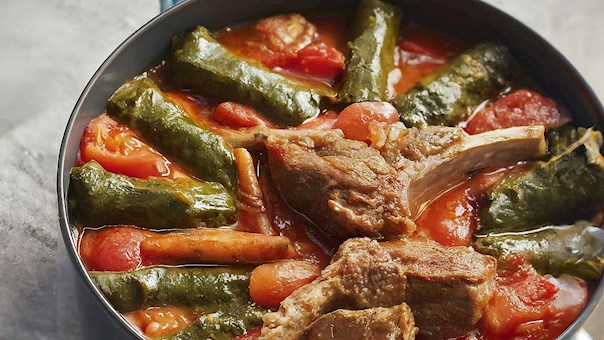
Warak enab is a dish of stuffed grape leaves prepared across the eastern Mediterranean and Middle East, especially in Lebanon, Syria, Jordan, and Palestine, consisting of tender vine leaves wrapped around a filling of rice, and in many versions minced meat, then gently cooked in a lightly acidic liquid. Its development is tied to long-established viticulture in the Mediterranean basin, where grape leaves were readily available alongside grapes and wine production, and where cooking practices evolved to make use of seasonal leaves by blanching and preserving them for later use, with references to stuffed leaves appearing in Byzantine and early Arabic culinary records that describe similar techniques applied to vegetables and leaves across the region. Preparation involves blanching fresh or preserved grape leaves to soften them, placing a small amount of filling made from short-grain rice, minced lamb or beef if used, salt, and mild spices near the base of each leaf, rolling them tightly into compact cylinders, and arranging them snugly in a pot layered to prevent movement during cooking, after which they are simmered slowly in water or stock with lemon juice until the rice is fully cooked and the leaves tender but intact. Warak enab is served warm or at room temperature, often drizzled lightly with olive oil and presented neatly arranged to emphasize uniformity rather than volume. A defining characteristic of warak enab is the balance between acidity from lemon and the neutral absorbent quality of rice, which allows the grape leaf itself to remain the dominant flavor rather than the filling. It is eaten in homes, restaurants, and social gatherings as part of shared meals, commonly alongside yogurt, grilled meats, or other vegetable dishes, and it pairs well with water, unsweetened black or mint tea, arak diluted with water, or dry white wines, fitting naturally into tables where multiple dishes are eaten slowly and in combination rather than in isolated courses.
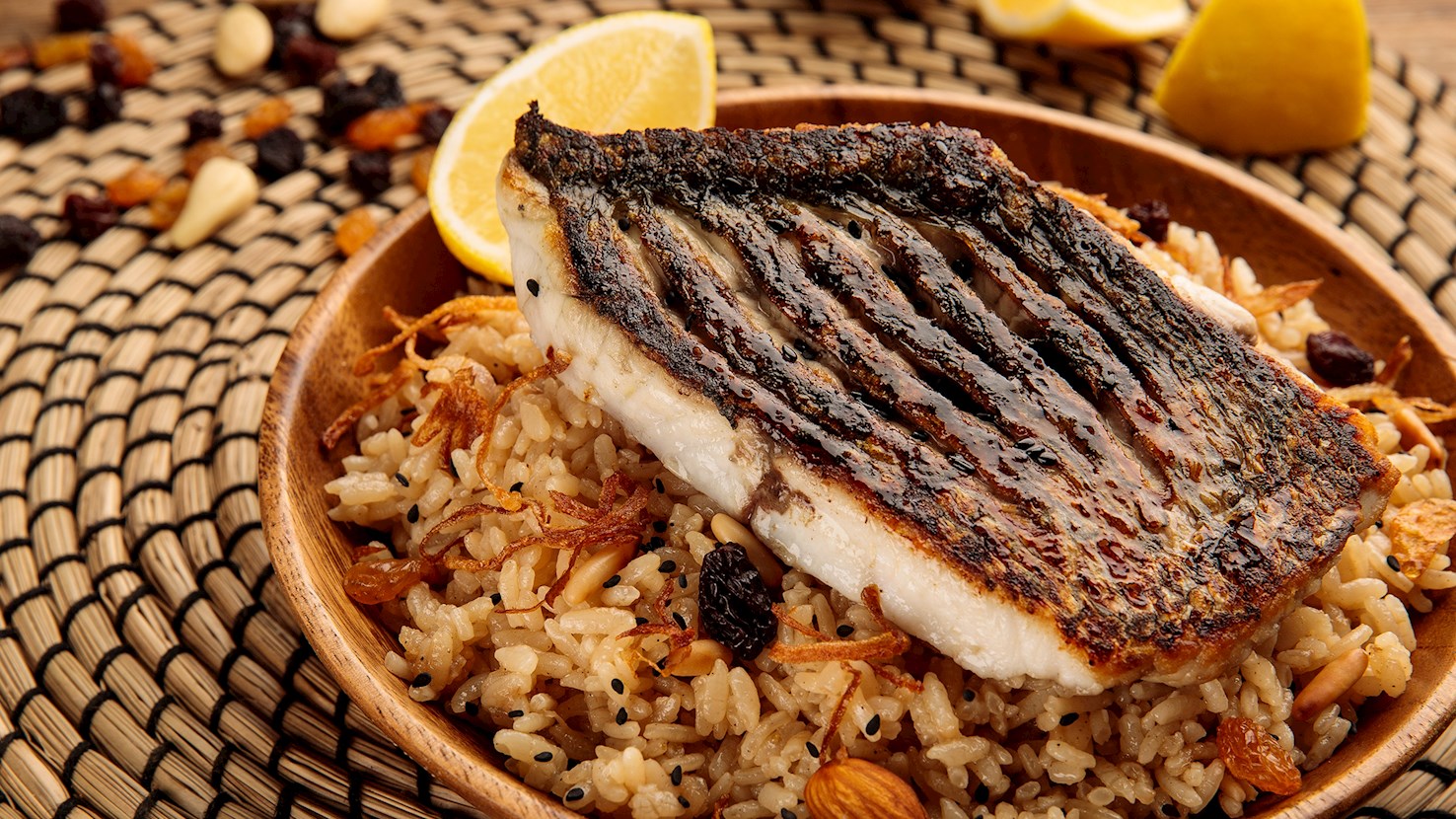
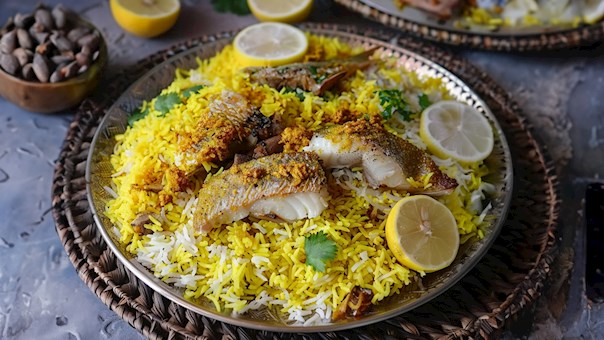
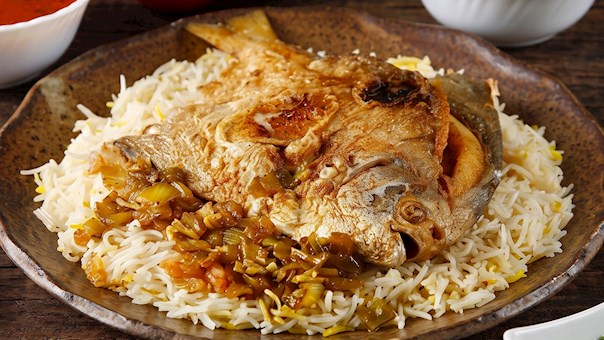
This traditional combination of rice and fish is typically prepared with white fish such as sea bass or red snapper. The fish is fried or baked separately, while the rice is cooked in a special fish broth that is prepared with fried onions and bahārāt - a traditional spice blend that usually employs allspice, peppercorns, cassia, coriander, cardamom, cumin, and chili peppers or paprika. The dish is traditionally served on one plate, topped with lightly toasted pine nuts and slivered almonds. If desired, a special sauce can be served on the side.
Mandi is Yemen's national dish (also popular in Saudi Arabia), consisting of lamb or chicken meat, fragrant basmati rice and a mixture of various spices. If lamb is used in the dish, it should be small-sized and as young as possible, to further enhance the flavors. To make mandi, the meat should be cooked in the tandoor, a specially designed hole in the ground covered with clay and charcoal, acting as an oven for the suspended meat above it. It is then closed and no smoke is allowed to go outside as it flavors the meat instead. When the meat is tender and juicy, it is served with rice and accompaniments such as salads, yogurt, and spicy tomato chutneys. Beloved in all of the Arabian Peninsula, mandi is often served for special events, such as feasts and weddings.
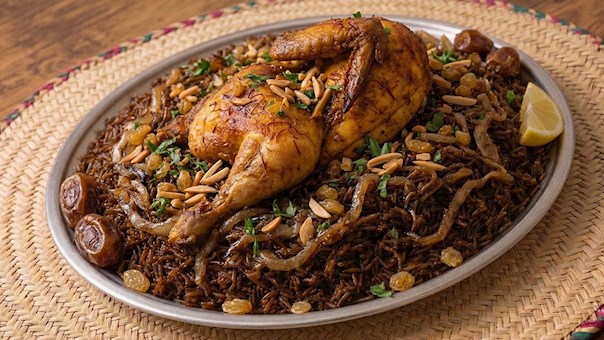
Ruz al Bukhari or Bukhari rice is a rice dish that is enjoyed throughout the Gulf States of the Arabian Peninsula. This Middle Eastern specialty is believed to derive its name from the city of Bukhara, a historically-important trading city situated on the Silk Road in Central Asia. A variety of spices such as cinnamon, cardamom, star anise, fennel seeds, cumin, coriander seeds, nutmeg, and black pepper, which used to be traded on the Silk Road, are featured in this dish, imparting a distinctive flavor and aroma to it. Chicken, lamb, or mutton typically accompany this dish, and long-grain rice is usually cooked in the aromatic broth obtained from cooking the accompanying meat. The dish is often topped with nuts, dried fruits, fried onions, or coriander leaves, and it is usually served with a green salad and salata hara (a spicy tomato sauce) on the side.
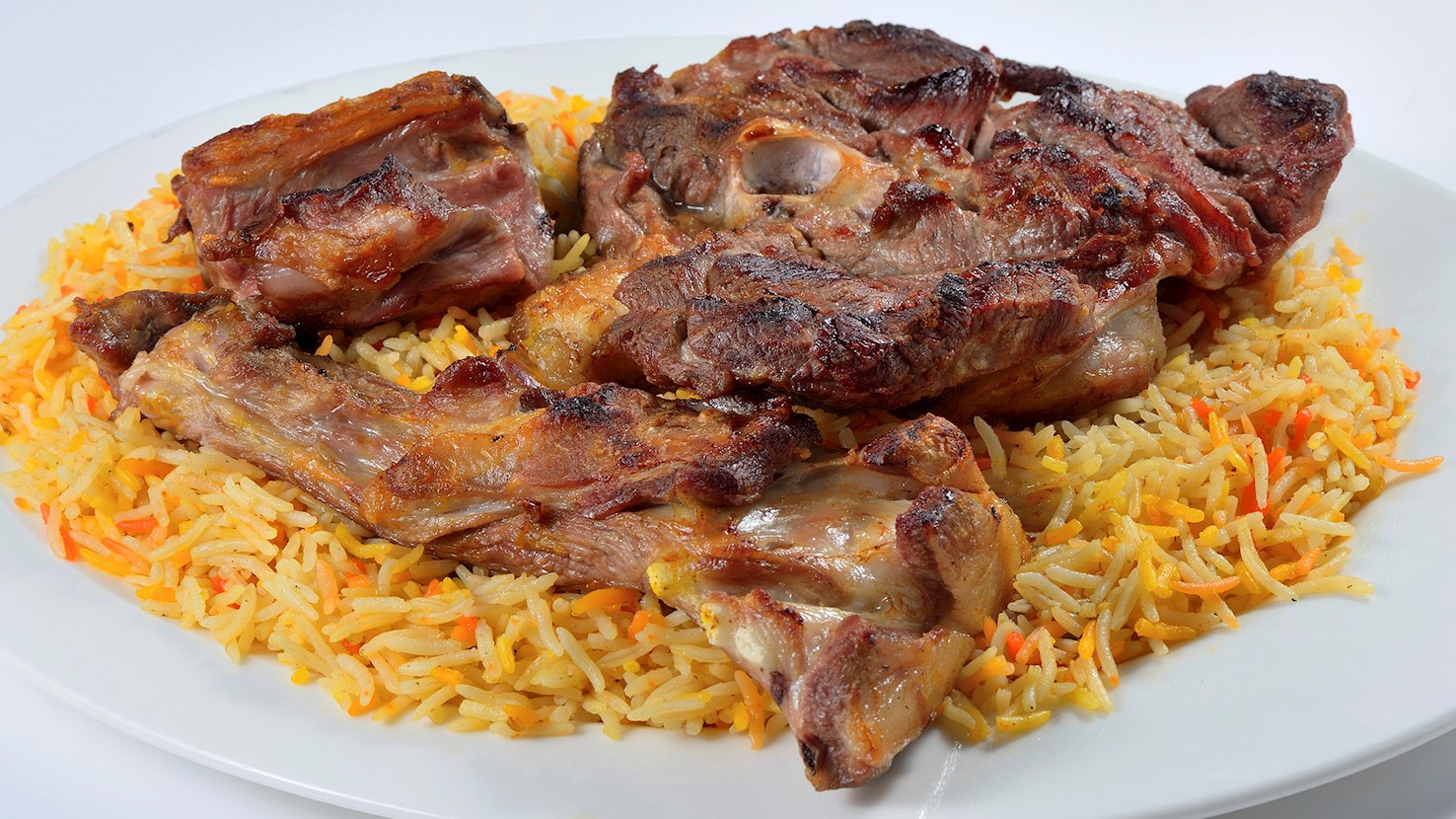
Considered the national dish of Kuwait, machboos laham is a spiced rice dish topped with slow-cooked lamb, also eaten in Bahrain, Qatar, the United Arab Emirates, and Saudi Arabia. Development of the dish stems from maritime spice trade routes connecting the Arabian Peninsula with India and East Africa, integrating imported Basmati rice, dried limes (loomi), and aromatic whole spices into regional bedouin meat-boiling techniques. Preparation begins by simmering bone-in lamb cuts in water infused with onions, garlic, and a regional spice mixture (bezar) containing cardamom, cinnamon, cloves, cumin, coriander, and turmeric until the meat becomes tender. The lamb is subsequently removed and either oven-roasted or pan-fried in clarified butter to achieve a crisp exterior, while long-grain Basmati rice is cooked directly in the reserved, heavily seasoned lamb broth to absorb fat and aromatics. To assemble the dish, the spiced rice is mounded onto a large communal platter, topped with the cooked lamb pieces, and decorated with hashu, a warm garnish of sautéed caramelized onions, yellow split peas, raisins, ground cardamom, and black pepper. The reliance on whole sun-dried black limes (loomi), which are pierced and simmered directly in the broth, imparts a sour, slightly fermented citrus acid that cuts through the fat content of the mutton and rice. Machboos laham is eaten during Friday family gatherings, religious festivals, and wedding banquets, customarily consumed by hand from a shared central tray while seated on floor mats. It is served with daqoos, a thick garlic tomato sauce, alongside plain yogurt (laban), fresh herbs, and pickled vegetables, followed by hot black tea infused with cardamom or mint.
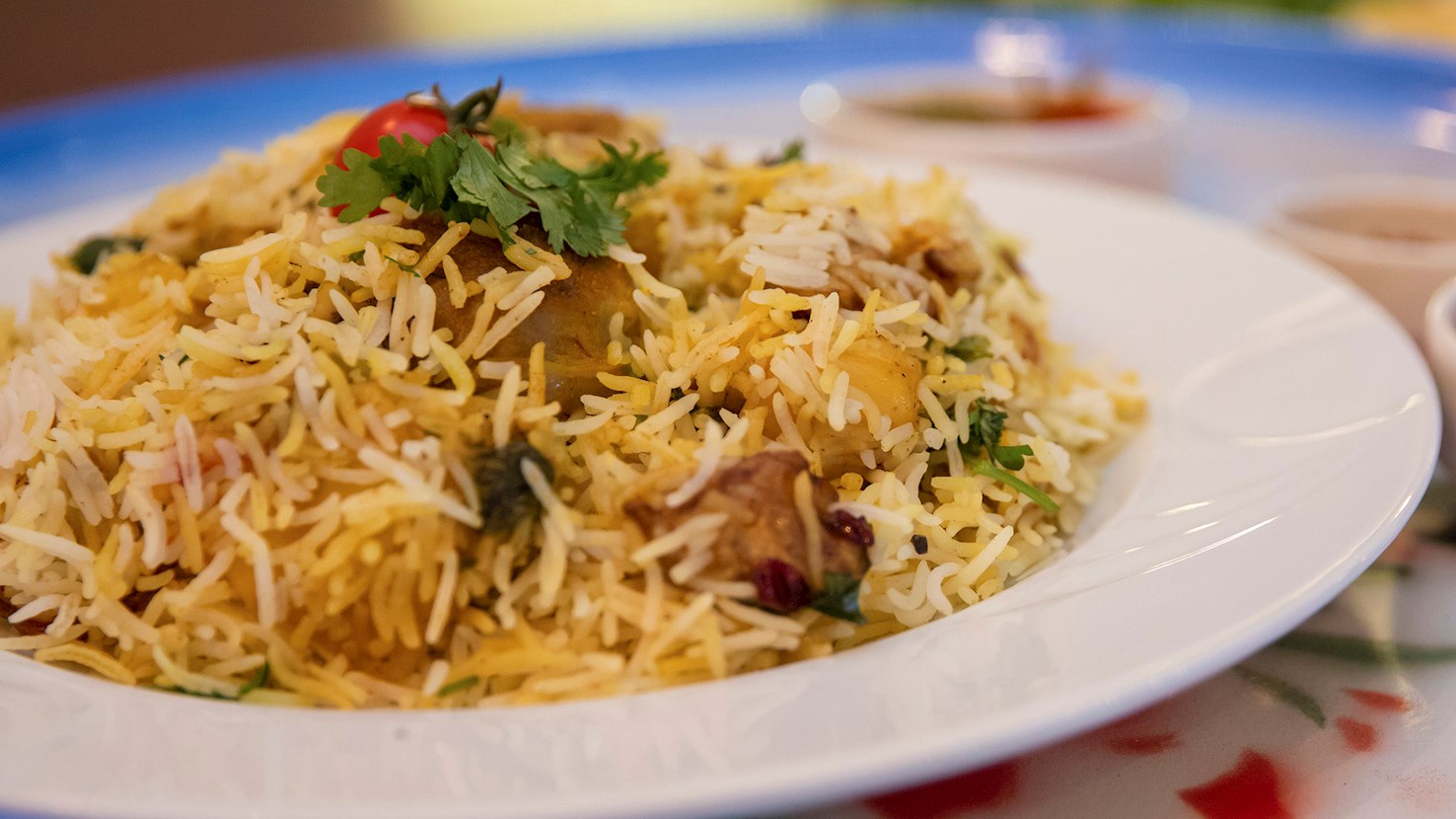
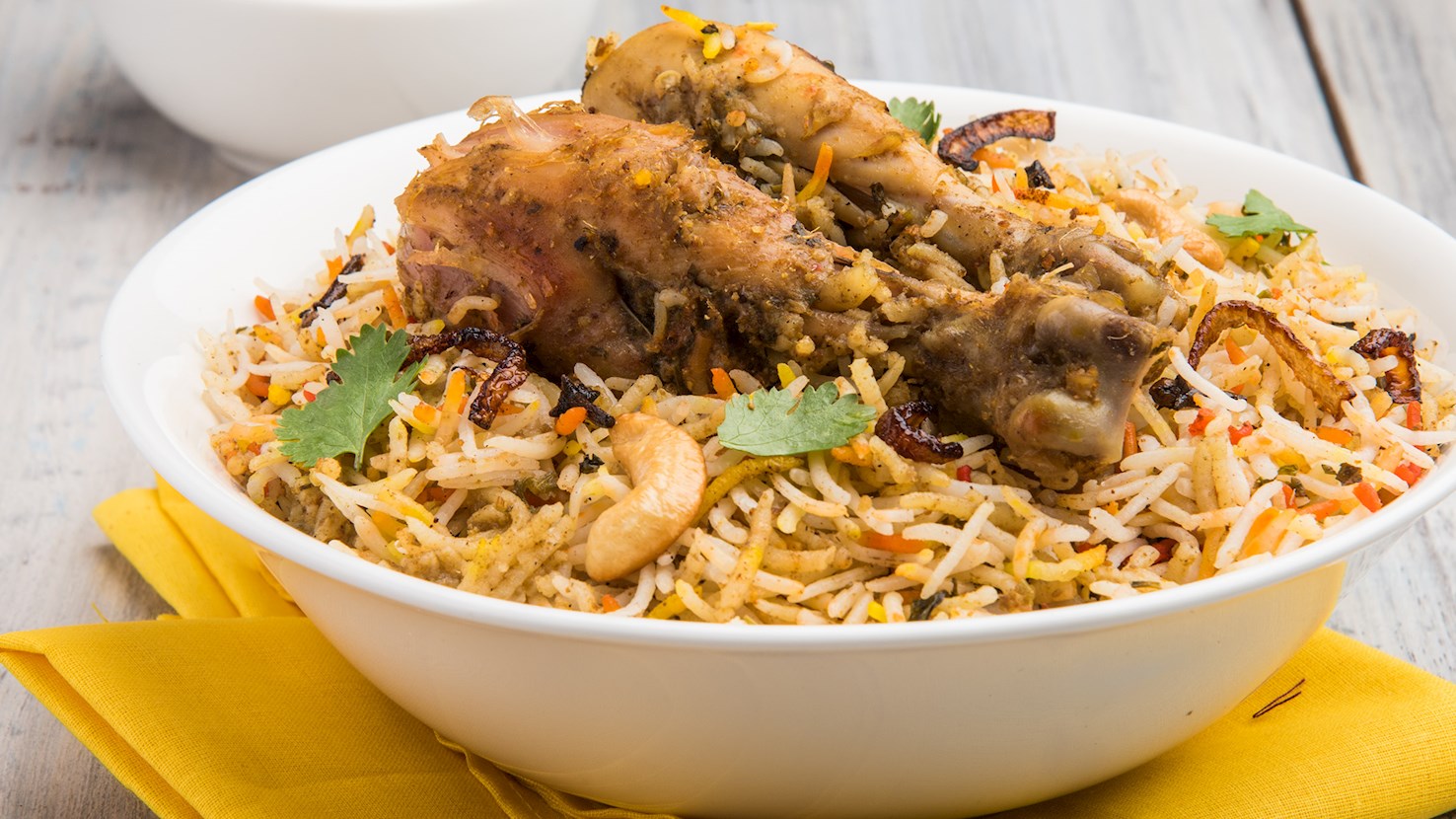
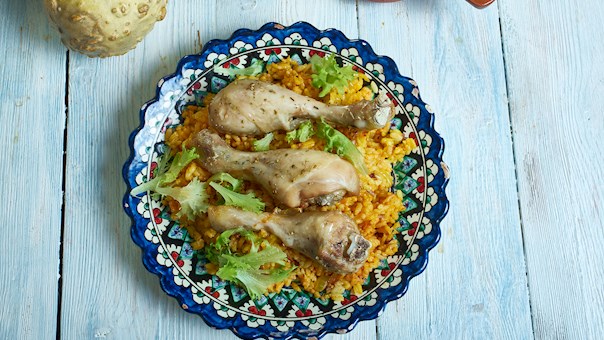
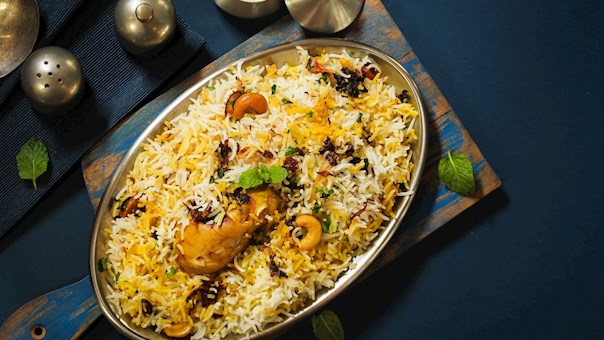
This rice dish is an Omani take on traditional Indian and Persian chicken biryanis. Just like other chicken biryanis, this one also consists of basmati rice mixed with chicken parts (legs or breasts). What makes this dish truly Omani is the use of spices and herbs that are typical of Omani cuisine. Although not as heavily spiced as other chicken biryanis, Omani chicken biryani is still a fragrant and flavorful dish, and it is typically accompanied by sides such as cucumber raita, lime wedges, and slices of sweet onions. In Oman, this dish is usually eaten for lunch or dinner, and it is available in numerous cafés, restaurants, and similar eateries throughout the country.
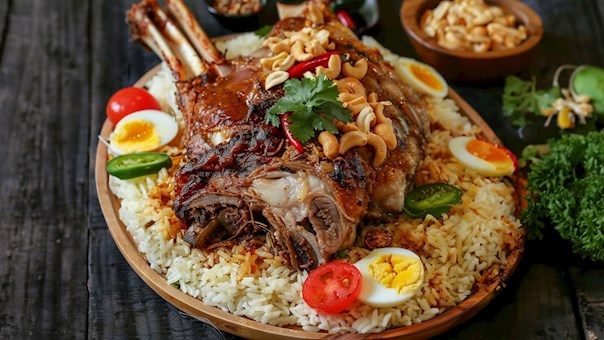
Madfoon is one of numerous Arabian meals made with a combination of meat and rice. This signature dish is differentiated by a cooking technique in which the marinated meat is cooked in an underground hole where it is placed on the sand and surrounded by charcoal. The smoke and heat slowly cook the meat, keeping it succulent and tender while providing it with a slightly smoky flavor and aroma. It is believed that this cooking method was inherited from the nomadic period, when traditional ovens did not exist and cooking meat underground was a convenient way to utilize nature and keep the meat protected from hungry predators. Nowadays, the madfoon technique - usually associated with the Yemeni city of Al Hudaydah - has been slightly modernized, but continues to produce the same authentic dish. It is prepared with chicken and lamb (with meat left on the bone) that is spiced with coriander, cumin, pepper, cloves, and turmeric. After several hours of cooking, the meat is tender and moist, thoroughly infused with spices. The meat is served on top of saffron rice, and it is usually accompanied by yogurt and a spicy chili sauce. Since it takes a lot of time to prepare and cook madfoon, it is only found in specialized restaurants across the Arabian Peninsula.
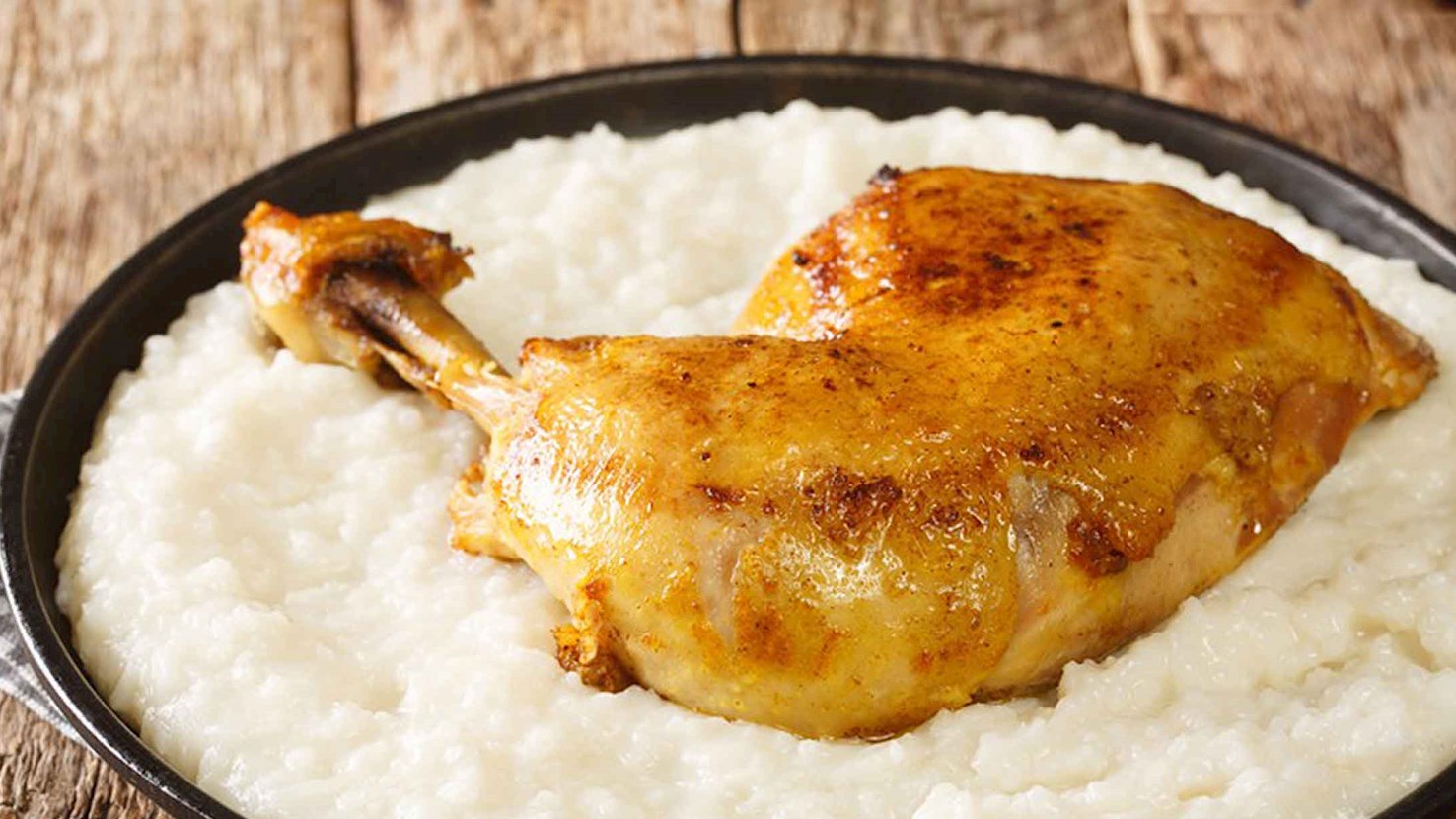
Hailing from Hejaz, saleeg is a traditional Arabian rice dish consisting of creamy, porridge-like short-grain rice and roasted meat. Chicken is the most common meat choice, and it is typically boiled in water with spices before it is roasted. This dish uses a combination of the broth in which the meat has been cooking, hot water, and optional mastic tear to boil the rice. The boiled rice is then combined with milk and ghee or butter, and cooked until it reaches the desired consistency. A large serving platter (tabasi) is traditionally used for serving saleeg, and the roasted meat is usually placed on top of the rice. Additional melted ghee or butter can be drizzled over the dish, and it is recommended to serve it with accompaniments such as salata hara (a spicy, salsa-like condiment), duggus (a chili tomato-parsley sauce), pickled lemons, or a tomato-cucumber salad.
TasteAtlas food rankings are based on the ratings of the TasteAtlas audience, with a series of mechanisms that recognize real users and that ignore bot,
nationalist or local patriotic ratings, and give additional value to the ratings of users that the system recognizes as knowledgeable.
TasteAtlas Rankings should not be seen as the final global conclusion about food. Their purpose is to promote excellent local foods,
instill pride in traditional dishes, and arouse curiosity about dishes you haven’t tried.






What People Say