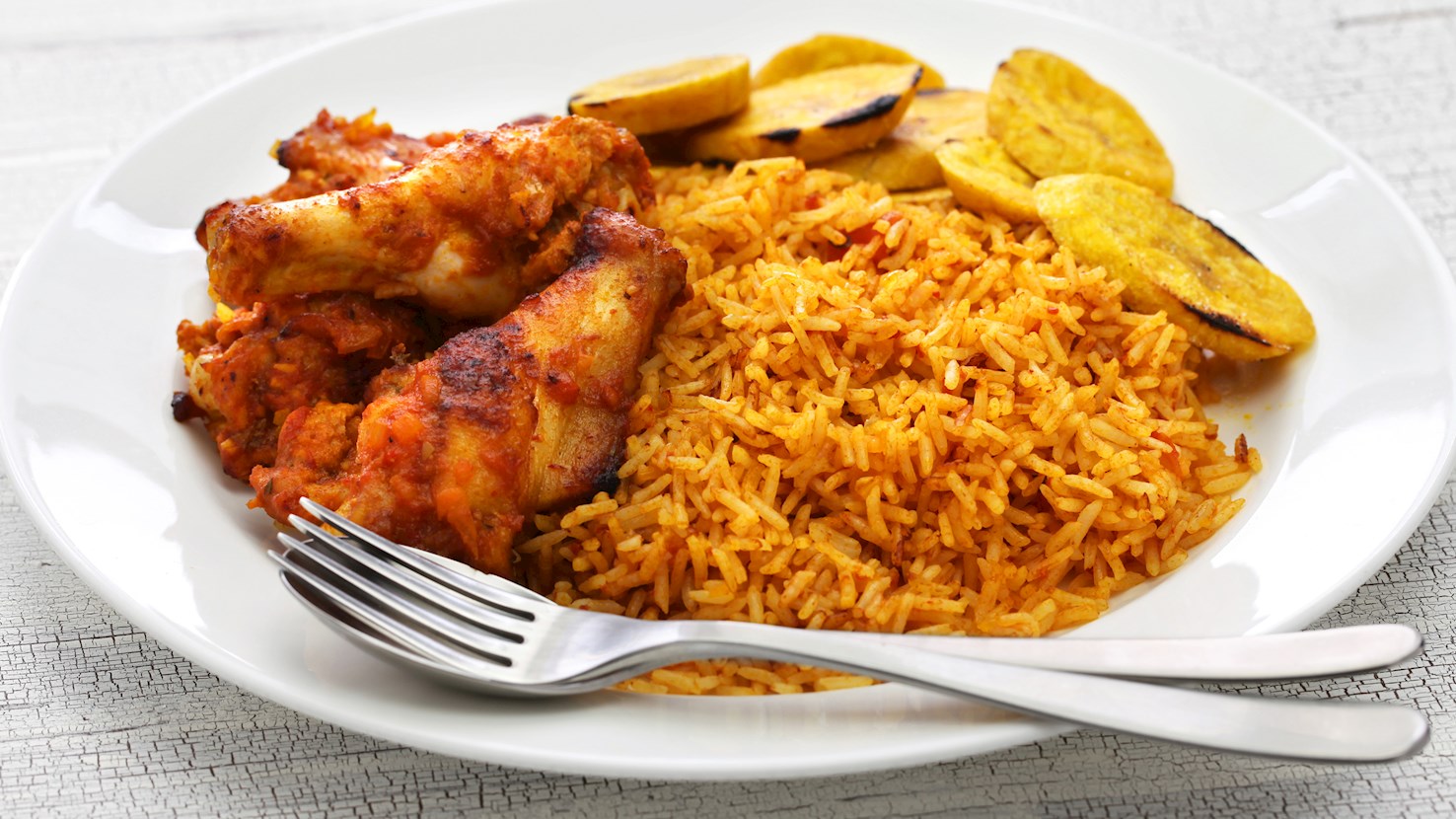
Jollof rice is a West African rice dish made with a base of tomatoes, onions, and peppers, cooked together with seasonings until the rice absorbs the sauce and takes on a deep red or orange color. It is prepared in many countries across the region, including Nigeria, Ghana, Senegal, Sierra Leone, Liberia, The Gambia, and Cameroon, each with distinct methods and flavor profiles. The dish has its roots in the Wolof-speaking areas of present-day Senegal and The Gambia, where one-pot rice dishes developed within the Wolof kingdom and later spread along trade and migration routes. Early forms of rice cooked in tomato-based sauces, including benachin, served as a foundation for what became known more broadly as jollof rice as the dish moved eastward and adapted to regional tastes. Preparation begins with creating a stew base by cooking tomatoes, tomato paste, onions, and chili peppers until thick and concentrated. This mixture forms the core of the dish’s flavor. Spices commonly include thyme, curry powder, ginger, garlic, and bay leaves, although blends differ by region. Broth is often added to the stew before the rice goes in, and long-grain varieties are favored for their ability to stay separate while absorbing the sauce. The rice is cooked on low heat until it absorbs the liquid fully, often forming a crust at the bottom of the pot, which some cooks consider an essential element. Vegetables such as carrots or peas may be added, and the dish can be prepared with chicken, beef, fish, or served as a vegetarian version. The defining feature is the balance between the acidity of tomatoes, the heat of peppers, and the aromatics in the spice blend, which creates a layered and concentrated flavor. A notable characteristic of jollof rice is the regional variation that shapes its identity. Senegalese versions often reflect the one-pot method of benachin and feature larger pieces of vegetables and fish. Nigerian versions are known for their smoky aroma due to cooking techniques that allow the stew and rice to caramelize slightly. Ghanaian versions may emphasize Scotch bonnet peppers and a softer consistency. Although each country asserts its own preferred style, all share the core elements of rice cooked directly in a seasoned tomato-pepper mixture. Jollof rice is eaten across West Africa in homes, restaurants, street-food settings, and festive gatherings. It appears at celebrations, everyday family meals, and communal events, often accompanied by fried plantains, grilled chicken, stews, or salads. Beverages that pair well with it include hibiscus drinks such as bissap or zobo, ginger drinks, palm wine, beer, or citrus-based soft drinks, which complement the spice and richness of the dish.
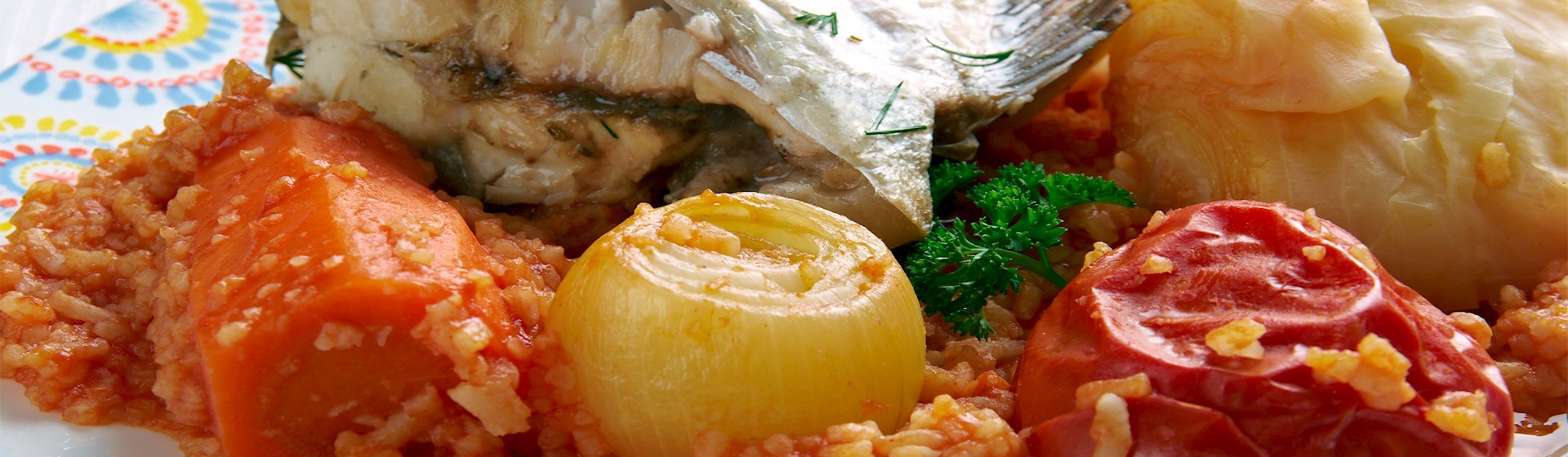
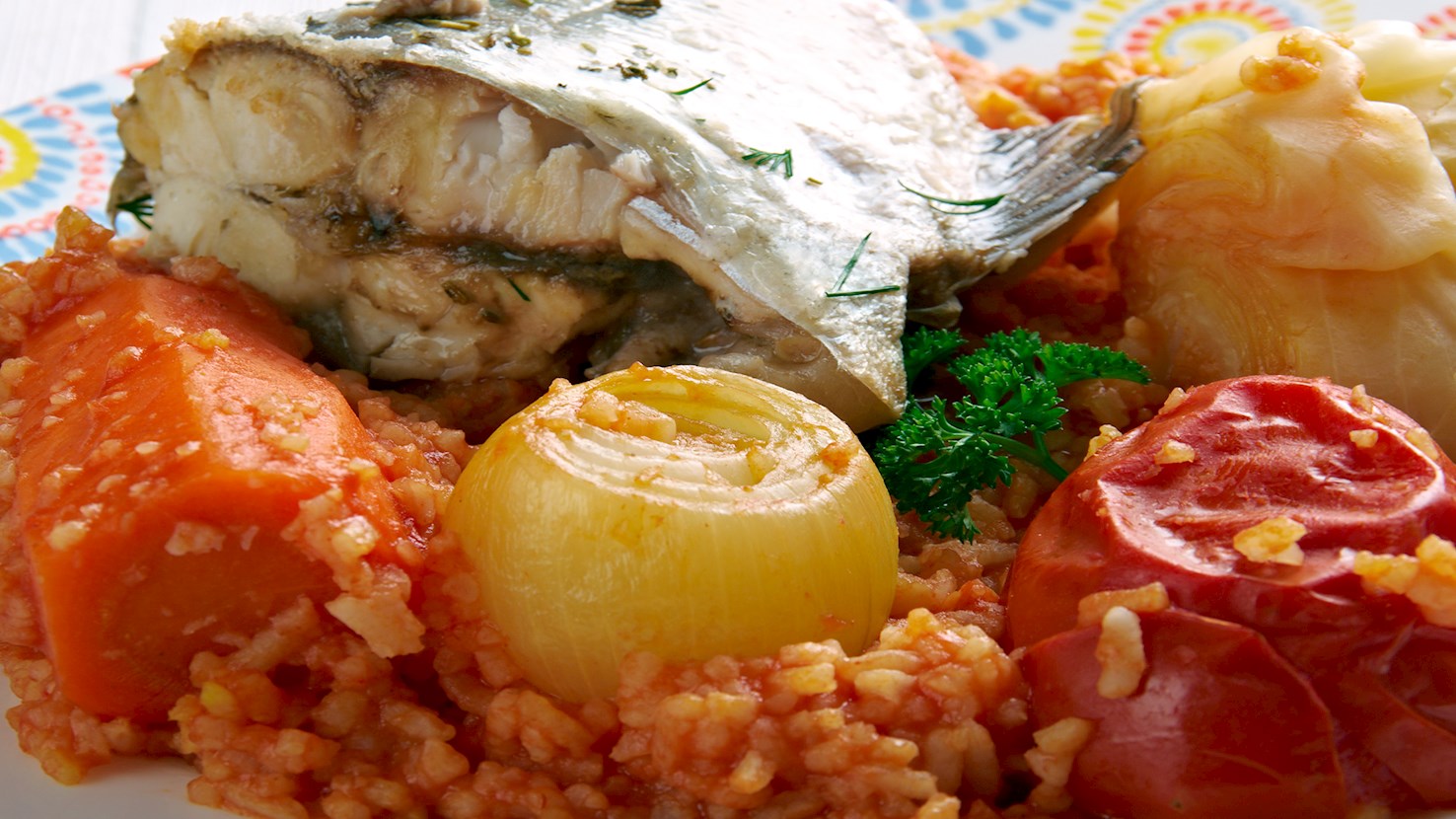
Thieboudienne is the national dish of Senegal, an aromatic combination of fish, vegetables, and rice in a hearty tomato sauce flavored with garlic and chili. Fish, vegetables, and rice are usually served separately, with a few lime wedges on the side, used for squeezing the juice over fish. It is believed that the dish was invented in the city of St. Louis in the 19th century.
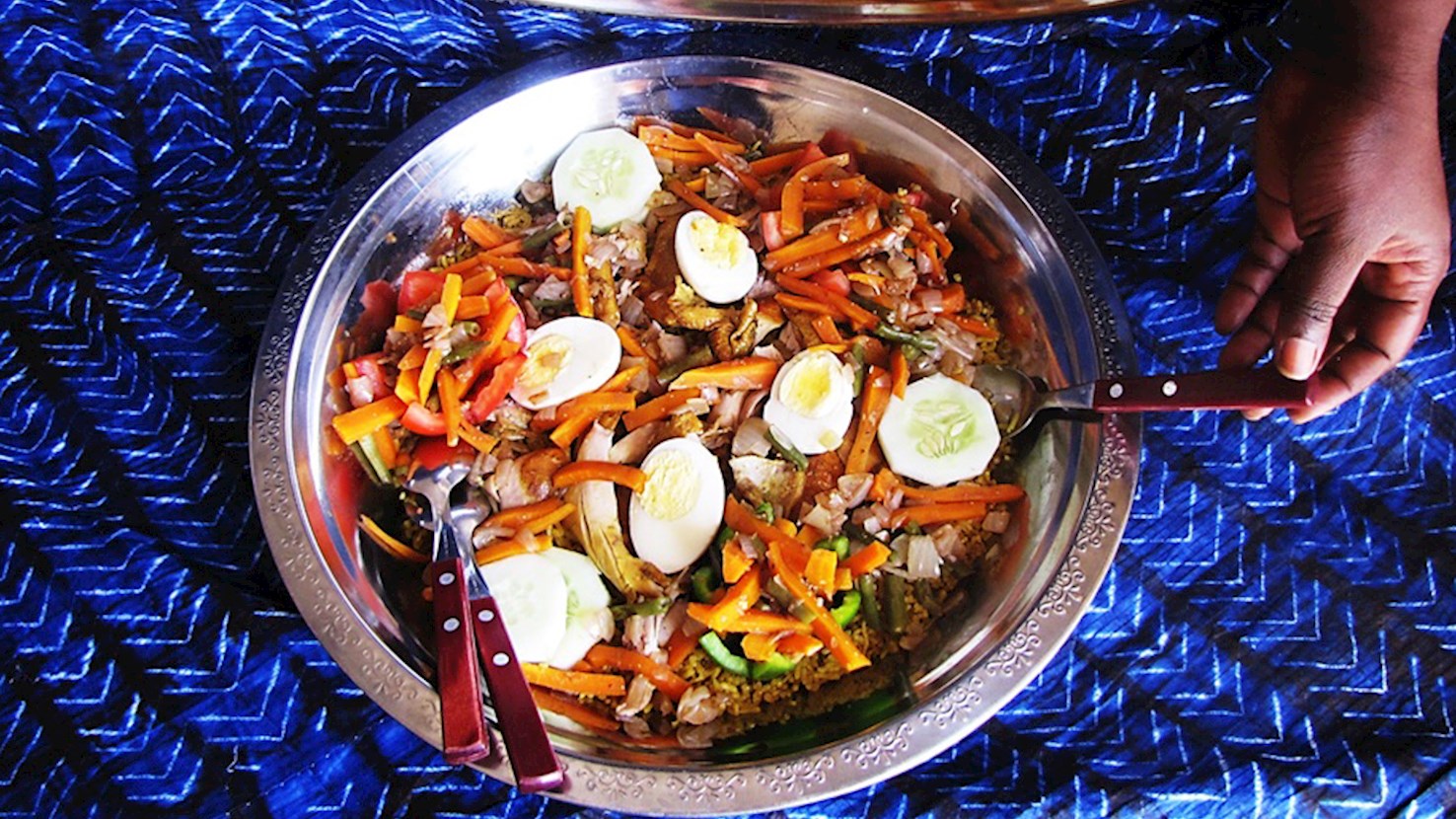
Thiébou yapp is a hearty Senegalese stew made with a combination of rice, meat, and vegetables. It is usually prepared with steamed broken rice, which is added to a meat broth containing browned chunks of beef or lamb, and the concoction is then simmered until fully cooked. Typical ingredients include onions, garlic, bell peppers, cabbage, eggplants, habanero peppers, mustard, carrots, tomatoes, paprika, vinegar, oil, and chopped parsley. This stew is a variation of the Senegalese national specialty thiébou jen, which uses fish instead of meat. Rich and fragrant, the dish is typically served on a plate with the rice on the bottom, topped with meat and vegetable chunks. The dish often features olives and hard-boiled eggs as well.
Thiébou guinaar is a traditional dish based on rice and chicken. It is usually prepared with marinated chicken pieces which are browned and then simmered with water, tomato paste, bouillon cubes, and vegetables. Once cooked, the meat and vegetables are carefully removed, and the steamed rice is added to the same liquid to cook further. The rice is spread over a serving plate, topped with the chicken pieces and cooked vegetables, and the whole thing is drizzled with the sauce. This traditional specialty is typically eaten as a main course and is often garnished with fresh vegetables. Also known as ceebu guinaar, this dish is a variation of thiéboudienne, the Senegalese national dish.
Thiébou guerté is a traditional dish based on rice and peanuts, two of the primary crops in Senegal. The dish typically consists of broken rice and peanuts cooked together and has as a somewhat brownish color from the addition of peanut butter. Also known as ceebu guerté, this dish is a variation of the Senegalese national dish known as thiéboudienne. In Senegal, peanut rice is usually eaten as a main course.
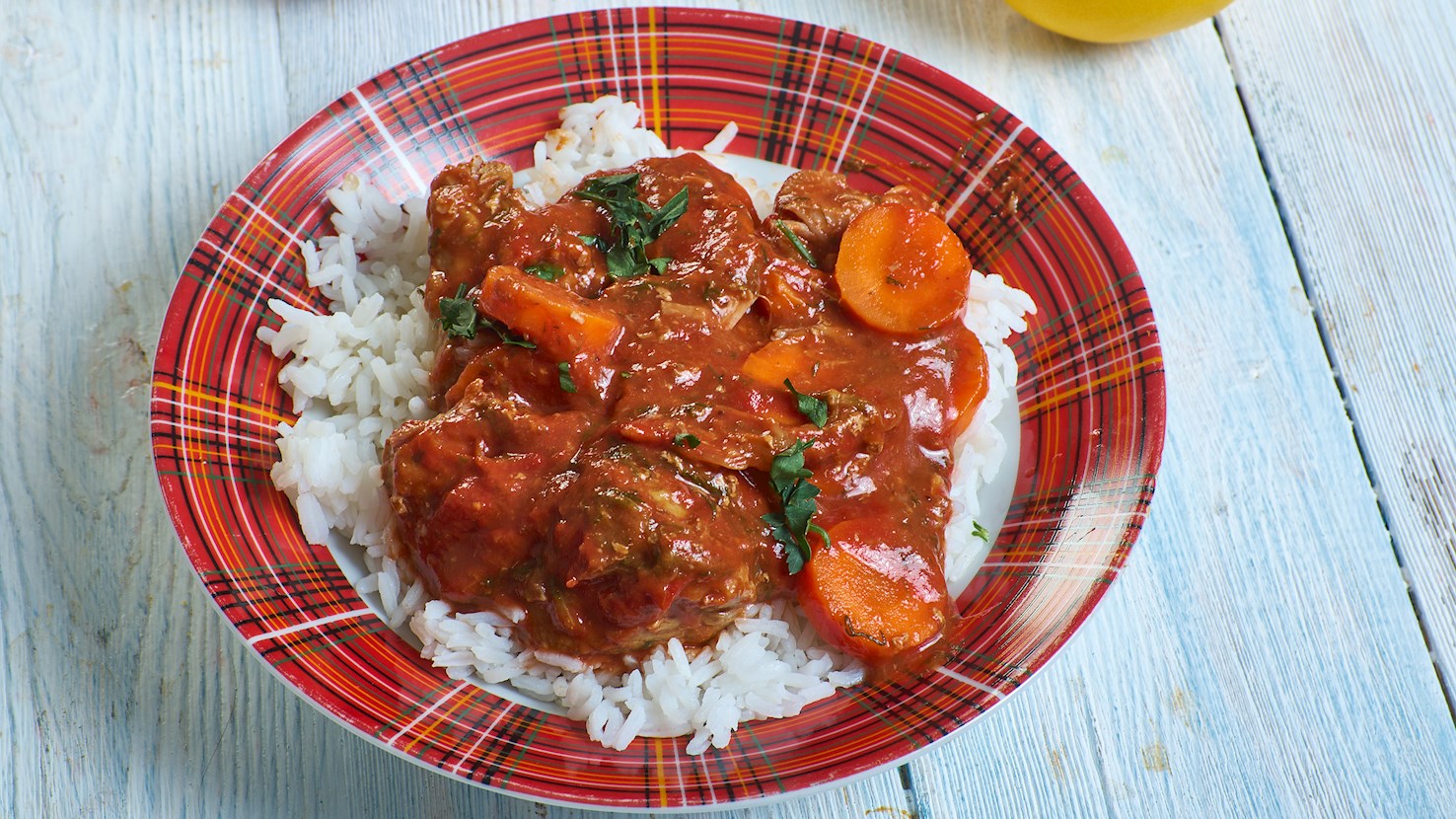
Thiou à la viande is a traditional dish that is typically served over white rice. It can be made with any meat, usually beef or lamb that is cut into small pieces, browned, and then cooked in a tomato-based sauce with chopped vegetables. Typical vegetables include potatoes, sweet potatoes, turnips, carrots, cabbage, onions, and tomatoes. The stew is usually served over white rice, but it can also be consumed on its own, typically with bread on the side.
TasteAtlas food rankings are based on the ratings of the TasteAtlas audience, with a series of mechanisms that recognize real users and that ignore bot,
nationalist or local patriotic ratings, and give additional value to the ratings of users that the system recognizes as knowledgeable.
TasteAtlas Rankings should not be seen as the final global conclusion about food. Their purpose is to promote excellent local foods,
instill pride in traditional dishes, and arouse curiosity about dishes you haven’t tried.





What People Say