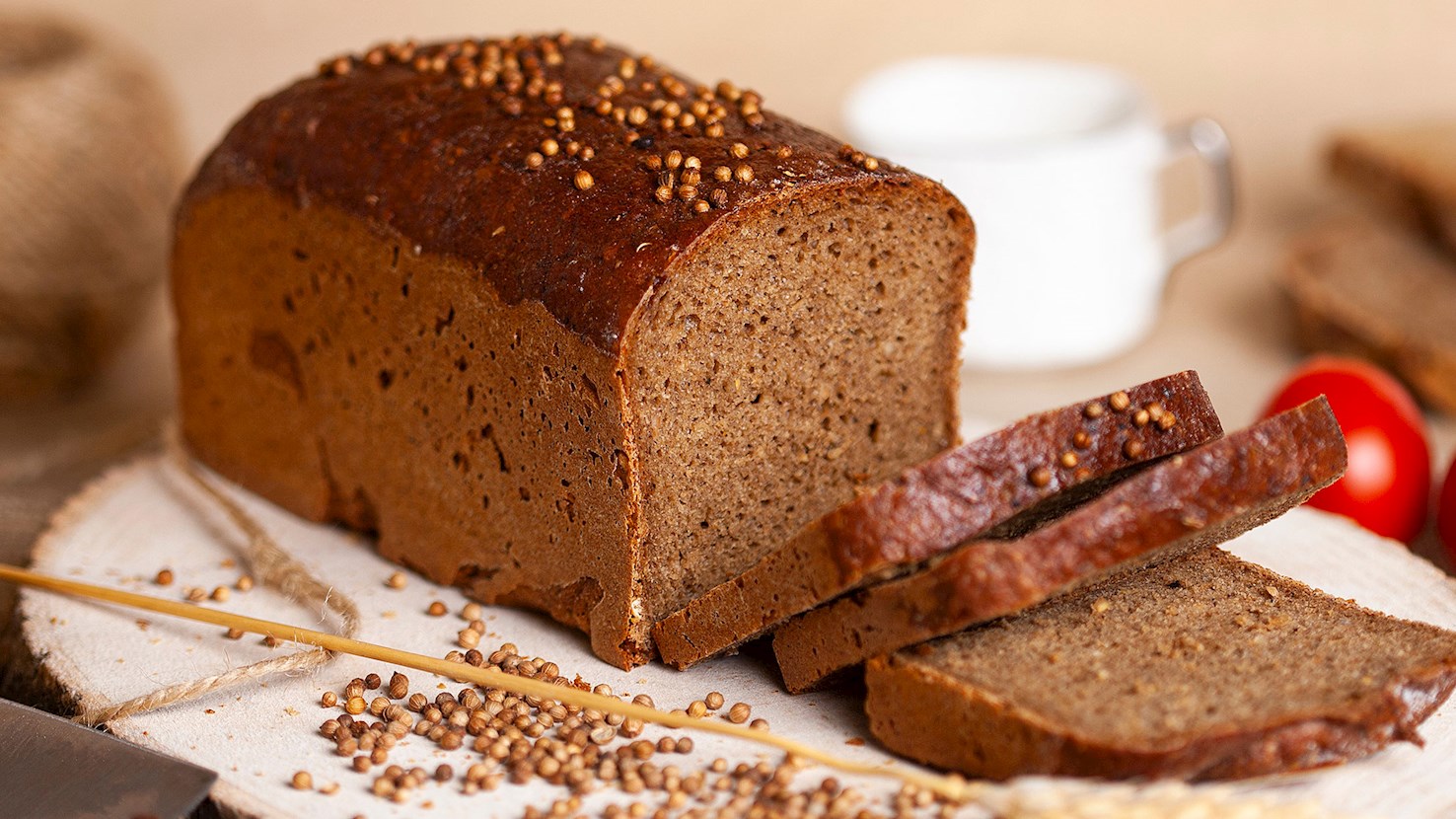
Borodinsky is a dark sourdough rye bread from Russia and other parts of Eastern Europe. The creation of this dark loaf is closely tied to the 1812 Battle of Borodino. Margarita Tuchkova, the widow of a fallen Russian general, built the Spaso-Borodinsky convent on the old battlefield. The nuns living there created the first recipe. They topped the dark dough with whole coriander seeds to resemble grapeshot fired from cannons during the war. Another story says that Moscow bakeries created the exact modern recipe in the early 1930s. Making this bread requires a special method called scalding. Bakers mix rye flour and red rye malt together. They pour boiling water over the mixture and let it rest for a few hours to become naturally sweet. Next, they mix this sweet paste with a rye sourdough starter, a little wheat flour, molasses, sugar, salt, and ground coriander. They put the wet and sticky dough into rectangular metal baking pans. The bakers smooth the top with water, press whole coriander seeds into it, and bake it in a hot oven. This scalding step makes the starches swell up before baking. This gives the bread a very dense, moist interior that stays fresh for a long time. People across Russia and neighboring countries eat this bread every day. They usually cut it into thin slices because it is so heavy and has a strong, sweet, and sour taste. Many people use these slices as a base for salty toppings like pickled herring, cured pork fat, and raw garlic. It is a common side dish for hearty beet soups, such as borscht. People also like to serve it with small glasses of cold vodka or a dark rye drink called kvass.
Vitebsk rye bread is a dark, scalded sourdough loaf produced exclusively from rye flour, originating from the northeastern region of Belarus, namely the Vitebsk Region. Baking practices in this specific northern climatic zone historically dictated the exclusive use of frost-resistant rye crops, forcing local bakers to perfect complex fermentation techniques to make the dense grain palatable. To counter the inherent bitterness of pure rye, regional recipes incorporated sweetening agents and specific spices available through local trade routes. Bakers initiate the process by creating a hot scald, pouring boiling water over a mixture of fermented rye malt, dark molasses, and finely ground anise seeds. The thermal shock gelatinizes the starches and releases the anise's essential oils, infusing the base with a highly distinct, aromatic sweetness. Once the scald cools to room temperature, bakers combine the mixture with an active rye sourdough culture, salt, water, and finely milled white rye flour. Working with pure rye flour yields a highly viscous, sticky dough lacking gluten structure, requiring bakers to mold the mass into rectangular tins or free-form boules using wet hands. Baking requires prolonged exposure to descending oven temperatures, creating a firm, dark crust that protects a dense, deeply colored crumb. The exclusive reliance on an anise-infused scald naturally acts as a potent preservative, allowing the loaf to retain moisture and a soft texture for significantly longer than standard yeast breads. Slices are served at room temperature after the loaf has cooled completely, allowing the crumb to set. In the Vitebsk region and throughout Belarus, this bread is consumed daily, cut into thick slices to accompany soups and main courses. The robust, sweetly spiced flavor profile of anise and molasses cuts through the heavy fat of salted pork lard (salo) and complements smoked meat products or sharp cheeses. Beverage pairings often include fermented rye kvass, a hot chicory root drink, or dark stouts that match the roasted malt notes of the crust.
Narochansky bread is a dark, dense, sourdough-leavened loaf made primarily from rye flour, originating from the Republic of Belarus. It was created in 1986 at Minsk Bakery Number 2, where state food technologists engineered a highly nutritious loaf using abundant domestic crops. Naming the product after Lake Naroch, the largest body of water in the country, the creators established a strict recipe standard that remains in widespread commercial use today. Bakers begin the complex, multi-stage production process by preparing a gelatinized scald known as a zavarka. Boiling water is poured over a mixture of fermented red rye malt, ground caraway seeds, and dried potato flakes or mashed potatoes. Integrating cooked potatoes directly into the pre-ferment significantly alters the starch structure, allowing the final loaf to remain soft and resist staling at room temperature for several weeks without artificial preservatives. After the scald cools, it is combined with an active rye sourdough culture, dark molasses or treacle, salt, water, and a blend of high-extraction rye and wheat flours. The dense, sticky dough is kneaded thoroughly and shaped into large, round boules before being baked directly on the hearth of a hot oven. Intense heat creates a thick, chewy, dark brown crust that seals the moist, heavily seeded crumb inside. Once completely cooled, the bread is sliced and served at ambient temperature. Consumption occurs daily across Belarus and neighboring Eastern European nations, serving as a core ingredient in hearty meals. People cut the large round loaves into wedges or thick slices by hand, utilizing the sturdy crumb to soak up rich meat gravies or support heavy toppings. The sweet, malty, and distinctly earthy flavor profile, with strong notes of caraway, makes this bread an optimal accompaniment to machanka, a regional thick pork-and-sausage stew. Slices are frequently layered with salo (cured pork fatback), raw garlic cloves, and pickled cucumbers. Beverage pairings typically include fermented rye kvass, a strong cup of black tea, or a pale lager to cut through the rich, fatty toppings paired with the bread.
TasteAtlas food rankings are based on the ratings of the TasteAtlas audience, with a series of mechanisms that recognize real users and that ignore bot,
nationalist or local patriotic ratings, and give additional value to the ratings of users that the system recognizes as knowledgeable.
For the “Top 3 Eastern European Rye Breads” list until June 15, 2026, 21 ratings were recorded, of which 19 were recognized by the system as legitimate.
TasteAtlas Rankings should not be seen as the final global conclusion about food. Their purpose is to promote excellent local foods,
instill pride in traditional dishes, and arouse curiosity about dishes you haven’t tried.