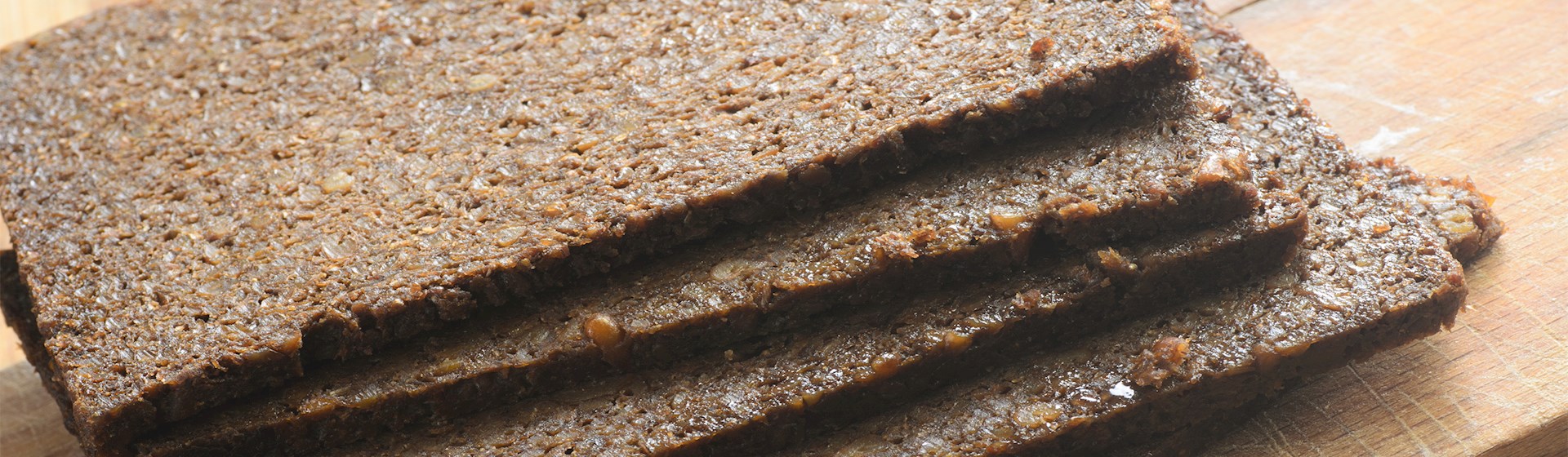
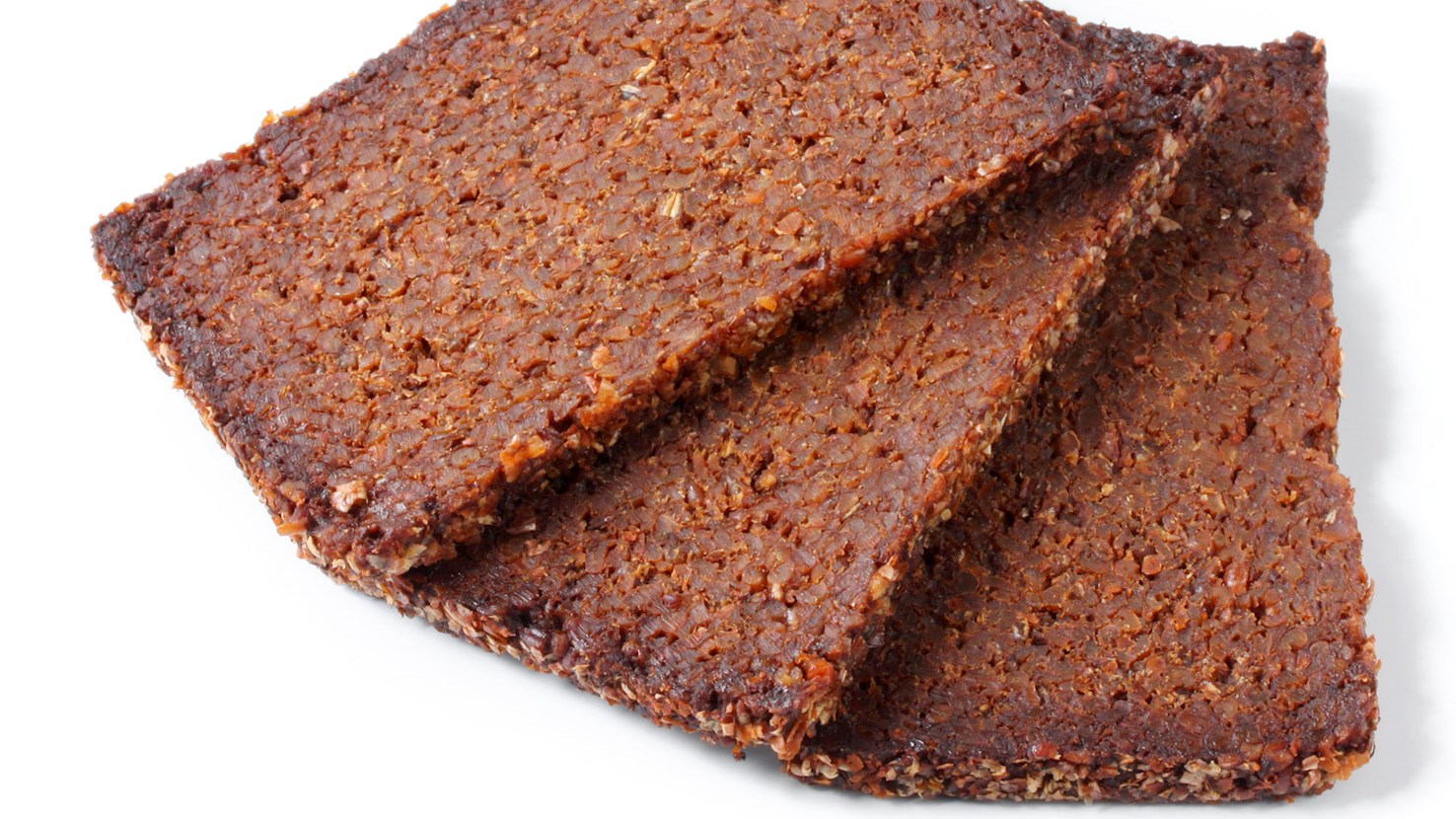
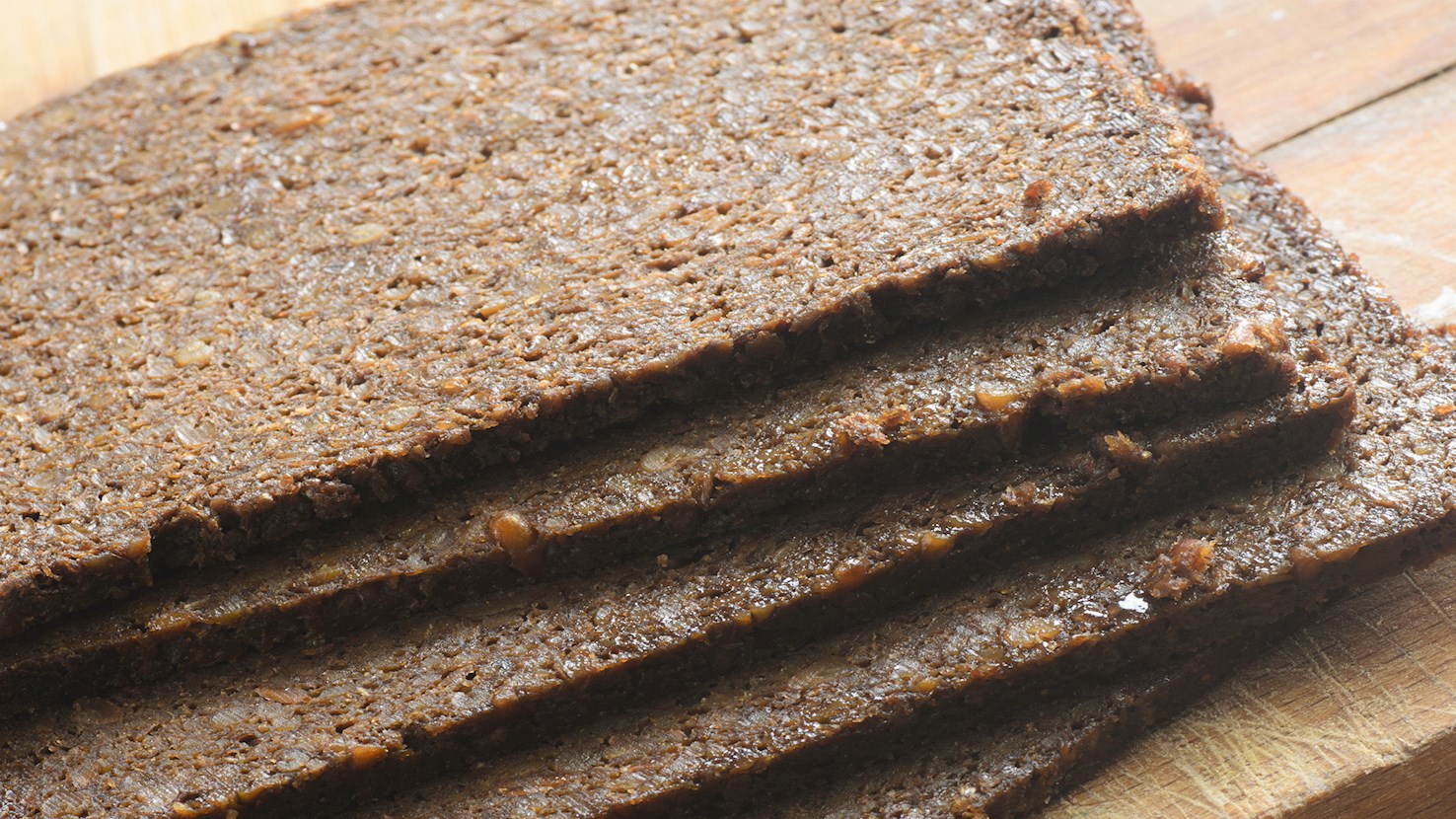
First described in 1450 as the black bread of Westphalia, the famous Westfälischer Pumpernickel is a traditional all-rye bread made with either coarsely ground rye meal or a combination of rye flour and whole rye kernels. It can also be flavored with malt or sugar beet syrup. The loaves are placed in lidded pans and baked slowly at a low temperature in steam-filled ovens for anywhere from 16 to 24 hours, which gives pumpernickel its characteristic deep brown, almost black color. Pumpernickel has little or no crust, a pronounced earthy aroma, and a distinctive bittersweet flavor. It is quite dense and moist, and it has an extremely long shelf-life – when shrink-wrapped, it stays fresh for months, while canned pumpernickel can be stored for as long as two years. Even though the unique flavor and texture of pumpernickel goes well with both sweet and savory spreads, the Westphalians typically enjoy it with a thick smear of butter and a topping of ham or liver sausage.
This heavy and slightly sweet rye bread is made from a sourdough starter and coarsely ground rye with whole rye berries as its base. Its name comes from the German pumpern, a synonym for being flatulent, and the male given name Nickel—a form of the name Nicholas—which was commonly associated with the devil in New High German vernacular. Thus, pumpernickel literally translates to "devil’s fart," which is a definition accepted by most publishers and dictionaries, however strange it may sound. The traditional German pumpernickel contains no coloring agents, but instead relies on the Maillard reaction to impart a deep brown color and a sweet, almost chocolatey and earthy flavor and aroma. Apart from being delicious, pumpernickel is rich in resistant starch which is known to aid digestion and benefit blood sugar regulation.
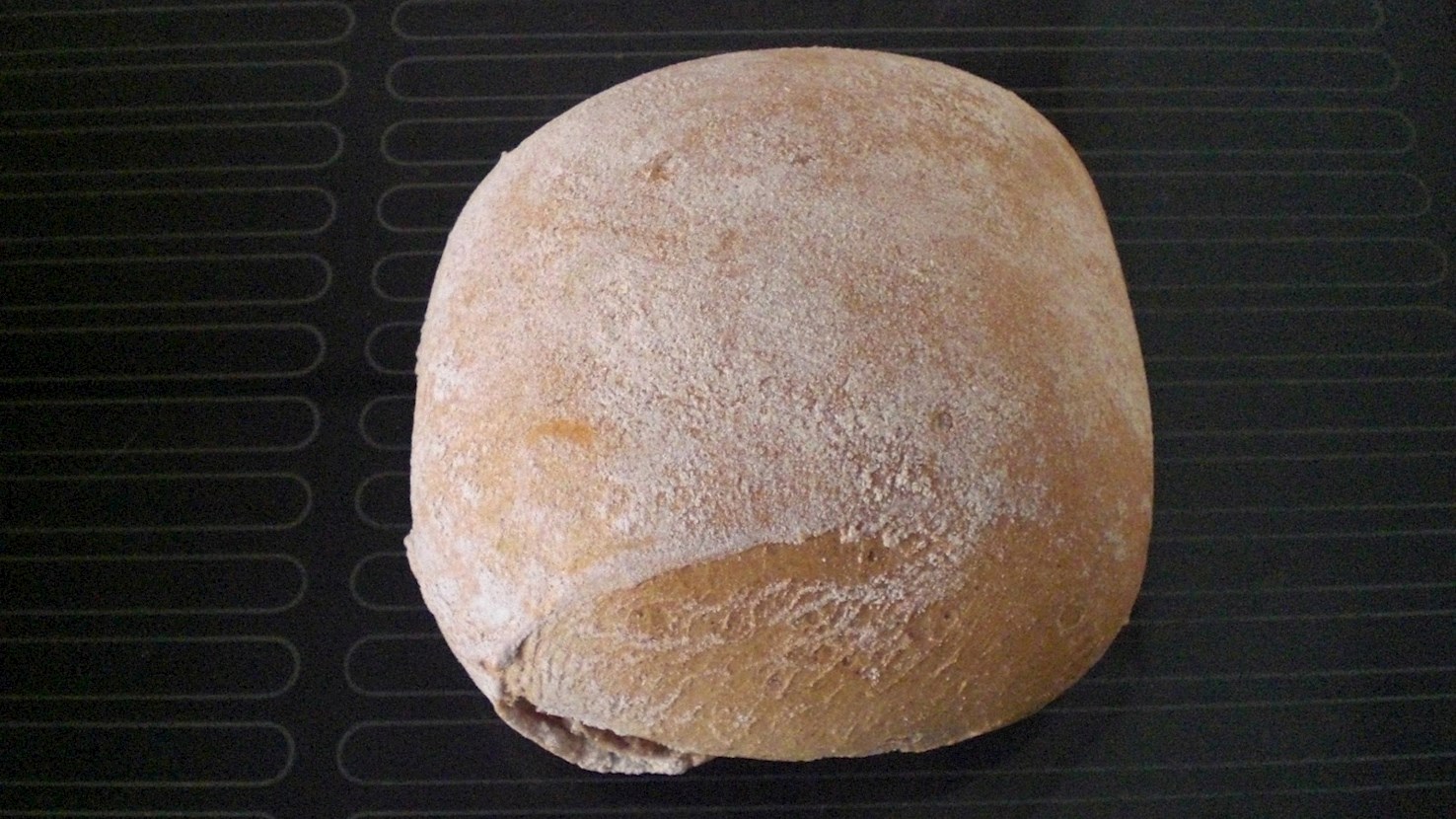
Schusterjunge (lit. cobbler's apprentice) is a traditional bread roll originating from Berlin. The bread rolls are usually made with a combination of rye flour, wheat flour, yeast or baking powder, salt, caraway seeds, and beer. The flours are mixed with yeast or baking powder, salt, and caraway seeds. Beer is added gradually, and the smooth dough is then shaped into small round rolls. The dough is dipped in caraway seeds and coarse salt before the rye rolls are baked until brown.
Heidebrot is a hearty, sourdough-leavened bread crafted predominantly from rye flour mixed with a smaller proportion of wheat flour, hailing from the Lüneburg Heath region of Lower Saxony. The creation of this baked good traces back to the specific agricultural constraints in northern Germany, where sandy, nutrient-poor soils were well-suited to growing robust rye rather than demanding wheat. Because rye lacks sufficient gluten to rise on its own, early farming communities in the area relied on natural fermentation processes to produce a digestible and aerated loaf. To make the dough, bakers mix approximately seventy to eighty percent rye flour with twenty to thirty percent wheat flour, water, salt, and an active sourdough culture. The dense mixture is kneaded thoroughly and shaped into an elongated oval. Before entering a high-heat oven, the unbaked loaf is generously coated with a thick layer of dry flour. The intense baking temperature causes this heavily floured surface to tear as the dough rapidly expands, resulting in a naturally fractured, heavily fissured crust that distinctly characterizes the bread's appearance while sealing in the crumb's moisture. Once fully baked and cooled, the loaf is cut into thick slices and served at room temperature. The sturdy, dense slices are eaten open-faced by hand, supporting heavy layers of butter, robust liver sausages, cured Mettwurst, and sharp aged cheeses. The mildly acidic and deeply earthy flavor of the rye combination pairs exceptionally well with strong, malty dark beers, dry apple cider, or a simple cup of black tea to counterbalance the richness of the savory toppings.
Gersterbrot is a mixed rye and wheat sourdough bread typical of northern Germany, originating in Hanover, Brunswick, and Bremen. The development of this baked good stems from early regional baking practices aimed at extending the shelf life of staple foods in Northern European climates. To prepare the dough, bakers combine a high percentage of rye flour with wheat flour and an active sourdough starter, kneading the mixture until it forms a dense, hydrated mass. Before the baking process begins in the oven, the formed loaf undergoes a specialized technique called "gerstern," in which the exterior is deliberately exposed to an open flame or intense radiant heat. This direct application of fire singes the dough, creating a distinctly speckled, dark crust that is entirely unique to this specific bread variety. Sealing the exterior with fire instantly traps the dough's internal moisture, naturally extending the final product's shelf life by preventing the crumb from drying out over several days. Once the flaming is complete, the loaf is baked until the interior reaches a firm, fine-textured crumb and the exterior develops a robust, slightly smoky flavor profile. The bread is typically served sliced at room temperature, often serving as the foundation of the German evening meal known as Abendbrot. Consumers across Northern Germany generally eat it open-faced, utilizing the sturdy slices to support heavy, savory toppings. Due to its deeply roasted, mildly acidic taste, it pairs exceptionally well with robust accompaniments such as smoked hams, thick liverwurst, and sharp aged cheeses, and is often enjoyed alongside a crisp Pilsner beer or a hot mug of black coffee.
TasteAtlas food rankings are based on the ratings of the TasteAtlas audience, with a series of mechanisms that recognize real users and that ignore bot,
nationalist or local patriotic ratings, and give additional value to the ratings of users that the system recognizes as knowledgeable.
For the “Top 5 German Rye Breads” list until July 16, 2026, 376 ratings were recorded, of which 326 were recognized by the system as legitimate.
TasteAtlas Rankings should not be seen as the final global conclusion about food. Their purpose is to promote excellent local foods,
instill pride in traditional dishes, and arouse curiosity about dishes you haven’t tried.