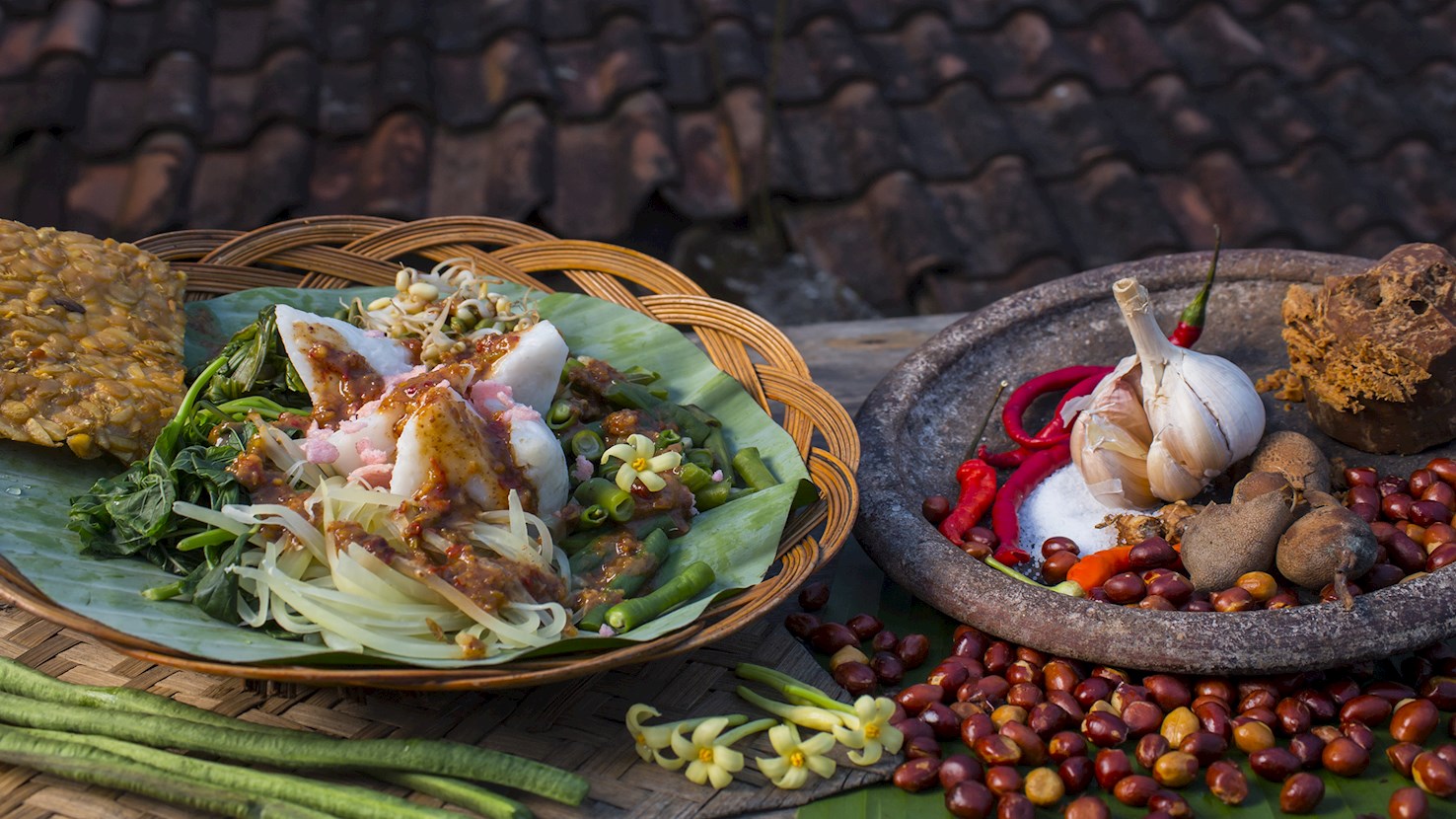
Indonesian pecel may refer to a fragrant peanut sauce or a combination of the sauce and various vegetables, when it is commonly referred to as a salad. The base of the sauce is prepared with roasted peanuts and spices that typically include chili peppers, palm sugar, garlic, tamarind juice, shrimp paste, kaffir lime leaves, salt, and kencur, an aromatic ginger variety. Usually associated with Java, the sauce is characterized by its distinctive combination of sweet and spicy flavors. When served with rice, the dish goes under the name nasi pecel.
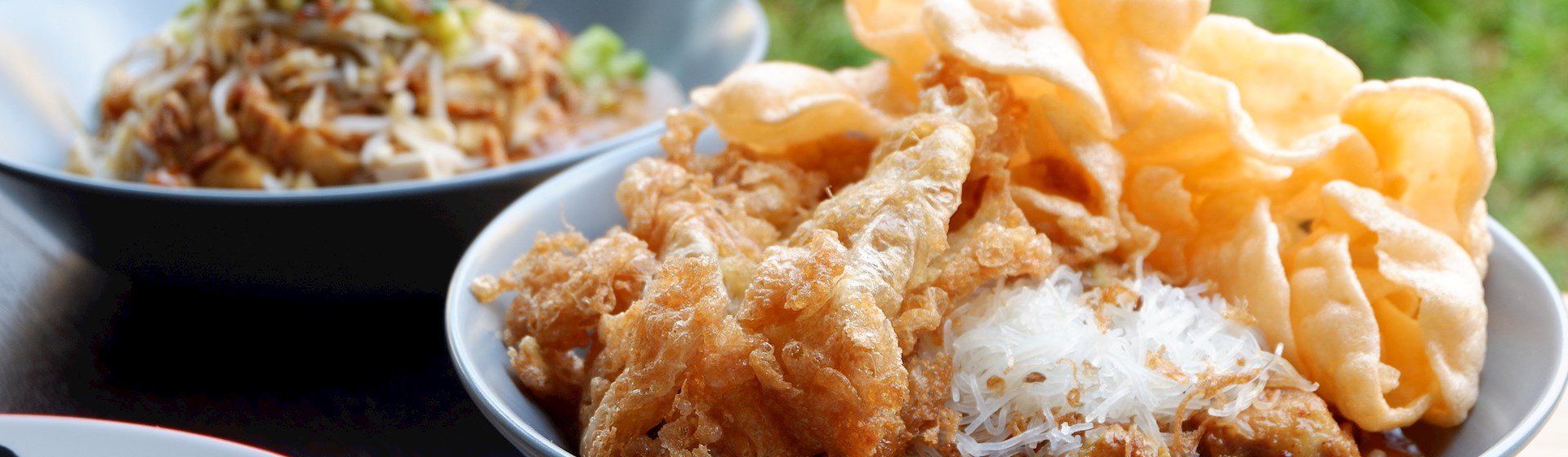
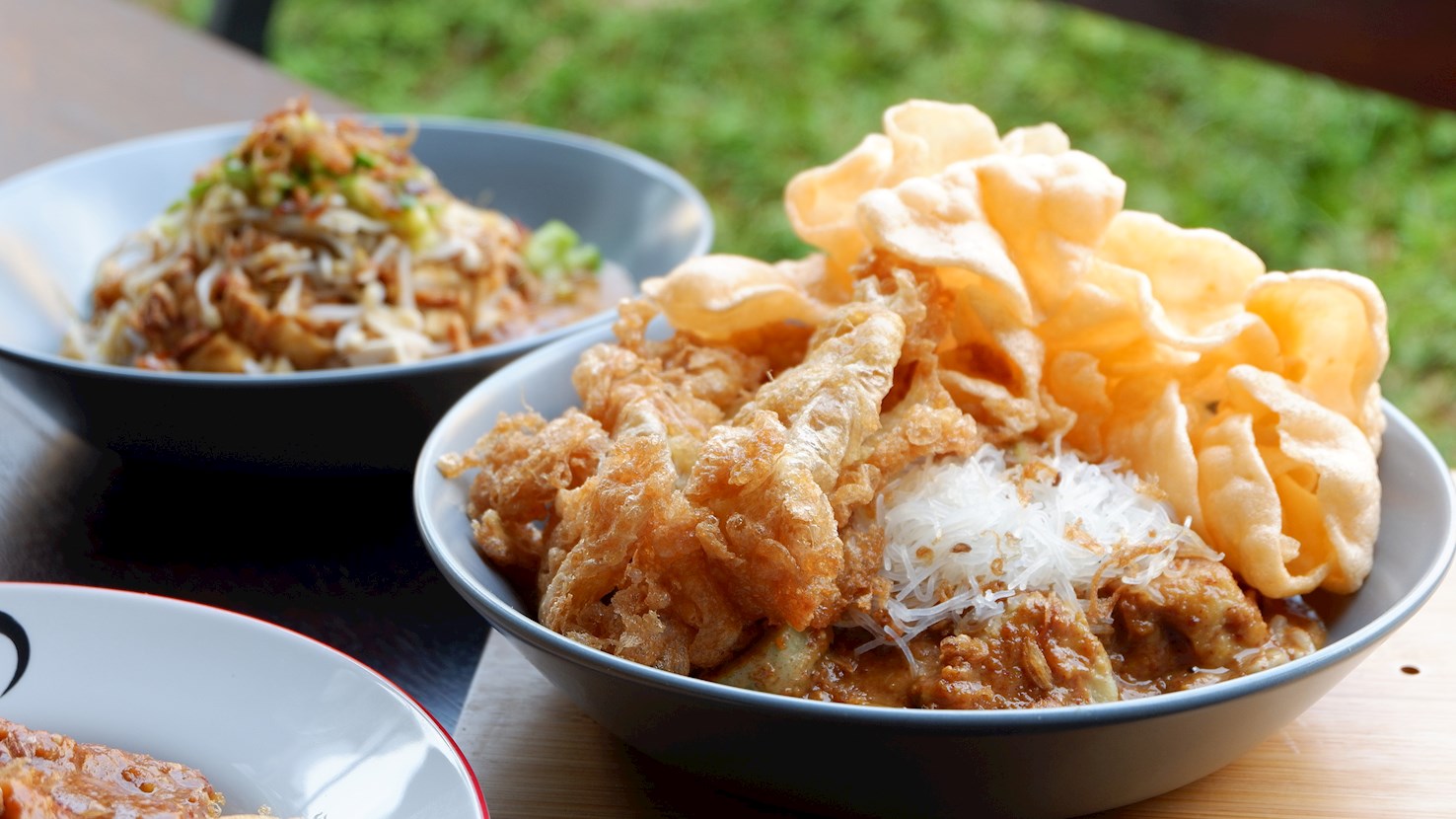
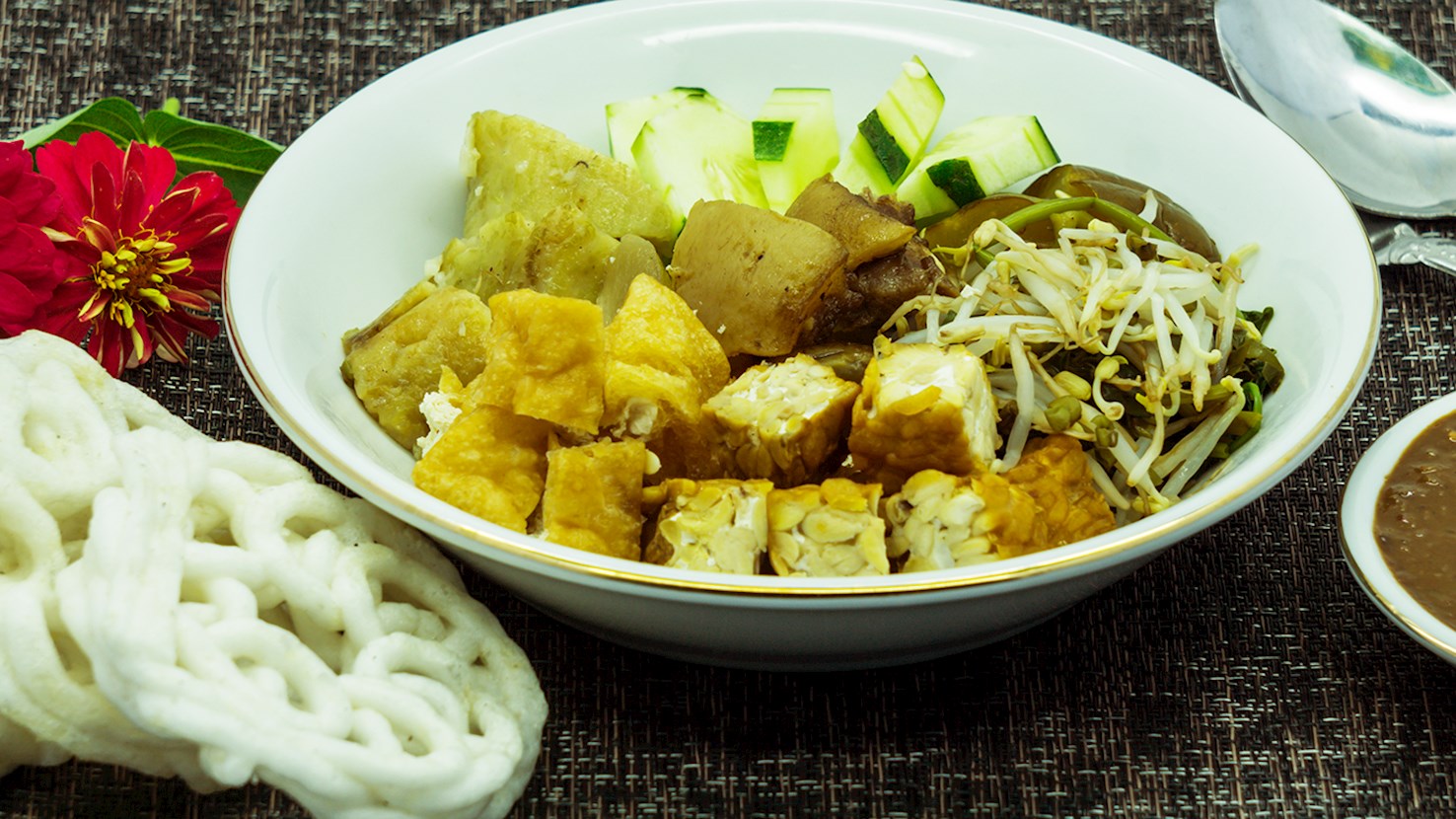
Ketoprak is a traditional street food dish that's often described as tofu salad. It's made with a combination of fried tofu, steamed rice cakes, rice vermicelli noodles, bean sprouts, cabbage, and cucumbers. The combination is served in peanut sauce and sweet soy sauce (kecap manis). It's usually topped with fried shallots and krupuk. The dish can be found at numerous ketoprak food carts throughout Jakarta, although there is still an ongoing debate about the origin of the dish – some claim that it was first made in Cirebon because the majority of street food vendors come from Cirebon. The tofu is freshly fried from the food carts, while the other ingredients are prepared in advance. Ketoprak is usually a vegan dish, but it's sometimes topped with a hard-boiled egg which makes it non-vegan.
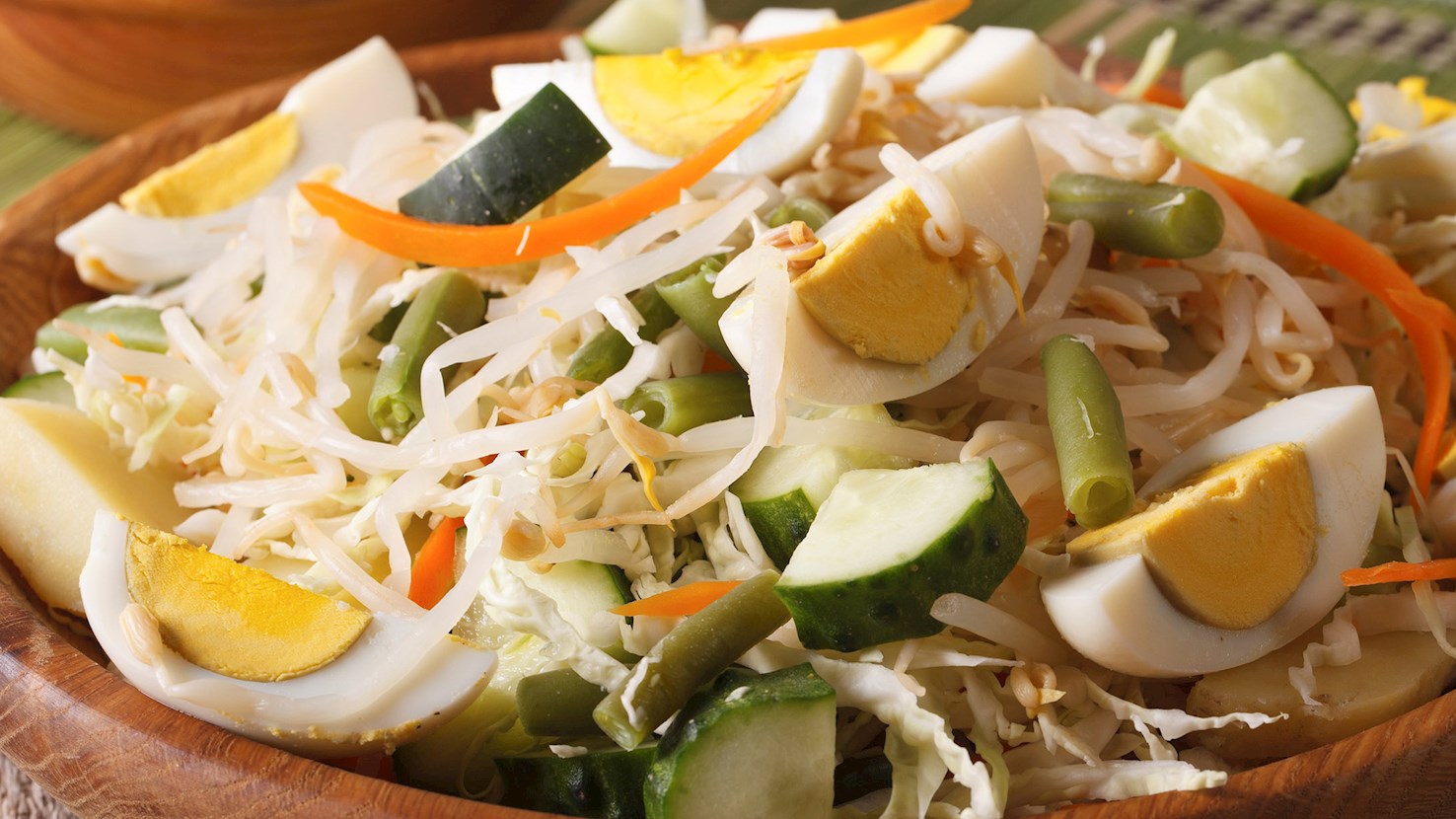
Gado-gado is an Indonesian version of a mixed salad. It usually consists of a variety of vegetables, eggs, tempeh, and tofu. The vegetables are usually just slightly boiled, tossed with a nutty sauce, then completed with the addition of crispy prawn crackers. The sauce was traditionally made with cashews, but due to lower price and availability, peanuts are more frequent today. The dish is a true representative of Indonesian street food, and it has been present in the Indonesian culture since the 16th century. It originated among the native people of Jakarta, but today it can be found in all parts of Indonesia. Gado-gado can be a whole dish on its own, but it can also be boosted by the addition of rice, rice crackers, or chicken. This classic Indonesian street food is usually sold by street vendors or at hawker centers, and it can be served for breakfast, lunch, or dinner.
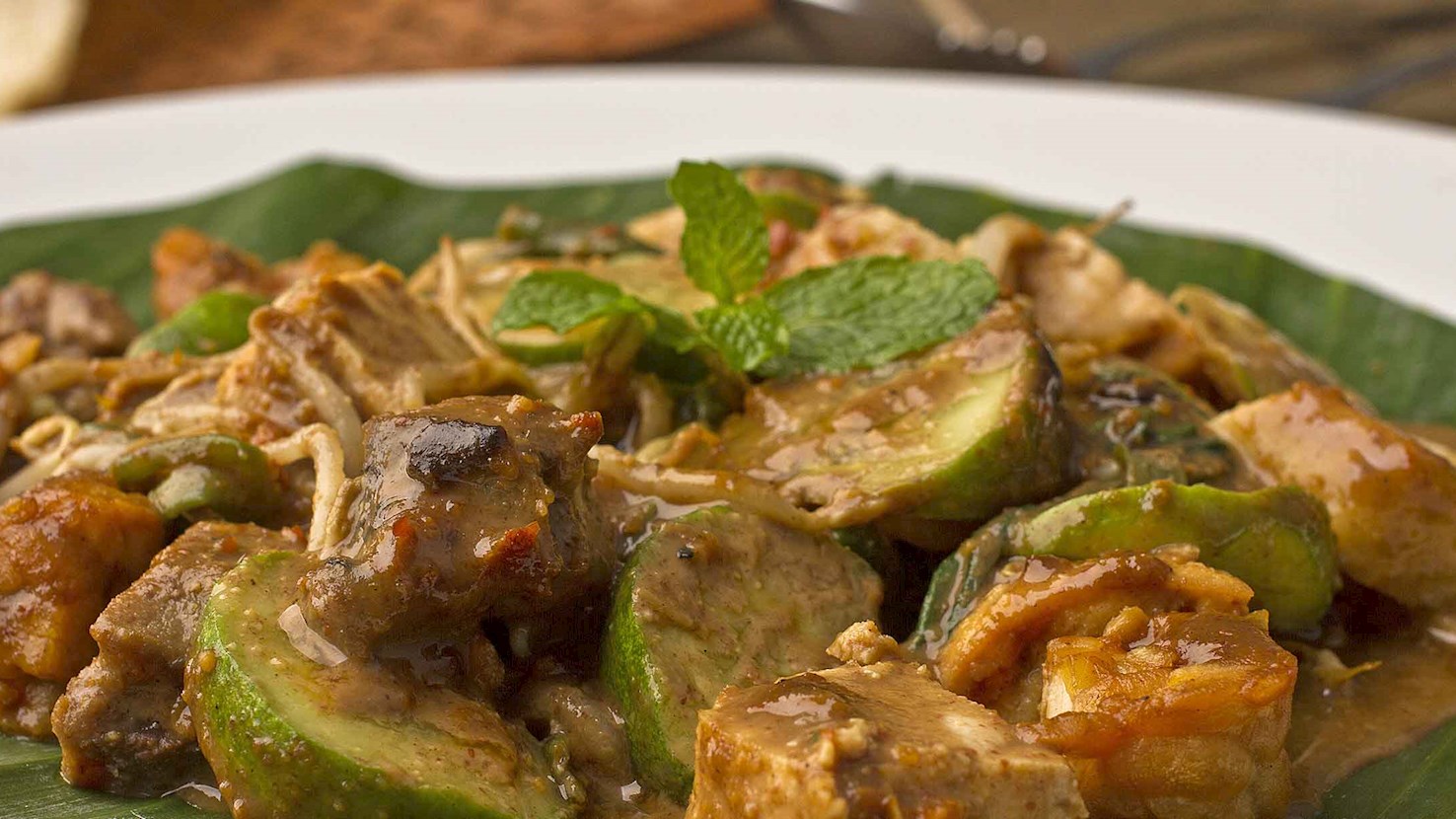
Rujak cingur is one of many versions of Indonesian rujak, a fruit salad which consists of different tropical fruits, usually served with a spicy and sweet dressing. Rujak cingur is a unique variety, because apart from fruits, it also incorporates vegetables and a rare ingredient – beef snout. This chewy, gelatinous meat is a delicacy in East Javanese cuisine and provides a unique texture and depth that sets rujak cingur apart from all other salads in the Indonesian repertoire. The dish is a layered composition of raw and boiled vegetables such as cucumber, water spinach, bean sprouts, long beans, and young jackfruit, combined with tropical fruits like pineapple, unripe mango, or kedondong, creating a vibrant contrast between sweet, sour, crunchy, and soft elements. What binds rujak cingur together is its extraordinary black sauce, a thick, pungent dressing made from fermented shrimp paste (petis), ground peanuts, palm sugar, garlic, chili, and tamarind, often pounded together with fried shallots and a hint of lime. It delivers an umami punch with sweet, spicy, and salty notes, enhanced by the distinctive funk of petis, which is darker and more intense than standard shrimp paste used elsewhere in Southeast Asia. The cingur, when mixed with the sauce, absorbs these powerful flavors while providing a tender resistance that plays against the crispness of the vegetables and fruit. Traditionally, everything is mixed together using a cobek or stone mortar, ensuring the sauce coats every piece evenly. Often served with steamed rice or lontong (compressed rice cakes), rujak cingur is not just a dish but a cultural experience that embodies the fearless approach to flavor found in East Javanese cooking. It challenges Western notions of what a salad should be and rewards those willing to embrace its aromatic complexity. For locals, it is both street food and ceremonial food, available at humble roadside stalls or as part of celebratory feasts.
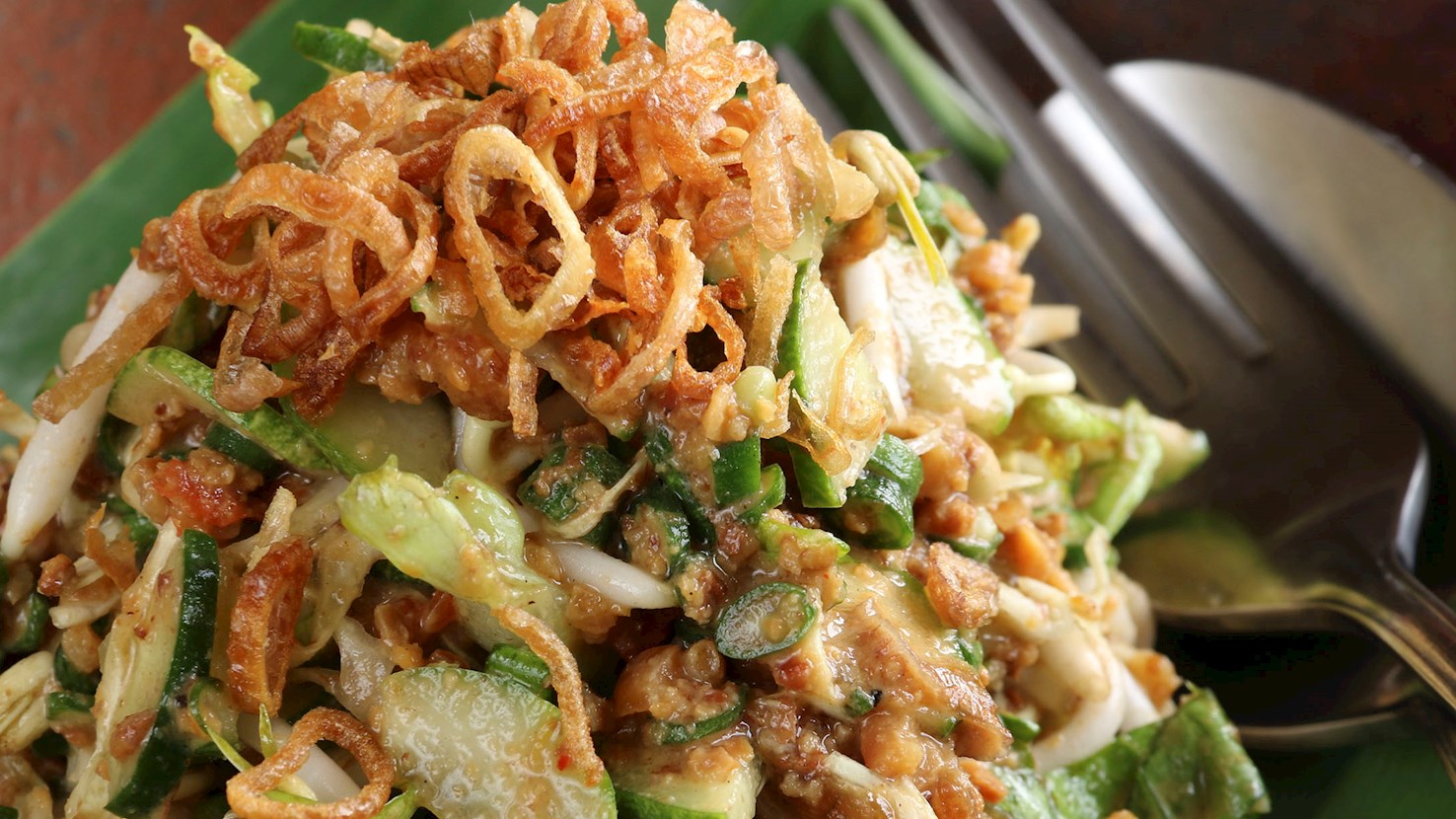
Karedok is the traditional Indonesian version of a vegetable salad. This simple and healthy dish calls for fresh and raw ingredients which are sliced and served with a traditional peanut sauce. The most common vegetables in karedok include cucumbers, cabbage, long beans, Thai basil, bean sprouts, and eggplant, however, other vegetables can be used as well. The sauce is made by grinding fried peanuts together with salt, palm sugar, and chili. The flavor of the sauce can be adjusted with other ingredients such as shrimp paste or garlic. Due to the usage of peanut sauce, karedok is often compared with another Indonesian specialty, gado-gado, but it is still distinguished by the usage of only raw ingredients. Karedok originated in West Java and is traditionally associated with the Sundanese ethnic group. In Indonesia, karedok can be found at food stalls, traditional hawker-style food courts, and restaurants. However, for the Sundanese community, it represents a daily dish, eaten at any time of the day, and it is usually served together with rice, tofu, tempeh and krupuk - traditional Asian prawn crackers.
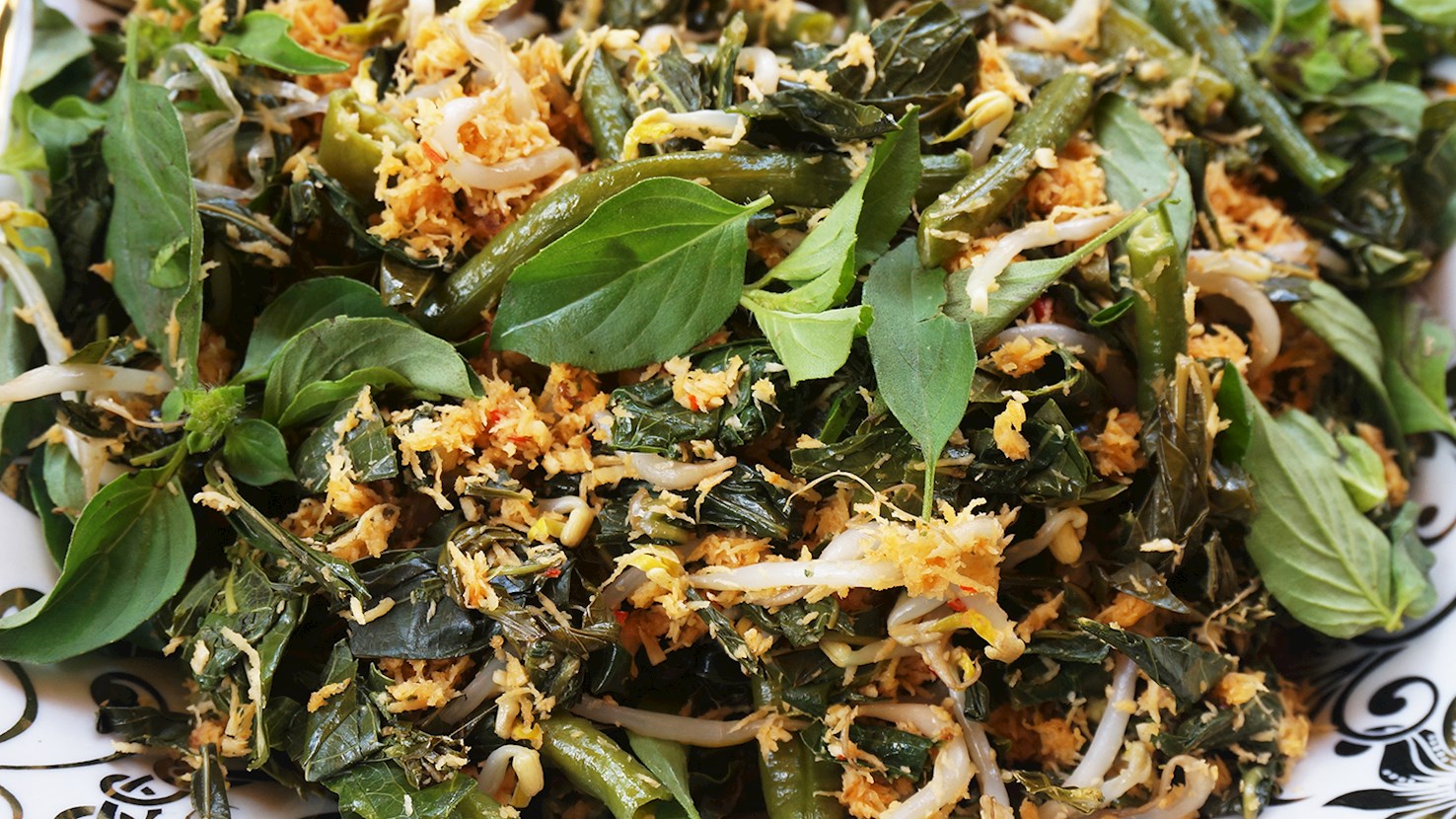
Urap is an Indonesian salad that originates from Java and is widely enjoyed across the archipelago for its fresh, earthy flavors and rich coconut-based seasoning. Unlike typical Western salads, urap is composed of lightly blanched or steamed vegetables that are generously coated in a spiced grated coconut dressing. It is often served as a side dish alongside rice and grilled meats, but it is also hearty enough to be enjoyed on its own as a vegetarian main course. The vegetables used in urap vary by region and availability but commonly include long beans, bean sprouts, spinach, cabbage, cassava leaves, and sometimes carrots. What sets urap apart is the bumbu kelapa, the grated coconut mixture that binds the dish together. This dressing is made by mixing freshly grated coconut with a blend of ground spices, which typically includes garlic, shallots, chili, makrut lime leaves, galangal, and sometimes turmeric or kencur. The mixture is lightly sautéed or steamed to enhance its aroma, then tossed with the vegetables, allowing the seasoning to cling to each leaf and strand. Urap is particularly popular in Javanese cuisine and plays an important role in traditional celebrations such as selamatan, communal feasts held for spiritual or social milestones. It is also a key component of tumpeng, the ceremonial cone-shaped rice platter served with various side dishes. While deeply ceremonial, urap remains a common everyday dish, appreciated for its simplicity and affordability.
Rujak petis is a savory fruit and vegetable salad that comes from Ponorogo, East Java. The dish is recognized by its distinctive dark sauce made with petis, a thick, sweet fermented shrimp paste that gives it a rich umami flavor. Unlike many other rujak varieties that lean toward sour and sweet profiles, rujak petis is characterized by a pronounced salty depth balanced with palm sugar and tamarind. The base of the salad typically includes slices of cucumber, jicama, unripe mango, water spinach stems, bean sprouts, and sometimes steamed vegetables like long beans. These fresh, crisp ingredients are combined with the sauce just before serving to preserve their texture. Preparation of rujak petis begins by pounding roasted peanuts, bird’s eye chilies, and garlic into a coarse paste. Palm sugar is added along with tamarind water, salt, and a generous portion of petis udang. The mixture is stirred until smooth, forming a thick, sticky dressing that clings to every piece of fruit and vegetable. In many households and street stalls, vendors keep the sauce ready in large bowls and assemble each portion to order by mixing the sauce with freshly cut produce. The final result is a complex combination of crunchy, refreshing bites coated with a concentrated sweet-salty dressing. Rujak petis is widely enjoyed as a snack or light meal, especially during the afternoon. It is often served on banana leaves or small paper wrappers, and sometimes accompanied by krupuk crackers for additional crunch. While it is closely associated with Surabaya and other cities in East Java, variations of rujak petis are found throughout the province, with slight differences in the ratio of petis to palm sugar or in the kinds of vegetables used. The sauce itself is also used in other dishes such as tahu tek and lontong balap, reflecting its importance in East Javanese cooking. Vendors often prepare the petis themselves by simmering shrimp stock and reducing it to a syrupy paste, ensuring a more robust and complex flavor than factory-made versions. In recent years, packaged rujak petis sauce has become popular among people living outside Java, helping spread the dish beyond its original region.
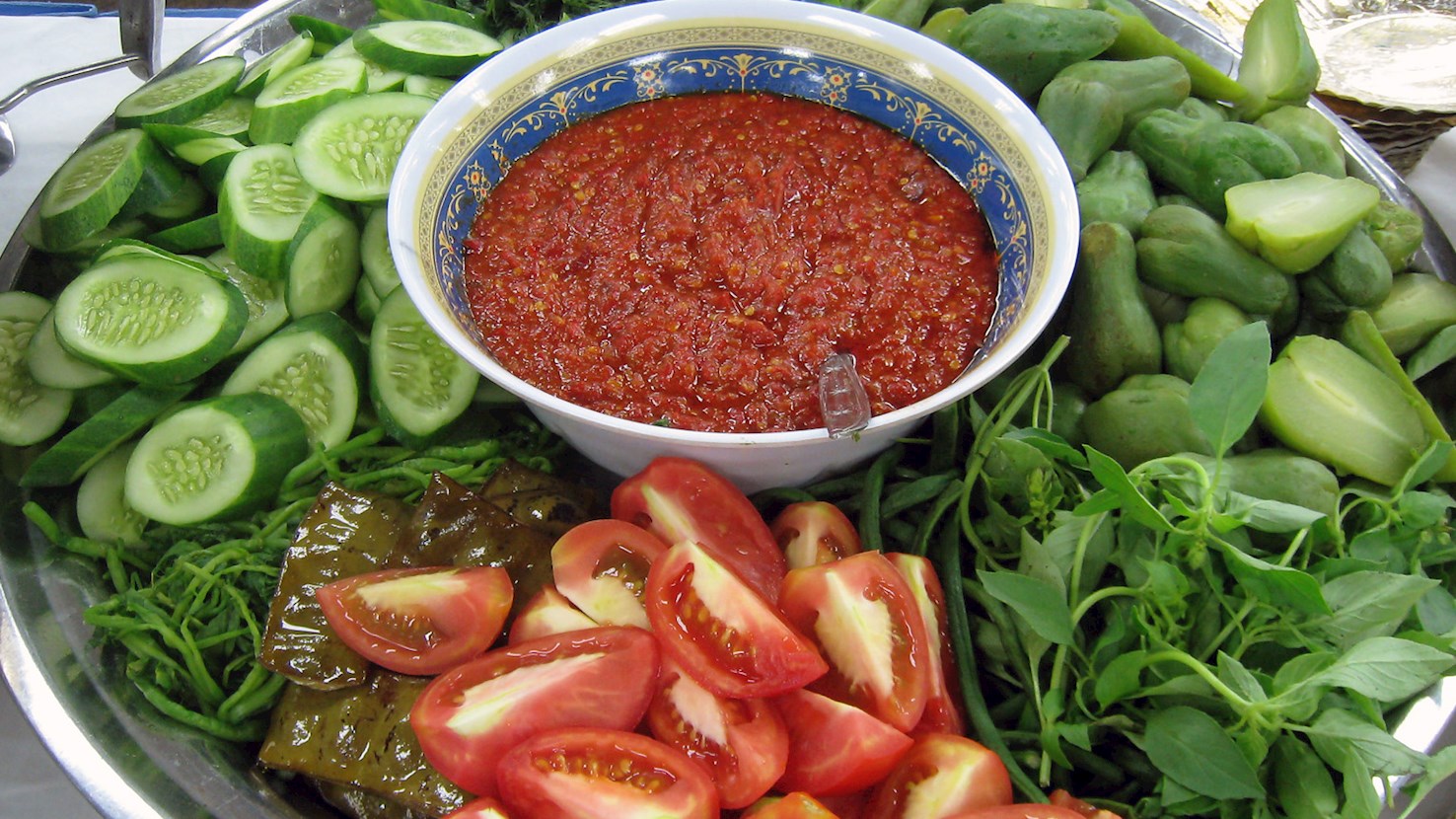
Lalap is a raw vegetable dish from Indonesia, particularly associated with Sundanese cuisine of West Java. It consists of assorted uncooked or lightly blanched vegetables served alongside sambal, a spicy chili-based condiment. Lalap is commonly eaten as part of daily meals, especially in West Javanese households, and is often paired with fried or grilled proteins such as chicken, fish, or tempeh. Its function on the plate is to provide freshness, texture, and contrast to heavier or oily components of the meal. The typical vegetables used in lalap include cucumber, long beans, basil leaves (kemangi), cabbage, lettuce, and sometimes eggplant, tomatoes, or young cassava leaves. Some vegetables are served raw for crispness, while others may be briefly blanched to soften their texture or reduce bitterness. The selection depends on regional availability, seasonal produce, and personal preference. There is no fixed combination, and the emphasis is placed on freshness and balance. Lalap is always served with sambal, most commonly sambal terasi, which contains chili, shrimp paste, lime juice, and a small amount of sugar and salt. The sambal provides the central flavor element of the dish, while the vegetables function more as a neutral base to carry the spiciness. In Sundanese meals, lalap and sambal are considered essential components, and the quality of sambal is often seen as a marker of the cook’s skill. The dish reflects the Sundanese culinary philosophy, which emphasizes raw and lightly cooked foods, balanced flavors, and minimal use of heavy sauces. It also serves a practical purpose by offering a quick, low-cost way to include vegetables in daily meals without complex preparation. Despite its simplicity, lalap holds an important place in Indonesian food culture, especially in the western part of Java where it is consumed regularly and often made from ingredients grown in household gardens.
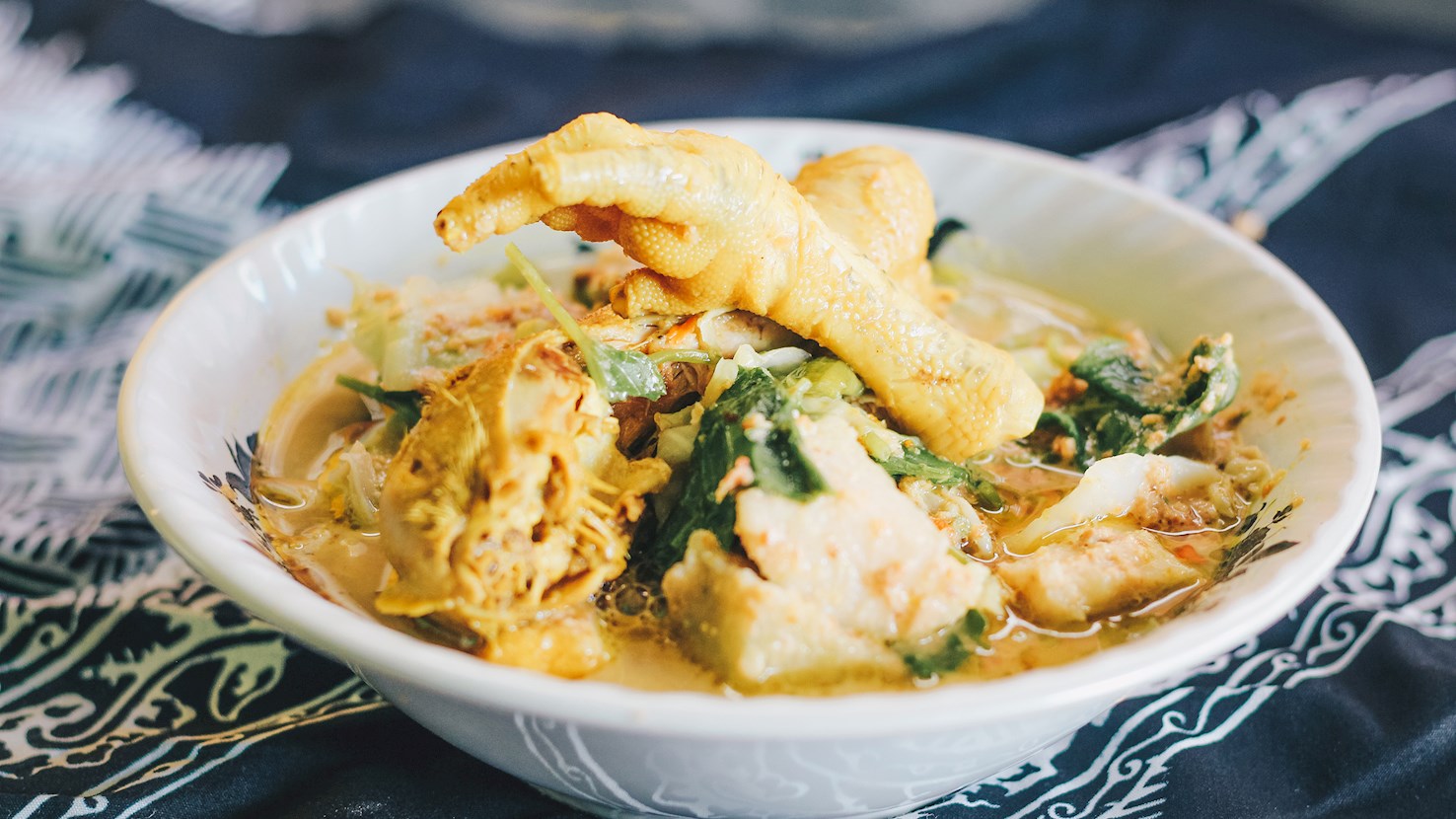
Rujak soto is a combined salad-and-soup dish from Banyuwangi, on East Java’s eastern tip, in Indonesia. It begins as rujak, a spicy vegetable salad typically made with water spinach, bean sprouts, cucumber, lontong rice cake, and a thick peanut-petis sauce flavored with chilies, tamarind, and palm sugar, and is then finished by pouring hot soto broth seasoned with turmeric, lemongrass, garlic, and slow-cooked beef or offal on top. The result is a layered meal that balances cool, tangy, spicy salad elements with the warmth and depth of savory soup. According to local sources and food historians, this iconic dish was first created in 1975 by Usni Solihin, a street vendor who began pouring hot broth over rujak to make it more filling and suitable as a complete meal for Banyuwangi’s laborers. Rujak soto is typically served with slices of beef or offal, a scattering of fried shallots, and a squeeze of lime, all prepared to order by warung and street stall vendors to keep the vegetables crisp and the broth hot.
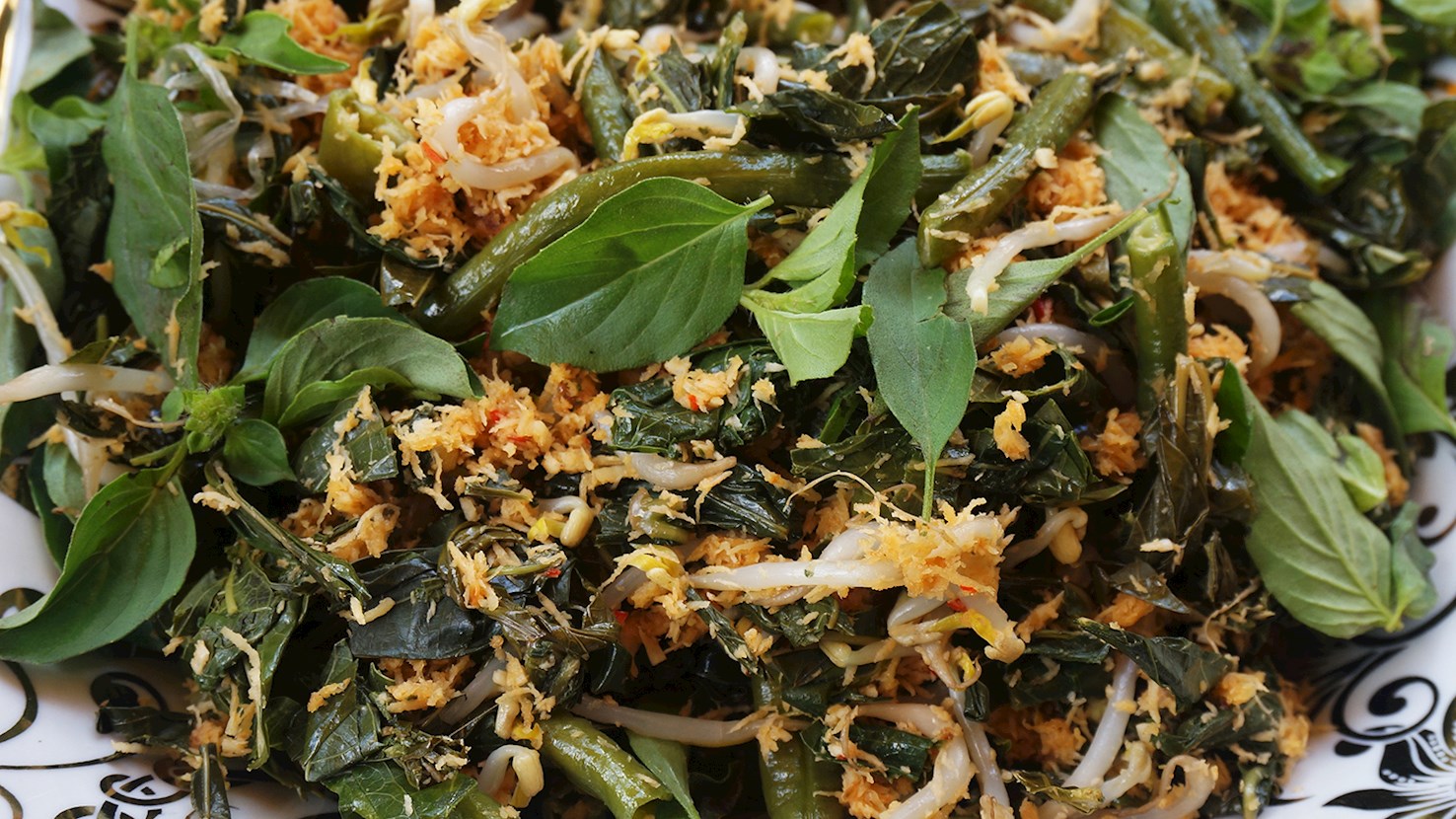
Kuluban is a vegetable salad dish that comes from Jepara in Central Java, where it is prepared as a side dish or light meal. The recipe features blanched and steamed vegetables that are tossed with a seasoned grated coconut dressing. Unlike other Indonesian salads such as urap, kuluban tends to rely more on leafy greens and beans, using ingredients like long beans, spinach, bean sprouts, young jackfruit, and cassava leaves. The combination of vegetables varies depending on what is available, reflecting the importance of fresh, local produce in Javanese cooking. To prepare kuluban, the vegetables are cleaned and cooked briefly so they stay tender but maintain some firmness. The dressing is made by mixing grated coconut with ground spices, which often include coriander, garlic, makrut lime leaves, and sometimes kencur, a type of aromatic rhizome that lends a distinctive flavor. The seasoning is typically balanced with salt and a little palm sugar, creating a mildly sweet and savory taste that clings to each piece of vegetable. Once combined, the dish is usually served at room temperature, either on its own or with steamed rice and fried tempeh or tofu. Kuluban is often prepared in Central Javanese households and appears at gatherings and communal meals where several vegetable dishes are presented together. Some cooks prefer to prepare the coconut dressing by briefly toasting the grated coconut in a pan before mixing it with the spices, which deepens the flavor and aroma.
TasteAtlas food rankings are based on the ratings of the TasteAtlas audience, with a series of mechanisms that recognize real users and that ignore bot,
nationalist or local patriotic ratings, and give additional value to the ratings of users that the system recognizes as knowledgeable.
TasteAtlas Rankings should not be seen as the final global conclusion about food. Their purpose is to promote excellent local foods,
instill pride in traditional dishes, and arouse curiosity about dishes you haven’t tried.



What People Say