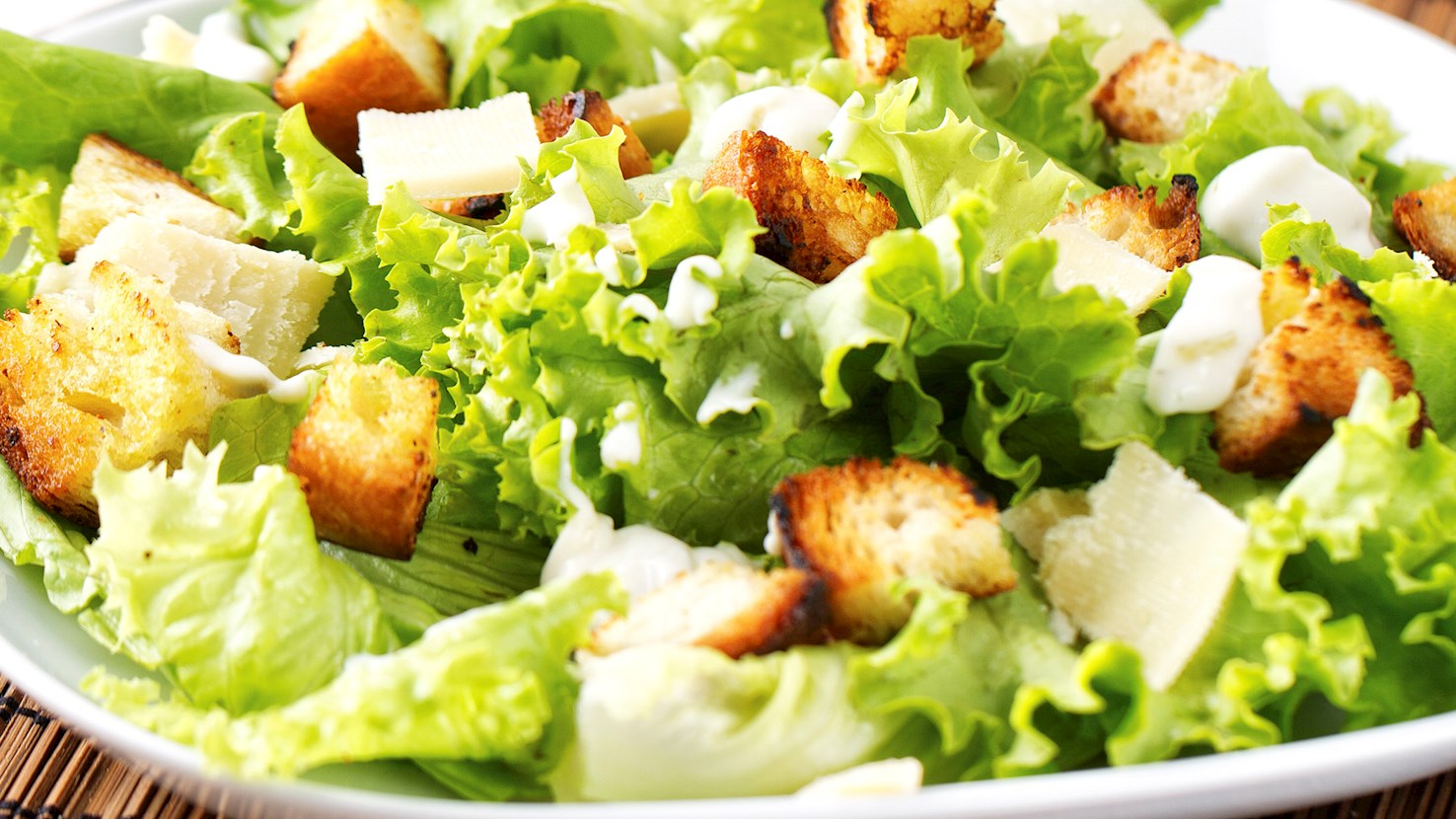
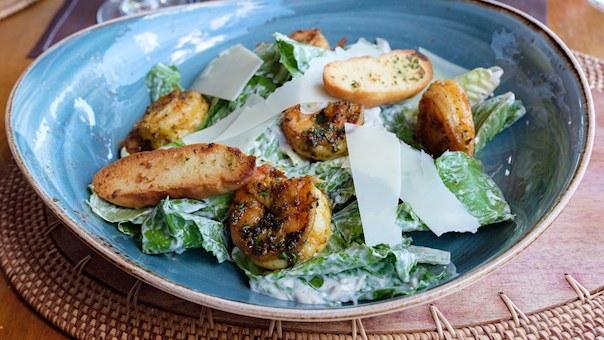
The iconic Caesar salad was named after its creator Cesare (Caesar) Cardini, an Italian immigrant who lived in San Diego but, circumventing Prohibition laws in the United States, operated a popular restaurant in Tijuana, just south of the Mexican border. Back then, in the 1920s, during the Prohibition era, Tijuana was flourishing as many Californians, including Hollywood jet set, would often drive over to party and enjoy the good life. And just like it was the case with many other world-famous dishes, Caesar salad was invented through sheer ingenuity and improvisation. In 1924, on a busy 4th of July weekend, Cardini's restaurant was packed so when the renowned restaurateur realized he's running low on food supplies, as he didn't want to disappoint the customers, Caesar concocted a salad with what was left over in the kitchen. To animate the guests and add some flair to his new invention, Cardini prepared the salad tableside, as many restaurants still do today, tossing the crisp romaine lettuce with creamy coddled eggs, garlic-flavored croutons, parmesan cheese, olive oil, and Worcestershire sauce. Originally, the romaine leaves were coated with the dressing and placed on a serving plate in a circle, stem side out, so that the diners could enjoy their salad with fingers. In 1926, Alex Cardini, a former ace pilot in the Italian Air Force during WWI, joined his brother Caesar at his Tijuana restaurant. Back then, the dish was named Aviator's salad in honor of the pilots from San Diego's Rockwell Field Air Base who, reportedly, one morning – after a long night of drinking and missing curfew – woke up at Caesar's restaurant and enjoyed the salad prepared by Alex Cardini for breakfast. Later on, as the salad gained popularity with other Californian visitors, it was renamed to Caesar salad. Alex also added other ingredients to the already famed concoction, in particular anchovies, even though Caesar was said to be against that inclusion, claiming that the Worcestershire sauce was enough to provide the faint fishy flavor. Moreover, in 1948 Caesar Cardini established a patent on the salad dressing which is still today produced and marketed by Caesar Cardini Foods, Inc. as Cardini's Original Caesar dressing mix. Regardless of the two slightly different recipes and dressing variations, Caesar salad became a sensation sought after from coast to coast, eventually even becoming a success in Europe; especially after the Paris-based International Society of Epicures in 1953 proclaimed it as "the greatest recipe to originate from the Americas in 50 years".
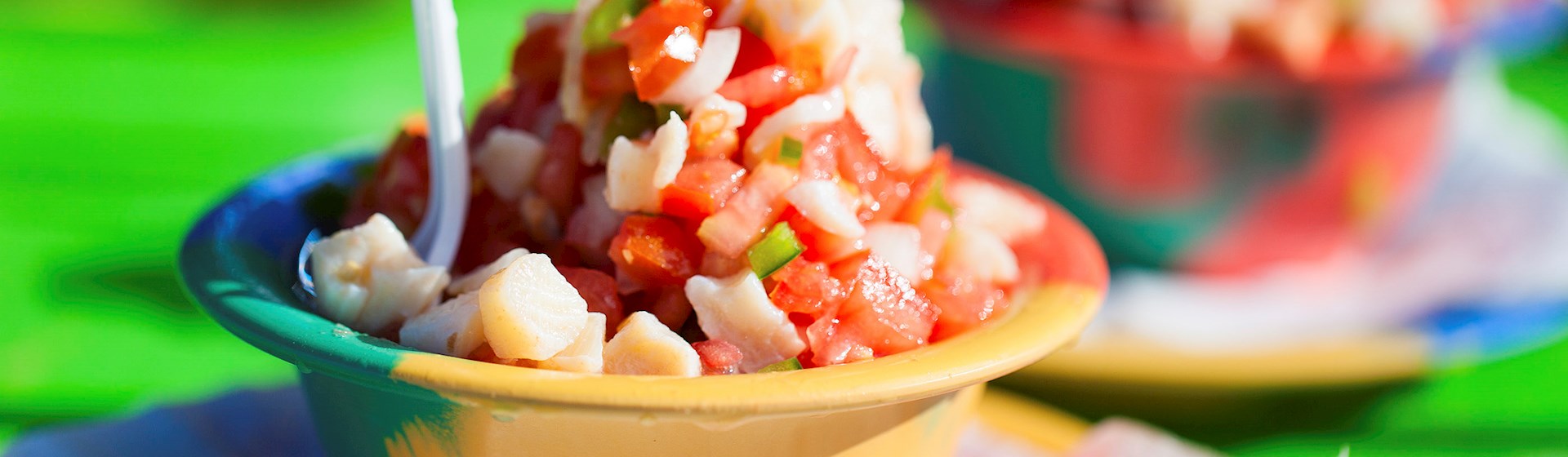
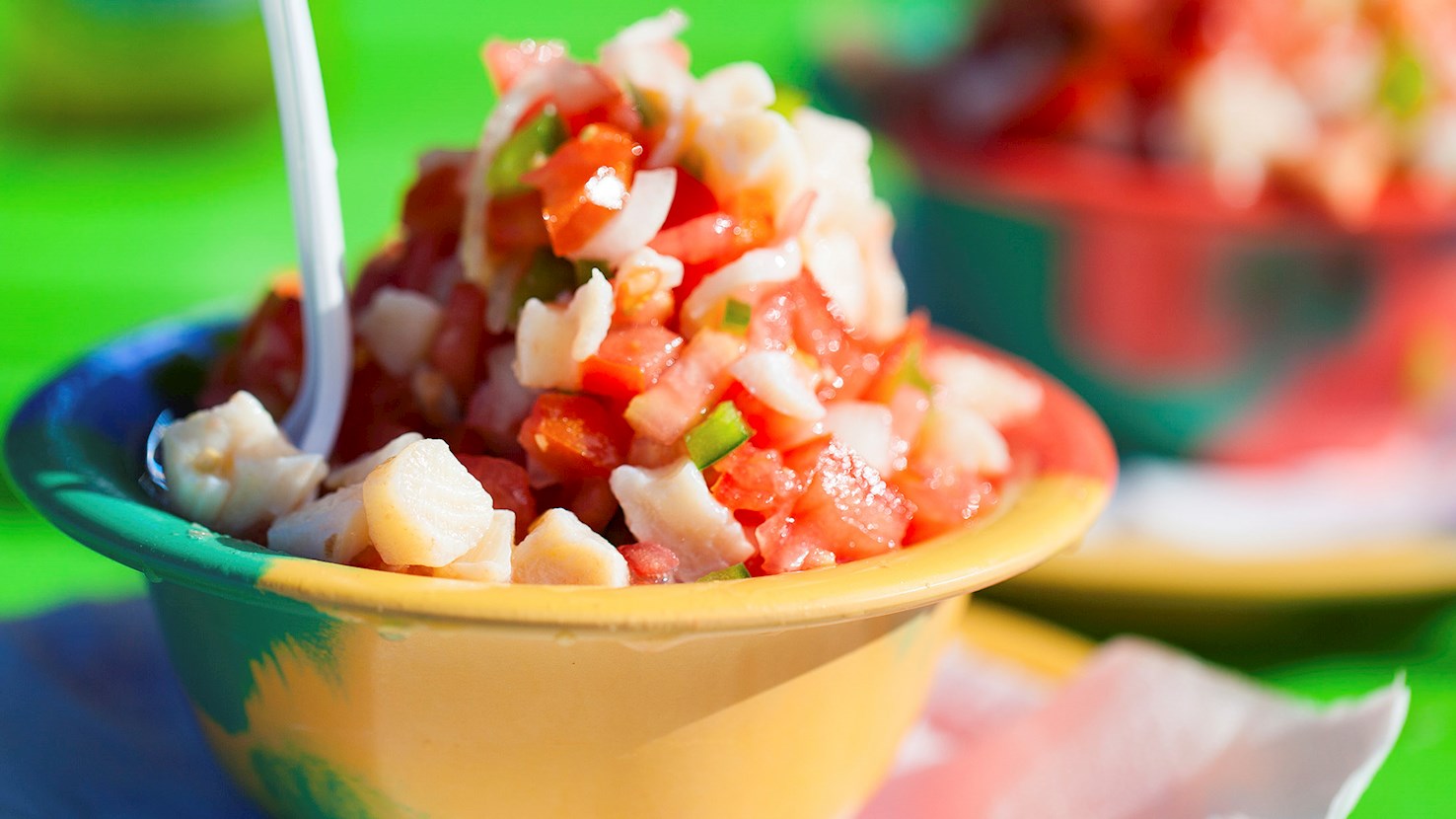
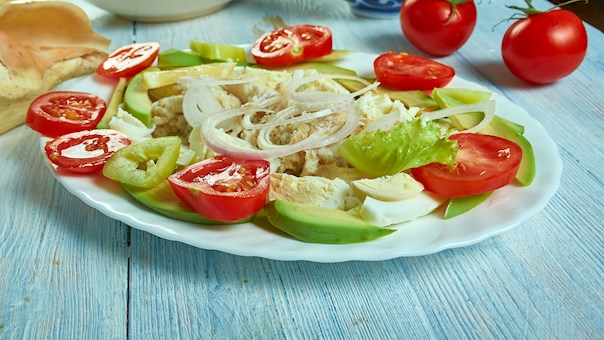
Conch salad is one of the most popular Bahamian dishes that is both a flavorful comfort food and a colorful, edible work of art. The key ingredient in the dish is conch, a shellfish that is unfortunately slowly dying out due to its rapid depletion in the Caribbean seas. Other ingredients include finely chopped tomatoes, bell peppers, onions, and a marinade of goat pepper, lime, and orange juice, a mixture that also partly cooks the raw white conch meat. However, there is also a tropical version of the salad with apples, pineapple, and mango added to the regular salad, with a less spicy flavor. It is recommended to pair the salad with a glass of local Bahamian beer such as Kalik or Sands, although a combination of coconut water, sweet milk, gin, and ice, known as sky juice is also commonly paired with the dish.
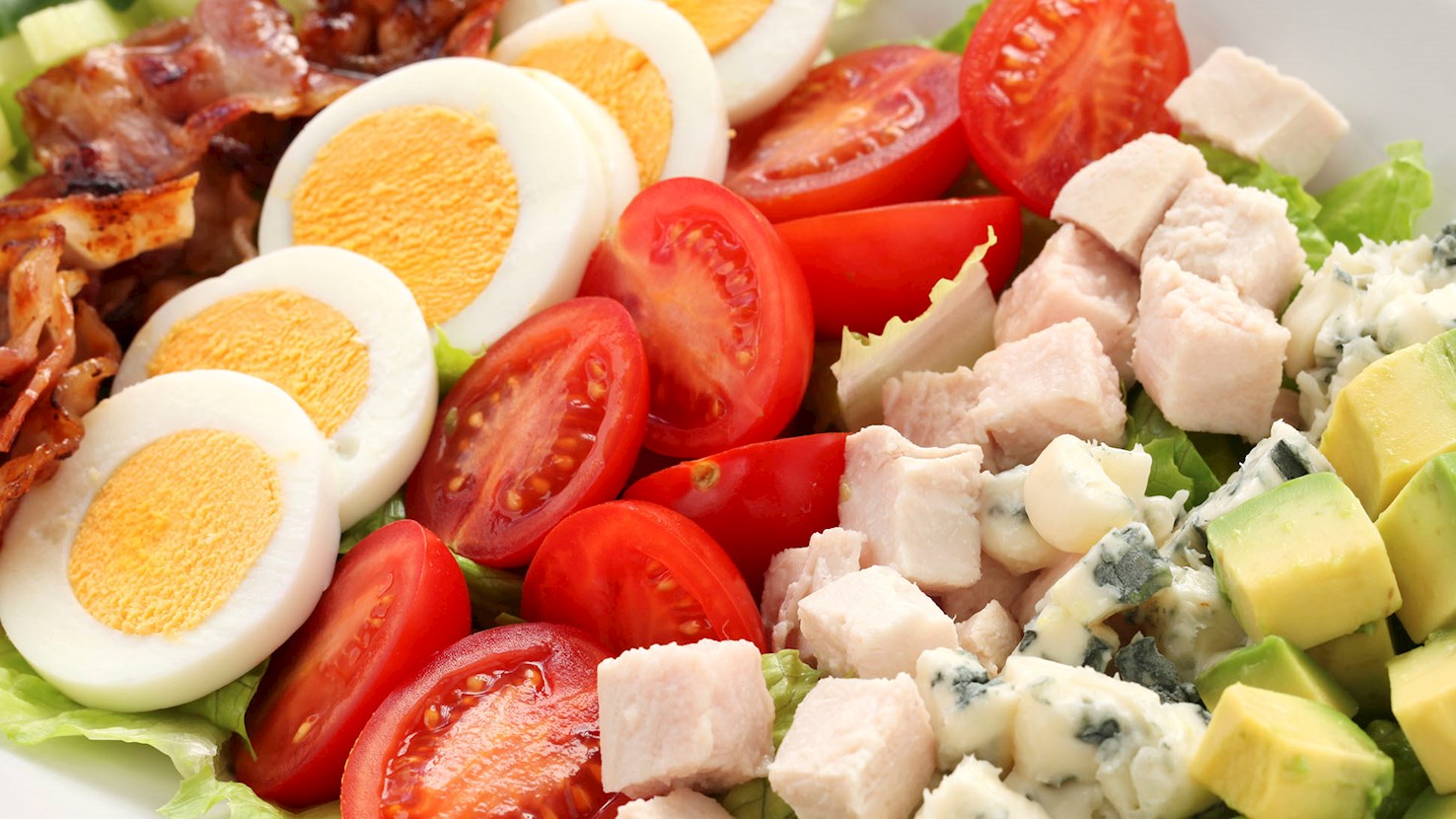
A shining example of American ingenuity and creativity, Cobb salad was invented in the 1930s at The Brown Derby, a famous Los Angeles restaurant whose owner, Robert Cobb, found some leftovers in the kitchen - hard-boiled eggs, salad greens, chicken breast, avocado, chopped bacon, tomatoes, and Roquefort cheese among them. He tossed all of the ingredients with some salt, pepper, and a vinaigrette consisting of olive oil, red vinegar, lemon juice, garlic, and Worcestershire sauce, and Cobb Salad started its way toward fame. The composed salad's popularity relies entirely on the careful preparation of each ingredient and their distinct textures, from juicy over crunchy to creamy. It is similar to a BLT sandwich without the bread, and thanks to a variety of movie stars who ate at the restaurant such as Clark Gable and Lucille Ball, the dish rose to stardom, becoming a symbol of Californian cuisine. Although the restaurant is closed today, the tradition of consuming Cobb salad remains a staple of American food.
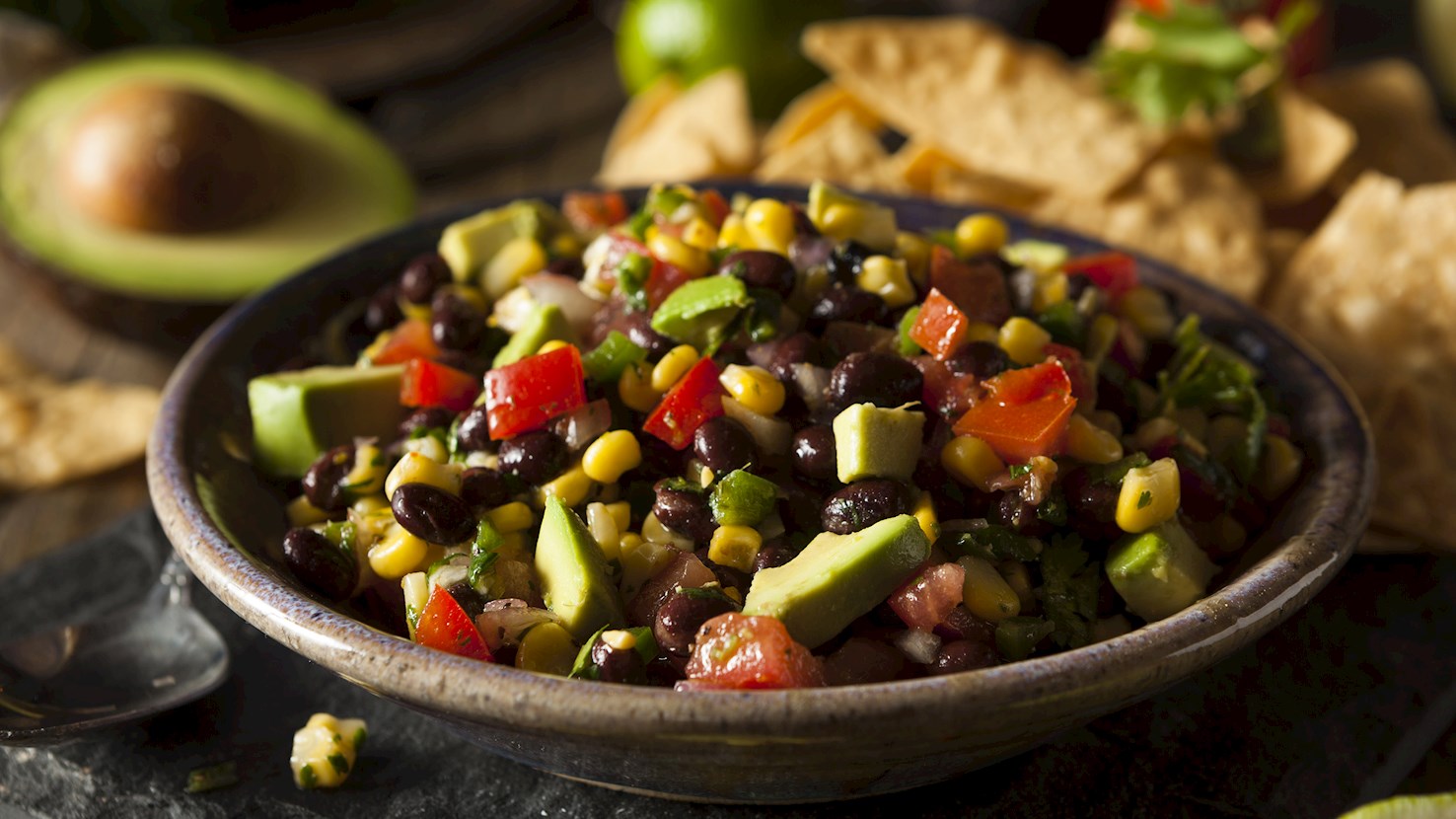
Texas caviar is a traditional salad originating from Texas. Despite the name, there is no roe in Texas caviar – the salad is usually made with a combination of black-eyed peas, garlic, scallions, bell peppers, jalapeños, celery, coriander, parsley, red wine vinegar, vegetable oil, sugar, salt, and pepper. The oil, vinegar, sugar, garlic, salt, and pepper are whisked in a bowl. The remaining ingredients are added to the bowl, and everything is tossed to combine. The salad is seasoned with salt and black pepper to taste, and it's then left to sit for about an hour before serving. Texas caviar was invented in the 1940s by Helen Corbitt. The salad is usually enjoyed as an accompaniment to tortilla chips or grilled meat and fish.
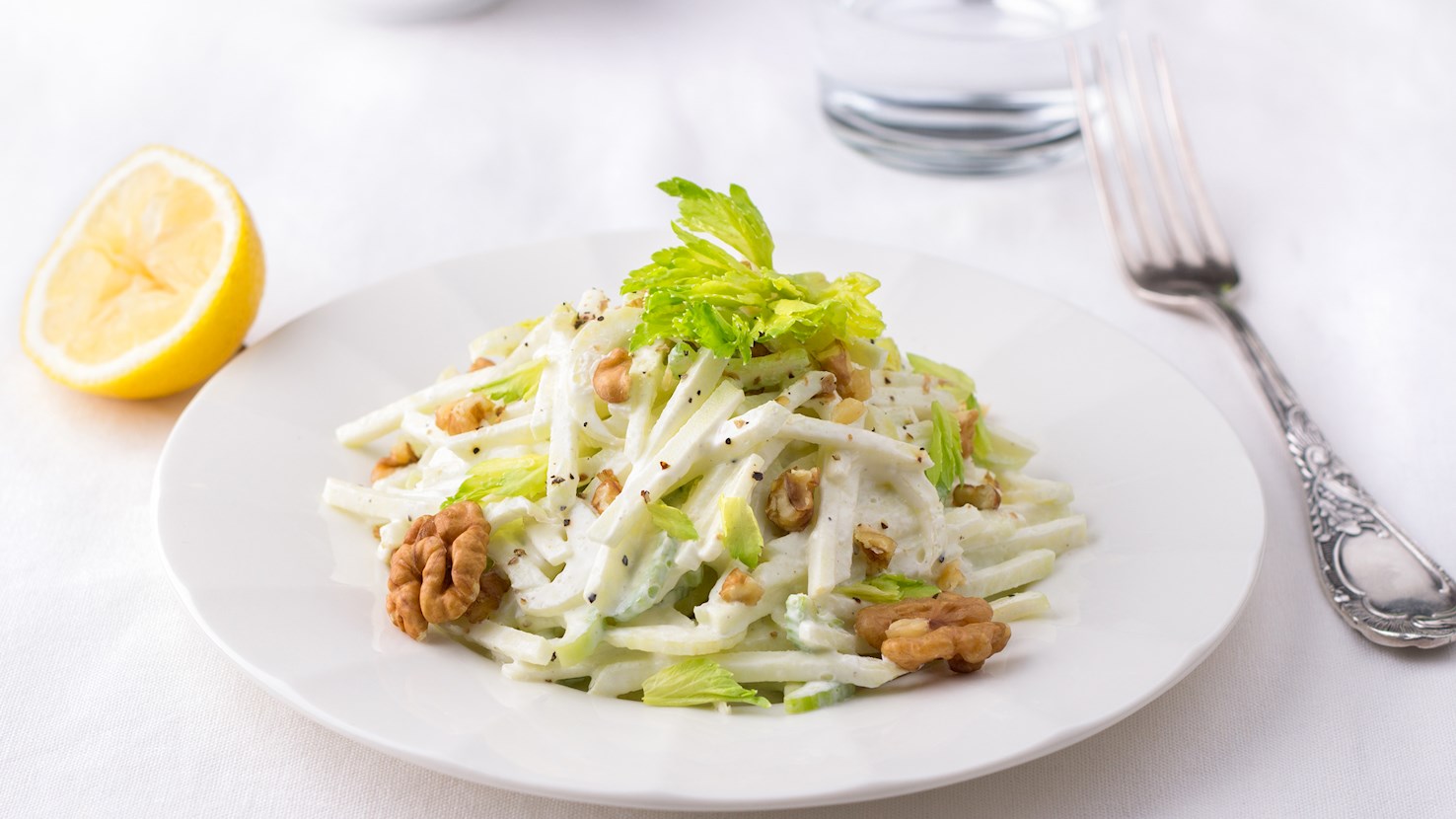
Waldorf salad had been invented in 1896 by Oscar Tschirky, a dining room manager at New York's Waldorf-Astoria Hotel. Originally, the salad consisted of apples, celery, and mayonnaise, and was a huge success. Interestingly, finely chopped walnuts were added to the salad much later, in 1928, although most people associate the salad with walnuts as the key ingredient. Today, Waldorf salad is usually served cold as an appetizer, on a bed of lettuce, while ingredients such as chicken, raisins, or grapes are sometimes added in the modern versions of this elegant dish.
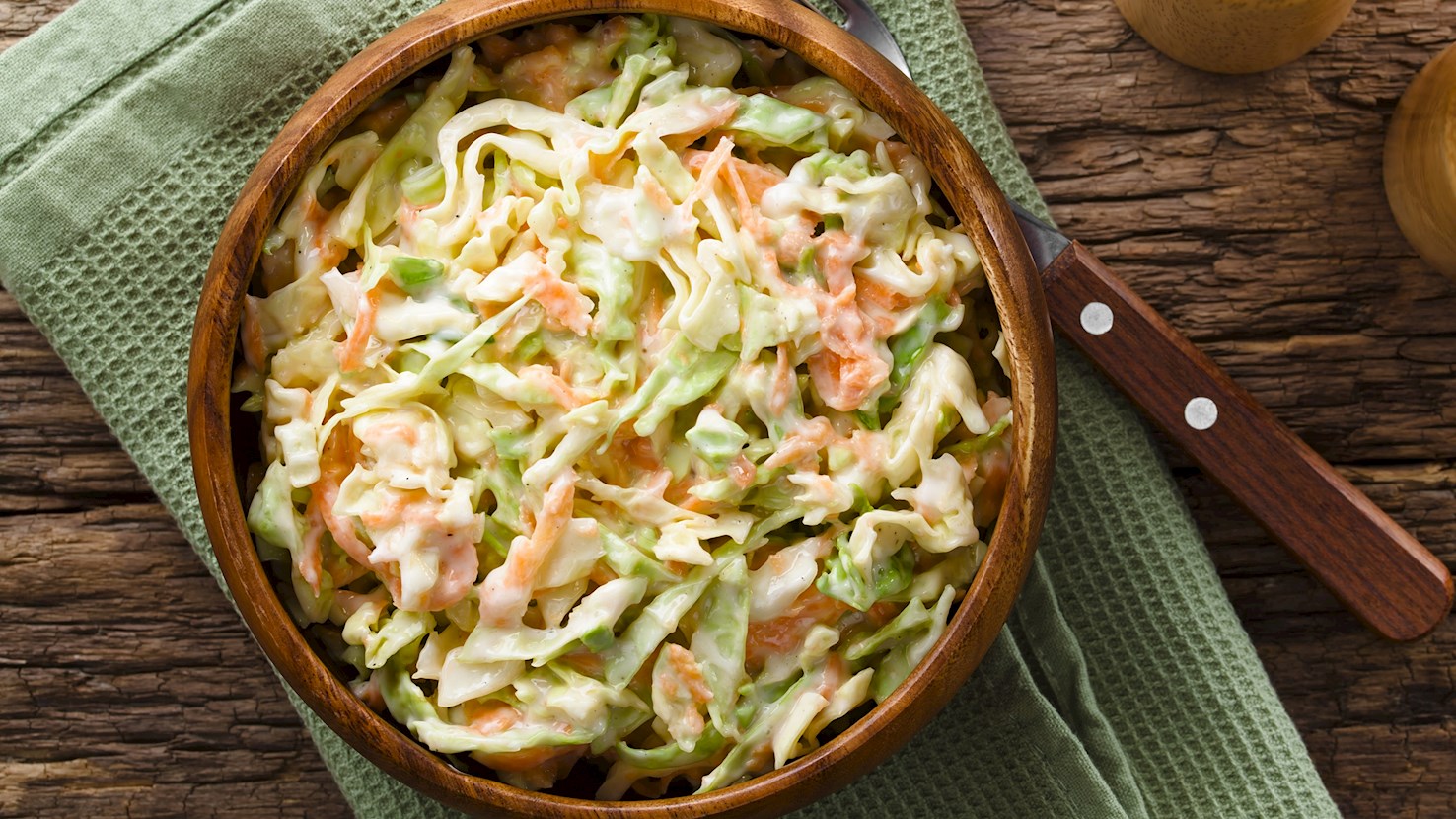
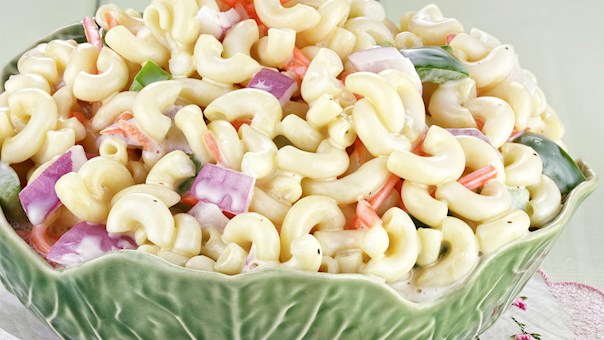
Originating from the Dutch term koolsla, meaning cabbage salad, coleslaw is nowadays a true American staple and a side dish that's often served with barbecued meat or fried chicken. Originally, it was brought over to New York state in the 18th century by the Dutch settlers. It consists of shredded cabbage, mayonnaise, carrots, buttermilk or sour cream with vinegar, sugar, and other seasonings, depending on the cook and regional variations. Some of the variations have other ingredients such as salad dressings, celery seeds, grated cheese, pineapple, or peppers. However, the only consistent ingredient in coleslaw is shredded cabbage. The salad is always served chilled, and it's commonly used in hamburgers, sandwiches, and hot dogs.
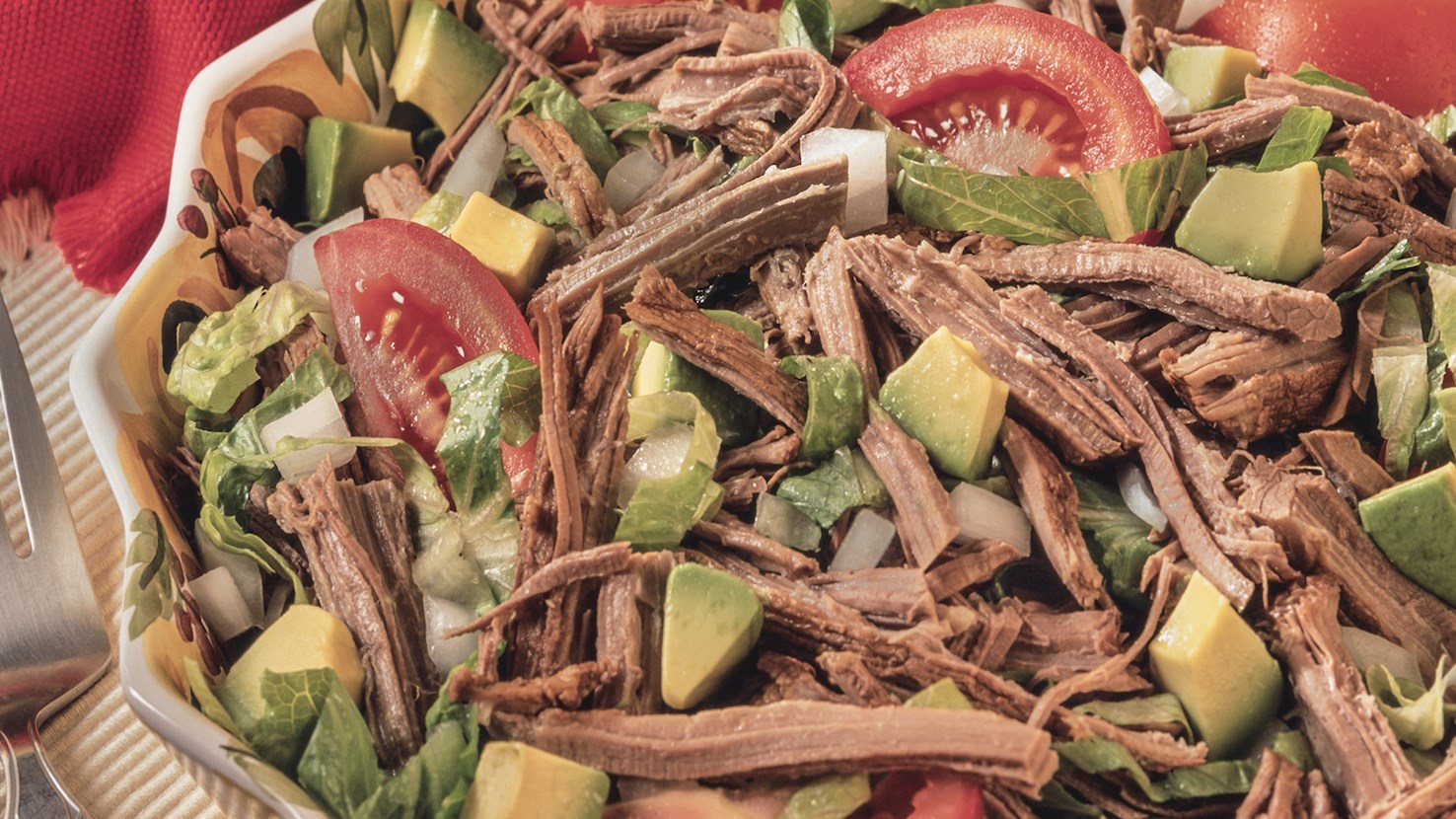
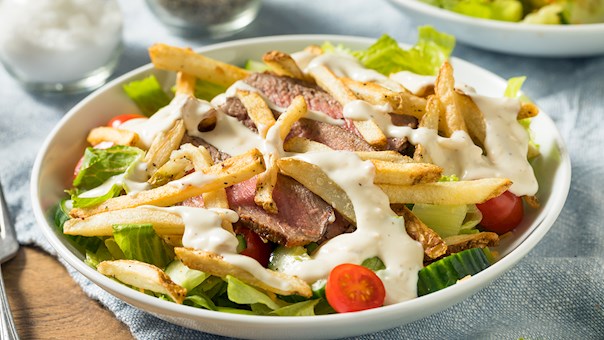
Salpicón de res is a flavorful Mexican salad that is popular throughout Latin America. It consists of beef steak pieces, onions, tomatoes, hot chiles, and avocado slices. The salad is usually seasoned with lime juice, salt, pepper, vinegar, olive oil, and oregano. It can be consumed on its own or used as a topping for tostadas and tortillas.
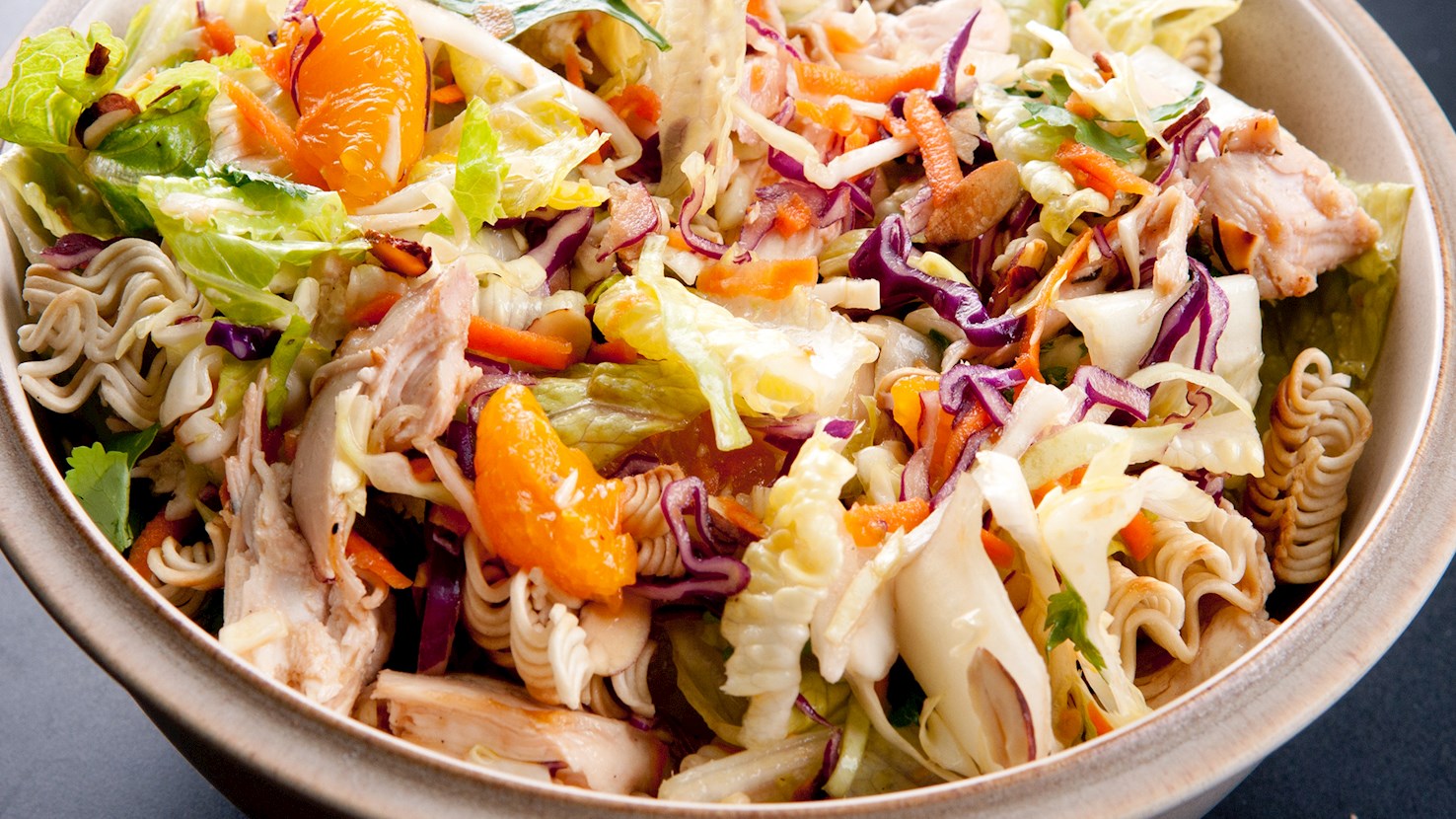
Chinese chicken salad is a cold, crunchy mixture of shredded chicken, chopped greens, and fried noodles tossed in a sweet sesame-ginger vinaigrette. Its origins trace to mid-20th-century California. In 1956, Ming’s restaurant in Palo Alto added a version to its menu. During the 1960s, restaurateur Sylvia Wu created a highly popular version at Madame Wu’s Garden in Santa Monica after actor Cary Grant requested a salad similar to one he had eaten elsewhere. The salad developed as a West Coast restaurant invention rather than as a direct import from East Asia. Preparation begins with whole chicken breasts that are poached or roasted, cooled completely, and then torn by hand into thin shreds. The vegetable base usually consists of roughly chopped iceberg lettuce or shredded Napa cabbage, mixed with julienned raw carrots, sliced scallions, and thin strips of red cabbage. The ingredients are tied together with a sharp, acidic vinaigrette made from rice vinegar, toasted sesame oil, light soy sauce, minced fresh ginger, and a small spoonful of white sugar. The shredded chicken and raw vegetables are placed in a wide bowl and coated generously with the dressing. For the essential crunch, deep-fried wonton wrapper strips or puffed rice vermicelli noodles are scattered evenly over the dressed greens. Changes in ingredients alter the balance between sweetness and savoriness. Canned mandarin orange segments or sliced water chestnuts are sometimes added for bursts of sweet juice and extra crispness. In richer nut-based versions, creamy peanut butter or dark hoisin sauce is blended into the vinaigrette, creating a thicker, heavier dressing that coats the greens more completely. Other versions replace the fried wonton strips with toasted sliced almonds or crushed peanuts, avoiding deep-frying while retaining the crunchy texture. The salad is served fully chilled. The dressing is tossed with the greens at the last moment so the fried dough and delicate lettuce do not become soggy. Because the bowl of Chinese chicken salad is usually large and filling, it can serve as either a substantial appetizer or a standalone lunch.
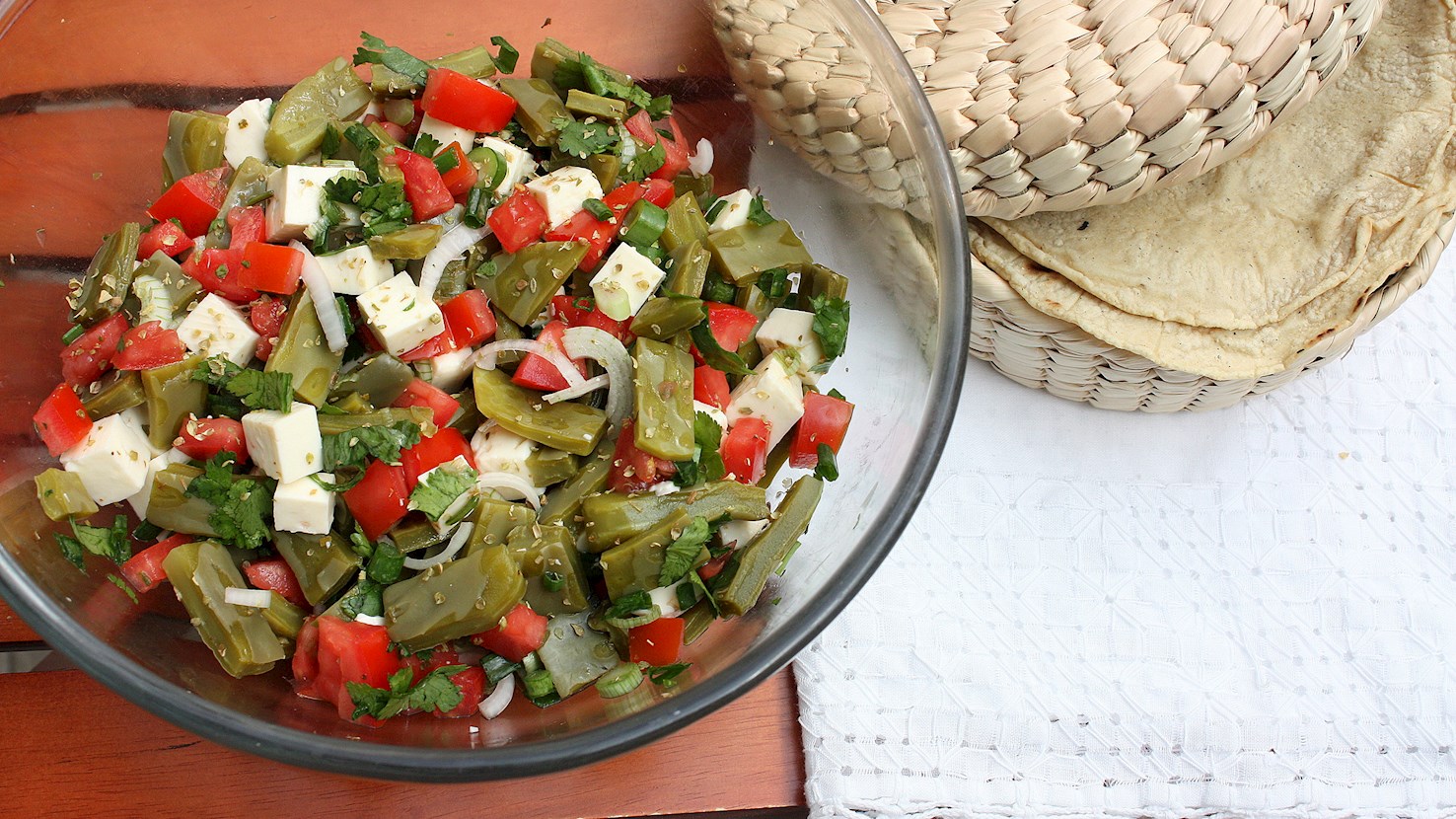
Ensalada de nopalitos is a traditional salad originating from Central Mexico. Although there are many versions, it's usually made with a combination of nopal cactus pieces, lime juice or vinegar, olive oil, oregano, onions, salt, and cilantro. The salad ingredients are simply mixed and set aside for the flavors to blend, for about an hour. When served, a dish is lined with lettuce leaves and the salad is placed on top. It is then topped with jalapeño strips, sliced onions, crumbled queso fresco, and tomato pieces.
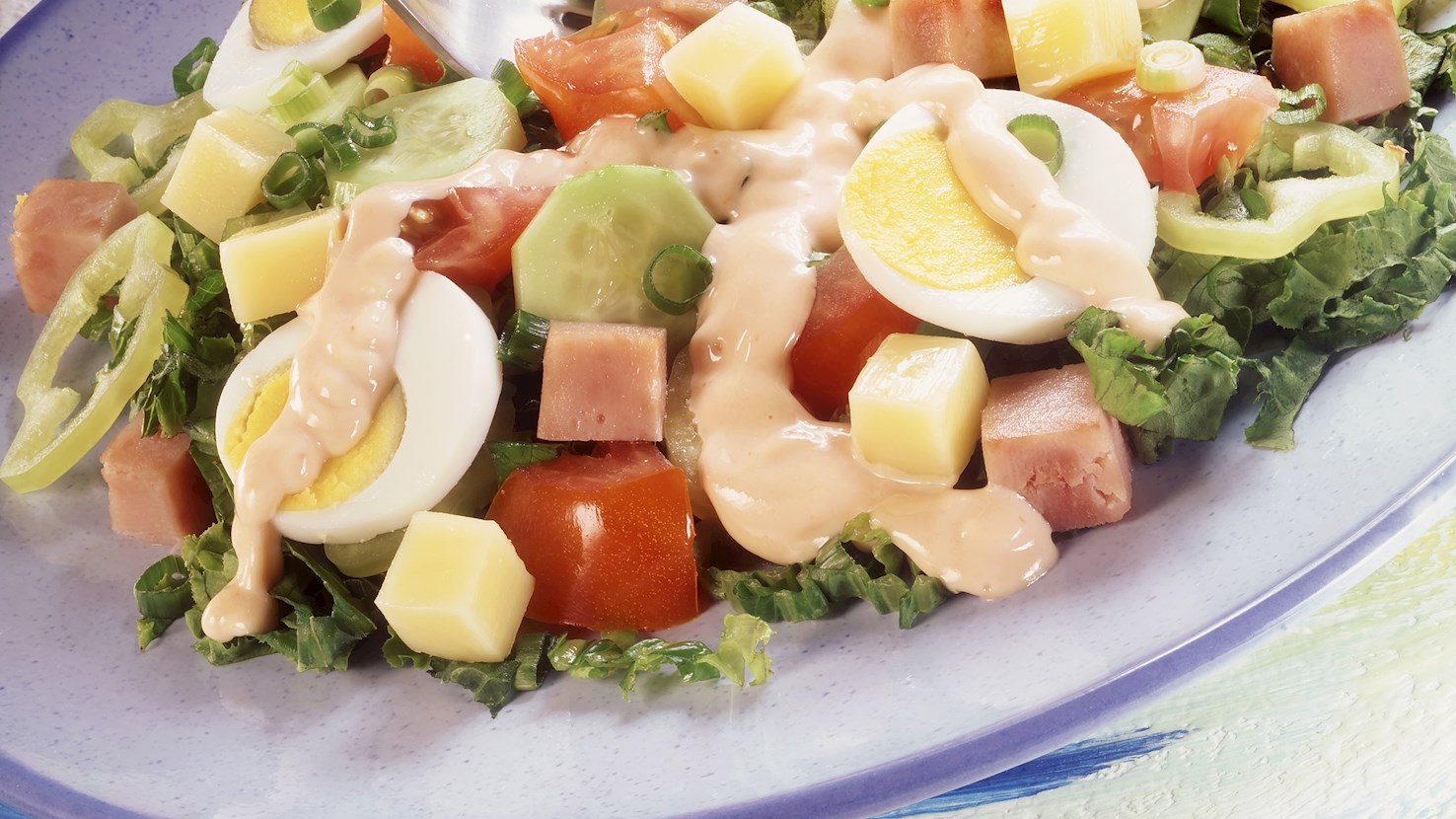
A chef's salad is a big salad that is usually served as a meal of its own. It consists of a variety of vegetables, hard-boiled eggs, cheese, and meats such as ham or turkey meat. The salad can be served with a variety of different dressings. No one can agree about the origins of chef's salad, so there are quite a few theories about its invention. Some claim that it originated from salmagundi, a 17th-century dish consisting of anchovies, chopped meat, eggs, onions, and oil. Others claim that Cobb salad was the true inspiration, while most believe that chef's salad was created in the 1940s by Louis Diat, a chef at the Ritz-Carlton Hotel in New York City. Regardless of its origins, the salad's popularity lies in the fact that it is both a great way to use up leftovers and a quick, flavorful meal.
TasteAtlas food rankings are based on the ratings of the TasteAtlas audience, with a series of mechanisms that recognize real users and that ignore bot,
nationalist or local patriotic ratings, and give additional value to the ratings of users that the system recognizes as knowledgeable.
For the “Top 27 North American Salads” list until October 15, 2026, 2,261 ratings were recorded, of which 1,820 were recognized by the system as legitimate.
TasteAtlas Rankings should not be seen as the final global conclusion about food. Their purpose is to promote excellent local foods,
instill pride in traditional dishes, and arouse curiosity about dishes you haven’t tried.







What People Say