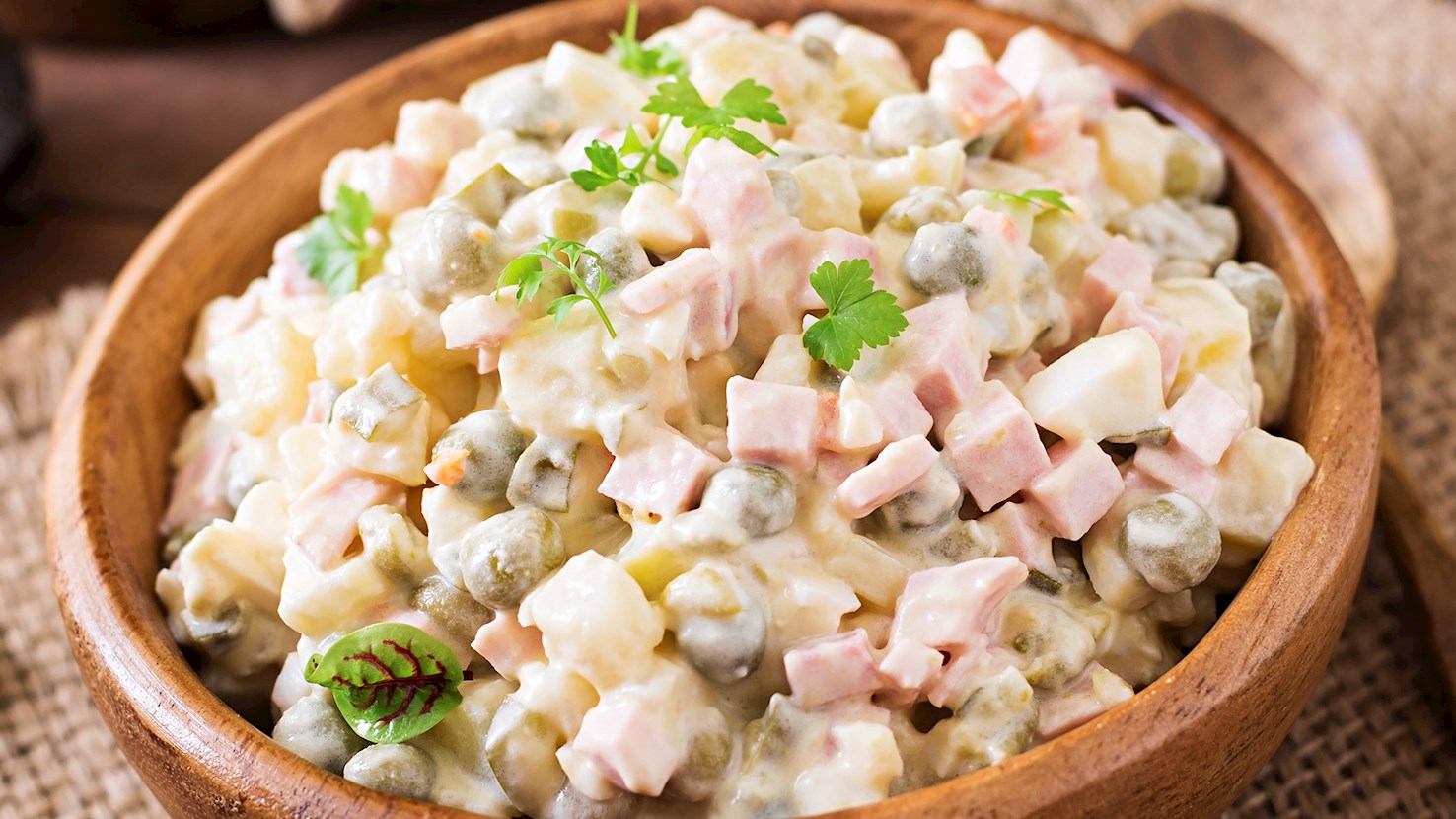
Olivier salad is a salad with variable ingredients, but it is typically made with chopped vegetables, meat, and mayonnaise. The key ingredients include diced potatoes, vegetables, eggs, chicken, or ham. This salad is one of the most important appetizers at the New Year's salad buffets in Russia, as well as in some of the other countries of the former USSR. The original was invented in the 1860s by Lucien Olivier, a chef in the popular Moscow restaurant called L'Hermitage. Olivier guarded the recipe until he died, but it is believed that the recipe was stolen by an employee who watched the chef at work, so the salad is still made today. Another theory says that the recipe for the new Olivier salad was developed by one of the restaurant's customers who wanted to keep the salad alive after the chef passed away. Olivier salad as we know it today is nothing like the original version, because it was called game bird mayonnaise, made with gourmet ingredients such as black caviar, capers, hen, and crayfish tails. Over time, the salad evolved and most of the gourmet ingredients have been replaced with more common ones such as peas, chicken, ham, and pickles. Today, the variations are endless, but most Russian chefs agree on one thing: adding carrots to the Olivier is a heresy. Interestingly, Olivier salad is also sometimes called Russian salad, while the meatless version is called French salad or francuska salata, probably due to the French name of its creator. The Spanish version is known as ensaladilla rusa. It is so popular in Spain that it's an important part of the Spanish gastronomy as well as being a staple in schools and summer camps all over the country. Ensaladilla rusa is also one of Spain's most popular tapas – in some cases, it's even served free of charge if you order a beer. There's also the Piedmontese insalata russa, typically consumed as an appetizer, and with many variations, so the salad might also include ingredients such as pickled cauliflower, anchovies, and tuna. Interestingly, in the Italian municipality of Carrù, tuna is an obligatory element of the salad.
Insalata di riso novarese is a traditional rice salad originating from Novara. The salad is usually made with a combination of Arborio rice, olive oil, anchovies, parsley, garlic, lemon juice, salt, and black pepper. The garlic and anchovies are cooked in olive oil until the anchovies become mushy. The mixture is removed from the heat, cooled, and poured over cooked rice. The rice is garnished with parsley and sprinkled with lemon juice before it's left to cool, and it's then simply seasoned with salt and pepper to taste before serving.
L'insalata di gallina bionda is a popular Piemontese dish prepared with a special breed of chicken from the region of Piemonte, known as Bionda Piemontese. Cooked chicken meat is elevated with a few elements providing different textures and flavors: fresh vegetables such as chopped celery or carrots bring crispiness, cubed toma Piemontese brings creaminess, while pickled onions, mushrooms, artichokes, and olives excite the palate with their acidity. Finished with olive oil, lemon juice, salt, and pepper (sometimes even with a light mayonnaise), l'insalata di gallina bionda is most commonly enjoyed as an antipasto, but when served in slightly larger portions, it also works very well as a main dish.
TasteAtlas food rankings are based on the ratings of the TasteAtlas audience, with a series of mechanisms that recognize real users and that ignore bot,
nationalist or local patriotic ratings, and give additional value to the ratings of users that the system recognizes as knowledgeable.
For the “Top 3 Piedmontese Salads” list until June 15, 2026, 516 ratings were recorded, of which 381 were recognized by the system as legitimate.
TasteAtlas Rankings should not be seen as the final global conclusion about food. Their purpose is to promote excellent local foods,
instill pride in traditional dishes, and arouse curiosity about dishes you haven’t tried.