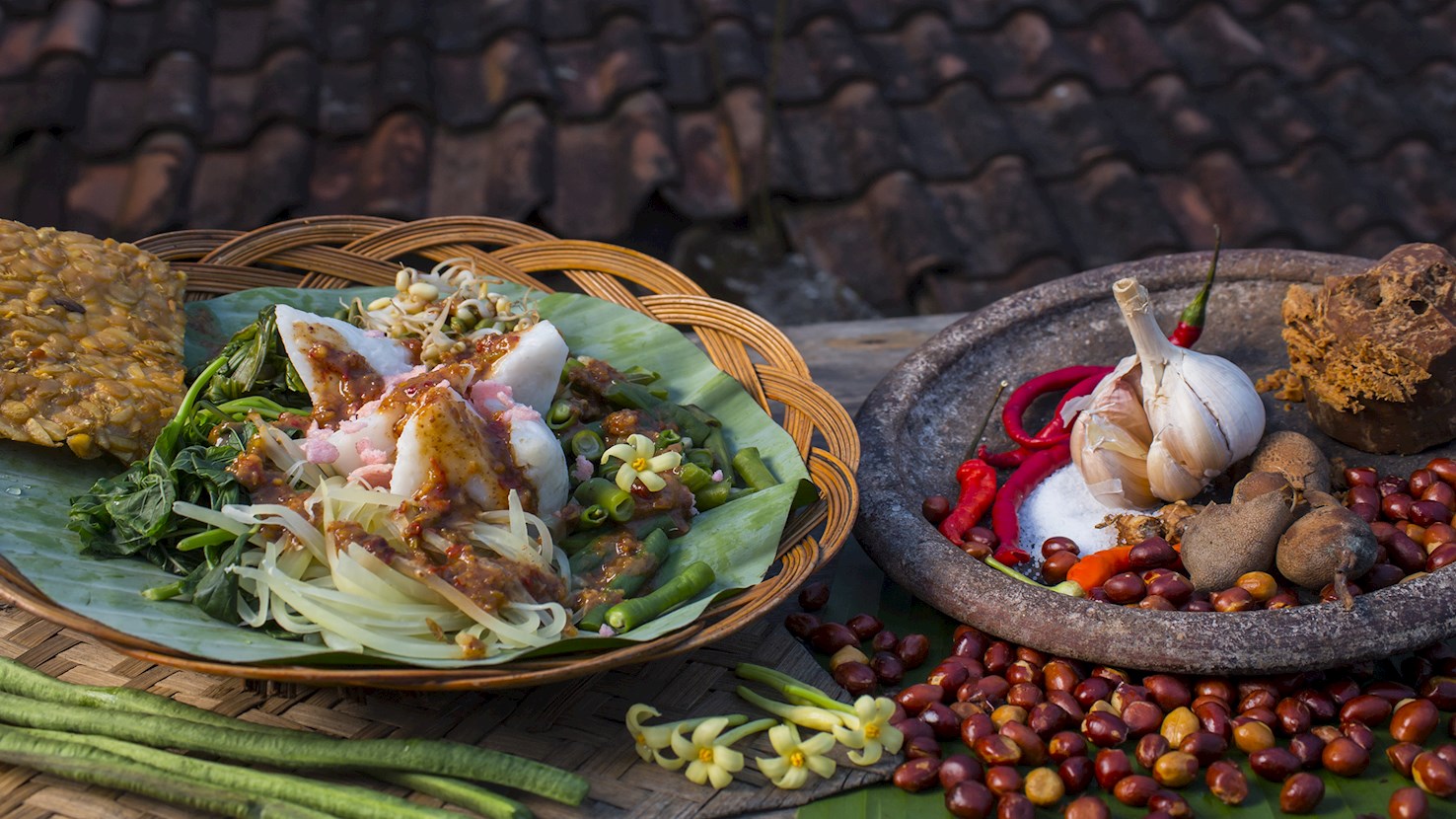
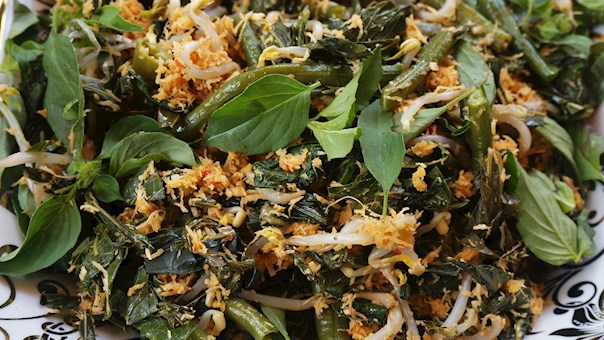
Indonesian pecel may refer to a fragrant peanut sauce or a combination of the sauce and various vegetables, when it is commonly referred to as a salad. The base of the sauce is prepared with roasted peanuts and spices that typically include chili peppers, palm sugar, garlic, tamarind juice, shrimp paste, kaffir lime leaves, salt, and kencur, an aromatic ginger variety. Usually associated with Java, the sauce is characterized by its distinctive combination of sweet and spicy flavors. When served with rice, the dish goes under the name nasi pecel.
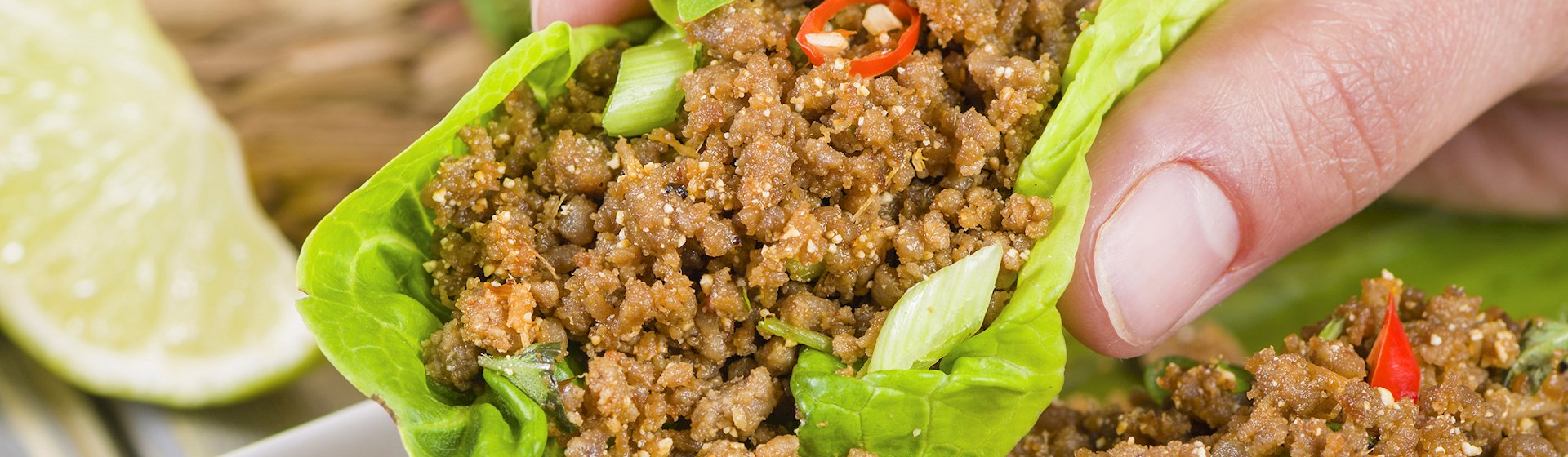
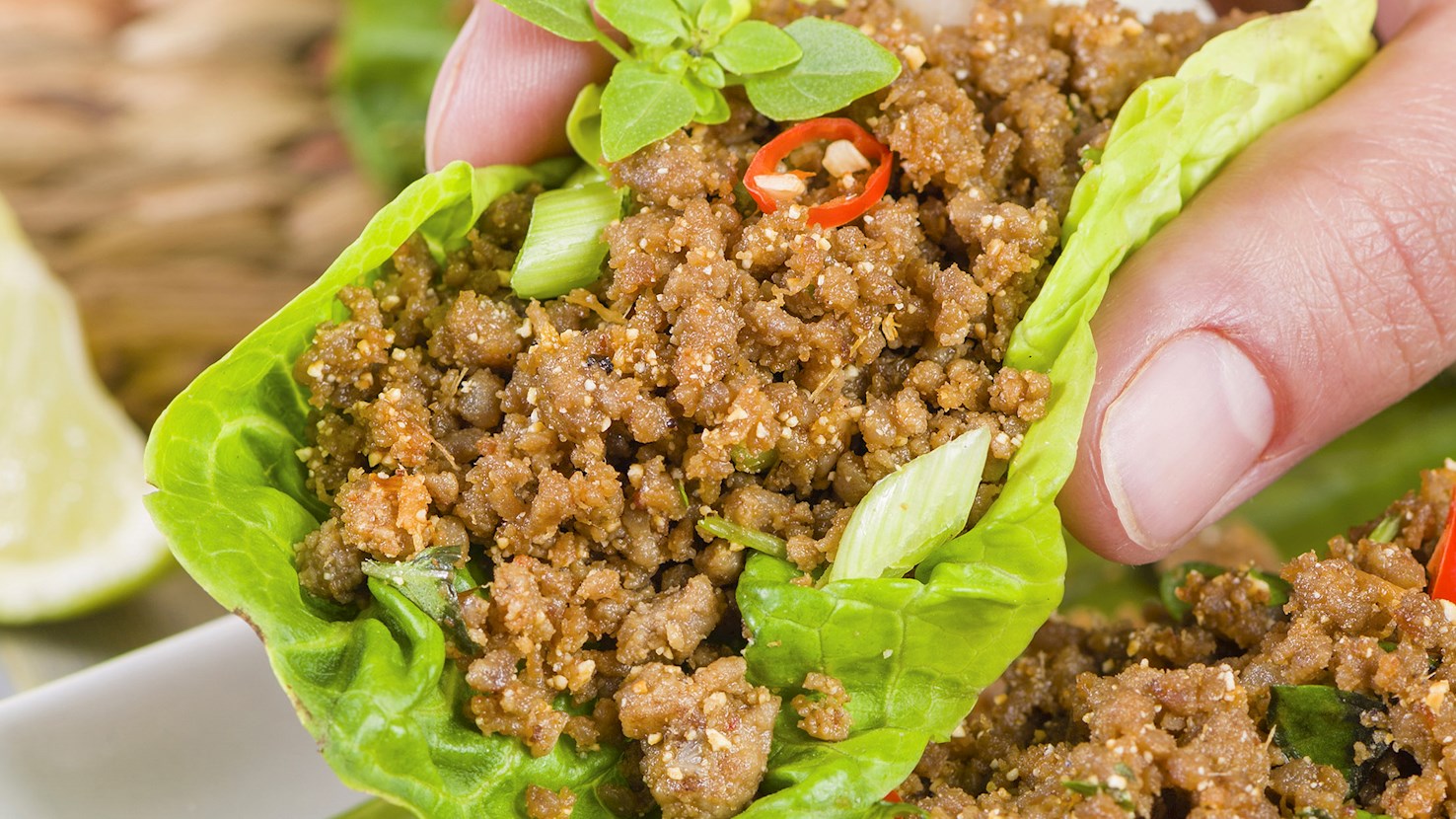
Larb, also spelled laap or larp, is a seasoned minced meat salad originating from Laos, where it functions as a national dish, and widely consumed throughout the Isan region of northeastern Thailand. The dish developed among ethnic Lao agrarian communities along the Mekong River basin as a method to process fresh livestock, wild game, or river fish immediately following slaughter, serving as a focal point for communal labor exchanges and ceremonial feasts. Preparation involves finely hand-chopping lean meat and offal, most commonly pork, beef, chicken, duck, or fish, and quickly blanching or cooking it in a small amount of broth before tossing the warm meat with fermented fish sauce (padaek or nam pla), lime juice, ground dried chili flakes, sliced red shallots, chopped mint, cilantro, and culantro. What distinguishes larb from other Southeast Asian seasoned meat preparations is the essential addition of khao khua, a coarse powder produced by dry-roasting raw glutinous rice grains until golden brown and grinding them, which acts as a textural thickening agent that binds the citrus-herb dressing to the minced protein while imparting a roasted, nutty flavor profile. Northern Thai variants (larb Lanna) differ by substituting lime juice and fish sauce with a complex blend of dried spices, including long pepper, dried ginger, and star anise, often incorporating fresh bile or blood for bitterness. Larb is eaten at room temperature or warm during daily family meals, market stalls, and village gatherings across Laos and northern Thailand. Diners eat the dish by hand, rolling small portions of warm steamed sticky rice (khao niao) into balls to scoop up the minced meat alongside raw vegetable garnishes including cabbage wedges, Thai eggplant, green beans, and cucumber slices, pairing the meal with cold lager beer, crushed sugar cane juice, or iced green tea.
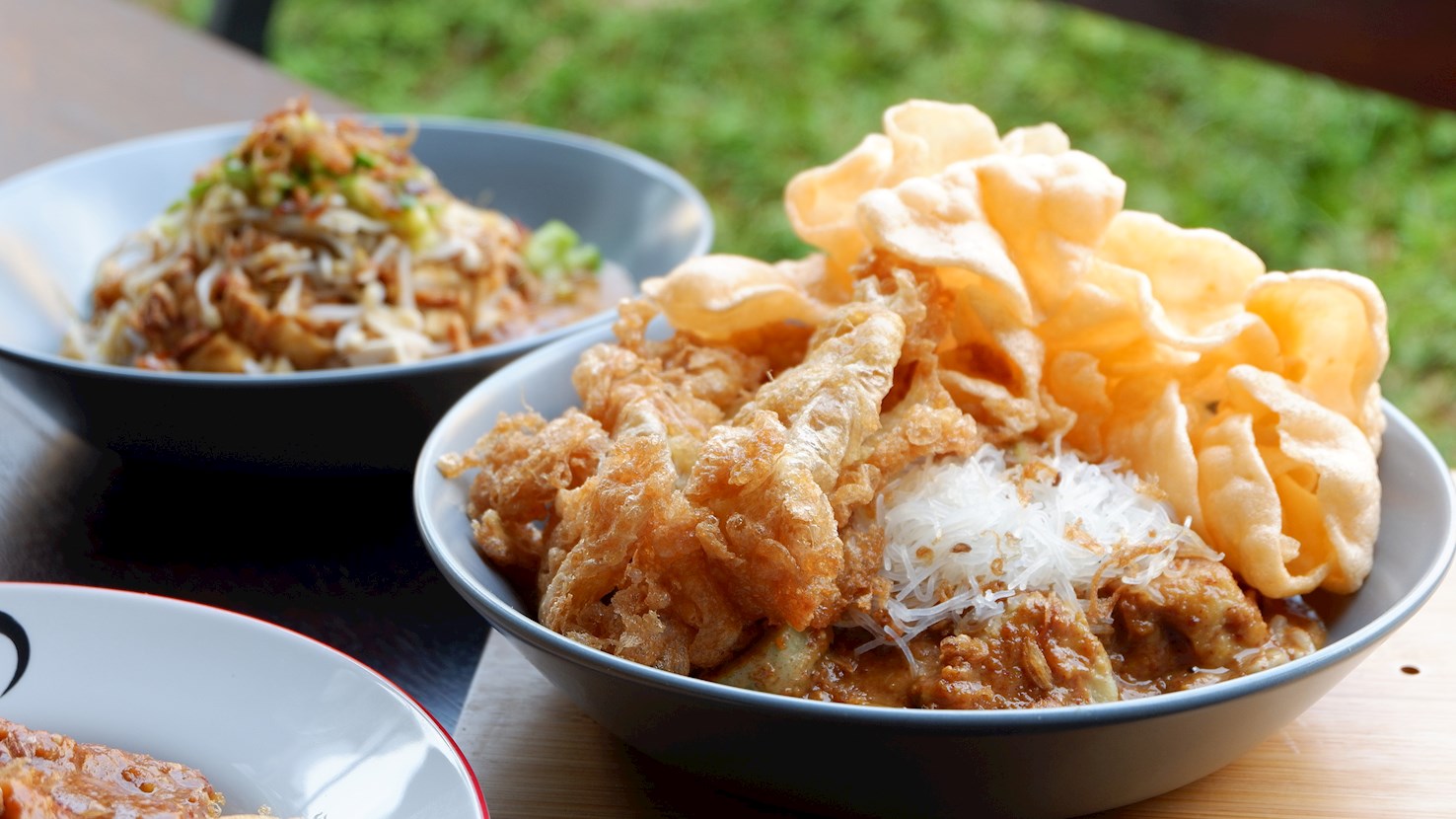
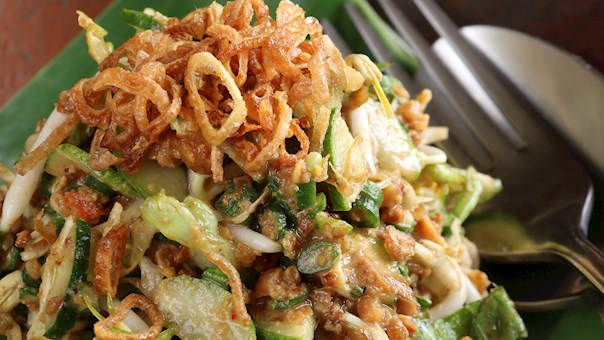
Ketoprak is a traditional street food dish that's often described as tofu salad. It's made with a combination of fried tofu, steamed rice cakes, rice vermicelli noodles, bean sprouts, cabbage, and cucumbers. The combination is served in peanut sauce and sweet soy sauce (kecap manis). It's usually topped with fried shallots and krupuk. The dish can be found at numerous ketoprak food carts throughout Jakarta, although there is still an ongoing debate about the origin of the dish – some claim that it was first made in Cirebon because the majority of street food vendors come from Cirebon. The tofu is freshly fried from the food carts, while the other ingredients are prepared in advance. Ketoprak is usually a vegan dish, but it's sometimes topped with a hard-boiled egg which makes it non-vegan.
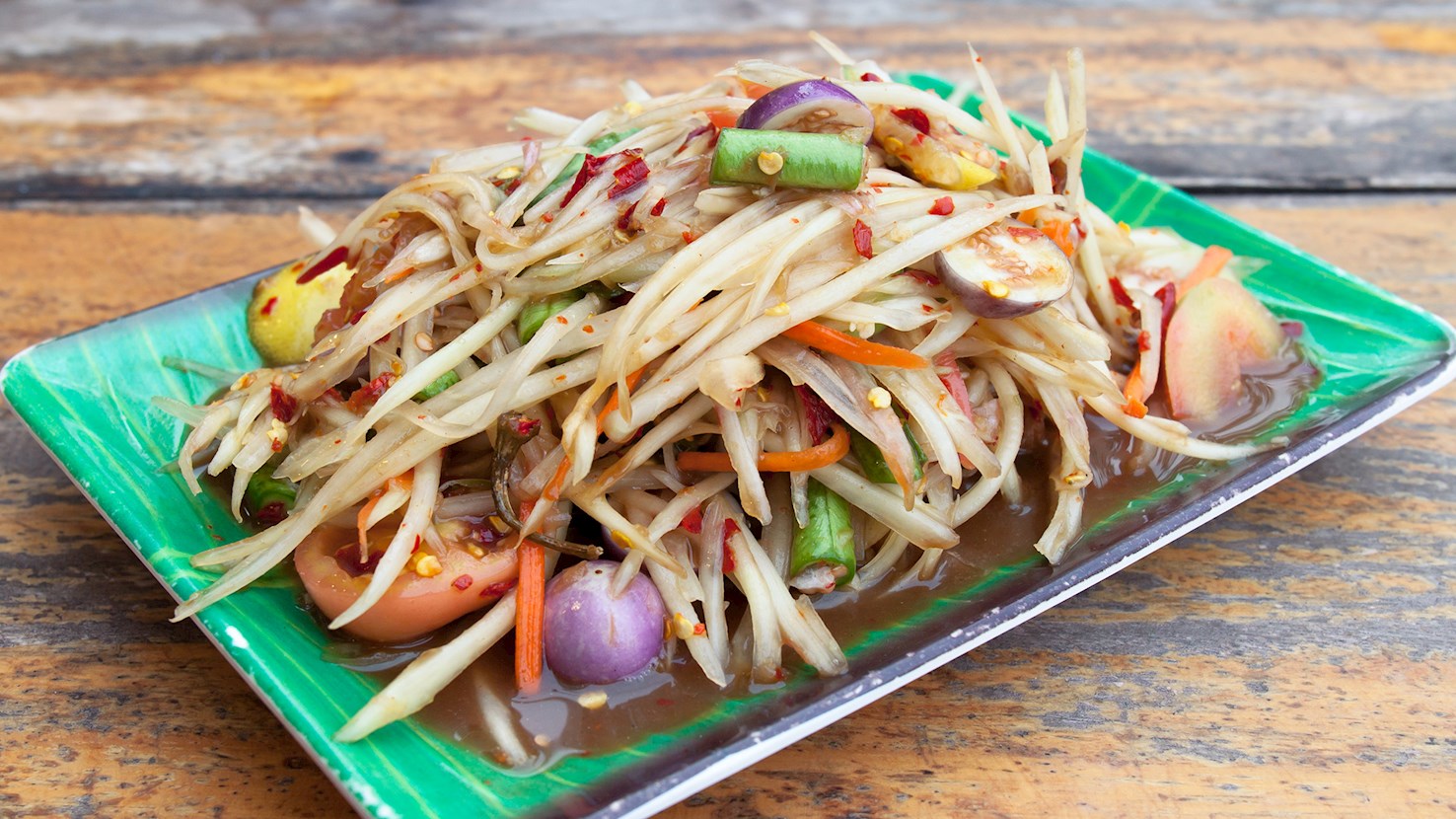
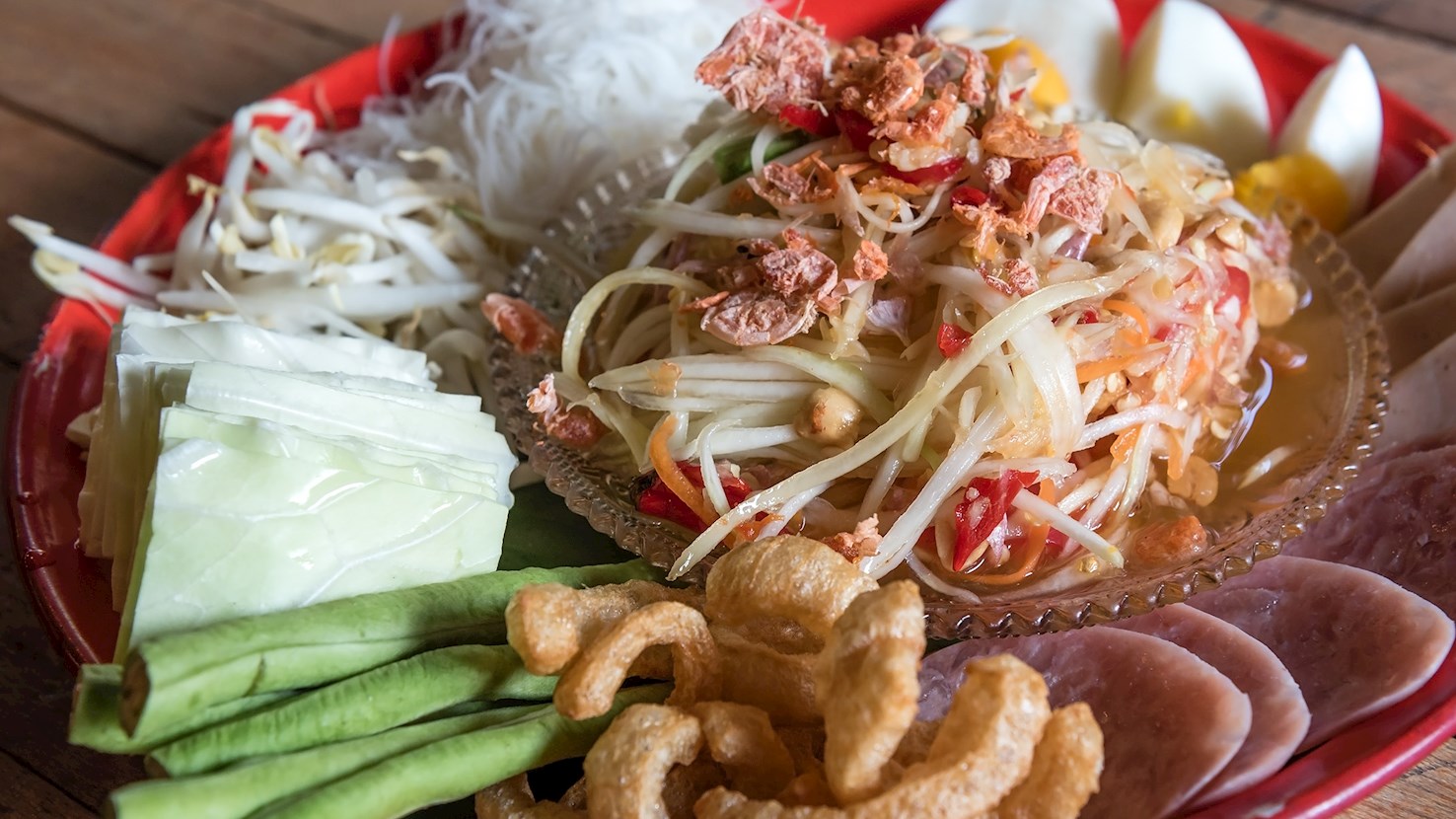
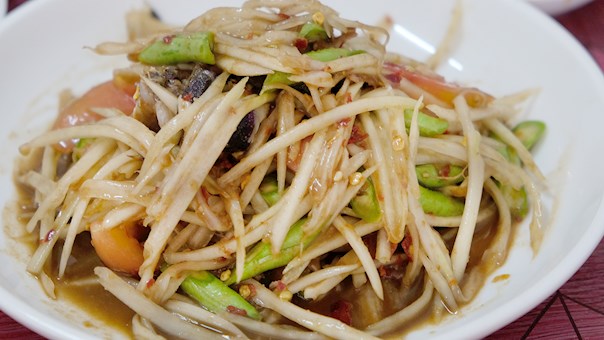
Som tam is a pounded green papaya salad of Lao origin that became a major part of the food culture of Isan, northeastern Thailand, before spreading throughout the rest of Thailand. It is made by pounding and tossing shredded unripe papaya with chilies, garlic, lime, fermented or fish-based seasonings, tomatoes, and other ingredients in a mortar. In Laos, the closely related form is known as tam mak hoong (ຕຳໝາກຫຸ່ງ), while in Isan the salad commonly appears with pla ra, the fermented fish seasoning closely related to Lao padaek. The sweeter version internationally known as som tam Thai, usually made with palm sugar, fish sauce, dried shrimp, roasted peanuts, long beans, and tomatoes, developed as a central Thai adaptation. The name som tam combines som, referring to sourness, with tam, meaning to pound. The dish belongs to the broader Lao category of tam, in which vegetables and fruits are pounded with chilies, garlic, fermented fish, and acidic seasonings. Lao and Isan food cultures are closely connected by language, migration, geography, and centuries of shared culinary practices. When Lao-speaking populations became incorporated into Siam and later Thailand, especially in the northeast, their foodways became part of what is now identified as Isan cuisine. Som tam therefore entered the wider Thai repertoire primarily through this Lao-Isan culinary connection. Papaya itself is not native to Southeast Asia. Carica papaya originated in tropical America and reached Asia through Spanish and Portuguese maritime networks during the sixteenth century. Once established in mainland Southeast Asia, its firm, mild unripe flesh proved well suited to existing Lao methods of pounding raw fruits and vegetables with salty, sour, and spicy seasonings. The precise date when green papaya became the standard ingredient cannot be established. The earliest currently identified printed Thai recipe specifically called som tam malakor, or papaya som tam, appears in the Bangkok cookbook Tamra Khraawp Lohk from 1929. Another version was recorded in Sai Yaowapa in 1935 as part of khao man som tam. These recipes show that papaya som tam had entered Bangkok culinary writing by the early twentieth century, but they do not establish Bangkok as its birthplace. Rural Lao and Isan foods were much less likely to appear in early printed cookbooks than dishes associated with urban kitchens. Som tam became far more visible across Thailand during the twentieth century as large numbers of people from Isan migrated to Bangkok and other cities. From the mid-twentieth century onward, Isan workers established food stalls and restaurants serving som tam, sticky rice, grilled chicken, and larb. By the 1960s, northeastern food had developed a significant presence in Bangkok, and som tam gradually became an everyday dish throughout Thailand. The defining preparation technique remains the mortar and pestle. Garlic and chilies are usually pounded first, followed by salty, sour, and sometimes sweet seasonings. Long beans and tomatoes are lightly bruised before shredded green papaya is added. A spoon is commonly used together with the pestle to lift and turn the ingredients. The goal is to bruise the papaya enough for the dressing to penetrate while keeping it crisp. Lao and Isan versions generally emphasize fermented fish, acidity, salt, and chili rather than pronounced sweetness. Tam mak hoong commonly uses padaek, while Isan som tam pla ra uses pla ra. Som tam pu pla ra also includes salted field crab. These forms usually contain little or no peanut and dried shrimp. By contrast, som tam Thai typically uses fish sauce instead of strongly fermented fish, more palm sugar, dried shrimp, and roasted peanuts, producing the sweeter profile most familiar outside Thailand. Som tam is therefore best understood as a family of closely related pounded salads rather than one fixed recipe. Green papaya is the best-known base, but cucumber, green mango, corn, fruit, noodles, and other ingredients can be prepared using the same tam technique. Individual vendors also adjust the amount of chili, acidity, sugar, and fermented fish according to preference. The salad is usually prepared to order because its texture is best immediately after pounding. The papaya should remain crisp, the tomatoes lightly crushed, and the dressing concentrated enough to coat the strands without making the salad soupy. In Laos and Isan, som tam is closely associated with glutinous rice. Small portions of sticky rice are eaten by hand alongside the salad, helping moderate the chili and absorb some of the dressing. Grilled chicken is another particularly established accompaniment, and the combination of som tam, sticky rice, and kai yang is now common throughout Thailand. Larb, grilled pork, grilled fish, sausages, pork rind, and fresh or blanched vegetables can also accompany it. Today som tam is one of the most widely recognized foods associated with Thailand, although its culinary roots lie in Lao food culture and the closely related cuisine of Isan. The sweeter som tam Thai dominates many international Thai restaurants, while the more fermented and less sweet forms remain central to everyday eating in northeastern Thailand and Laos. Sticky rice and grilled chicken are its most characteristic pairings, while cold water, soda water, lager, or unsweetened tea suit its chili, acidity, and saltiness.
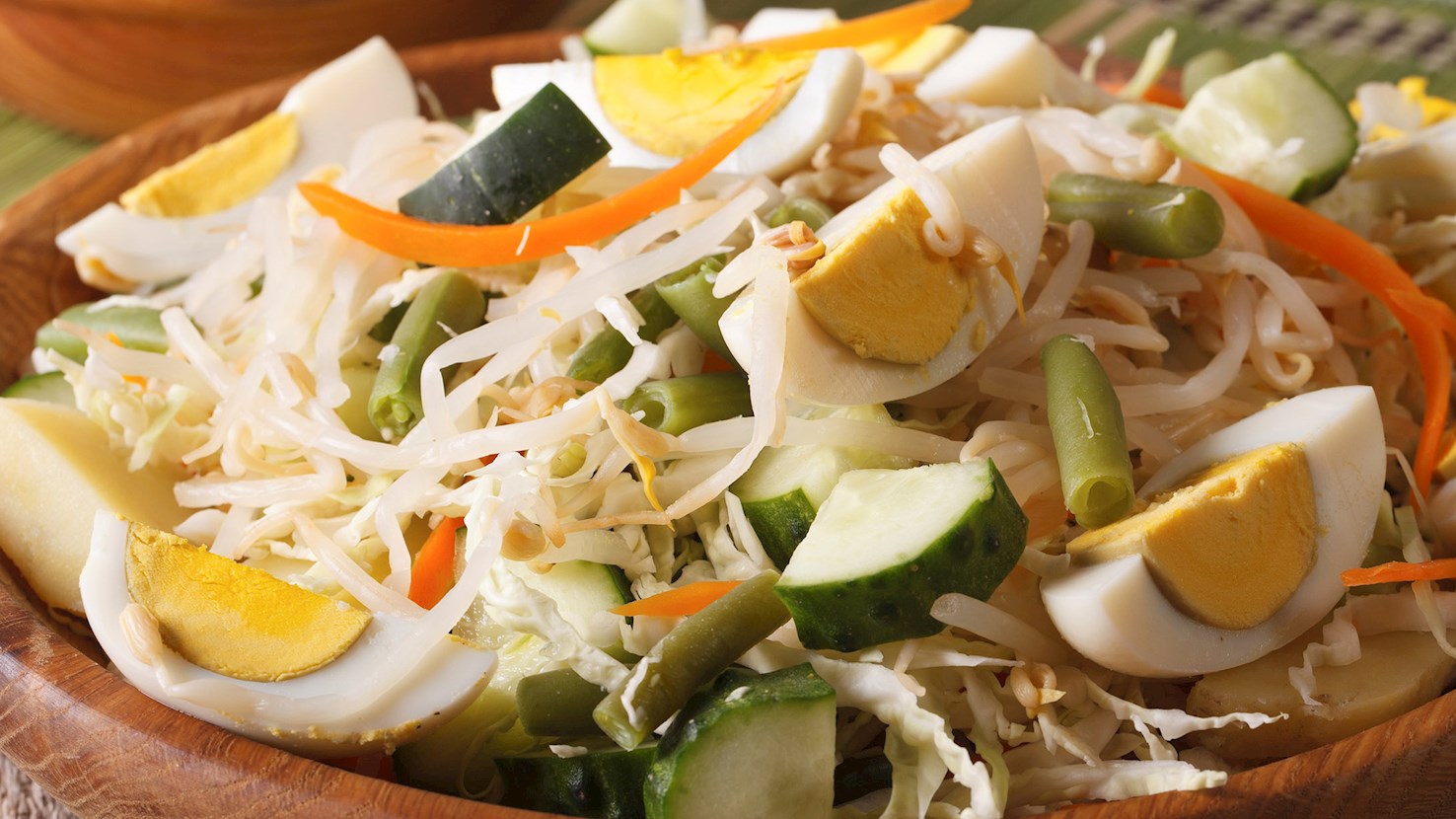
Gado-gado is an Indonesian version of a mixed salad. It usually consists of a variety of vegetables, eggs, tempeh, and tofu. The vegetables are usually just slightly boiled, tossed with a nutty sauce, then completed with the addition of crispy prawn crackers. The sauce was traditionally made with cashews, but due to lower price and availability, peanuts are more frequent today. The dish is a true representative of Indonesian street food, and it has been present in the Indonesian culture since the 16th century. It originated among the native people of Jakarta, but today it can be found in all parts of Indonesia. Gado-gado can be a whole dish on its own, but it can also be boosted by the addition of rice, rice crackers, or chicken. This classic Indonesian street food is usually sold by street vendors or at hawker centers, and it can be served for breakfast, lunch, or dinner.
Bok l’hong, meaning pounded papaya in Khmer, is a Cambodian take on the green papaya salad that is widely consumed throughout Southeast Asia and is believed to have originated in Laos. Like the Lao and Thai versions, the Cambodian papaya salad usually requires the shredded fruit to be pounded with other ingredients, while the Vietnamese variety doesn't involve pounding of the fruit. The salad often contains tamarind, galangal, and prohok, a type of Cambodian fish paste. Bok l'hong can also feature smoked fish or salted crabs, and it is usually consumed with steamed rice and grilled meat such as chicken. One significant difference between the traditional Laotian green papaya salad and the Cambodian version of the salad lies in the use of white fish sauce in the latter instead of the much more pungent fermented fish sauce which is typically used in the former. Just like in Thailand, Vietnam, and Laos, in Cambodia, green papaya salad is available in numerous restaurants and is a common street food item.
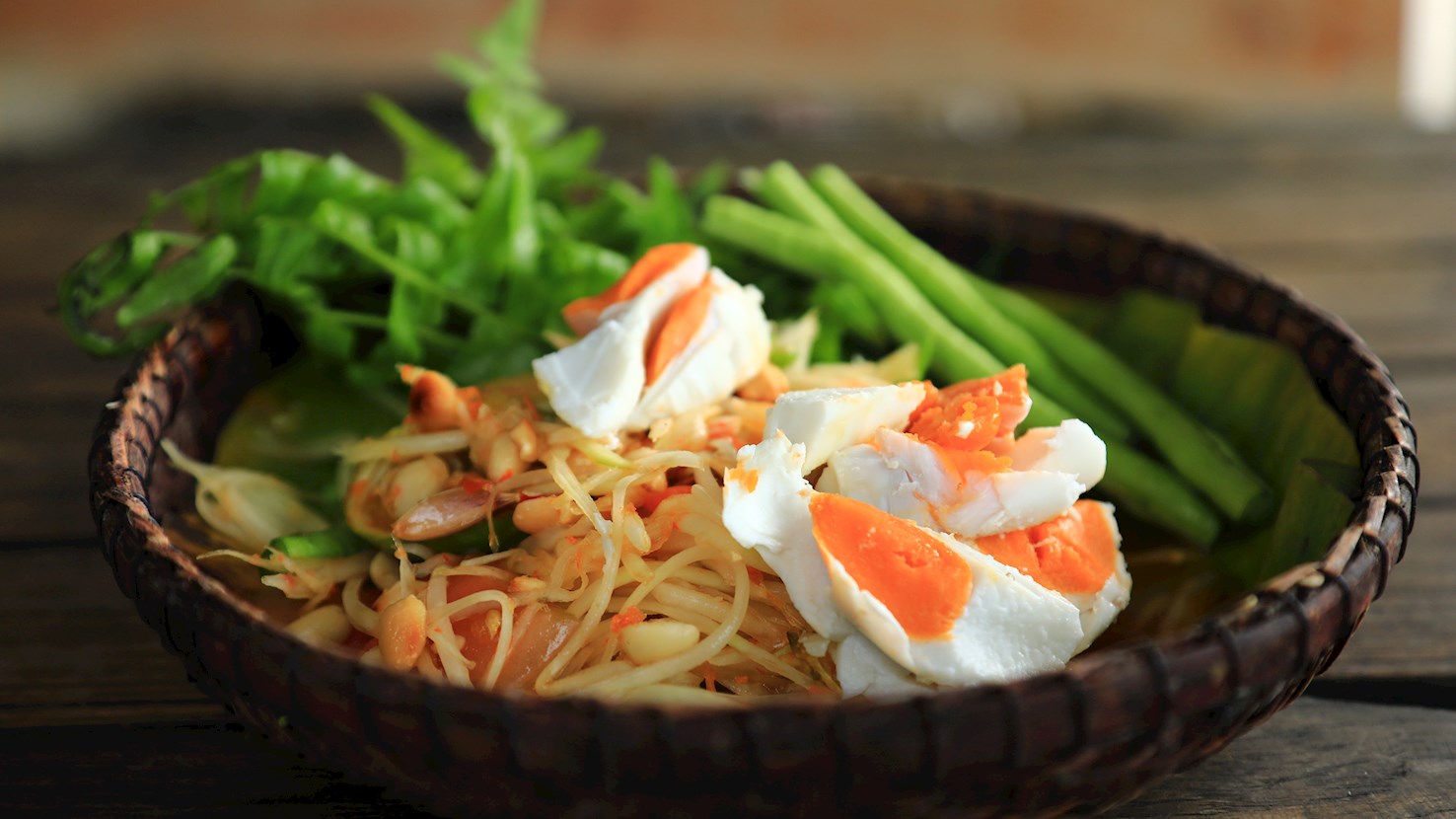
Som tam khai khem is a traditional papaya salad originating from Thailand. There are many types of som tam, and this one can be distinguished from the rest because it’s topped with salted hard-boiled eggs. The salad is usually made with a combination of green papaya, bird’s eye chili, garlic, green beans, tomatoes, crushed peanuts, carrots, dried shrimp, and hard-boiled salted eggs. The ingredients are mixed thoroughly, while the salted egg is cut into quarters and placed on top of the salad, although it can also be mixed into it. The salad is dressed with a sauce consisting of fish sauce, palm sugar, lime or tamarind juice, and chicken stock.
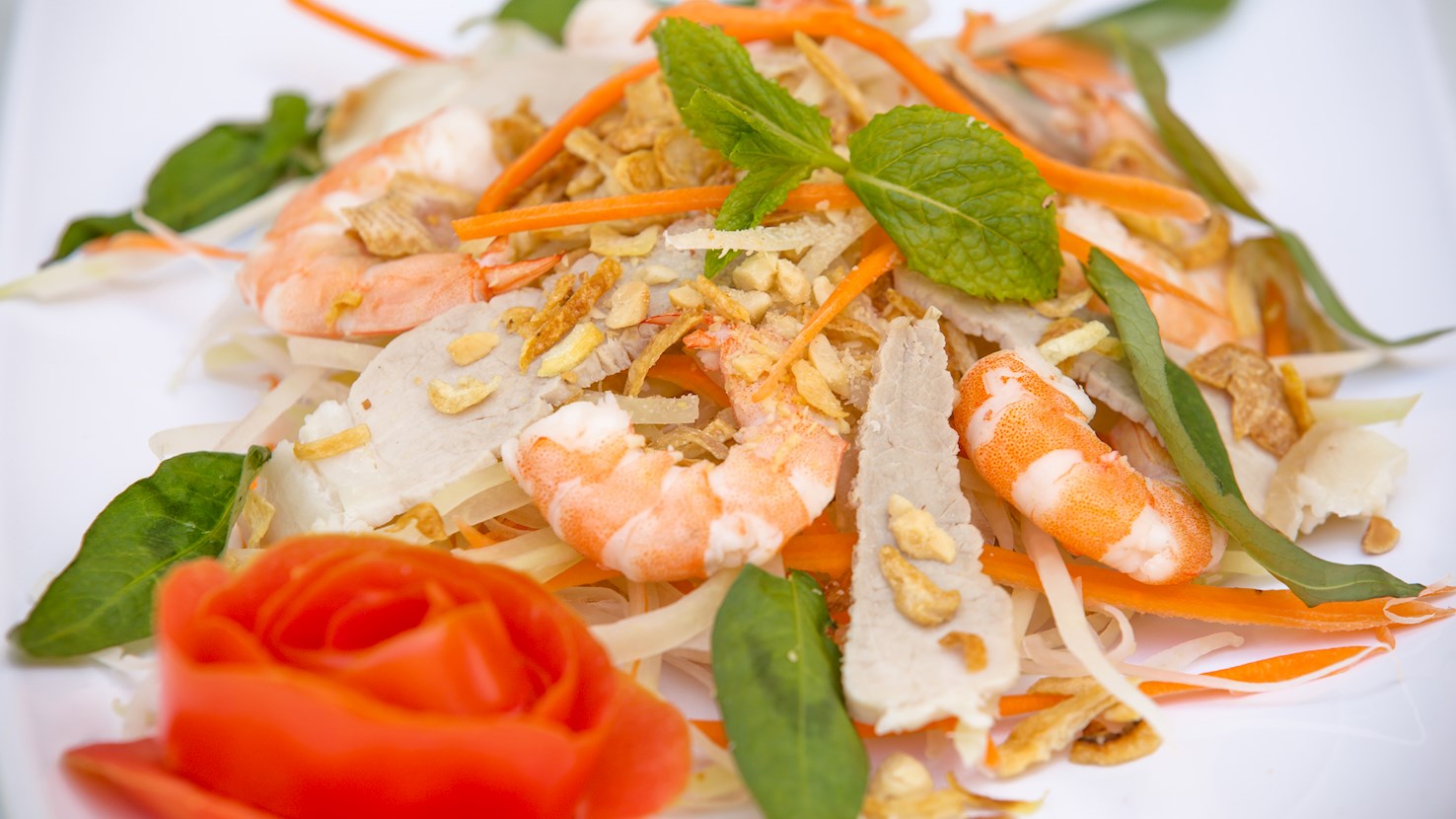
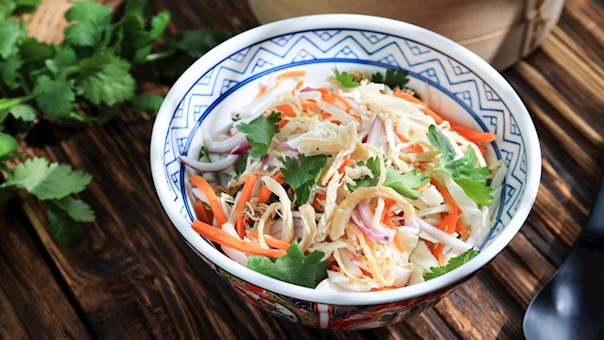
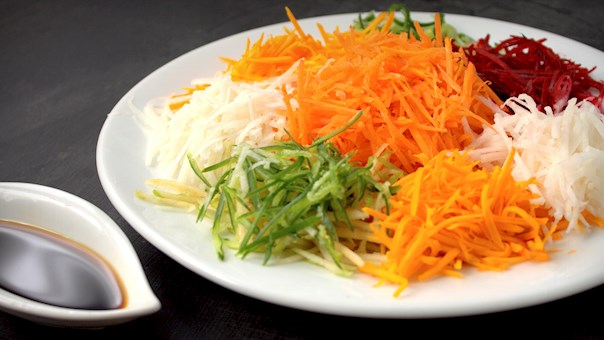
Nộm is a traditional salad. It's made with a combination of fresh, grated vegetables such as cabbage and turnip, along with papaya, green mango, banana flowers, cucumber slices, and sometimes even shredded boiled pork. Other common ingredients include hot chili peppers, roasted ground nuts, and grated carrots to make the salad more visually attractive and colorful. Nộm is the name in the North, while in Southern Vietnam, the salad is known as gỏi. The salads are usually dressed with nước chấm, and they're often served with prawn crackers on the side.
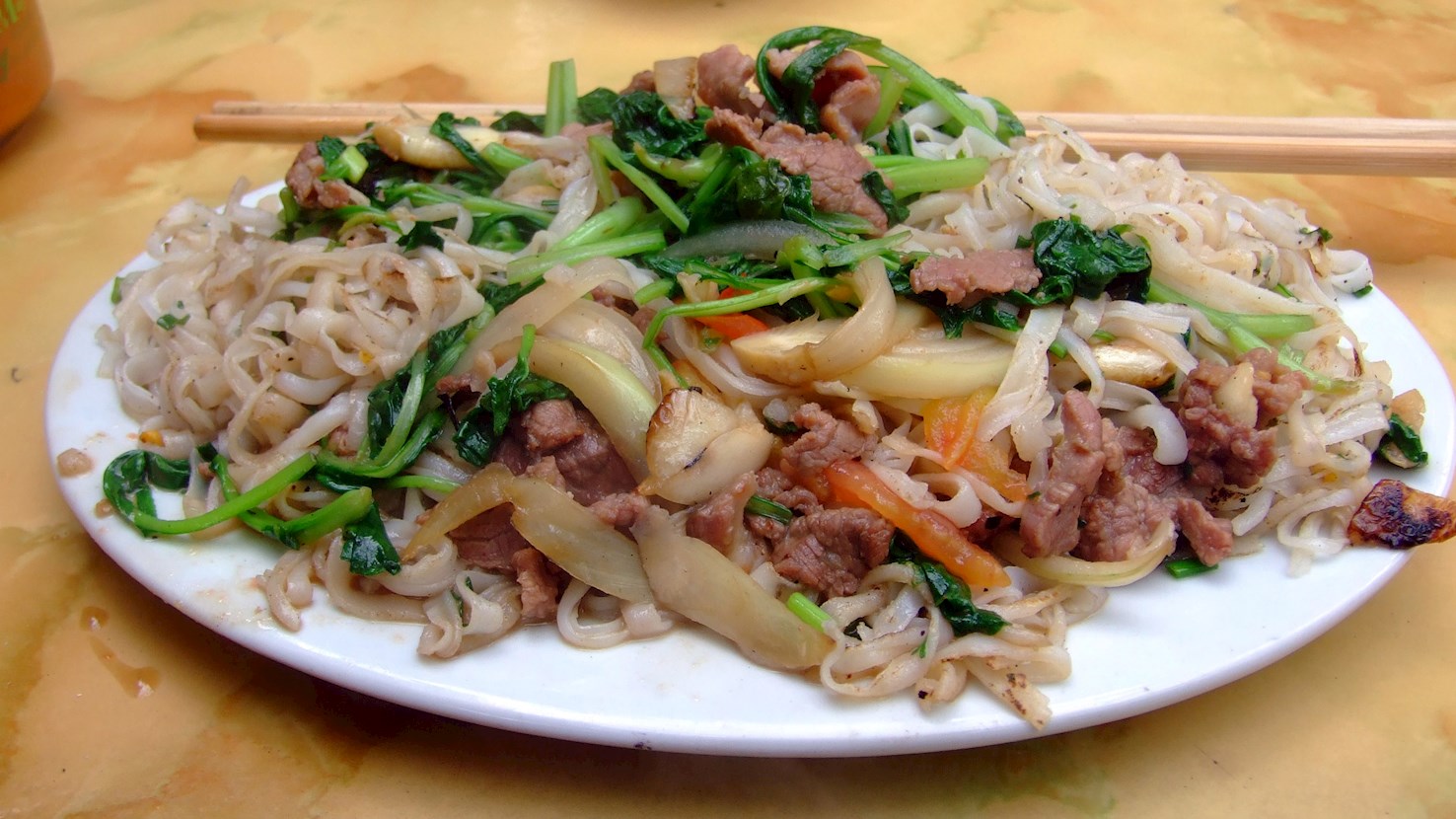
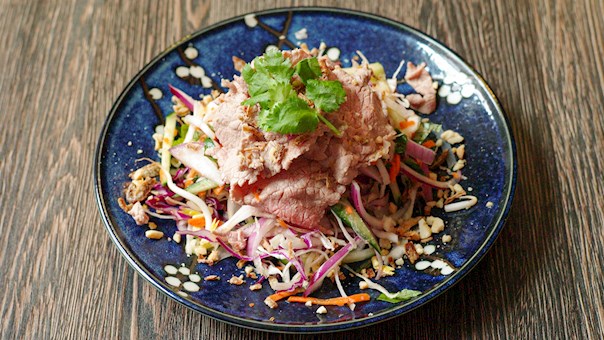
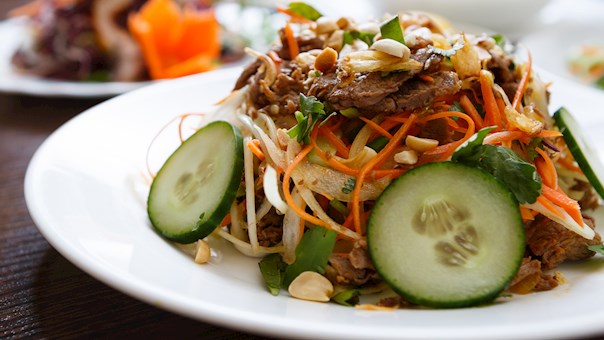
Phở trộn or mixed pho is a classic Vietnamese pho variety. This type of pho is dry, meaning that it doesn't contain broth – instead, it's a salad with meat (beef or chicken) and noodles. The dish is typical of Hanoi and it's especially popular during summer. The sliced meat is marinated in salt, ginger, pepper, garlic, lime juice, and five spice powder. It's then browned in a pan and mixed with fresh greens (mint, Thai basil, lettuce, cilantro, bean sprouts), fried shallots, rice noodles, and a dressing consisting of vinegar, fish sauce, sugar, and tamarind paste. The noodle salad is often garnished with chopped peanuts and red chili peppers, while lime wedges are usually served on the side.
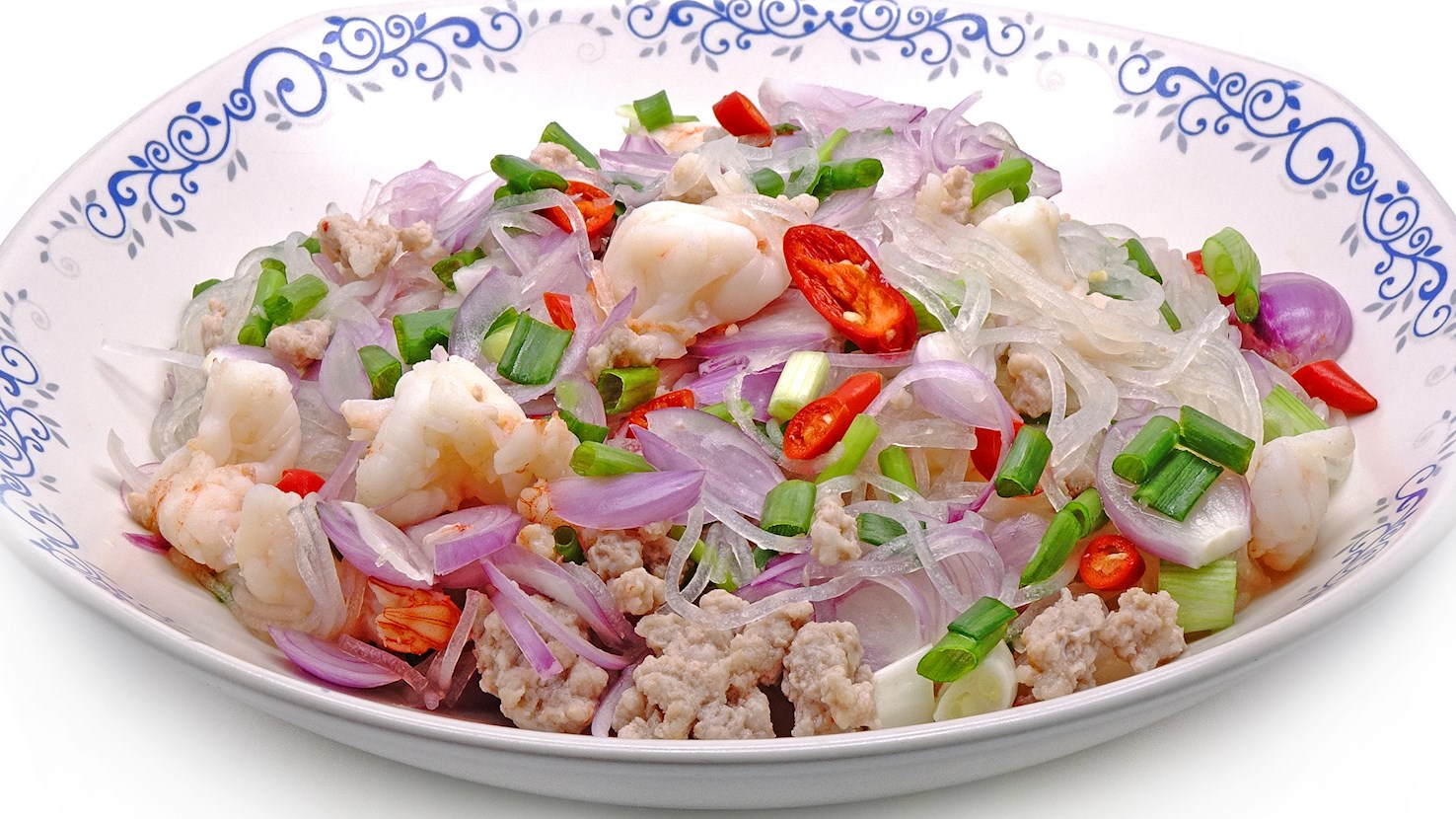
Yum woon sen is the name for a spicy Thai salad made with glass noodles, ground pork, chili peppers, and dressings. The noodles and the pork are cooked separately, then combined with crunchy chopped vegetables and drizzled over with fish sauce and lime juice. Once assembled, the salad is traditionally topped with peanuts, although some places use shrimps as the topping of choice. Because yum woon sen is typically quite spicy, people often consume it with steamed rice and lettuce on the side.
TasteAtlas food rankings are based on the ratings of the TasteAtlas audience, with a series of mechanisms that recognize real users and that ignore bot,
nationalist or local patriotic ratings, and give additional value to the ratings of users that the system recognizes as knowledgeable.
For the “Top 53 Southeast Asian Salads” list until October 15, 2026, 1,354 ratings were recorded, of which 1,031 were recognized by the system as legitimate.
TasteAtlas Rankings should not be seen as the final global conclusion about food. Their purpose is to promote excellent local foods,
instill pride in traditional dishes, and arouse curiosity about dishes you haven’t tried.




What People Say