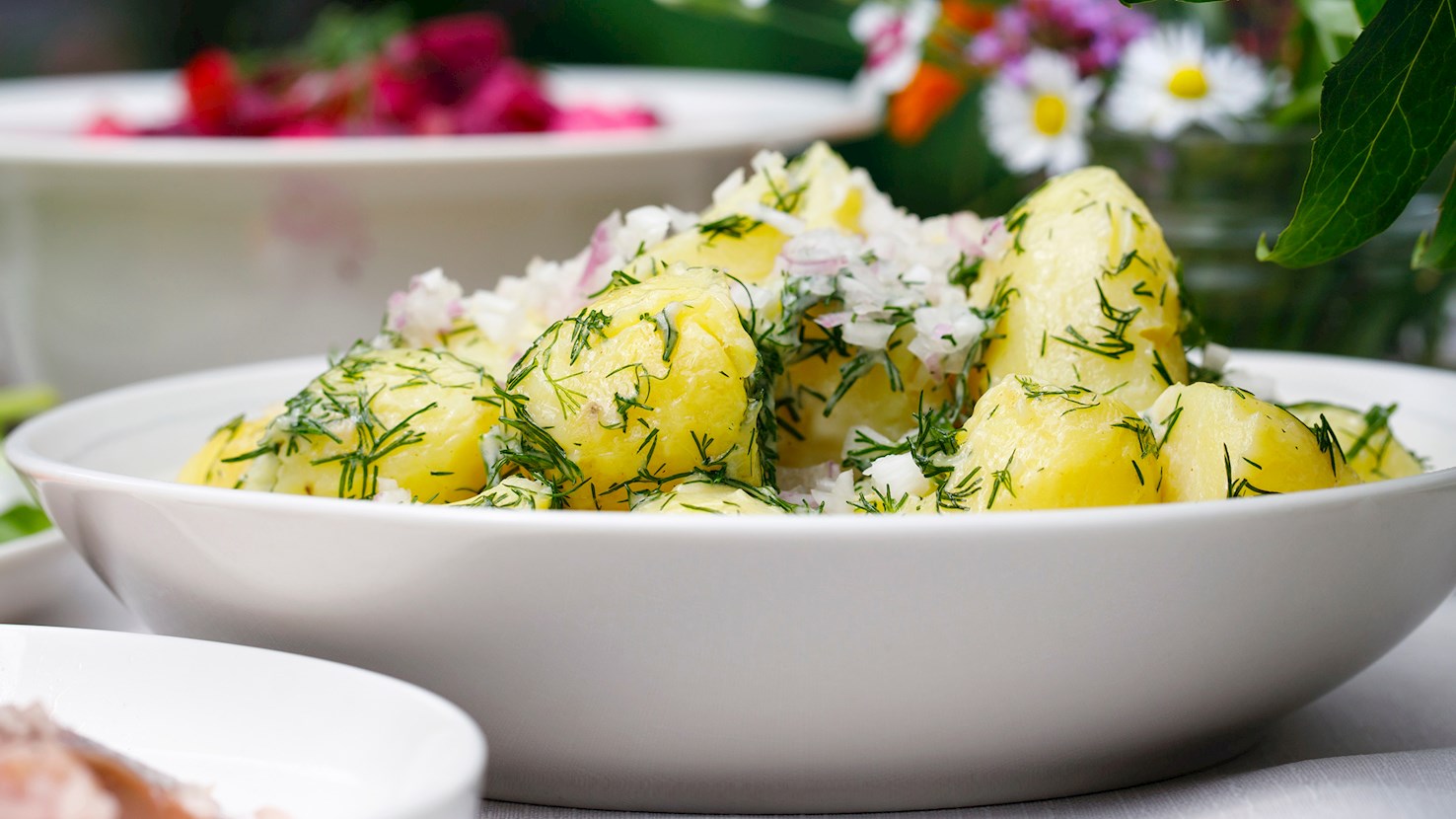
Färskpotatissallad is a traditional potato salad. Although there are many variations, the salad is usually made with a combination of new potatoes, sour cream or crème fraîche, chopped dill, and mayonnaise. The new potatoes are scrubbed and boiled in salted water until soft. They're drained and cut into smaller chunks. The crème fraîche or sour cream is mixed with the mayonnaise and dill, and the potato chunks are then folded into the mixture. Färkspotatissallad is well-chilled for at least one hour before serving. This potato salad is often served as part of a smorgäsbord buffet or Swedish Midsummer's Eve picnics.
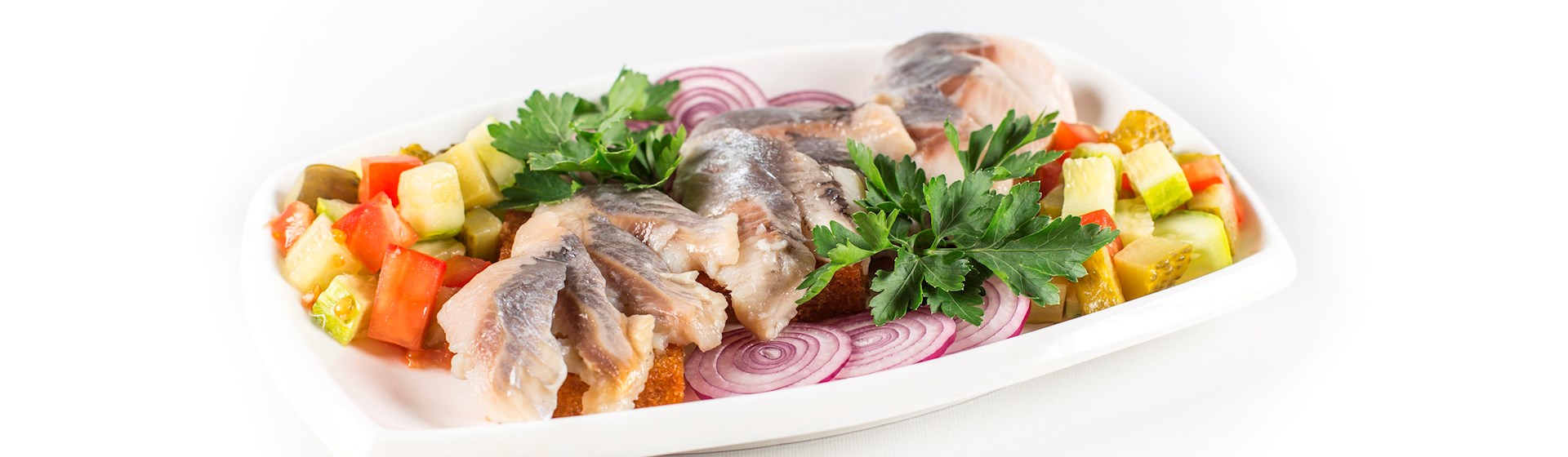
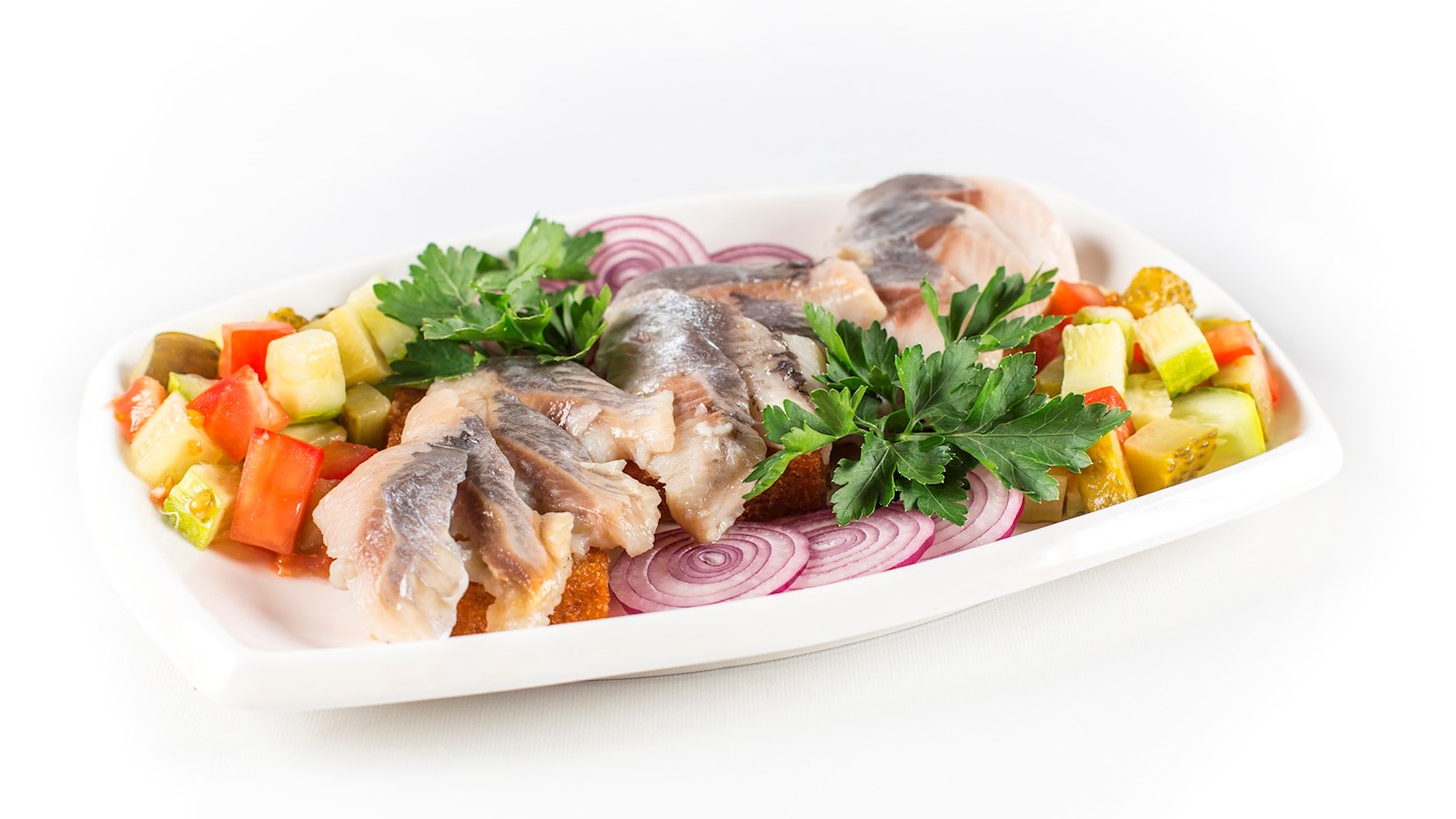
Traditionally served on the Christmas smörgåsbord, sillsalat is a Swedish salad that combines finely sliced or minced pickled herring with diced boiled potatoes, pickled beets, pickles, apples, and chopped onions. All the ingredients are placed in a large bowl and tossed lightly with a sour-sweet dressing made with vinegar, water, sugar, pepper, and (optionally) cream or yogurt. For a nice pop of color, the salad can be enriched with whipped cream flavored with beet juice. Sillsalat is usually garnished with chopped parsley and served with wedges of hard-boiled eggs, rye bread, and sour cream.
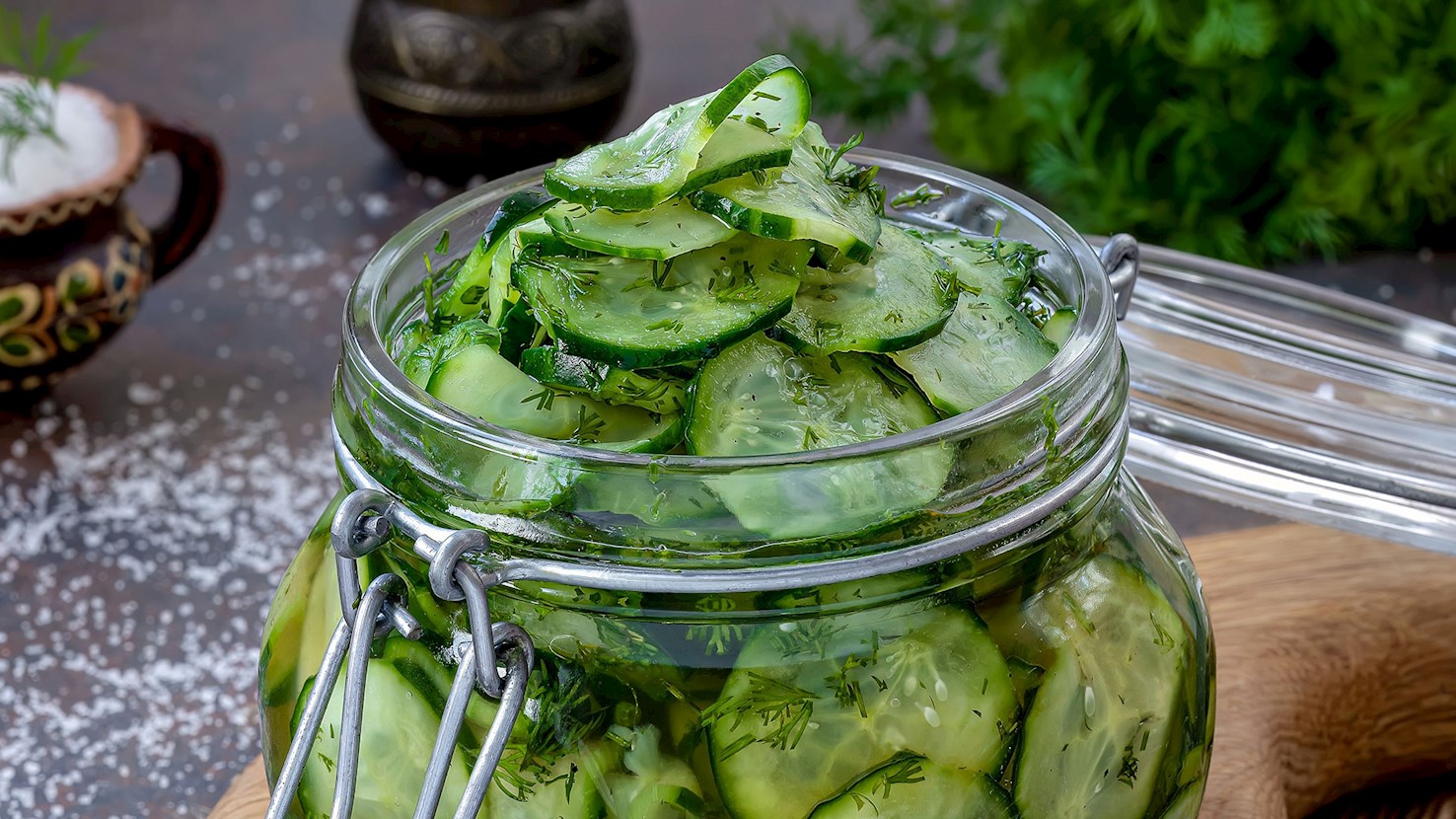
Pressgurka is a Swedish quick-pickled cucumber dish found across the country in homes, canteens and restaurants, most often accompanying meat-based meals such as meatballs or roasted dishes. It comes from Sweden’s long-established practice of preserving vegetables through acid, sugar and salt to extend the usefulness of short-season produce in a northern climate, a method well documented in cookbooks from the late nineteenth century where lightly pressed cucumbers appeared as an easy way to prepare fresh vegetables for immediate consumption while still gaining some of the qualities of preserved foods. The preparation involves slicing cucumbers very thinly, sprinkling them with salt and briefly pressing them to draw out moisture, then mixing the softened slices with a solution of vinegar, sugar, water and occasionally white pepper and dill. The pressing step changes the texture in a way that distinguishes it from other Scandinavian cucumber pickles by creating a softer but still crisp bite without requiring long curing. It is usually served chilled as a refreshing side to warm mains, often placed alongside potatoes and gravy, and it also appears on many Swedish lunch tables, smorgasbord spreads and summer meals where its acidity helps balance richer flavors. It is eaten throughout the year, often straight from the refrigerator, and pairs well with dishes containing cream-based sauces, roasted meats, fried fish, new potatoes and beverages such as light lagers or crisp, low-tannin white wines that can match its acidity without overwhelming it.
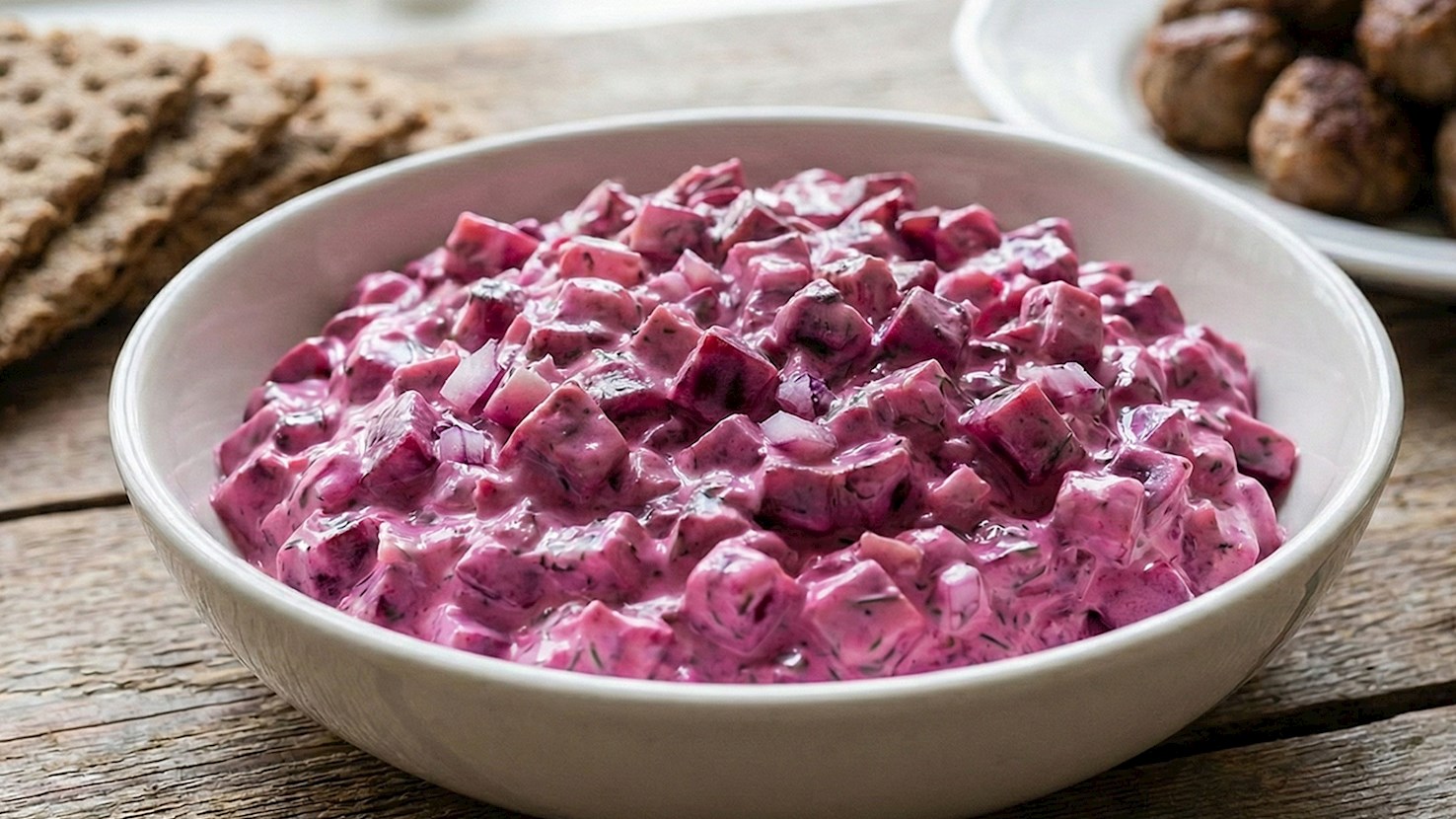
Rödbetssallad is a Swedish beetroot salad that has become a recognizable part of the country’s cuisine, especially linked to festive occasions. Made primarily from cooked or pickled beets, it is known for its vibrant color and creamy texture, and it often accompanies meat dishes in a way that balances richness with freshness. The dish became established in Swedish households during the late nineteenth and early twentieth centuries, when pickling and preserving were essential methods for ensuring a varied diet year-round. Beets, being hardy and easy to store, were commonly used, and turning them into a salad with cream or mayonnaise allowed for both practicality and flavor. Over time, rödbetssallad grew beyond home preparation and began appearing in delicatessens and restaurants, becoming closely associated with holiday meals such as Christmas and New Year, as well as casual dining traditions. Preparing rödbetssallad usually involves dicing cooked or pickled beets into small, even cubes and mixing them with ingredients like diced apples, onions, and sometimes pickled cucumbers. The mixture is bound with mayonnaise, crème fraîche, or sour cream, creating a smooth consistency that carries the sharp sweetness of the beets and the tang of the dressing. Once combined, the salad is left to rest for a while so that the flavors meld, and it is typically served chilled. It is eaten as a side dish with meats such as meatballs or cold cuts, and its bright color makes it a standout on the table. Today, rödbetssallad is eaten across Sweden, especially during Christmas feasts where it is paired with ham, but also in everyday settings such as open-faced sandwiches or simple dinners at home.
TasteAtlas food rankings are based on the ratings of the TasteAtlas audience, with a series of mechanisms that recognize real users and that ignore bot,
nationalist or local patriotic ratings, and give additional value to the ratings of users that the system recognizes as knowledgeable.
For the “Top 4 Swedish Salads” list until June 15, 2026, 46 ratings were recorded, of which 41 were recognized by the system as legitimate.
TasteAtlas Rankings should not be seen as the final global conclusion about food. Their purpose is to promote excellent local foods,
instill pride in traditional dishes, and arouse curiosity about dishes you haven’t tried.