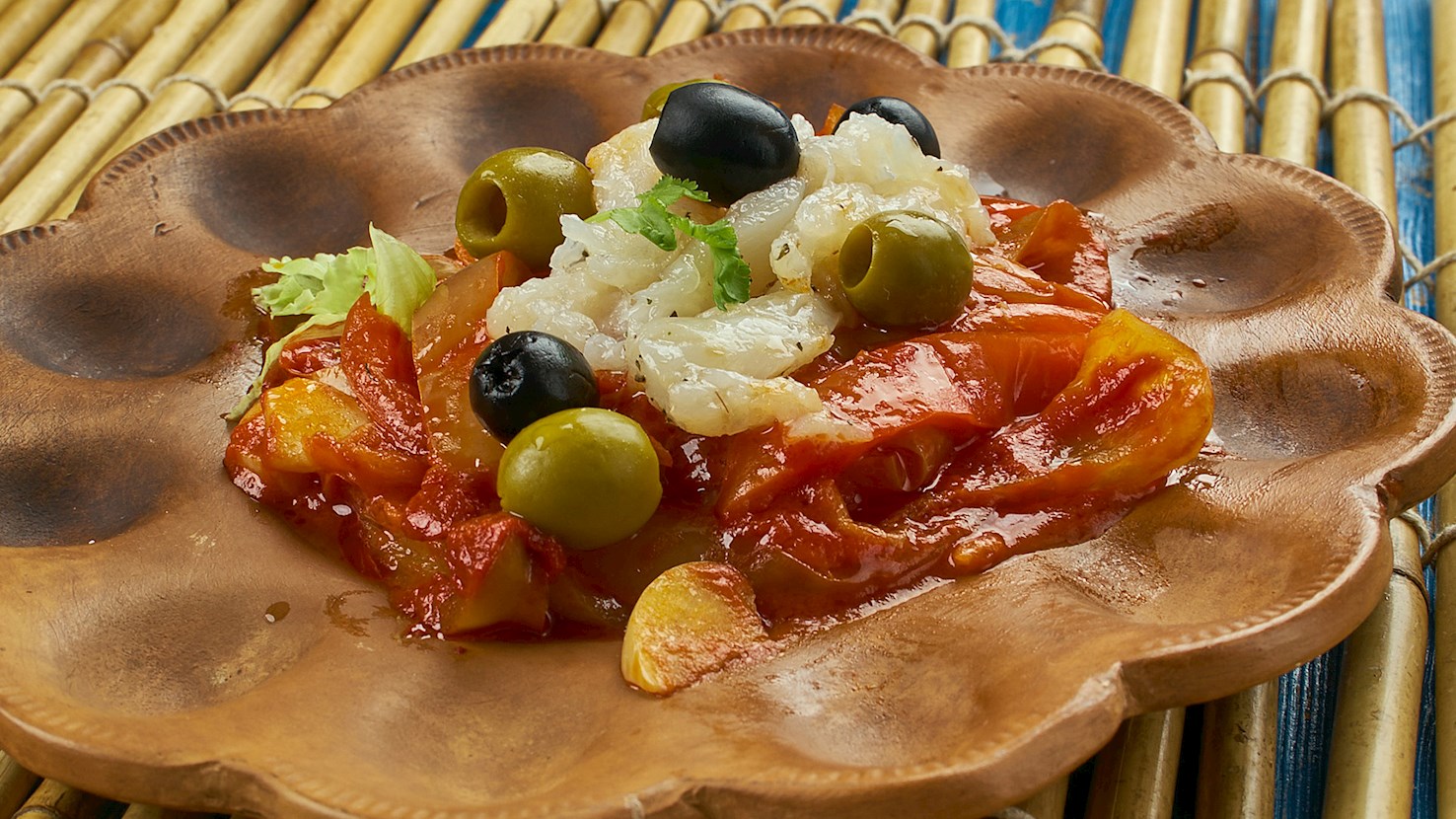
Esgarrat is a traditional dish originating from Valencia. It's made with red peppers, cod, garlic, olive oil, and salt. This simple appetizer is prepared by roasting the peppers and the cod on a grill. The skin is then peeled off the peppers and ripped into irregular strips by hand. The cod is also ripped into strips, and it's then placed on top of the peppers. The dish is seasoned with garlic, salt, and lots of olive oil. The name of the dish refers to the method of preparation, meaning that the ingredients must be ripped or torn. Esgarrat is often served at bars, where it's mopped up with bread. In the past, the dish used to be a staple of hungry fishermen. There are also other varieties, and most of them incorporate black olives in the dish.
Espencat is a dish of roasted vegetables and cod from Valencia. Its name comes from the Valencian word espencar, meaning “to tear,” which describes the way the roasted vegetables are prepared before being combined with other ingredients. The dish is made primarily with red peppers and eggplants, which are roasted until their skins blister and char, then peeled and torn into strips. Salted cod, soaked to remove excess salt and then flaked, is often added, giving the dish a savory depth that contrasts beautifully with the natural sweetness of the vegetables. While cod is considered one of its main components, espencat can also be prepared without it, allowing the roasted vegetables to take center stage. In some versions, it incorporates canned chopped tomatoes, tuna (mojama), hard-boiled eggs, onions, pine nuts, and olives. Espencat is also closely related to esgarraet, another Valencian dish of flaked cod and roasted peppers, though espencat typically includes a broader mix of vegetables and textures. The preparation begins by roasting red peppers and eggplants—sometimes with garlic and onions—over an open flame or in an oven until their skins blister and blacken. Once cooled, the skins and seeds are removed, and the flesh is torn by hand into thin strips—a key step that helps the vegetables retain moisture and better absorb olive oil and seasoning. The cod is flaked into the mix, which is then dressed with generous amounts of extra virgin olive oil, salt, and often raw garlic for an aromatic finish. Some recipes recommend letting the dish rest for several hours or even overnight so the flavors can deepen and meld together. It is typically served at room temperature or slightly chilled as a starter, a side dish, or a light main course, often accompanied by slices of crusty bread to soak up the juices. The dish is most common in the warmer months, when peppers and eggplants are at their best, and it pairs particularly well with crisp white wines or dry rosés, which enhance its freshness and balance its flavors.
Ensalada de naranjas con granadas is a traditional salad originating from Valencia. This fresh salad is usually made with a combination of pomegranate, Valencian oranges, extra-virgin olive oil, garlic, sherry, lettuce, black olives, chives, and salt. The pomegranate, orange slices, black olives, and lettuce are mixed together, then dressed with a mixture of garlic, olive oil, salt, and sherry. Once assembled, the salad is sprinkled with the chives and served as a tapa. It can also be served as a late-summer lunch with added walnuts or toasted croutons.
TasteAtlas food rankings are based on the ratings of the TasteAtlas audience, with a series of mechanisms that recognize real users and that ignore bot,
nationalist or local patriotic ratings, and give additional value to the ratings of users that the system recognizes as knowledgeable.
For the “Top 3 Valencian Salads” list until May 15, 2026, 18 ratings were recorded, of which 12 were recognized by the system as legitimate.
TasteAtlas Rankings should not be seen as the final global conclusion about food. Their purpose is to promote excellent local foods,
instill pride in traditional dishes, and arouse curiosity about dishes you haven’t tried.