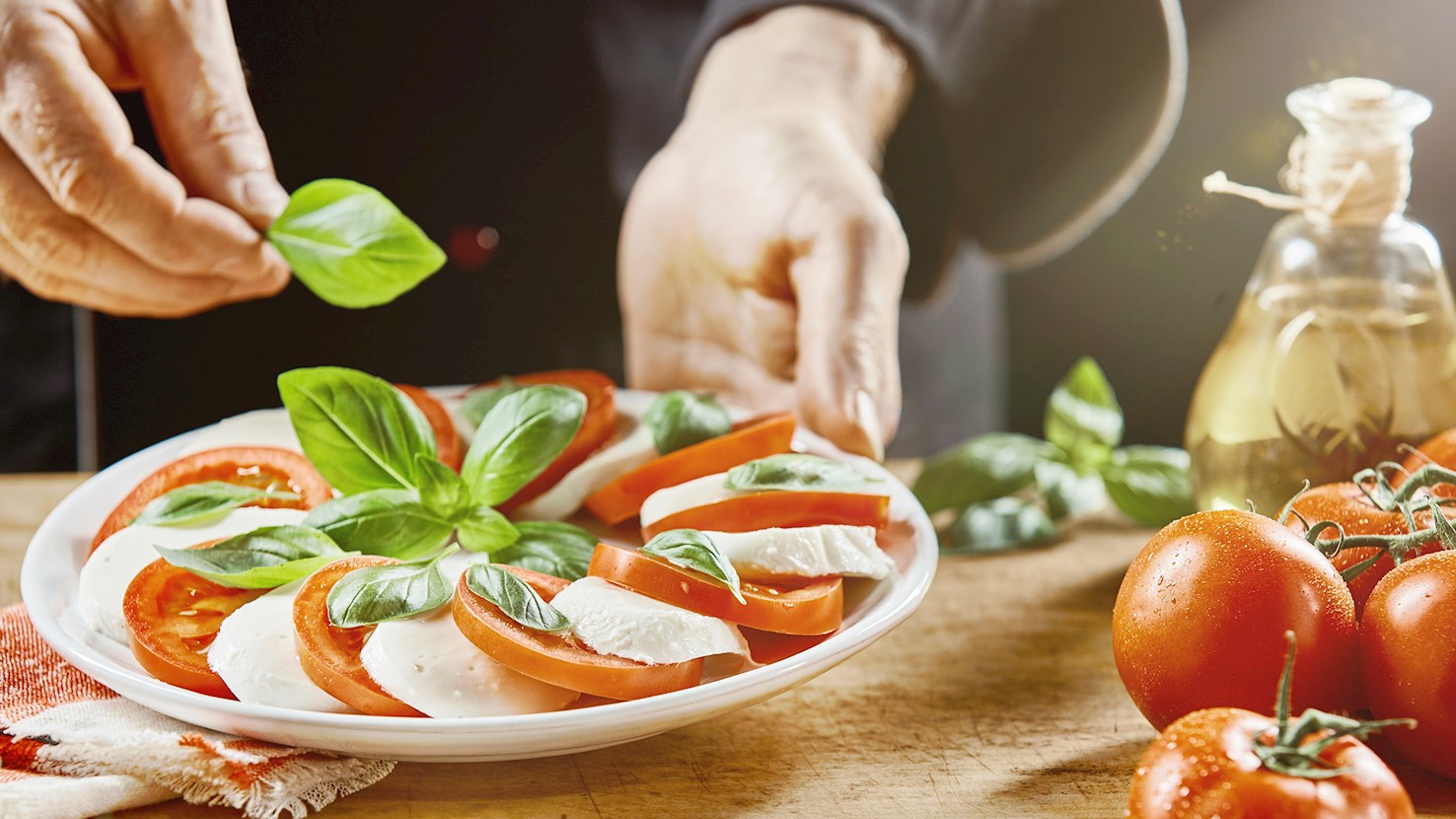
Nothing embodies the essence of summer in southern Italy like vibrant colors of the flavorful insalata Caprese, a true classic of Neapolitan cuisine. The perfect combination of ripe, sun-kissed tomatoes, creamy mozzarella and fresh basil - this simple salad is believed to have originated on the island of Capri, hence the name. Caprese was originally made with the Re Umberto or Fiascone tomatoes, traditionally grown along the beautiful Amalfi coast, and treccia di Sorrento, a type of braided mozzarella cheese. Also, contrary to popular practice, the authentic Caprese salad recipe doesn't call for balsamic or any other type of vinegar. Instead, mozzarella and tomatoes are thickly sliced, arranged on a plate and garnished with basil leaves, sprinkled with some salt and white pepper, then finished with a generous drizzle of extra virgin olive oil.
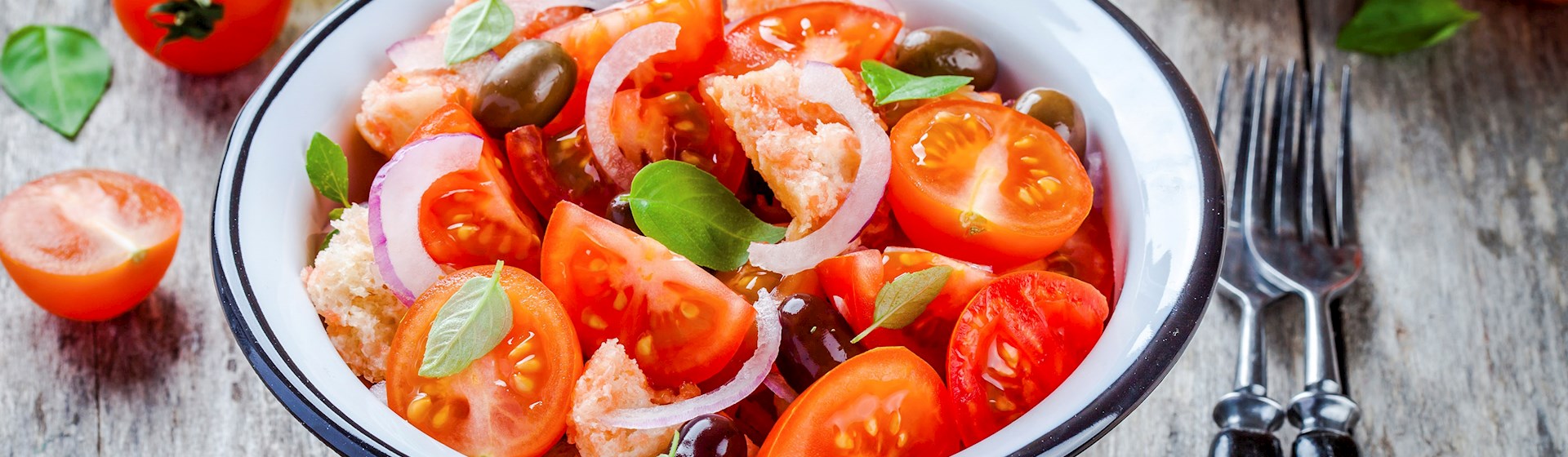
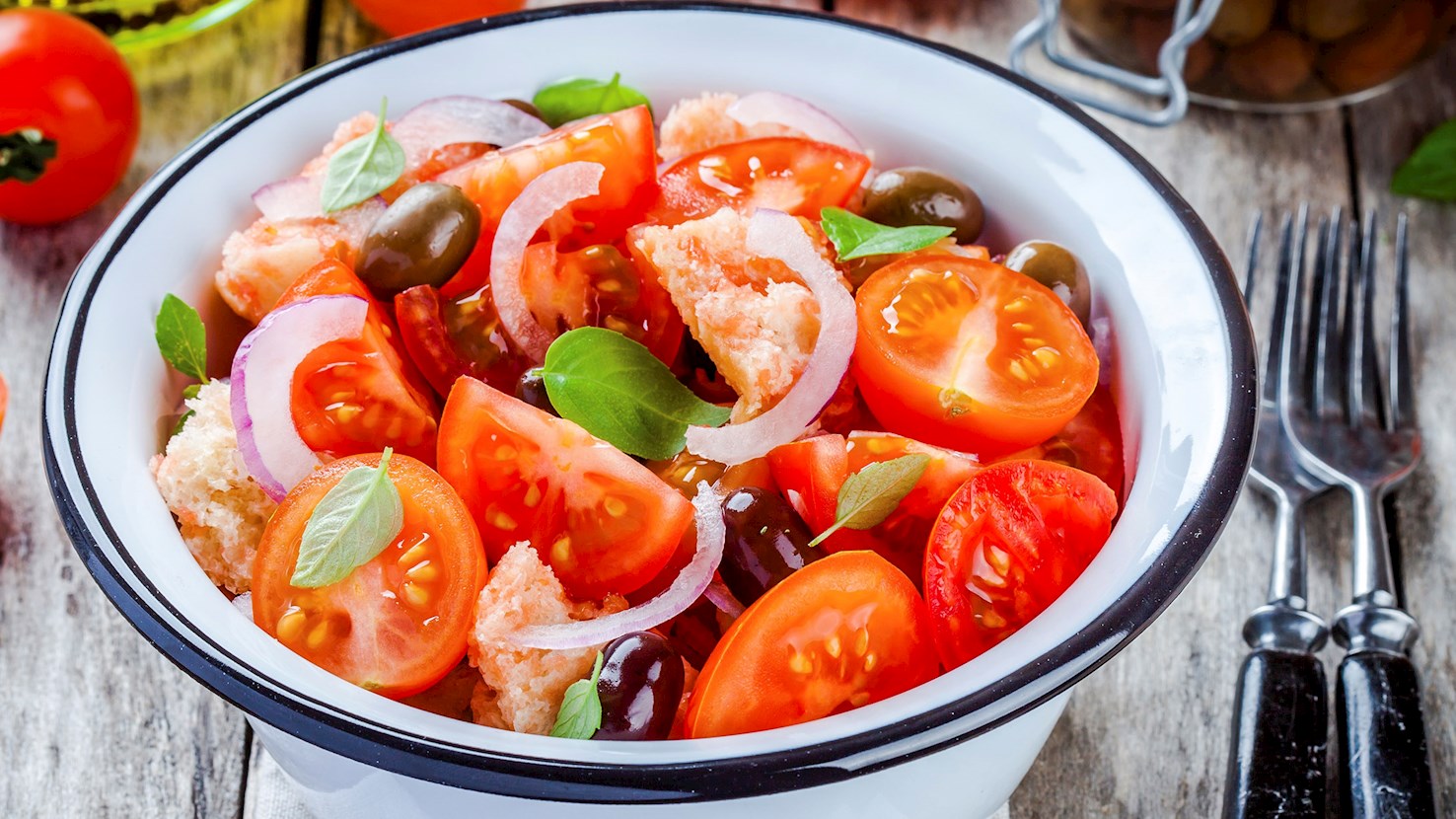
Panzanella is an Italian salad made from pieces of stale, moistened bread, with the addition of tomatoes, onions, or basil, and a dressing of vinegar and olive oil. The salad is a specialty of Tuscany, where it is usually served in the summer, making use of the fresh summer vegetables that are in season. Panzanella can sometimes include other additional ingredients such as cucumbers, olives, and cheese. It is believed that panzanella was invented out of necessity, as a means to utilize unwanted ingredients, such as stale bread. The salad was first described in the 1500s, in a poem by a famous artist and poet named Bronzino. The name of the dish comes from two words: pane, meaning bread, and zanella, meaning soup bowl. However, some people tend to disagree and claim that it is derived from the word panzana, meaning food. Regardless of the origin of its name, panzanella remains a classic Tuscan summer treat filled with fresh, flavorful ingredients.
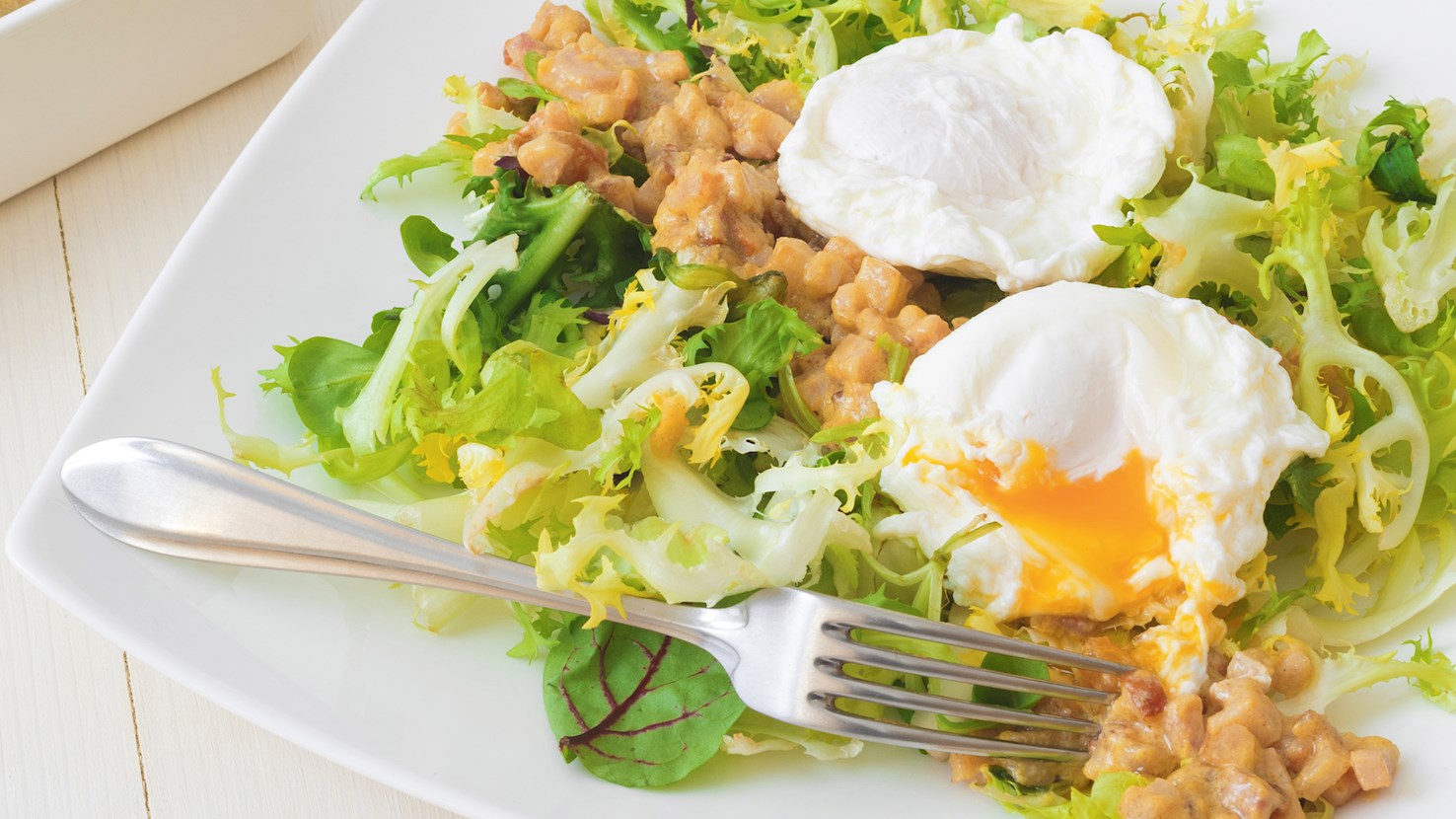
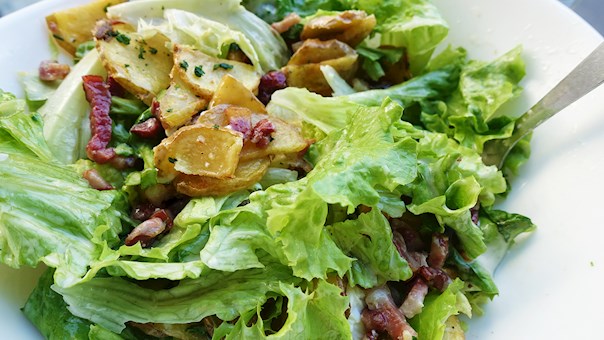
Salade Lyonnaise consists of endive, bacon, croutons, and a poached egg that is placed on top of it. It originates from the French city of Lyon, and it is one of the most popular salads found on the menus of numerous small French bistros and restaurants. The salad is a representative of the typical Lyonnaise cuisine, which started in the 1500s when Catherine de Medici told her chefs to make new dishes from various ingredients found throughout France. Today, the salad is typically found in tiny eateries called bouchons, specializing in comfort food.
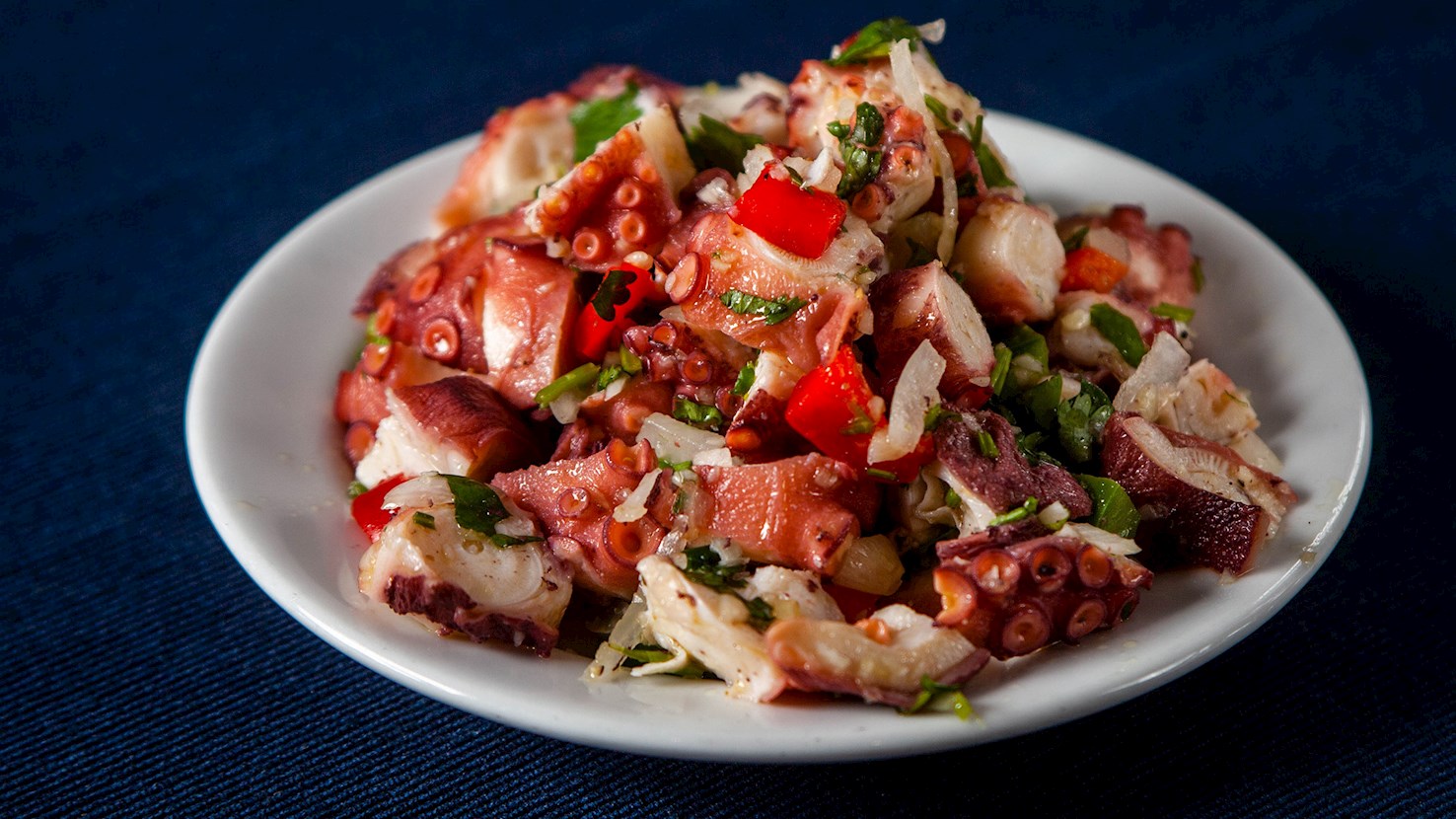
Salada de polvo is a traditional dish featuring tender octopus as the main ingredient. The octopus is boiled until tender, then cut into bite-sized pieces and combined with finely chopped onion, diced green bell pepper, minced garlic, and fresh coriander. The salad is dressed with high-quality extra virgin olive oil and vinegar, seasoned with salt and pepper, and optionally enhanced with a squeeze of lime or lemon juice. Depending on the recipe, tomatoes, herbs like mint, bay leaves, parsley, chives, and red bell peppers can also be included. Chilled for at least an hour to meld the flavors, this dish is light, refreshing, and tangy, with a savory depth from the olive oil and garlic. Often served as an appetizer or part of a meal, it pairs well with crusty bread and a crisp white wine.
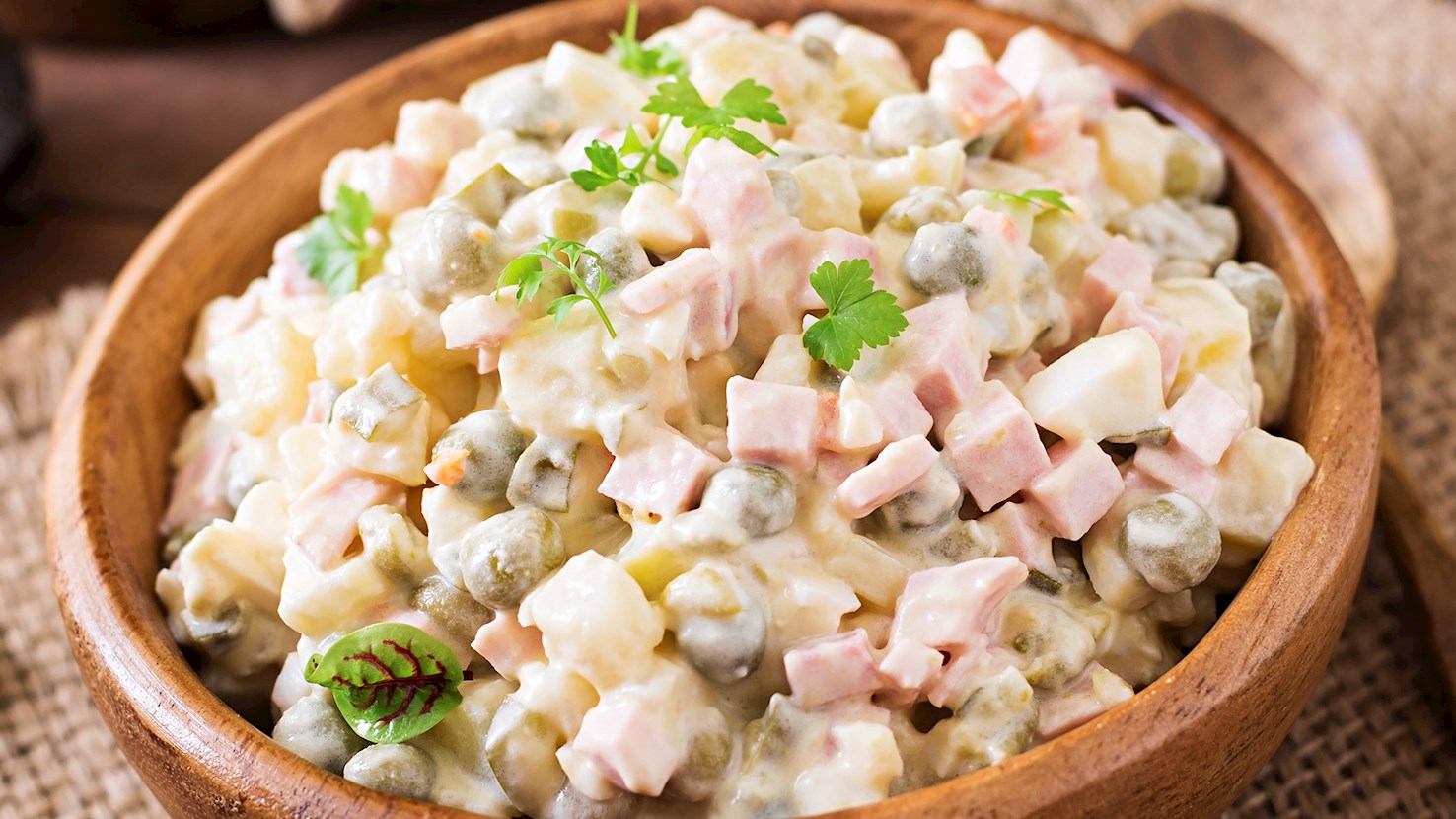
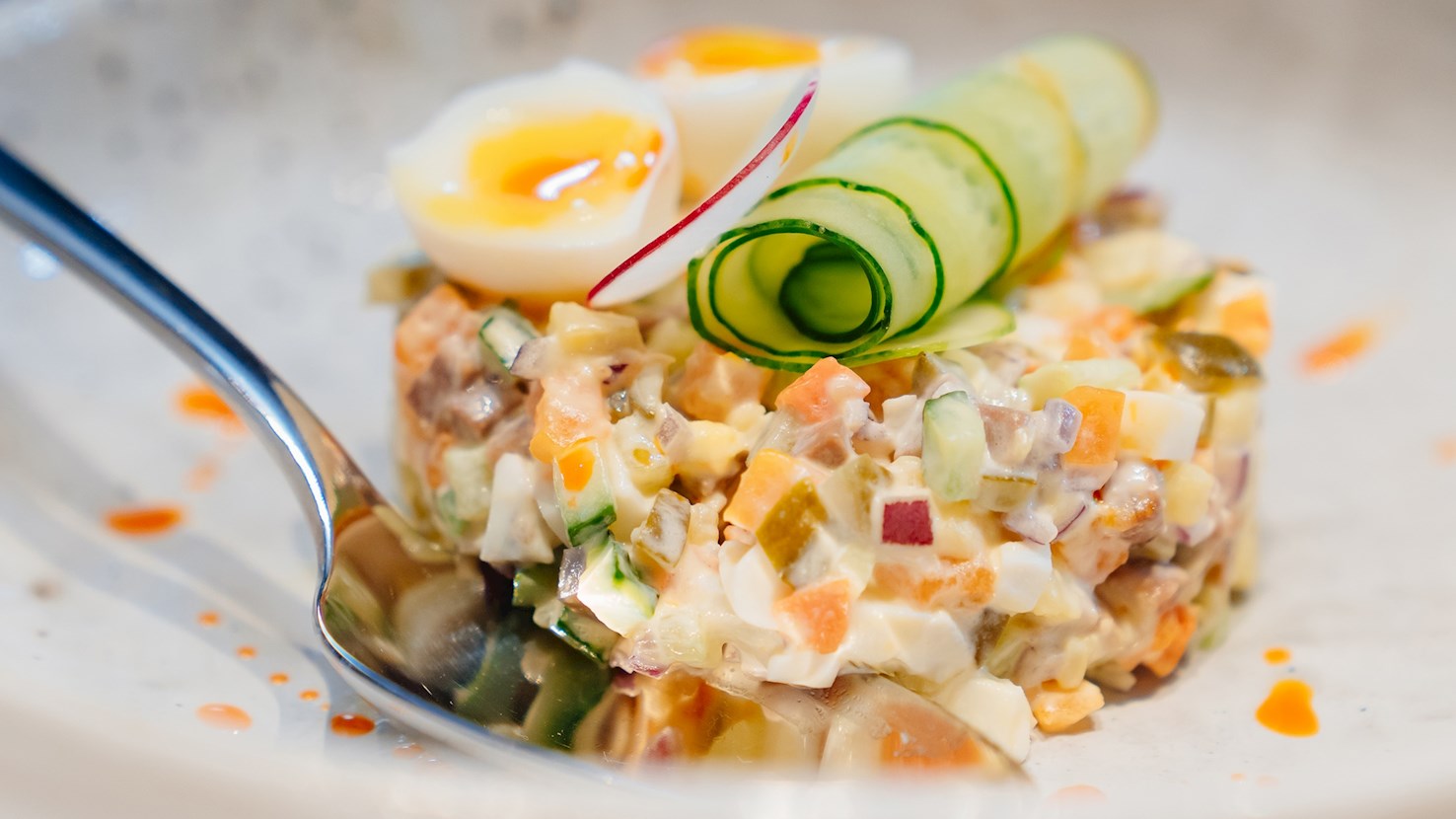
Olivier salad is a Russian salad with variable ingredients, but it is typically made with chopped vegetables, meat, and mayonnaise. The key ingredients include diced potatoes, vegetables, eggs, chicken, or ham. This salad is one of the most important appetizers at the New Year's salad buffets in Russia, as well as in some of the other countries of the former USSR. The original was invented in the 1860s by Lucien Olivier, a chef in the popular Moscow restaurant called L'Hermitage. Olivier guarded the recipe until he died, but it is believed that the recipe was stolen by an employee who watched the chef at work, so the salad is still made today. Another theory says that the recipe for the new Olivier salad was developed by one of the restaurant's customers who wanted to keep the salad alive after the chef passed away. Olivier salad as we know it today is nothing like the original version, because it was called game bird mayonnaise, made with gourmet ingredients such as black caviar, capers, hen, and crayfish tails. Over time, the salad evolved and most of the gourmet ingredients have been replaced with more common ones such as peas, chicken, ham, and pickles. Today, the variations are endless, but most Russian chefs agree on one thing: adding carrots to the Olivier is a heresy. Interestingly, Olivier salad is also sometimes called Russian salad, while the meatless version is called French salad or francuska salata, probably due to the French name of its creator. The Spanish version is known as ensaladilla rusa. It is so popular in Spain that it's an important part of the Spanish gastronomy as well as being a staple in schools and summer camps all over the country. Ensaladilla rusa is also one of Spain's most popular tapas – in some cases, it's even served free of charge if you order a beer. There's also the Piedmontese insalata russa, typically consumed as an appetizer, and with many variations, so the salad might also include ingredients such as pickled cauliflower, anchovies, and tuna. Interestingly, in the Italian municipality of Carrù, tuna is an obligatory element of the salad.
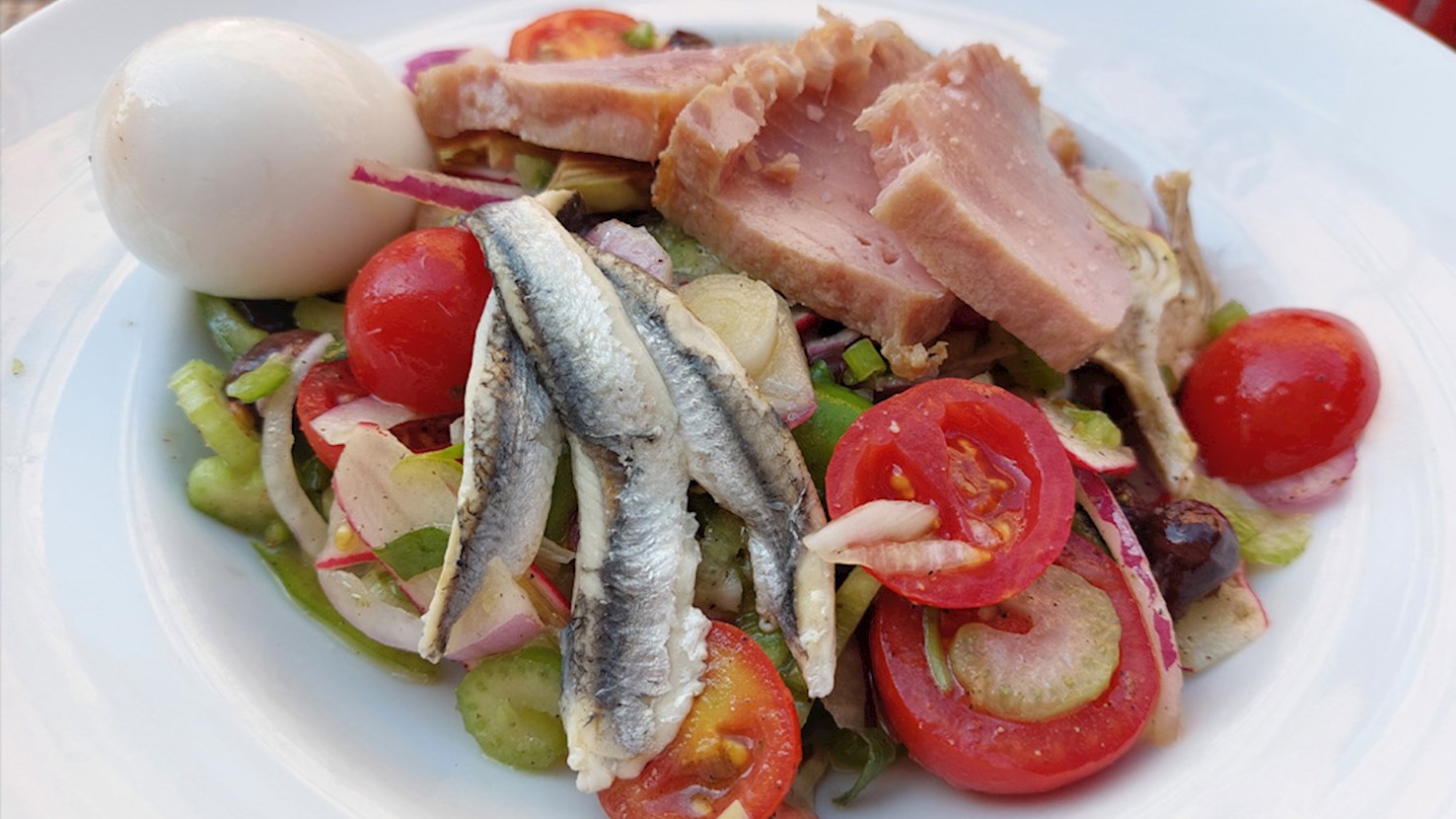
Originating from Nice in the French region of Provence, the traditional Niçoise salad is a true national treasure. Both flavorful and colorful, it can be served on its own as a main dish, but is more commonly used as a garnish for a variety of meat or fish dishes. It consists of fresh tomatoes, anchovies, black olives, capers, beans, and a drizzle of lemon juice. The salad is typically seasoned with traditional Provençal seasoning of olive oil, garlic, and basil. The authentic Niçoise should always be prepared with the freshest raw vegetables, as a sign of respect for the quality and flavor of local ingredients. Popular as a summer lunch, it has spread worldwide, with a lot of varieties created along the way, some of them replacing beans for artichokes or adding tuna, boiled eggs, lettuce, and potatoes to the original recipe. Regardless of the varieties, it should always reflect the sunny, colorful, and vibrant atmosphere of Nice.
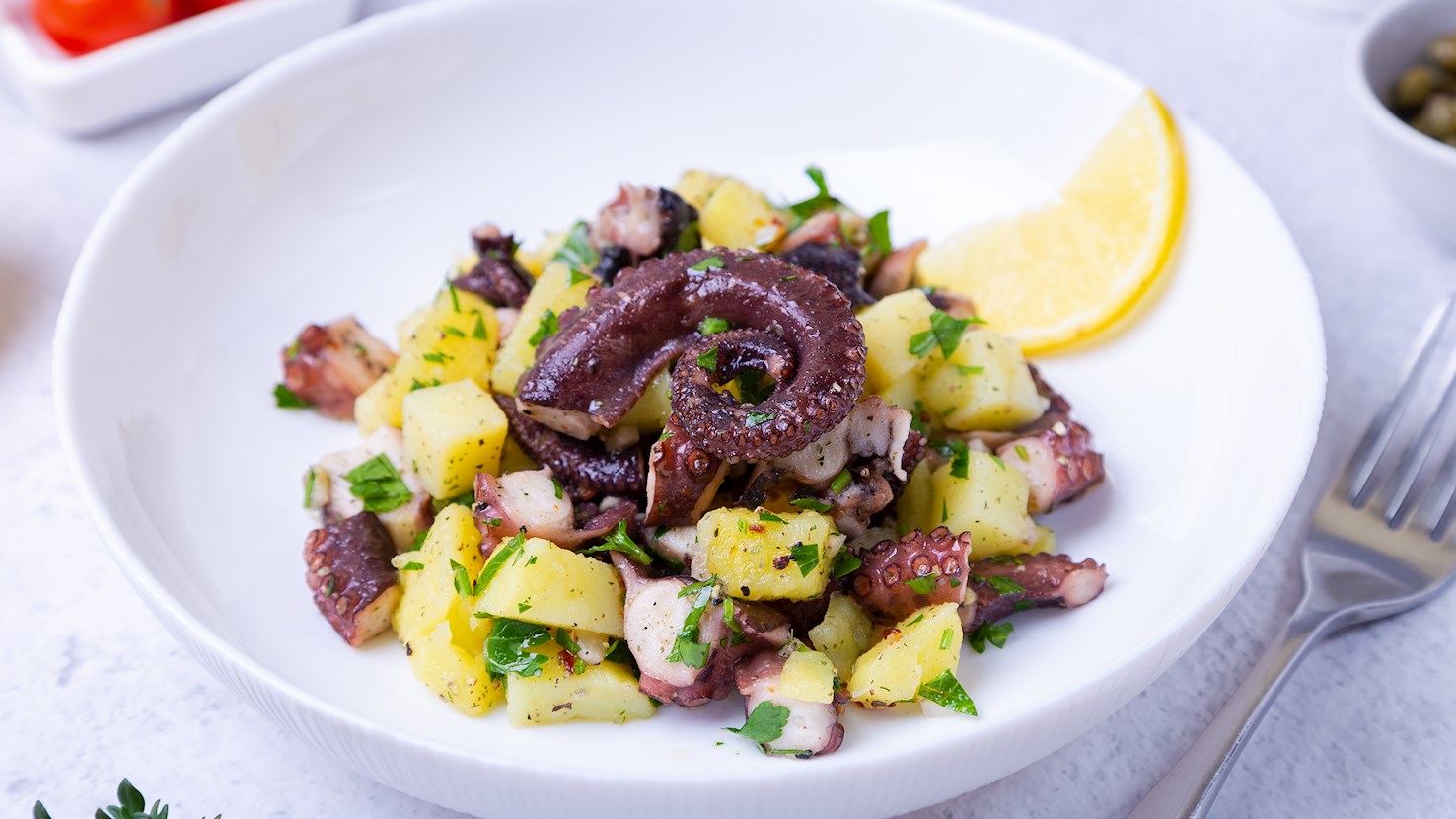
Salade de poulpe is a traditional octopus salad originating from Languedoc. The salad is usually made with a combination of tenderized octopus, potatoes, white wine, onions, fennel, capers, parsley, paprika, salt, pepper, olive oil, and lemon juice. The octopus is cut into pieces, boiled in a mixture of oil, wine, salt, and water until tender, and then drained. The potatoes are boiled, skinned, sliced, and mixed with the octopus. The onions, fennel, and capers are placed on top and the salad is then dressed with a mixture of olive oil, lemon juice, vinegar, salt, and pepper. The salad is sprinkled with parsley and paprika and it's then typically served with aïoli.
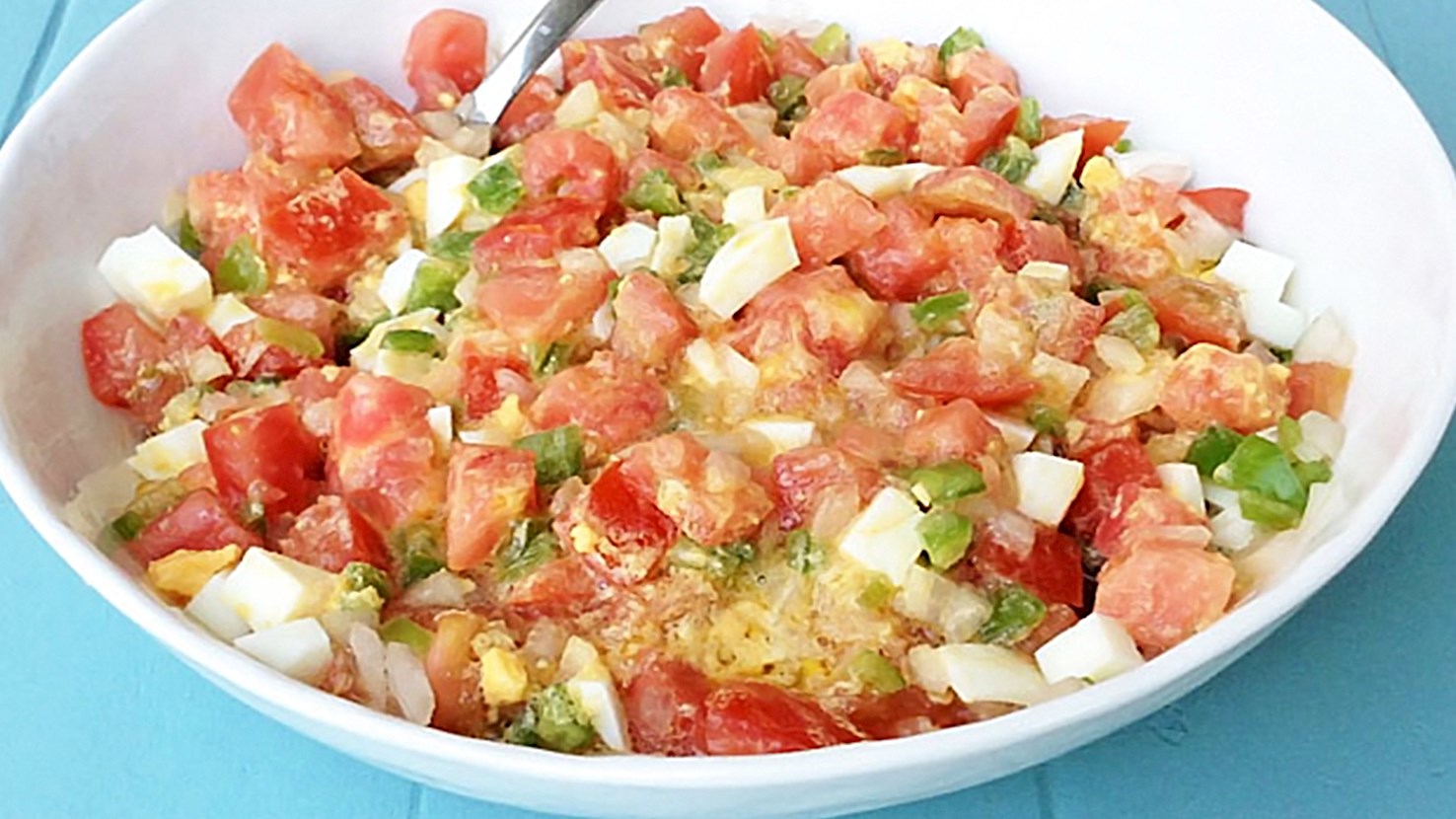
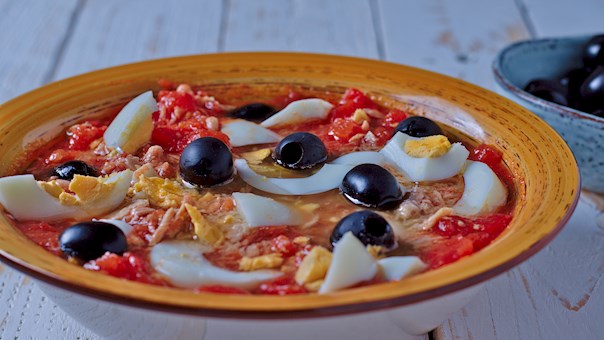
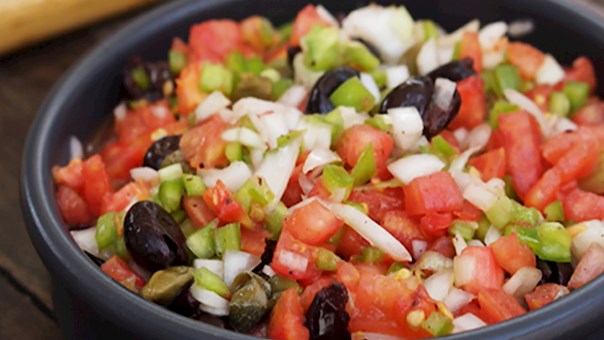
Pipirrana is a typical Spanish salad originating from Andalusia. It has numerous variations because each province has a different method of preparation and different ingredients. However, one of the more traditional versions is made with cucumbers, onions, green peppers, and tomatoes. The refreshing summer salad is usually dressed with olive oil, and vinegar, and slices of bread are often used as an accompaniment that is soaked in it, while tuna and olives are often added in order to elevate the flavors. It is believed that pipirrana was invented by Spanish field workers of Andalusia, Murcia, and La Mancha, who would prepare it with fresh vegetables, so it is safe to assume that tuna and olives were not originally used in the salad, except on festive occasions.
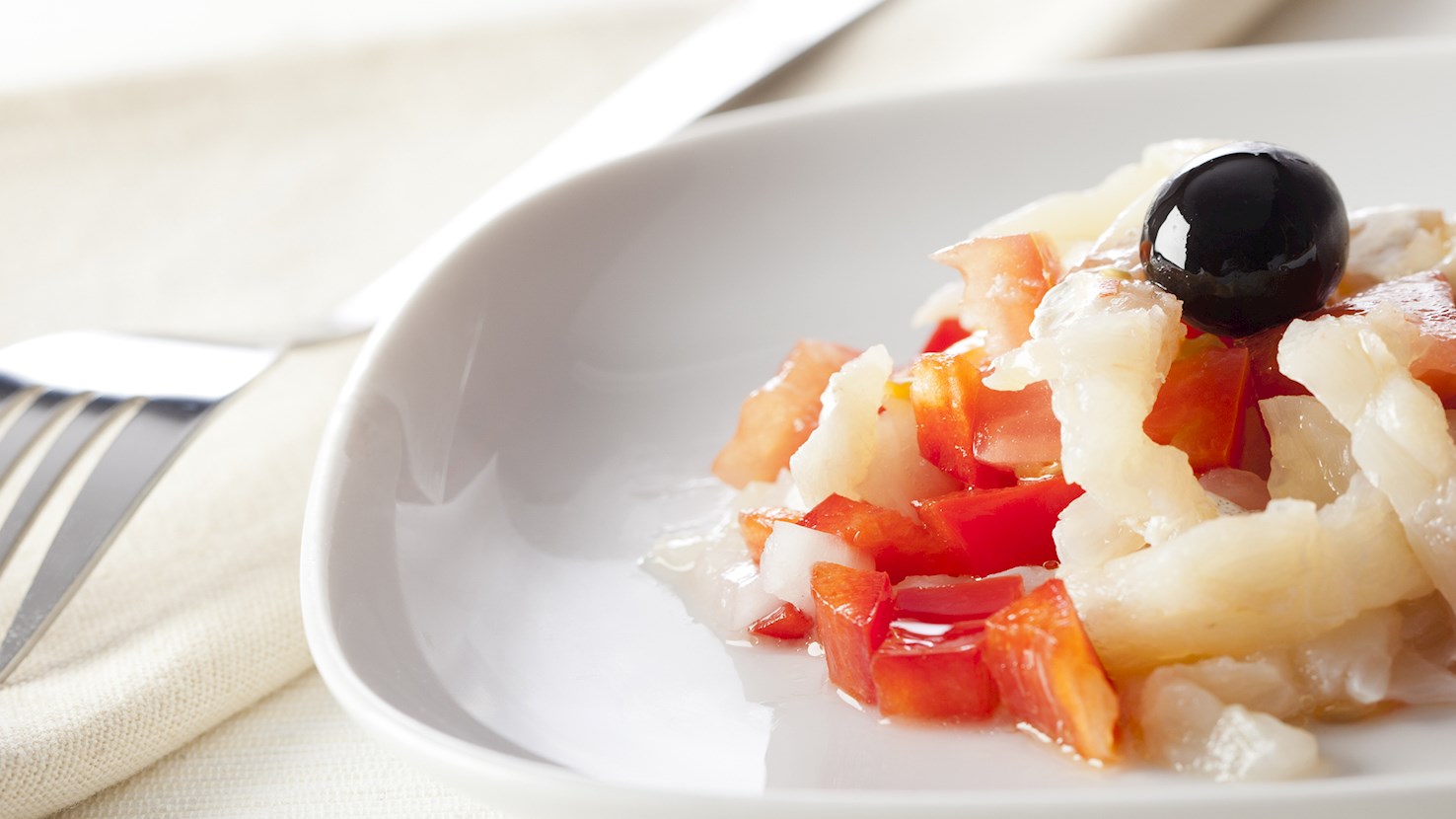
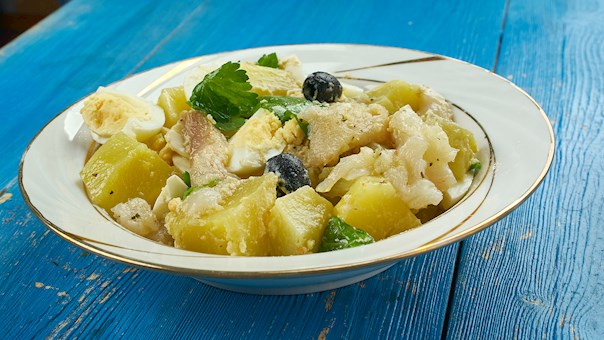
Esqueixada is a traditional Catalan salad prepared with cod as the main ingredient. Other ingredients may vary, but tomatoes, onions, red peppers, and olive oil are most commonly used. Cod should first be desalted, then flaked between the fingers, hence the name esqueixada, derived from esqueixar, meaning to tear. This Catalan summertime staple is sometimes garnished with hard-boiled eggs and black olives before serving.
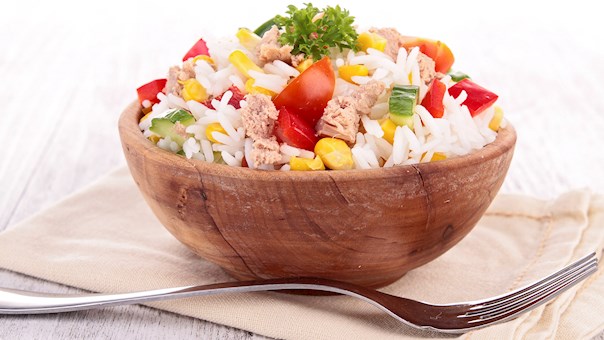
Ensalada rusa is a popular Spanish variation of the Olivier salad, that consists of a mixture of diced boiled potatoes, carrots, peas, and sometimes green beans, all combined with mayonnaise to create a creamy texture. In Spain, the salad usually includes additional ingredients such as hard-boiled eggs, pickles, and tuna or chicken. This dish is typically served cold and is a staple in many tapas bars. The preparation involves boiling the vegetables until tender, then dicing them into small, uniform pieces. These vegetables are mixed with mayonnaise and other ingredients like diced pickles, hard-boiled eggs, and tuna or chicken Salt and pepper are added to taste. After mixing, the salad is chilled to allow the flavors to meld together.
TasteAtlas food rankings are based on the ratings of the TasteAtlas audience, with a series of mechanisms that recognize real users and that ignore bot,
nationalist or local patriotic ratings, and give additional value to the ratings of users that the system recognizes as knowledgeable.
For the “Top 68 Western European Salads” list until May 15, 2026, 2,070 ratings were recorded, of which 1,659 were recognized by the system as legitimate.
TasteAtlas Rankings should not be seen as the final global conclusion about food. Their purpose is to promote excellent local foods,
instill pride in traditional dishes, and arouse curiosity about dishes you haven’t tried.