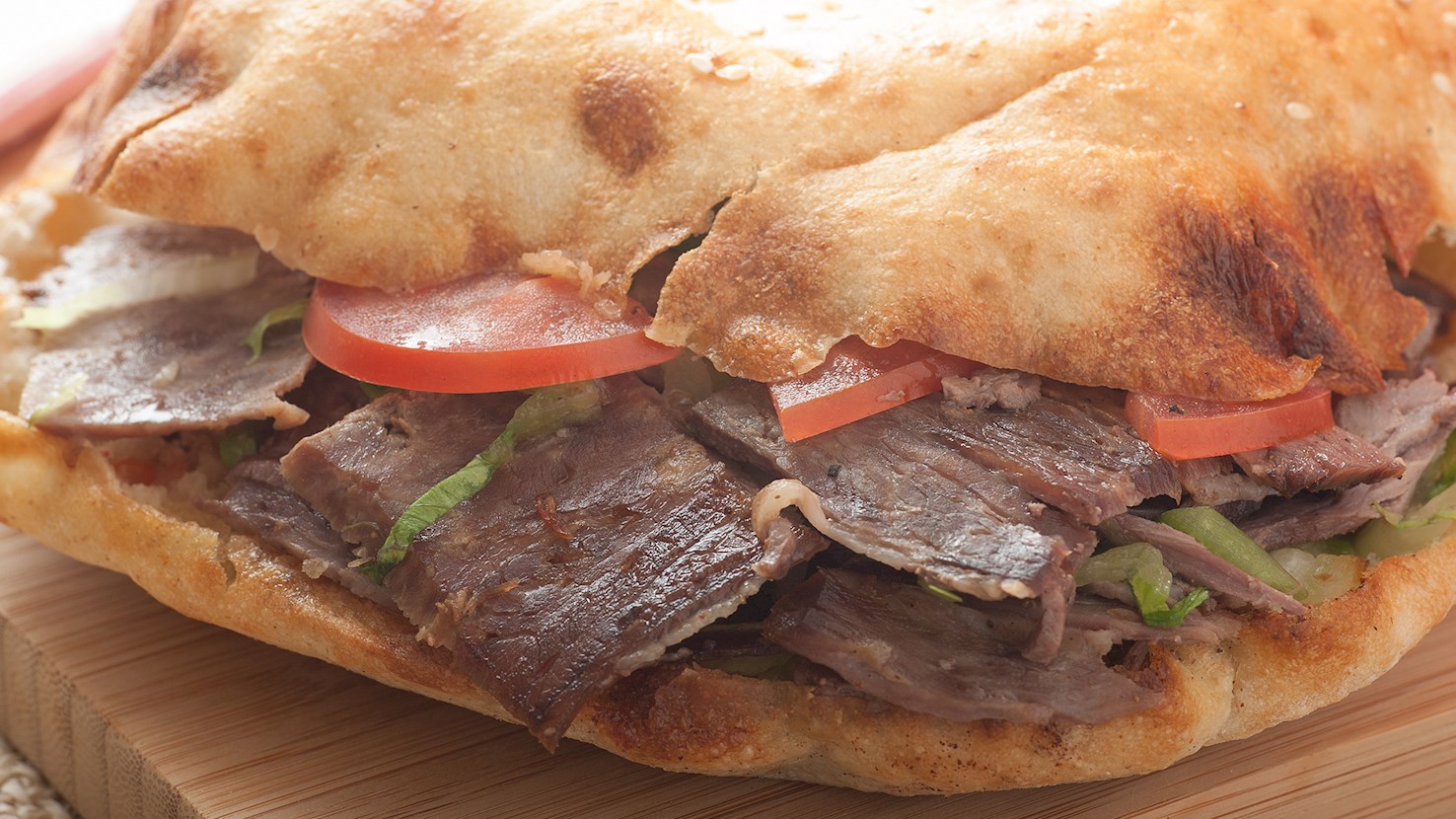
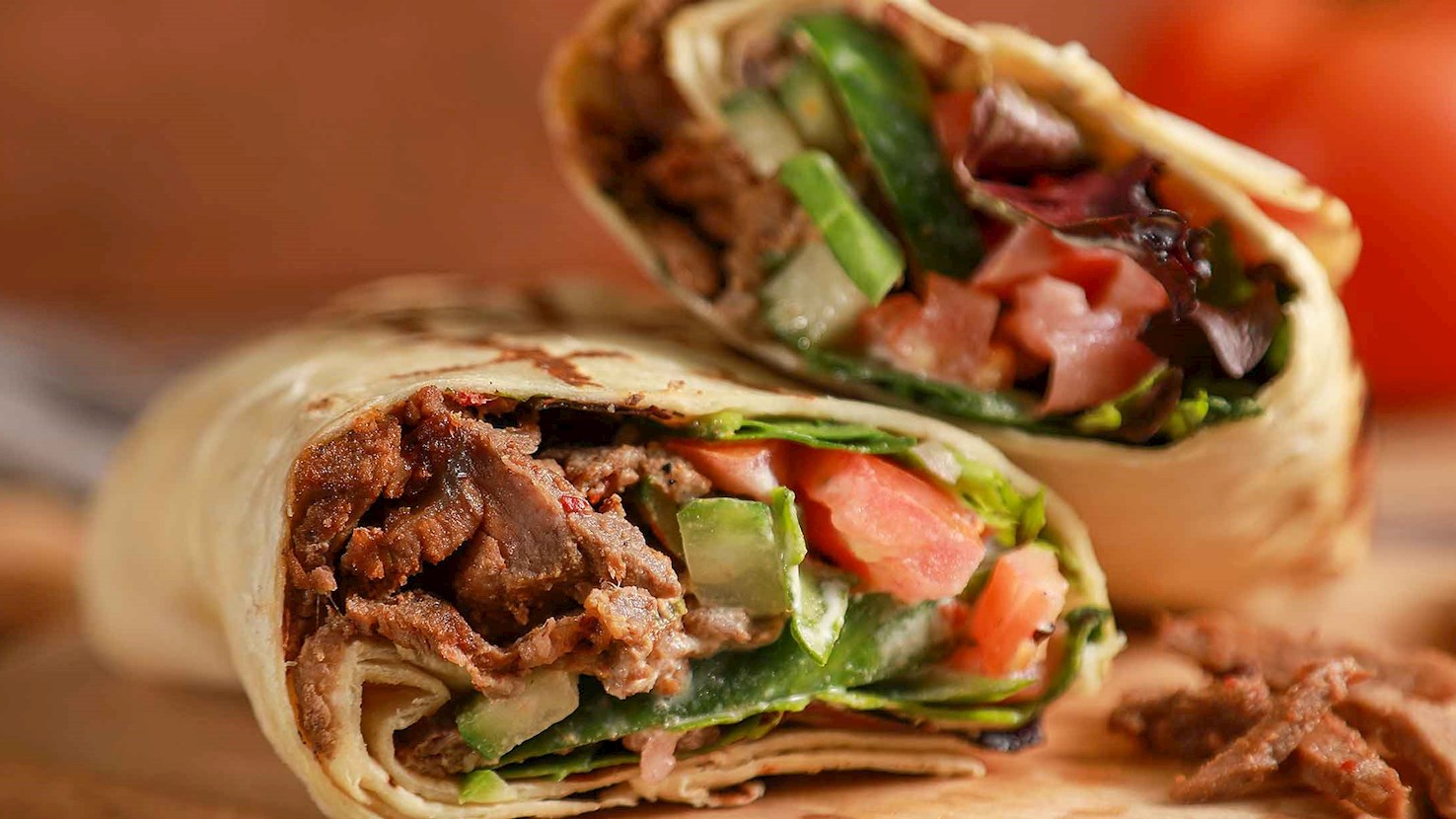
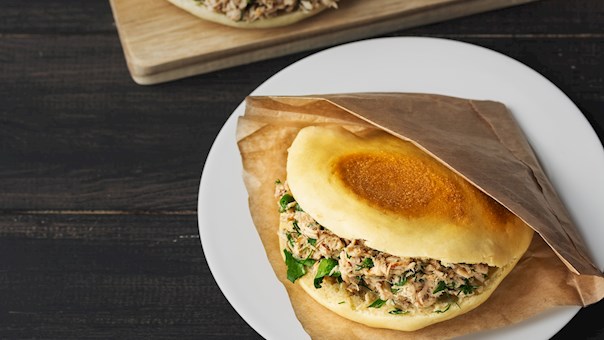
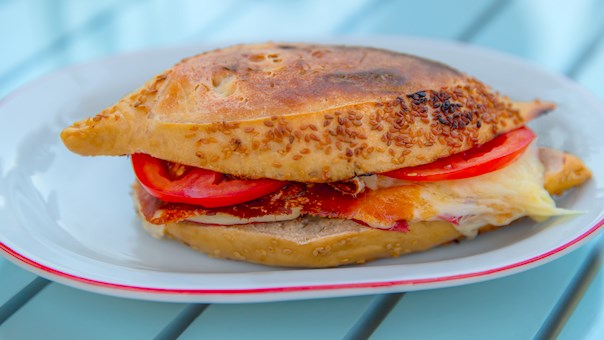
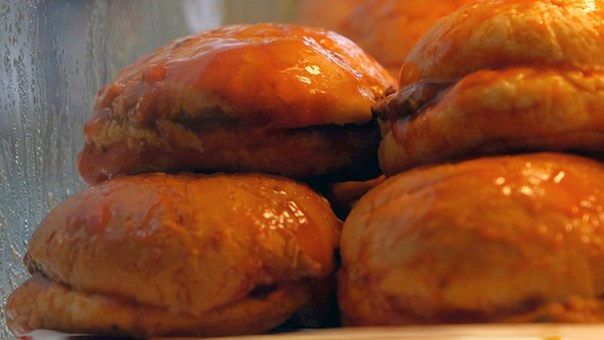
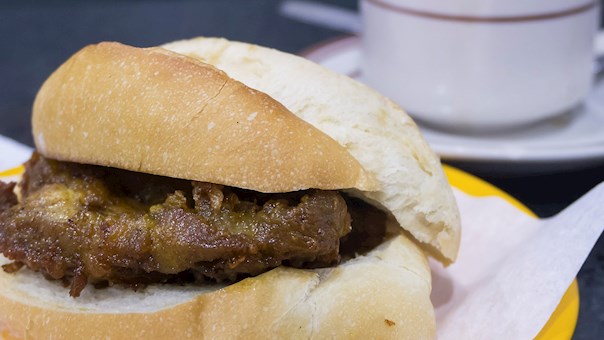
Tombik döner or gobitkebab is a variety of döner kebab where the shredded meat is stuffed in a bun-shaped flatbread known as pide ekmek. The bread has a crispy exterior and a soft interior. This dish is typically served with additional ingredients, depending on the customer's choice, such as tomatoes, onions, lettuce, or other assorted vegetables and sauces.
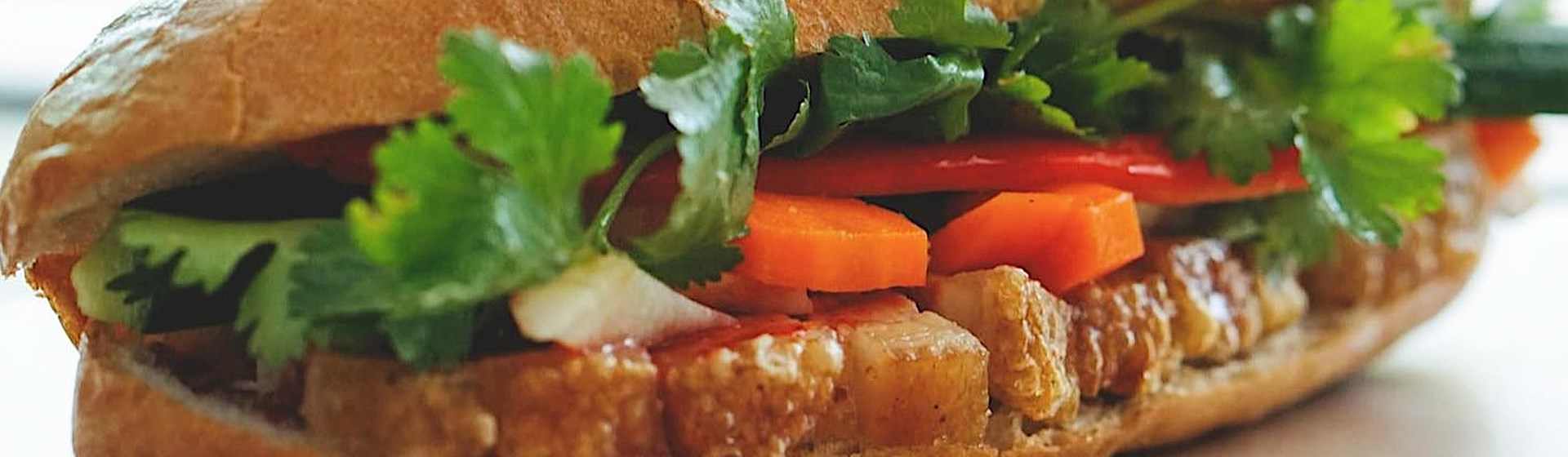
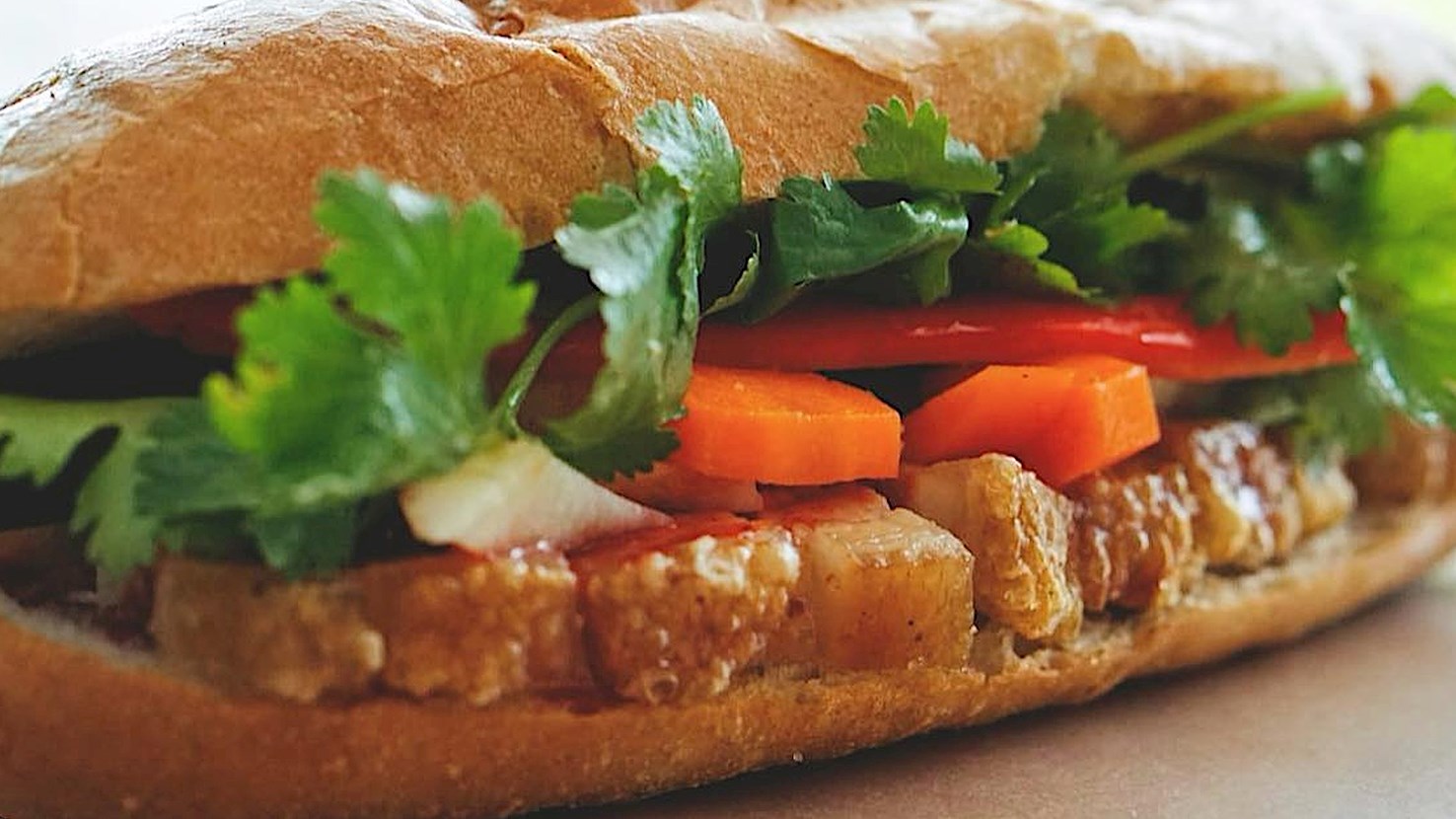
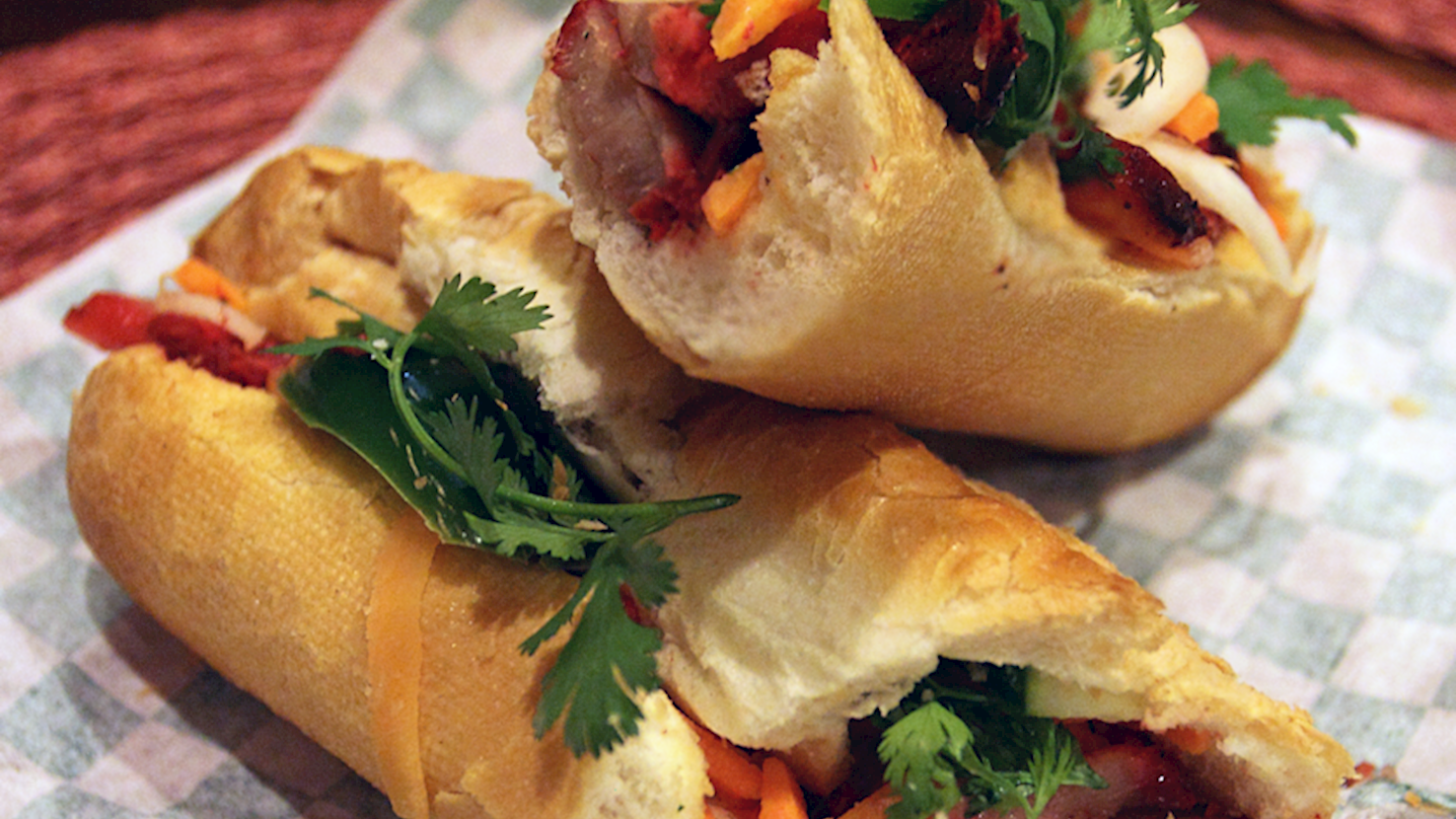
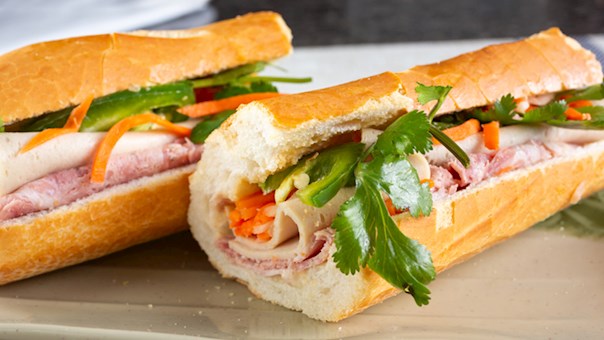
Bánh mì heo quay is a traditional bánh mì sandwich variation made with roasted pork belly as the main ingredient. The pork is roasted with a thick layer of salt and spices. It is sliced and served on a freshly baked bánh mì roll. The sandwich is then dressed with a combination of mayonnaise, pickled carrots and daikon, cucumbers, cilantro, and chives. If desired, sliced chili peppers can be added to the sandwich as a topping, making it very spicy. One side of bánh mì heo quay can also be spread with chicken liver pate before the sliced pork belly is added to the sandwich. This type of bánh mì can be bought at street food stalls and it’s one of the most popular types of bánh mì in the country.
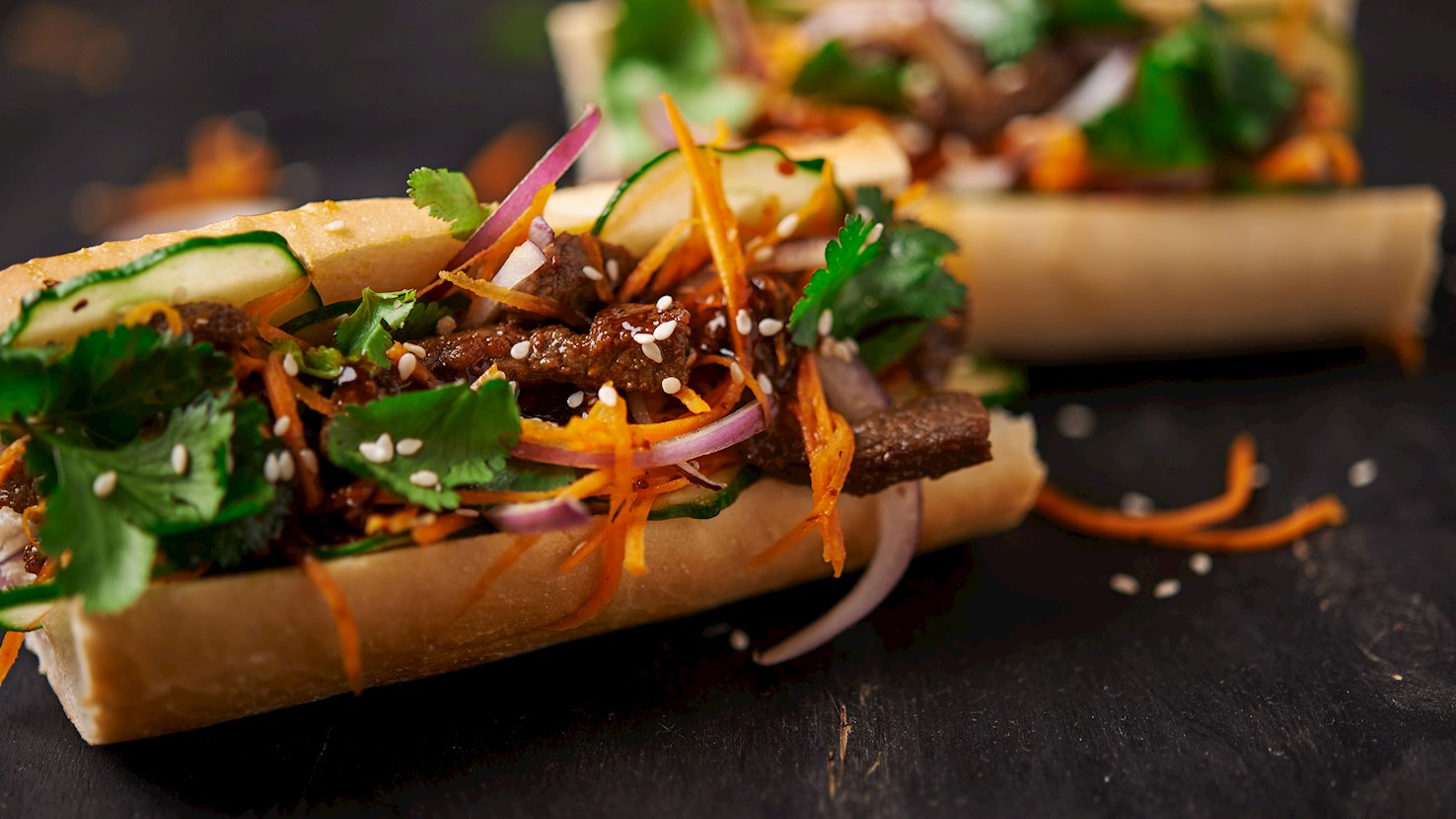
Bánh mì (pronounced 'bun mee') is a popular Vietnamese variety of sandwiches that share the same core ingredient - a baguette. The baguette was brought over to Vietnam during the colonial period, and nowadays it is one of the few happy legacies from the time. The crusty bread, condiments, and meats are all a legacy of French and Chinese colonialism, while cilantro, chili, and pickles reflect the Vietnamese taste for fresh vegetables and bright flavors. In the beginning, most banh mi sandwiches consisted of bread, meat, and seasonings, with no added vegetables. Today, the possibilities are virtually limitless - the sandwiches are stuffed with cold cuts, French butter, fresh mayonnaise, liver pâté, cucumbers, cilantro, pickles, oyster sauce, garlic...and the list goes on. The bread should be light, with a delicate crust and a tender, chewy, and soft interior with a slightly sweet flavor. The meat on the inside can be chicken, pork, beef, seafood, cold cuts, or pâtés, sausages, and terrines, but it is extremely important not to overstuff the sandwich. Most of the fillings and condiments are things that foreigners are unfamiliar with, and that just may be the secret to its popularity. With their cult-like following and savory Vietnamese fillings, these sandwiches have crossed the borders of their native country long ago, and banh mi shops are still popping up all over the world.
Marinated and spit-roasted, shawarma is a delicious Middle Eastern meat treat whose origins can be traced back to the Ottoman Empire era, while its name stems from the Arabic pronunciation of the Turkish word çevirme (lit. to turn; turning), and refers to the rotating skewer on which the meat is cooked. Shawarmas are made with either lamb, turkey, chicken, beef, or a mix of different meats which are slow-cooked for hours and basted in their own juices and fat, gaining an incomparable succulence, but the real secret to a perfect shawarma is in the marinade. Depending on the variety, the meat must be marinated for at least a day, preferably two, especially when using beef. These marinades are either yogurt or vinegar-based and typically include spices and flavorings such as cinnamon, cloves, cardamom, nutmeg, black pepper, allspice, dried lime, spicy paprika, garlic, ginger, lemon, bay leaf, and sometimes even orange slices. Shawarma is traditionally served either on its own or enjoyed tucked inside a warm flatbread such as pita or lavash. However, what really sets it apart from the Turkish döner kebab, Greek gyros, or other similar foods is the extent of garnishes and condiments offered with it. For example, Israeli shawarmas are typically topped with tahini and come with generous servings of hummus and pickled mango slices, while in other countries, shawarma is often complemented with garlic mayo or a zesty toumaia garlic sauce, both fresh and pickled vegetables, salads like tabbouleh or fattoush, and amba sauce–a tangy chili and mango pickle dip. Once a common staple of the Middle Eastern working man, shawarma has today become the ultimate Arabic street food, found not only in Arabia and Levant but in virtually any nook and corner of the globe.
Bánh mì thịt is a traditional bánh mì sandwich variation in which thịt means meat. As the name suggests, the sandwich is made with various Vietnamese cold cuts such as sliced roasted pork, sliced pork belly, chả (sliced ham), or chả lụa pork sausage, along with cucumbers, mayonnaise, pickled carrots and daikon, and liver pâté stuffed into a bánh mì roll. The sandwich is often garnished with ingredients such as coriander, black pepper, and sliced chili peppers. These meat-filled sandwiches are common throughout Vietnam and they’re a staple of school children and factory workers. Bánh mì thịt is usually enjoyed for breakfast and lunch, but the sandwiches can be eaten for any meal of the day if bought from street stall vendors.
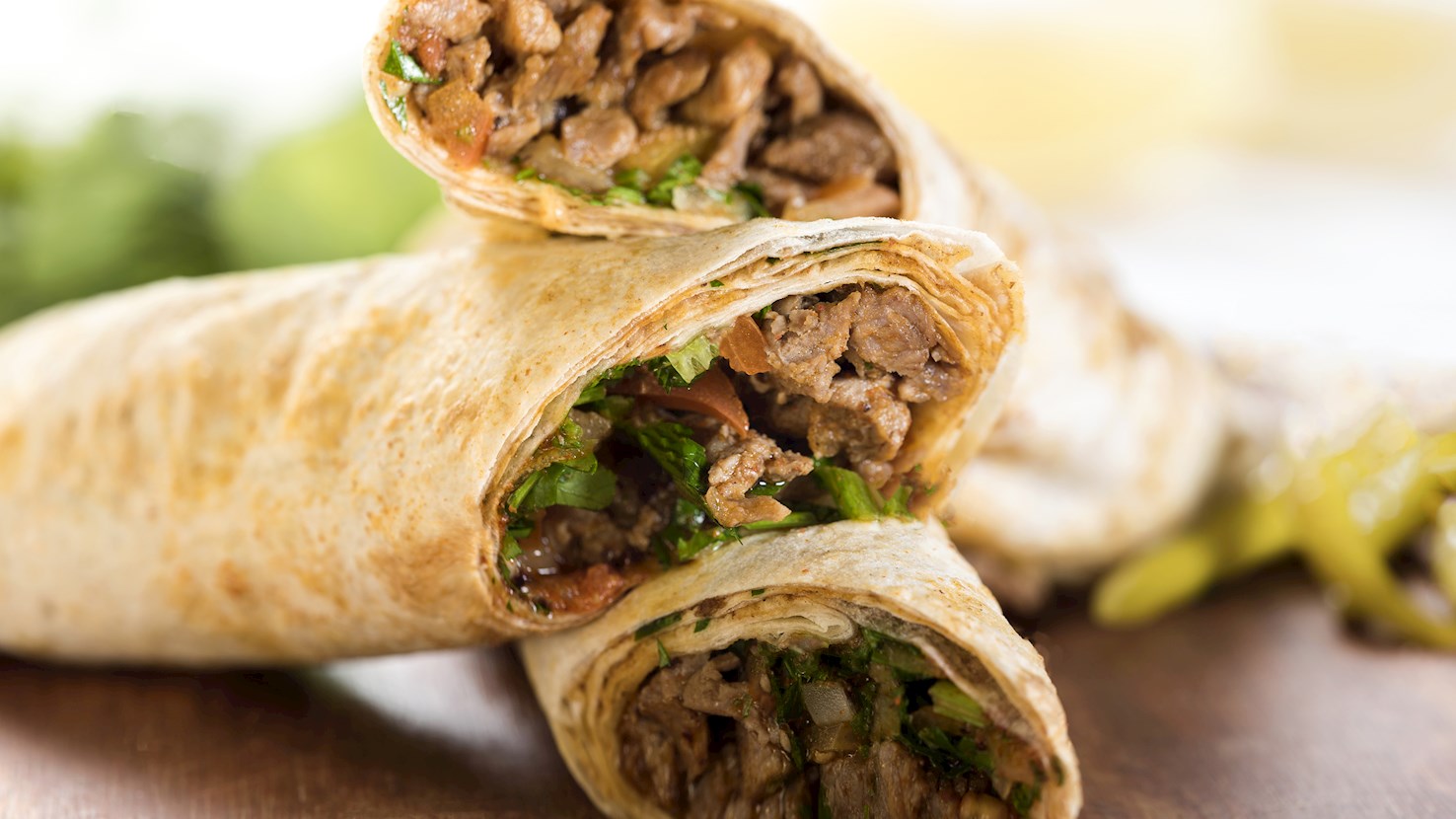
Tantuni is a traditional street food dish from Mersin, consisting of thinly sliced beef or lamb that is seasoned with Turkish spices and herbs, usually cooked with onions and tomatoes. The combination is cooked in specially designed tantuni pans. Traditionally, the dish is served rolled in lavash, with ground sumac and a lemon wedge on the side. Since every tantuni chef has his own method and secret technique of preparing the dish, it is said that the flavors of tantuni are never the same. Tantuni was originally created as a poor man's dish - it's very nutritious because it consists of meat with a lot of fat stuffed into bread. Some believe that the name of the dish refers to the sound that the meat and spices make when they are brought from the rim of the pan to its center.
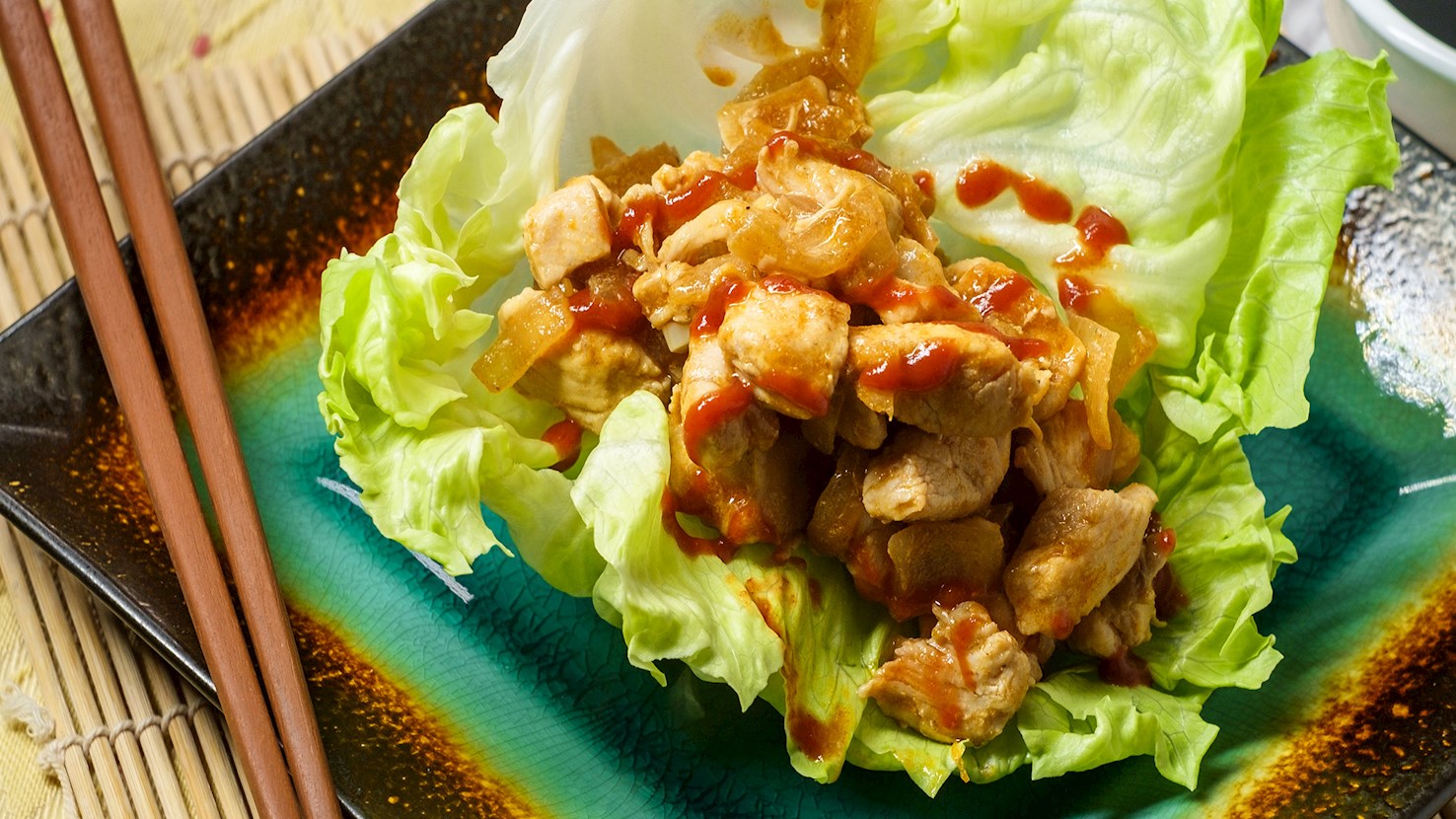
Sangchu is a ssam variety that always wrapped in lettuce. The fillings typically include rice, sliced meat, and condiments such as gochujang past, ssamjang dip, or fresh and pickled vegetables. All the elements are usually served separately, and each person is able to customize the wrapper according to their preference. Apart from meat, typically galbi (short ribs) or bulgogi, the main ingredients may also include fish or other types of seafood.
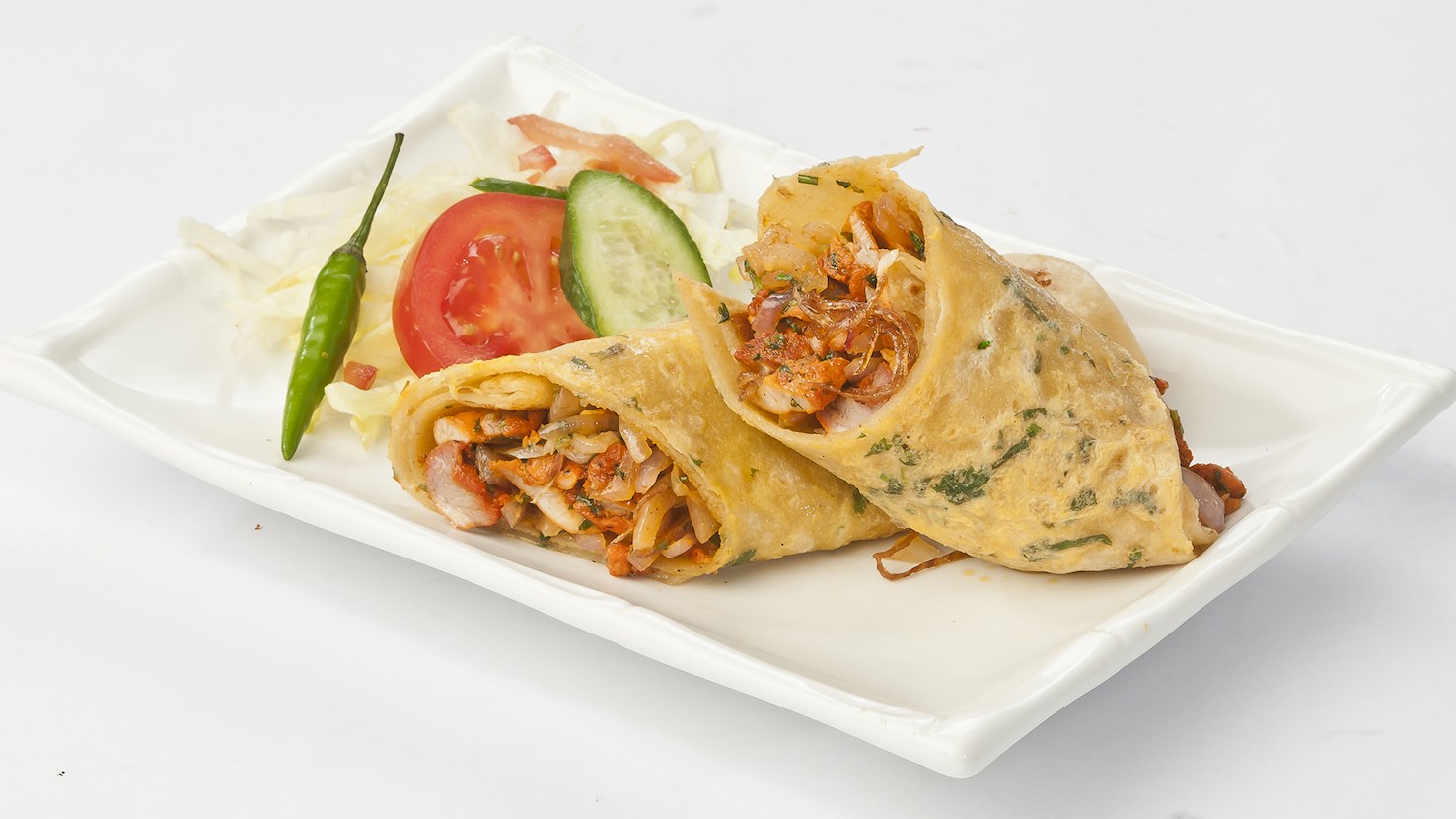
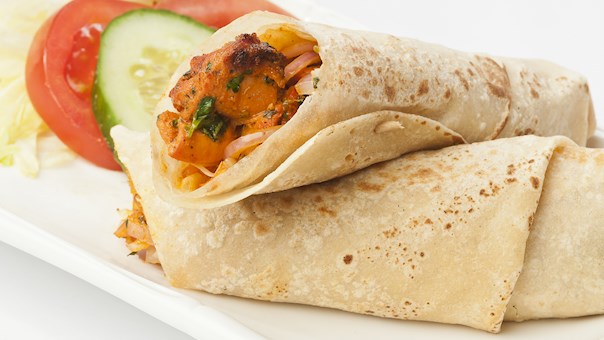
Kathi roll is an Indian street food dish hailing from Kolkata. It consists of skewered and roasted kebab meat that is wrapped in paratha flatbread. Some say that the dish was invented because the British didn't want to eat kebabs with their hands, so an ingenious person at Nizam's restaurant rolled the meat in a paratha. Initially, kathi roll was prepared with eggs and chutney along with the meat. Typically, the cook will roll the dough on a tawa, crack an egg onto it, then add the fillings. Kathi roll is traditionally wrapped in paper and served piping hot. In the 1960s, the cooks at Nizam's replaced the metal skewers with bamboo skewers, giving the dish its name, kathi roll, as kathi means stick in Bengali. Nowadays, this tasty wrap can also be found in cities such as New York City and London.
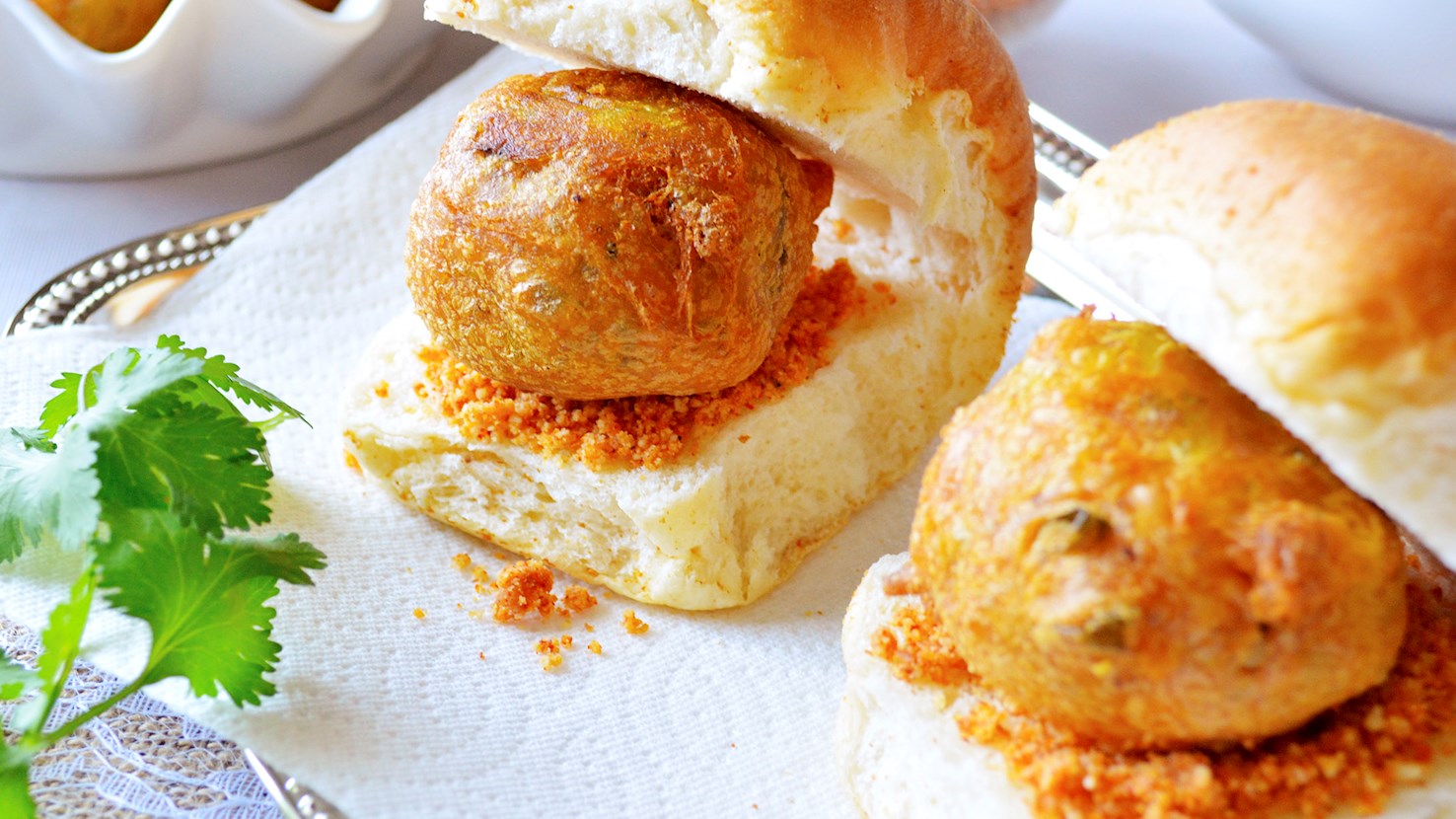
Vada pav is one of Mumbai's favorite sandwiches, its name referring to the key ingredients: vada, or spicy mashed potatoes that are deep-fried in chickpea batter, and pav, or white bread rolls. This iconic street food is said to have originated from a street vendor named Ashok Vaidya, who worked near the Dadar train station in the 1960s and 1970s. He thought of a way to satiate the hungry workers, and concluded that the ideal dish should be portable, affordable, and easy to prepare. Ashok made vada pav, and its popularity skyrocketed, especially after the Shiv Sena, a Marathi-Hindu nationalist political party, started to promote the sandwich as an ideal working class snack. Today, the sandwich is sold throughout Mumbai, both on street stands and in elegant restaurants, ideally accompanied by a hot red chutney with coconut, peanuts, garlic, tamarind, and chiles.
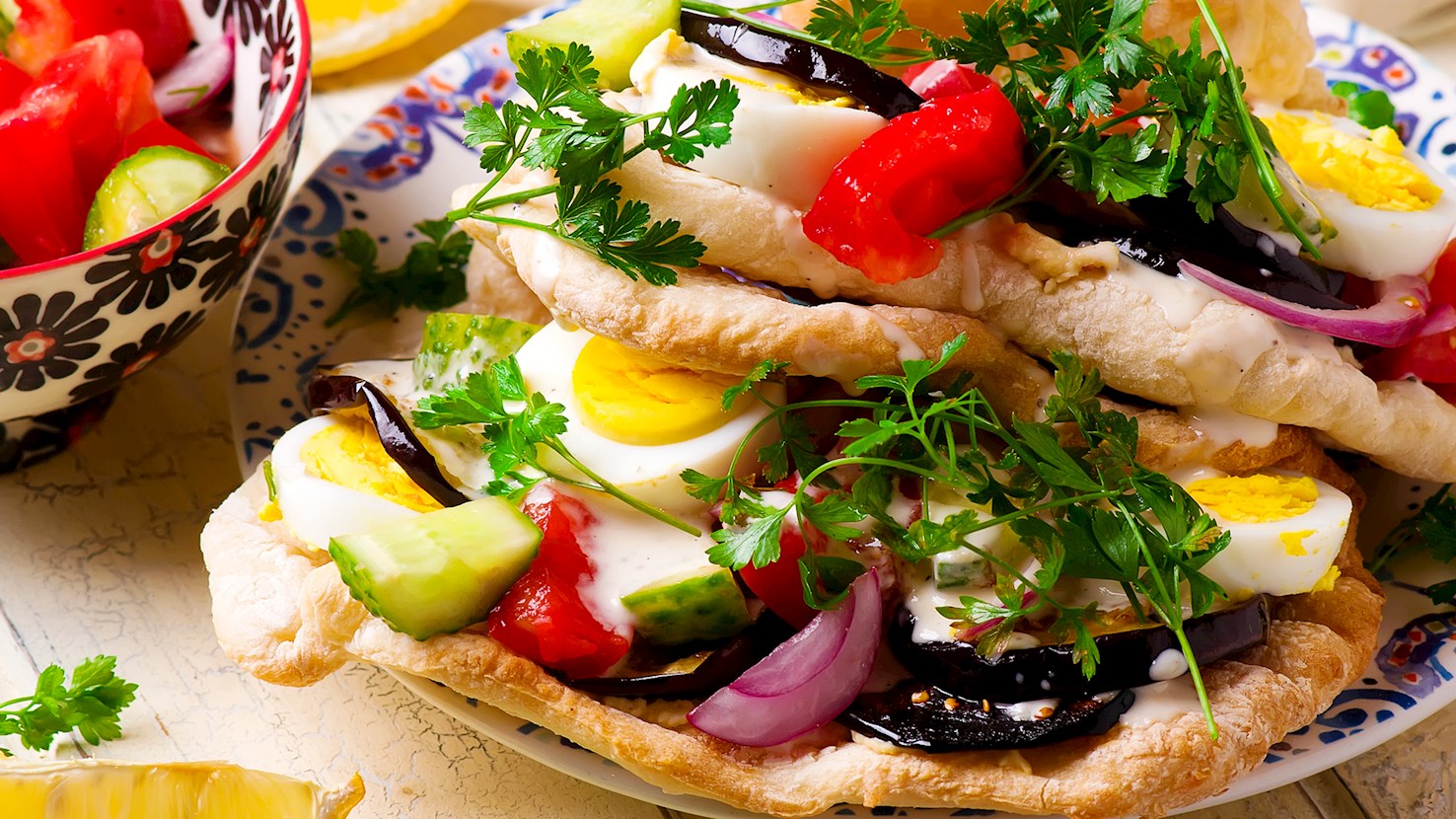
Sabich is an Israeli street food dish consisting of pita bread filled with fried eggplant, hard-boiled eggs, hummus, tahini, Israeli salad, and pickles, often topped with amba, a tangy mango pickle sauce. It is a vegetarian sandwich with Iraqi Jewish origins that has become a well-known part of Israel’s urban food culture, particularly popular as a breakfast or lunch option. The combination of ingredients represents a fusion of Middle Eastern and Iraqi Jewish flavors adapted into the context of Israeli fast food. The dish originated among Iraqi Jews who immigrated to Israel in the mid-20th century. Many of them brought with them their Sabbath morning meal, which included fried eggplant, hard-boiled eggs, and salads served cold due to religious restrictions on cooking during the day of rest. In Israel, these elements were eventually assembled together inside pita bread for convenience, creating a portable meal. The sandwich format emerged in the 1960s in Ramat Gan, where vendors began selling sabich from small stands, and it quickly became associated with the city’s Iraqi Jewish community before spreading throughout the country. To prepare sabich, thin slices of eggplant are salted, dried, and deep-fried or pan-fried until golden and soft. Hard-boiled eggs are peeled and sometimes seasoned with salt or a sprinkle of cumin. Pita bread is slightly warmed or toasted, then spread with hummus and tahini. The fried eggplant and eggs are layered inside, followed by diced tomato and cucumber salad, pickled vegetables, and a drizzle of amba sauce. Some versions include parsley, chopped onion, or boiled potatoes, depending on regional or personal preference. The amba, a key element, adds a sharp and slightly spicy note that balances the richness of the eggplant and sesame sauce. Sabich is usually served as a handheld sandwich, but it can also be presented as a plate with the same components arranged side by side. The flavors are complex but balanced, creamy from the tahini, acidic from the pickles and amba, and earthy from the eggplant and eggs. The sandwich is typically vegetarian, though some modern versions include additions like feta cheese or hot sauce. It is eaten throughout the day, especially as a filling breakfast or quick street lunch. In Israel, sabich is commonly sold alongside falafel and shawarma in similar establishments, though it appeals especially to those looking for a meatless meal. It pairs well with cold drinks such as lemonade, ayran, or mint-infused soda water. Its mix of textures, temperature contrast, and depth of flavor have made sabich one of the defining examples of Israeli street food rooted in diaspora home cooking.
TasteAtlas food rankings are based on the ratings of the TasteAtlas audience, with a series of mechanisms that recognize real users and that ignore bot,
nationalist or local patriotic ratings, and give additional value to the ratings of users that the system recognizes as knowledgeable.
For the “Top 44 Asian Sandwiches and Wraps” list until July 15, 2026, 5,640 ratings were recorded, of which 2,755 were recognized by the system as legitimate.
TasteAtlas Rankings should not be seen as the final global conclusion about food. Their purpose is to promote excellent local foods,
instill pride in traditional dishes, and arouse curiosity about dishes you haven’t tried.