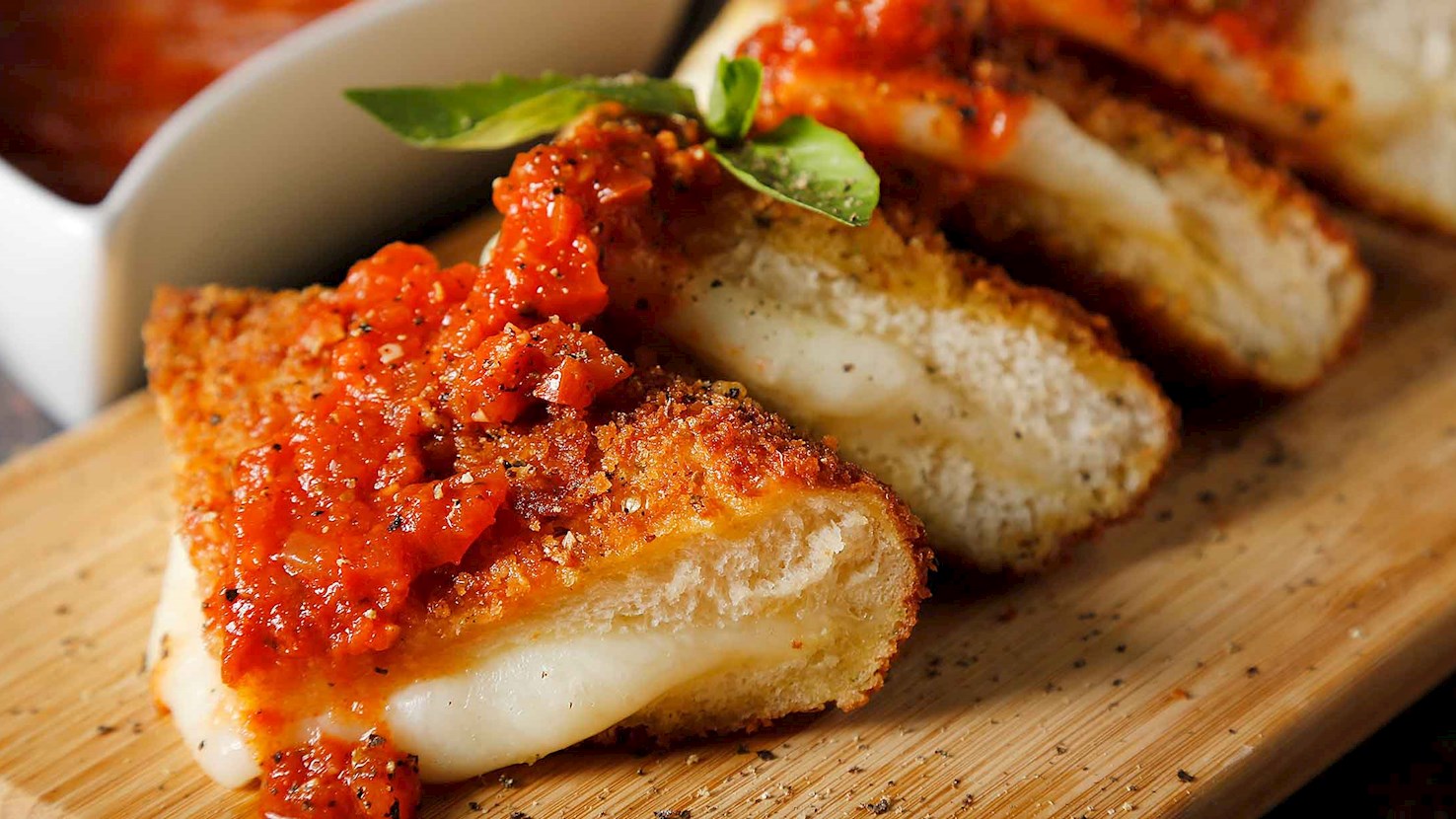
Mozzarella in carrozza (lit. mozzarella in a carriage) is an Italian fried sandwich that's especially popular in Campania, although it's eaten in various parts of Italy. The sandwich is made with crustless, slightly stale bread, mozzarella cheese (ideally di bufala variety), flour, milk, and beaten eggs. Apart from this version, there's also a version with added anchovies. Once assembled, the sandwiches are dipped in flour and cold water (so that the cheese doesn't leak out), then in the beaten eggs, and they're finally fried until nicely browned and crisp on the exterior. This sandwich was invented by housewives in Southern Italy who wanted to make use of leftover mozzarella and stale bread. Nowadays, its popularity has crossed borders, so it's even popular in a few eateries in New York City.
Created in the 1970s at a bar in Ischia Ponte, zingara di Ischia is a grilled sandwich traditionally consisting of two slices of pane cafone (Neapolitan peasant bread), fior di latte, prosciutto crudo, tomatoes, and mayonnaise. Today, the sandwich will also include some type of a salad.
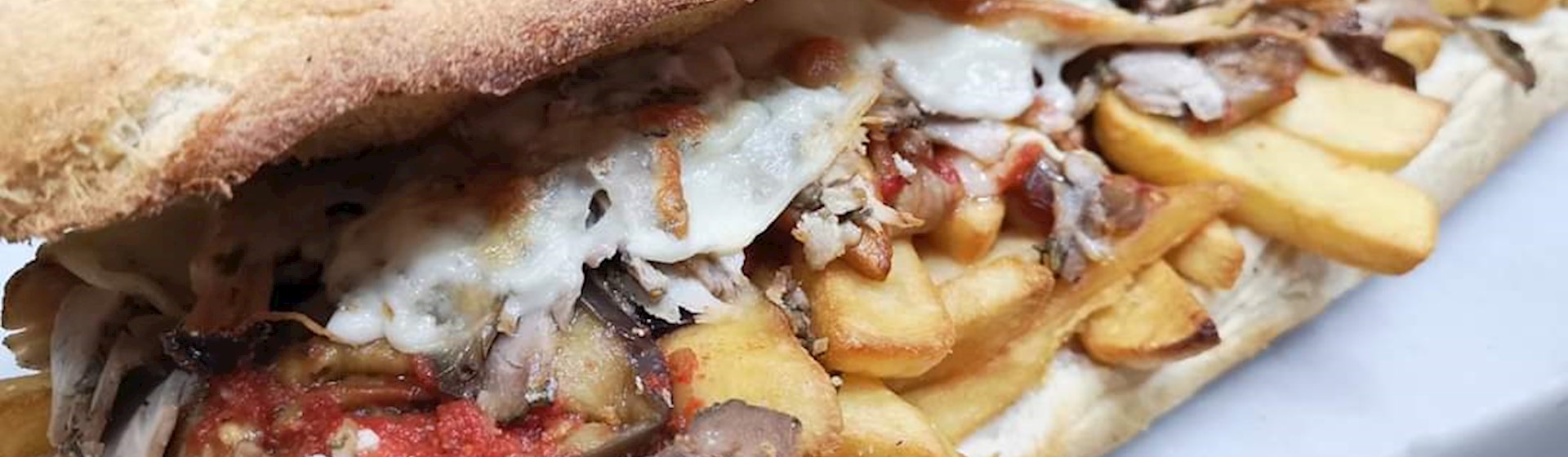
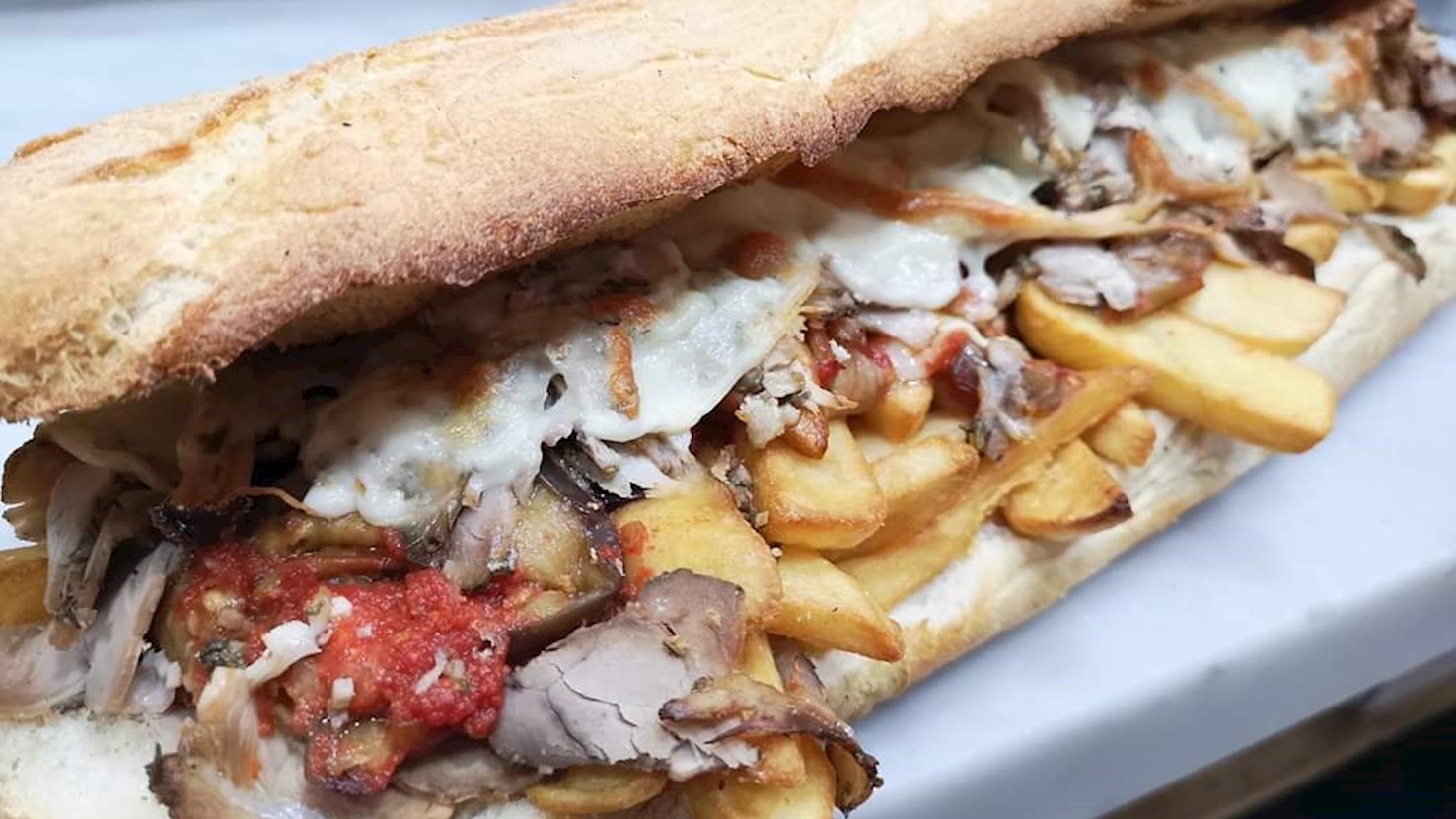
Cuzzetiello is a Neapolitan sandwich that consists of the end part of a rustic bread loaf called pane cafone that is typically stuffed with either Neapolitan sausage and fried friarelli, Genovese sauce, homemade ragù with meatballs, eggplant parmigiana, or a stew of beef and potatoes. In the Neapolitan tradition, cuzzetiello is considered a marrena, a type of substantial snack during lunch break created to use up leftovers from Sunday’s lunch. Today, even more fillings are on offer, including vegetarian ones with vegetables only and sweet ones with Nutella. For those extra hungry, at some joints, there is also the option of ordering cuzzetiello maxi, which is a whole loaf of stuffed bread.
Panuozzo di Gragnano is an Italian sandwich, a sort of large oval-shaped bread or panino that can be filled with various ingredients. It was in 1983, in a small town near Naples called Gragnano, that this specialty was created by Giuseppe Mascolo, whose family has been the exclusive owner of the registered trademark Panuozzo since 1996. Made with simple pizza dough, the bread is baked in a wood-fired pizza oven, and it is then sliced lengthwise before all the desired ingredients are tucked inside. Then comes the final touch - a second, brief time spent in the oven - a step which gives the bread its distinctive crispy exterior and allows for the filling to blend perfectly with the bread. Although the original filling consisted of pancetta, mozzarella, and arugula (rocket), nowadays, the choice for panuozzo stuffing is limitless, offering a wide range of both savory and sweet stuffings depending on the customer's choice. Typical ingredients include different varieties of Italian cheese such as provolone, smoked buffalo mozzarella, or Grana Padano, Italian meat products, polpette (meatballs), mushrooms, salsiccia and friarielli (sausage and broccoli rabe), and vegetables, while the sweet versions usually contain Nutella, gelato, nuts, and powdered sugar.
Pizza parigina is a hybrid street food from Naples, a rectangular baked sandwich made with two distinct types of dough. The base is a soft, fermented pizza dough, while the top layer is a thin, buttery sheet of puff pastry. Between these layers, the filling typically comprises tomato sauce, cooked ham, and provola cheese. The item is categorised as a rustico and is a staple in Neapolitan rotisseries and bakeries, distinguished by the structural contrast between the bready foundation and the laminated, flaky upper crust. The development of this item is linked to the culinary influence of French chefs, known as monzù, who worked in the kitchens of the Bourbon aristocracy in Naples during the late 18th and early 19th centuries. The name parigina is a linguistic corruption of the phrase "p' 'a riggina," which in Neapolitan dialect means "for the queen," specifically referring to Queen Maria Carolina of Austria, the consort of Ferdinand IV of Bourbon. This dish represented a fusion of the common pizza dough used by the local population with the refined puff pastry techniques introduced by the French-trained court chefs. By the mid-20th century, the recipe transitioned from royal households to public bakeries, where it was adapted into a convenient, portable format for urban workers. Preparation requires stretching a standard pizza dough into a well-oiled rectangular baking tray to form the bottom layer. This base is topped with a layer of tomato concentrate or sauce, followed by slices of prosciutto cotto and smoked provola cheese. A pre-rolled sheet of puff pastry is then placed over the filling and the edges are crimped to seal the contents. A unique technical requirement of the process involves pricking the surface of the puff pastry with a fork to allow steam to escape and brushing it with an egg wash to achieve a deep golden finish. The pizza is baked at approximately 200°C until the bottom is fully cooked and the top has expanded into multiple crispy layers. Pizza parigina is eaten throughout the city of Naples as a snack, a quick lunch, or a component of a buffet. It is served in rectangular portions and is usually consumed at room temperature, which allows the provola cheese to set slightly and prevents the puff pastry from becoming overly greasy. In local rotisseries, it is frequently paired with other fried or baked items such as arancini or crocchè. Beverage pairings include dry white wines from the Campania region, such as Falanghina, or a cold pilsner, both of which provide a crisp acidity that cuts through the richness of the butter in the pastry and the smokiness of the cheese.
TasteAtlas food rankings are based on the ratings of the TasteAtlas audience, with a series of mechanisms that recognize real users and that ignore bot,
nationalist or local patriotic ratings, and give additional value to the ratings of users that the system recognizes as knowledgeable.
For the “Top 5 Campanian Sandwiches and Wraps” list until June 15, 2026, 124 ratings were recorded, of which 91 were recognized by the system as legitimate.
TasteAtlas Rankings should not be seen as the final global conclusion about food. Their purpose is to promote excellent local foods,
instill pride in traditional dishes, and arouse curiosity about dishes you haven’t tried.