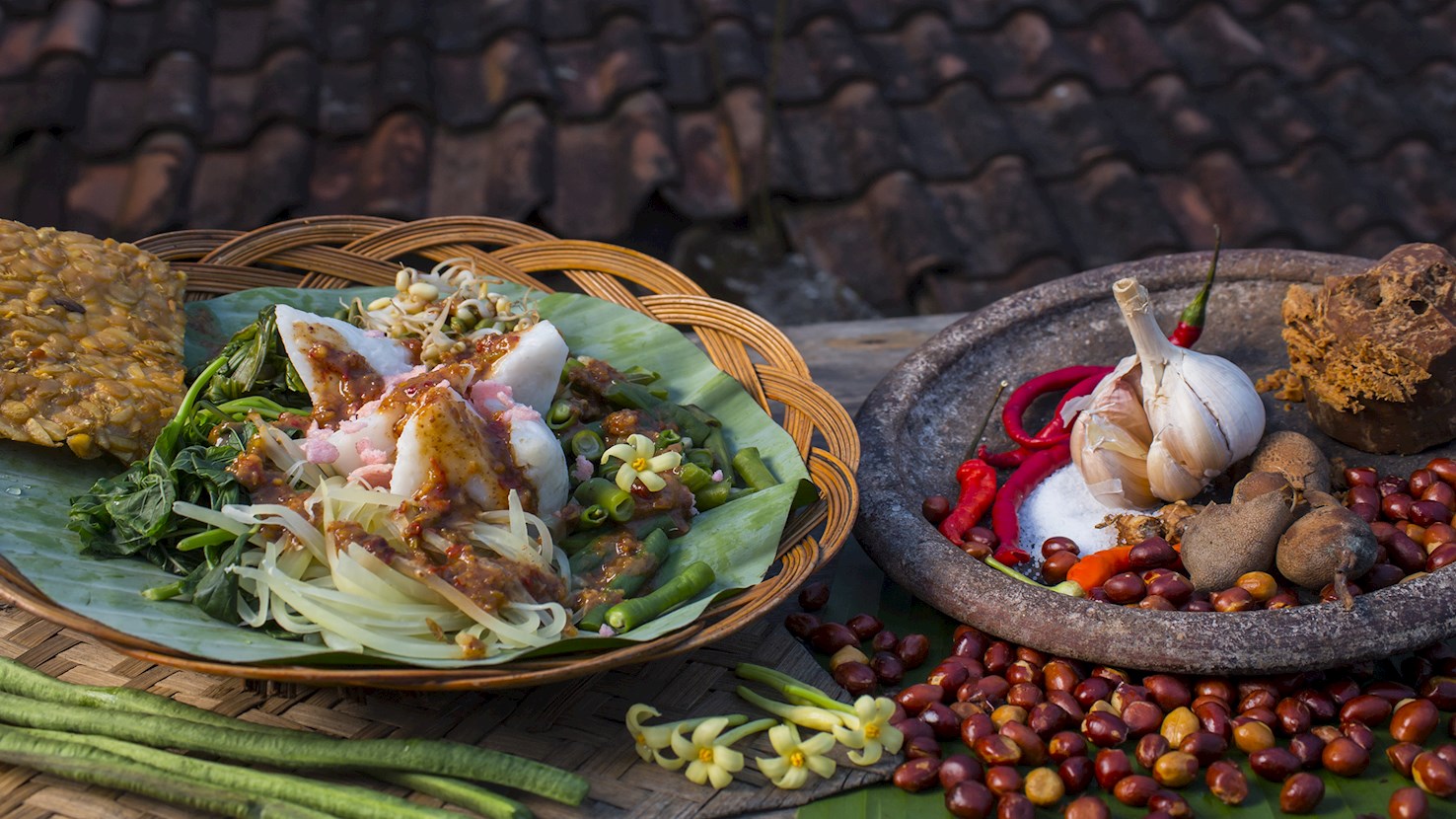
Indonesian pecel may refer to a fragrant peanut sauce or a combination of the sauce and various vegetables, when it is commonly referred to as a salad. The base of the sauce is prepared with roasted peanuts and spices that typically include chili peppers, palm sugar, garlic, tamarind juice, shrimp paste, kaffir lime leaves, salt, and kencur, an aromatic ginger variety. Usually associated with Java, the sauce is characterized by its distinctive combination of sweet and spicy flavors. When served with rice, the dish goes under the name nasi pecel.
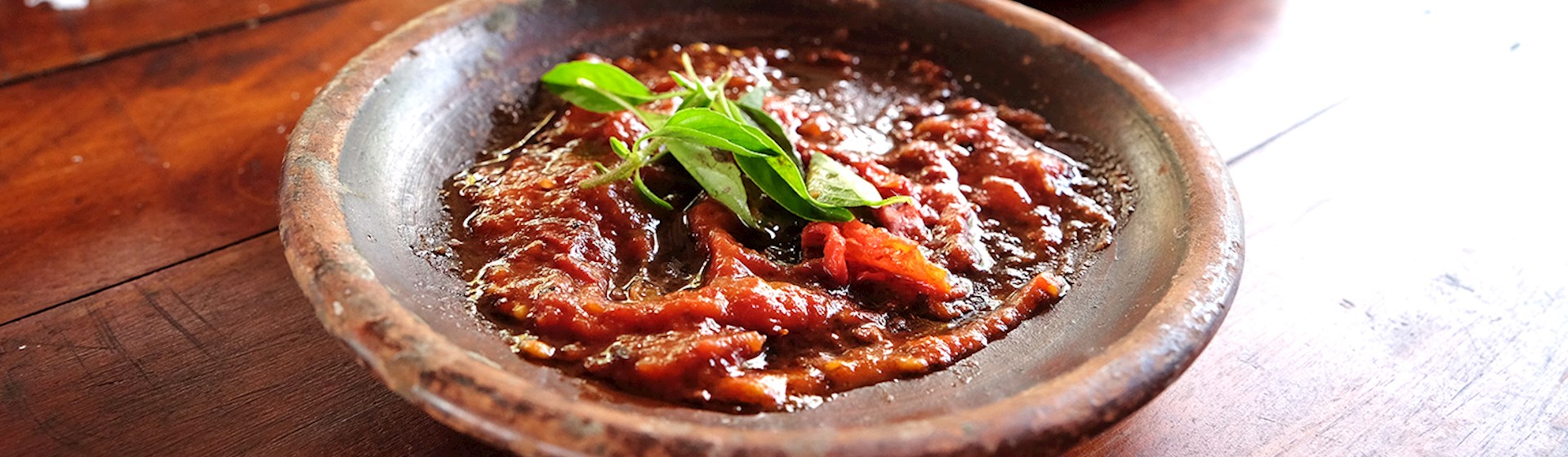
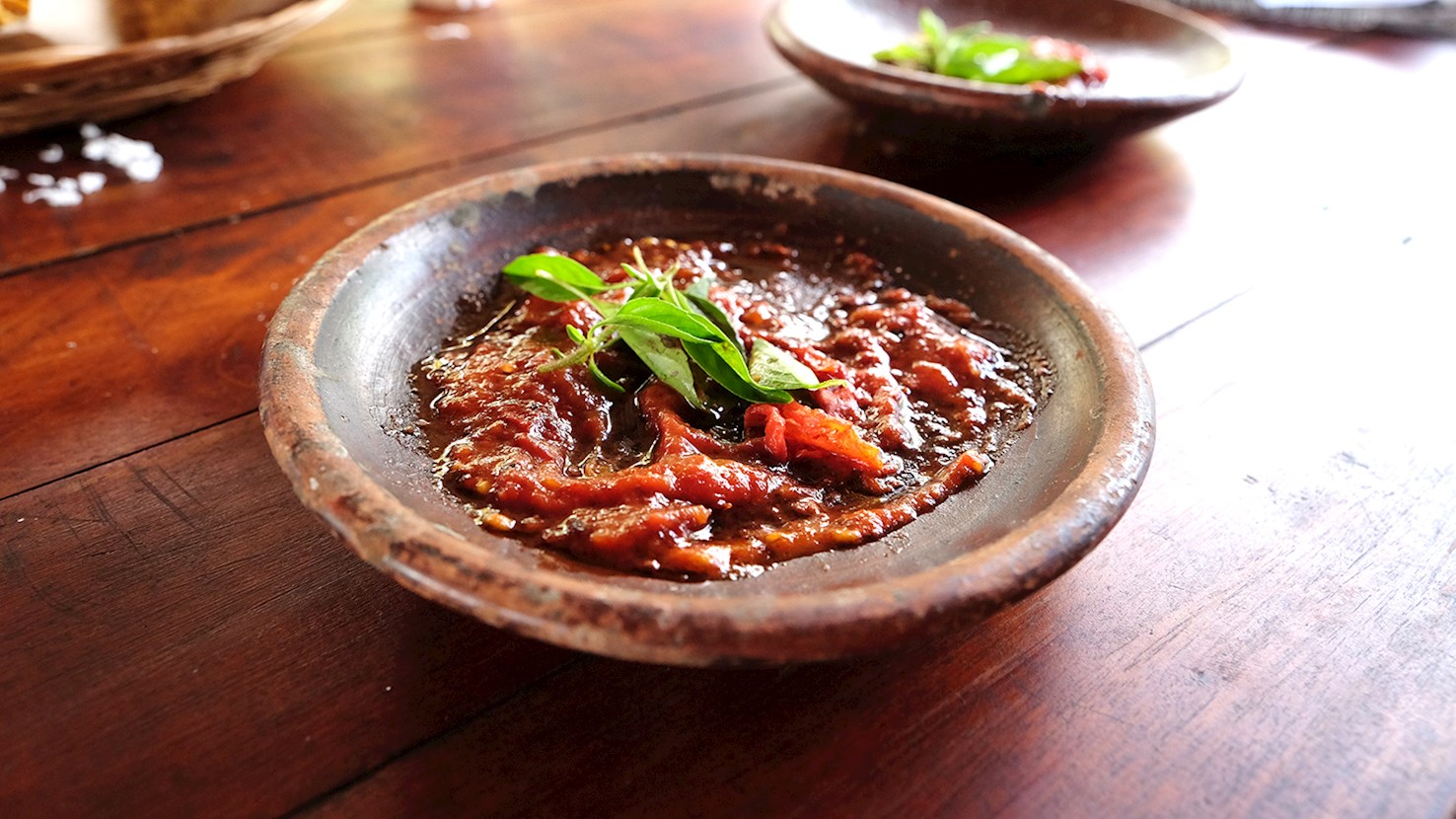
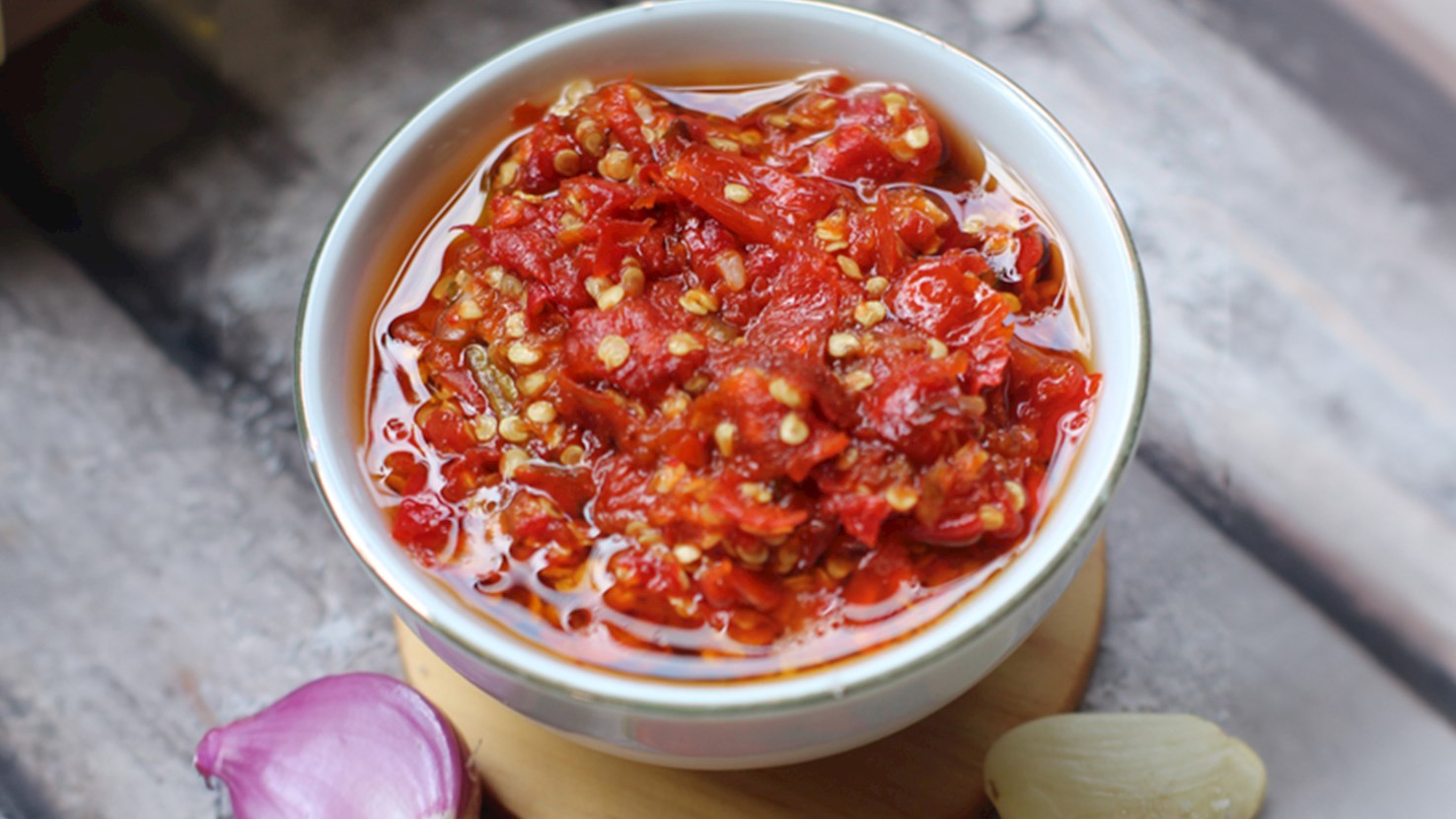
Sambal terasi is an Indonesian chili paste made primarily from fresh red chilies and fermented shrimp paste known as terasi. It is one of the most common and widely used sambals across Indonesia and serves as a versatile condiment that accompanies a variety of dishes, from fried fish and vegetables to rice and tofu. The key ingredient, terasi, is made from ground, salted, and fermented small shrimp that is sun-dried and either formed into blocks or sold loose. Before being used in sambal, terasi is typically toasted or fried to reduce its strong odor and enhance its umami flavor. The sambal is prepared by grinding red chilies, garlic, shallots, and sometimes tomatoes together with the toasted shrimp paste using a mortar and pestle, though modern versions may use a blender. Palm sugar is added to introduce sweetness, and tamarind juice or lime juice provides a sour note to balance the flavors. Salt is used for seasoning, and a small amount of oil is often added to blend everything smoothly or to fry the sambal further if a cooked version is desired. There are two main types of sambal terasi: sambal terasi mentah (raw), which uses raw chilies and ingredients and is served fresh, and sambal terasi matang (cooked), where the ingredients are sautéed to develop a deeper, more mellow flavor. Sambal terasi is an essential part of Indonesian cuisine and is found in households and restaurants throughout the country. It is known for its bold, savory taste and ability to enhance even the simplest dishes. While it can be very spicy depending on the amount and type of chilies used, it is always characterized by its complex combination of spicy, salty, sweet, and tangy notes. Because of its strong flavor and the presence of shrimp paste, sambal terasi is often made in small batches and consumed fresh, although it can be stored for several days in a sealed container in the refrigerator. In Malaysia, sambal terasi is known as sambal belacan.
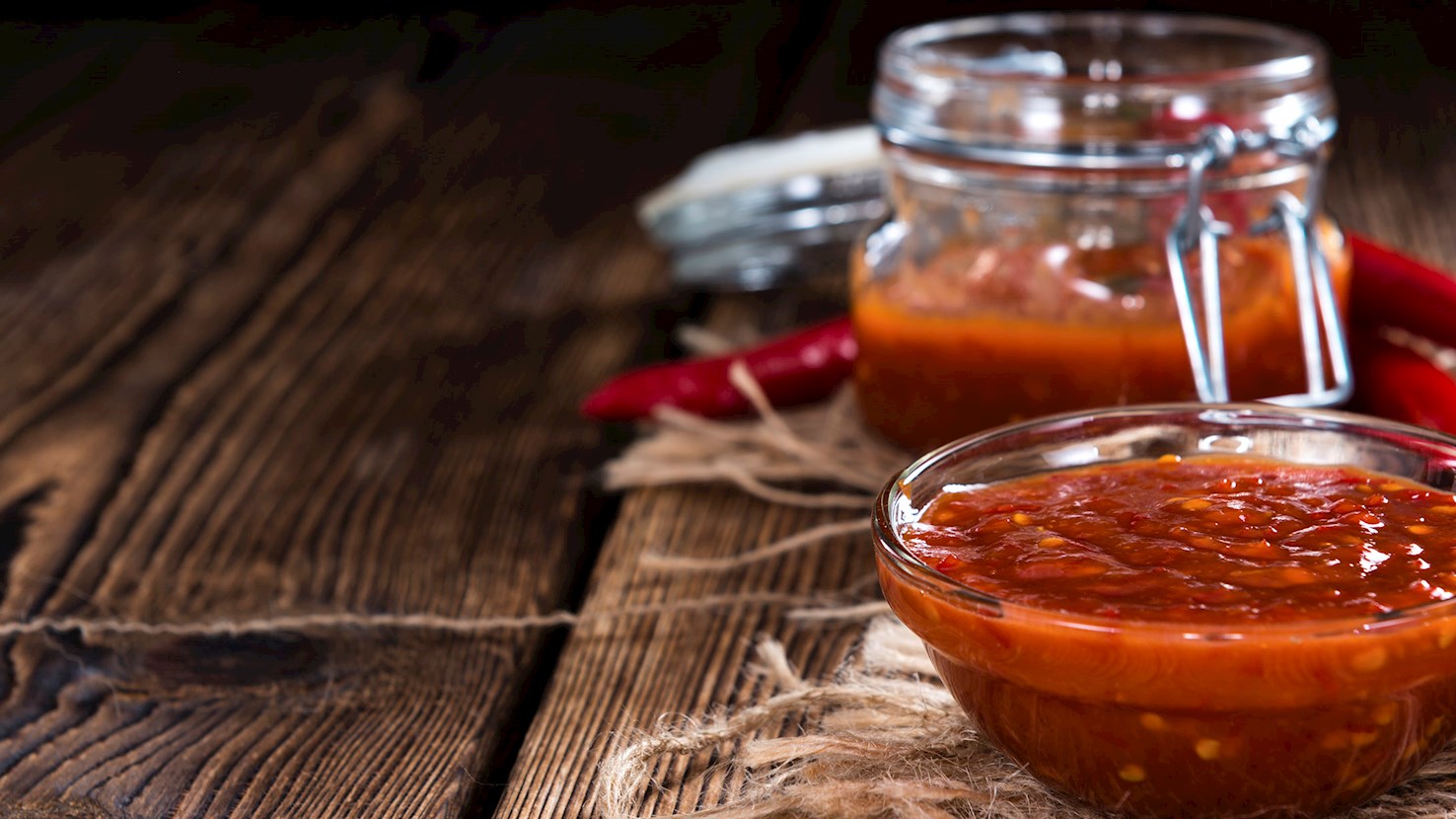
This quintessential Southeast Asian condiment is usually made only with spicy chili peppers and salt. It is occasionally adapted with lime juice, onions, sugar, ginger, shrimp paste, or vinegar. Traditionally prepared in a mortar, it is characterized by its thick consistency and an incredibly strong and sharp flavor. This original Indonesian creation has gained worldwide acclaim, and store bought varieties are available at numerous Asian food markets and international stores around the world. Sambal is used in a variety of Asian dishes, usually as a spicy condiment, seasoning, or a topping served alongside meat, seafood, vegetables, or rice.
Sambal bajak is a rich and savory Indonesian chili paste that's more complex in flavor compared to simpler sambals like sambal ulek. It's a cooked sambal, meaning the ingredients are sautéed together, which develops a deeper, more integrated flavor profile. Sambal bajak includes a blend of chili peppers, shallots, garlic, tamarind, palm sugar, and often shrimp paste (terasi) for umami depth. Additional ingredients like lemongrass, galangal, and kaffir lime leaves can also be included to enhance its aromatic qualities. The cooking process caramelizes the ingredients slightly, resulting in a sambal that is both spicy and sweet, with a rich umami background. It's a versatile condiment that can be used to accompany a variety of dishes, from rice and noodles to meats and vegetables, adding a flavorful kick to any meal.
TasteAtlas food rankings are based on the ratings of the TasteAtlas audience, with a series of mechanisms that recognize real users and that ignore bot,
nationalist or local patriotic ratings, and give additional value to the ratings of users that the system recognizes as knowledgeable.
TasteAtlas Rankings should not be seen as the final global conclusion about food. Their purpose is to promote excellent local foods,
instill pride in traditional dishes, and arouse curiosity about dishes you haven’t tried.



What People Say