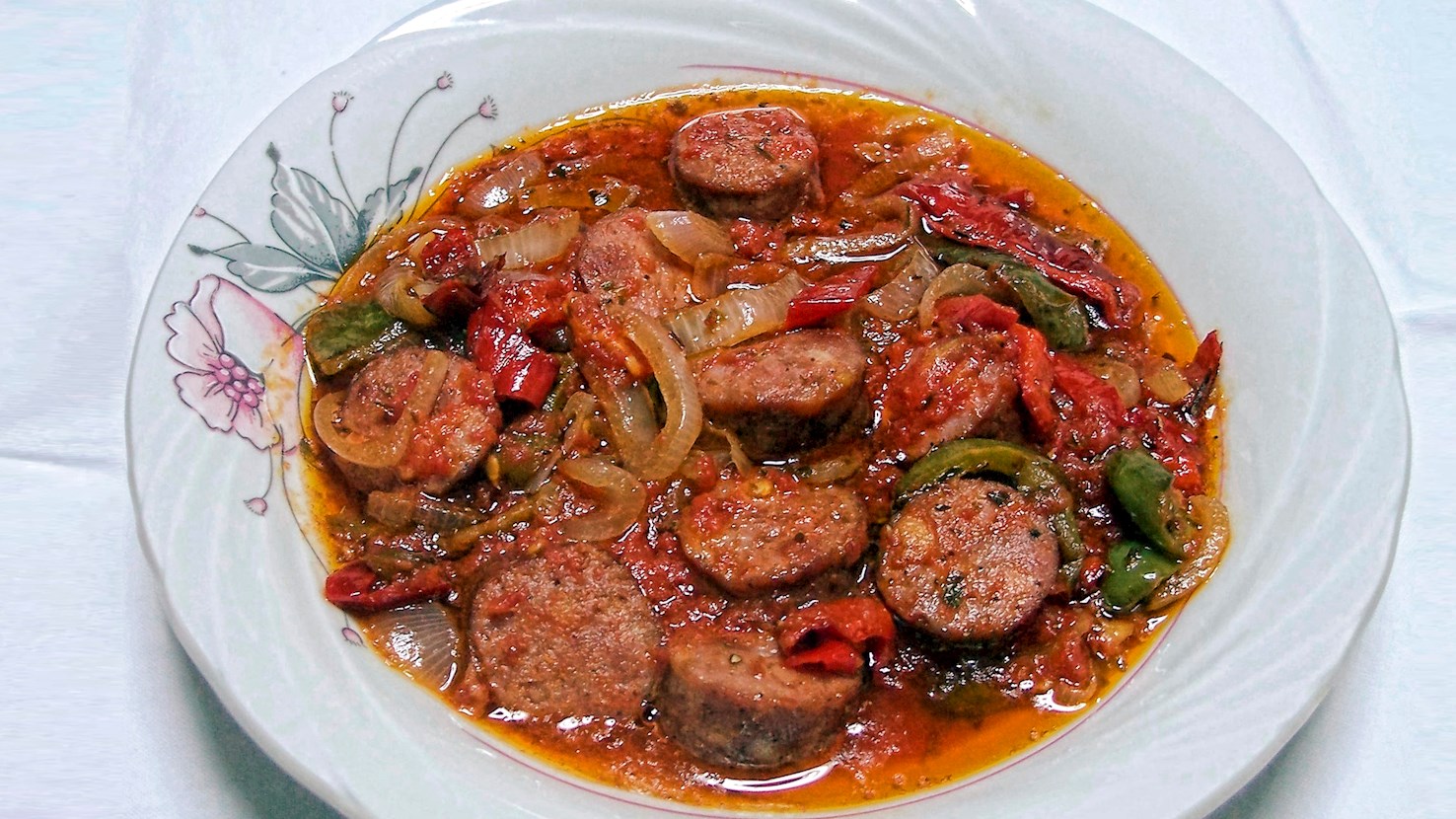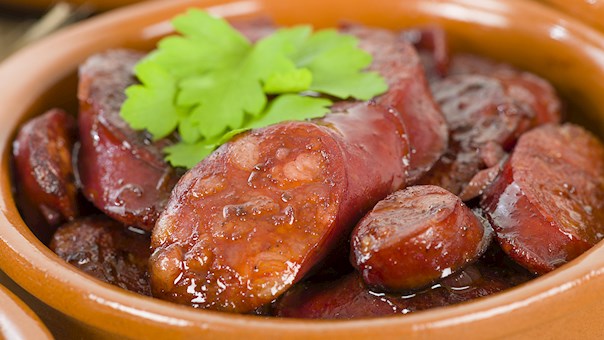
Hailing from the Thessaly region, this rustic dish combines sausages, locally referred to as loukaniko, and bell peppers, all sliced into larger chunks and doused in a rich tomato sauce. Spetsofai is commonly elevated with hot peppers which provide the welcoming heat during the colder winter months. The dish is a tavern staple across Central Greece, and it can be enjoyed as a meze dish or a main course that perfectly pairs with rice, potatoes, or feta cheese and country-style bread on the side.
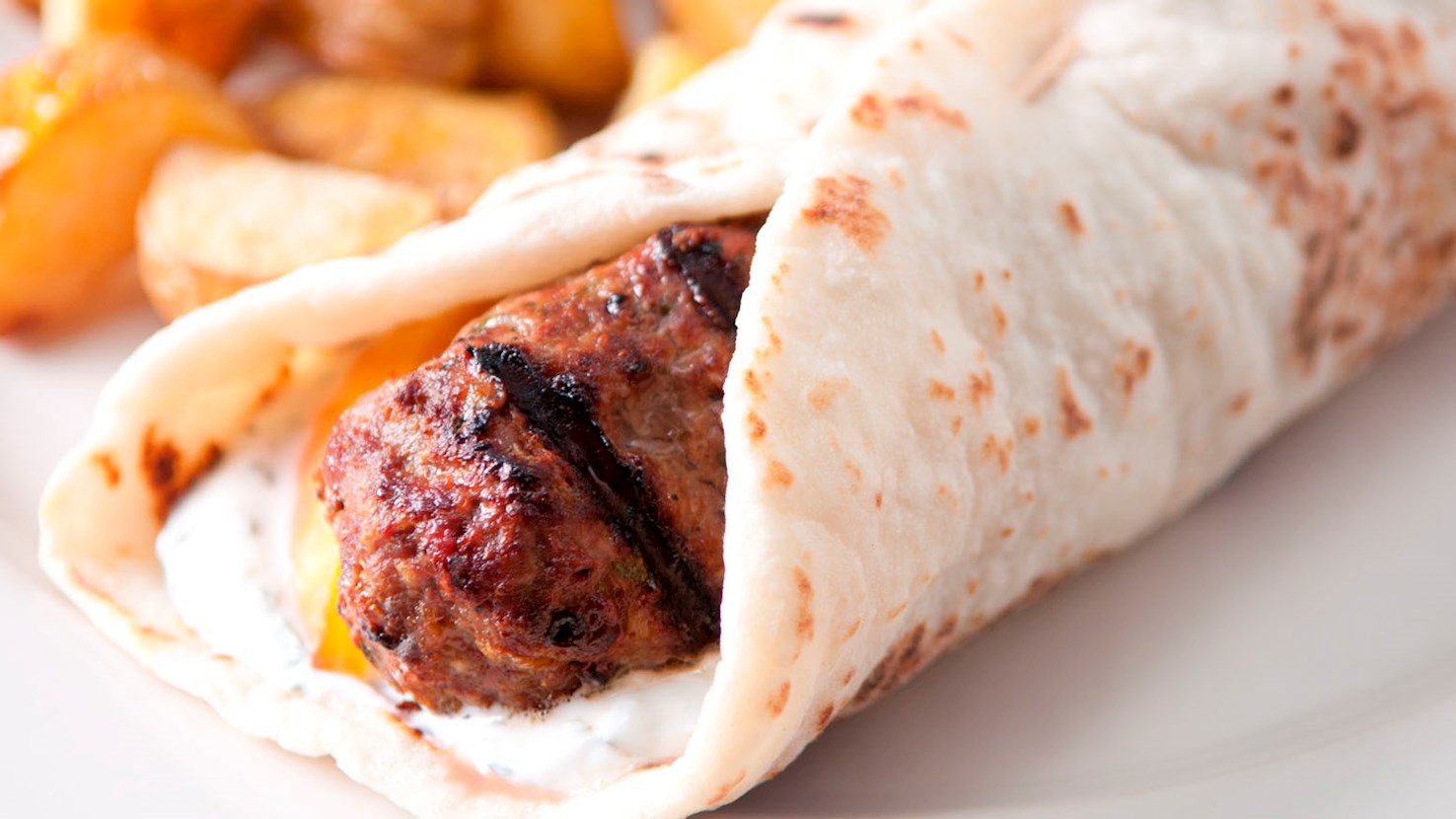
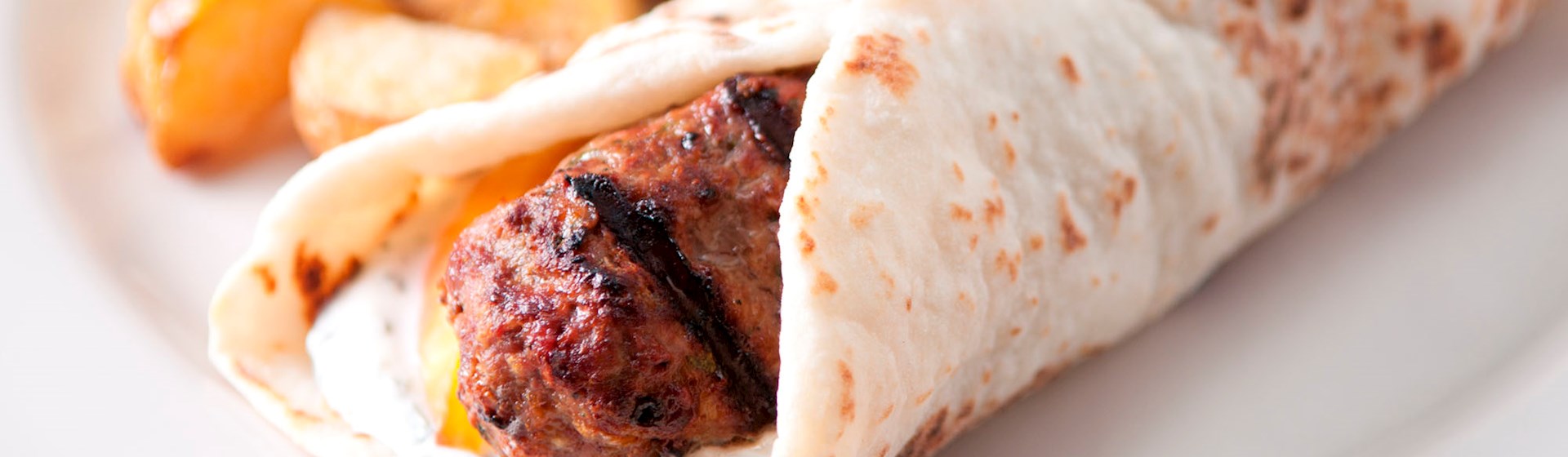
This traditional Cypriot sausage is made from a mixture of minced pork and lamb, chopped red onion, and parsley wrapped in caul fat, a thin fatty membrane that lines the stomach of cows, sheep, and pigs. There are two theories as to how the dish got its name – either from the Turkish word şeftali, which means peach, most likely as a reference to its texture, or from the name of the street vendor who is credited with having invented it. The meat mixture is seasoned with salt, pepper, and cinnamon, and then formed into small sausages which are skewered and grilled. As the meat cooks, the caul fat renders, giving the sausages a crispy, caramelized exterior while keeping the meat on the inside tender and juicy. Sheftalia is commonly served in a pita, topped with salad and tzatziki, a sauce made with yogurt, cucumber and olive oil.
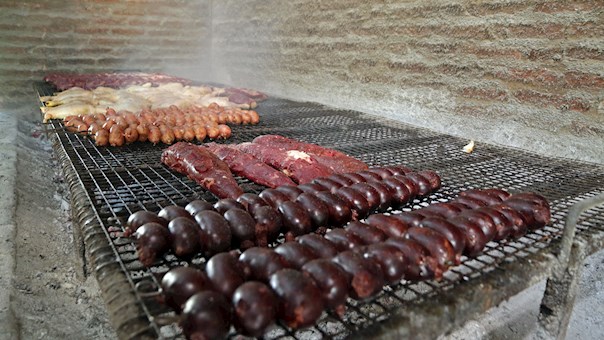
A true Argentinian asado is only complete with chorizo, a fresh pork (or beef or pork and beef) sausage seasoned with paprika, pepper, oregano, and garlic. It is briefly soaked in water and then grilled until the outside is charred, but the insides remain juicy. Still, chorizo sausage is nearly impossible to overcook thanks to its high-fat percentage. Chorizo is typically served as an appetizer and as a sandwich, inside a bread roll, smothered in chimichurri sauce.
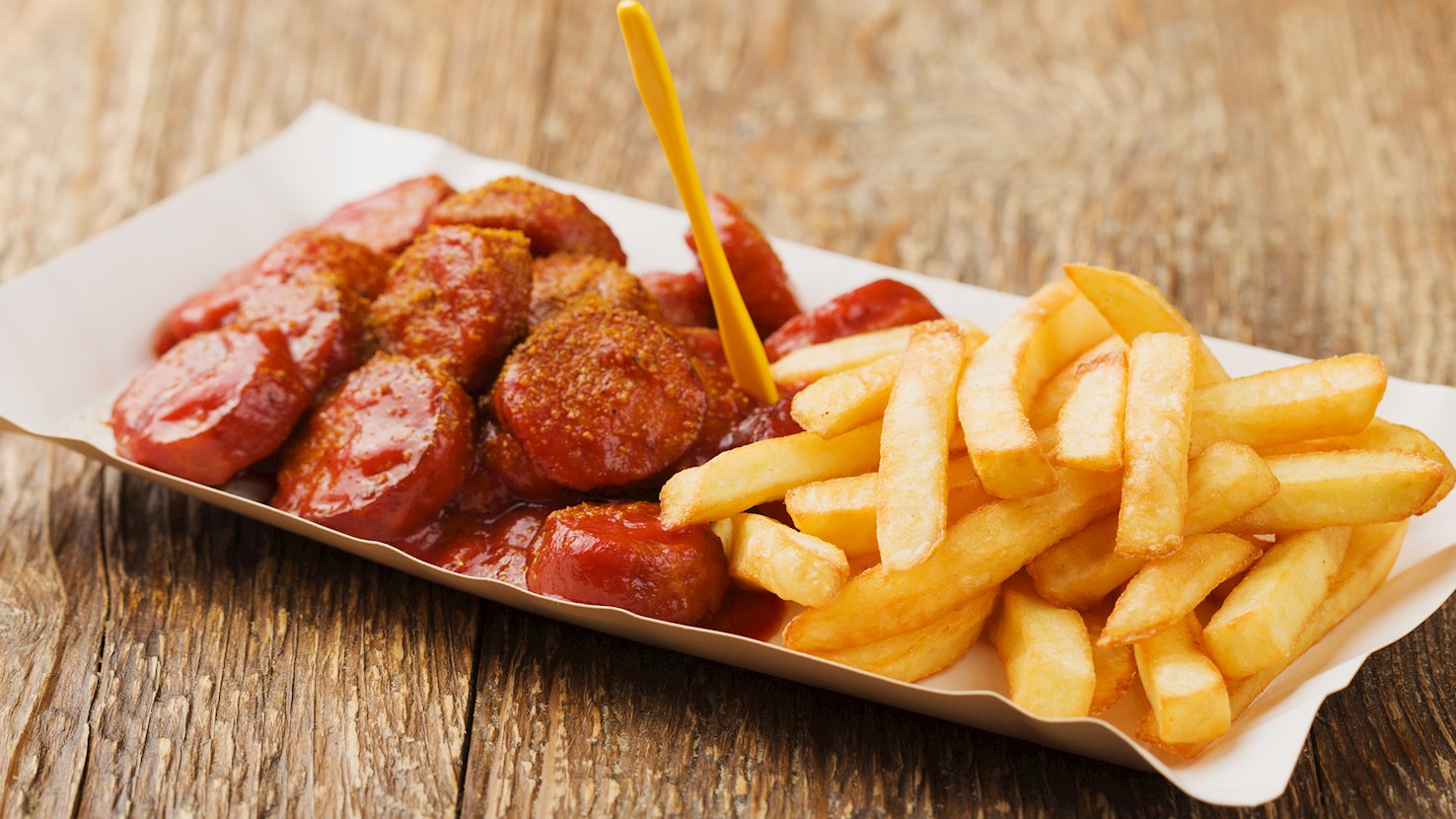
No other dish in Germany is as well known as currywurst, a street snack that has become an indispensable part of Germany’s culinary heritage. The dish is made from two essential parts - boiled and subsequently fried sausage, served whole or sliced, and a smooth and rich curry-spiced tomato sauce. With a portion of french fries or a kaiser roll on the side, the dish is usually lightly dusted with yellow curry powder. A wide range of sausages are used for currywurst, but the famous German bratwurst is the most commonly used variety. The real star of this dish is its gravy-like sauce made with puréed tomatoes and infused with the aromatic curry powder. The popularity of currywurst in Germany has generated numerous legends about its origins. Even though Hamburg is sometimes mentioned as its birthplace, Berlin is the city that is most commonly associated with the invention of this delicious dish. The most famous legend tells the story of Herta Heuwer, a Berlin local who is widely credited as the inventor of the tomato and curry concoction. In 1949, amid the aftermath of World War II, many ingredients were hard to come by and life was tough. However, thanks to Herta’s negotiating skills, she was able to get hold of a hard to come by ingredient – British yellow curry powder. She then mixed it with puréed tomatoes and other spices to create the base sauce, which she served with the sliced sausage. The dish became an instant success. Herta patented her creation and never revealed her original recipe. Later, as currywurst grew in popularity, numerous varieties popped up all over Berlin and the rest of Germany. No two are the same, and every local has their own favorite style and a favorite currywurst place. Germans are so fond of this fast food staple that they have even built a museum in its honor. Located in Berlin, the Currywurst Museum offers a glimpse into the history of the legendary currywurst, as well as a detailed overview of the numerous varieties, cooking styles, and serving options of this famous dish.
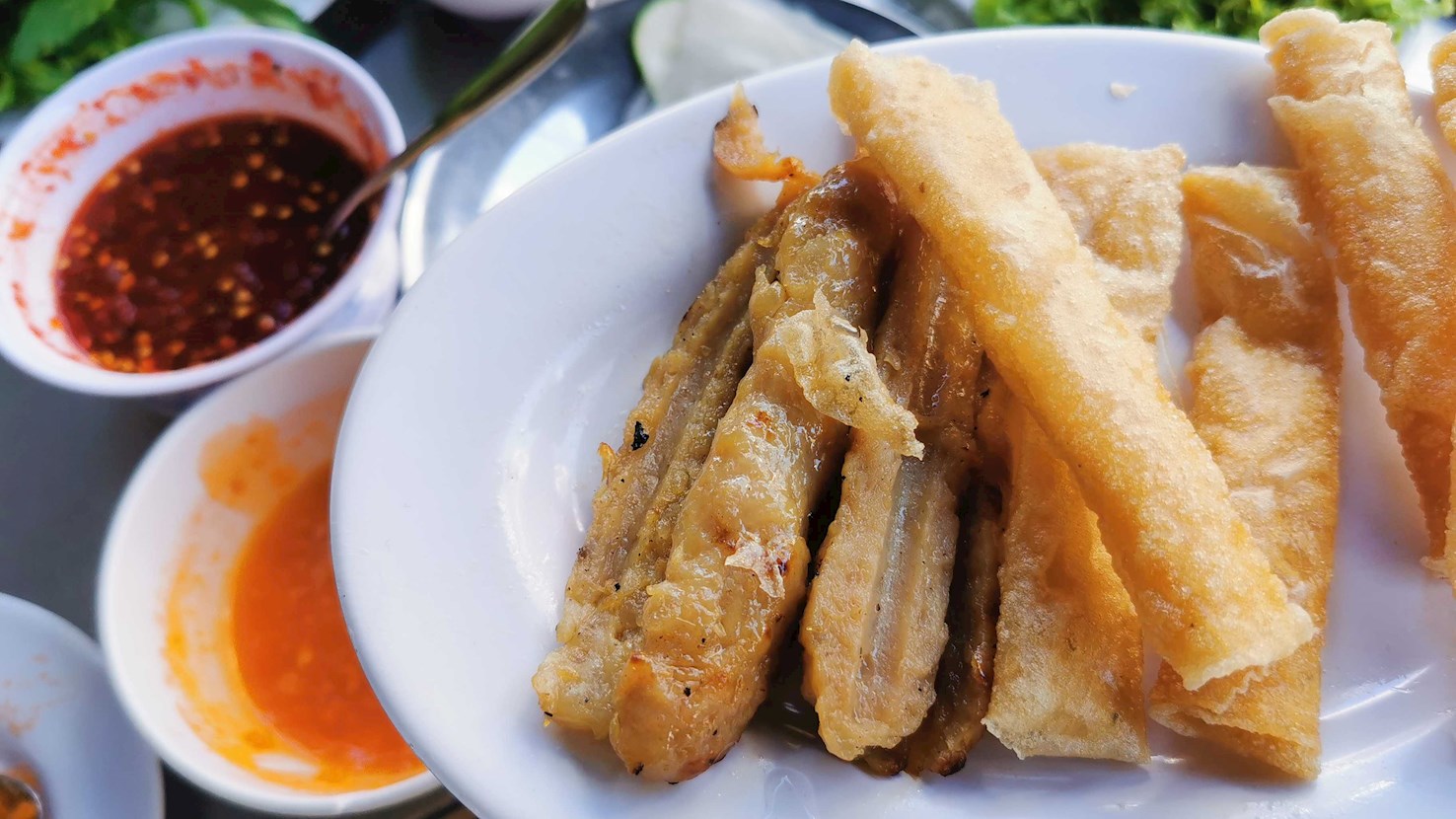
Nemnướng is a traditional Vietnamese grilled sausage originating from Nha Trang. The sausage is usually made with a combination of ground pork fat and meat, garlic, fish sauce, shallots, sugar, black pepper, and often baking soda that's used for puffing up the meat. The meat is formed into patties and balls or placed on skewers before the grilling process. Once done, nem nướng can be served in many ways – with steamed rice and fresh or pickled vegetables; wrapped in rice paper; paired with rice noodles, or in a bánh mì sandwich. The sausage is often accompanied by nước chấm dipping sauce, and it's served as an appetizer or a snack.
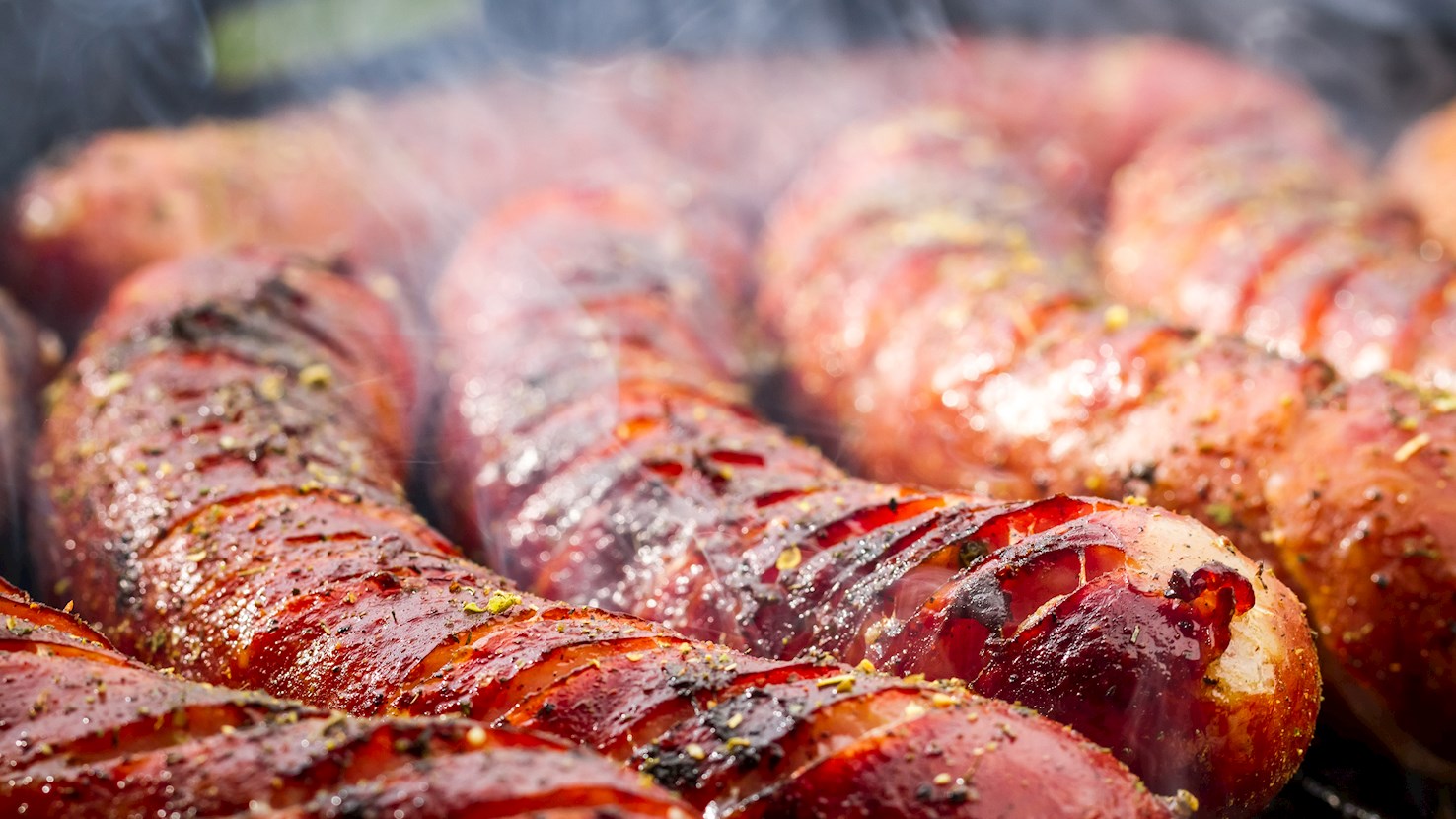
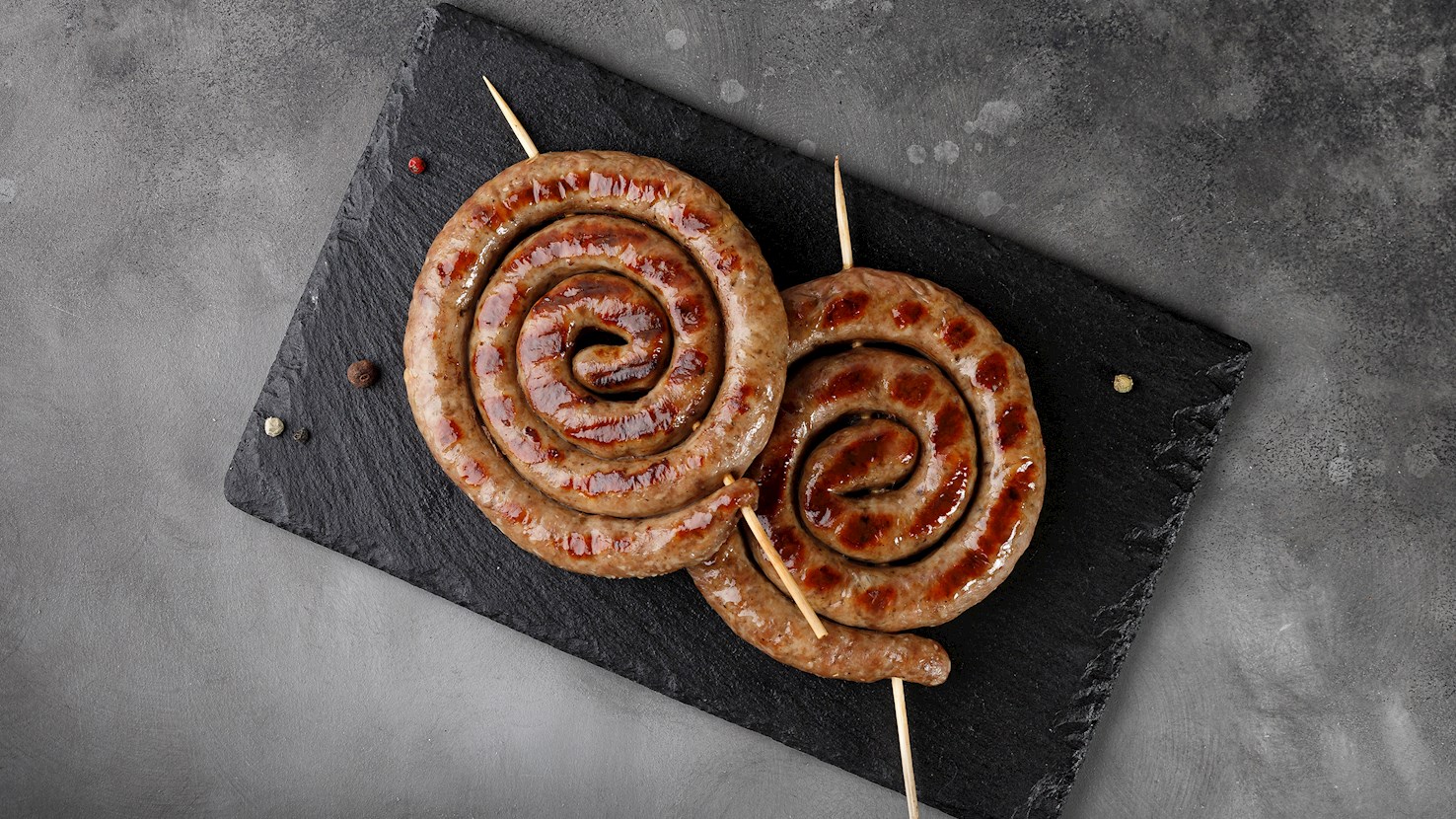
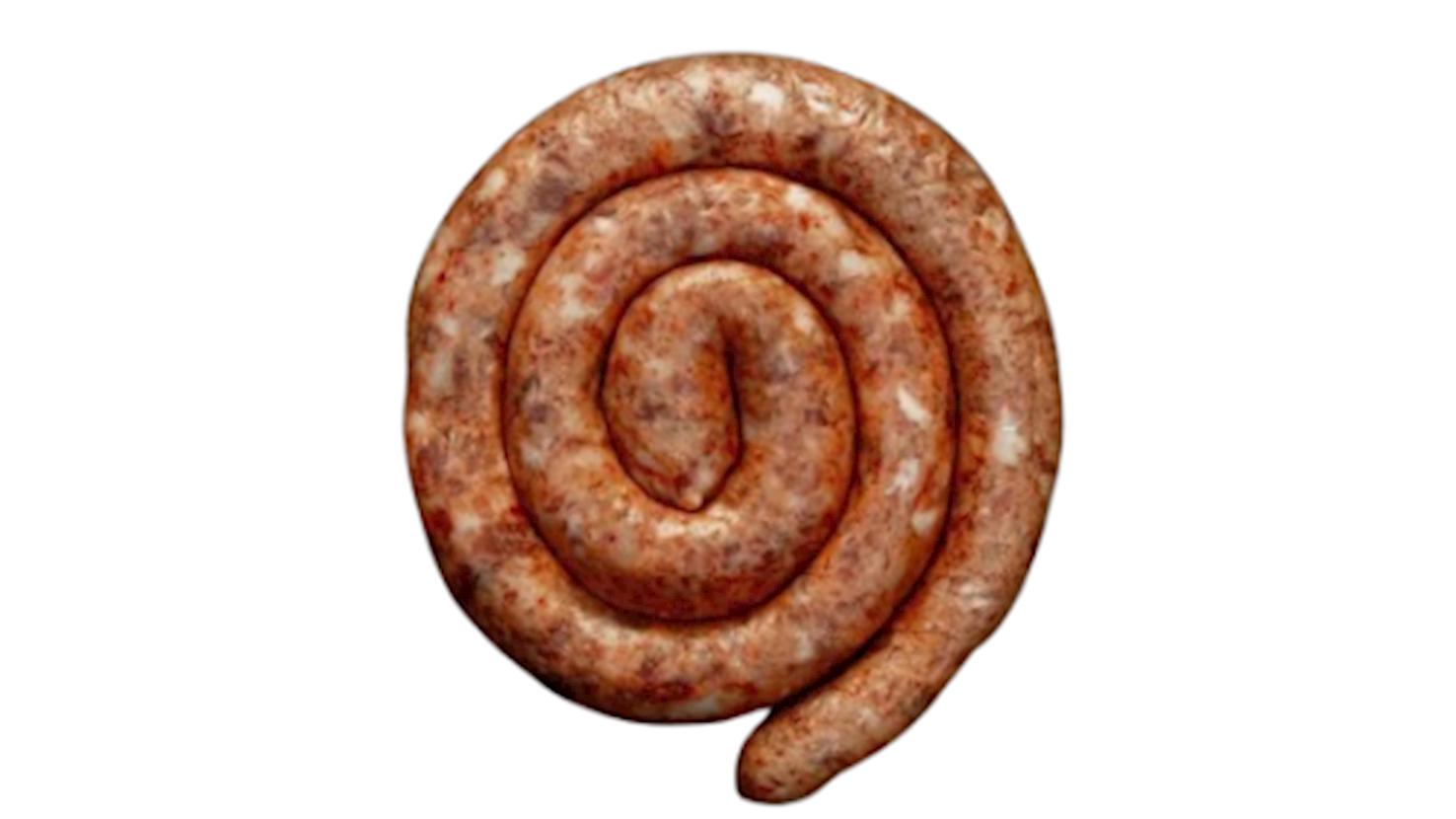
Salchicha parrillera is a thin, long, fresh, and coiled Argentinian sausage that is very similar to chorizo. They only differ in shape. For barbecuing, it’s usually shaped into a tight spiral and secured with long toothpicks that are pierced into the center of the sausage to keep it in place. It is grilled over low to medium flame and often turned until crispy on the outside. The grilled sausage is served with bread and chimichurri sauce.
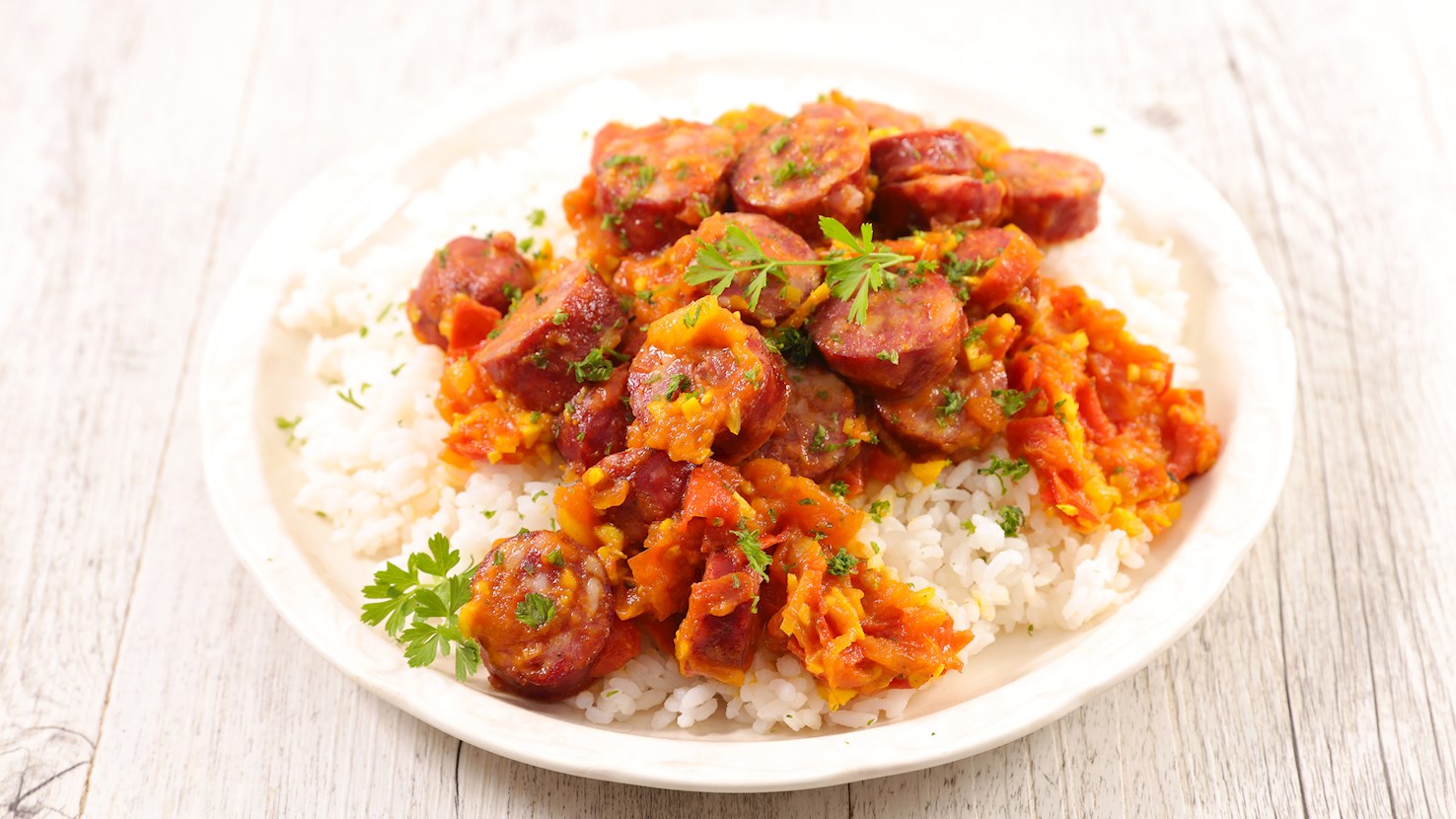
Rougail saucisses is a traditional dish originating from Réunion, an island that's an overseas region of France. The dish is usually made with a combination of sausages (fresh or smoked), onions, olive oil, hot peppers, tomatoes, and salt. The sausages are blanched in boiling water for a few minutes, rinsed, and then sautéed in olive oil. The onions are sliced and added to the pot, and the hot peppers are seeded, chopped, and mashed with salt before they're also added to the pot. Once the onions become golden brown, diced tomatoes are mixed in, and the dish is cooked over low heat until the sauce thickens.
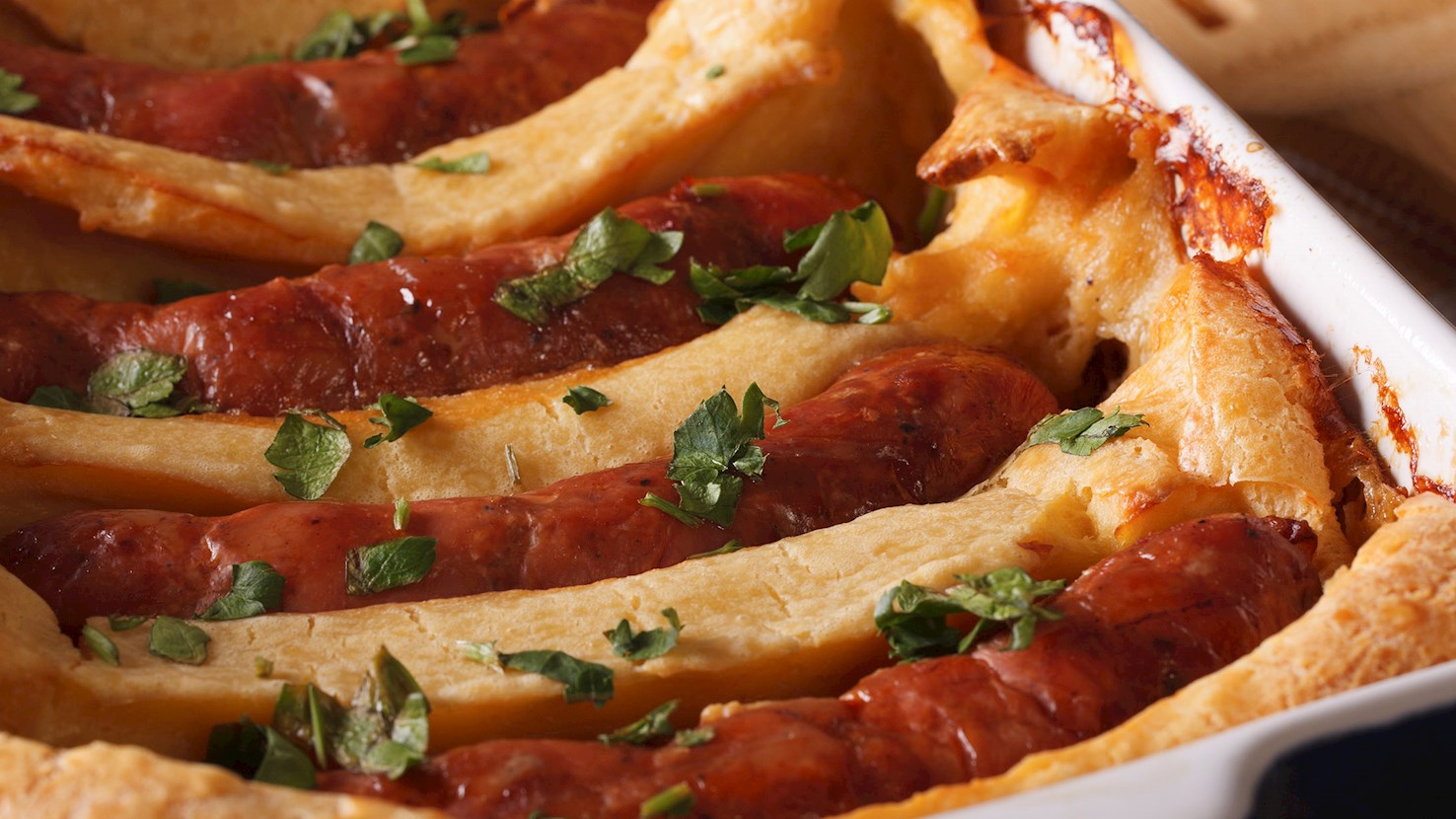
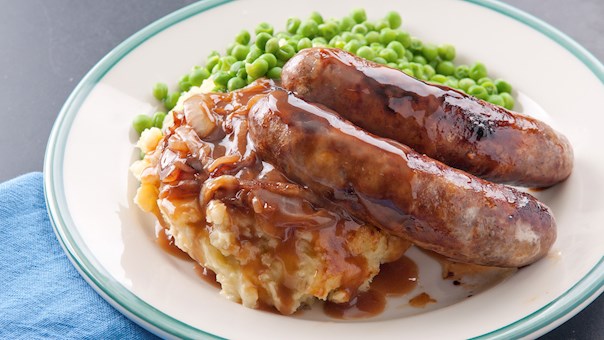
The unusually named toad in the hole is a traditional delicacy consisting of a number of sausages baked in a Yorkshire pudding batter. The dish is traditionally served with vegetables, mashed potatoes, and onion gravy on the side. It was invented in the 18th century, when batter puddings first became popular. The name of the dish comes from its visual appearance—the sausages are reminiscent of frogs which are peering out from a crevice. Originally, toad in the hole was considered a vulgar dish, and over time it slid down the social scale and became a staple of workers' diet. Today, the dish is still consumed as an inexpensive comfort food, characterized by large portions and its high caloric content.
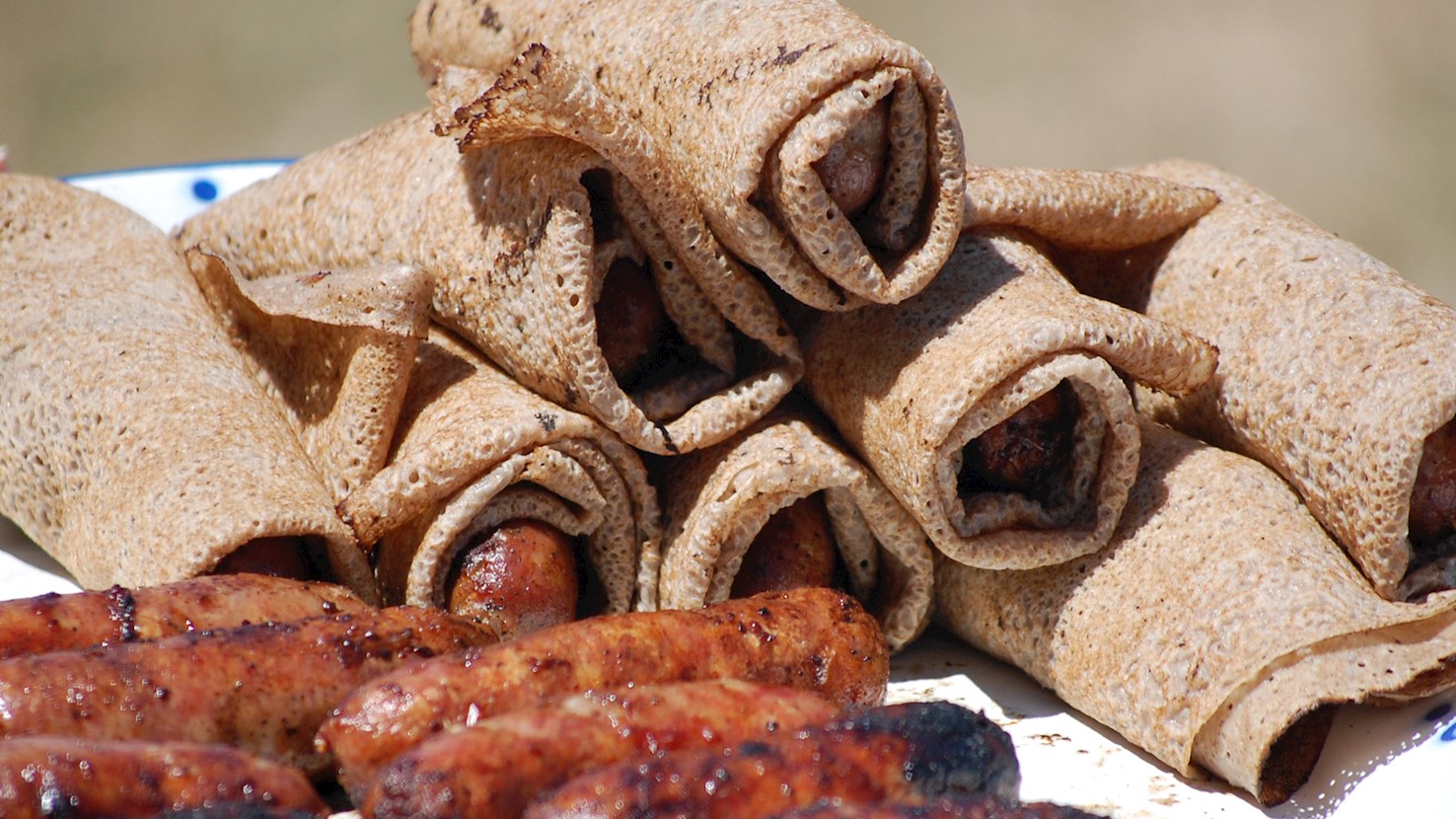
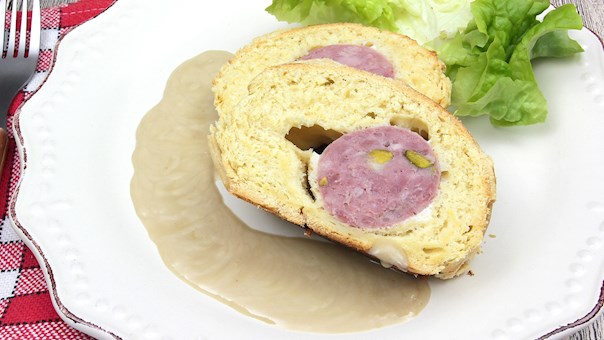
This classic street food item hails from French Brittany, more precisely from the department of Ille-et-Vilaine. Usually sold at food trucks, galette saucisse consists of a cold buckwheat crêpe that is wrapped around a warm grilled pork sausage. The combination can be complemented by mustard, but other options may also include mayonnaise or ketchup, cheese, or other garnishes. The dish is believed to have originated as early as the 15th century, and it is said that the first versions were prepared with pork offal. It is best enjoyed with a glass of Breton cider on the side.
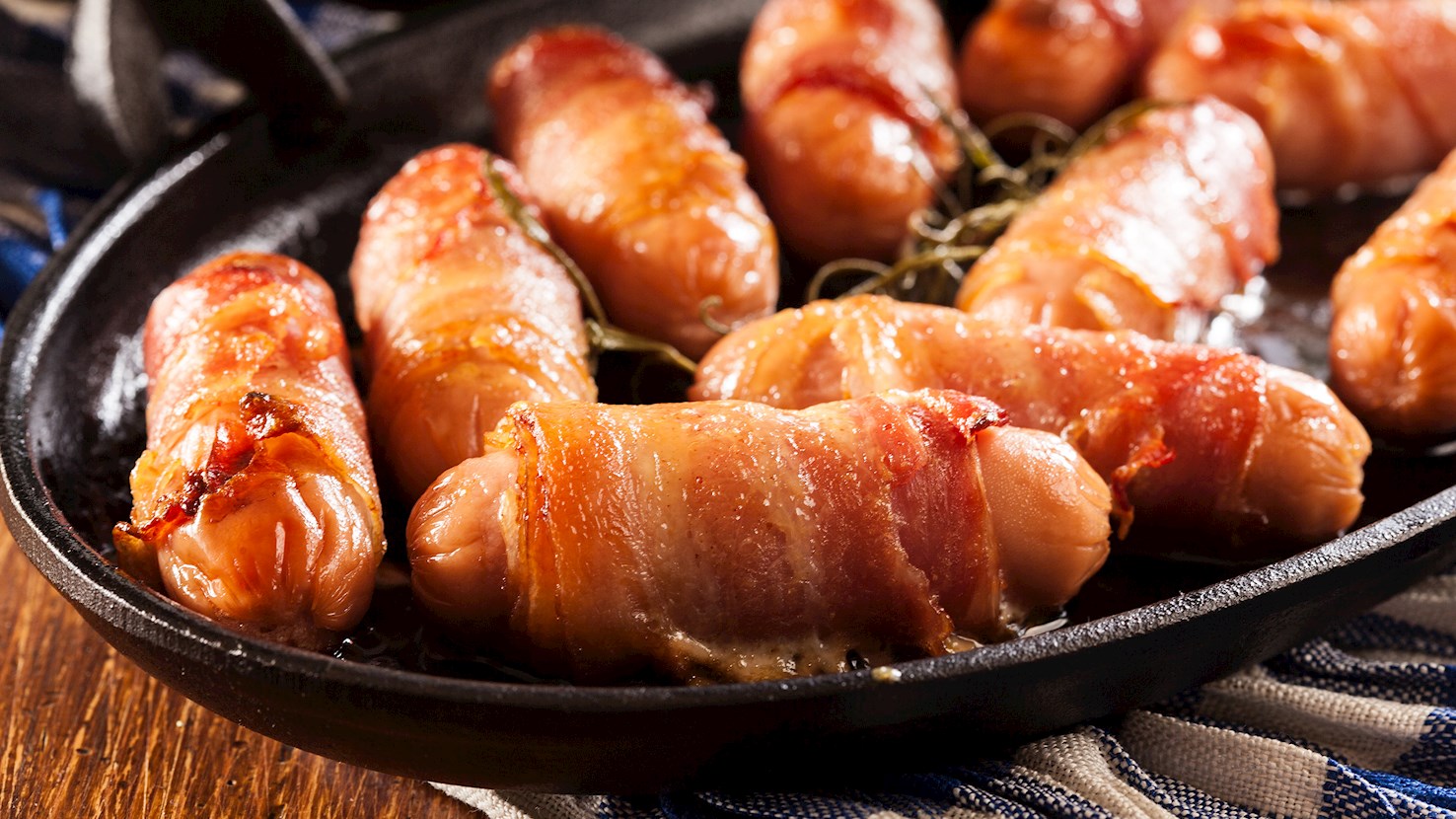
Also known as kilted soldiers, pigs in blankets is a UK and Irish side dish consisting of cocktail-sized chipolata sausages wrapped in streaky bacon, which can be either pan-fried or baked. Chipolata sausages are fresh, pork-based sausages that are common in the UK. The first recipes are from 1957, but pigs in blankets did not become popular until the 1990s when Delia Smith, an English cook and TV personality, included a recipe in her cookbook. Today, pigs in blankets are a Christmas staple, usually served as a side dish to roast turkey. There are many variations as well. In some variations, chorizo or chicken sausage is used instead of chipolata, and some add additional ingredients, such as chestnuts, herbs, and apples, or call for smoked or flavored bacon. And finally, although they bear the same name, the UK pigs in blankets should not be confused with the US dish of the same name in which sausages are wrapped in dough and baked.
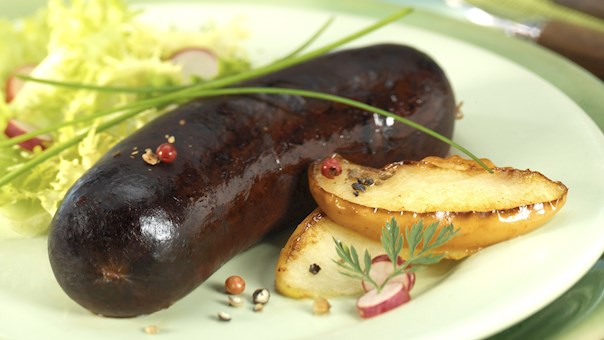
Don Julio is a producer that uses meat exclusively from its own farm. On the farm, Hereford and Aberdeen Angus cattle are raised, fed solely on grass, and grown using regenerative grazing methods. This approach allows for sustainable farming and high-quality meat production. Don Julio owns a renowned restaurant in Buenos Aires, famous for its top-tier meat products, including house-made sausages. The sausages served at the restaurant, such as morcilla (blood sausage), salchicha, and chorizo, are made from meat sourced from the farm, using traditional techniques and spices. The meat is dried and aged to achieve optimal flavor and texture. All products are handcrafted, in line with the highest quality standards.
TasteAtlas food rankings are based on the ratings of the TasteAtlas audience, with a series of mechanisms that recognize real users and that ignore bot,
nationalist or local patriotic ratings, and give additional value to the ratings of users that the system recognizes as knowledgeable.
For the “Top 40 Sausage Dishes in the World” list until June 15, 2026, 1,941 ratings were recorded, of which 1,556 were recognized by the system as legitimate.
TasteAtlas Rankings should not be seen as the final global conclusion about food. Their purpose is to promote excellent local foods,
instill pride in traditional dishes, and arouse curiosity about dishes you haven’t tried.
The initial list of top producers was compiled based on available reviews, awards, local recommendations, media and blog coverage, and consumer reviews.
The list will be updated with ratings from TasteAtlas local ambassadors and TasteAtlas users.