Nativus is a Hungarian company specializing in premium-quality wild game meat products. Their offerings include smoked and matured meats, such as salamis, hams, snack sausages, and dry sausages, as well as Sous Vide prepared venison cuts paired with sauces like forest mushroom or sour cherry.
They also provide pre-chilled and frozen game meats, including deer, roe deer, and mouflon. Nativus emphasizes the natural and unique flavors of Hungary's wild animals, aiming to bring these delicacies to a broader audience.
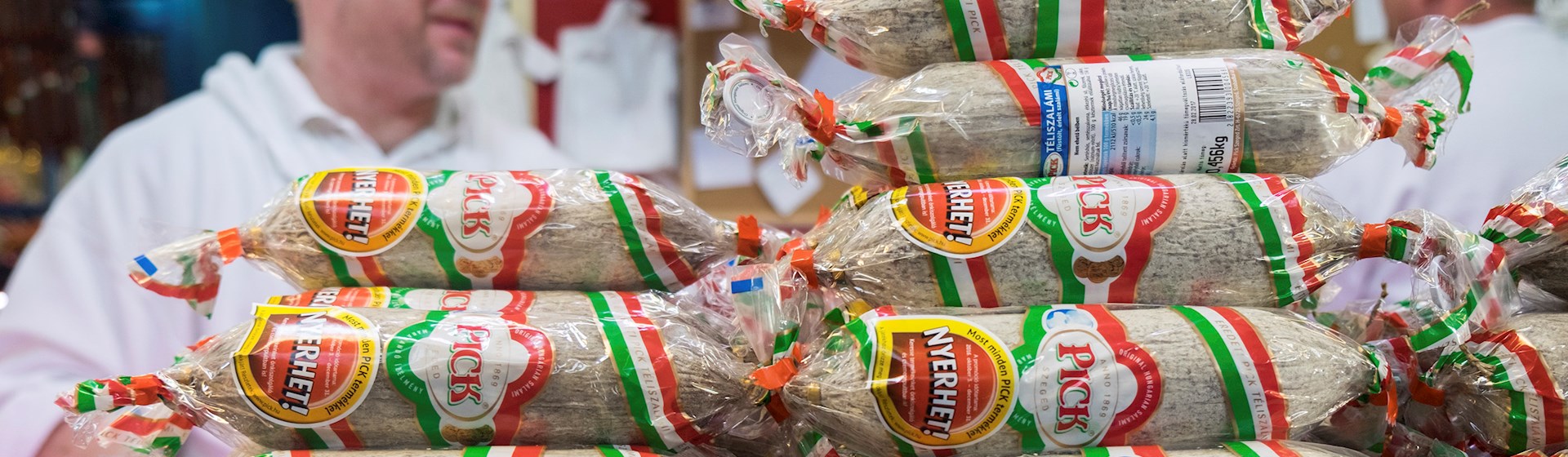
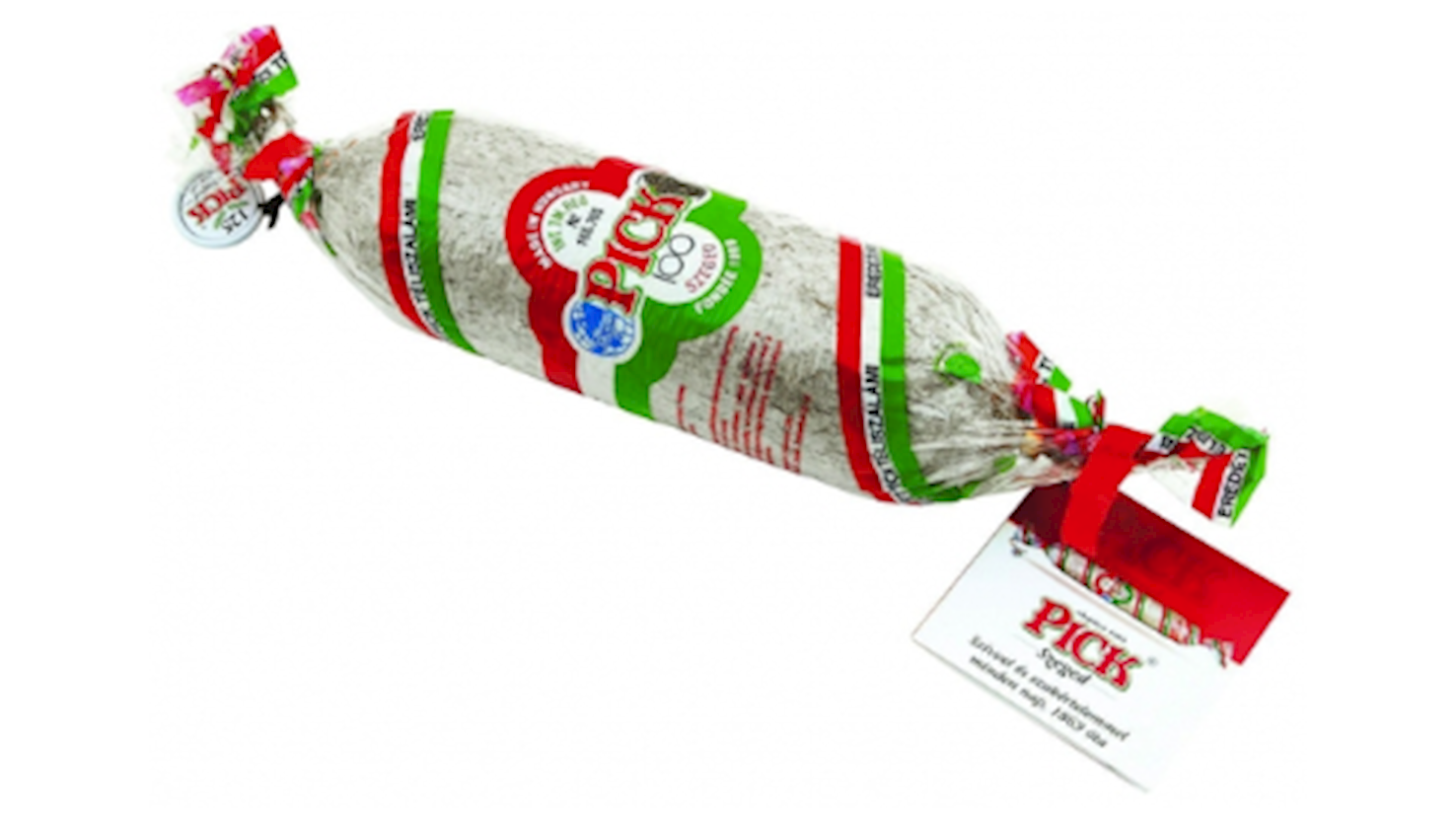
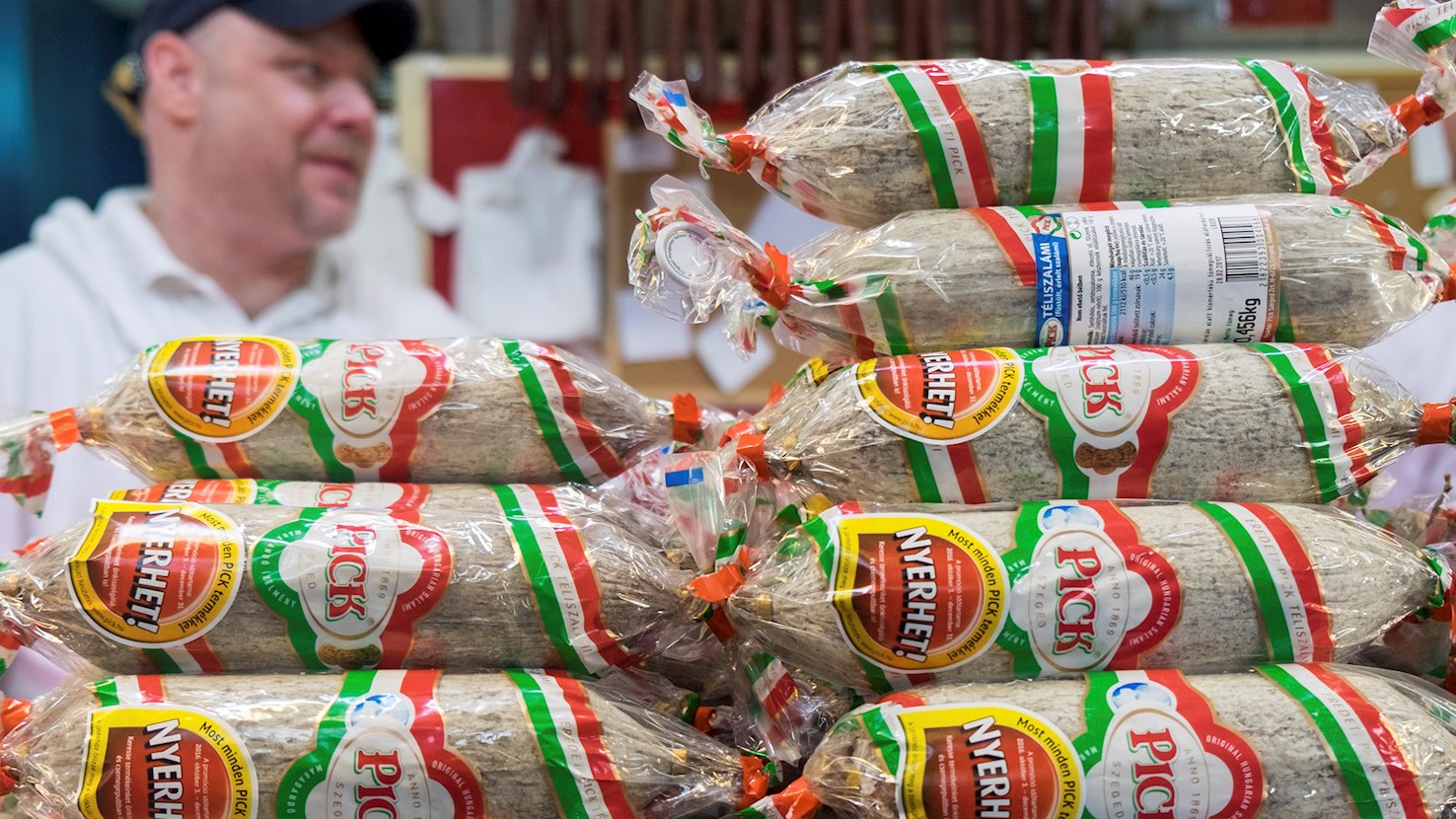
Pick Szeged is one of the oldest and most renowned meat industries in Hungary, with a tradition dating back to 1869. Located in the city of Szeged, Pick has become synonymous with premium quality cured meat products.
Over more than 150 years of existence, Pick has managed to preserve its original recipes and traditional production methods, which include the careful selection of the finest pork, natural fermentation, cold air drying, and beechwood smoking. This authentic process gives their salamis a distinctive aroma, a rich and rounded flavor, and a perfectly balanced texture.
Today, Pick offers a wide range of products, including various types of salamis, hams, sausages, and other cured meat delicacies, blending a rich heritage with modern technologies.
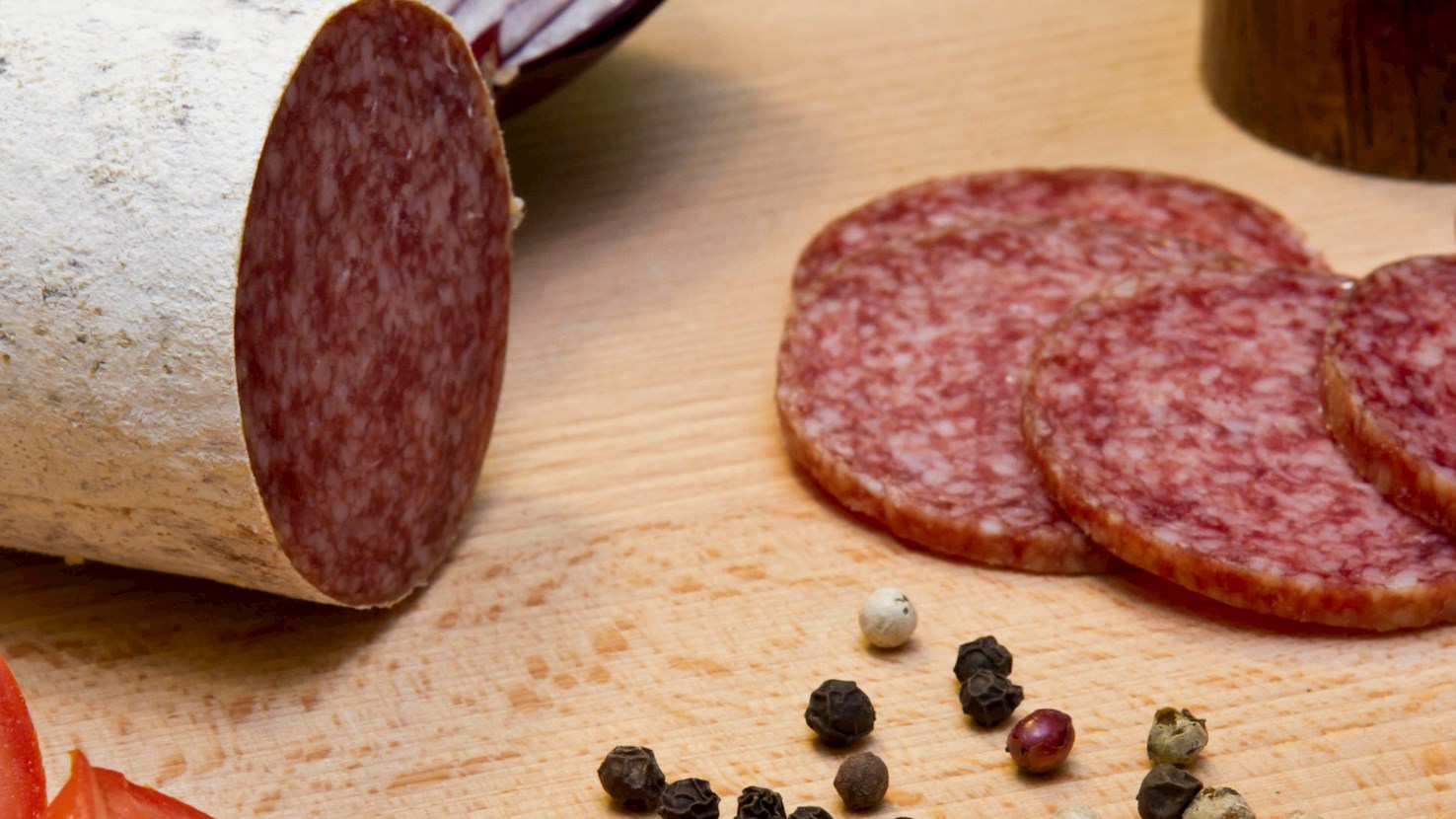
Their signature product – the traditional Pick Téliszalámi (winter salami) – remains an undisputed symbol of Hungarian gastronomic heritage, recognizable by the noble white mold that naturally covers the salami during the aging process.
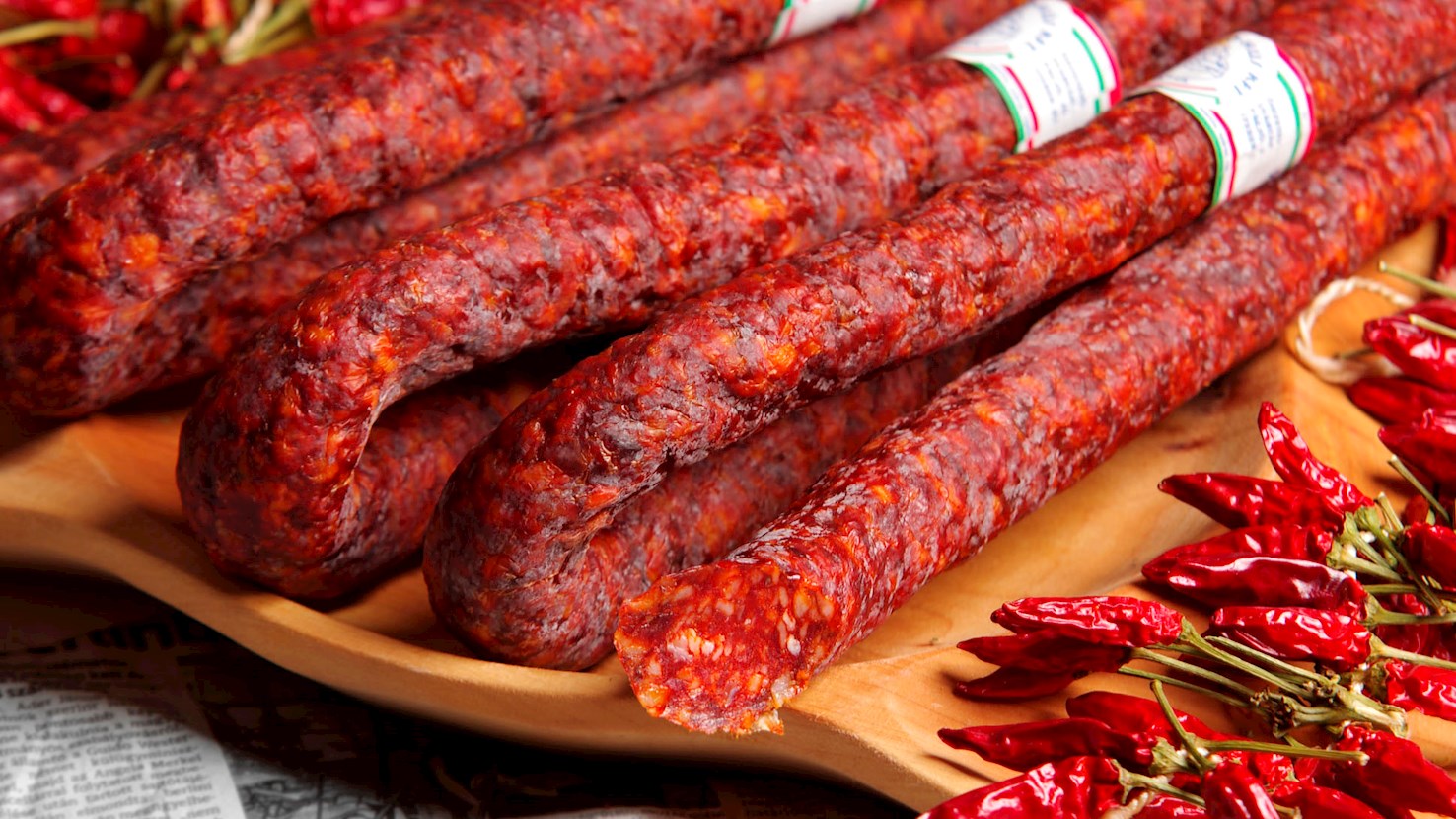
Csabai kolbász or Csabai vastagkolbász is a cylindrical sausage made with pork from pigs that have been fattened to a minimum weight of 135 kg. What makes this sausage unique is the manual boning method during the production, where all of the sinews are removed, thus ensuring the best quality of the meat. The pork meat and fat are minced, then combined with paprika, garlic, caraway, and salt and filled into casings, after which the sausage is smoked, cured, and dried. It slices easily and has a hot, smoky and spicy flavor (due to the paprika and the smoke treatment). It can be sold whole or sliced and vacuum-packed. According to tradition, it is eaten with bread, green peppers, and tomatoes.
Szegedi szalámi is a slowly smoked, cylindrical sausage made from pork. The salami is rounded at one end and slim at the end from which it was hung, and is covered by noble mold on the exterior. It slices easily and comes in different varieties depending on the length: normal (54cm), midi (36cm), tourist (19cm) and mini (16cm). Szegedi salami must be made with pork older than one year that was raised and slaughtered in the Bács-Kiskun, Csongrád, Békés, Hajdú-Bihar, and Baranya counties in Hungary. Additionally, salt and a mixture of seasonings is added to the salami, which matures for at least 90 days before it is ready to be consumed. The specific climate conditions near the Tisza river, the slow production process, and the existence of mold-flora in the region give this salami its unique visual appearance and a distinctive flavor. It is recommended to finely slice the salami and serve it on its own or with bread and cheese.
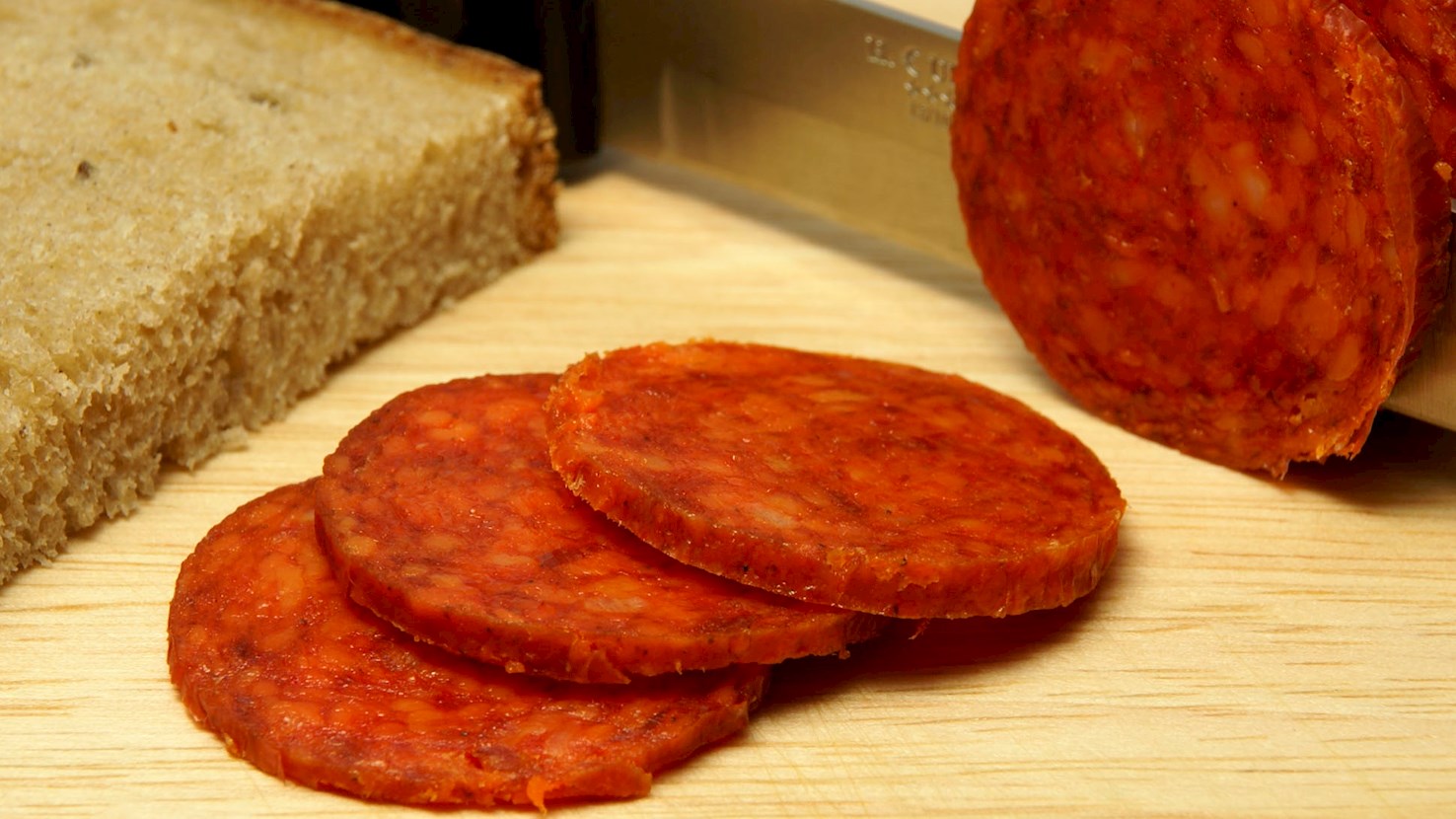
Budapesti téliszalámi is a smoked and dried cylindrical sausage made with pork meat and pork fat coming from castrated male pigs and non-breeding female pigs that are older than one year. The outside of the sausage is covered in noble white-grey to white mold as a result of the damp air near the Danube. The sausage has a strong flavor of allspice, white pepper, and sweet paprika. It slices easily, and the slices look like a mosaic of light brown or red meat and pale white fat pieces. Its texture is creamy and tender, with a melt-in-the-mouth quality. The sausage must mature for at least 90 days, and it is then sold - either whole or sliced and packed in vacuum containers. This product is made in Budapest and the surrounding area, and in the past it was made only during winter, hence the name téliszalámi (winter salami).
Gyulai kolbász is a slowly smoked sausage made from pig's meat that has been minced with fat and combined with salt, hot and mild ground paprika, pepper, caraway, garlic, and salt. The combination is placed into intestines that act as a protective casing, and the sausage is then smoked over wood before being cured and hung to dry. When sold whole, the sausages must come in pairs (18-26 cm in length) and they must not have any mold on the exterior. The sausages slice easily and have a pleasant flavor of smoke and spices used in the production process. They can be eaten on their own, with bread, or used in rakott krumpli, a traditional Hungarian potato and egg casserole.
Mangalica kolbász is a Hungarian sausage made from the meat of the Mangalica pig, a heritage breed native to Hungary known for its rich marbling, high fat content, and distinctive flavor. It is one of the most emblematic meat products of Hungarian charcuterie, rooted in the country’s deep connection to pork-based cuisine and sausage-making practices. The origins of Mangalica kolbász are closely tied to the development of the Mangalica breed in the 19th century, when it was selectively bred from local and imported pigs to thrive in the Carpathian Basin’s climate and landscape. Its meat quickly gained a reputation for superior taste and texture, leading to its use in sausages, cured meats, and lard, which were essential parts of rural life and preservation-based food culture. Kolbász made with Mangalica became especially valued because the fat and intramuscular marbling helped preserve the sausage naturally while also enhancing its flavor during curing or smoking. Preparation of Mangalica kolbász begins with selecting high-quality cuts of pork shoulder, belly, or a mixture of lean and fatty meat, which are coarsely ground to maintain a robust texture. The meat is seasoned generously with paprika, garlic, salt, black pepper, and often caraway seeds, creating a distinctively Hungarian flavor profile that balances smokiness, spice, and richness. The mixture is stuffed into natural casings, and from this point the process can vary: the sausage may be smoked over beechwood to deepen its flavor and extend its shelf life, or it may be lightly dried and aged. Some versions are ready to eat after smoking and drying, while others are designed for cooking or grilling, where the fat renders and the spices become more pronounced. The presence of Mangalica fat is crucial, as it melts at a lower temperature than most pork fat, giving the sausage a juicy, tender texture when heated. Mangalica kolbász is commonly served sliced as part of a cold spread with bread, pickles, and mustard, or grilled and eaten hot with sides like sauerkraut or roasted potatoes. It also appears in hearty stews, bean soups, and casseroles, where it lends depth and smokiness to the dish. The sausage pairs well with full-bodied Hungarian red wines such as Egri Bikavér, or with crisp lagers and pilsners that balance its richness.
Mangalica szalámi is a Hungarian cured sausage made from the meat of the Mangalica pig, a native breed renowned for its marbled fat, rich flavor, and superior quality. Originating in Hungary, where pork products hold a central place in culinary culture, this salami is regarded as one of the most refined expressions of Hungarian charcuterie. Its roots go back to the 19th century, when the Mangalica breed was developed through selective crossbreeding to adapt to local conditions and produce meat with exceptional fat content. In a period when preservation was essential for survival, curing meat with salt, spices, and air drying was a vital technique, and Mangalica pork quickly became the preferred choice due to its flavor, texture, and longevity. The preparation of Mangalica szalámi starts with finely ground meat and fat from the Mangalica pig, seasoned with paprika, garlic, black pepper, and salt. The mixture is stuffed into natural casings and undergoes a controlled drying and curing process that can last from several weeks to several months. Unlike some European salamis, the Hungarian approach typically involves minimal or no deliberate fermentation, focusing instead on cold smoking and slow air drying to preserve the meat and develop its flavor. The sausage is often smoked gently over hardwood, a step that deepens its aroma and helps prevent spoilage, after which it is left to mature in cool, dry cellars. During this time, the salami loses moisture, concentrates its flavor, and develops a firm texture with a balanced, complex taste. The slow maturation process distinguishes Mangalica szalámi from many other sausages, resulting in a product that is both robust and delicate in taste, with a balance of spice, sweetness, and umami. Mangalica szalámi is most often served sliced thinly as part of a charcuterie platter, paired with fresh bread, cheese, and pickles. It is also enjoyed as an appetizer, on sandwiches, or alongside wine and beer, where its rich, savory profile complements a wide range of flavors. Dry red wines such as Kadarka or Kékfrankos are common pairings, as their acidity and fruitiness balance the fat and spice of the salami.
Csemege kolbász is a mild cured sausage from Hungary, characterized by its medium caliber and firm yet sliceable consistency. It offers a balanced savory profile with notably low heat. The sausage is made with a mixture of pork meat, back fat, garlic, sweet paprika, salt, and black pepper, resulting in a product where the paprika contributes deep color and aroma without the pungency found in spicier Hungarian sausages. The specific style emerged during the 19th century as paprika usage became standardized in Hungarian meat processing. As spicy sausages solidified their place in the culinary landscape, producers began crafting milder versions ("csemege" translates roughly to "treat" or "delicacy," implying a mild, pleasant flavor) to suit everyday consumption and a broader range of palates, distinct from the hot paprika sausages of the region. Production involves coarsely grinding pork shoulder and fat, which are then thoroughly mixed with the spices to ensure even distribution. The seasoned meat is stuffed into natural hog casings and air-dried briefly to set the exterior. The sausages then undergo a slow, cold smoking process over hardwood, followed by a maturation period that stabilizes the meat while ensuring it remains supple rather than becoming rock-hard or brittle. However, differences can be found in the fat-to-meat ratio and the specific grade of sweet paprika used. Some producers age the sausage longer to achieve a drier texture suitable for paper-thin slicing, while others preserve a softer cure. Csemege kolbász is typically eaten cold or slightly warmed, often served as a snack or a central component of a cold platter. It is commonly sliced and accompanied by fresh bread, raw vegetables like peppers or tomatoes, and mustard. Beverage pairings usually lean toward light lagers, crisp white wines, or fruit brandies (pálinka), which enhance the savory pork and subtle paprika notes without overpowering the sausage.
TasteAtlas food rankings are based on the ratings of the TasteAtlas audience, with a series of mechanisms that recognize real users and that ignore bot,
nationalist or local patriotic ratings, and give additional value to the ratings of users that the system recognizes as knowledgeable.
TasteAtlas Rankings should not be seen as the final global conclusion about food. Their purpose is to promote excellent local foods,
instill pride in traditional dishes, and arouse curiosity about dishes you haven’t tried.
The initial list of top producers was compiled based on available reviews, awards, local recommendations, media and blog coverage, and consumer reviews.
The list will be updated with ratings from TasteAtlas local ambassadors and TasteAtlas users.





What People Say