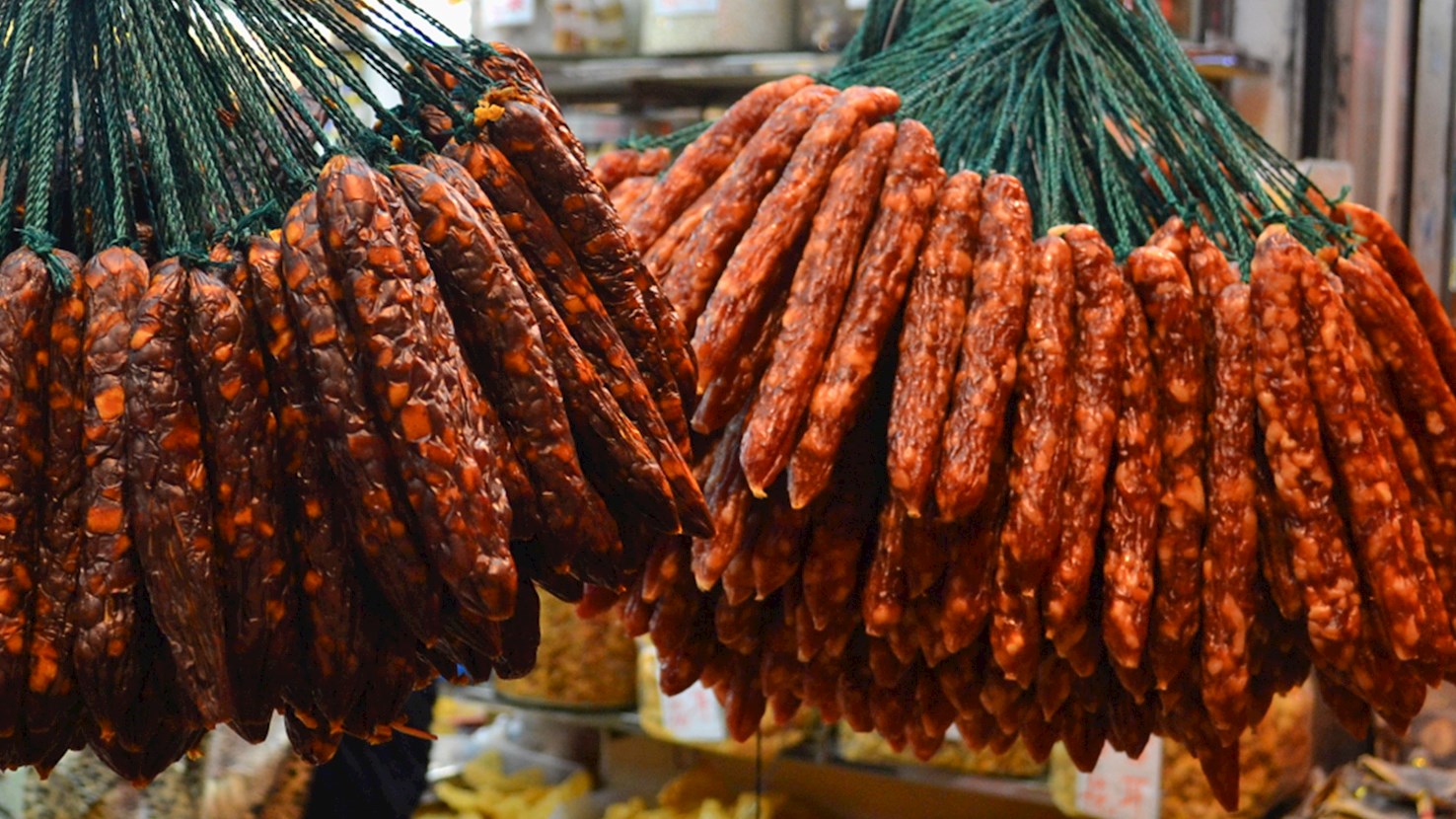
Làcháng is a type of Chinese cured sausage made primarily from pork, seasoned with sugar, salt, soy sauce, and rice wine, then air-dried or smoked. It originates from southern China, particularly Guangdong and Sichuan provinces, and varies in flavor and preparation depending on regional taste and climate. The sausage is known for its glossy surface, firm texture, and balance of sweet and savory flavors. The development of làcháng is closely tied to Chinese preservation methods that predate refrigeration. In southern China, where winter temperatures are cool but not freezing, meat was seasoned heavily with salt, sugar, and rice wine before being stuffed into casings and hung to dry in open air. The combination of sugar and soy sauce, characteristic of Cantonese cuisine, produced a sausage that was mildly sweet, aromatic, and reddish in color. In Sichuan, the same curing process incorporated chili, peppercorn, and baijiu, giving the sausage a spicier and more robust flavor. These variations reflect the regional cuisines that shaped their seasoning preferences. By the early twentieth century, làcháng had become a common preserved meat in markets and home kitchens across China, valued for its long shelf life and distinctive taste. Preparation begins with coarsely minced or diced pork, typically using a ratio of lean meat to fat that ensures moisture and texture. The meat is mixed with sugar, salt, soy sauce, rice wine, and optional spices such as five-spice powder or Sichuan pepper. The mixture is marinated for several hours or overnight, then stuffed tightly into natural pork casings. Once filled, the sausages are tied into short links and hung in a cool, airy place to cure for about one to two weeks, depending on humidity and temperature. In some regions, they are lightly smoked during or after curing to deepen the color and flavor. When fully dried, the sausages are firm and slightly translucent, with a rich aroma that intensifies during cooking. Làcháng is usually cooked before eating, either steamed, boiled, or pan-fried. In Cantonese cuisine, it is sliced thinly and steamed with rice, allowing the fat and juices to flavor the grains. It is also added to claypot rice, stir-fried with vegetables, or combined with cured duck and dried shrimp in festive dishes served during the Lunar New Year season. In Sichuan, it may be stir-fried with chili or used in soups to enrich broth. The sausage’s combination of sweetness and saltiness makes it suitable for pairing with rice, noodles, or congee. Làcháng is eaten throughout China and in Chinese communities abroad, especially in Hong Kong, Malaysia, and Singapore, where it is used in both home cooking and restaurant dishes. It is often served sliced with steamed rice or used as a flavor base in mixed rice and noodle dishes. It pairs well with light beers, oolong tea, or mild Chinese rice wine, all of which complement its sweetness and help balance its richness.
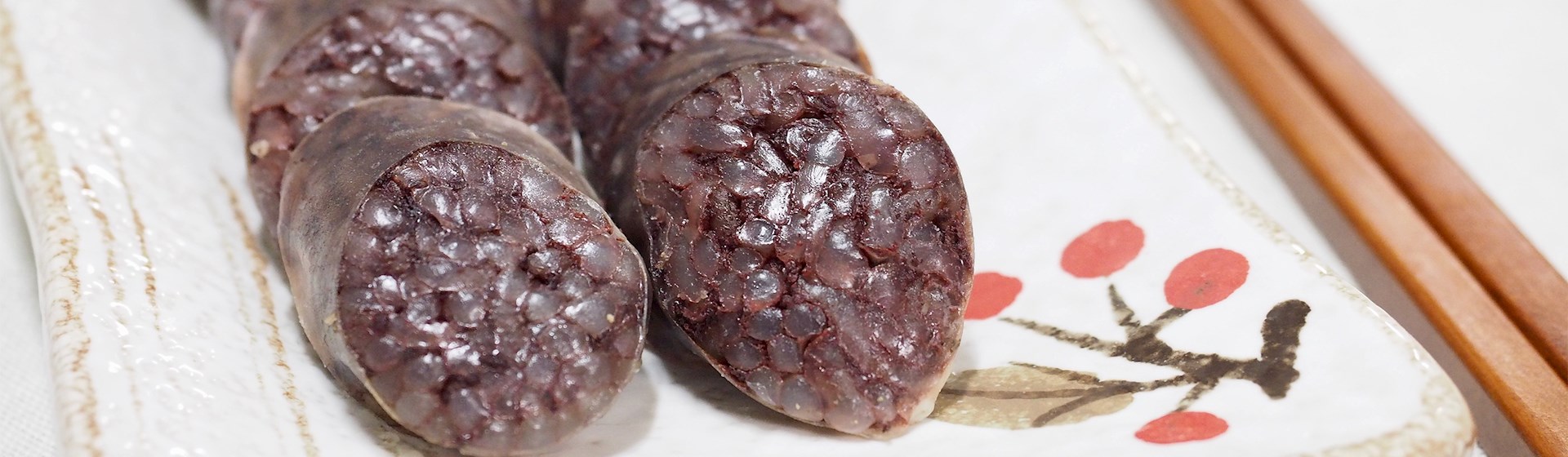
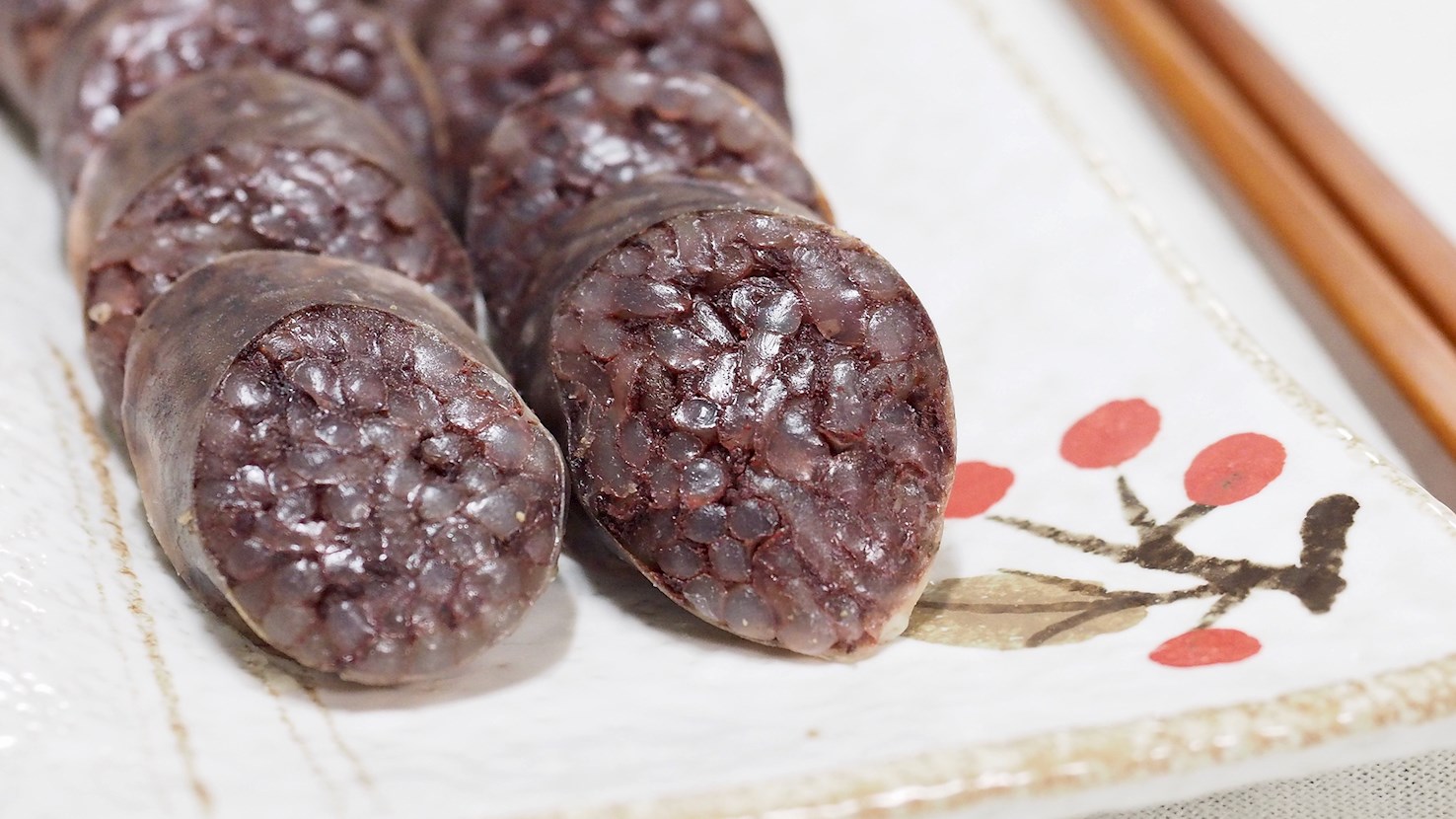
Korean sundae is a traditional blood sausage that usually consists of rice, glass noodles (dangmyeon), and pig’s blood, while the variations may also incorporate barely, bean sprouts, kimchi, perilla leaves, soybean paste, or scallions. Some regional varieties may even consist of squid or fish. Sundae can be steamed and enjoyed on its own, but it is also incorporated into various dishes such as the hearty sundaeguk soup or the sundae bokkeum stir fry. It is believed that sundae originated sometime in the Goryeo period (918–1392).
Ian-chhiâng is a traditional air-dried sausage and a street food favorite in Taiwan. Renowned for its exquisite flavor, this sausage is typically made with a mixture of fatty pork and garlic, flavored with rice wine, soy sauce, five-spice blend, sugar, salt, and black pepper. It can optionally be seasoned with chili powder and red pepper, while the rice wine can be replaced with Kaoliang, or sorghum wine. A staple at Taiwanese night markets, this savory snack can be grilled, pan-fried, or baked, and it is always eaten with raw slices of garlic. Juicy with a slightly sweet and mild flavor, the sausage can be served on a stick or sliced up and packed in a bag with slices of raw garlic. Slices of this sausage are often added to another street delicacy, known as small sausage in large sausage.
TasteAtlas food rankings are based on the ratings of the TasteAtlas audience, with a series of mechanisms that recognize real users and that ignore bot,
nationalist or local patriotic ratings, and give additional value to the ratings of users that the system recognizes as knowledgeable.
For the “Top 3 Cooked Sausages in East Asia” list until June 15, 2026, 77 ratings were recorded, of which 63 were recognized by the system as legitimate.
TasteAtlas Rankings should not be seen as the final global conclusion about food. Their purpose is to promote excellent local foods,
instill pride in traditional dishes, and arouse curiosity about dishes you haven’t tried.