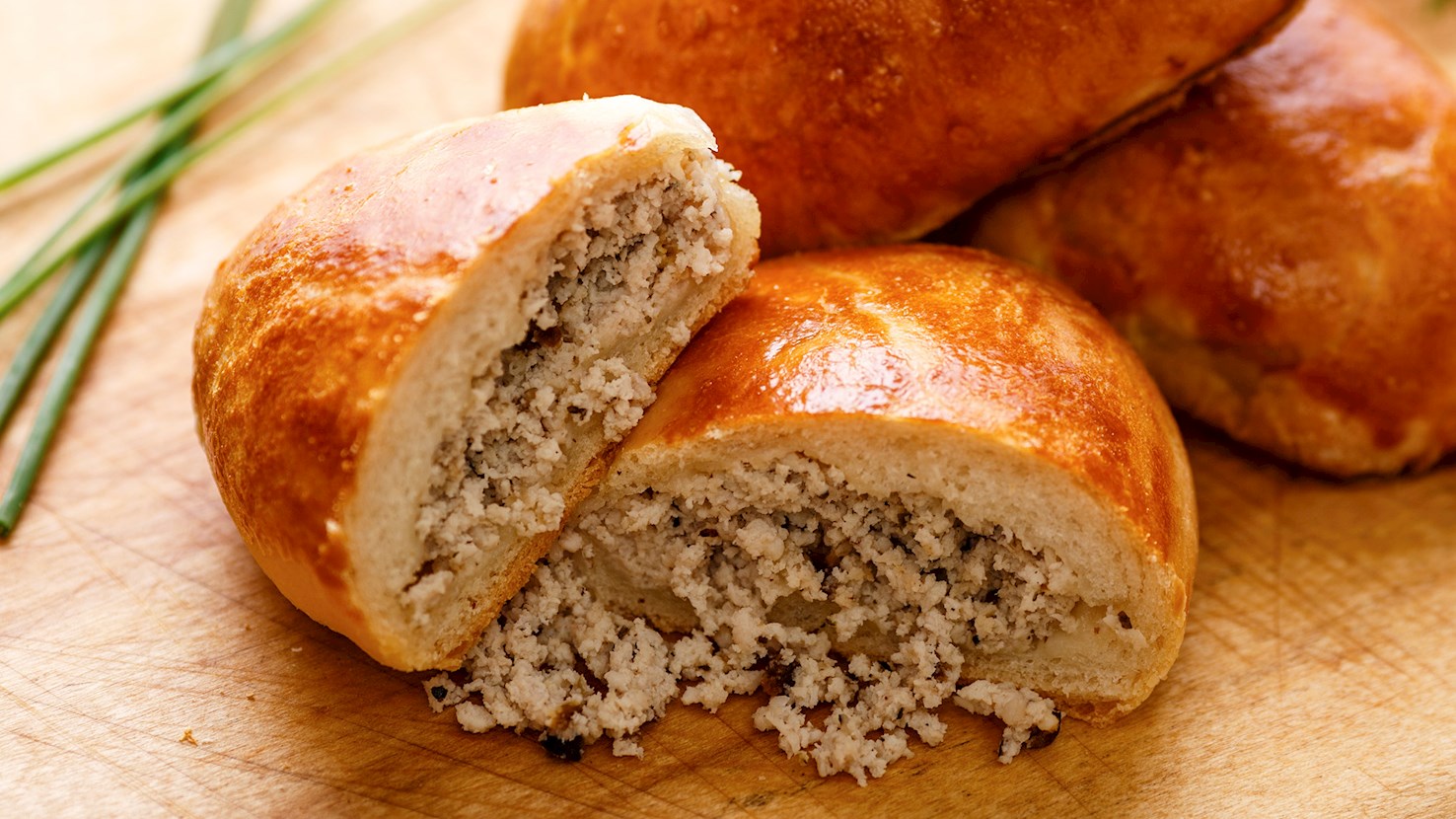
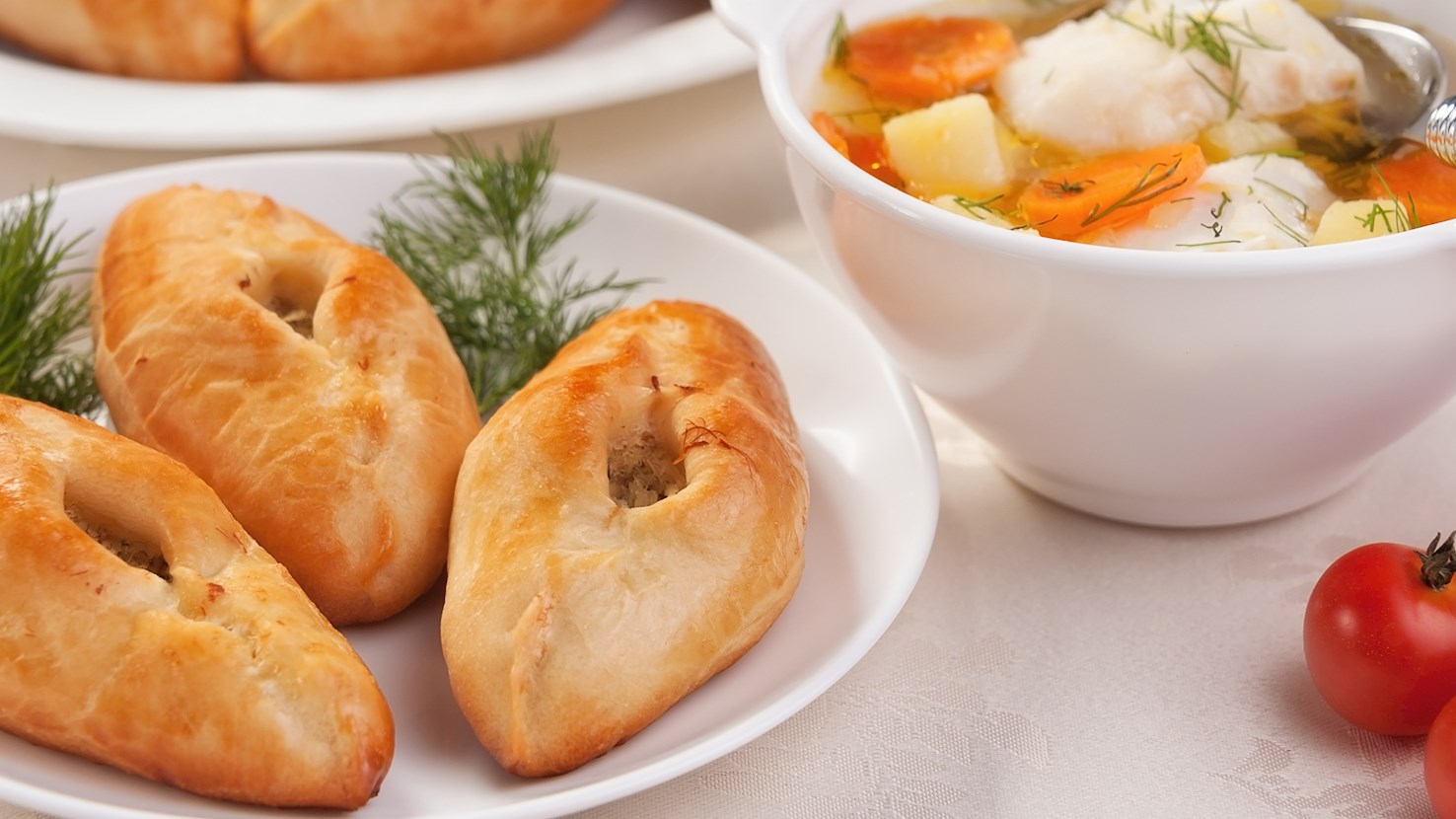
Pirozhki is one of the most popular Russian dishes, often sold as street food, although it can also be made at home. The pocket-sized, oval-shaped pirozhki are yeast dough buns stuffed with a variety of ingredients such as fresh fruits, jams, and cottage cheese for the sweet varieties, or meat, eggs, vegetables, fish, and rice for the savory versions. They can be either baked or fried. The name pirozhki can be literally translated to little pies. Pirozhki are commonly consumed as a snack, and today, they are prepared in numerous versions throughout the world.
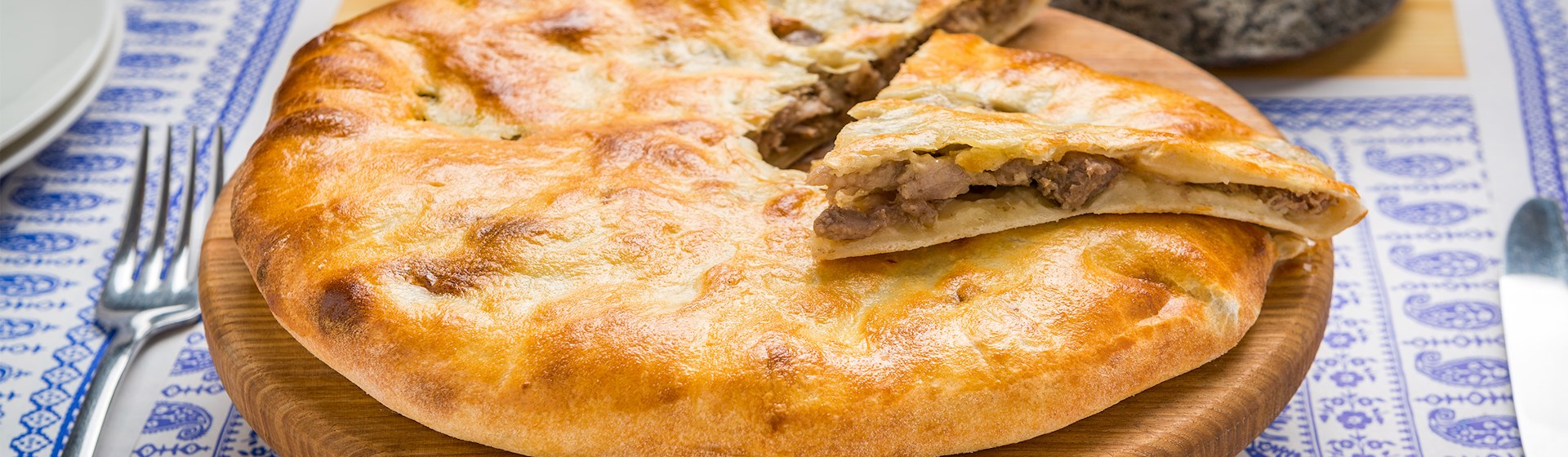
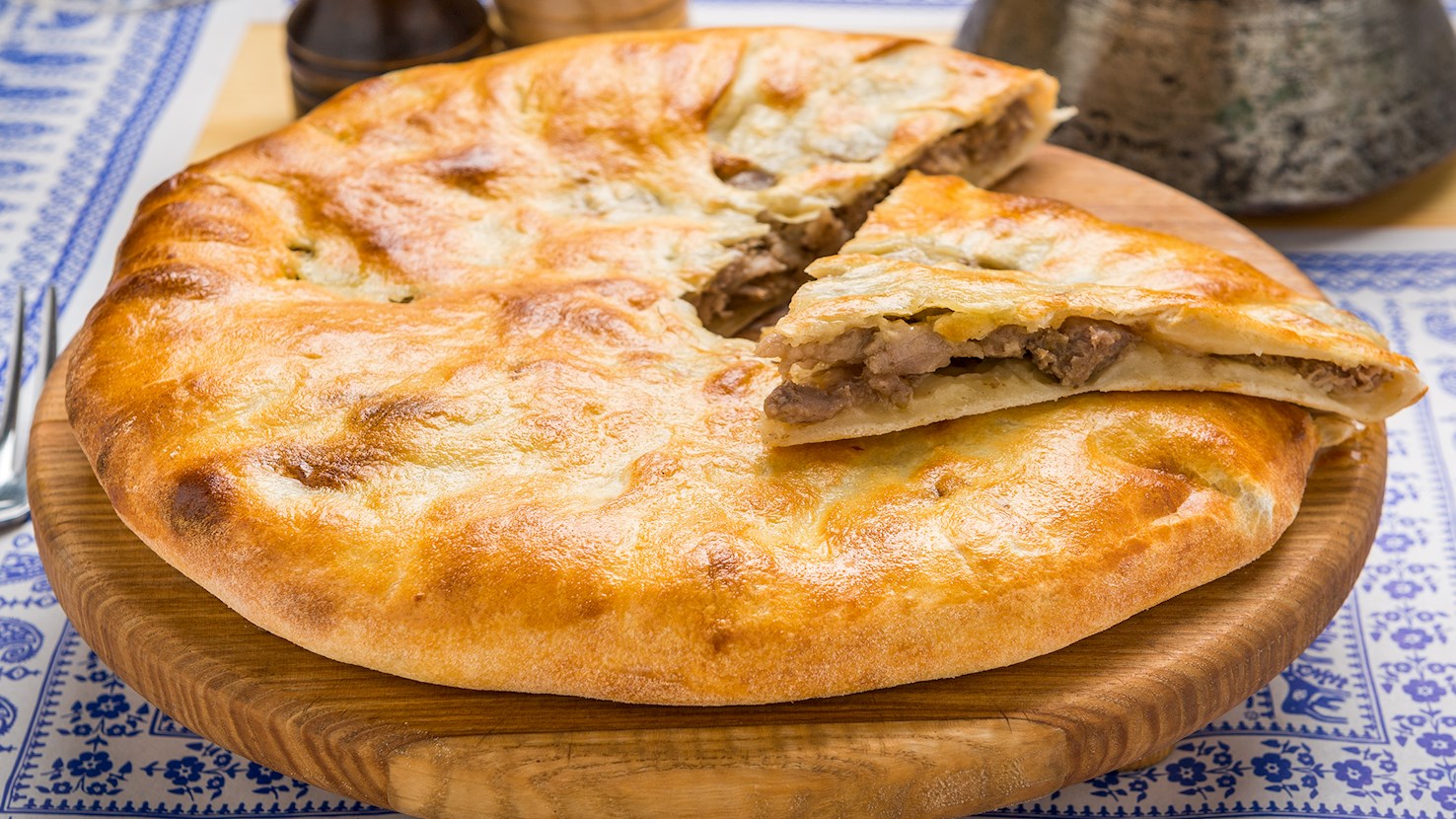
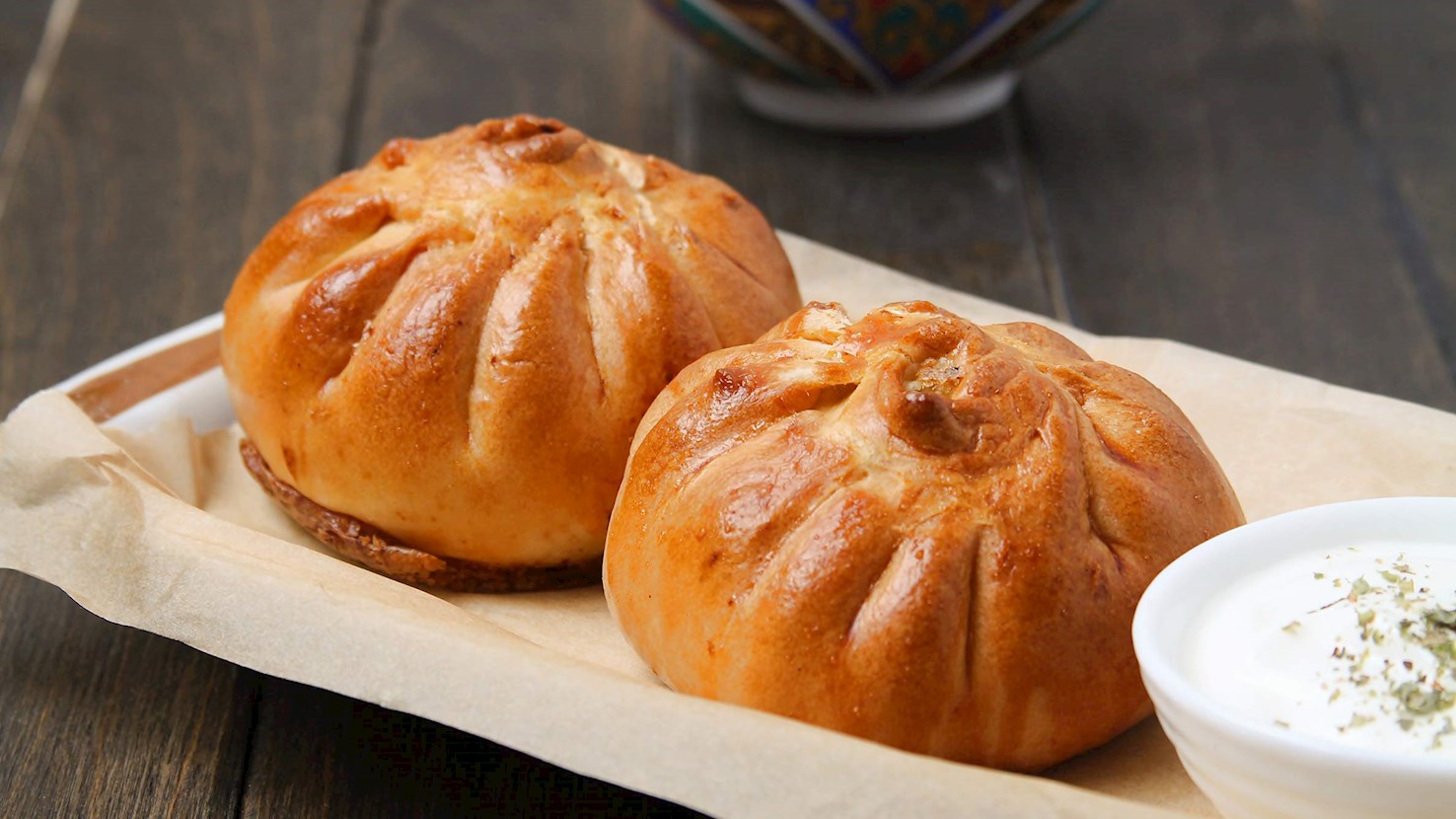
Kubdari is a popular Georgian pastry that is traditionally filled with beef, pork, or a combination of the two, along with spices such as cumin, dill, coriander, blue fenugreek, red pepper, onions, garlic, and salt. The dough consists of flour, water, yeast, sugar, salt, and eggs. Interestingly, the meat used in this savory pie should be cut, not minced, while the salt should be local and aromatized with special herbs. It is recommended to glaze kubdari with butter and serve it hot.
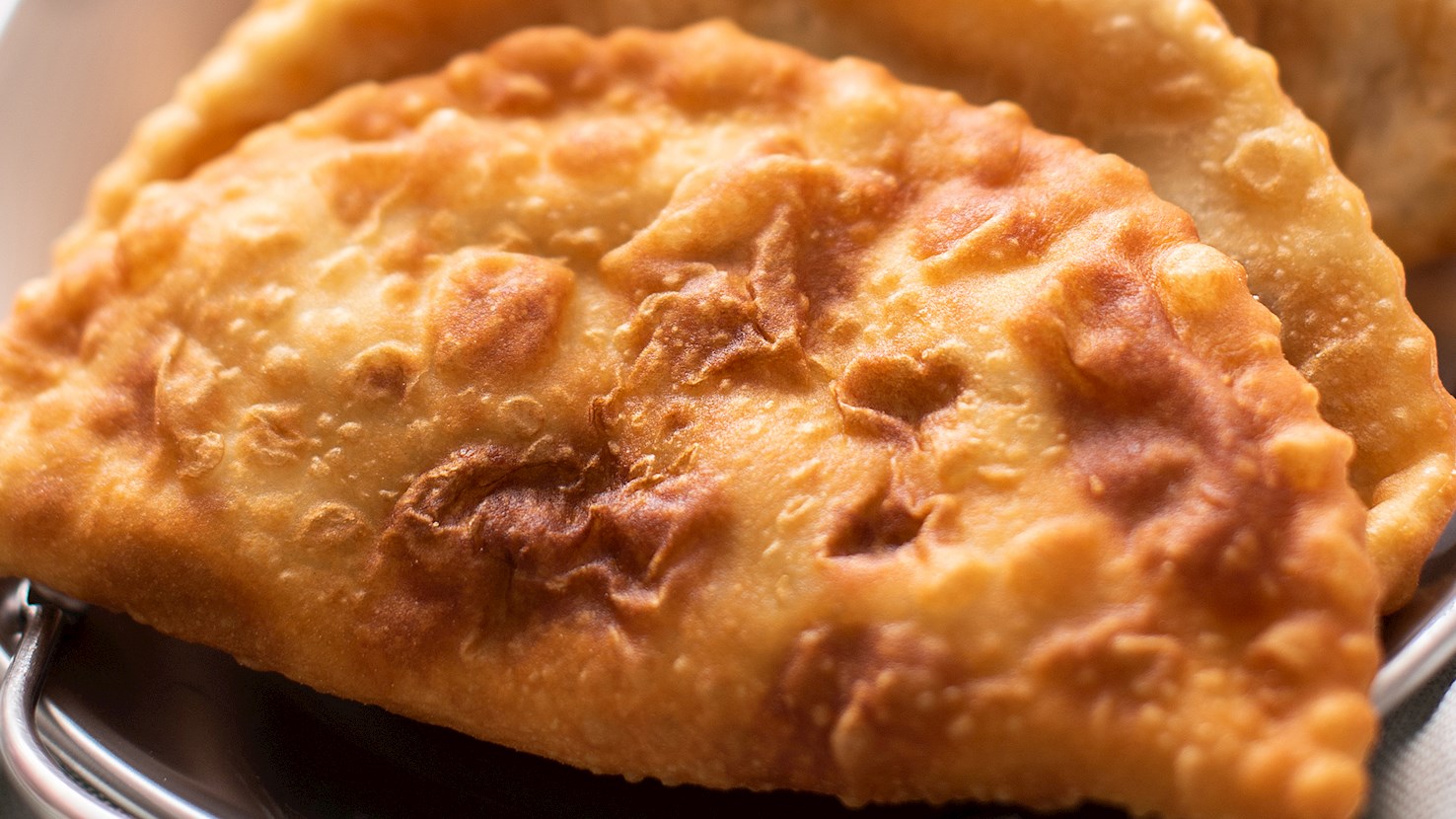
Chebureki, known in Türkiye and among the Crimean Tatar diaspora as çiğ börek, is a deep-fried, unleavened turnover filled with a seasoned mixture of ground meat and onions. It is the national dish of the Crimean Tatars, originating from the Crimean Peninsula along the northern coast of the Black Sea. The name is derived from the Crimean Tatar word "çiberek," which was later adapted into the Russian "chebureki." The development of this food is tied to the nomadic and pastoral history of the Crimean Khanate, where the reliance on sheep and cattle necessitated recipes that could turn flour and meat into calorie-dense, portable meals. As the Crimean Tatar population moved through Central Asia, the Caucasus, and into Anatolia, the dish became a common fixture in the culinary landscapes of the former Soviet Union and Türkiye, specifically becoming a localized specialty in the city of Eskişehir. The preparation begins with a dough consisting only of flour, water, and salt, which is rolled out until it is thin and translucent. The filling is composed of ground beef or lamb, a high volume of finely minced or grated onions, and a purposeful addition of water. This water is critical because it ensures the meat stays moist and creates a pressurized steam pocket during the frying process. The meat mixture is placed raw onto the dough, which is then folded into a half-moon shape and sealed tightly using a fork or a crimping tool. The pastry is submerged in a large volume of hot oil, where the high heat causes the water in the filling to vaporize instantly. This steam forces the dough to puff outward, creating a hollow interior while the exterior develops a signature blistered and bubbly texture. A unique physical property of chebureki is the savory broth that collects inside the pastry as the raw meat and onions cook in their own steam. Because the meat is not pre-cooked, the juices are trapped entirely within the dough, resulting in a distinct liquid center. It is eaten by hand, usually starting at the top corner to allow the steam to escape slowly and to prevent the hot internal juice from spilling. In street food kiosks and specialized restaurants, it is typically served as a standalone item or as part of a light meal. The most common beverage pairing is ayran, a chilled, salted yogurt drink, which helps to neutralize the richness of the fried dough. In some regions, it is also served with a side of spicy tomato sauce or hot black tea to contrast the savory profile of the lamb or beef.
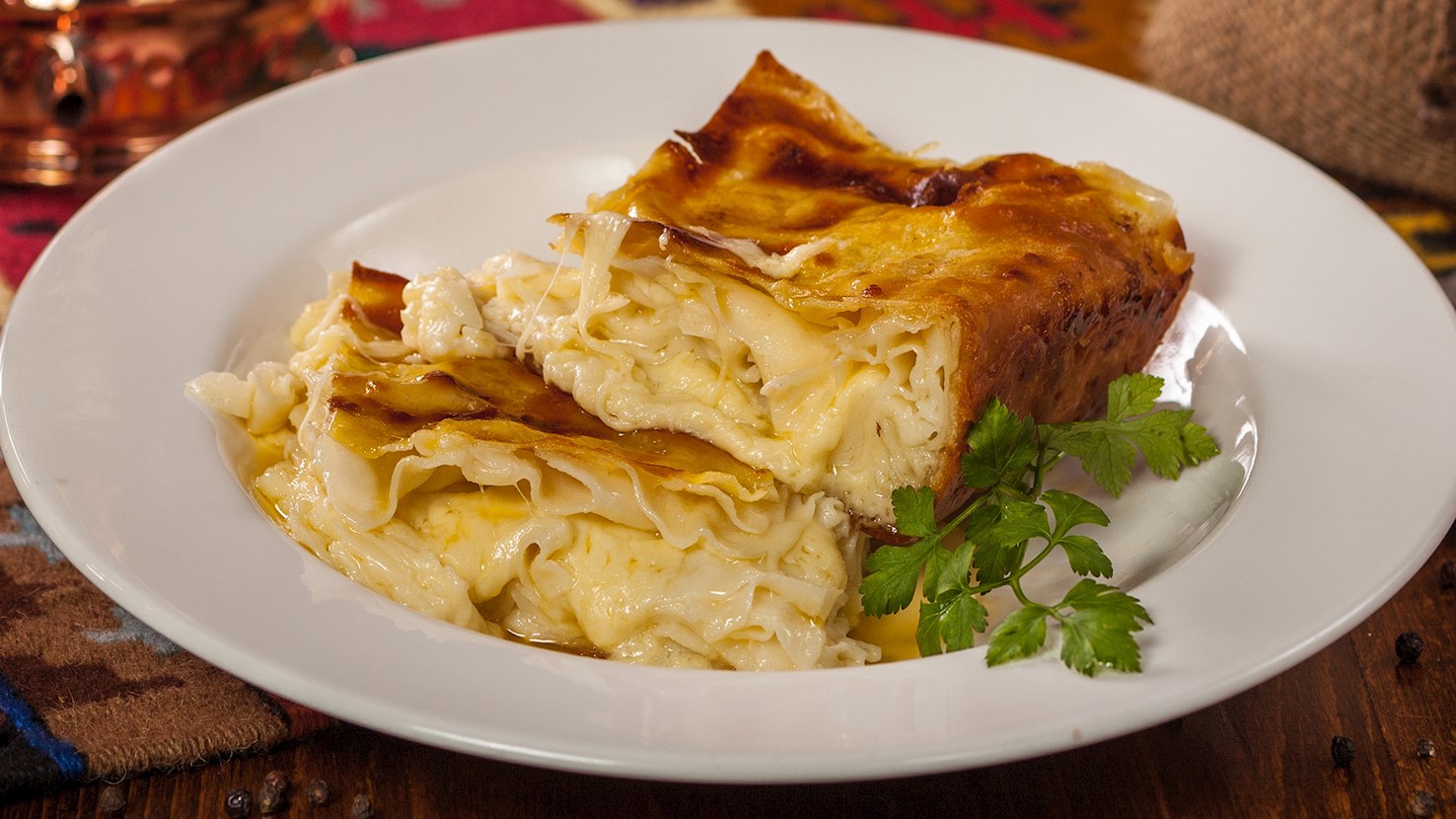
Achma is a Georgian dish consisting of a few layers of tender dough, a crispy top, and lots of cheese in between. It originates from the western Georgian regions of Adjara and Abkhazia. The dough is usually made with eggs, water, butter, and flour, while the cheese filling is either Georgian cheese or a combination of ricotta, mozzarella, and feta. Due to the fact that it’s a layered dish with tender sheets of dough, achma is often compared to the famous lasagne.
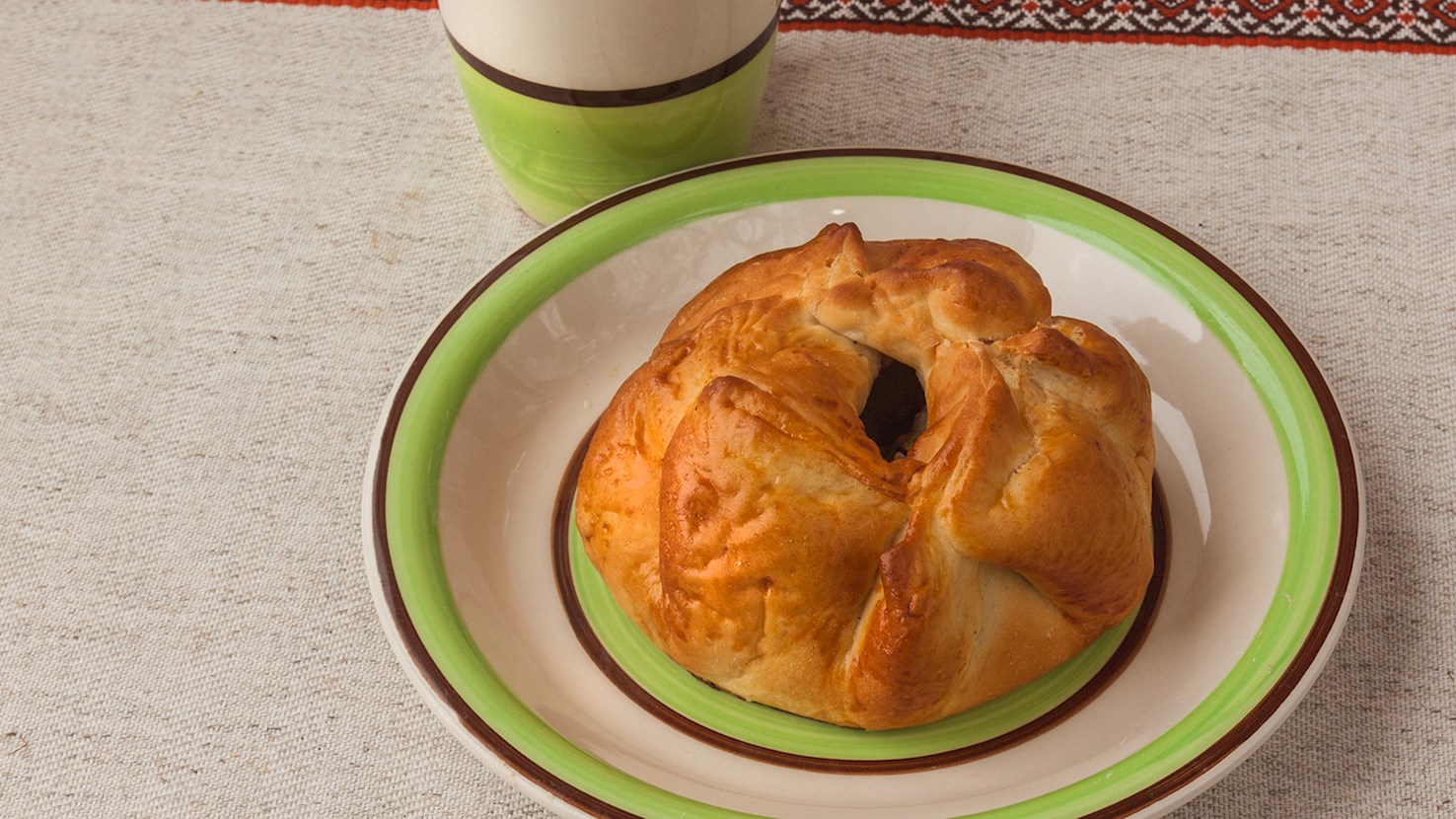
Elesh is a traditional pastry originating from Tatarstan. This Tatar pastry consists of dough that's usually stuffed with chicken, onions, salt, pepper, and potatoes. The dough is made with a combination of flour, eggs, sugar, salt, baking powder, butter, and sour cream. Once stuffed, the dough is wrapped up around the filling in the shape of a circle with a lid on top (similar to echpochmak, which is rectangular). The pastry is baked until done, and it is then served with meat broth on the side that's poured in the hole on top of the pastry in order to make it juicier.
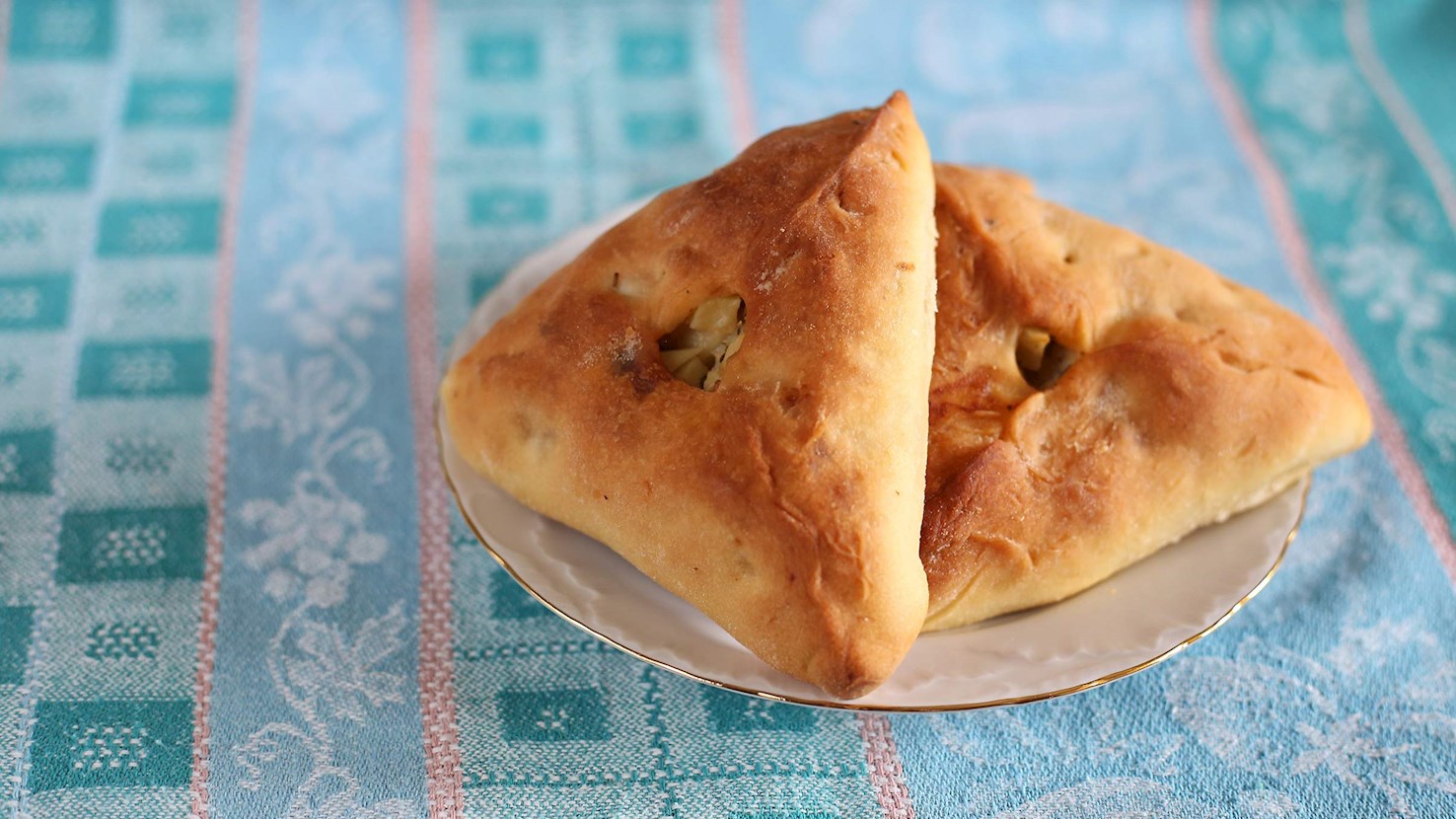
Echpochmak is a traditional pastry originating from Tatarstan. This Tatar and Bashkir pastry consists of yeasted dough that's stuffed with potatoes, meat, and onions. The dough is usually made with a mixture of milk, eggs, flour, butter, sour cream, salt, sugar, and yeast, while the filling contains lamb, potatoes, onions, salt, pepper, butter, and cumin. Once stuffed, the dough is folded into triangles with a hole in the middle and baked until done. When the echpochmak are done, melted butter or meat stock is traditionally poured into each hole. In the past, these pastries were enjoyed in the open air during military campaigns. It's recommended to serve echpochmak with tea on the side.
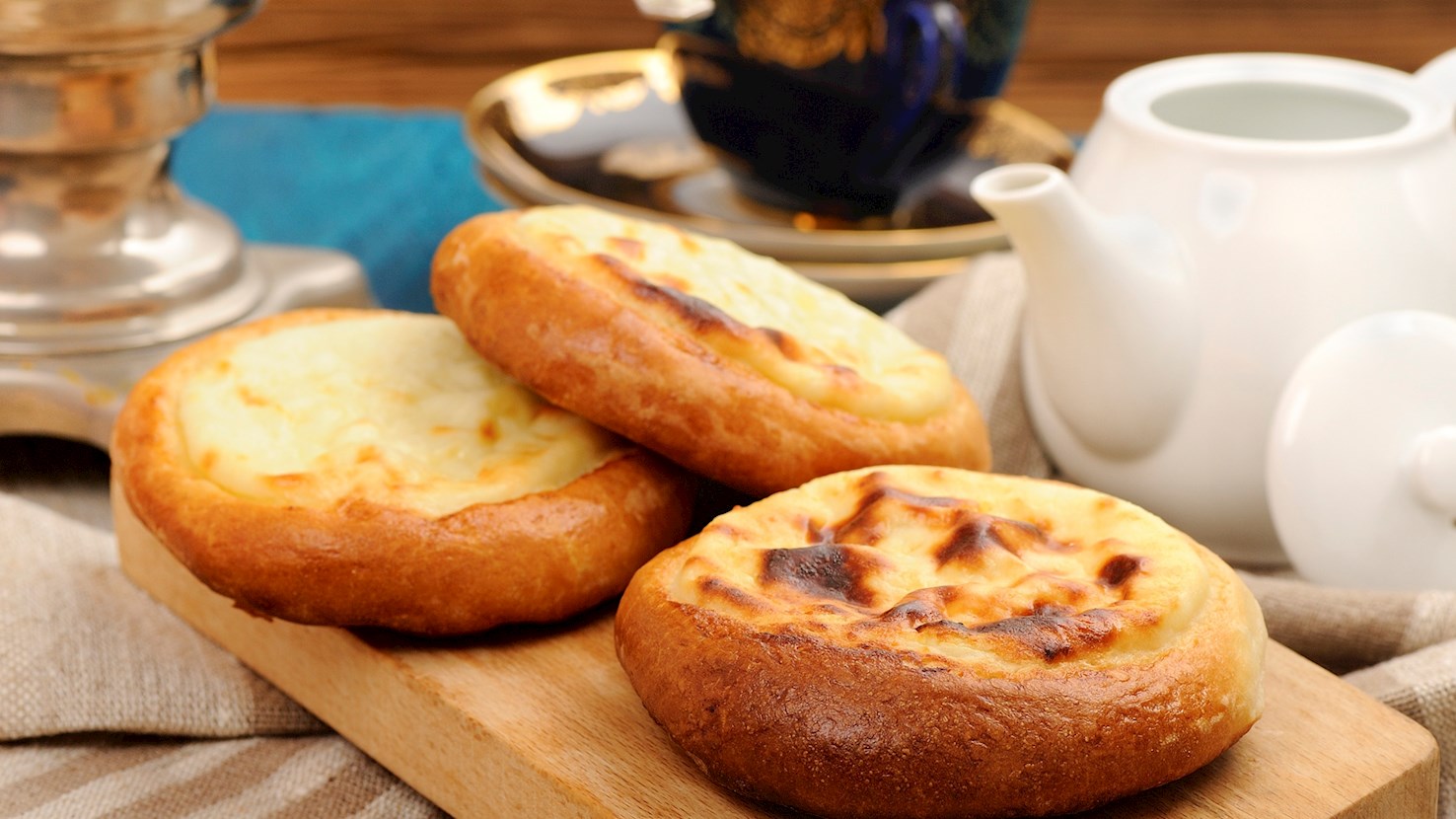
Vatrushka is a popular Russian ring-shaped pastry that is usually filled with sweet cottage cheese and topped with raisins or other pieces of fruit, although it can also be made with fruit jams or meat. The name of the pastry is borrowed from the Roman languages, and in Romanian vatra means bread that is baked over a fire. Traditionally, vatrushka is baked in firewood ovens, especially in the villages. The pastry is also popular throughout Ukraine and Belarus, where it can be found in numerous bakeries and stores.
Perepichka is an iconic Ukrainian street food item consisting of a soft, not overly seasoned sausage that is enclosed within yeasted dough. The whole combination is deep-fried, and it is usually served piping hot without any condiments. The first version of this favorite Kyiv street food appeared in 1981 at a small kiosk on Bohdan Khmelnytsky street. Perepichka was an instant success, and this hole-in-the-wall food outlet became somewhat of an institution for both locals and tourists.
Rasstegai is a traditional pastry with a hole in the center, which is stuffed with a wide variety of fillings – from liver with eggs to rice with mushrooms. However, the traditional stuffing is minced fish such as sturgeon or salmon. The pastry is made with flour, yeast, milk, eggs, butter, sugar, and salt, while the fish filling is typically combined with onions, butter, and cream. Traditionally, rasstegai is served as an accompaniment to soups and broths – the hole in the pastry is used to add broth to the filling.
TasteAtlas food rankings are based on the ratings of the TasteAtlas audience, with a series of mechanisms that recognize real users and that ignore bot,
nationalist or local patriotic ratings, and give additional value to the ratings of users that the system recognizes as knowledgeable.
For the “Top 9 Eastern European Savory Pastries” list until June 15, 2026, 843 ratings were recorded, of which 514 were recognized by the system as legitimate.
TasteAtlas Rankings should not be seen as the final global conclusion about food. Their purpose is to promote excellent local foods,
instill pride in traditional dishes, and arouse curiosity about dishes you haven’t tried.