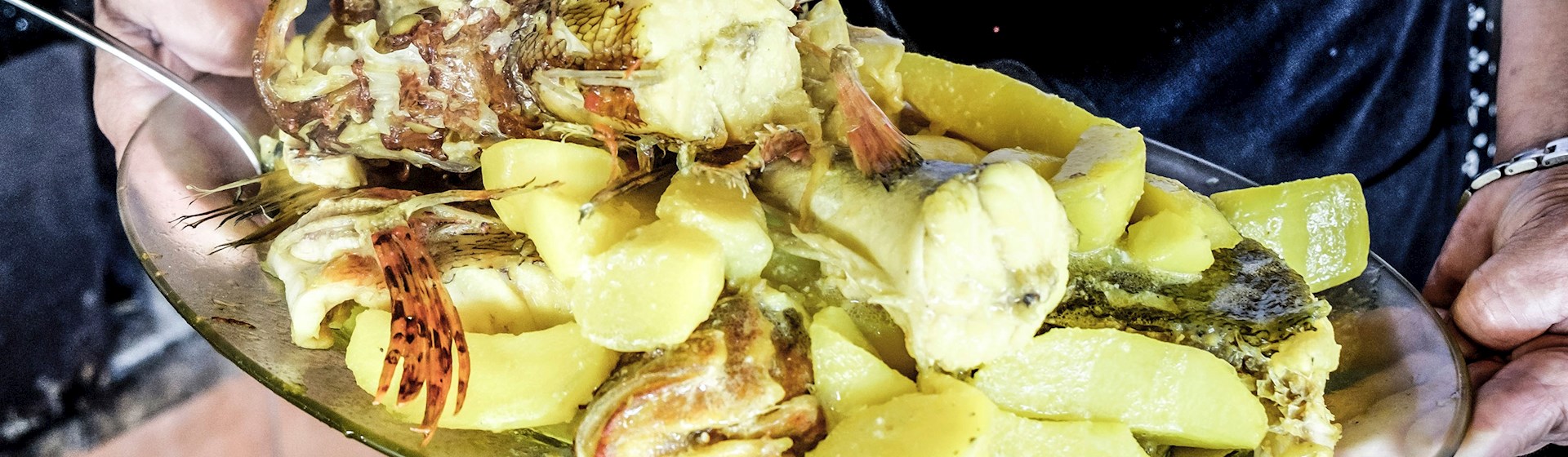
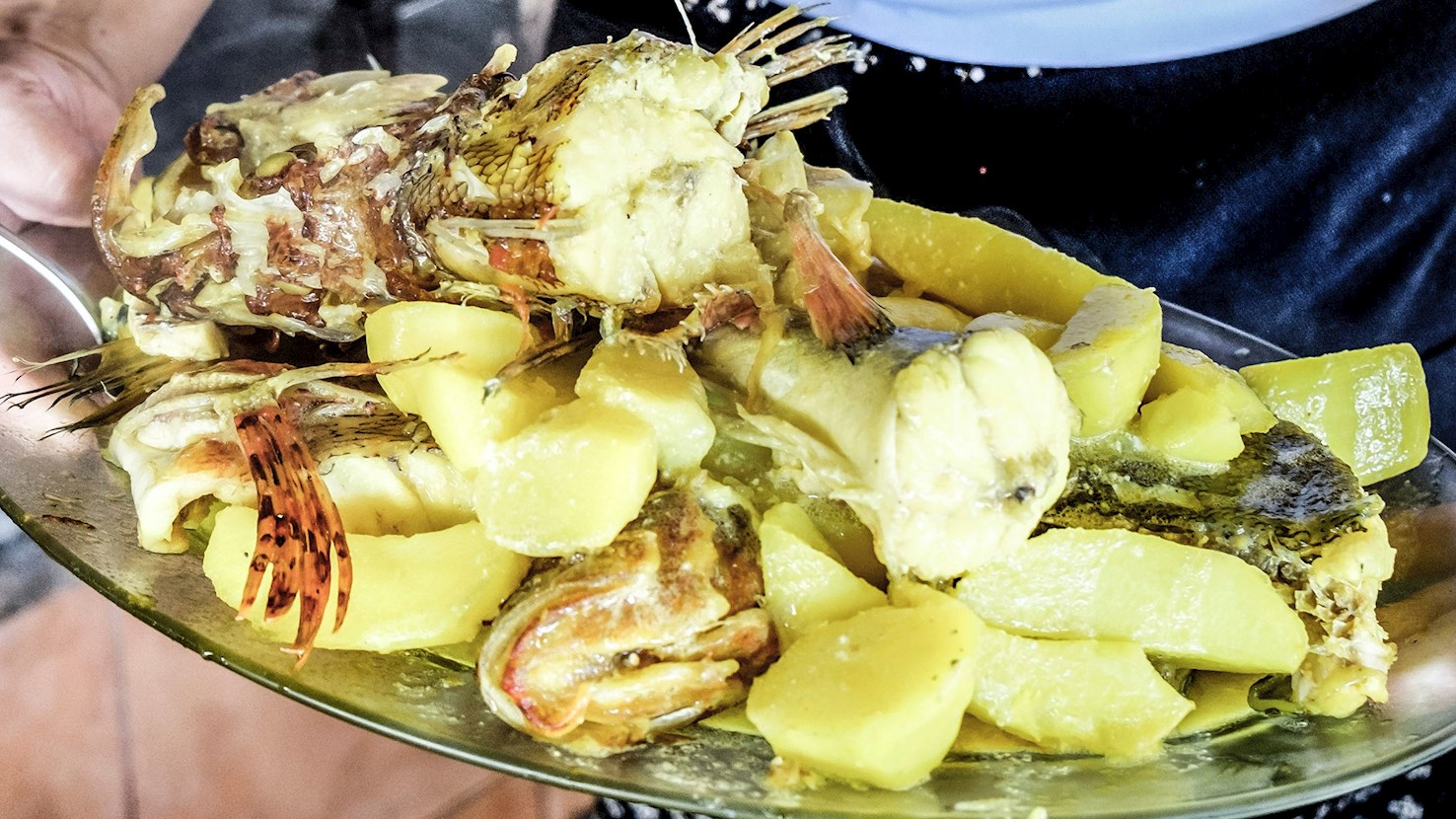
Guisat de peix is a fish stew from Ibiza. It is closely related to bullit de peix but distinct in its preparation; guisat is cooked and served as a single dish rather than split into multiple courses. It brings together fish, potatoes, and aromatics in one pot, creating a rich, hearty meal that highlights the flavors of the sea. The dish originated among fishing communities, who prepared it with the day’s catch — usually small rockfish and other less marketable species — combined with potatoes, olive oil, vegetables, and herbs to make a nourishing meal. This practice evolved into one of Ibiza’s defining seafood preparations, now found in homes and coastal restaurants across the island. The preparation begins with a sofrito of garlic, onion, tomato, and sometimes peppers, then adds chunks of potato and an assortment of fish, such as grouper, monkfish, scorpionfish, and John Dory. Everything simmers together with saffron and herbs, such as parsley, until the fish is tender and the broth is flavorful. To finish, a picada made with toasted almonds is added to the stew to thicken it. Unlike bullit, guisat does not include alioli or a second rice course, and its components meld into a single, deeply flavored stew. Guisat de peix is typically served hot as a main course, accompanied by rustic bread to absorb the broth, and pairs well with crisp white or rosé wines. Its simplicity, depth of flavor, and reliance on local catch make it a defining dish of Ibizan coastal cuisine.
Bullit de peix is a fish stew from the island of Ibiza in Spain’s Balearic Islands, known for its rich richly-colored broth and tender pieces of fish. The dish has its roots in the island’s fishing communities, where it was once a humble meal prepared by fishermen on their boats or in small coastal kitchens. They used unsuitable fish, combined with potatoes and local herbs, to create a dish that was both nourishing and comforting. What began as a practical solution to avoid wasting unsellable catch became an enduring part of Ibiza’s culinary identity, prepared for family gatherings, festive meals, and seaside celebrations. Preparation begins with a sofrito—a sauté of olive oil, garlic, onion, tomato, and peppers—that forms the aromatic base of the stew. Once the flavors have developed, sliced potatoes are added to the pot along with saffron, which infuses the broth with its distinctive color and fragrance. The fish — often rockfish, scorpionfish, monkfish, or grouper — is then added in pieces, cooking gently so it remains tender and delicate. Fresh parsley is typically added near the end of cooking, enhancing the stew with a bright herbal note. When the fish and potatoes are cooked through, they are carefully removed and served separately from the cooking liquid. The broth, rich with the essence of the sea and the vegetables, is often used to prepare a second course of rice known as arroz a banda or arroz del bullit, a defining feature of the dish. This two-course structure — with fish and potatoes served first and rice made from the same broth served second — is one of the aspects that make bullit de peix unique. Bullit de peix is most often served with aioli, and is typically eaten for lunch, usually paired with white wines from the Balearic Islands or dry rosés that complement its flavors.
Caldereta de langosta is a lobster stew from the island of Menorca in Spain's Balearic archipelago, regarded as one of the island's most emblematic seafood dishes. Its name comes from caldereta, meaning "small cauldron," referring to the pot in which it is traditionally prepared and served. The dish was originally created by local fishermen, who prepared hearty stews with whatever seafood they caught, combining shellfish with tomato, onion, garlic, and bread to make a nourishing meal. As Menorca's fishing culture evolved and lobster became one of the island's most prized catches, the stew shifted from a humble fisherman's meal to a delicacy served in taverns and family kitchens alike. By the mid-twentieth century, caldereta de langosta had become a signature dish in Menorcan restaurants, particularly in the fishing town of Fornells, which is still regarded as the epicenter of its preparation. Its popularity grew beyond the island as visitors discovered and celebrated its intense flavors and simple elegance. Preparation begins with the lobster, which is cut into pieces and lightly sautéed in olive oil to release its flavor. A base of finely chopped onion, garlic, tomato, and sometimes green pepper is slowly cooked to create a sofrito, which forms the foundation of the stew. Water or fish stock, along with parsley, is added, and the lobster pieces are gently simmered so their juices enrich the broth. To thicken and deepen the flavor, ground toasted almonds, bread, or even lobster liver and roe are sometimes incorporated into the sauce. The result is a silky, deeply flavorful broth, with the lobster remaining tender and succulent. The stew is typically served directly from the pot, accompanied by slices of toasted bread to soak up the sauce. What distinguishes caldereta de langosta is its focus on the lobster's natural flavor, which is not masked by heavy seasoning but rather enhanced by a slow-cooked base and careful layering of ingredients. Caldereta de langosta is most often enjoyed as a main course, particularly during the spring and early summer lobster season. It is served at family celebrations, local festivals, and in restaurants across Menorca, often as the centerpiece of a special meal. The dish pairs well with crisp white wines, such as Albariño or Menorcan wines, which have minerality that complements the sweetness of the lobster and the richness of the broth.
Formatjada is a traditional pastry from the island of Menorca, in Spain's Balearic Islands. Often prepared during Semana Santa (Easter), but enjoyed year-round, formatjades are small, round pies made with a rich dough—typically prepared with pork lard and flour, and often including yeast in modern variants—and filled with various sweet or savory ingredients. The name comes from the Catalan word formatge (cheese), reflecting one of its oldest and most common fillings. Savory versions are usually filled with local ingredients like pork and/or lamb, and sobrassada (cured, spiced sausage). Some are made with fish, especially in coastal towns, showcasing Menorca's fishing traditions. There are also sweet formatjades, which feature soft cheeses like requesón (a ricotta-style fresh cheese), flavored with sugar and lemon juice, offering a dessert-like counterpart to the more robust savory pies. These hand-sized pastries are baked until golden and are often served warm or at room temperature, making them ideal for picnics, celebrations, or simply as a local snack found in Menorcan bakeries.
TasteAtlas food rankings are based on the ratings of the TasteAtlas audience, with a series of mechanisms that recognize real users and that ignore bot,
nationalist or local patriotic ratings, and give additional value to the ratings of users that the system recognizes as knowledgeable.
For the “Top 4 Balearic Seafood Dishes” list until May 15, 2026, 2 ratings were recorded, of which 0 were recognized by the system as legitimate.
TasteAtlas Rankings should not be seen as the final global conclusion about food. Their purpose is to promote excellent local foods,
instill pride in traditional dishes, and arouse curiosity about dishes you haven’t tried.