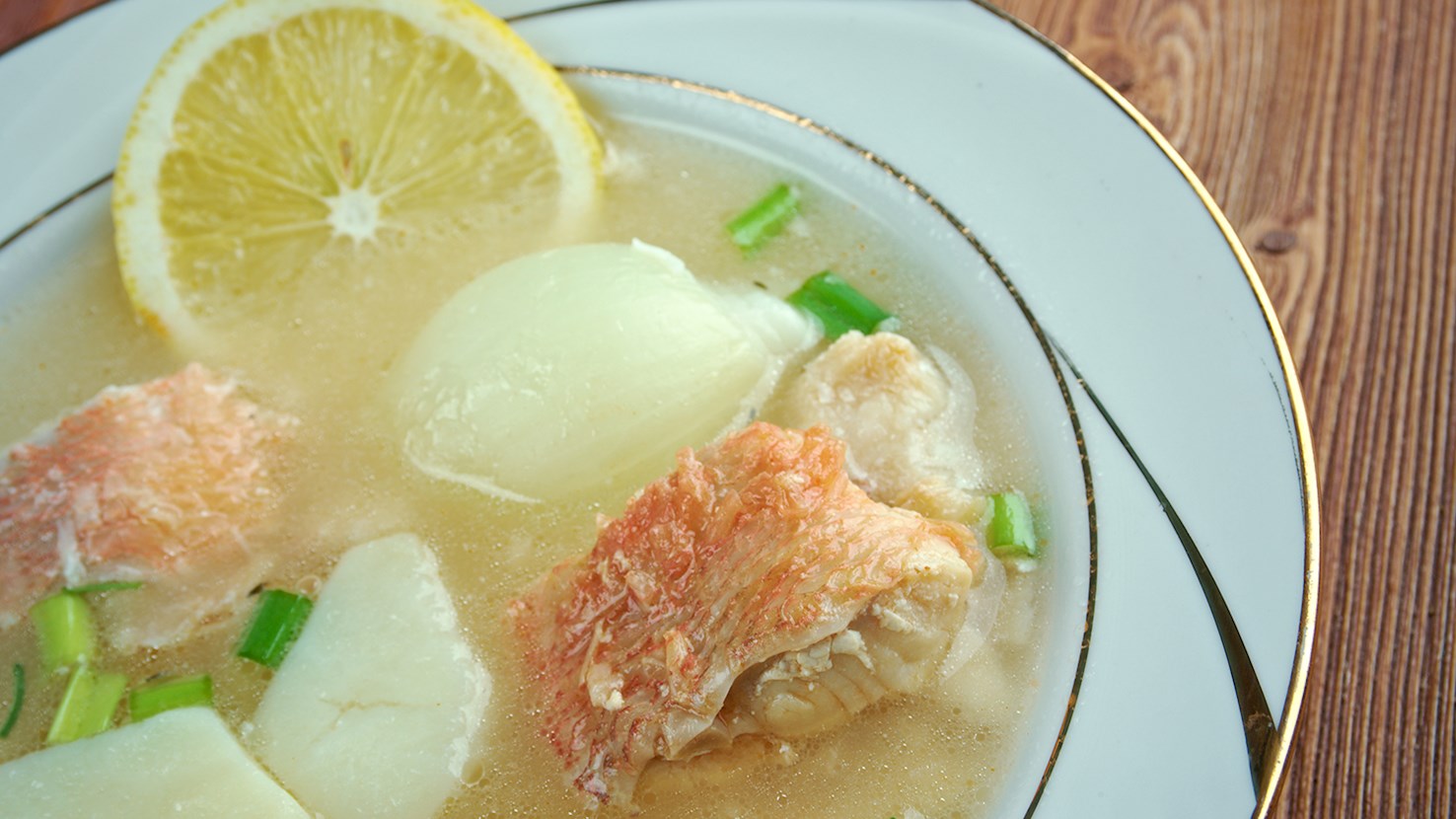
Cotriade is a traditional fish stew originating from the south of Britanny. The stew is made with different types of fish such as mackerel, hake, red mullet, conger eel, sprats, and herring, along with onions, garlic, potatoes, leeks, oil, and vinegar. The dish is usually flavored with bouquet garni. When served, the broth is eaten first, followed by the fish and vegetables. It's sometimes poured over toasted baguette or similar bread. The more fish there is in the stew, the better the cotriade. In the past, cotriade was an everyday dish for local fishermen and their families. It's recommended to pair the stew with a glass of dry white wine on the side.
Noix de Saint-Jacques à la fondue de poireaux is a remarkably elegant French seafood dish consisting of perfectly pan-seared king scallops resting atop a rich, buttery bed of slow-cooked, melt-in-the-mouth leeks. Hailing primarily from the brisk, wind-swept coastlines of Brittany and Normandy, this dish is a magnificent celebration of the winter fishing season, when the prized great Atlantic scallop is painstakingly harvested from the freezing ocean floor. The brilliance of this recipe lies not in a massive list of complex ingredients, but in the flawless marriage of two distinct seasonal elements and the uncompromising technical precision required to cook them. The soul of the dish is the fondue de poireaux, a term that frequently confuses foreigners expecting a pot of melted cheese, but which actually refers to an essential French technique of vegetable reduction. Fresh winter leeks are meticulously julienned and sweated in generous amounts of salted butter over an incredibly low flame for a long time. The absolute rule here is that the leeks must never brown or fry; instead, they are gently coaxed until they completely surrender their structure, collapsing into a sweet, earthy, and velvety tangle. To finish the fondue, chefs typically stir in a splash of crisp, dry white wine and a heavy dollop of rich crème fraîche, binding the melted leeks into a deeply luxurious, creamy base. In stark contrast to the slow, patient melting of the leeks, the scallops themselves demand aggressive, high-heat cooking. The thick, pearlescent noix (the sweet meat of the scallop) is flash-fried in a roaring hot pan with foaming butter for barely a minute on each side. This rapid sear creates a beautifully caramelized, nutty, golden-brown crust, locking in the ocean's natural juices while ensuring the center remains incredibly tender, warm, and just barely opaque. When plated, the golden-crusted scallops are nestled gently into the warm, pale-green nest of creamy leeks.
Coquilles Saint-Jacques à l’armoricaine is a luxurious French seafood delicacy that bathes prized, freshly harvested sea scallops in a deeply complex, rust-colored reduction of crushed tomatoes, white wine, aromatics, and a dramatic flambé of Cognac. Deeply tied to the culinary heritage of France’s northwestern coast, the preparation draws its name from Armorica, the ancient Celtic designation for the rugged, sea-swept peninsula that is now Brittany. The sauce itself boasts a famously debated pedigree—often intertwined with the legendary "Sauce Américaine" created by a 19th-century chef returning from the United States—but in the hands of coastal Breton cooks, it has evolved into a localized triumph that celebrates the sheer bounty of the Atlantic alongside classical French technique. The construction of this elegant plate begins with the careful handling of the scallops, ideally sourced by local fleets from renowned fishing hubs such as the Bay of Saint-Brieuc. To preserve their delicate, yielding texture, the scallop meat is briefly kissed by a hot pan laced with salted butter, developing a faint, golden sear before being swiftly removed from the heat. The true artistry unfolds as the cook builds the aromatic foundation in the exact same skillet, utilizing the residual savory drippings. Finely minced shallots and crushed garlic are gently softened until translucent, laying the essential groundwork for a generous addition of ripe, concentrated tomatoes. Next comes the pivotal, theatrical moment of the recipe: a heavy pour of high-quality Cognac or French brandy is ignited over the stove. This brief inferno burns away the harsh bite of the alcohol while leaving behind a profoundly warming, oak-infused perfume that weaves its way into the very fabric of the dish. Once the flames subside, a heavy splash of dry white wine and occasionally a ladle of rich seafood broth are stirred into the pan. The mixture is left to simmer, slowly reducing into a thick, velvety glaze that is often brightened with a subtle pinch of cayenne pepper and a handful of freshly chopped tarragon or parsley. The seared scallops are carefully folded back into this bubbling, crimson nectar just long enough to warm through, ensuring they do not overcook. When brought to the table, the visual contrast is absolutely stunning—the pearlescent, ivory meat of the seafood resting brilliantly against the intensely vibrant sauce. It is a dish that practically demands a fresh, crusty baguette to ensure the exquisite, ruby-hued sauce is thoroughly enjoyed.
Coquilles Saint-Jacques à la bretonne is a French seafood gratin originating from Brittany, featuring pristine sea scallops baked in their iconic fan-shaped shells with salted butter, caramelized onions, shallots, garlic, and fresh parsley under a crisp breadcrumb crust. The soul of this preparation is inextricably tied to the maritime terroir of northwestern France, particularly the historic fishing ports of Erquy and the Bay of Saint-Brieuc, where scallop dredging is a deeply respected, heavily regulated winter tradition. Because the seafood pulled from these freezing waters is of such extraordinary quality, the local culinary philosophy dictates minimal interference. The scallops, often left whole with their vibrant coral roes intact, are gently laid into the natural shells without being drowned in heavy dairy. Instead, they are enveloped in a highly aromatic, savory mixture known as a hachis, which forms the flavorful backbone of the gratin. To create this essential component, native Roscoff onions, pungent garlic, and sweet shallots are finely minced and sweated down in generous quantities of Brittany’s famous beurre demi-sel (lightly salted butter). This slow caramelization process coaxes out a profound, earthy sweetness that perfectly mirrors the oceanic sugar of the scallop. A splash of local dry white wine—such as a crisp Muscadet—or, occasionally, a dry Breton apple cider is added to deglaze the pan, providing a desperately needed thread of acidity to cut through the richness of the butter. A heavy handful of finely chopped fresh flat-leaf parsley is stirred in at the very last moment, lending the mixture a vibrant, herbaceous brightness before it is spooned generously over the resting seafood. The final, crucial step in achieving the classic Breton texture is the application of a hearty layer of traditional chapelure, or dried breadcrumbs. When the filled shells are subjected to the intense heat of a hot oven or broiler, the salted butter from the allium mixture bubbles up through the breadcrumbs, toasting them into an audibly crunchy, golden-brown canopy. Striking through this blistered crust with a fork releases an intoxicating wave of steam perfumed with garlic, toasted butter, and the salty brine of the sea. Eaten piping hot straight from the rustic shell alongside a chilled glass of regional wine and a slice of crusty country bread, coquilles Saint-Jacques à la bretonne offers an authentic, profoundly comforting taste of France's wild, wind-swept Atlantic coast.
A cornerstone of French coastal cooking, lotte à l'armoricaine is a profoundly savory seafood stew starring monkfish, a uniquely resilient species prized for its dense, cartilaginous tail, which maintains its structural integrity without flaking under heat. This classic preparation is characterized by its vibrant, rust-colored tomato gravy, whose historical roots remain heavily disputed; purists argue it hails directly from the shores of Brittany—anciently referred to as Armorica—while skeptics insist it is merely a linguistic corruption of the famous Parisian lobster dish, sauce américaine. To construct this beloved maritime staple, cooks typically slice the thick fish into hefty portions, often dusting them lightly in flour before achieving a golden sear in a heavy skillet. The flavor profile is dramatically elevated by a generous pour of Cognac that is promptly ignited, a flambé technique that eliminates the harsh alcoholic bite while leaving behind a sophisticated, toasted resonance. Following the flames, the pan receives a robust foundation of sweated onions, shallots, crushed garlic, ripe chopped tomatoes, and a splash of dry white wine, heavily seasoned with a bouquet garni and a mandatory pinch of cayenne pepper or piment d'Espelette to provide the sauce's signature underlying warmth. The previously browned monkfish is left to gently poach in this complex, bubbling reduction, allowing the pristine white flesh to absorb the acidic, sweet, and spicy dimensions of the surrounding liquid. Often spooned over a modest bed of plain rice or steamed potatoes to capture the luxurious drippings, this comforting culinary masterpiece beautifully illustrates the rustic sophistication of France's traditional fishing communities.
TasteAtlas food rankings are based on the ratings of the TasteAtlas audience, with a series of mechanisms that recognize real users and that ignore bot,
nationalist or local patriotic ratings, and give additional value to the ratings of users that the system recognizes as knowledgeable.
For the “Top 5 Breton Seafood Dishes” list until May 15, 2026, 7 ratings were recorded, of which 4 were recognized by the system as legitimate.
TasteAtlas Rankings should not be seen as the final global conclusion about food. Their purpose is to promote excellent local foods,
instill pride in traditional dishes, and arouse curiosity about dishes you haven’t tried.