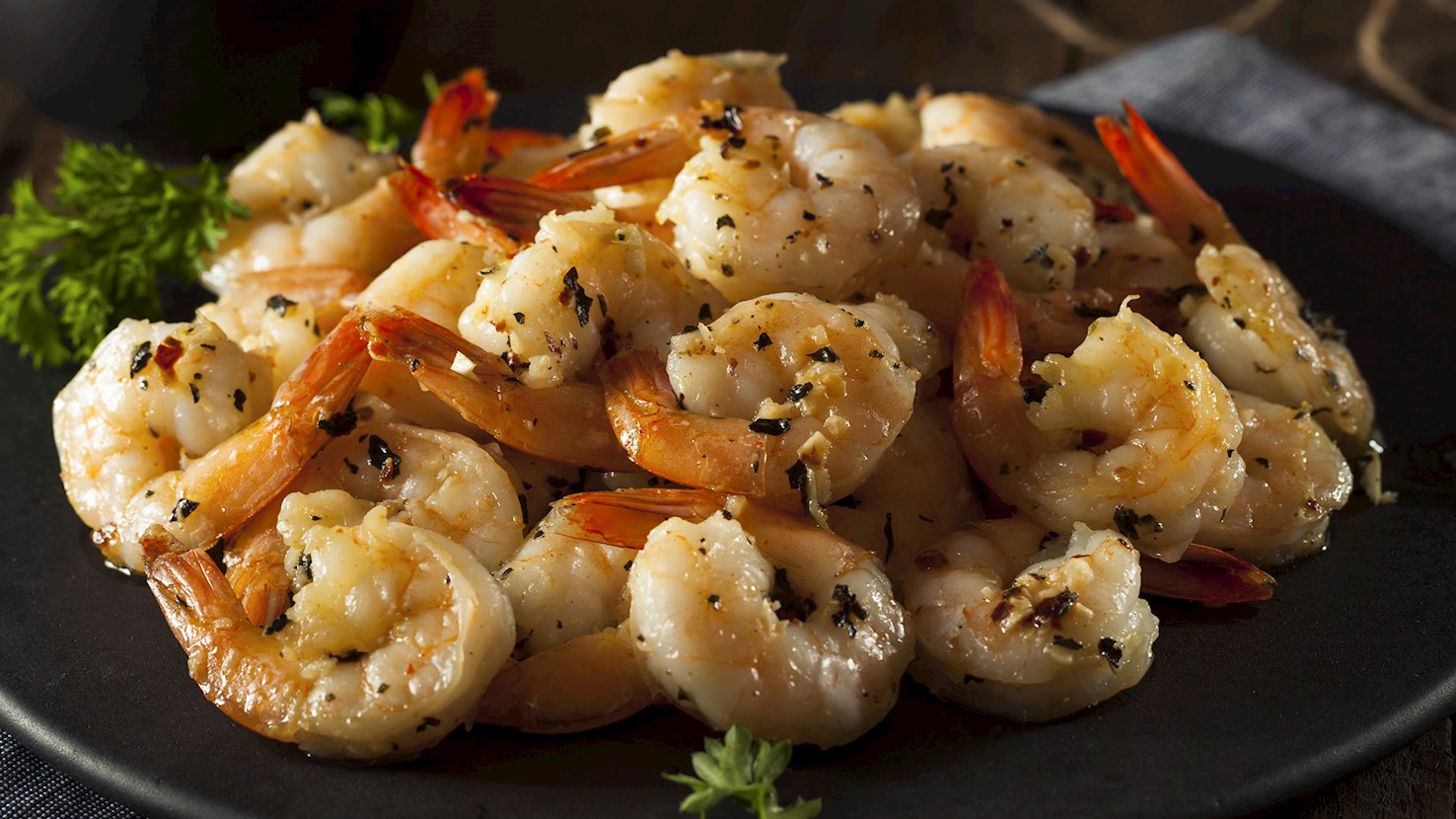
You bao xia is a dish consisting of whole, shell-on shrimp that are flash-fried in scorching oil until delightfully crisp, then rapidly tossed in a vibrant, sticky, sweet-and-savory glaze. Translated literally as "oil-exploded shrimp," this culinary masterpiece is a brilliant showcase of traditional Jiangnan cooking, which prizes the natural freshness of regional aquatic ingredients alongside deeply caramelized, complex flavor profiles. The defining characteristic of authentic you bao xia lies in its textural duality, achieved through a rapid, highly specific cooking process. First, the shrimp are briefly submerged in smoking-hot oil; this fierce thermal shock causes the translucent shells to instantly puff, crisp up, and detach slightly from the meat inside, turning a brilliant, glossy ruby red while ensuring the delicate flesh remains incredibly tender and sweet. Once the shrimp are scooped out of the bubbling oil, the wok is quickly repurposed to build the dish's signature aromatic profile. A fragrant foundation of minced ginger and scallion whites is quickly bloomed in the residual oil before the transformative glaze is introduced. This sauce is a delicate balancing act of classic Chinese pantry staples: premium light and dark soy sauces for umami and color, a generous pour of Shaoxing wine to neutralize any seafood funk, and the distinctively Shanghainese addition of abundant sugar, which melts down into a rich, clinging syrup. A final, crucial splash of aged Chinkiang black vinegar is added to the bubbling reduction, providing a subtle, acidic brightness that cuts through the richness of the frying oil and sugar without making the dish overtly sour. When the crispy shrimp are tossed back into this aggressively boiling wok, the blistered shells act like sponges, absorbing the sticky, caramelized coating to create a deeply savory, sweet exterior. You bao xia holds a revered place in Chinese dining culture, frequently taking center stage at banquets, family gatherings, and Lunar New Year celebrations. Its festive presence is highly symbolic: the bright crimson color of the cooked shrimp represents luck and joy, while the energetic "jumping" of the live shrimp and the phonetic sound of the word for shrimp (xia, which echoes laughter) evoke happiness and prosperity. Enjoying you bao xia is an inherently interactive and tactile dining experience that rewards the adventurous eater. While some diners prefer to painstakingly peel the glazed shells to reach the meat, true devotees of the dish argue that it is best eaten entirely whole—crispy shell, head, and all.
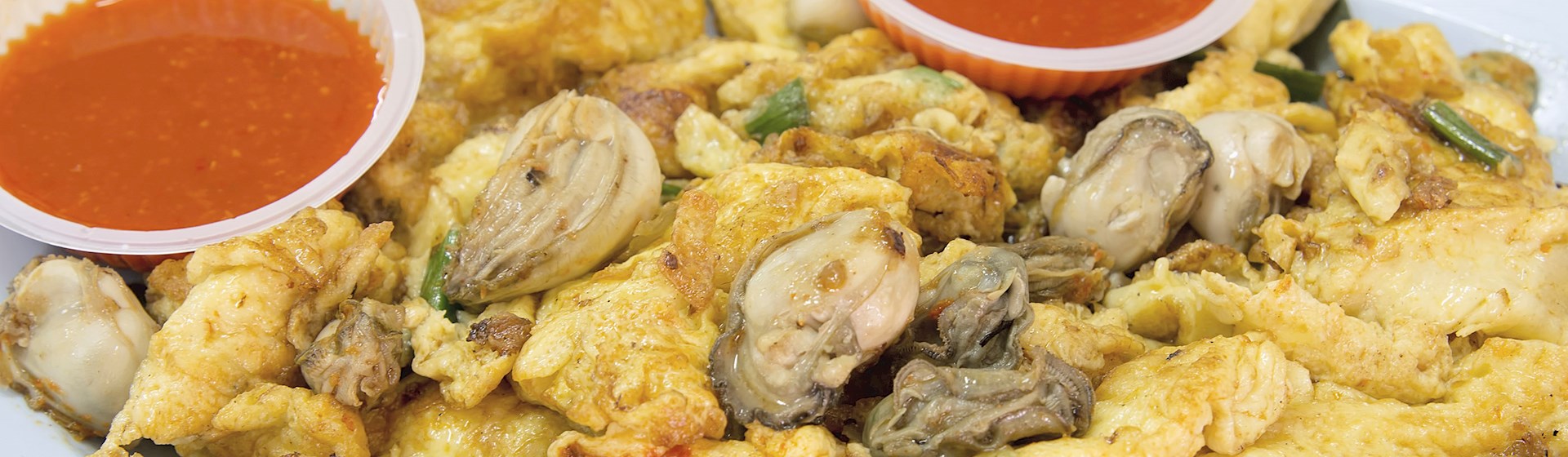
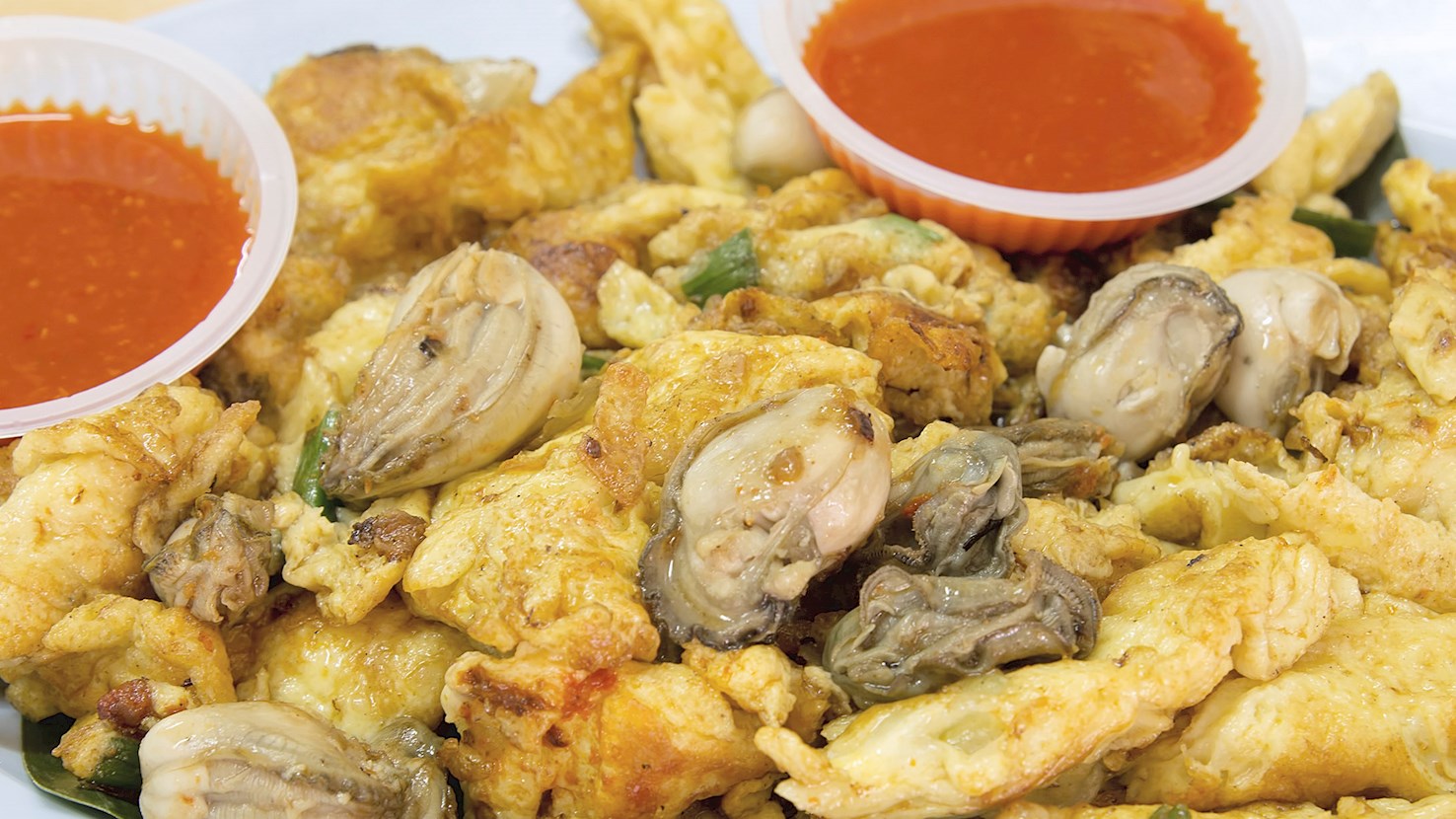
Oyster omelette is a savory egg-based dish originating in the coastal regions of southern China, particularly in Fujian and Guangdong, and it later spread across Southeast Asia, where it became a beloved staple of street food culture in places like Taiwan, Thailand, Malaysia, Singapore, and the Philippines. It combines small, fresh oysters with eggs and a starch batter, resulting in a dish that is crisp on the outside and soft within, often finished with herbs, sauces, or spicy condiments. Its roots lie in the coastal abundance of oysters and the ingenuity of cooks who sought to make use of seasonal shellfish in a satisfying and economical way. In port cities and fishing towns, oysters were plentiful but perishable, and incorporating them into quick, hot dishes allowed them to be eaten fresh while also providing nourishment and flavor to working families and laborers. The dish evolved over time, with each region adapting it to local tastes. In Fujian and Chaoshan areas, the emphasis is often on the delicate interplay of soft oysters and lightly set eggs, while in Taiwan the starch component became more prominent, forming a chewy, slightly gooey texture that contrasts with the crisp edges from the hot griddle. Thai and Malaysian versions tend to be spicier and sometimes include additional aromatics or bean sprouts for freshness and crunch. Preparation begins with a batter made of sweet potato, tapioca, or potato starch mixed with water, poured onto a hot, greased griddle or wok, and spread into a thin layer. Oysters are added on top, followed by beaten eggs, which cook quickly and bind the ingredients together. The omelette is flipped and browned until parts become crisp while the interior remains tender and moist. It is usually served hot, garnished with cilantro or scallions, and accompanied by a sweet, sour, or spicy dipping sauce, depending on the region. Today, oyster omelette is eaten both as a street snack and a restaurant dish, often associated with night markets, coastal seafood stalls, and festive occasions. It pairs well with light soups or rice porridge and is sometimes enjoyed alongside beer or tea, especially in settings where it is served as part of a shared meal.
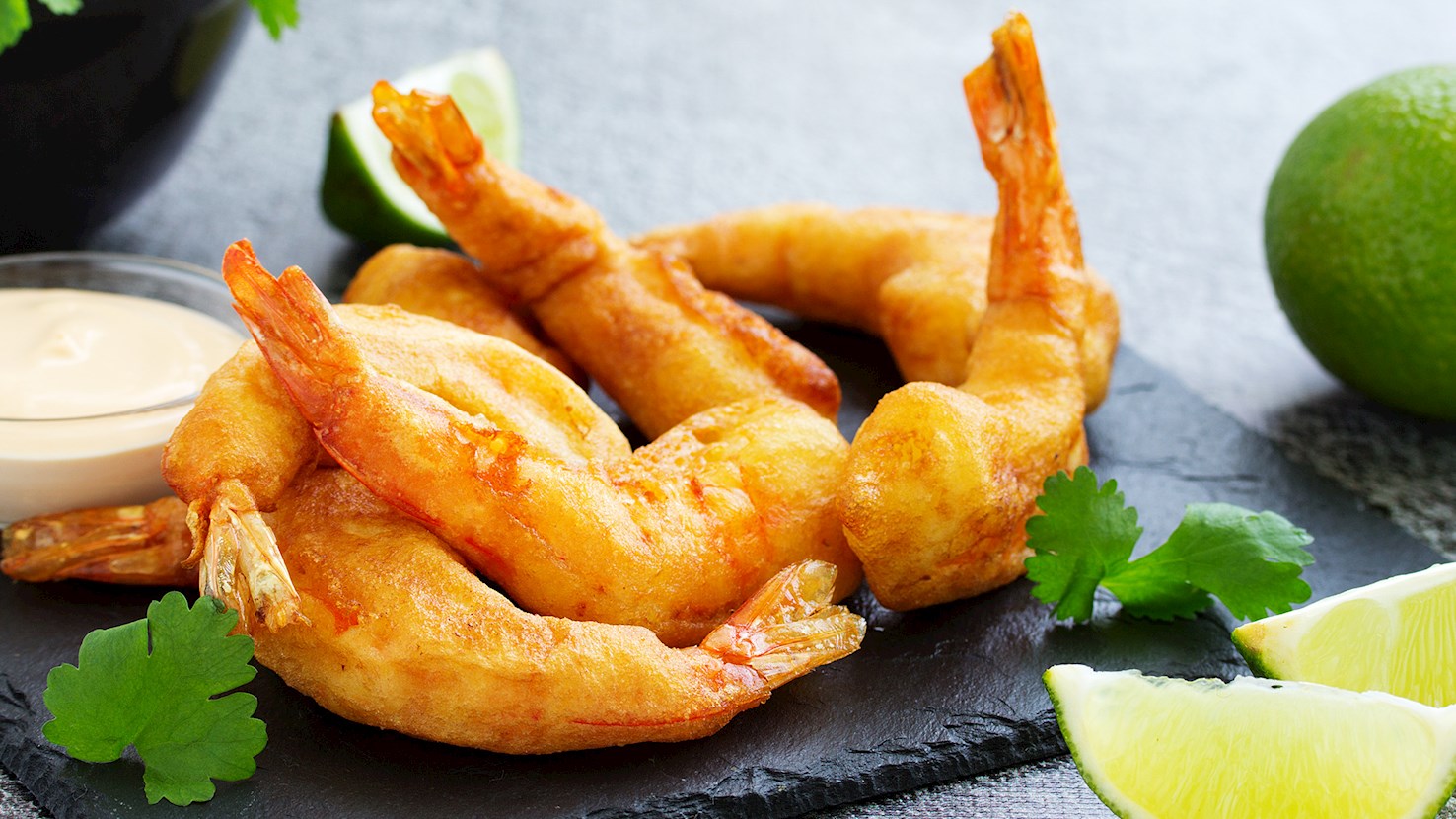
A specialty of Anhui cuisine, phoenix tail shrimp consists of crispy-fried, battered shrimps. It is typically prepared with large freshwater shrimps that have been shelled and deveined but with their tails left intact. Once cleaned, the shrimps are coated with a batter of flour, water, and seasonings, leaving the tails exposed before they’re fried to crispy perfection. The frying process makes the shrimps' tails bright red, crispy, and tilted upward, giving them a close resemblance to a phoenix's tail, hence the name phoenix tail shrimp. In China, these deep-fried crustaceans are typically enjoyed hot, accompanied by lemon wedges and a variety of dipping sauces on the side. Phoenix tail shrimps are usually eaten as snacks or appetizers.
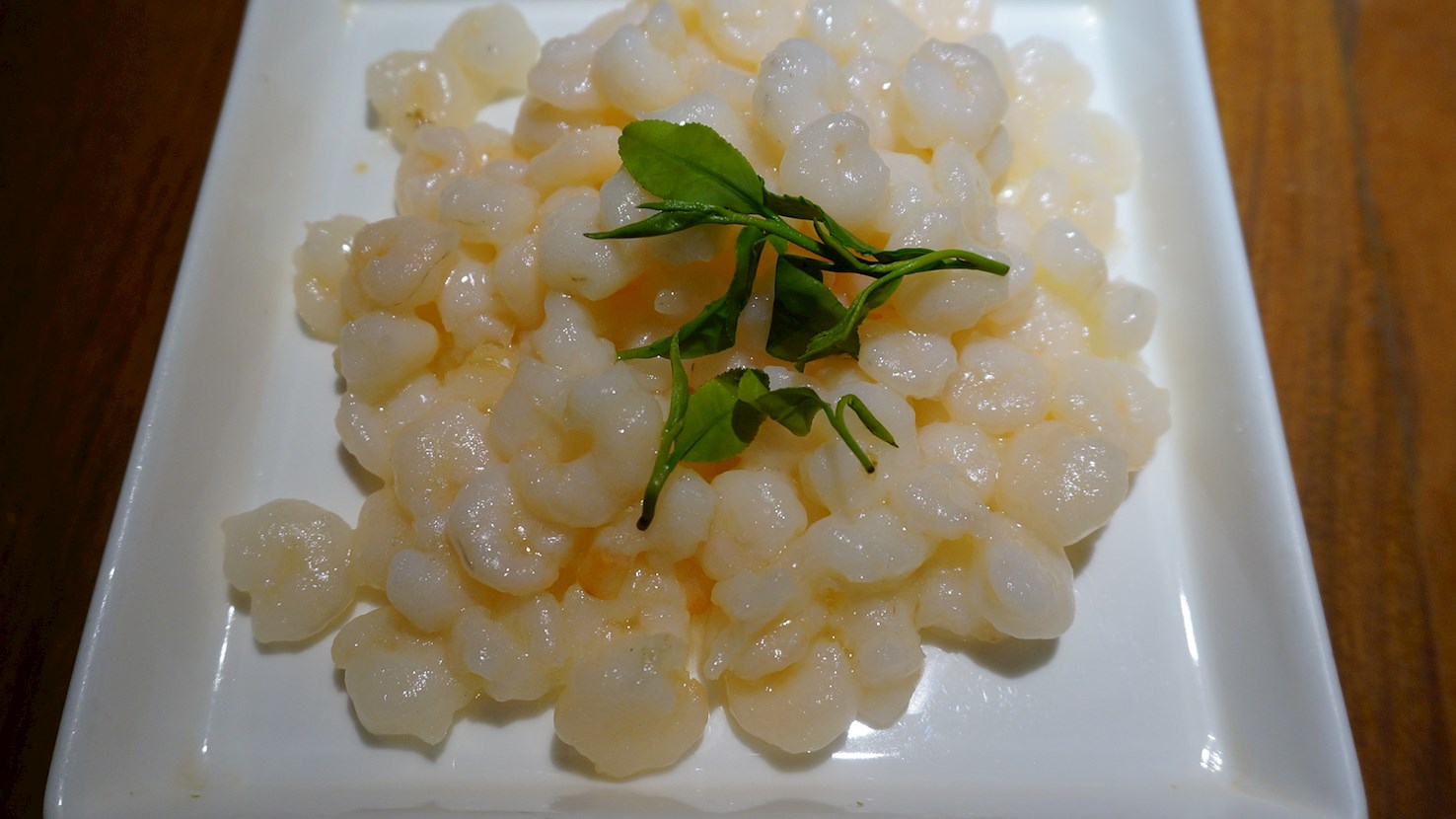
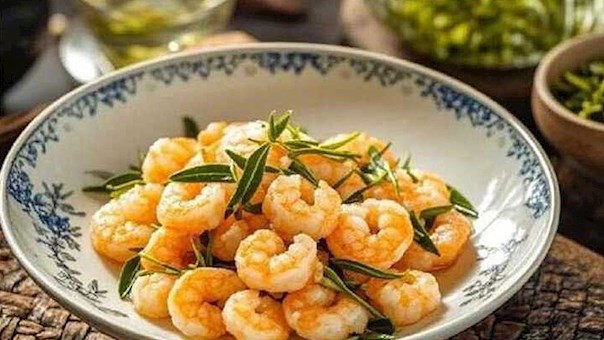
Regarded as a specialty of Hangzhou city, fried shrimps with Longjing tea is one of the best-known dishes of Zheijang cuisine that makes use of the outstanding Longjing tea. Large live shrimps are first soaked in a marinade of egg whites, cornstarch, and rice wine, and then cooked along with steeped Longjing tea. The fragrant and refreshing green shoots of Longjing tea beautifully complement the delicious white shrimps, giving this authentic dish an exquisite flavor. These stir-fried shrimps are served hot or chilled, drizzled with the cooking liquid and seasoned with salt and pepper to taste.
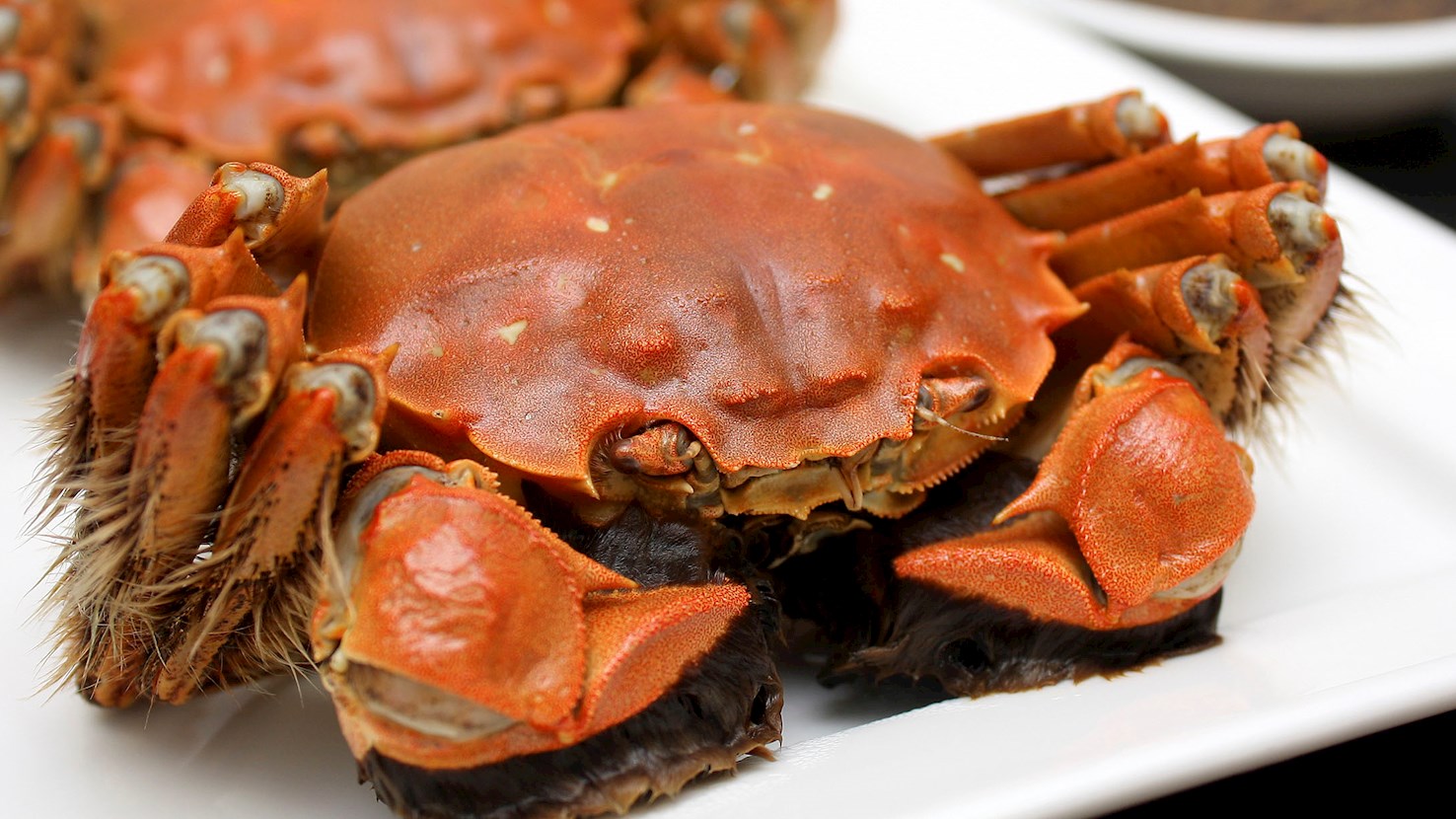
Easily identifiable by the patches of scruffy dark hair on its claws, the succulent, moist, and meaty Shanghai hairy crab is a delicacy that is large as an adult person's palm. Its flesh is firm, yet tender and delicate, so it is always steamed whole, without any seasonings, while the meat is much sweeter than regular crabmeat. When consumed, it is typically dipped into a combination of rice vinegar and soy sauce, then topped with sliced ginger. These crabs are traditionally eaten hot, and two to four crabs per person usually makes a satisfying meal. Hairy crabs are in season from September until mid-November, a time of the year when the city's neighbourhoods are interspersed with markets and high-end restaurants offering this delicacy. The Chinese people believe that hairy crab has a cooling (yin) effect on the body, so it should be paired with suitable warming foods and beverages such as the potent yellow rice wine.
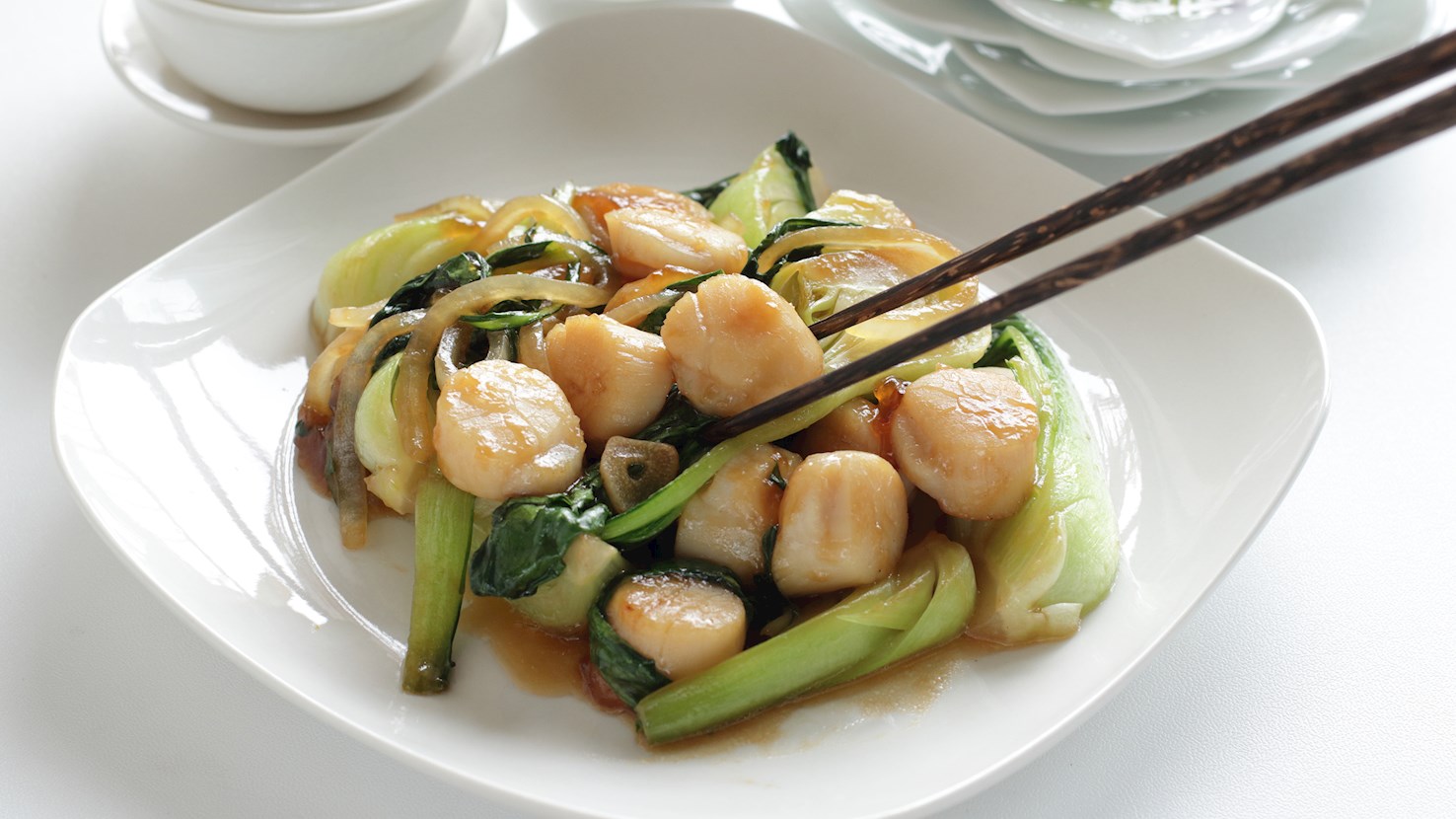
Scallops with bok choy is a traditional dish that's especially popular in Shandong as a banqueting dish. Although there are variations, it's usually made with a combination of fresh scallops, bok choy, ginger, garlic, vegetable oil, sesame oil, Shaoxing wine or sherry, salt, sugar, and black pepper. The bok choy is blanched in boiling water and drained, while the scallops are blanched in water for a few seconds before they're drained. The ginger and garlic are fried in oil in a wok and then mixed with the sesame oil, salt, pepper, sugar, and wine or sherry. Bok choy and scallops are added to the wok and the dish is stir-fried shortly before it's served hot. Sometimes, the dish is served with the bok choy arranged to resemble the spokes of a wheel, while the scallops are served on top.
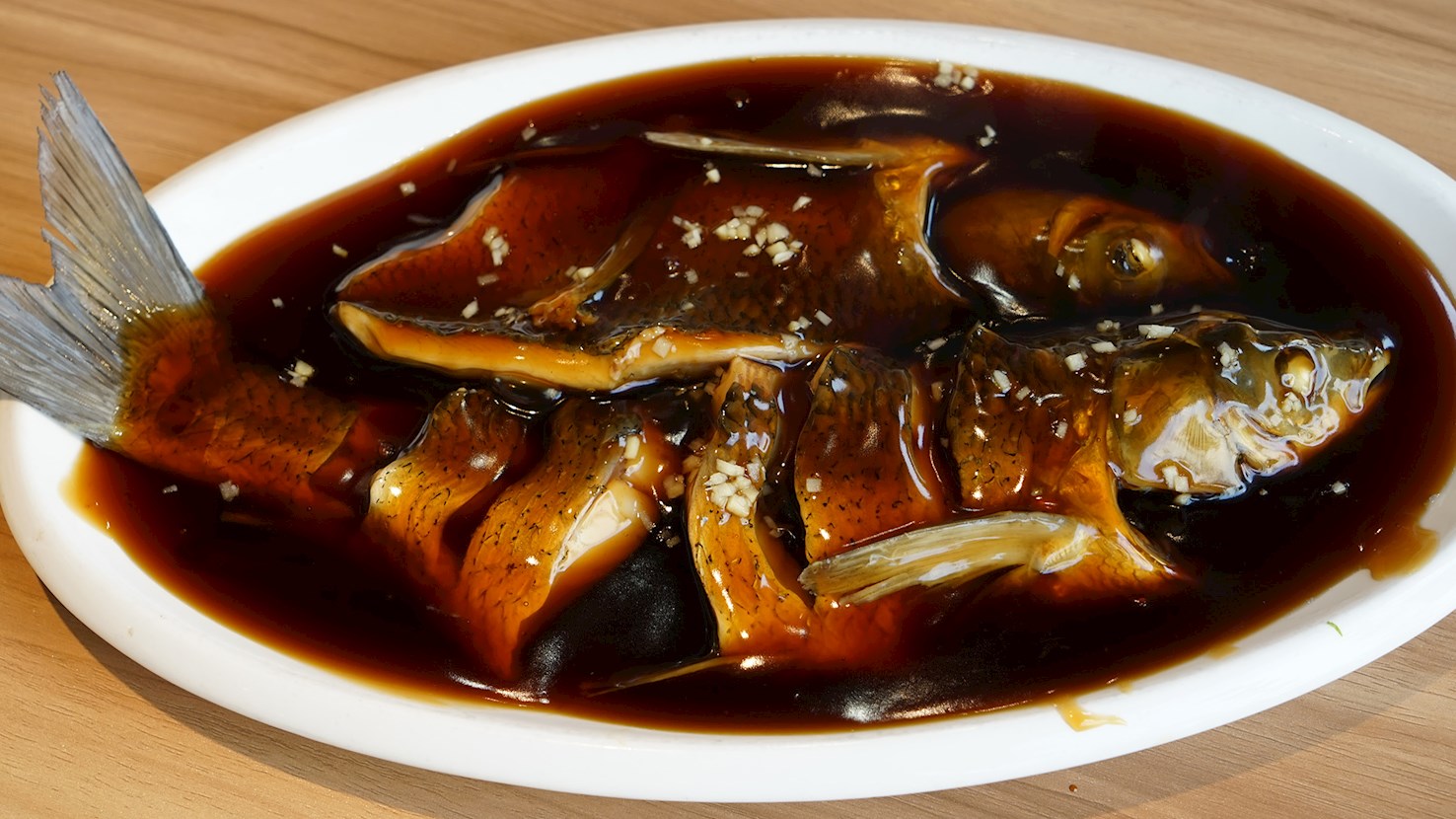
Xīhú cùyú is a West Lake vinegar fish dish from Hangzhou in Zhejiang Province, made with grass carp cooked in a sweet–sour sauce based on Zhejiang vinegar. It is closely associated with the waters around West Lake, where freshwater fish have long been central to local cuisine and where mild, clean-tasting carp provided a suitable base for sauces that emphasize clarity and balance. The dish formed in an environment where Zhejiang vinegars, especially those from nearby regions, were already established in household cooking, and Hangzhou cooks began preparing fish by first poaching or steaming it until just cooked and then coating it with a vinegar–sugar reduction that highlighted the fish’s natural flavor without masking it. Preparation begins with selecting a fresh grass carp, typically around one kilogram, cleaning it carefully, and cutting shallow diagonal slits along the body to ensure even cooking and better absorption of the sauce. The fish is either steamed or briefly cooked in hot water until the flesh sets, then removed and placed on a serving plate. A sauce is prepared separately by heating vinegar, sugar, a small amount of soy sauce, and sometimes rice wine, reducing the mixture until it becomes glossy and slightly thick. The hot sauce is poured over the warm fish so the flavor adheres to the surface while the interior remains tender. The dish is eaten in Hangzhou restaurants, banquet settings, and home kitchens, especially during seasons when fresh grass carp is plentiful. It is typically served with plain rice, mild vegetable dishes, or light broths that complement the sweet–sour profile. It pairs well with Longjing tea, which is native to the region, or with simple, non-aromatic white wines that do not compete with the vinegar’s flavor.
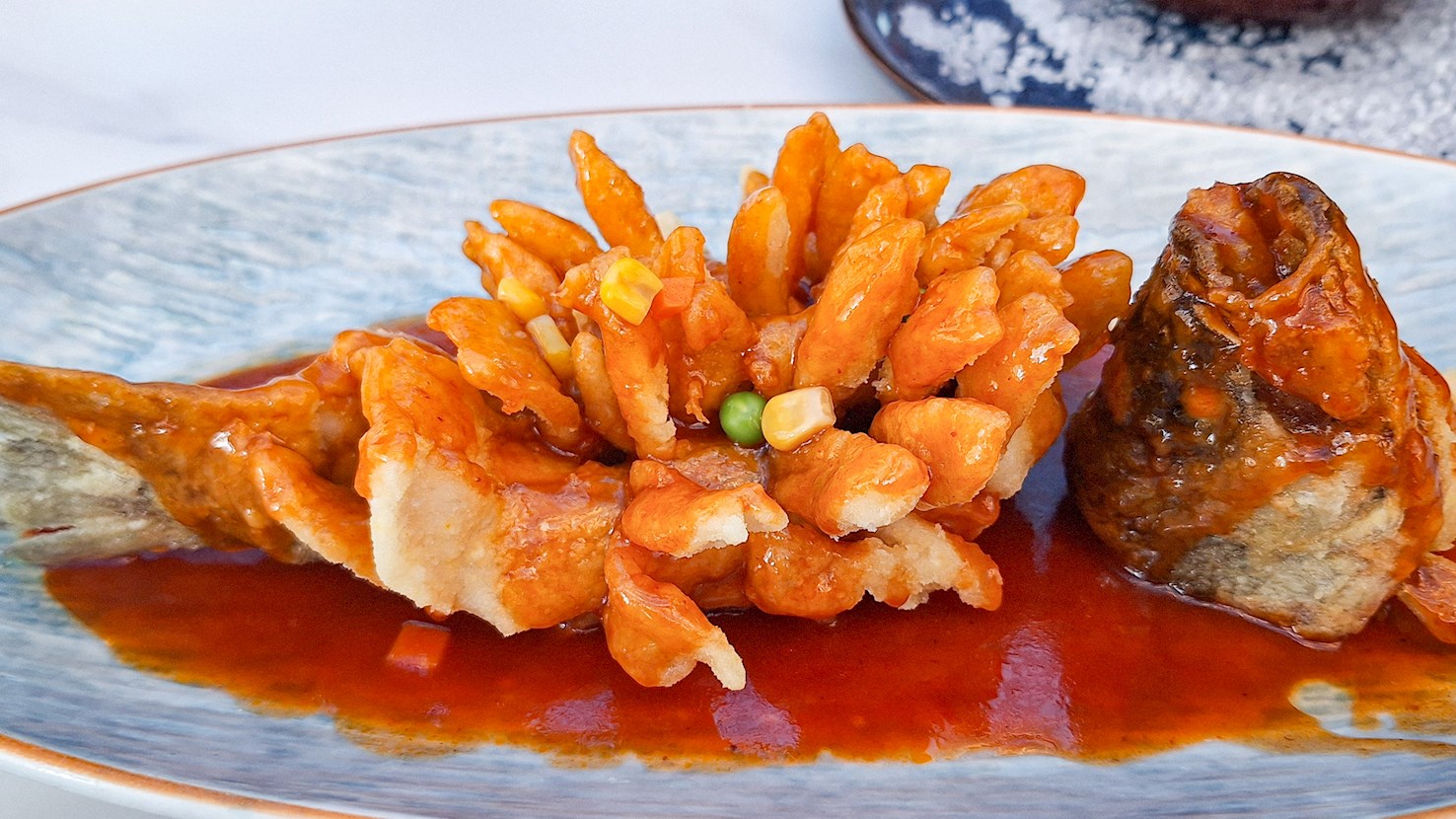
Sōngshǔ guìyú is a Jiangsu dish made from mandarin fish that is carefully cut, fried, and coated in a sweet and sour sauce, special because its precise preparation makes the flesh fan out like a squirrel’s tail while keeping a crisp texture and delicate flavor. Originating in Suzhou, it reflects the refined artistry of Jiangsu cuisine, where attention to knife skills, balance of taste, and visual presentation has long been valued. The dish became well known during the Qing dynasty, when Suzhou’s culinary culture emphasized both elegance and technical skill, and it soon became a highlight of banquets and formal gatherings. The preparation begins by cleaning the mandarin fish, leaving the head and tail intact while crosshatching the flesh so that it opens up when fried. After coating with starch, the fish is deep-fried until golden, puffed, and crisp, then served with a glossy sauce made from vinegar, sugar, soy sauce, and tomato paste or ketchup. This combination produces a dish that is visually striking and texturally balanced, with the crisp surface absorbing the tangy and sweet sauce. Today, it remains a centerpiece in Suzhou and across Jiangsu, often served at banquets, festivals, and family celebrations. It is eaten communally, shared at the center of the table, and continues to represent both the delicacy of freshwater fish and the craftsmanship of Jiangsu’s culinary heritage.
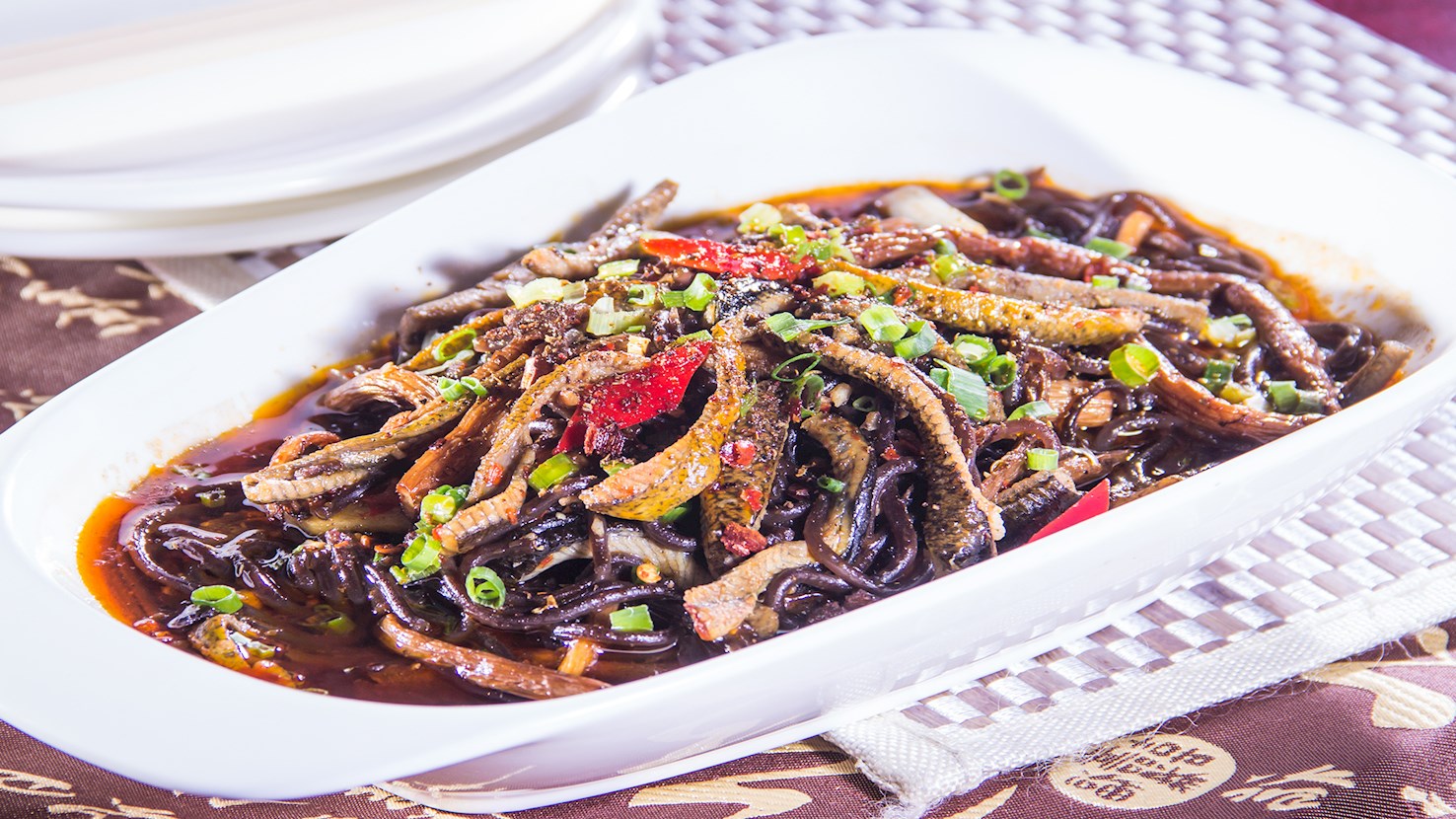
Sheng bao shan pian is thinly sliced, rapidly wok-fried freshwater swamp eel coated in a sweet, sharply acidic, and highly aromatic garlic sauce. Directly out of the blistering wok, this dish is served hot on a communal plate, demanding immediate consumption to experience the fleeting, delicate crunch of the eel's skin before the thick sauce softens the starch coating. Waiters in high-end Jiangnan banquets rush it to the table precisely for this reason, placing it at the center as a star course accompanied by a simple bowl of steamed white rice to absorb the intense, dark glaze. The origins of this culinary staple lie in the water towns and dense network of rivers across the Yangtze River Delta, particularly around Hangzhou, Suzhou, and Shanghai, where freshwater swamp eels thrive in the muddy banks of rice paddies. Historical records indicate that chefs during the Qing Dynasty perfected the intense high-heat cooking method necessary to transform the naturally muddy, firm flesh of the wild eel into a refined delicacy. Executing the recipe requires immense skill and speed, beginning with live eels that are swiftly dispatched, deboned, and cut into uniform rectangular strips. The raw meat is coated with a fine dusting of cornstarch or potato starch before being submerged in smoking-hot cooking oil for just a few seconds. This flash-frying technique blisters the skin and seals the juices inside. The oil is drained, leaving only a tablespoon in the wok to rapidly bloom minced garlic, ginger, and scallions. A pre-mixed liquid composed of dark soy sauce, aged Chinkiang black vinegar, white sugar, Shaoxing rice wine, and white pepper hits the hot metal, instantly reducing into a sticky syrup. The fried eel slices are tossed back into the wok for a final few seconds to catch the glaze before being plated. While the sweet-and-sour garlic profile is the more common option, variations exist. In Ningbo, chefs apply a much heavier hand with raw garlic and often incorporate yellow chives for an astringent bite. Shanghai iterations lean significantly more heavily on sugar and dark soy sauce, creating a sweeter, almost black, molasses-like coating, while cooks in inland Jiangsu might add shredded bamboo shoots and bell peppers to add contrasting crunch and vibrant visual appeal to the final plate.
Xuěcài dàhuángyú is a dish from Ningbo in Zhejiang Province, prepared with yellow croaker cooked together with xuecai, a locally made salted and fermented mustard green. It reflects the region’s reliance on coastal fish and preserved vegetables, both of which have long been staples in Ningbo markets. Yellow croaker is a fish landed along the Zhejiang coast, valued for its tender flesh and mild flavor, while xuecai is produced inland through salting, pressing, and fermenting mustard greens, resulting in a sour–salty preserved vegetable used across eastern Zhejiang. The combination of these two ingredients appears in written food accounts from the late Qing and Republican periods, where the dish is listed among notable Ningbo preparations that balance preserved vegetables with locally available seafood. Preparation begins by cleaning and scoring a fresh yellow croaker to ensure even cooking. Xuecai is rinsed briefly to reduce its saltiness and then squeezed dry. In a wok, ginger and sometimes scallions are sautéed lightly before the fish is added and gently pan-fried on both sides. The xuecai is placed around the fish, and a mixture of water, Shaoxing wine, and light soy sauce is added. The fish is simmered over low heat until just cooked, allowing the flavor of the preserved greens to infuse the broth. The dish is finished with a touch of sugar or white pepper depending on the cook’s preference. It is eaten hot and commonly served as a main dish during family meals in eastern Zhejiang, especially in Ningbo households that prepare it with fish purchased from local markets. Restaurants specializing in Ningbo or broader Zhejiang cuisine also feature it, often highlighting the contrast between the tender fish and the lightly sour preserved greens. It pairs well with plain rice, simple vegetable stir-fries, or tofu dishes that balance the saltiness of the xuecai. Beverages such as mild Huangjiu, especially those from Shaoxing, complement the dish due to their subtle sweetness and low acidity, while light green teas provide a clean counterpoint to the broth.
TasteAtlas food rankings are based on the ratings of the TasteAtlas audience, with a series of mechanisms that recognize real users and that ignore bot,
nationalist or local patriotic ratings, and give additional value to the ratings of users that the system recognizes as knowledgeable.
TasteAtlas Rankings should not be seen as the final global conclusion about food. Their purpose is to promote excellent local foods,
instill pride in traditional dishes, and arouse curiosity about dishes you haven’t tried.





What People Say