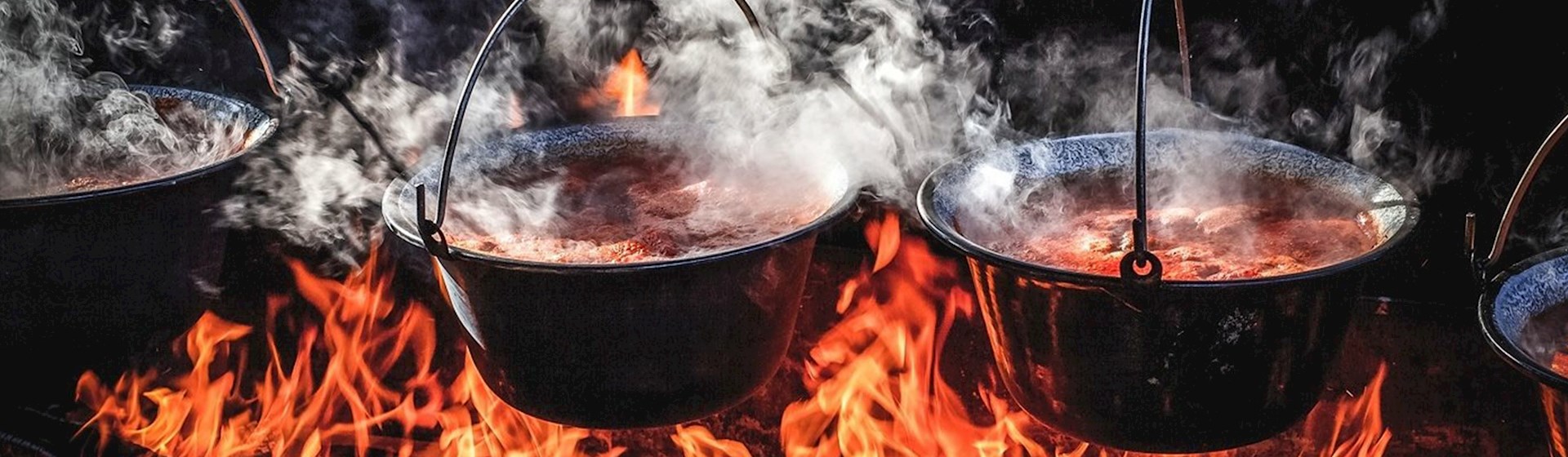
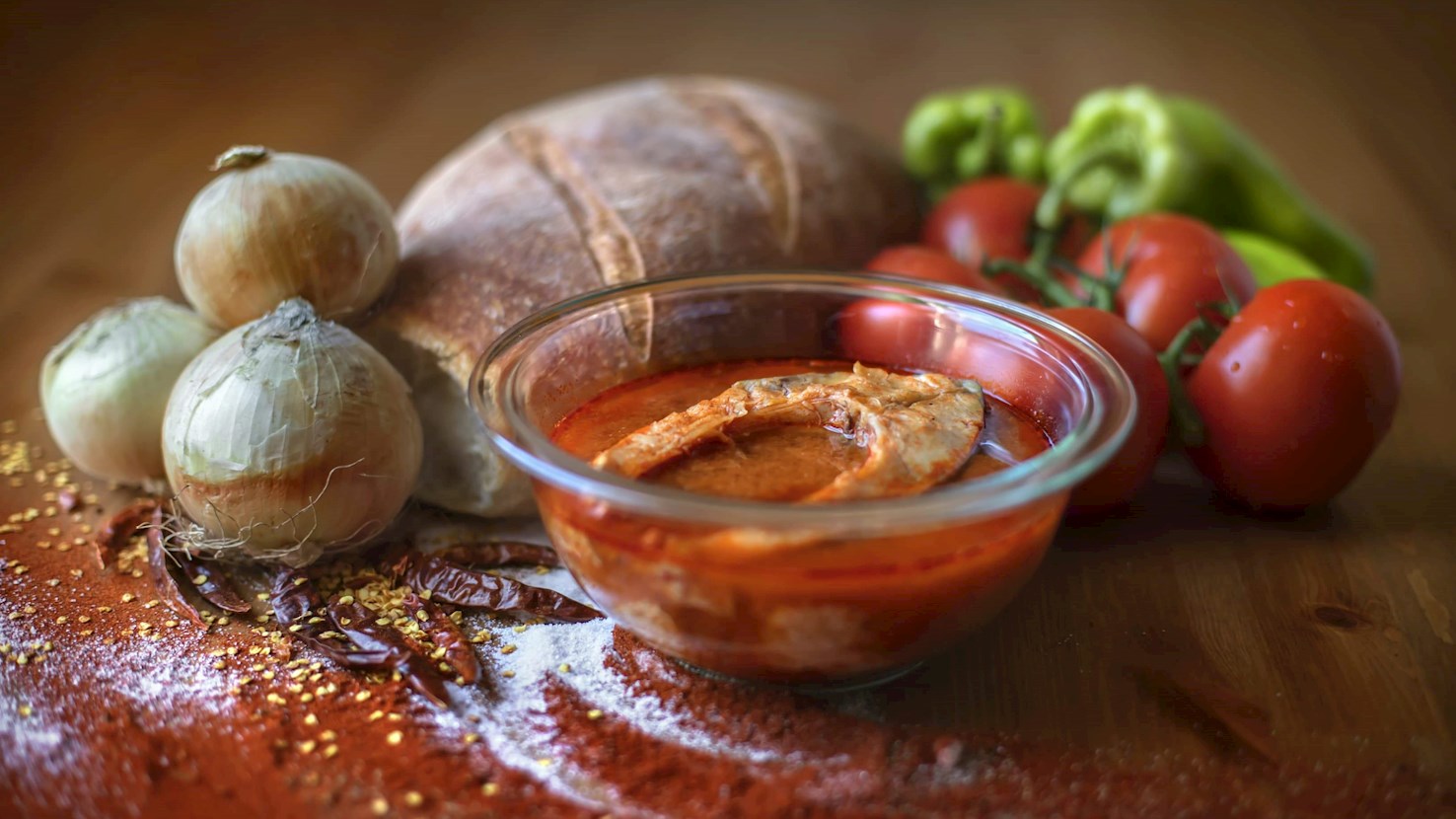
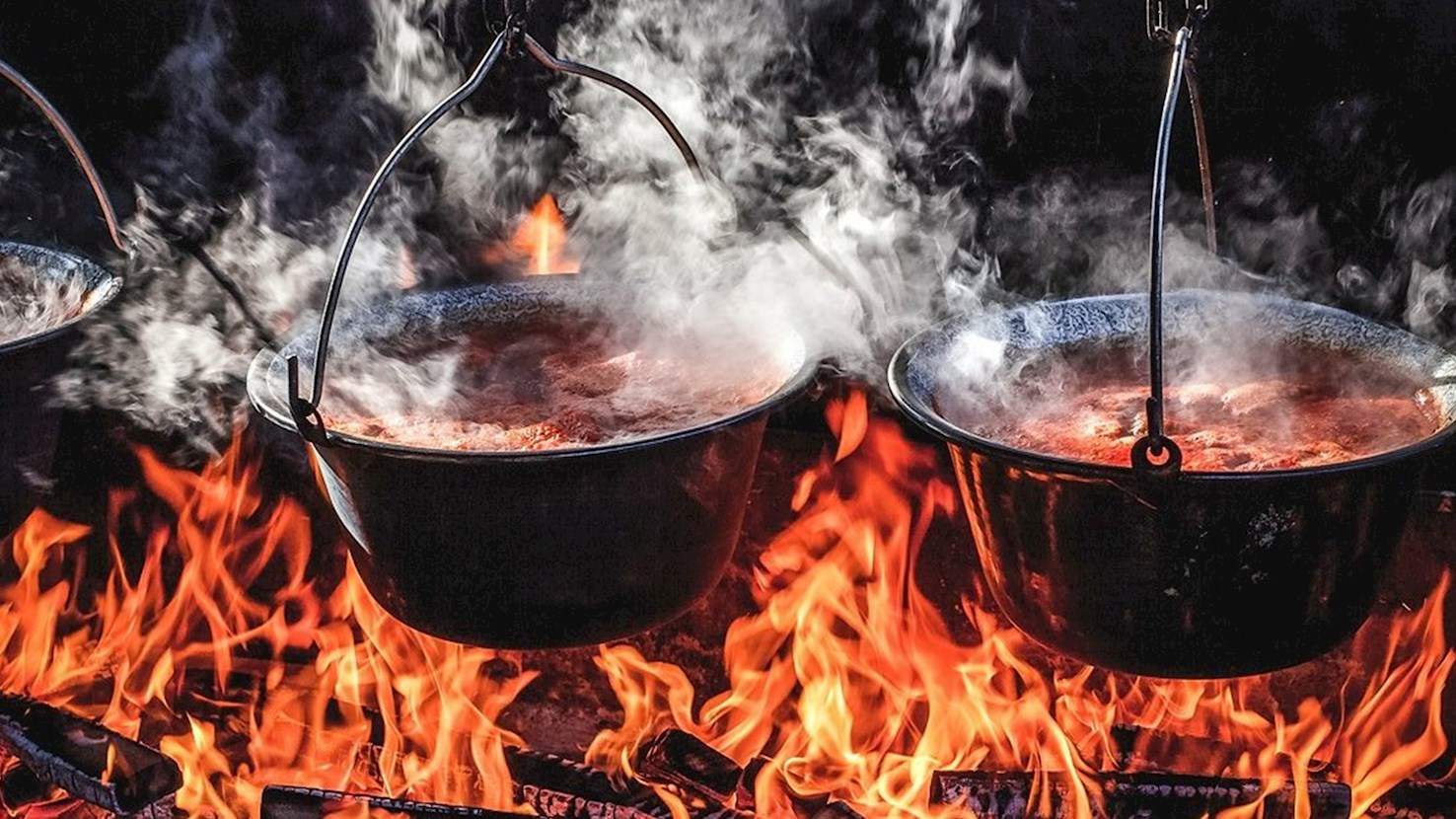
Halászlé or fisherman's soup is made with mixed river fish cooked in a broth that is heavily spiced with hot paprika. The fish—mainly carp, catfish, perch, or pike—is locally sourced from the Tisza and Danube rivers, and though halászlé may seem like a simple dish, this rich soup is traditionally prepared outside and cooked in a kettle over an open fire. Every region has their own version, but the two most popular are Szeged halászlé, made with four types of fish, and Baja halászlé, made mainly with carp and served with homemade pasta called gyufatészta.
Fiš paprikaš (or hal paprikas in Hungary, with the addition of sour cream) is a traditional stew cooked in a big cauldron over an open fire. This spicy fish stew is traditionally made with a variety of freshwater fish such as catfish, starlet, pike, and carp. The stew is heavily flavored with large amounts of the region's staple – ground red paprika, which can range from mild to very hot. Fiš paprikaš is often served with homemade noodles, and it is so popular in the region that there are numerous fiš cooking competitions organized throughout the year. The dish is traditionally accompanied by hot ground paprika on the side so each person can increase the spiciness according to personal preferences.
Haltepertő are traditional Hungarian fish cracklings originating from Szeged. The dish is usually made with a combination of catfish, breadcrumbs, flour, paprika, oil, and salt. The catfish fillets are cut into smaller pieces or strips that are seasoned with salt and rolled in a combination of breadcrumbs, flour, and paprika. The breaded pieces of catfish are fried in hot oil until golden brown and crisp. Haltepertő is typically served with raw onion slices and tomatoes on top. A lemon wedge is also often used for squeezing lemon juice over the fish cracklings.
Balatoni halászlé is a Hungarian fish soup originating from the Lake Balaton region, known for its bright red color, rich flavor, and use of freshwater fish caught from Central Europe’s largest lake. It is a distinctive regional variant of halászlé, a category of spicy fish soups found throughout Hungary, and reflects the culinary identity of the Balaton area, where fishing has long been a vital part of local life and gastronomy. Its roots go back centuries, when fishermen along the Danube, Tisza, and Balaton lakes developed hearty one-pot meals made directly from their catch. These soups, prepared in large cauldrons over open fires, were practical solutions for feeding fishing crews and quickly became a cornerstone of rural cooking. Over time, halászlé evolved into a dish with strong regional variations, and the Balaton version developed its own distinct style based on the fish species and ingredients available in western Hungary. Preparation of Balatoni halászlé begins with freshly caught freshwater fish, most often carp, catfish, and pike-perch (local Balatoni fogas), which are cleaned and cut into pieces, including the head and bones, to maximize flavor. A key step is the preparation of a rich broth, made by simmering fish heads, spines, and trimmings with onions until they release their natural gelatin and depth. Once strained, the broth is returned to the pot with the fish fillets and an abundant amount of high-quality Hungarian paprika, which gives the soup its vivid red color and distinctive flavor. Garlic, tomatoes, peppers, and sometimes hot chilies are added for complexity and heat, though seasoning varies slightly by household and region. The soup is simmered gently, usually without stirring, to keep the fish intact and tender. It is typically prepared outdoors in a cauldron known as a bogrács, a method that contributes to its layered, concentrated flavor and is considered essential to achieving the best result. What distinguishes Balatoni halászlé from other regional versions, such as the ones from Baja or Szeged, is its reliance on the specific freshwater species from Lake Balaton and the slightly lighter, cleaner broth that results. It often contains a mix of several fish types rather than relying on carp alone, and some cooks incorporate a small amount of dry white wine from the Balaton highlands, which adds a subtle acidity that balances the soup’s richness. Balatoni halászlé is most often served hot and immediately after cooking, accompanied by fresh white bread and, in some households, slices of spicy green pepper on the side. It is a centerpiece of outdoor gatherings, family celebrations, and summer festivals around Lake Balaton, where it is prepared and enjoyed communally. Dry, crisp white wines from the Balaton wine region, such as Olaszrizling or Szürkebarát, are popular pairings, as they cut through the soup’s spiciness and complement the delicate fish flavors.
TasteAtlas food rankings are based on the ratings of the TasteAtlas audience, with a series of mechanisms that recognize real users and that ignore bot,
nationalist or local patriotic ratings, and give additional value to the ratings of users that the system recognizes as knowledgeable.
For the “Top 4 Hungarian Seafood Dishes” list until June 15, 2026, 469 ratings were recorded, of which 250 were recognized by the system as legitimate.
TasteAtlas Rankings should not be seen as the final global conclusion about food. Their purpose is to promote excellent local foods,
instill pride in traditional dishes, and arouse curiosity about dishes you haven’t tried.