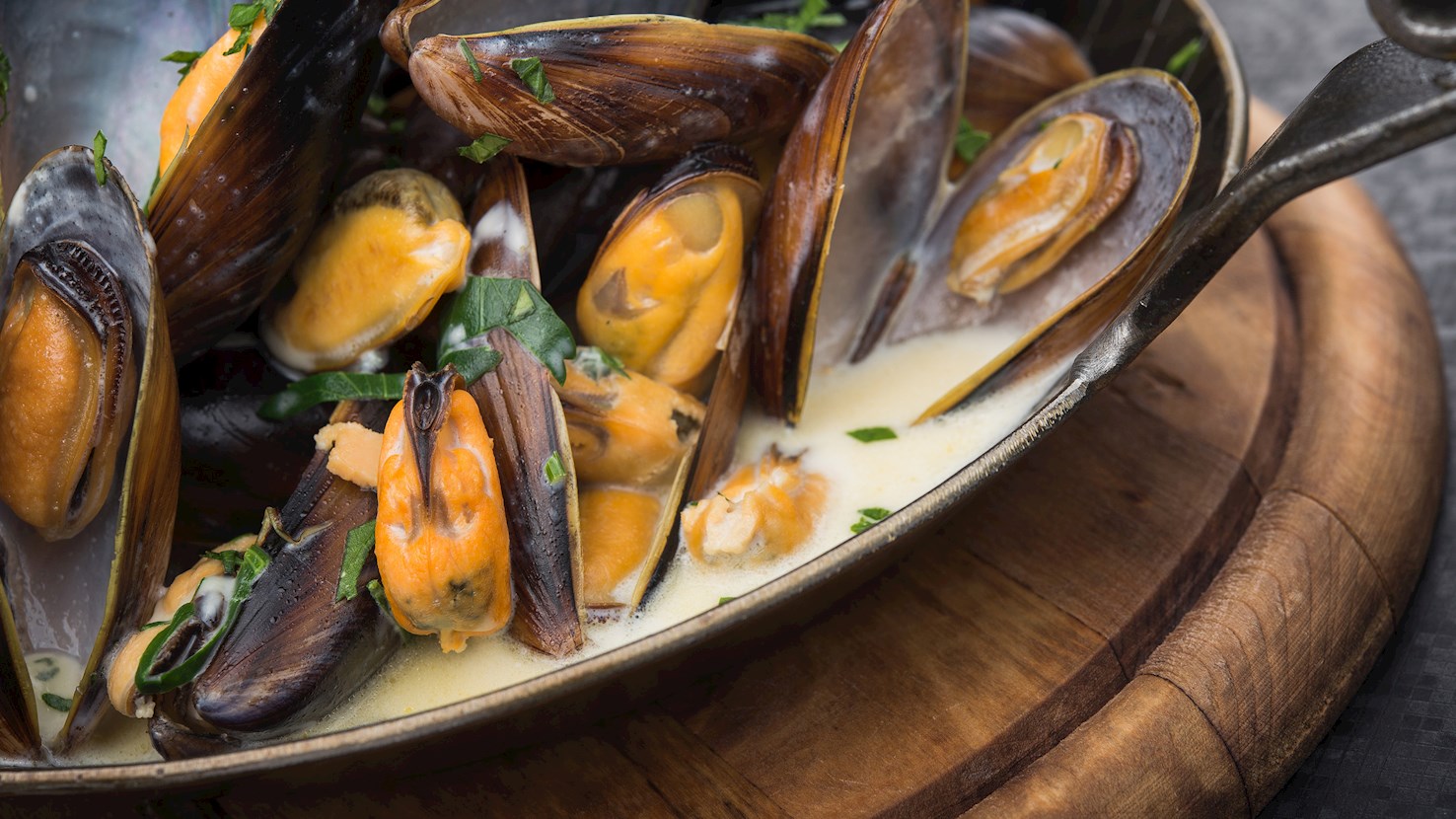
Irish mussels in cream are a dish rooted in the island’s coastal food culture, where seafood and dairy have long been at the heart of daily cooking. Along the shores of Galway Bay, Killary Harbour, and other inlets of the Atlantic coast, mussels have been harvested for centuries, first gathered wild from rocks and later farmed on ropes in sheltered waters. The addition of cream reflects Ireland’s rich dairy heritage, where cows raised on grassland produce milk of notable quality, giving dishes a distinct depth and richness. The dish is prepared by cleaning fresh mussels and steaming them until they open, often with butter, shallots, and a splash of Irish cider or white wine to form the base of the broth. Cream is then added, creating a sauce that is both smooth and full-bodied, carrying the briny sweetness of the shellfish. Parsley or thyme may be sprinkled in before serving, adding a note of freshness that balances the richness. It is a meal designed to be eaten hot and immediately, usually accompanied by Irish brown bread or soda bread, perfect for soaking up the sauce. Irish mussels in cream are often enjoyed in pubs, seafood restaurants, and homes along the coast, served as either a starter or a main course. They are frequently paired with a pint of stout, whose roasted notes balance the cream, or with Irish cider, which adds a crisp and fruity contrast.
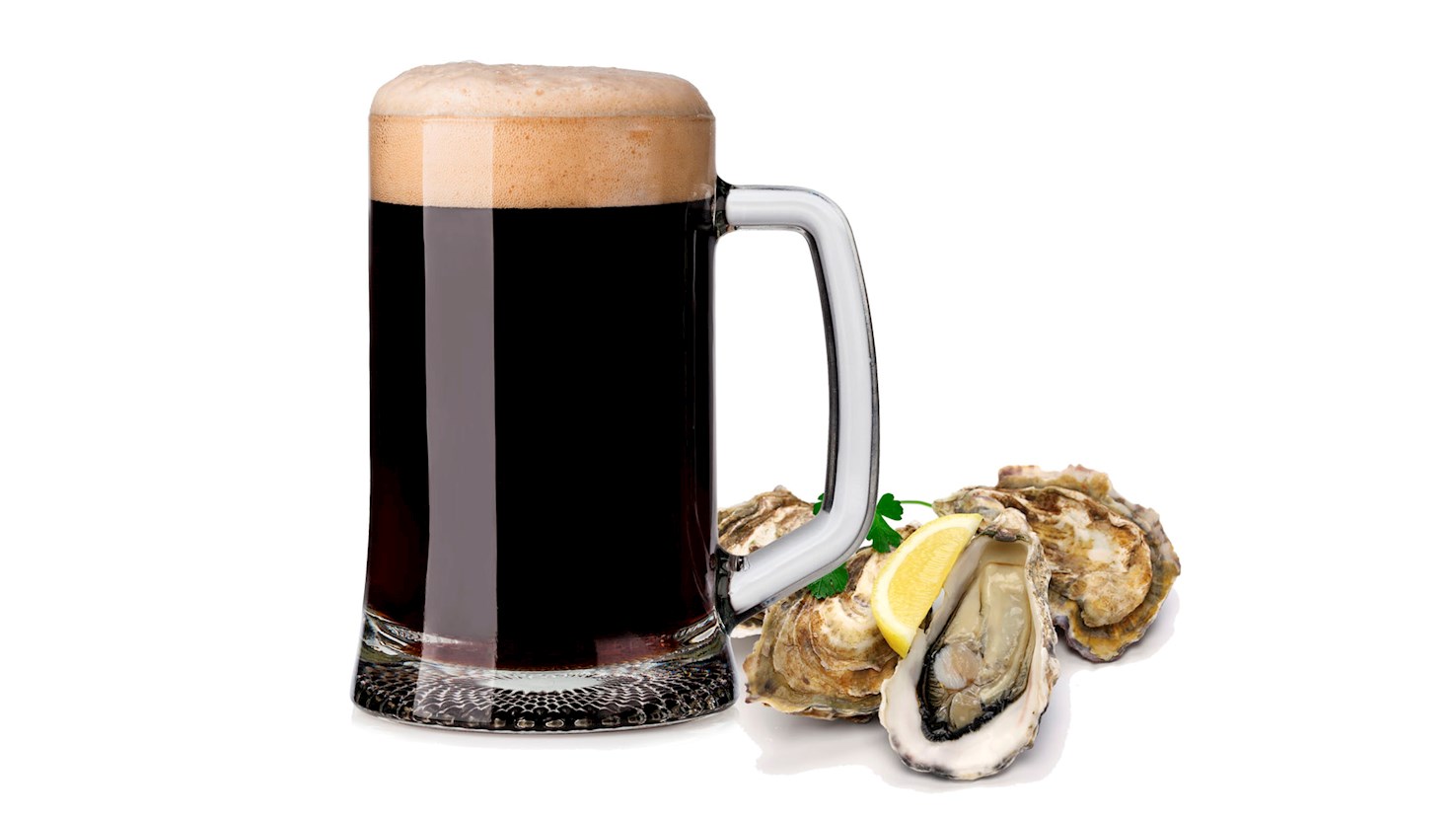
Stout and raw oysters form a pairing that is most closely associated with Ireland, where the dark, roasted flavors of the beer meet the briny freshness of the shellfish in a combination that has been enjoyed for centuries. The connection between the two is rooted in both geography and economy, as Ireland’s coastal waters provided ample oysters and the breweries of Dublin and beyond produced the stouts that became famous worldwide. In the nineteenth century, oysters were not considered a luxury but an affordable source of protein for working people, and they were frequently served in pubs alongside pints of stout. This natural companionship grew into a culinary tradition that spread far beyond the island. The preparation is straightforward, as the oysters are opened just before serving and enjoyed raw on the half shell, often with a squeeze of lemon though purists prefer them unadorned. The stout is poured fresh, its creamy head balancing the sharp salinity of the oysters. The contrast between the two is what makes the experience memorable: the beer’s roasted malt and slightly bitter edge rounds off the sea-salt bite, creating a balance that neither could achieve alone. Today, the pairing is still most often found in Ireland, particularly in coastal towns and cities, though it is also common in the UK and has been adopted in oyster bars and beer halls worldwide. It is eaten as an appetizer, a light meal, or part of a larger seafood feast, and the choice of stout can vary from classic dry Irish styles to modern craft interpretations. Other shellfish, breads, or even cheese are sometimes served alongside, but nothing quite rivals the clarity and reputation of oysters and stout together.
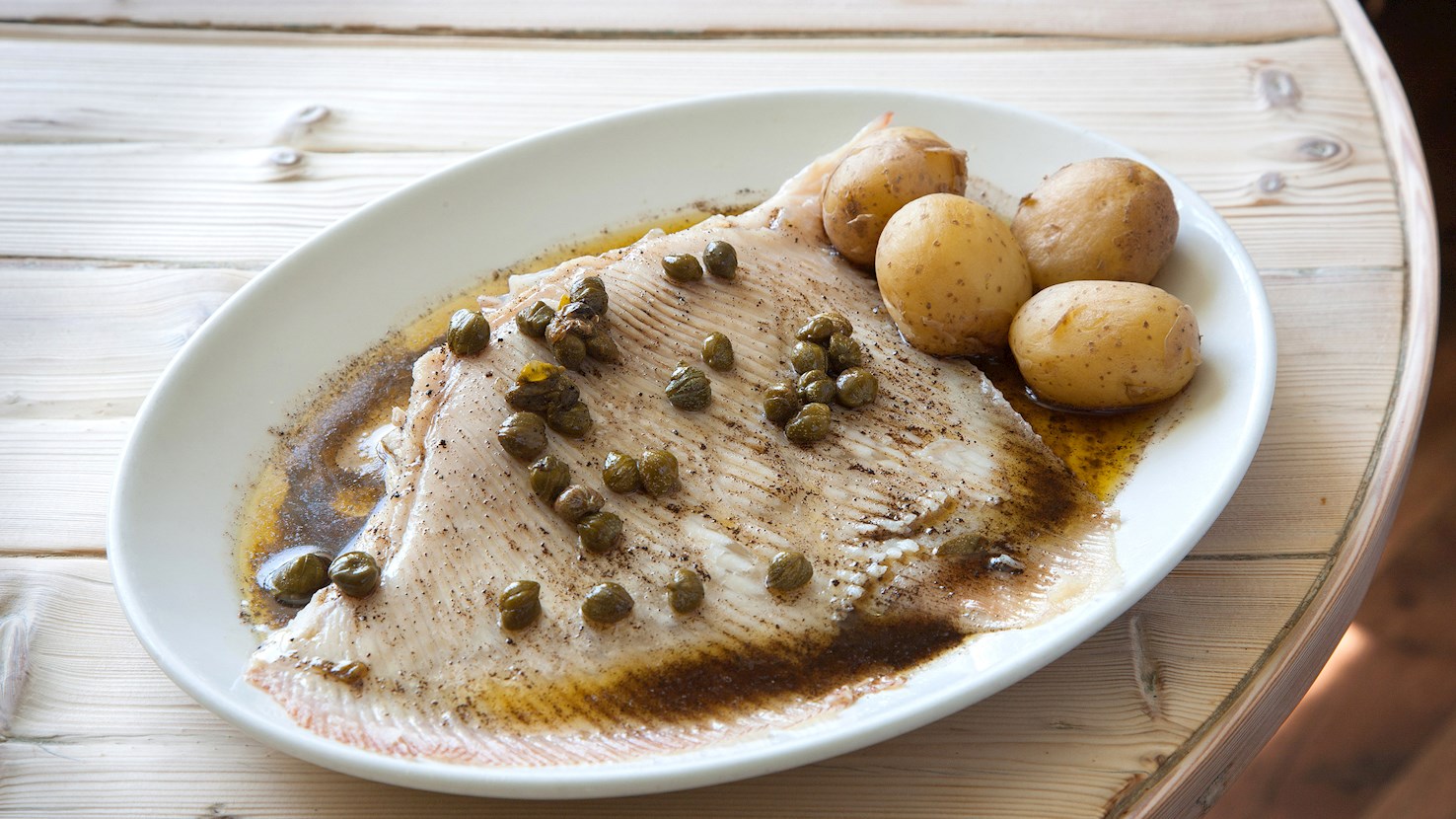
Skate in brown butter is a dish rooted in the country’s coastal cooking, where skate wings have long been valued as part of the daily catch. Along the Atlantic seaboard, from Kerry to Galway, fishermen would bring in skate, a fish less prized in markets than cod or salmon but well regarded locally for its tender flesh and mild flavor. The preparation with butter grew naturally out of Ireland’s dairy-rich culture, where high-quality butter has always been central to the kitchen, giving the dish a distinctly Irish character despite its resemblance to continental recipes. The way it is prepared in Ireland is straightforward. Skate wings are simmered gently in water or light stock, often with a hint of onion or bay to perfume the cooking liquid. Once the flesh is ready to slip easily from the cartilage, the fish is lifted onto plates and dressed with browned Irish butter that has been cooked to a nutty aroma. A splash of vinegar or lemon is added to cut through the richness, sometimes with capers or parsley if available, but the focus always remains on the butter and the fish. This dish is rarely served alone. In Irish homes and restaurants alike, it is placed alongside floury boiled potatoes, which soak up the sauce and make the meal complete. Bread and butter often appear at the table too, underscoring the centrality of dairy. The combination of fish and butter may seem simple, yet it carries the mark of Ireland’s ingredients: fresh Atlantic catch and some of the world’s richest butter. Unlike in continental versions, where skate in brown butter might be framed as a restaurant specialty, in Ireland it has historically been a homely, coastal dish, one that celebrates resourcefulness and respect for local produce. It remains a feature in seafood-focused restaurants today, particularly in areas close to fishing ports, and pairs well with Irish cider or even a stout, both of which bring a contrast to the richness of the butter.
Dublin Bay prawns with mayonnaise is a cold seafood dish originating from the east coast of Ireland, centered around the use of langoustines, locally known as Dublin Bay prawns. The dish consists of boiled or steamed langoustines served chilled, accompanied by a simple mayonnaise or a light mayonnaise-based sauce. Dublin Bay prawns, though widely distributed across northern European waters, were first commercially identified and named in relation to the Dublin Bay area, where they were fished in abundance during the nineteenth and early twentieth centuries. As the city’s dining culture developed, local hotels and seafood establishments began featuring cold prawn dishes, following European service patterns that emphasized simple presentation of high-quality shellfish with minimal seasoning. The pairing of prawns and mayonnaise draws influence from French and British cold seafood plates, introduced into Irish cooking through hotels, ocean liners, and urban restaurants in the late Victorian and Edwardian eras. Dublin’s location as a port city with access to fresh shellfish encouraged chefs to adopt such preparations using local catch. By the mid-twentieth century, Dublin Bay prawns with mayonnaise had become a hallmark of refined yet uncomplicated Irish seafood dining, served in coastal restaurants and at formal luncheons. Preparation involves cooking whole langoustines in salted boiling water or lightly seasoned court bouillon for a few minutes until the shell turns bright pink and the meat firms. They are then drained and cooled rapidly, often in ice water, to retain texture. Once chilled, the prawns are shelled and arranged neatly on a plate, sometimes leaving a few heads or tails for presentation. The mayonnaise is prepared from egg yolks, mustard, oil, vinegar or lemon juice, and salt, whisked to a smooth emulsion. Some versions include herbs or a small amount of mustard powder for sharper flavor. The finished dish is served cold, with the prawns lightly coated or accompanied by the mayonnaise on the side. The goal is to highlight the natural sweetness and delicacy of the langoustine meat rather than to disguise it with strong seasoning. Dublin Bay prawns with mayonnaise are eaten throughout Ireland, particularly in seafood restaurants in Dublin, Howth, and Dalkey, where fresh langoustines are readily available. The dish pairs best with crisp, light wines such as Sauvignon Blanc or Chablis, or with a dry sparkling wine. For non-alcoholic options, sparkling water with lemon or a cold herbal tea provides a similar refreshing contrast.
Langoustine bisque is a refined seafood soup made from Dublin Bay prawns, the local name for langoustines caught off the Irish coast. These crustaceans, prized for their sweet, delicate meat, are landed in ports such as Howth and Dun Laoghaire, making them a staple ingredient in Dublin’s coastal and city restaurants. The dish represents a careful adaptation of continental bisque techniques to Irish seafood, shaped by the availability of exceptionally fresh shellfish from the Irish Sea. As Dublin developed a modern culinary scene through the late twentieth century, chefs began to elevate regional produce through classical French methods, and the langoustine bisque became one of the defining examples of this approach, combining Irish ingredients with precise European preparation. In a Dublin kitchen, the bisque typically begins with the shells and heads of fresh langoustines, which are roasted in butter until aromatic and lightly browned. They are simmered with finely chopped onions, carrots, leeks, and celery, along with tomato paste, herbs, and a measure of dry Irish white wine. The broth is slowly reduced, strained, and thickened with rice or a small roux before being blended to achieve a smooth, uniform texture. Cream is incorporated toward the end, along with a touch of Irish whiskey or brandy, an element that has become characteristic of the Dublin version, adding gentle warmth and complexity. The reserved langoustine meat is often poached separately and placed in the bowl before the bisque is poured over it, ensuring the meat remains tender and distinct from the broth. Langoustine bisque in Dublin pairs well with crisp, mineral-driven white wines such as Albariño or Loire Sauvignon Blanc, and also with lighter Irish craft lagers, which provide a subtle contrast to its smooth texture.
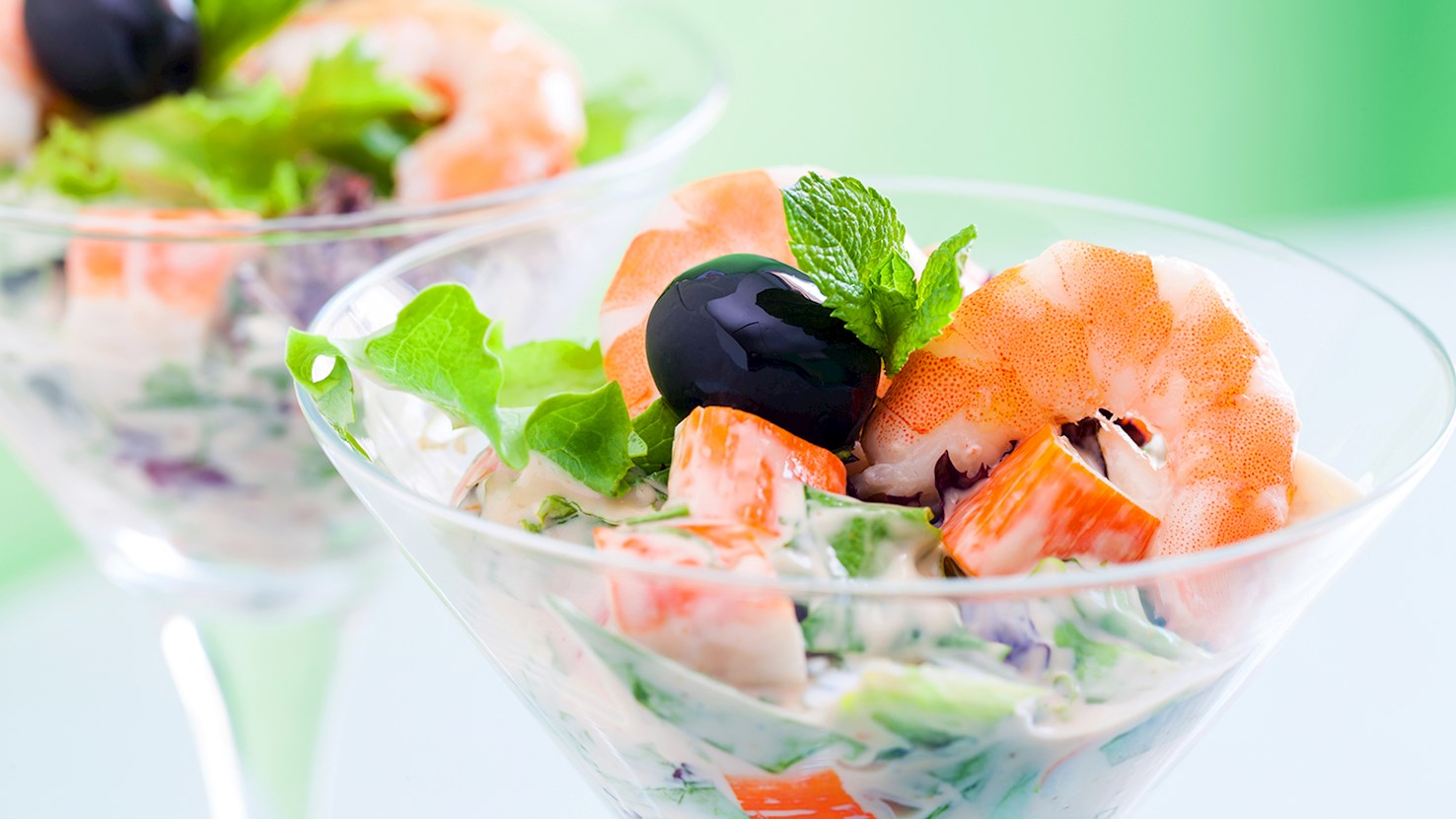
Langoustine salad is a cold seafood dish made from cooked langoustines, also known as Dublin Bay prawns or Norway lobsters, combined with light dressing and fresh vegetables or greens. It is a refined yet simple preparation that highlights the delicate, sweet flavor of the langoustine meat, often served as a starter or light main course. The dish is found in coastal regions across Europe, particularly in Ireland, France, and Scotland, where langoustines are fished from the cold waters of the North Atlantic and the Irish Sea. In Ireland, it is especially associated with Dublin and nearby coastal towns, where the catch is landed fresh and prepared soon after. Preparation begins with whole langoustines, which are boiled or steamed for a few minutes in salted water or lightly seasoned stock until just cooked through. They are then cooled rapidly in ice water to preserve firmness and color. The shells are removed, leaving the tail meat intact. The salad base typically includes soft lettuce varieties such as butterhead or mixed leaves, sometimes with cucumber, tomato, or avocado. The dressing can vary but usually consists of a light mayonnaise, lemon vinaigrette, or a mix of both, flavored with herbs such as chervil, parsley, or dill. The langoustine meat is arranged on the greens and coated lightly with the dressing rather than mixed heavily, ensuring the shellfish remains the focus of the dish. In some versions, a few whole langoustines are left in the shell for presentation. Langoustine salad is eaten across Ireland, especially in restaurants and hotels along the coast where shellfish is abundant. It is often served as a first course at formal meals or as a light summer dish. It pairs well with crisp, mineral-driven white wines such as Muscadet, Chablis, or Sauvignon Blanc, which complement the shellfish’s natural sweetness. A dry rosé or sparkling wine also works well, while a non-alcoholic pairing such as sparkling water with lemon or a cold herbal infusion suits more casual dining.
Garlic butter Dublin Bay prawns is a seafood dish made from langoustines, locally known in Ireland as Dublin Bay prawns, cooked with butter, garlic, and herbs. It is a warm, savory preparation that highlights the sweetness and delicacy of the shellfish while adding aromatic richness from the butter and garlic. The dish is most commonly associated with Dublin and coastal regions along Ireland’s east and west coasts, where langoustines are caught in cold, clean waters. It is served in restaurants, hotels, and homes as either a starter or a main course, depending on portion size. Dublin Bay prawns, despite the name, are not true prawns but a species of small lobster, Nephrops norvegicus, which has been commercially fished in Irish waters for centuries. The preparation of shellfish with butter and garlic reflects both Irish and broader European influences. Butter has long been a key ingredient in Irish cooking, produced in abundance through the country’s dairy industry, while garlic-based sauces and marinades became common in Irish restaurants during the twentieth century as French and Mediterranean techniques were adopted. The combination of these elements created a simple but refined way to serve fresh seafood without overwhelming its flavor. Garlic butter Dublin Bay prawns began appearing regularly on Irish menus during the mid-twentieth century, particularly in coastal restaurants and hotel dining rooms, as demand for lighter seafood dishes grew. Preparation begins with whole raw langoustines, which may be split lengthwise or left intact depending on presentation. They are briefly boiled, grilled, or sautéed, usually for only a few minutes to preserve the tenderness of the meat. In a separate pan, butter is melted and mixed with finely chopped garlic, lemon juice, and sometimes parsley or chives. The cooked prawns are coated or basted with this mixture, allowing the garlic butter to seep into the flesh and shell. When grilled, the butter is brushed over the prawns during cooking to create a light caramelization, while in pan-fried versions it forms a sauce that coats the meat. The dish is typically served hot, often accompanied by lemon wedges and crusty bread to absorb the flavored butter. It appears both as a casual seafood plate and as part of more formal dining menus, depending on presentation. Garlic butter Dublin Bay prawns pair best with crisp, dry white wines such as Sauvignon Blanc, Pinot Grigio, or Chablis, which cut through the richness of the butter. For a local pairing, a chilled Irish cider or a light lager also works well, balancing the sweetness of the prawns and the savory garlic sauce.
Seared scallops with black pudding is a celebrated modern British and Irish appetizer that masterfully pairs the delicate, oceanic sweetness of pan-fried king scallops with the deeply savory, iron-rich crumble of traditional spiced blood sausage. The undeniable brilliance of the preparation relies entirely on the extreme juxtaposition of its two foundational elements: massive, hand-dived scallops that offer a luxurious, butter-soft texture and profound maritime sweetness, set against thick rounds of premium regional black pudding—such as Scotland’s oatmeal-bound Stornoway or Ireland’s beef-suet Clonakilty—which provide an aggressively spiced, earthy weight. Execution demands flawless technique, requiring the bivalves to be thoroughly dried before hitting a screaming-hot skillet slicked with oil or clarified butter. This rapid, high-heat friction ensures a deeply caramelized, golden-brown crust while keeping the interior exquisitely tender and barely warm. In the same pan, the blood sausage is fried until its edges are shatteringly crisp, absorbing the rich, residual pan juices to create a hearty, texturally satisfying base for the seafood. Because this iconic combination is so inherently rich, chefs almost universally incorporate a vibrant, balancing element to cut through the heavy fats, typically plating the seared scallop and crumbly pudding atop a bright smear of minted pea purée, a tart green apple compote, or a silky cauliflower velouté. Eaten together, the crunch of the spiced sausage, the yielding meat of the scallop, and the acidic pop of the vegetable bridge create a dynamic, unforgettable bite that perfectly encapsulates the evolving brilliance of modern British and Irish gastronomy.
Dublin Lawyer is a rich and indulgent lobster dish, particularly associated with the city of Dublin and the country’s coastal culinary heritage. It consists of lobster meat cooked in a sauce of butter, cream, and Irish whiskey, creating a luxurious and deeply flavorful dish that highlights the abundance of seafood from Ireland’s waters and the nation’s fondness for whiskey as a cooking ingredient. Its origins can be traced back to the 19th century, when lobster was more widely accessible in Ireland than it is today and often appeared in upper-class households and fine dining establishments. The dish’s curious name is believed to refer to the stereotype of Dublin lawyers of the time, wealthy and fond of whiskey and rich living, reflecting both the opulence of the ingredients and the social context in which it was first enjoyed. Preparation begins with freshly cooked lobster, usually boiled or steamed before the meat is carefully removed from the shell. The meat is then sautéed in melted butter, often with a touch of shallot or onion for added depth, before being combined with cream and a generous splash of Irish whiskey. The sauce reduces gently to a velvety consistency that coats the lobster, which is then often returned to the shell for serving. Some variations flambé the whiskey to intensify its flavor and add a touch of theatre to the cooking process. The result is a rich, aromatic dish that balances the sweetness of lobster with the depth of dairy and the distinctive warmth of whiskey. Dublin Lawyer is typically served as a centerpiece of a special meal, often accompanied by simple sides that allow its flavors to shine. Crusty bread or boiled potatoes are common, and a crisp green salad or lightly cooked seasonal vegetables may round out the plate. It appears most frequently in fine dining restaurants and at festive occasions, particularly around Christmas or on celebratory menus in Ireland. Wine pairings tend to favor crisp whites such as Chablis or Sauvignon Blanc, which cut through the richness, though some prefer the continuity of Irish whiskey served alongside it.
TasteAtlas food rankings are based on the ratings of the TasteAtlas audience, with a series of mechanisms that recognize real users and that ignore bot,
nationalist or local patriotic ratings, and give additional value to the ratings of users that the system recognizes as knowledgeable.
For the “Top 9 Irish Seafood Dishes” list until July 15, 2026, 61 ratings were recorded, of which 56 were recognized by the system as legitimate.
TasteAtlas Rankings should not be seen as the final global conclusion about food. Their purpose is to promote excellent local foods,
instill pride in traditional dishes, and arouse curiosity about dishes you haven’t tried.