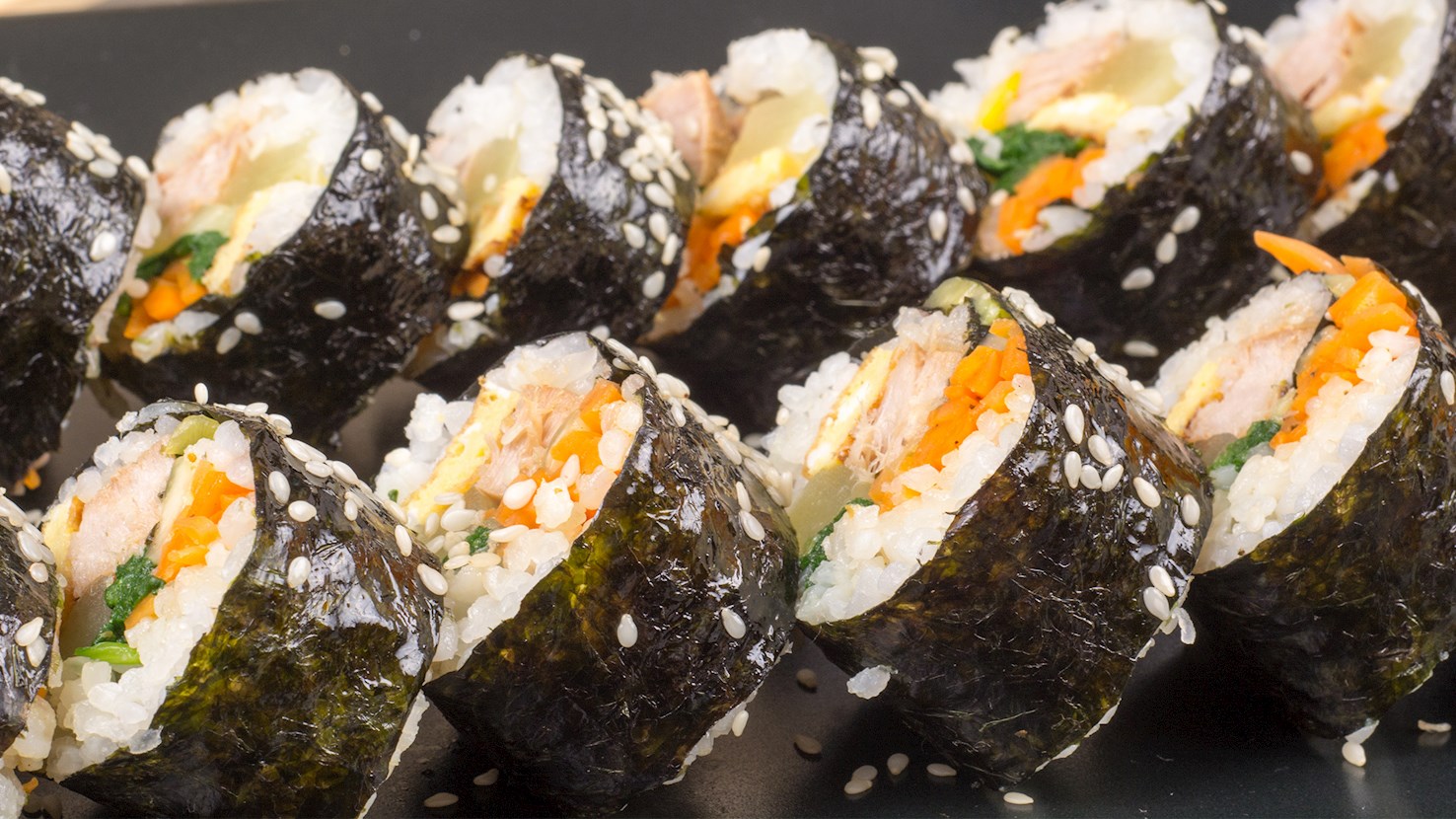
This gimbap (Korean rice roll) is made with canned tuna. Apart from rice and fish, the fillings may include other ingredients that are typically used in gimbap such as fresh or pickled vegetables, eggs, or fish cakes, while the tuna is often mashed and then combined with mayonnaise, mustard, and spices. The roll is traditionally wrapped in toasted seaweed, and it is served sliced into small, bite-size pieces.
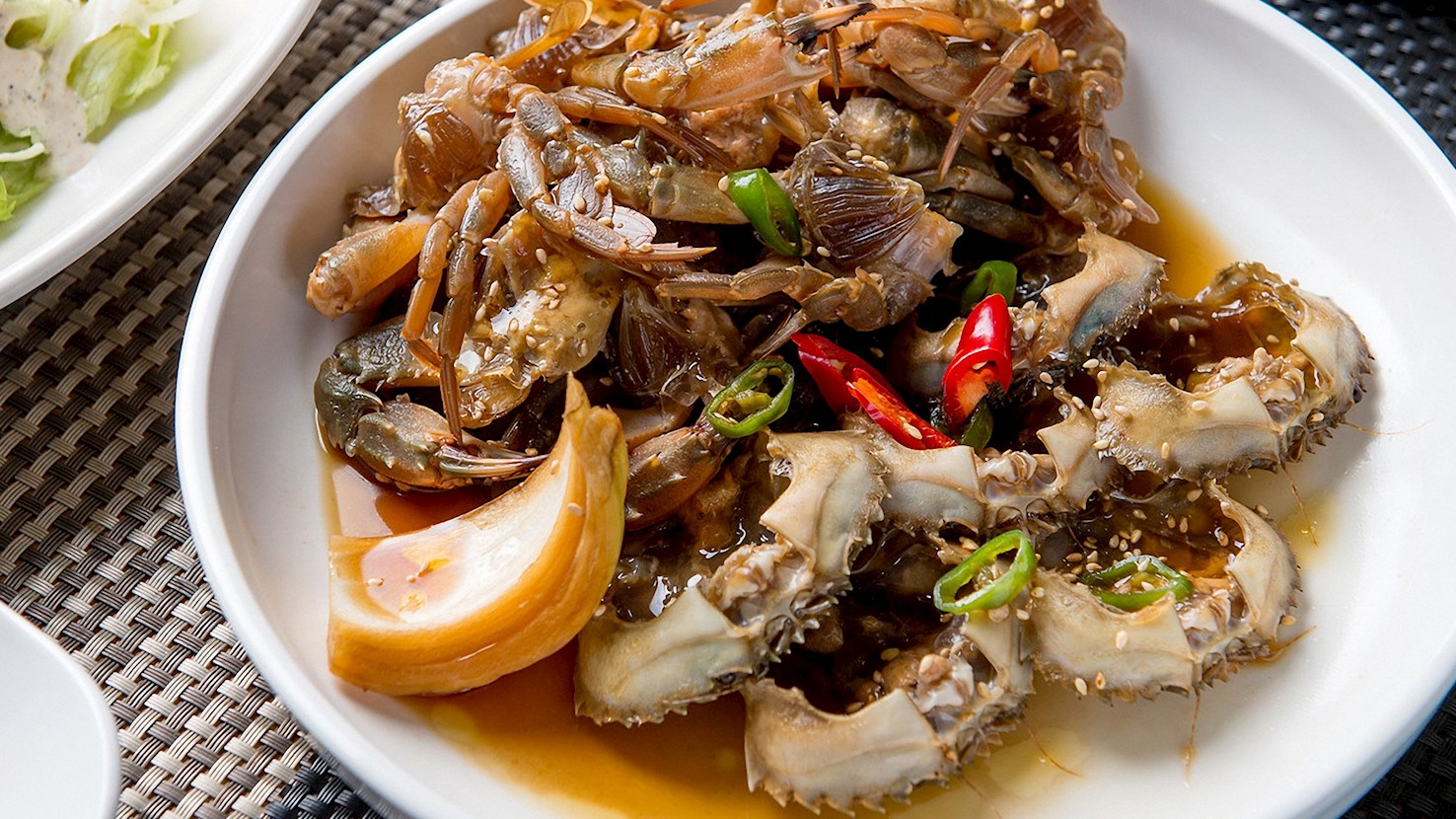
Gejang is raw crab seasoned and marinated in Korea, most commonly in an aromatic soy-sauce brine or a red chili mixture, then eaten with steamed rice. The flesh stays soft and translucent, with a slippery, almost creamy texture that differs sharply from the firm flakes of steamed crab. Ganjang gejang, the soy-marinated form, emphasizes the crab’s sweetness beneath a salty, savory seasoning; yangnyeom gejang coats cut pieces in a thicker mixture of chili flakes, garlic, and other seasonings. Both are served in the shell, and roe-bearing females are especially prized for the orange roe and rich contents beneath the carapace. Gejang developed through Korean methods of salting and preserving seafood, though its inventor and birthplace remain unknown. By the late Joseon period, crab was being preserved in both soy sauce and salt, and older versions could be substantially saltier than those commonly served now. Freshwater crabs, including mitten crabs known as chamge, had an important place in these earlier practices. Many contemporary versions use marine crabs and a milder marinade, with refrigeration and a short holding period replacing the prolonged preservation expected from a heavily salted product. The distinction matters: a bowl of modern gejang is perishable raw seafood, not a shelf-stable preserve. Soy sauce is fermented, but that doesn't mean every serving of crab has undergone long fermentation. The crab most closely associated with present-day gejang is kkotge, literally “flower crab,” a swimming crab abundant along Korea’s western coast. Incheon and the coastal areas of South Chungcheong Province are particularly associated with it. Spring females are valued for their developed roe, while autumn crabs are sought for their substantial meat. Male crabs are also used, and a good serving does not depend entirely on the presence of roe. The species, size, season, and condition of the crab all affect how much flesh it contains and how it responds to the marinade. For ganjang gejang, the shells are thoroughly scrubbed, and the crabs are drained before being submerged in seasoned brine. Cleaning and opening practices vary, with some methods leaving the crab largely intact until serving. The marinade combines soy sauce with water and aromatics such as onion, garlic, ginger, and chili. Kelp may add savory depth, while apple, Asian pear, sugar, or a little rice wine can soften the saltiness and contribute sweetness. These additions vary by household and restaurant; the essential point is a brine that seasons the crab without making its flesh taste only of soy sauce. The liquid is usually boiled separately to extract the aromatics, then cooled completely before it touches the crab. This preserves the raw texture rather than partially cooking the surface. The crabs remain submerged under refrigeration while the seasoning penetrates, commonly for a few days. Some methods drain the brine, boil it again, cool it, and return it to the crab. That repeated treatment manages the marinade, not the crab itself. Longer soaking isn't necessarily better: the meat can become excessively salty and lose its structure. Yangnyeom gejang follows a different approach. The upper shell is removed, the gills are discarded, and the body is cut in half or into quarters so the seasoning reaches the exposed flesh. Gochugaru, Korean red chili flakes, supplies the red color and much of the heat, usually alongside soy sauce, garlic, ginger, and a sweetener. Scallions and sesame seeds are common additions, while some versions include grated fruit or plum syrup. Gochujang isn't required; many mixtures use chili flakes instead of fermented chili paste. The coating clings to the shell and cut surfaces, delivering a more immediate chili-and-garlic flavor than the liquid marinade in ganjang gejang. It generally needs less marinating time and is also kept cold. Regional differences depend as much on the crab as on the seasoning. In Yeosu, on the southern coast, dolgejang uses smaller, hard-shelled crabs called dolge and is closely associated with baekban, a set meal of rice, soup, and side dishes. The city’s Bongsan neighborhood has many restaurants specializing in these meals, often serving both soy-marinated and spicy crab. Elsewhere, larger kkotge may serve as the centerpiece of a more expensive restaurant, while chamgejang preserves the association with freshwater mitten crabs. At the table, the crab is separated into manageable sections and the soft flesh extracted with fingers, chopsticks, or suitable shell-cracking utensils. Hard shell fragments should remain on the plate. A particularly familiar way to finish ganjang gejang is to spoon warm rice into the upper shell and mix it with the roe, rich crab contents, and a little marinade. Roasted gim, or seaweed sheets, can wrap small mouthfuls. Gejang’s nickname, bap doduk, means “rice thief” and reflects its reputation for encouraging another bowl of rice, a useful clue to how it is meant to be eaten: in concentrated bites alongside a relatively plain staple. Light soup and vegetable banchan cut through the salt and richness. Water or unsweetened barley tea suits the meal, while soju is a common pairing when the crab is served with drinks.
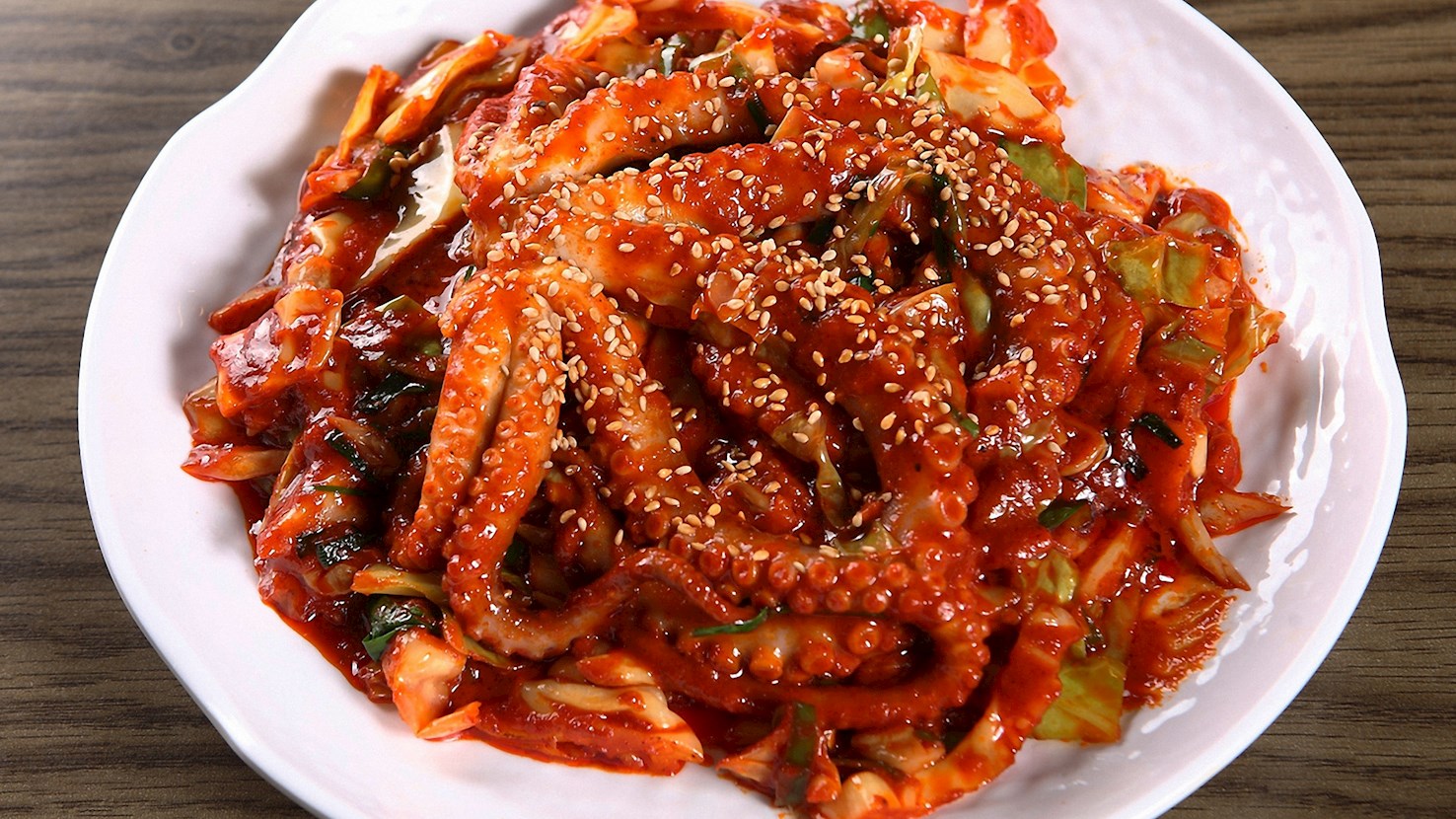
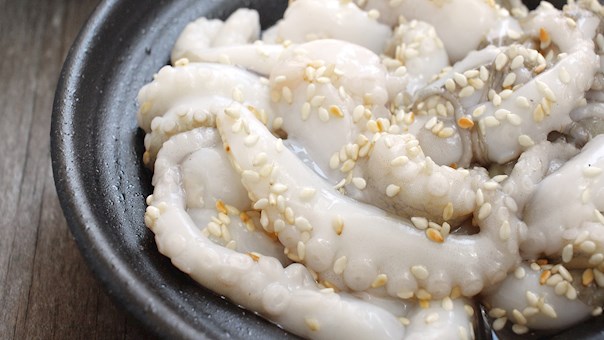
Stir-fried octopus is a classic Korean banchan (side dish). It is usually prepared with a small-sized octopus that is sliced and then fried in a flavorful combination of garlic, ginger, and gochujang chili paste, while other additions include sliced vegetables such as onions, scallions, cucumbers, chili peppers, or zucchinis. The dish is usually served sprinkled with roasted sesame seeds and goes exceptionally well with hearty Korean soups and stews.
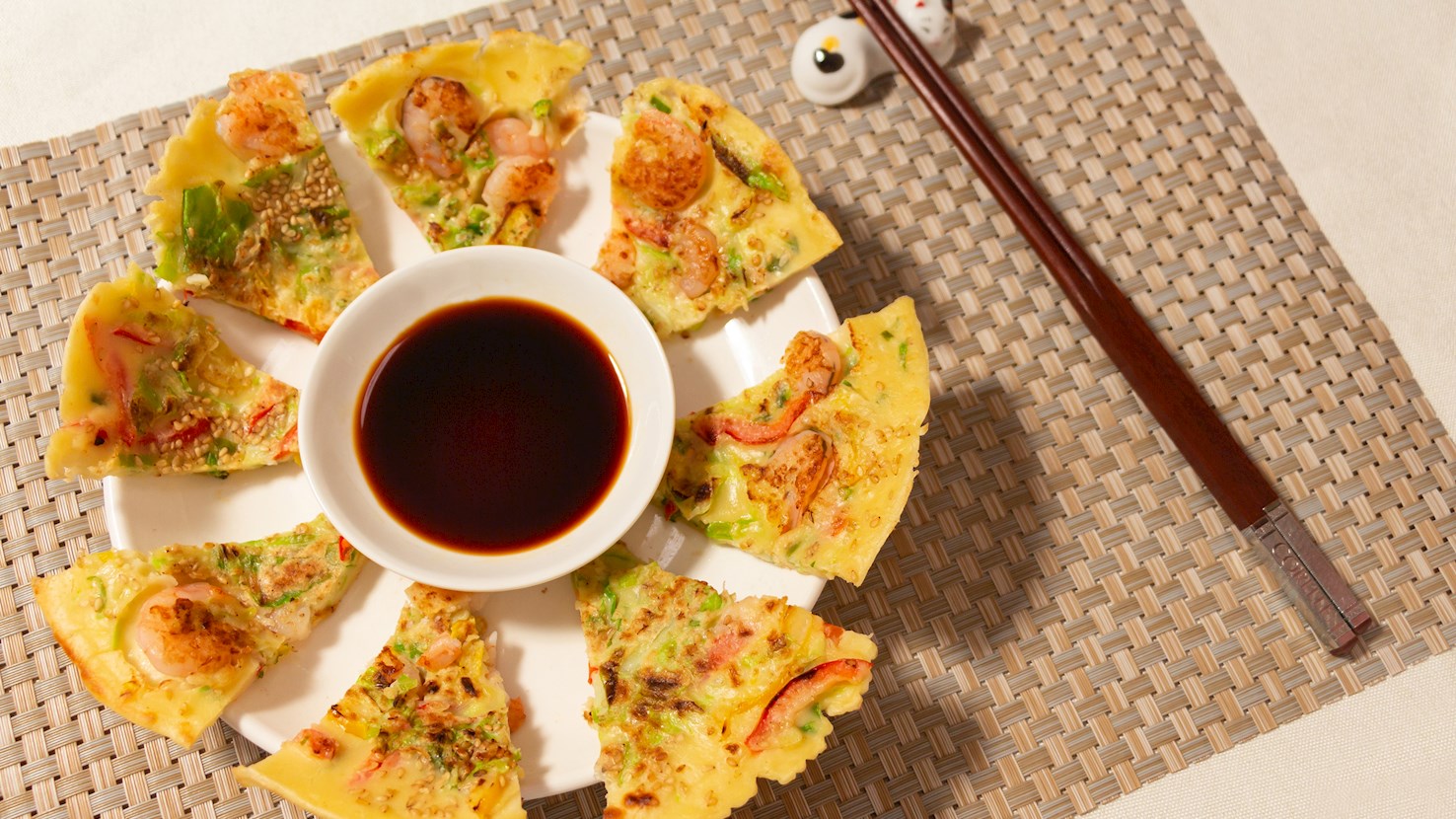
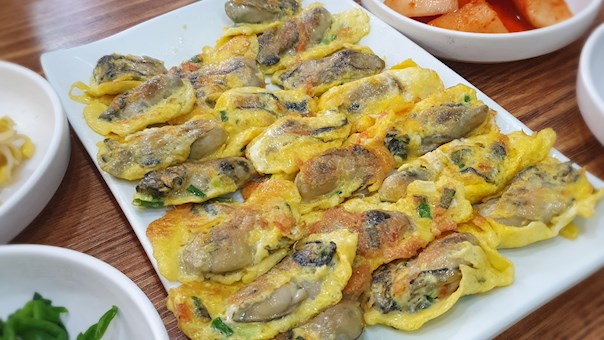
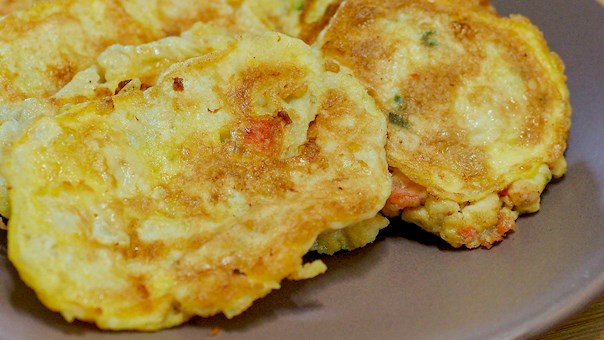
Haemuljeon is a traditional dish originating from South Korea. This type of jeon (pan-fried battered food) is made with a combination of seafood, scallions, eggs, flour, and oil. Seafood such as mussels, oysters, squid, shrimp, and clams are cut into bite-sized pieces and then mixed with the scallions, eggs, and flour. Once battered, the mixture is pan-fried in hot oil on both sides until the pancake turns golden brown on both sides. Haemuljeon is served hot with a dipping sauce on the side. The dipping sauce usually consists of soy sauce, vinegar, red pepper flakes, sugar, and black pepper.
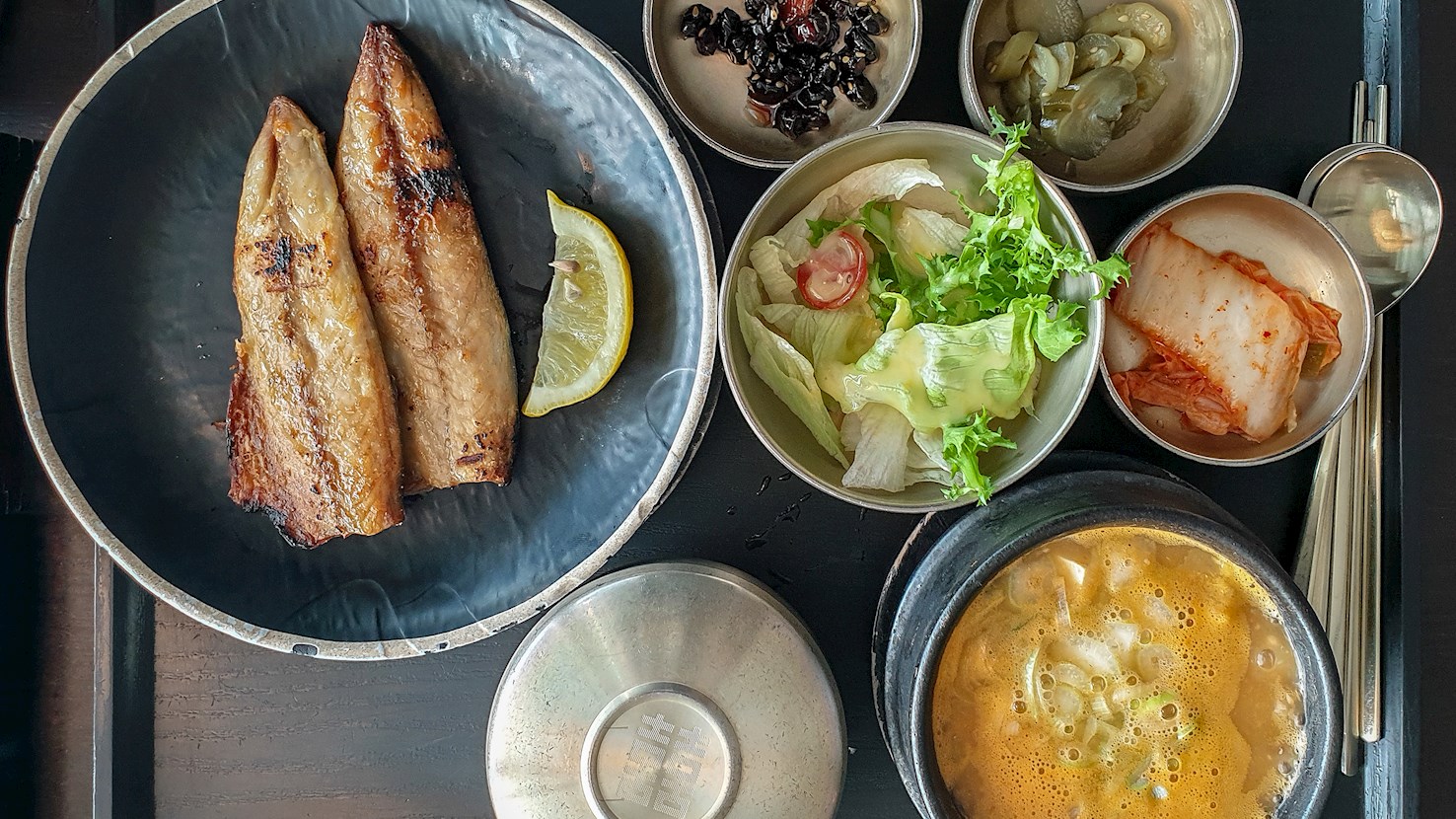
Godeungeo gui is a traditional fish dish originating from South Korea. The dish is made with a combination of mackerel (skin-on, head and tail removed), vegetable oil, salt, and lemon wedges. The fish is seasoned with salt on both sides, rinsed, dried, and then pan-fried, grilled over an open flame, or placed under a broiler. The mackerel is grilled, broiled, or fried on both sides until the skin becomes slightly crispy. Before serving, the fish is sprinkled with lemon juice and the dish is ready to be enjoyed. If desired, add a bit of grated ginger over the top of the mackerel as well.
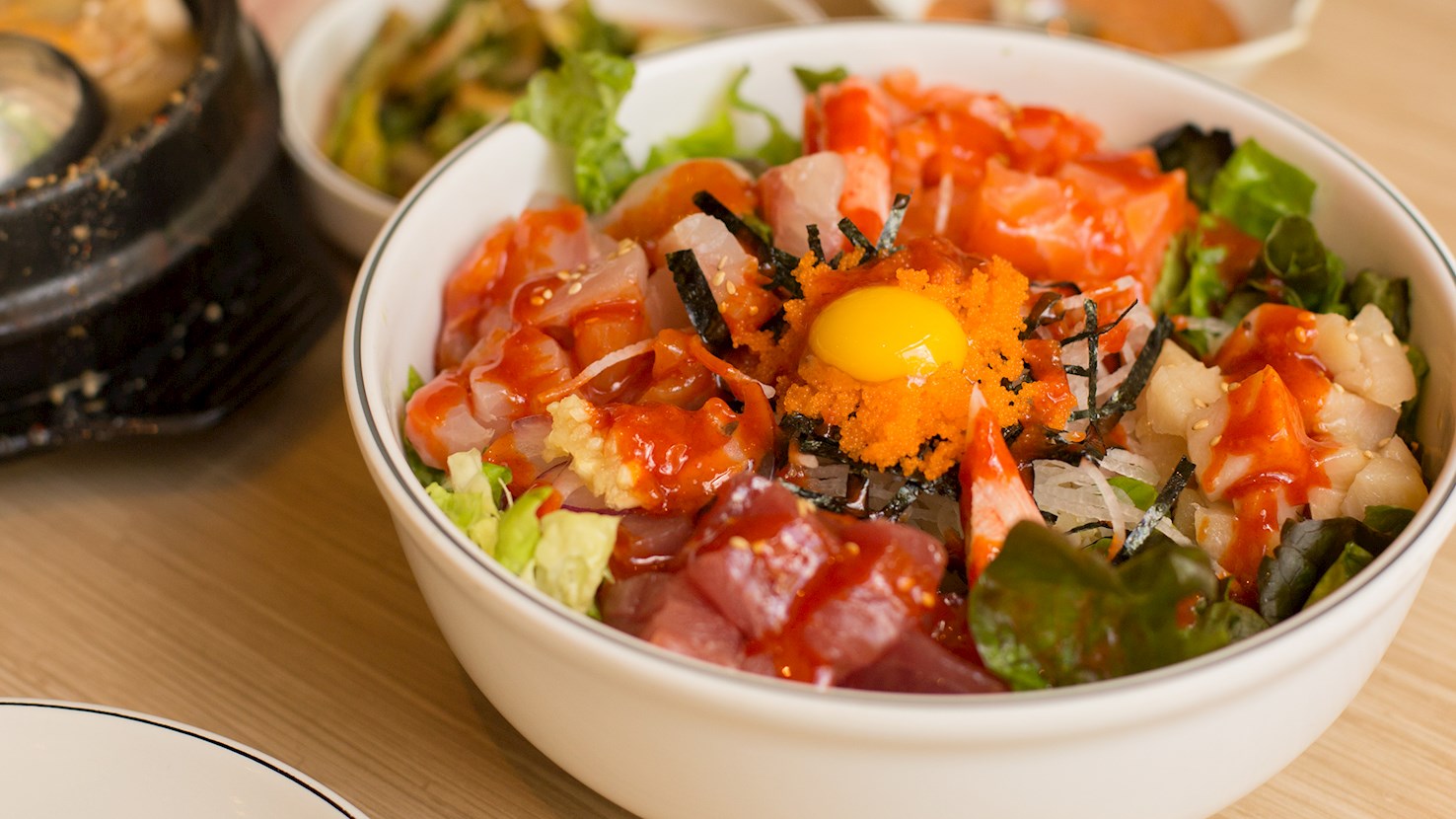
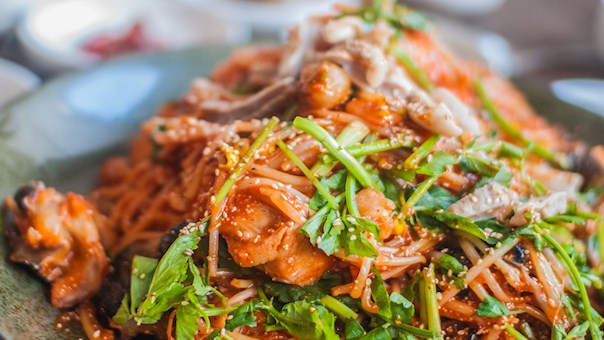
Hoedeopbap combines raw fish, steamed rice, and plenty of crisp vegetables in a Korean rice bowl dressed with a sweet, vinegary chili sauce. The fish may be sliced into short strips or cut into small cubes, with lettuce, cucumber, and aromatic perilla leaves providing much of the bowl’s volume. Before eating, the ingredients are mixed so that the rice picks up the dressing and each spoonful contains some fish and greens. The contrast is immediate: soft rice, cool fish, crunchy vegetables, and a sauce that supplies heat, acidity, and sweetness together. Namewise, hoe refers to raw fish, while deopbap means rice covered with a topping. It is also commonly described as raw-fish bibimbap because mixing is central to how it is eaten. A precise invention date, individual creator, or single birthplace is not securely established. Its place in Korean food is easier to explain through two established eating practices: serving sliced raw seafood as hoe and combining rice with vegetables and seasonings in one bowl. Hoedeopbap brings those practices together, but their existence does not establish an exact chronology for the assembled meal. It is especially associated with seafood restaurants and coastal eating, although it is available well beyond the coast. No particular fish is required. Flatfish, rockfish, sea bream, tuna, and salmon all appear, depending on the restaurant, local supply, and the style of bowl. Lean white fish adds a clean flavor and a slightly resilient bite, while salmon offers a softer, richer mouthfeel. Tuna can provide a firmer, meatier texture. A bowl may contain a single species or a mix, and changing the fish alters the meal's character without changing its basic structure. The pieces need to be small enough to combine comfortably with rice and shredded vegetables; large slices that work well on a separate platter of hoe are less convenient once everything is stirred together. Fish selected and handled for raw consumption is kept chilled until assembly, and the dressing is added near serving rather than used as a prolonged marinade. The vinegar supplies flavor, not a cooking step. Rice provides the substantial base. Korean short-grain rice is commonly used because its tender, lightly sticky grains hold together on a spoon while still dispersing through the vegetables. It is generally plain steamed rice, with the dressing providing acidity rather than mixing it into the rice as sushi seasoning. Warm rice can be paired with the cool toppings, but excessive heat would wilt the greens and change the delicate surface of the fish. The bowl consequently depends more on careful assembly than on complicated last-minute cooking. Vegetables should be well-drained so their water doesn't thin the sauce or collect under the rice. Lettuce is sliced into manageable ribbons, cucumber into fine strips, and firmer additions such as carrot or cabbage are cut thinly enough to mix evenly. Onion, scallions, and radish sprouts can add sharper flavors. Perilla leaves, called kkaennip, are particularly useful for their pronounced herbal aroma. Sometimes loosely translated as sesame leaves, they come from a different plant and have their own flavor. These vegetables aren't just decoration around a central portion of fish; their quantity and texture are essential to the finished bowl. Chogochujang, often shortened to chojang, supplies the main seasoning. It combines gochujang, the fermented red chili paste, with vinegar and a sweetener, producing a dressing that is sharper and more fluid than the paste alone. Garlic, soy sauce, or other seasonings may be added, but recipes differ, and the sauce should remain easy to distribute. A little toasted sesame oil rounds out the acidity with a nutty aroma, while sesame seeds and shredded gim, roasted seaweed, are common finishing touches. Add the dressing gradually to preserve the fish’s flavor; too much can make every component taste primarily of chili paste and vinegar. Although the ingredients may arrive neatly arranged, that arrangement is temporary. Mixing brings the dressing down into the rice and distributes the leaves and fish rather than leaving a heavily seasoned top over an unseasoned base. Hoedeopbap differs from many familiar bibimbap bowls by emphasizing raw seafood and uncooked salad vegetables, though bibimbap itself allows considerable variation. Seafood versions can also include squid, oysters, abalone, or sea pineapple, each contributing a different texture and marine flavor. These additions are meaningful variations rather than compulsory ingredients, and the menu often identifies the featured seafood. Hoedeopbap is usually a complete lunch or dinner, served in a wide bowl with room to mix, sometimes with the rice or sauce served separately. Kimchi, a few vegetable side dishes, and a light soup may accompany it, but a large spread is unnecessary. A spoon works well for the mixed rice, while chopsticks help you pick up longer vegetable or fish pieces. Water or unsweetened barley tea goes well with the tangy dressing; a small serving of soju also fits when the bowl is part of a leisurely seafood meal.
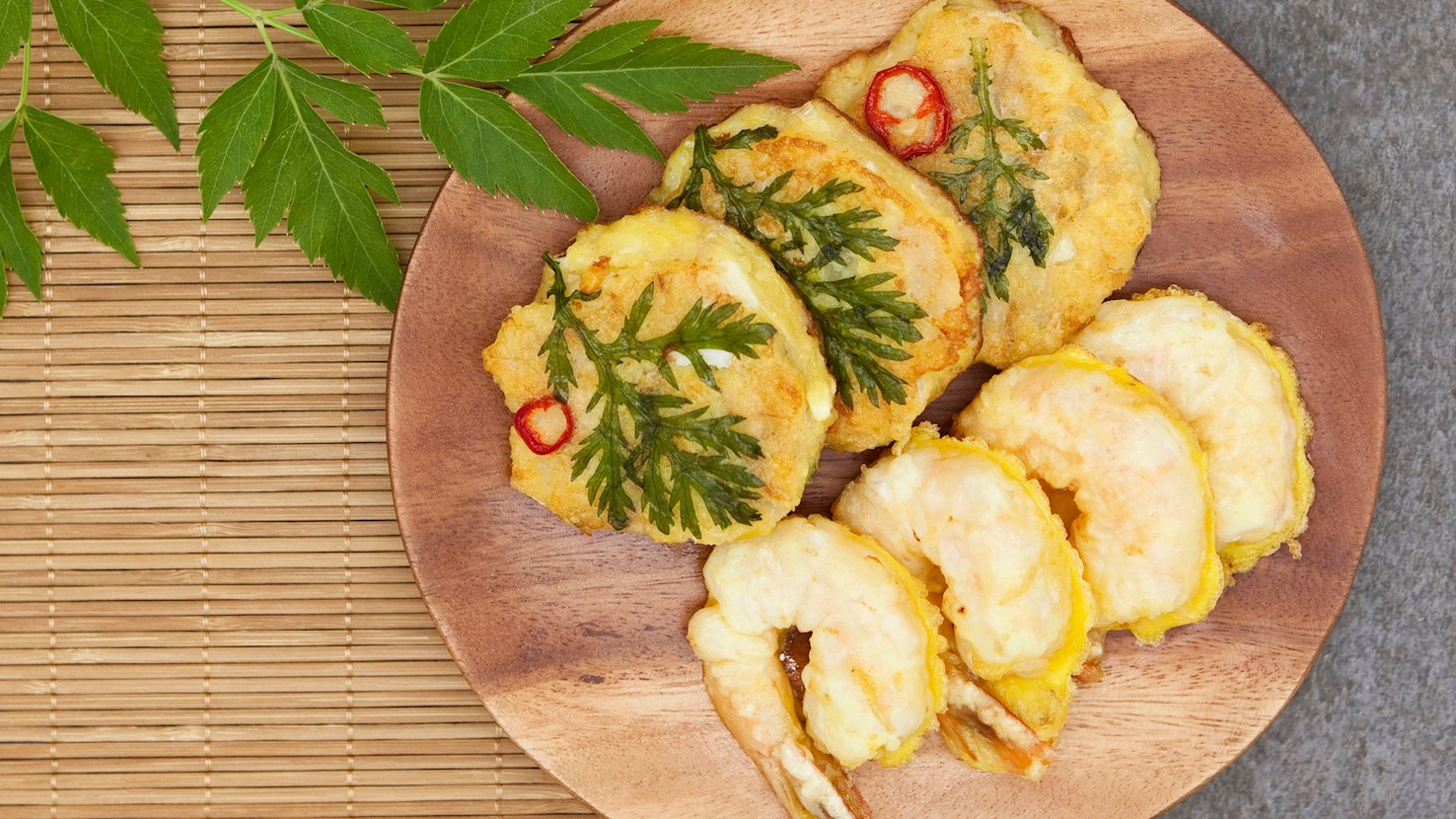
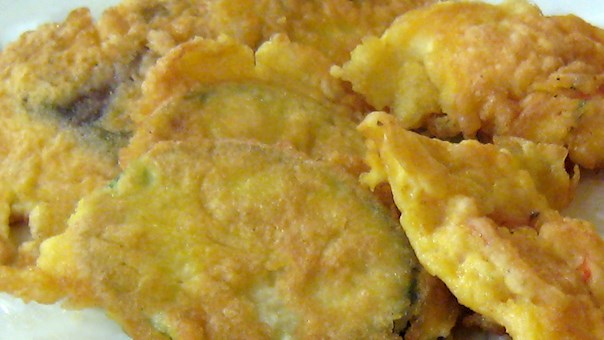
Saewoojeon is a traditional dish originating from South Korea. This type of jeon (pan-fried battered food) is made with a combination of shrimps, flour, eggs, salt, white pepper, and oil. The shrimps are cleaned and then sprinkled with salt and pepper, coated with flour, and dipped in beaten eggs. Once battered, they are pan-fried in hot oil on both sides until golden brown. Saewoojeon is served hot as a snack or an appetizer with a dipping sauce on the side.
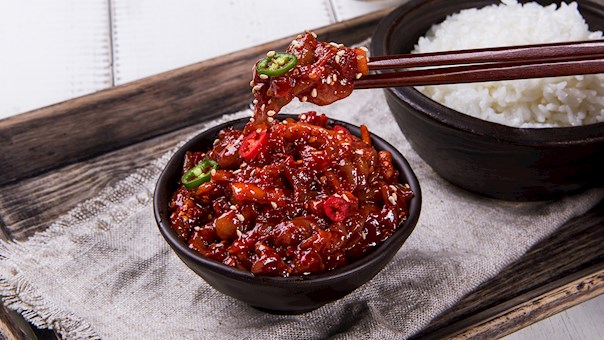
This popular Korean snack consists of thin strips of dried squid (ojingeo chae) that are stir-fried together with gochujang-based chili paste and various additions such as garlic, soy sauce, or rice wine. The spicy snack is often served at bars and goes especially well with beer, but it is also commonly enjoyed as an accompaniment to rice or other Korean dishes. It is typically served in small bowls and comes garnished with roasted sesame seeds. Ojingeo chae muchim is a similar dish in which the thin squid strips are merely coated in a spicy paste.
Maeutang is a spicy Korean fish stew that is usually made with freshwater or saltwater fish such as red snapper, pollock, cod, monkfish, or sea bass. Traditionally, a whole fish is used in the dish, including the head and the bones. The fish is cut into pieces and is then simmered in an anchovy-based broth together with vegetables and occasionally tofu, while the whole dish is usually spiced with gochujang chili paste and chili pepper flakes. In some restaurants, the guests are often allowed to choose the fish from the aquarium, which will eventually be used in their stew. Although the term maeuntang roughly translates merely as spicy stew, it is usually used to denote this fish-based variety. The perfect accompaniment to this flavorful, spicy stew is soju—traditional Korean spirit.
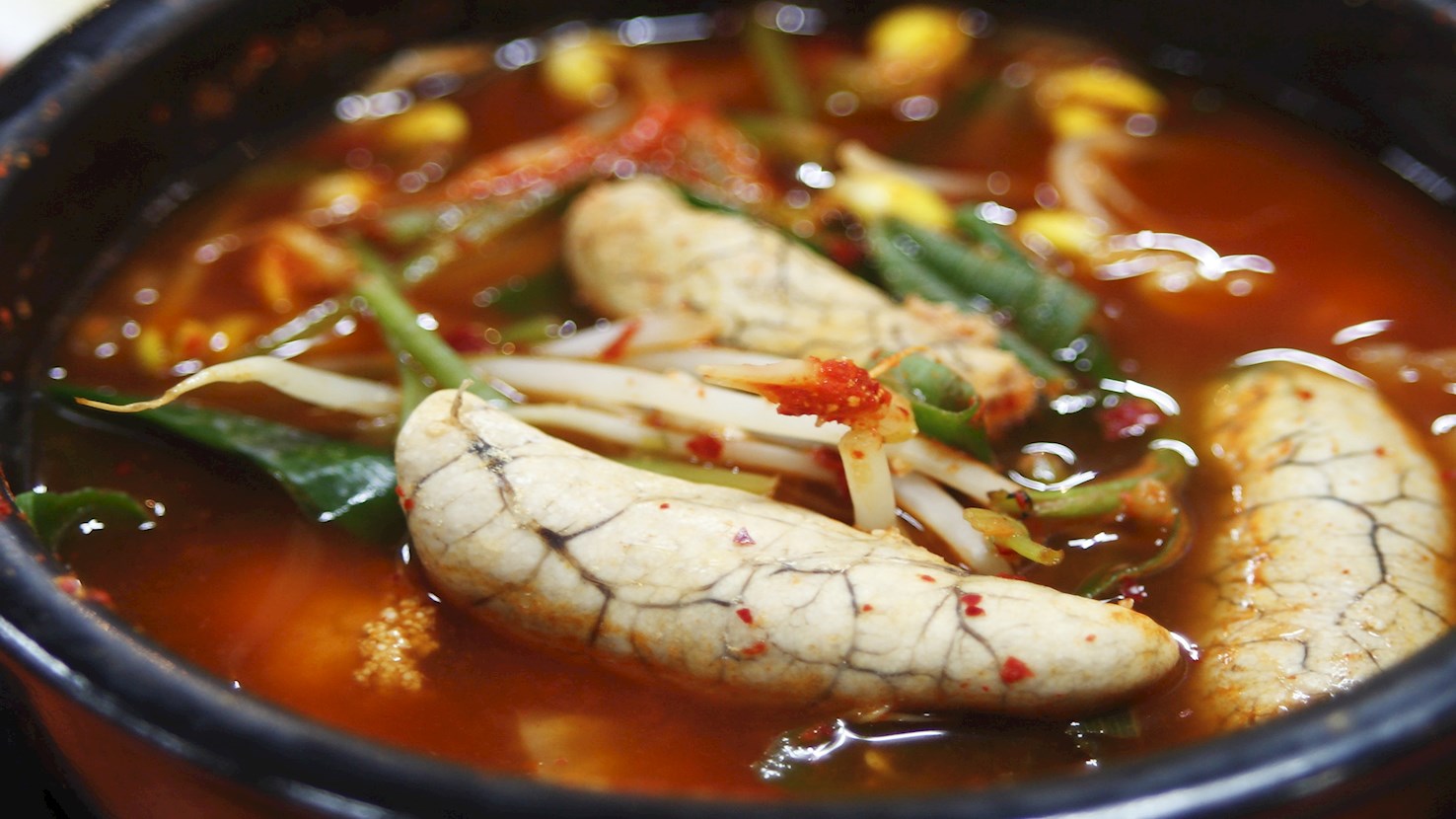
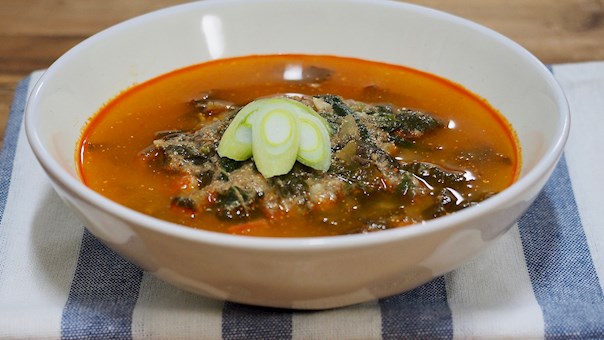
The star ingredient in this hearty Korean soup is fresh or marinated pollack roe (myeongnan). The soup consists of a spicy broth, typically dashi-based, which is seasoned with gochujang paste. Apart from the roe, the soup usually incorporates sliced daikon radish, scallions, bean sprouts, and occasionally tofu or other additions. It is traditionally served with rice on the side, and it pairs well with soju—traditional Korean spirit.
TasteAtlas food rankings are based on the ratings of the TasteAtlas audience, with a series of mechanisms that recognize real users and that ignore bot,
nationalist or local patriotic ratings, and give additional value to the ratings of users that the system recognizes as knowledgeable.
TasteAtlas Rankings should not be seen as the final global conclusion about food. Their purpose is to promote excellent local foods,
instill pride in traditional dishes, and arouse curiosity about dishes you haven’t tried.








What People Say