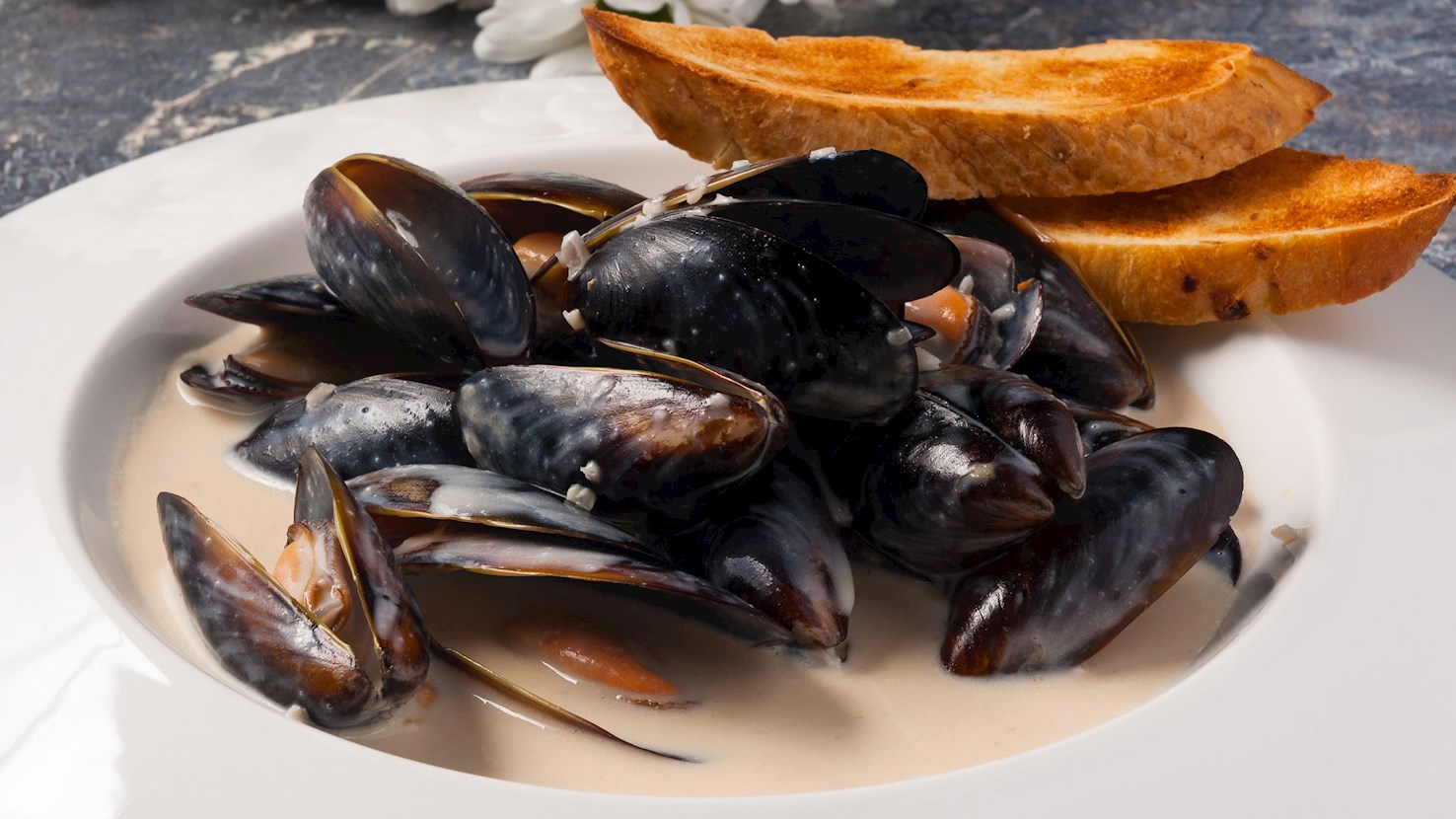
Moules à la crème Normande is a traditional mussel dish originating from Normandy. It's made with mussels in a creamy sauce consisting of butter, cream, onions, garlic, shallots, cider, parsley, salt, and pepper. The onions, shallots, and parsley are sautéed in butter, then mixed with the washed mussels. The combination is covered with cider and seasoned with pepper, then cooked until the mussels open. They're then removed, and the sauce is reduced and mixed with the cream. Finally, the mussels are mixed with the sauce, and the dish is then usually served with accompaniments such as fries or bread for mopping up the juices.
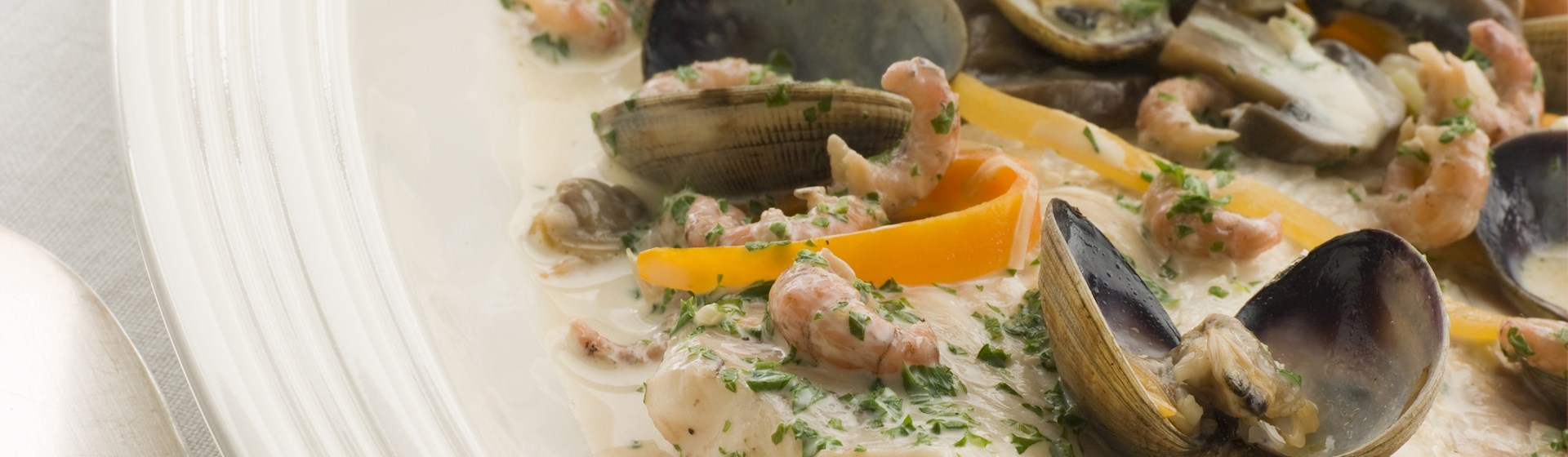
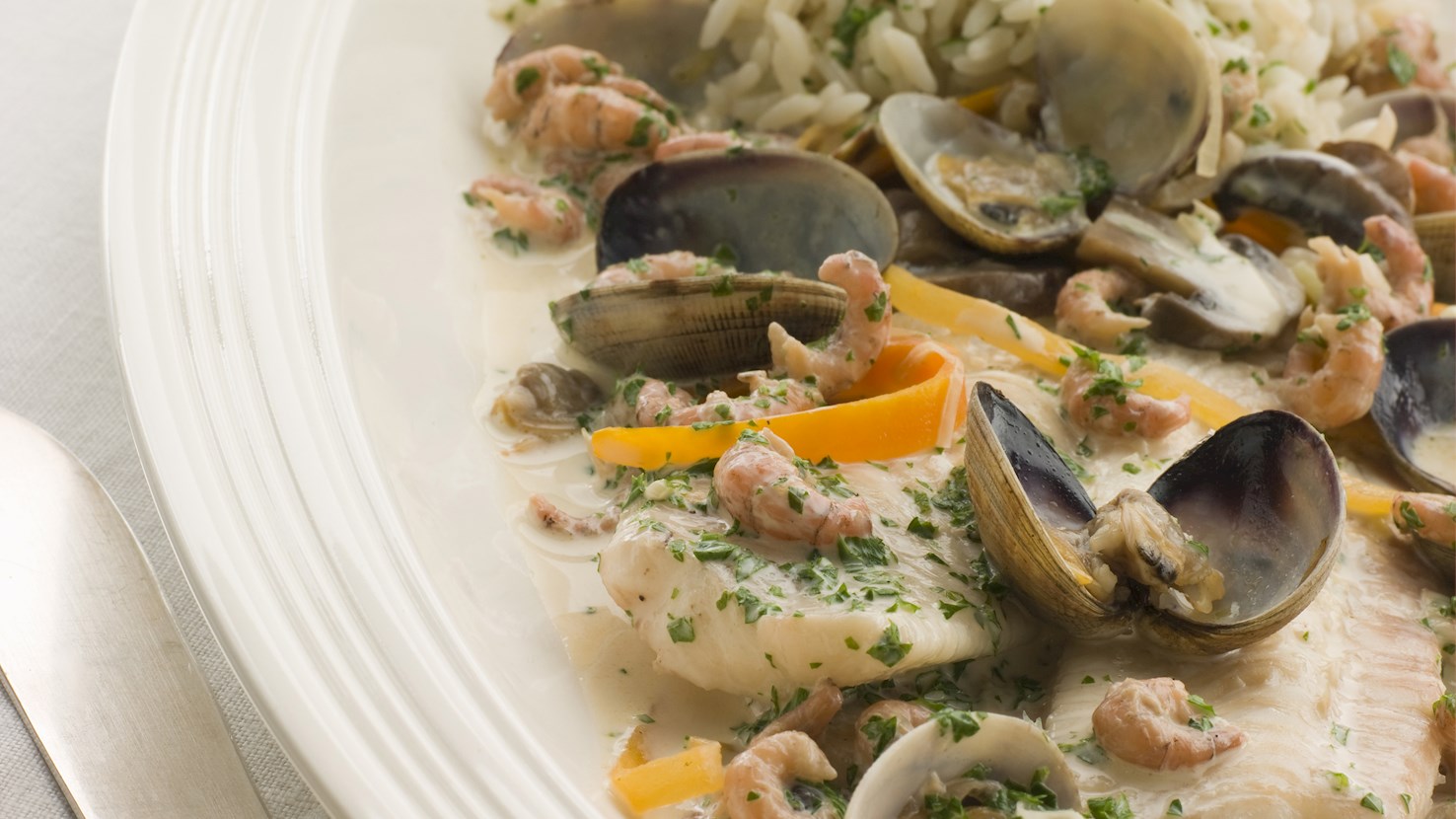
Sole à la Normande is a traditional dish originating from Normandy. It's made with a combination of sole fillets, onions or shallots, parsley, salt, pepper, and cider. The fillets are seasoned, rolled, and placed into buttered dishes with onions or shallots, parsley, and cider to poach for about 20 minutes. The rich sauce Normande, consisting of butter, flour, egg yolks, cream, and lemon juice is then poured over the fillets, and the dish is garnished with shrimps, mussels, oysters, button mushrooms, cubes of fried bread, and (optionally) truffle slices.
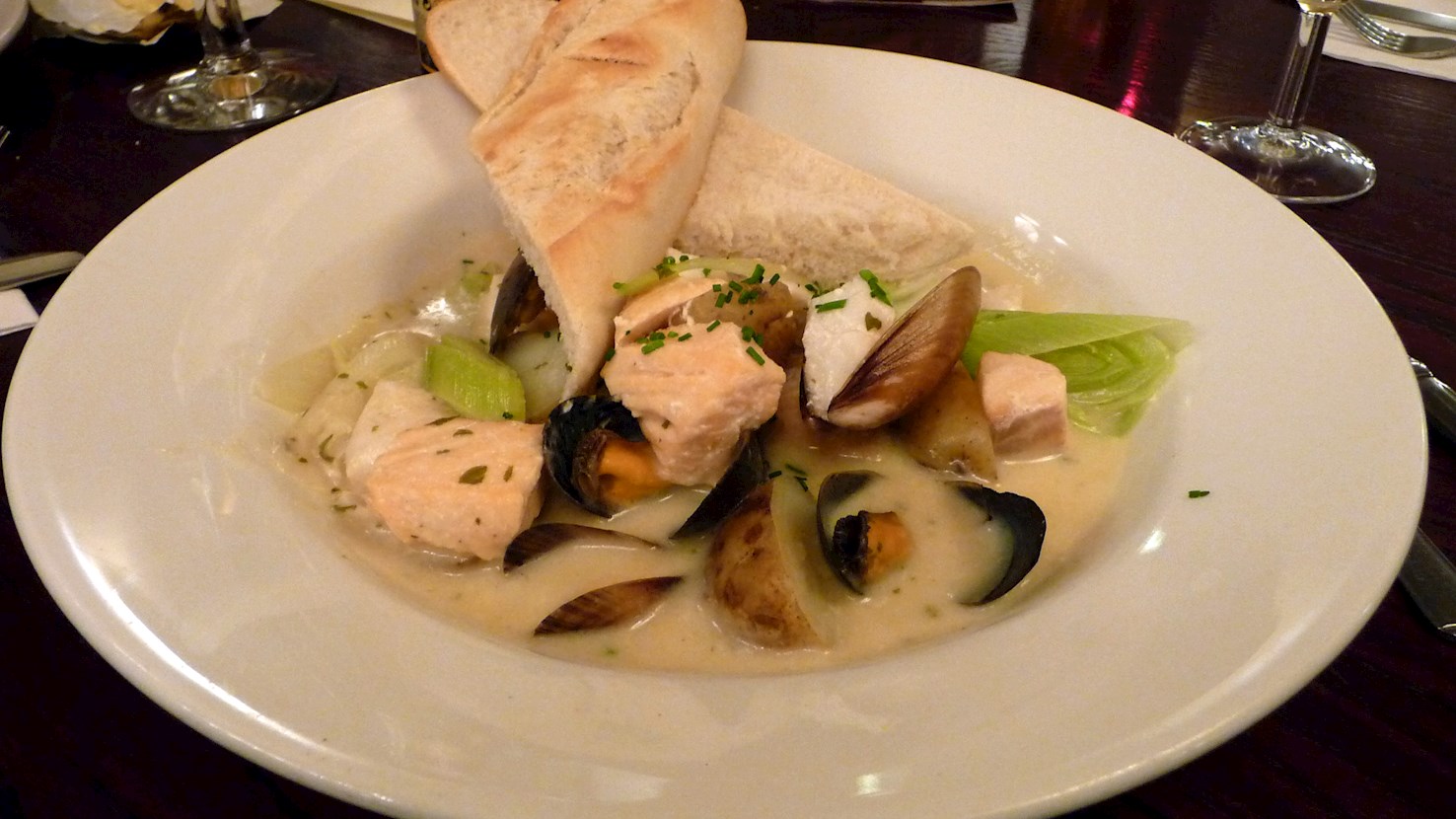
Marmite dieppoise is a traditional fish stew originating from Dieppe on the Normandy coast. The fish stew is usually made with a combination of scallops, prawns, mussels, salmon or monkfish, mushrooms, heavy cream, shallots, white wine, thyme, bay leaves, and parsley. The dish is traditionally made in a marmite – a covered earthenware or metal pot. The shallots, thyme, bay leaves, wine, and mussels are brought to a boil and simmered for a few minutes. The unopened mussels are discarded, while those that have opened are set aside to cool. The cooking liquid is simmered and mixed with prawns and scallops. After a few minutes, the prawns and scallops are removed, and the cooking liquid is used once again for the fish. The fish is poached until firm, and the cooking liquid is strained to remove any traces of sand. Next, it’s reused to cook the mushrooms until the liquid evaporates. The cream is stirred in and boiled until thick, and the mussels, prawns, scallops, and fish are placed into the pot and cooked until hot. The fish stew is seasoned with salt and pepper and garnished with chopped parsley before serving.
Noix de Saint-Jacques à la fondue de poireaux is a remarkably elegant French seafood dish consisting of perfectly pan-seared king scallops resting atop a rich, buttery bed of slow-cooked, melt-in-the-mouth leeks. Hailing primarily from the brisk, wind-swept coastlines of Brittany and Normandy, this dish is a magnificent celebration of the winter fishing season, when the prized great Atlantic scallop is painstakingly harvested from the freezing ocean floor. The brilliance of this recipe lies not in a massive list of complex ingredients, but in the flawless marriage of two distinct seasonal elements and the uncompromising technical precision required to cook them. The soul of the dish is the fondue de poireaux, a term that frequently confuses foreigners expecting a pot of melted cheese, but which actually refers to an essential French technique of vegetable reduction. Fresh winter leeks are meticulously julienned and sweated in generous amounts of salted butter over an incredibly low flame for a long time. The absolute rule here is that the leeks must never brown or fry; instead, they are gently coaxed until they completely surrender their structure, collapsing into a sweet, earthy, and velvety tangle. To finish the fondue, chefs typically stir in a splash of crisp, dry white wine and a heavy dollop of rich crème fraîche, binding the melted leeks into a deeply luxurious, creamy base. In stark contrast to the slow, patient melting of the leeks, the scallops themselves demand aggressive, high-heat cooking. The thick, pearlescent noix (the sweet meat of the scallop) is flash-fried in a roaring hot pan with foaming butter for barely a minute on each side. This rapid sear creates a beautifully caramelized, nutty, golden-brown crust, locking in the ocean's natural juices while ensuring the center remains incredibly tender, warm, and just barely opaque. When plated, the golden-crusted scallops are nestled gently into the warm, pale-green nest of creamy leeks.
Coquilles Saint-Jacques à la normande is a sumptuous French seafood preparation that marries the sweet, oceanic brine of freshly caught Atlantic scallops with the legendary, rich dairy and orchard fruits of Normandy. Served warm in its iconic natural shell, this dish perfectly encapsulates the concept of terre et mer (land and sea), bridging the gap between the freezing, wind-whipped waters of the English Channel and the lush, green pastures of the Norman countryside. The foundation of this luxurious recipe begins at bustling historic fishing ports like Dieppe or Port-en-Bessin, where local fleets dredge for king scallop, a scallop highly prized for its massive size and delicate, melting texture. The scallops—often with their vibrant coral roes still attached—are typically seared for only a brief moment or gently poached, ensuring they remain incredibly tender and yielding. They are then set aside so the chef can focus on crafting the dish's soul: the pan sauce. In authentic Norman fashion, the aromatics—usually finely diced shallots and earthy white button mushrooms—are slowly sweated in a generous knob of cultured Norman butter. What elevates this dish into the stratosphere of flavor, however, is the crucial step of deglazing. Instead of relying on standard white wine, cooks reach for the region's liquid gold: a hearty splash of dry, fermented apple cider or a potent pour of Calvados. Flambéing the pan with this aged apple brandy burns off the harsh alcohol while leaving behind an intoxicating, slightly sweet orchard perfume that cuts straight through the savory aromatics. Finally, a heavy dollop of thick, tangy crème fraîche is folded into the skillet, reducing down into a magnificent, ivory-colored glaze that blankets the resting seafood. The slight, cultured tang of the crème fraîche and the complex, woody sweetness of the Calvados provide a brilliant counterpoint to the meaty, umami-laden scallop. It is sometimes finished with a very light dusting of parsley or a mere whisper of breadcrumbs, then quickly broiled. Eating this dish is a deeply comforting, luxurious experience, best accompanied by a chilled glass of dry artisanal cider and a thick slice of freshly baked bread, so not a single drop of the magnificent, orchard-scented cream is left behind in the shell.
Harengs marinés de Honfleur is a dish of marinated herring fillets associated with the port town of Honfleur. The dish consists of cleaned herring cut into fillets or sections, firm in texture and pale silver to gray in color, preserved in a marinade based on vinegar, salt, onions and aromatics, producing a balance of acidity, salinity and marine flavor with a clean, slightly sharp finish. The preparation developed alongside Honfleur’s long-standing role as a fishing harbor, where herring landings supported both local consumption and preservation methods that allowed fish to be stored, transported and eaten beyond the immediate catch period, making marination a practical response to seasonal abundance and market demand. Preparation begins with very fresh herring that is gutted, filleted and lightly salted, then immersed in a vinegar-based marinade often combined with sliced onions, peppercorns, bay leaf and sometimes carrot, allowing the acidity to cure the flesh while maintaining structure; after several days the fish becomes fully seasoned, firm yet supple, and ready for consumption without further cooking. Variations appear in the strength of the vinegar, the ratio of salt, the thickness of the cuts and the choice of aromatics, with some versions favoring sharper acidity and others a milder, slightly sweet profile, and a notable feature of the Honfleur style is the emphasis on clean-cut fillets and restrained seasoning that keeps the herring flavor at the forefront. Harengs marinés de Honfleur are eaten cold in homes, markets and brasseries, commonly served as a starter or part of a seafood spread, and they pair well with boiled potatoes, rye or country bread, butter, and drinks such as dry cider, light white wine or beer that balance their acidity and saltiness.
TasteAtlas food rankings are based on the ratings of the TasteAtlas audience, with a series of mechanisms that recognize real users and that ignore bot,
nationalist or local patriotic ratings, and give additional value to the ratings of users that the system recognizes as knowledgeable.
For the “Top 6 Norman Seafood Dishes” list until May 15, 2026, 20 ratings were recorded, of which 17 were recognized by the system as legitimate.
TasteAtlas Rankings should not be seen as the final global conclusion about food. Their purpose is to promote excellent local foods,
instill pride in traditional dishes, and arouse curiosity about dishes you haven’t tried.