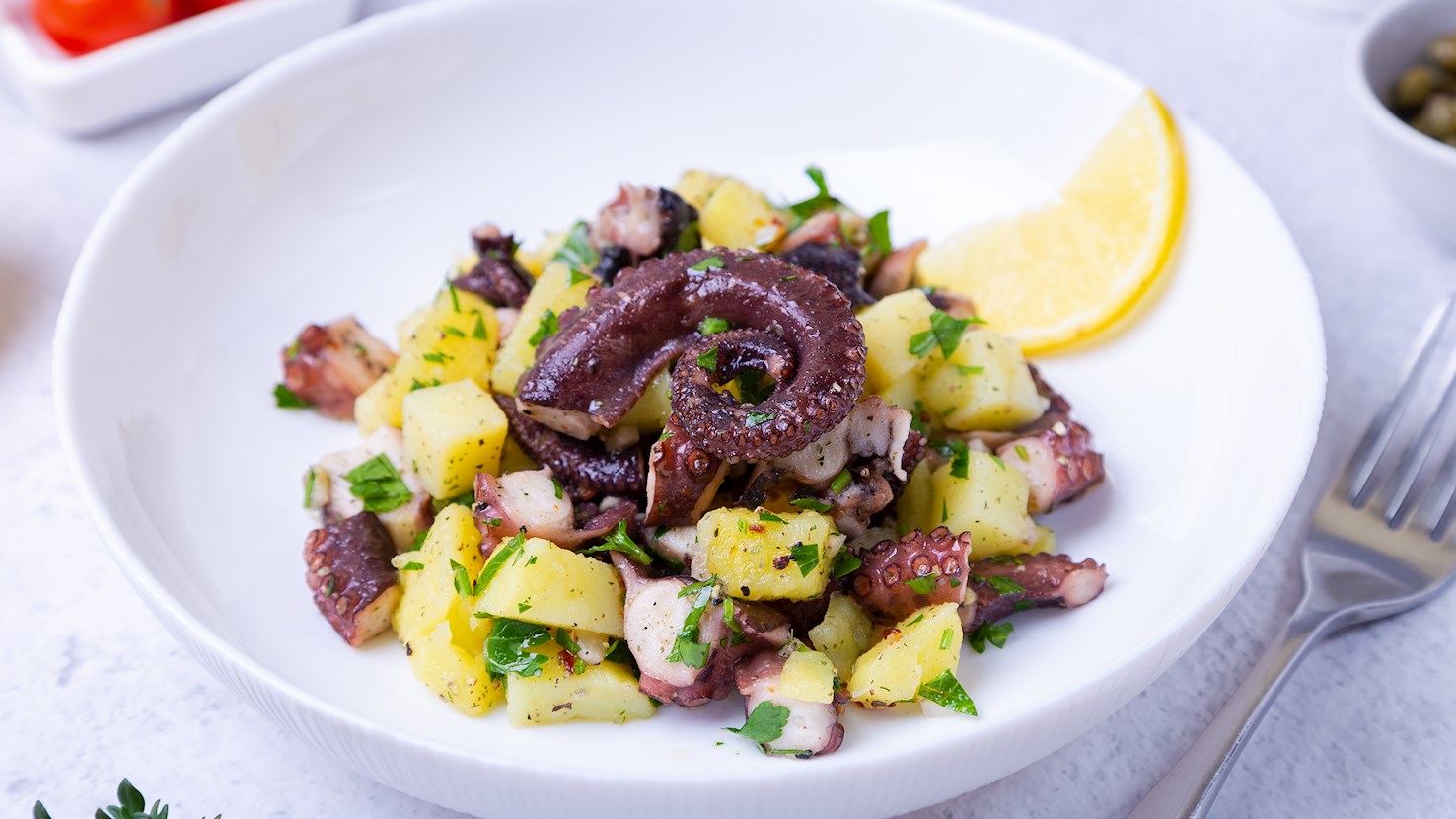
Salade de poulpe is a traditional octopus salad originating from Languedoc. The salad is usually made with a combination of tenderized octopus, potatoes, white wine, onions, fennel, capers, parsley, paprika, salt, pepper, olive oil, and lemon juice. The octopus is cut into pieces, boiled in a mixture of oil, wine, salt, and water until tender, and then drained. The potatoes are boiled, skinned, sliced, and mixed with the octopus. The onions, fennel, and capers are placed on top and the salad is then dressed with a mixture of olive oil, lemon juice, vinegar, salt, and pepper. The salad is sprinkled with parsley and paprika and it's then typically served with aïoli.
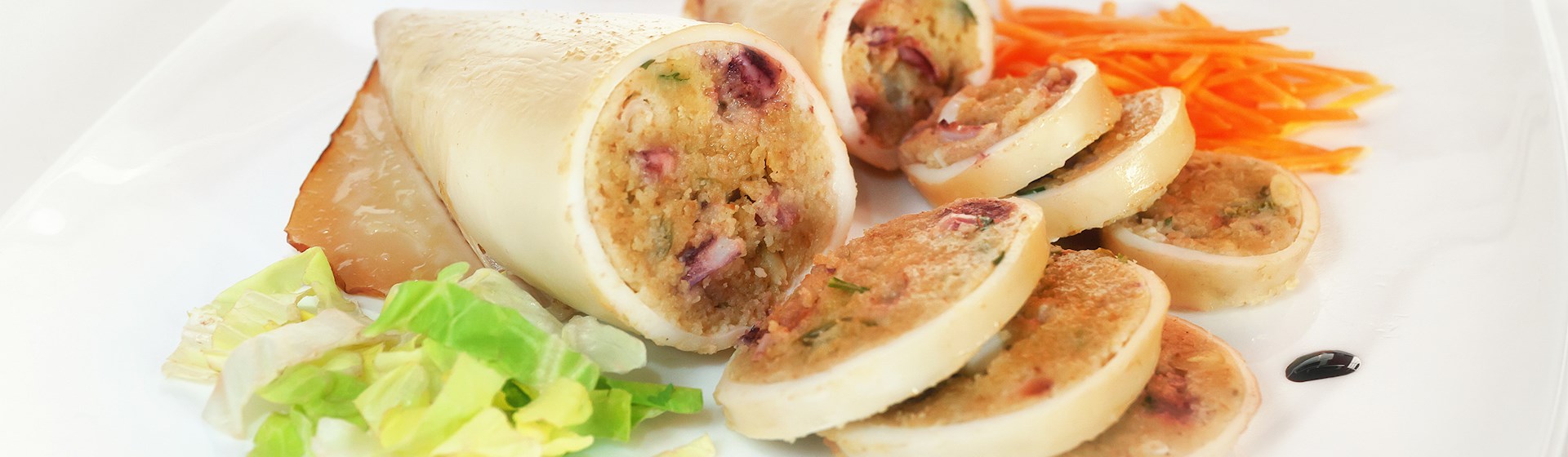
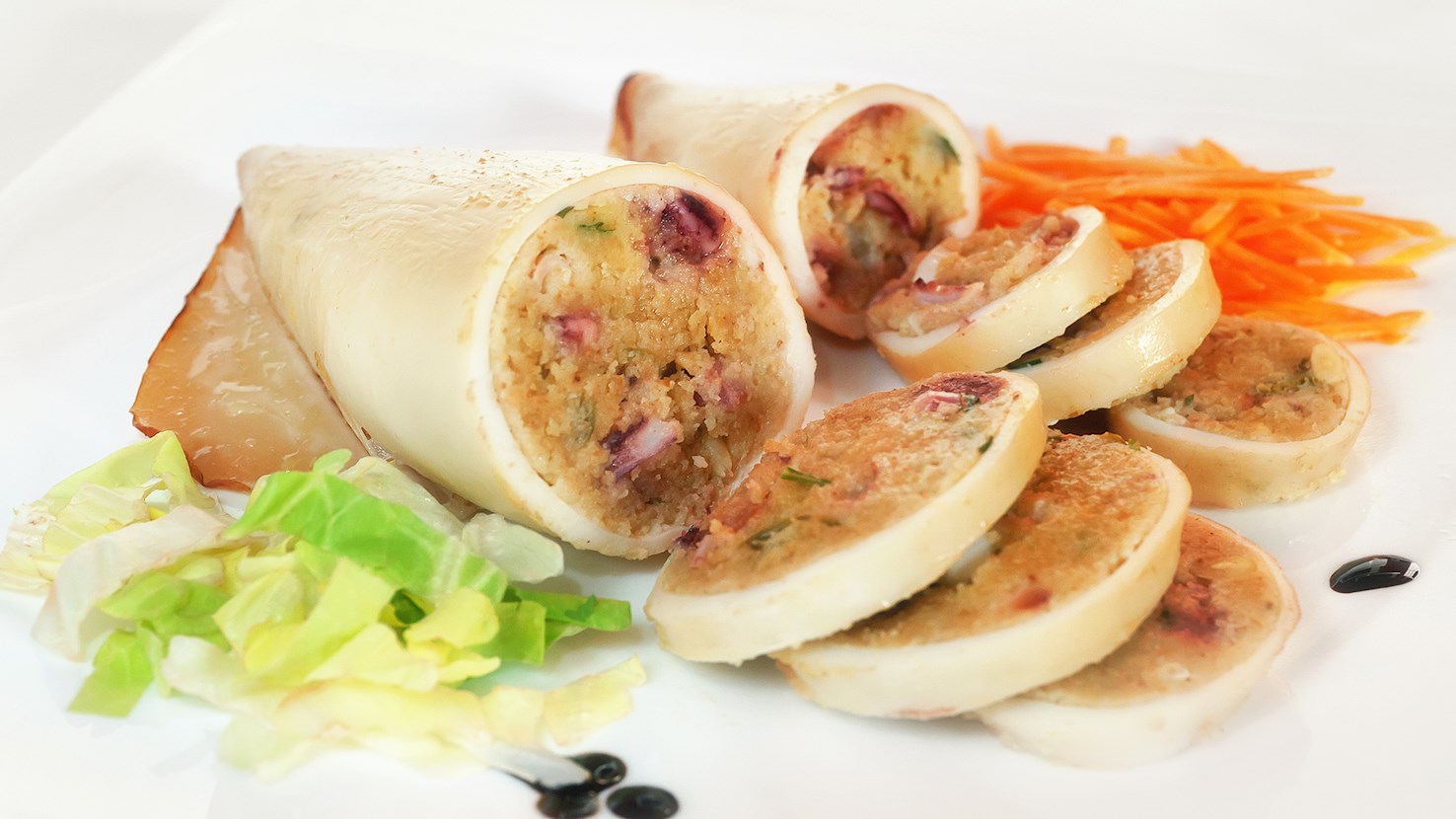
Encornets farcis is a French seafood dish consisting of squid stuffed with a variety of flavorful ingredients. The filling is a combination of breadcrumbs, milk, butter, carrots, celery, onions, and flavorings such as thyme and parsley. When served, stuffed squid are sometimes accompanied by a delicious sauce consisting of stock, shallots, and butter, flavored with bay leaves. It is recommended to garnish the dish with remaining parsley to make it even more visually appealing than it already is.
This traditional dish consists of pieces of cuttlefish doused in a flavorful tomato-based sauce that is usually enriched with onions, white wine, and garlic. The dish is usually finished off with the addition of aioli, which thickens the sauce and provides the typical velvety texture. Hailing from Sète, the dish was named rouille, meaning rust, referring to the distinctive red hue of the sauce. It is usually served over pasta or alongside rice or polenta, and if aioli is not mixed in the sauce, a dollop is traditionally placed on each serving of rouille.
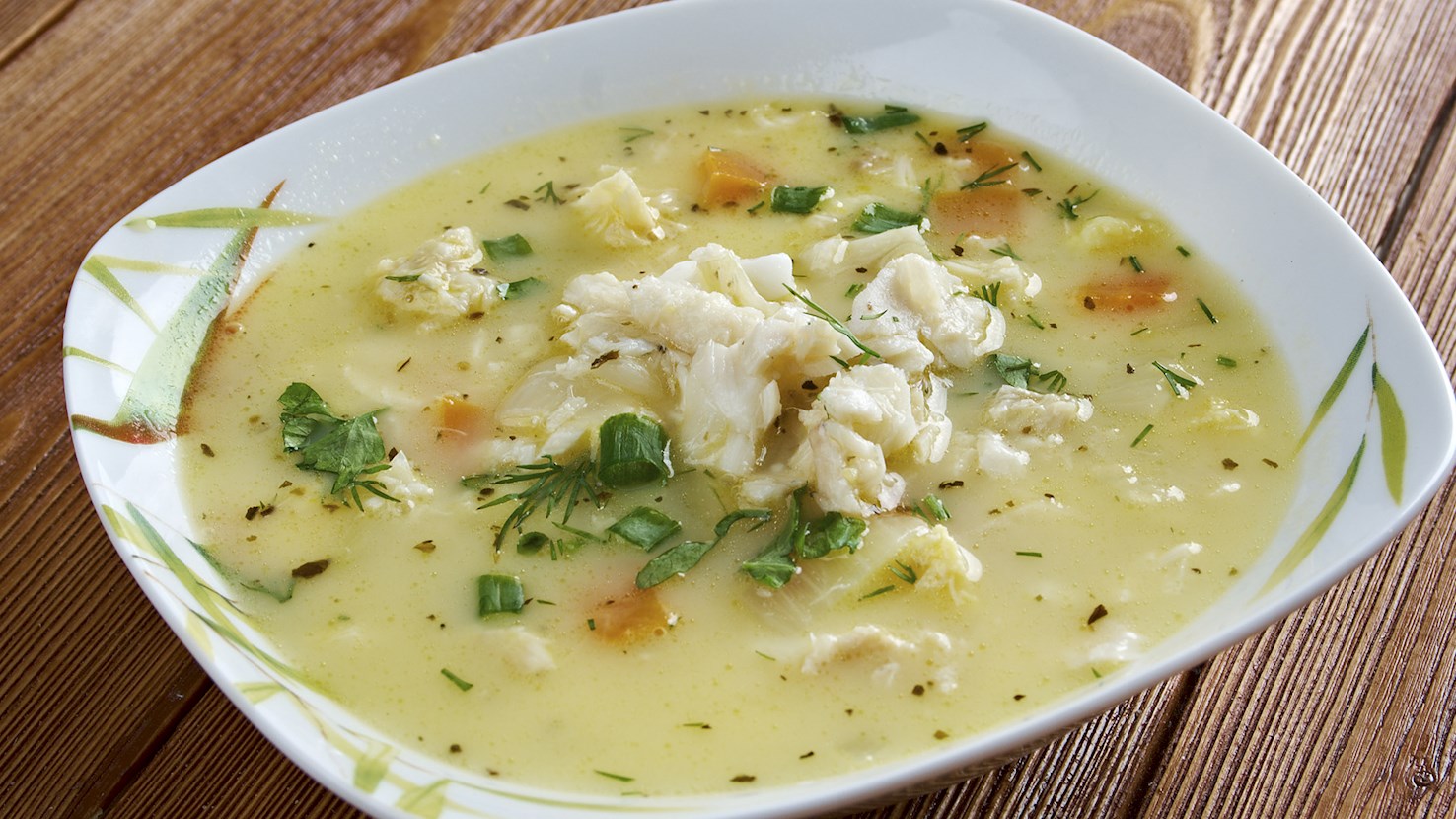
Also known as bouillabaisse's cousin, bourride is a popular fish stew originating from the French region of Languedoc-Roussillon, unlike bouillabaisse, which originated in the city of Marseilles. Most commonly it is made with white fish such as mullet, mackerel, or sea bass, but the original and most traditional recipes primarily include monkfish. However, modern varieties also incorporate scallops, mussels or any other type of shellfish. The stew is usually enriched by the addition of vegetables such as leeks, onions, celery, and carrots. What differentiates bourride from the more famous bouillabaisse is the addition of aioli, a sauce made with garlic, olive oil, and, usually, egg yolks. This fragrant sauce is added last in order to thicken the broth and to provide a richer flavor to the dish. Bourride is renowned for being less complicated and expensive than bouillabaisse, and the earliest mention of the dish appears in Reboul's La Cuisinière Provencale from 1897, when it was described as an aioli-thickened bouillabaisse without saffron. Although there are endless varieties of this French classic, it is believed that the dish originated in Sète, a port city situated in southeastern France, where you can find the most traditional variety of this stew, prepared exclusively with monkfish, and known locally as bourride Sètoise. Toasted garlic bread topped with aioli sauce is usually served alongside the stew. It can be served on the side, or placed in a bowl where it is typically combined with the creamy broth and the accompanying fish. However, in some restaurants, the broth is served first, then there are fish and vegetables, while aioli and bread are served last.
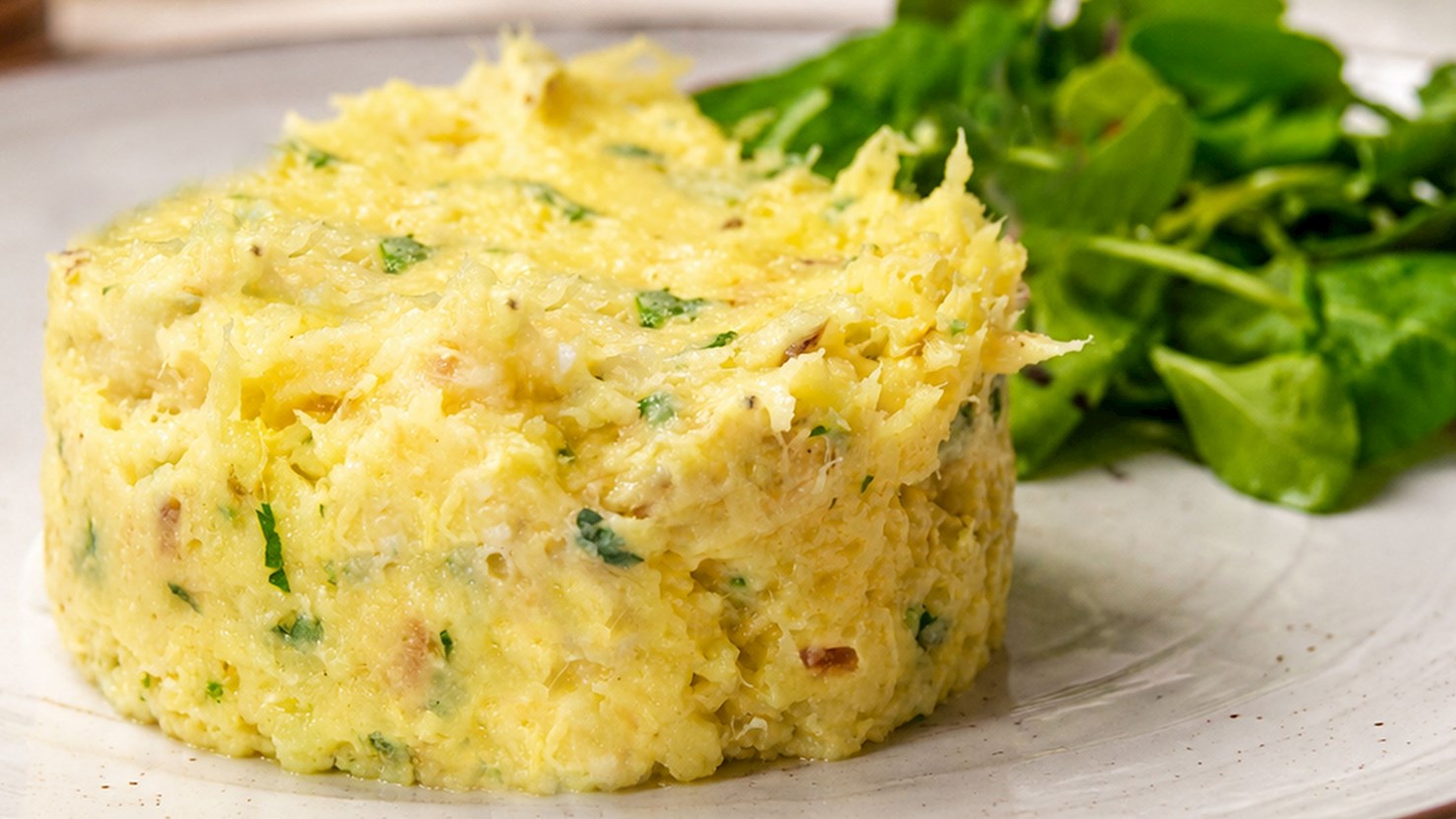
Estofinado is a warm cod and potato hash originating in the Aveyron region. It was created along the Lot Valley, where boatmen known as “gabarriers” brought back stockfish—air-dried cod—from their trading routes, introducing it to local cooking. Over time, this preserved fish became the heart of a nourishing dish that combined local ingredients such as potatoes, eggs, garlic, and walnut oil. Preparation begins by soaking the dried cod for several days in cold water, changing the water regularly to remove the salt and rehydrate the flesh. Once softened, the fish is simmered gently until tender, then flaked into small pieces and mixed with boiled potatoes that have been roughly mashed. In a large pot or earthenware bowl, chopped garlic and parsley are combined with the fish and potatoes, and hot walnut or sunflower oil is poured in to bind the mixture. Beaten eggs are added while stirring vigorously to give a smooth, slightly elastic texture, and chopped hard-boiled eggs are folded through at the end. Some cooks include a splash of cream or milk to enrich the mixture or use butter in place of oil. Variations exist where the potato-to-fish ratio is adjusted for texture, or the dish is baked briefly to form a light crust on top. A unique feature of estofinado is the use of rehydrated stockfish rather than salted cod, a culinary legacy of the inland trade routes that brought sea products into this mountain region. Estofinado is eaten warm as a main course, often served with a simple green salad or pickled vegetables, and pairs well with a dry white wine such as an Entraygues-le-Fel or Marcillac, or a light regional red that balances its richness.
Tielle is a savory seafood pie from Sète, a coastal town in the Occitanie region of southern France, known for its spicy tomato-octopus filling and vibrant orange crust. This round, hand-sized pie is made from a soft, slightly oiled dough that encases a rich mixture of stewed octopus, tomatoes, garlic, onions, olive oil, white wine, and spices such as paprika or cayenne. The top layer is sealed and crimped over the base, then baked until golden and crisp, producing a contrast between the tender filling and the flaky, flavorful crust. Tielle can be enjoyed hot or cold, making it a popular street food, snack, or light lunch in its hometown and along the Mediterranean coast. The dish is closely tied to the cultural heritage of Sète, which was settled in part by Italian immigrants, especially from Gaeta near Naples, during the 18th and 19th centuries. Tielle likely evolved from southern Italian seafood pies such as the tiella di Gaeta, with the name derived from the Italian word "teglia," meaning baking dish. Over time, the recipe adapted to local ingredients and preferences, integrating the bold, sun-drenched flavors of southern France with the rustic techniques of Italian home cooking. In Sète, tielle is sold in bakeries, markets, and seaside eateries, often alongside other seafood specialties that reflect the town’s maritime identity.
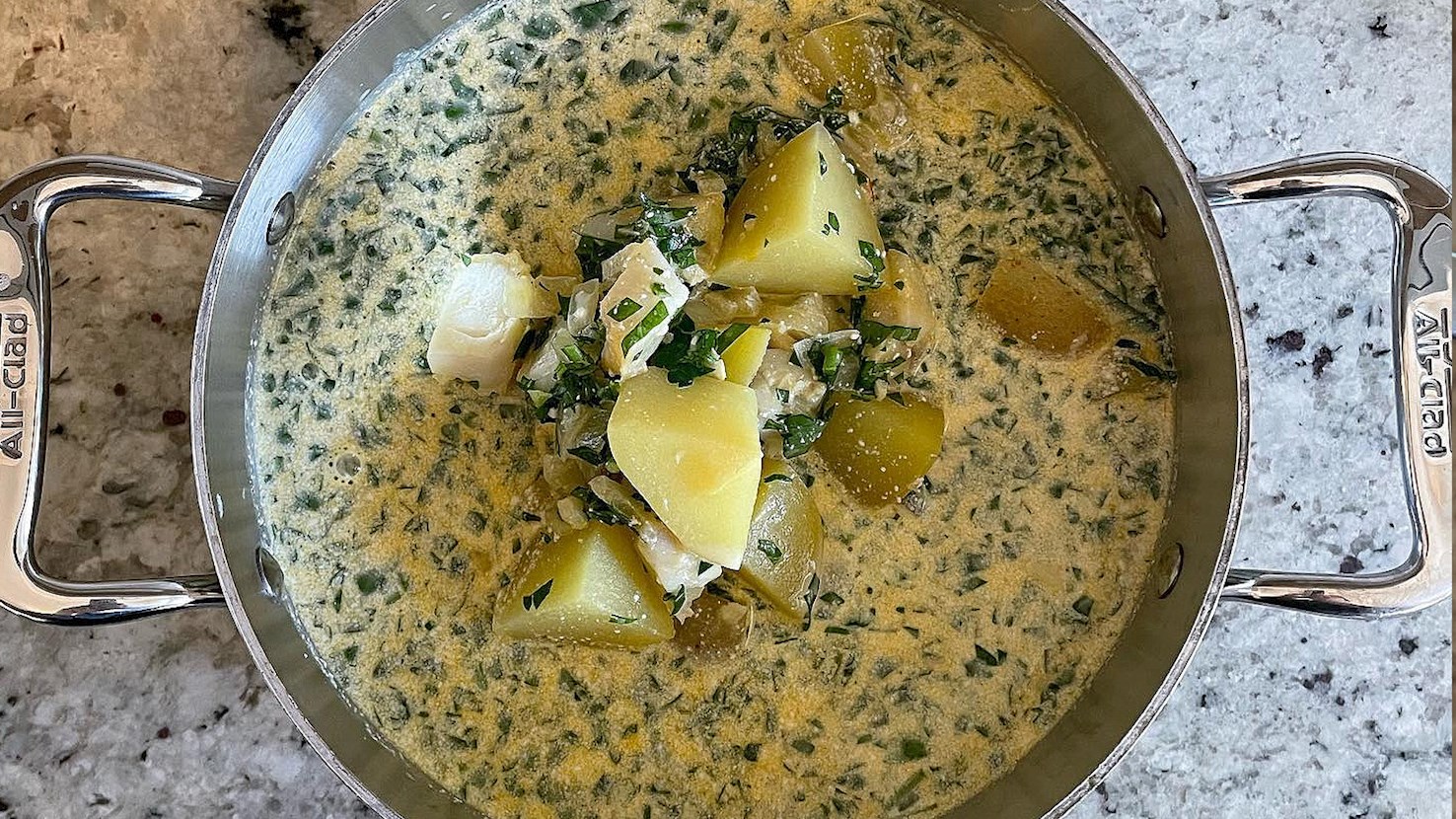
Bullinada is a traditional seafood and potato stew, associated with the Catalan cultural and historical domain, which means both the Spanish Catalonia and French Catalonia (the region of Pyrénées-Orientales). Bullinada is a warm, creamy, and nourishing dish mostly prepared during winter. When talking about seafood, bullinada can be prepared several ways: with only white fish, with only shellfish and prawns, or with a combination of all. This stew is served with fresh, crusty bread and paired with a light, white wine.
TasteAtlas food rankings are based on the ratings of the TasteAtlas audience, with a series of mechanisms that recognize real users and that ignore bot,
nationalist or local patriotic ratings, and give additional value to the ratings of users that the system recognizes as knowledgeable.
For the “Top 7 Occitan Seafood Dishes” list until June 15, 2026, 32 ratings were recorded, of which 23 were recognized by the system as legitimate.
TasteAtlas Rankings should not be seen as the final global conclusion about food. Their purpose is to promote excellent local foods,
instill pride in traditional dishes, and arouse curiosity about dishes you haven’t tried.